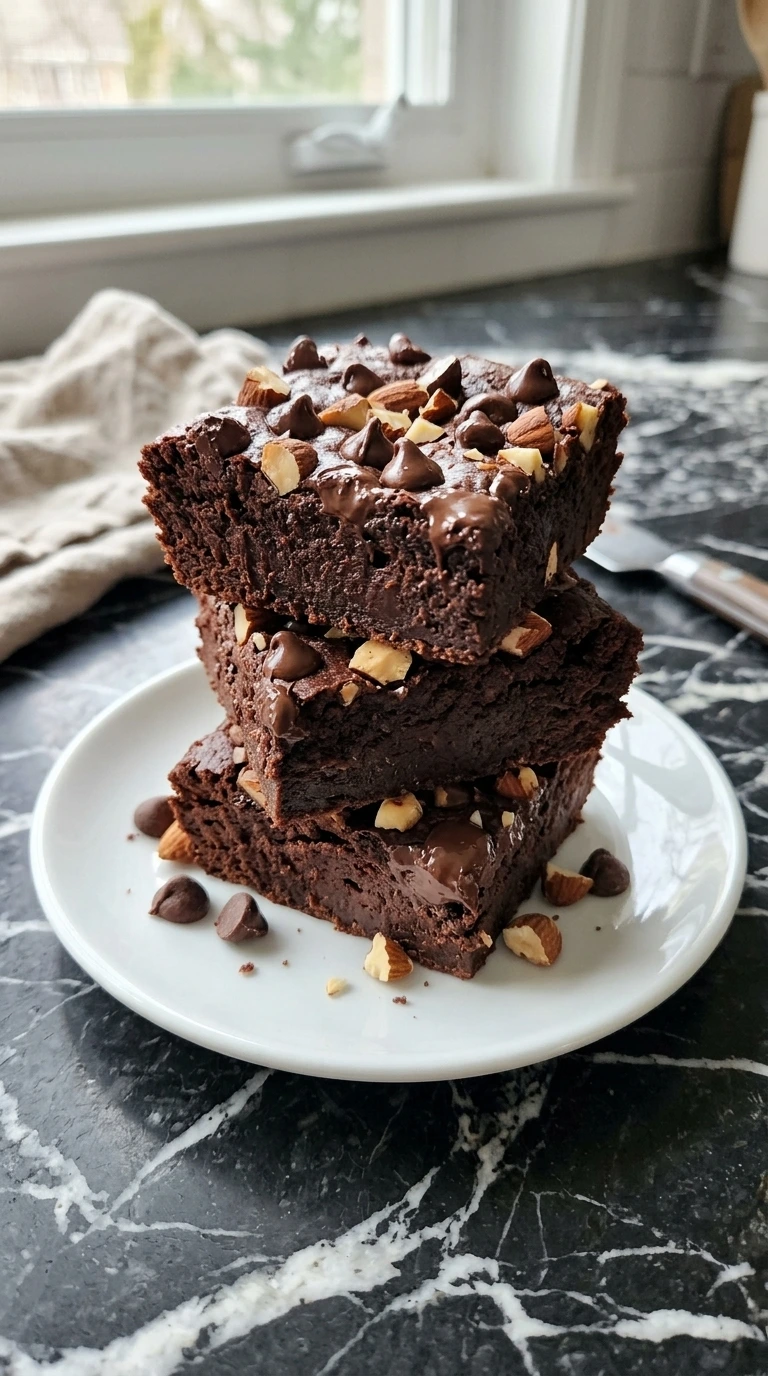
Ingredients
Method
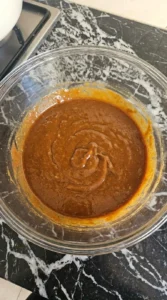
- Bring the orange-fleshed sweet potato puree, creamy almond butter and eggs to 68°F to 72°F. Add them to a large bowl with maple syrup, coconut sugar and vanilla extract. Whisk for 2 to 3 minutes using tight circles from the center outward. Scrape the sides halfway through, then whisk another 20 seconds so no egg streaks remain. The mixture should look glossy and reddish brown, with slow ribbons that disappear after 3 seconds. You’ll smell maple and vanilla before the almond butter becomes fully blended. Stop once the surface looks even. Whisk past 4 minutes and you’ll trap excess air, which makes the brownies puff and sink. Room-temperature mixing keeps the fat and water evenly emulsified.
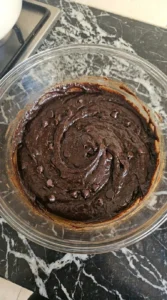
- Set the bowl at 70°F and sift in Dutch-process cocoa powder, certified gluten-free oat flour, instant espresso powder, baking powder and fine sea salt. Fold for 60 to 90 seconds with broad J-shaped strokes. Turn the bowl one quarter turn after every fold. Add 1/2 cup dairy-free dark chocolate chips during the final 20 seconds, then stop when the dry pockets vanish. The batter should become thick and nearly black, with glossy chocolate chips held throughout instead of sinking. Lift a fold and watch it fall in a heavy ribbon that sits for 5 seconds. If you keep mixing beyond 2 minutes, the oat flour absorbs too much liquid and the crumb turns tight. Gentle folding limits structure so the center stays fudgy.
- Keep the batter near 70°F. Coat an 8×8-inch light-colored metal pan with 1 teaspoon avocado oil, then line it with parchment. Pour in the batter and spread it toward all four corners in 6 to 8 slow passes. Scatter the remaining 1/4 cup dairy-free dark chocolate chips and 1/3 cup chopped roasted unsalted almonds unevenly across the top. The surface should sit level within 1/8 inch, but a few shallow swirls should remain. Press only the largest almond pieces halfway into the batter so they don’t fall off later. If one corner stays thicker, it’ll remain gummy while the opposite edge dries. Even thickness lets the center and edges set at the same rate.
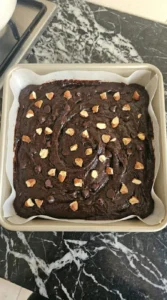
- Bake the pan in a fully preheated 350°F oven for 26 to 30 minutes. Rotate it 180 degrees at minute 18, then check at minute 26. The edges should look set while the center stays slightly softer. Insert a toothpick 1 inch from the center. It should carry several moist crumbs, not wet batter. The top will turn matte and lightly crackled, while the chocolate chips stay glossy and the almonds deepen one shade. You’ll smell cocoa strongly around minute 24. (I baked my first batch for 35 minutes, the edges lost every bit of softness.) Go past 30 minutes and the residual heat dries the center. Pulling early preserves moisture while the starch finishes setting.
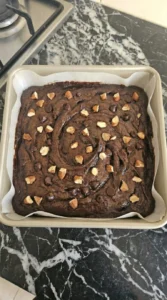
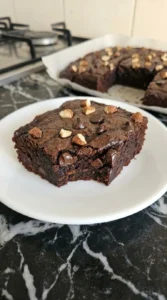
- Cool the brownie slab in its pan at 68°F to 72°F for 45 minutes. Lift it out by the parchment, then cut it into 16 uneven 2-inch squares. Use one firm downward press for each cut instead of sawing. Place one square on a small white plate, then split one corner open to expose the dense center. The top should hold its thin crackled skin, while the inside looks moist and compact with tiny sweet potato pores. A warm chocolate chip should smear slightly when pressed. Cut before 45 minutes and the center clings to the blade and tears. Cooling lets the starches firm without drying the crumb.
Notes
Store cooled brownies in a shallow airtight container for up to 5 days in the refrigerator. Place parchment between layers so the glossy chocolate tops don’t stick. For freezing, wrap each square tightly in plastic wrap, then place them in a freezer bag for up to 3 months. Press out excess air before sealing. For a softer texture, thaw one wrapped square at room temperature for 20 to 30 minutes. Reheat one square in a 300°F oven for 5 to 7 minutes, or microwave it for 10 to 12 seconds. Add 1 teaspoon almond butter on top after warming if the edges feel dry. Don’t reheat the whole batch repeatedly because condensation makes the tops tacky. Discard brownies with a sour smell, visible fuzzy spots or unusual moisture pooling. A stale cocoa aroma alone means quality dropped, but it doesn’t always signal spoilage.