
Coconut Curry Shrimp
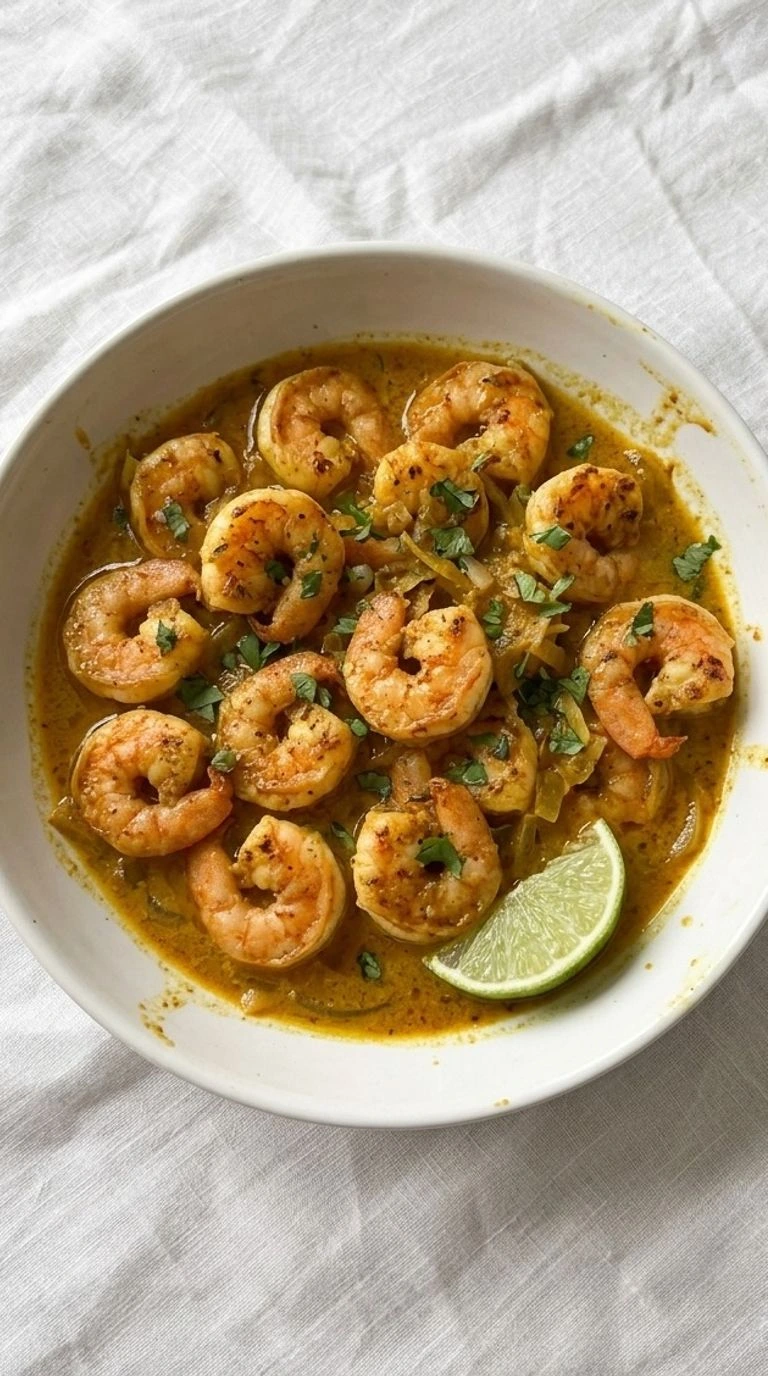
The first time I made Coconut Curry Shrimp, I wanted something warm and rich without spending the whole evening in the kitchen. The coconut milk smelled amazing as it simmered with curry powder and garlic, but the shrimp needed just the right amount of time. After a couple of tries, I learned to build the sauce first and add the seafood near the end. That small change made all the difference.
Now this easy coconut curry shrimp is one of my favorite meals when dinner needs to feel special but the schedule is tight. The sauce is creamy with a gentle kick of spice, and fresh lime keeps every bite bright. If you’re planning a full dinner, serve it with our Roasted Brussels Sprouts with Bacon for a savory side that adds a crisp contrast. You don’t need a long list of ingredients or a complicated method.
A few pantry spices, full-fat coconut milk and peeled shrimp are enough to make a satisfying coconut curry shrimp recipe at home. Keep some cooked rice nearby to catch the sauce, and dinner is sorted.
Why This Recipe Works
The sauce starts with onion, garlic, ginger and curry powder cooked in oil, which helps release the spices’ fat-soluble aromas before the coconut milk goes in. Simmering the sauce for 6 to 8 minutes lets the tomato paste blend in and reduces excess liquid without making the coconut milk boil hard.
Add the shrimp only after the sauce has thickened, then cook until they reach 145°F. This short finish keeps the seafood tender, while lime juice added off the heat cuts through the coconut’s richness.
Ingredients
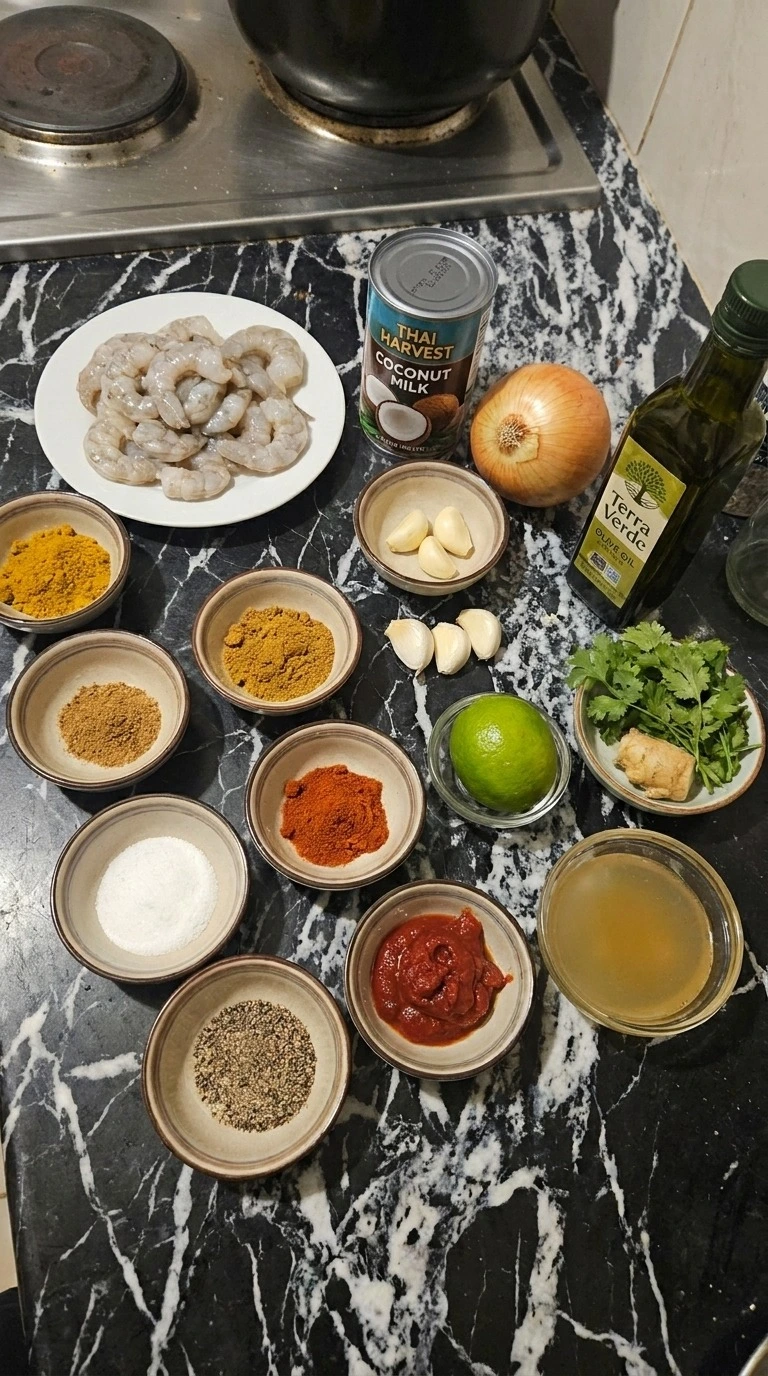
- medium-large shrimp: Peeled and deveined, thawed completely if frozen and patted dry for better seasoning and even cooking.
- salt: Use 1/2 teaspoon to season the shrimp and reserve the remaining 1/2 teaspoon to adjust the sauce.
- black pepper: Freshly ground if possible, adding a mild peppery bite to the shrimp.
- paprika: Adds warm color and a gentle earthy flavor to the shrimp coating.
- olive oil: Used to soften the onion and bloom the aromatics without sticking.
- yellow onion: Finely diced so it softens quickly and blends into the coconut curry sauce.
- garlic: Minced finely to release its aroma and spread evenly through the sauce.
- fresh ginger: Finely grated to bring a fresh, peppery note to the curry base.
- tomato paste: Adds savory depth and a deeper orange-red color to the sauce.
- curry powder: A mild or medium blend provides the main warm spice flavor.
- ground cumin: Adds an earthy note that complements the curry powder and coconut milk.
- full-fat coconut milk: One standard can creates a creamy sauce with enough body to cling to the shrimp.
- low-sodium chicken broth: Thins the coconut milk to a spoonable sauce and adds savory flavor without excessive salt.
- lime juice: Freshly squeezed and stirred in off the heat to brighten the rich coconut sauce.
- fresh cilantro: Chopped and folded into the finished curry, with a small pinch reserved for serving.
- long-grain white rice: Hot cooked rice provides a fluffy base for the sauce and makes the dish a complete meal.
- lime: Cut into wedges for serving so each person can add extra citrus to taste.
Kitchen Equipment
- 10-inch heavy-bottomed skillet: Use a wide skillet to soften the aromatics and simmer the sauce without crowding the shrimp, since a thin pan can create hot spots that scorch the coconut milk.
- Medium mixing bowl: A bowl with at least a 2-quart capacity gives the shrimp room to take an even coating of seasoning, while a very small bowl can crush their curved shape.
- Wooden spoon: Use a sturdy wooden spoon to scrape the curry paste from the pan and stir the sauce gently, since a thin utensil may not lift the sticky paste from the skillet’s edges.
- Instant-read thermometer: A fast-reading thermometer helps confirm that the thickest shrimp reach 145°F, while judging color alone can leave uncertainty with larger shrimp.
- Microplane or fine grater: A fine grater turns fresh ginger into a soft pulp that blends into the sauce, whereas thick shreds can remain fibrous in each bite.
How to Make It
Step 1: Season and coat the shrimp
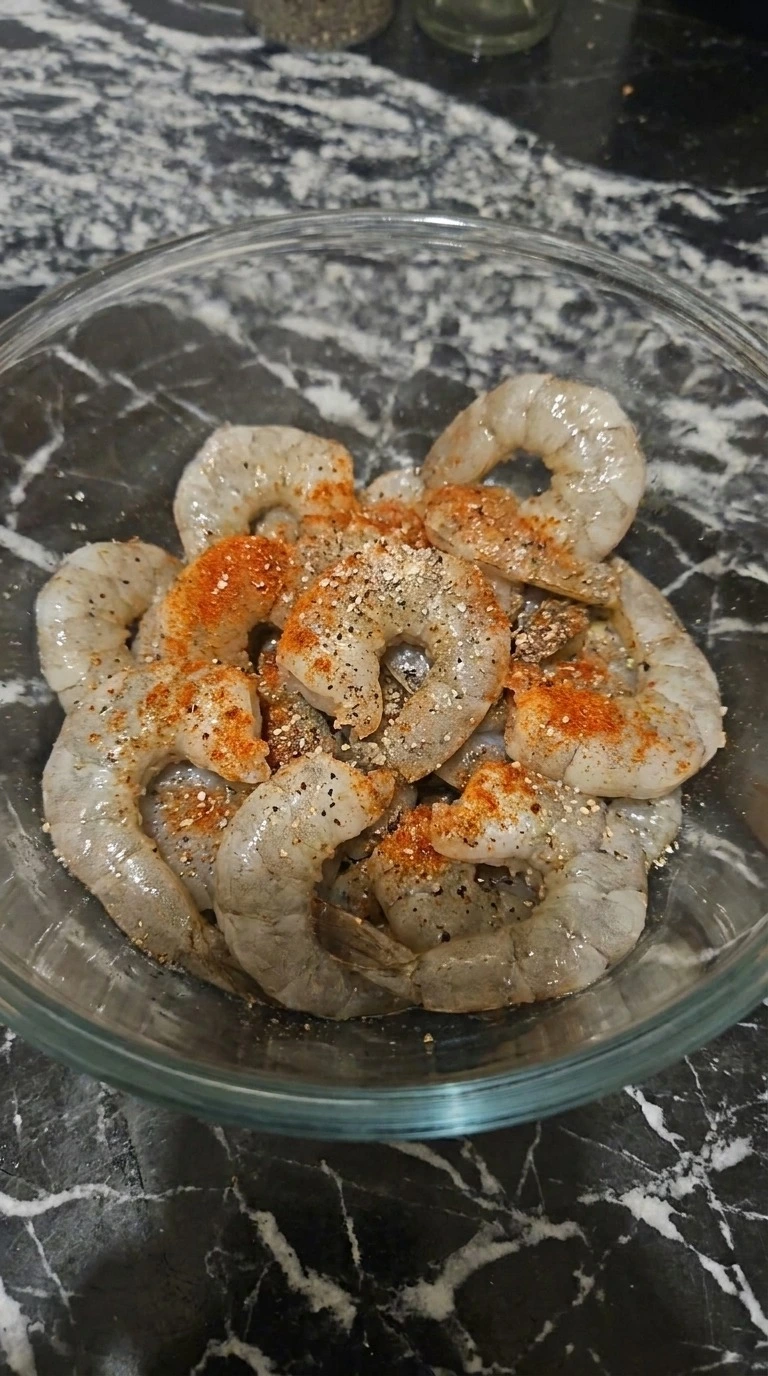
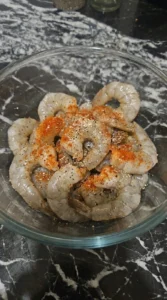
Pat 1 pound of peeled and deveined medium-large shrimp dry, then toss them with 1/2 teaspoon salt, 1/4 teaspoon black pepper and 1/2 teaspoon paprika in a mixing bowl. Use clean hands or a spoon to turn each shrimp until the seasoning forms a thin, even coat.
Let them stand for 5 minutes at room temperature while you mince 3 garlic cloves, grate 1 teaspoon fresh ginger and finely dice 1 medium yellow onion. Keep the shrimp in a single loose layer rather than pressing them into a pile.
The shrimp should look lightly speckled with red paprika and black pepper, not wet with pooled liquid. Don’t leave them out longer than 15 minutes.
Tip: Choose shrimp that are similar in size, about 21 to 25 per pound, so they finish cooking at roughly the same time.
Step 2: Soften the onion, garlic and ginger
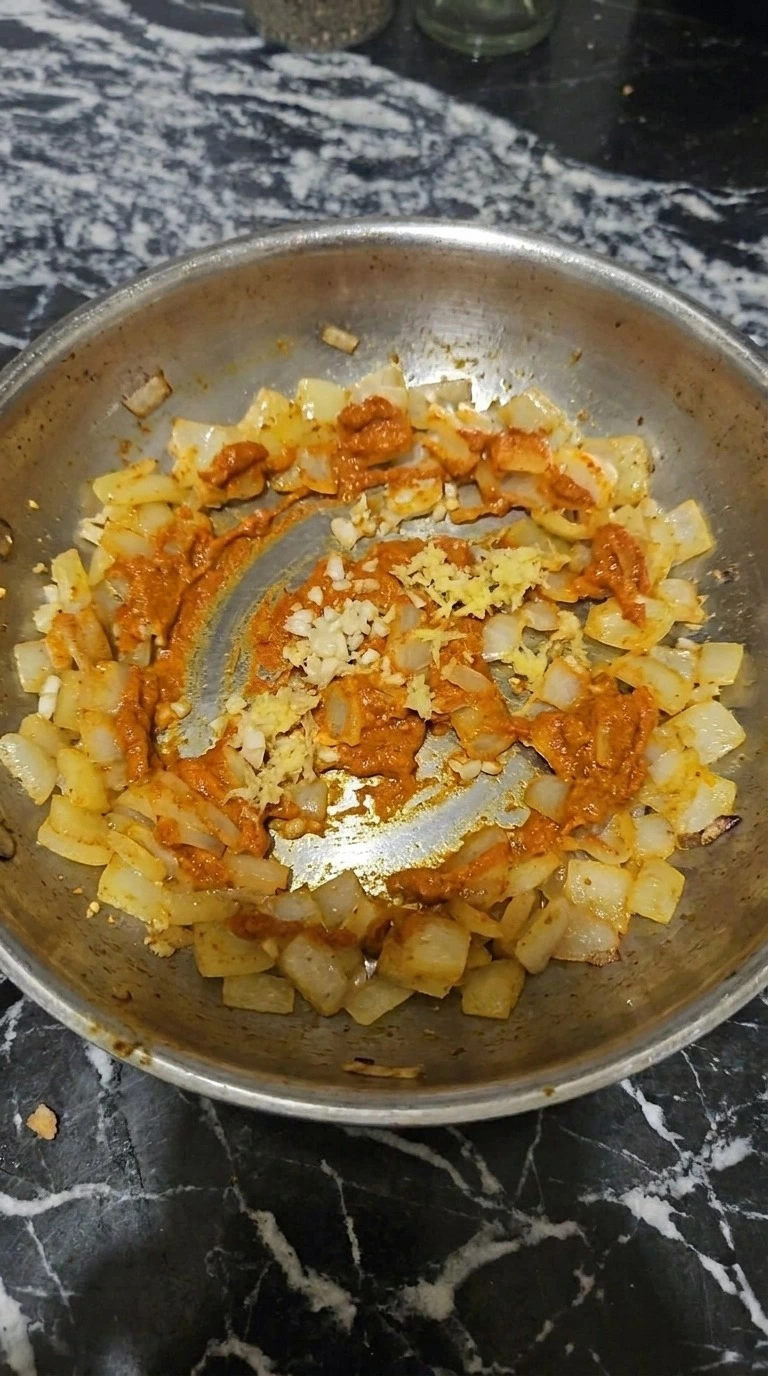
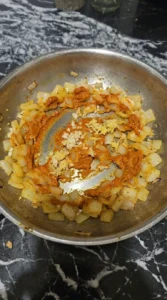
Set a large skillet over medium heat, about 350°F at the cooking surface, and add 1 tablespoon olive oil. Stir in the diced yellow onion and cook for 4 to 5 minutes, moving the pieces across the pan with a wooden spoon until they soften and turn translucent at the edges. Add the minced garlic and grated ginger, then stir for 30 to 45 seconds.
Fold in 2 tablespoons tomato paste, 2 teaspoons curry powder and 1/2 teaspoon ground cumin, scraping the pan as the mixture turns a deeper orange-red. Keep the heat steady and stir often because garlic can burn in under a minute. You’ll smell the garlic and ginger first, followed by a warm curry aroma.
The onion should be soft, not browned or crisp.
Tip: Use a wide skillet at least 10 inches across so the onion can soften in a thin layer instead of steaming in a heap.
Step 3: Build the coconut curry sauce
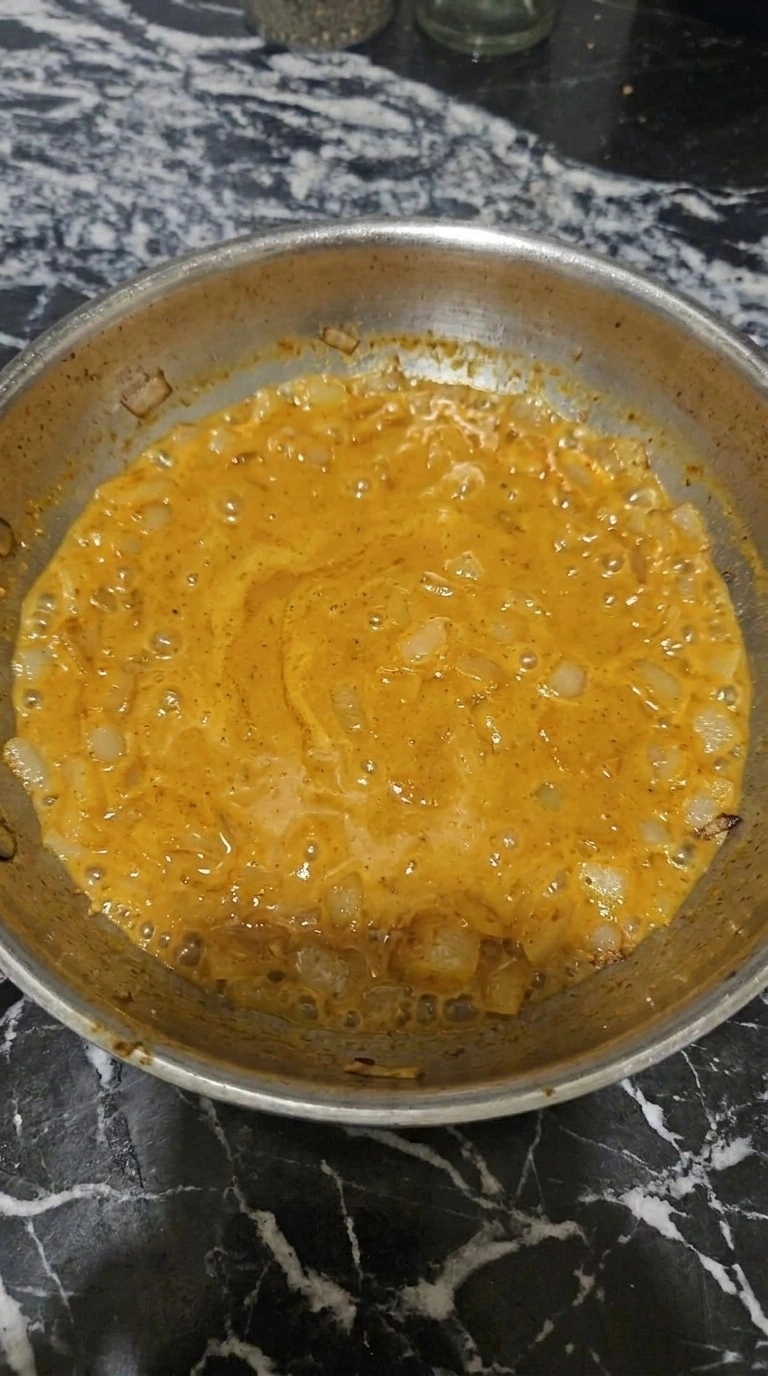
Pour in 1 can (13. 5 ounces) full-fat coconut milk and 1/2 cup low-sodium chicken broth, then stir slowly to loosen the orange-red paste from the skillet. Add 1/2 teaspoon salt if needed and keep the sauce at a gentle simmer over medium-low heat, around 200°F to 205°F, for 6 to 8 minutes.
Stir every minute and scrape along the edges so the coconut milk blends evenly without catching on the bottom. The sauce should reduce slightly and coat the back of a spoon while still flowing easily. (I tried boiling it hard once, and the sauce reduced too fast before the curry flavor had time to mellow.
) Look for small bubbles around the edge rather than a rolling boil. If the sauce thickens too much, stir in 1 tablespoon broth at a time.
Tip: Shake the unopened coconut milk can well before measuring, or whisk its separated cream and liquid together until smooth.
Step 4: Simmer the shrimp until just opaque
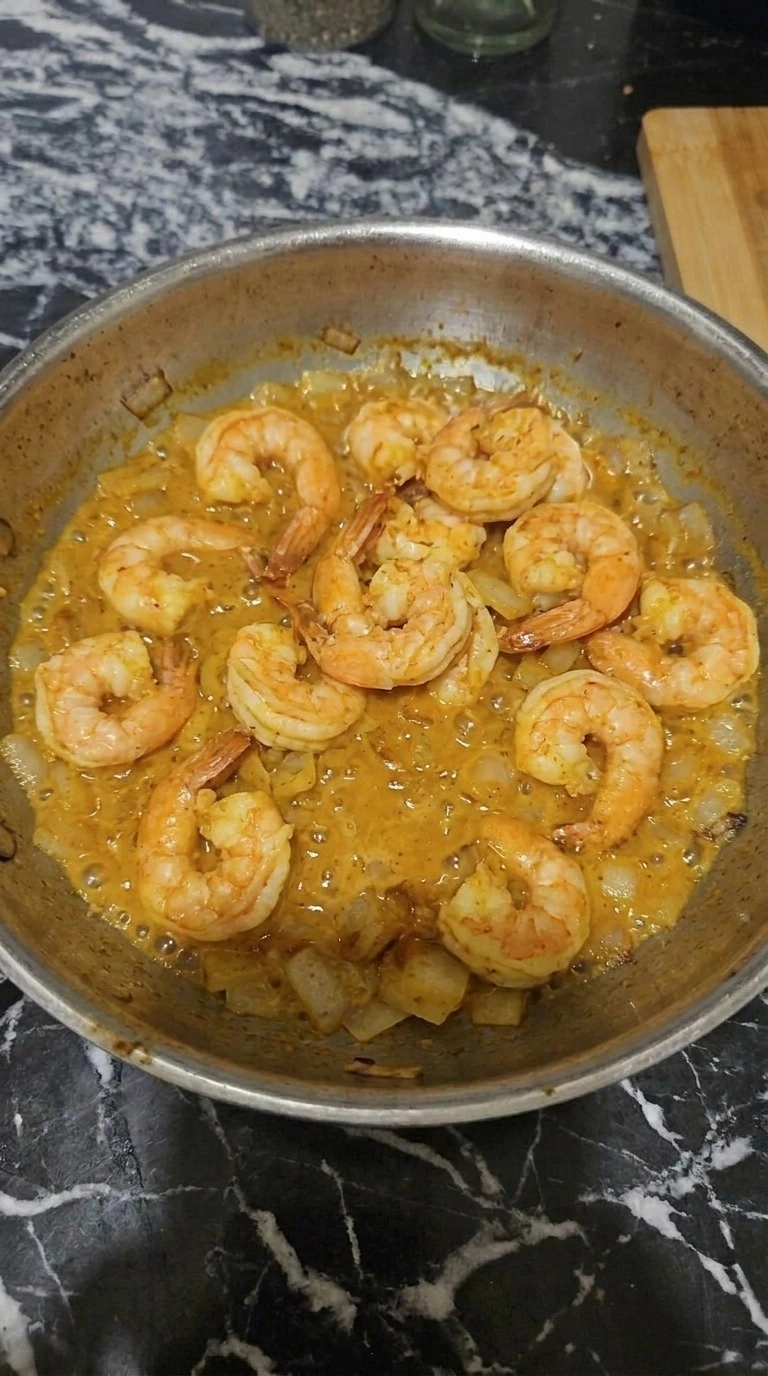
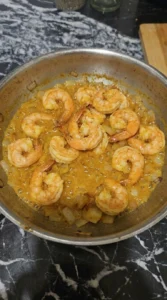
Add the seasoned shrimp to the simmering sauce and spread them into a loose single layer, turning each piece once with tongs after 2 minutes. Keep the skillet over medium-low heat, around 200°F to 205°F, and cook for another 2 to 3 minutes until the shrimp are opaque and pearly through the thickest part. For food safety, check that the center reaches 145°F.
Stir gently so the sauce coats the shrimp without breaking their curved shape. Avoid a hard boil because intense heat can tighten the shrimp and make their texture rubbery. The gray translucence should disappear and the shrimp should turn coral-pink with lightly curled edges.
Pull the pan off the heat as soon as they reach 145°F.
Tip: If the shrimp are frozen, thaw them fully in the refrigerator and pat them dry before seasoning to keep excess water out of the sauce.
Step 5: Finish with lime and fresh cilantro
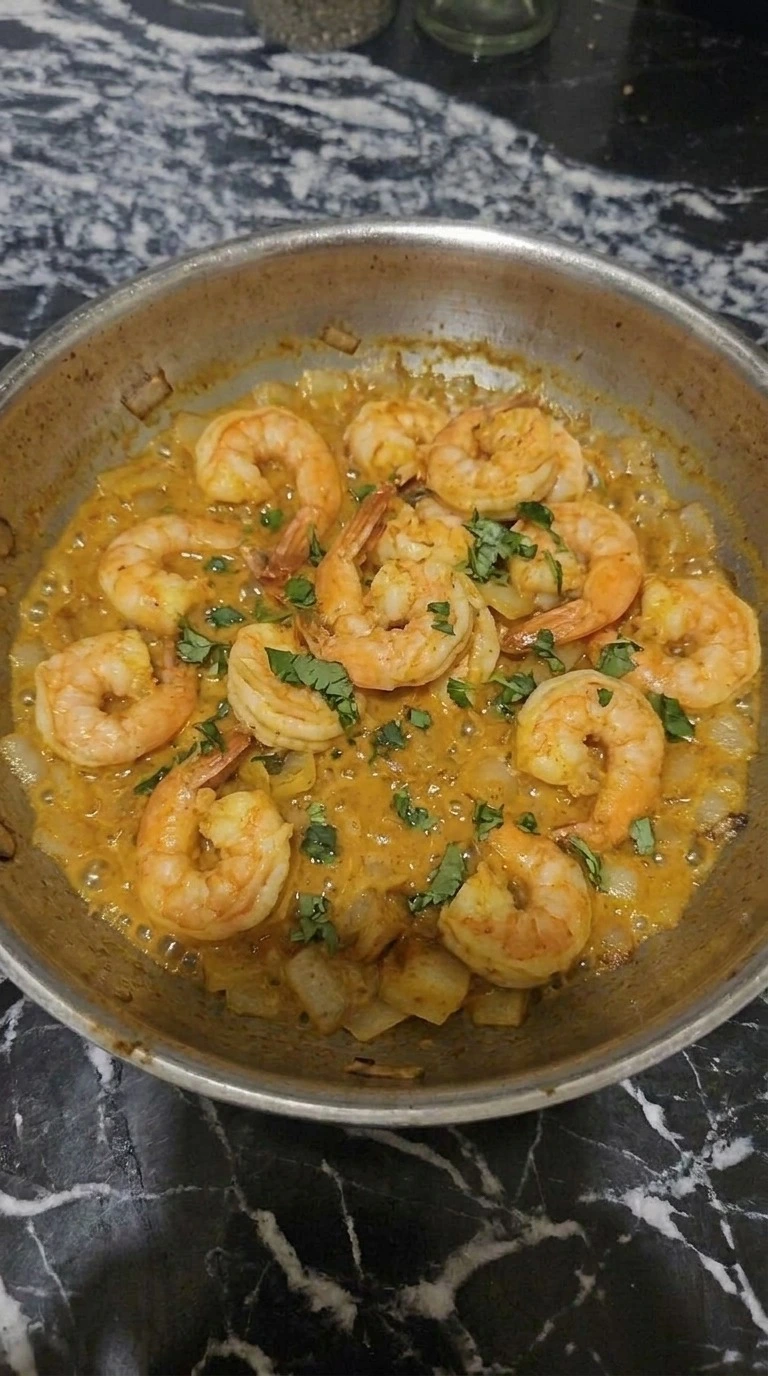
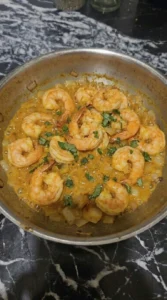
Remove the skillet from the heat and stir in 1 tablespoon fresh lime juice. Fold in 2 tablespoons chopped fresh cilantro, saving a pinch for the plate, and turn the shrimp gently so the bright green herbs spread through the golden-orange sauce.
Let the pan rest for 1 minute before serving. Don’t return it to a hard boil after adding the lime because prolonged heat can dull its fresh flavor and tighten the shrimp further.
The finished sauce should cling to the shrimp while still pooling between them. A fresh lime scent and scattered green cilantro leaves signal that it’s ready to serve.
Tip: Taste the sauce after adding the lime, then add up to another teaspoon of juice if the coconut milk still tastes too rich.
Step 6: Serve the shrimp with rice
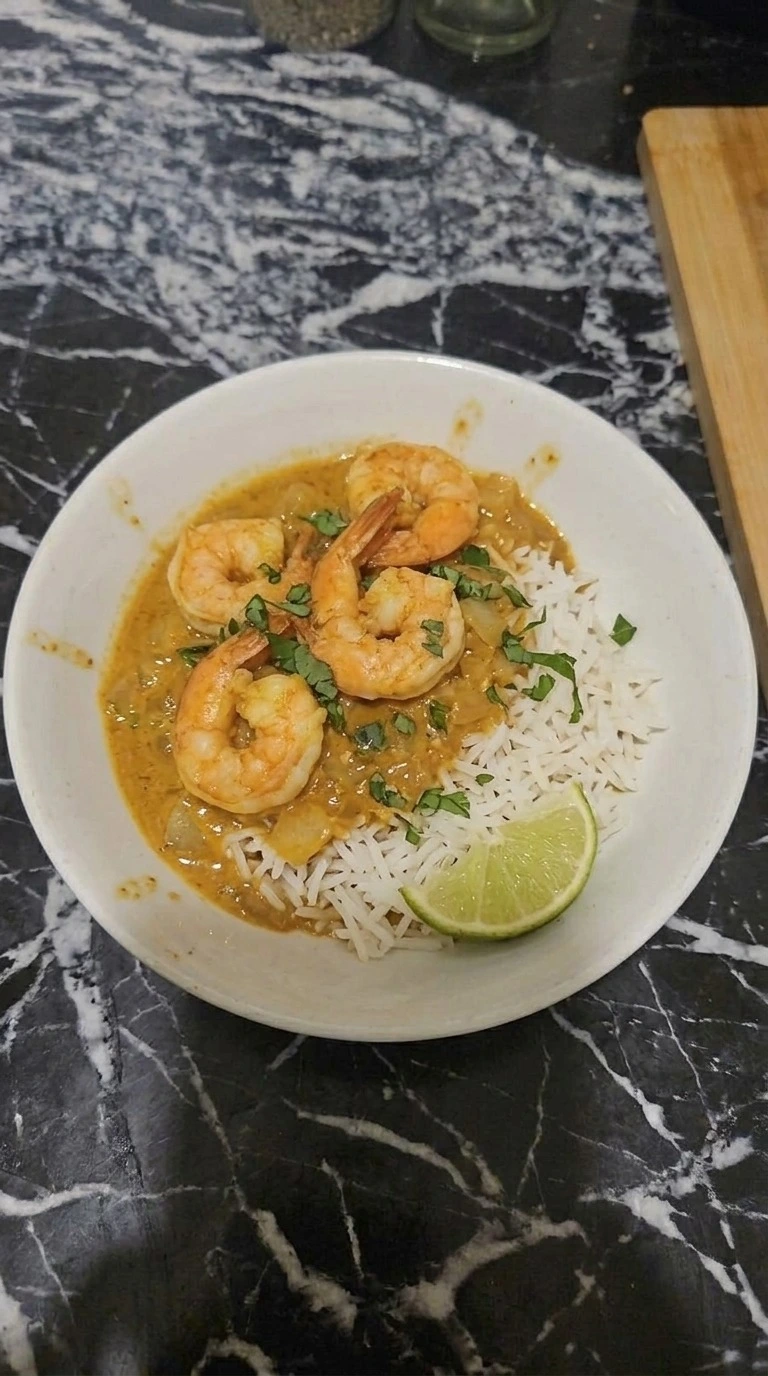
Spoon 3 cups of hot cooked long-grain white rice into four shallow serving bowls, then divide the coconut curry shrimp and sauce evenly over the rice. Keep the shrimp loosely arranged rather than stacking them tightly, and let some golden sauce run between the grains.
Add the reserved chopped cilantro and cut 1 fresh lime into wedges, placing one wedge beside each portion. Serve while the sauce is warm, within 5 minutes of plating, so the rice absorbs some curry without becoming soggy.
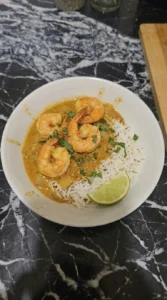
Each bowl should show coral-pink shrimp, golden sauce, white rice and green herbs in uneven layers. Keep extra sauce available for anyone who wants more.
Tip: Rinse long-grain white rice before cooking and let it rest covered for 5 minutes after cooking so the grains stay separate beneath the sauce.
Pro Tips
- Pat the shrimp dry with paper towels before seasoning, then let them sit for 5 minutes. Dry surfaces help the spices cling instead of sliding off into excess moisture.
- Choose full-fat canned coconut milk with coconut extract and water near the top of the ingredient list, and shake the can for 10 seconds before opening it.
- Use a skillet at least 10 inches wide so the onion softens in a thin layer. Crowding a smaller pan traps moisture and slows the browning of the aromatics.
- Keep the sauce at a gentle simmer for 6 to 8 minutes before adding the shrimp. Small bubbles around the edge are enough to thicken it without scorching the coconut milk.
- Check the thickest shrimp with an instant-read thermometer and remove the skillet from the heat at 145°F. Leaving them simmering for another 3 minutes can make their texture firm and rubbery.
- Taste the sauce after stirring in 1 tablespoon lime juice, then add another teaspoon if needed. Fresh citrus should brighten the curry without overpowering the coconut flavor.
- Prepare the onion, garlic and ginger before turning on the heat, and measure the spices into a small dish. The garlic can burn in under a minute, so having everything ready prevents rushed cooking.
- For a deeper curry flavor, stir the 2 teaspoons curry powder into the onion mixture for 30 seconds before pouring in the coconut milk. Stop when the spices smell fragrant, since darkened spices can turn bitter.
- For a spicy coconut curry shrimp, add 1/2 teaspoon red pepper flakes with the curry powder and finish with extra lime juice to balance the heat.
- Add 1 cup sliced red bell pepper and 2 cups baby spinach to make a vegetable-rich version. Cook the pepper with the onion and fold in the spinach during the final 1 to 2 minutes.
- For a Thai-inspired twist, replace the curry powder with 1 tablespoon red curry paste and add 1 teaspoon fish sauce. Taste before adding extra salt because fish sauce brings its own saltiness.
- Make a dairy-free and gluten-free dinner by checking that the curry powder, broth and tomato paste contain no unwanted additives. Serve the shrimp over 3 cups cooked brown rice for a heartier texture.
Substitutions & Variations
- medium-large shrimp: Use 1 pound peeled and deveined sea scallops or boneless chicken breast cut into 1-inch pieces. Scallops offer a sweet, delicate bite and need about 2 to 3 minutes per side, depending on size. Chicken takes longer, usually 6 to 8 minutes in the sauce, and must reach 165°F internally. For another chicken dinner idea, try our Chicken Alfredo Bake.
- full-fat coconut milk: Use 13.5 ounces light coconut milk. The sauce will be thinner and less rich, so simmer it for an extra 3 to 5 minutes before adding the shrimp. Avoid boiling it hard because reduced-fat coconut milk can separate more easily under intense heat.
- low-sodium chicken broth: Use 1/2 cup low-sodium vegetable broth or water. Vegetable broth keeps the savory depth while making the dish suitable for pescatarians who avoid meat-based broth. Water works in a pinch, though the sauce will taste less complex and may need another pinch of salt.
- olive oil: Use 1 tablespoon avocado oil or another neutral cooking oil. Avocado oil has a mild flavor and handles medium heat well. Coconut oil also works, but it adds a noticeable coconut aroma and can make the finished sauce taste sweeter.
- long-grain white rice: Serve with 3 cups cooked brown rice or 3 cups cooked quinoa. Brown rice adds a nutty flavor and firmer texture, while quinoa gives the meal a lighter, slightly earthy base. Both absorb the sauce differently from white rice, so serve the curry immediately to keep the grains from becoming soggy.
Storage Instructions
Transfer leftover Coconut Curry Shrimp to a shallow airtight container and refrigerate within 2 hours of cooking. Keep it chilled for up to 3 days, or freeze portions for up to 2 months in freezer-safe containers with as little empty space as possible.
For the best texture, store the rice separately and thaw frozen portions overnight in the refrigerator. Reheat the curry in a saucepan over low heat for 5 to 8 minutes, stirring gently and adding 1 to 2 tablespoons broth if the sauce has thickened.
Bring the center to 165°F when reheating leftovers, but avoid prolonged boiling because the shrimp can turn rubbery. Discard leftovers with mold, an unusual odor or a slimy texture.
Coconut Curry Shrimp
Ingredients
Method
- Pat 1 pound of peeled and deveined medium-large shrimp dry, then toss them with 1/2 teaspoon salt, 1/4 teaspoon black pepper and 1/2 teaspoon paprika in a mixing bowl. Use clean hands or a spoon to turn each shrimp until the seasoning forms a thin, even coat. Let them stand for 5 minutes at room temperature while you mince 3 garlic cloves, grate 1 teaspoon fresh ginger and finely dice 1 medium yellow onion. Keep the shrimp in a single loose layer rather than pressing them into a pile. The shrimp should look lightly speckled with red paprika and black pepper, not wet with pooled liquid. Don’t leave them out longer than 15 minutes.
- Set a large skillet over medium heat, about 350°F at the cooking surface, and add 1 tablespoon olive oil. Stir in the diced yellow onion and cook for 4 to 5 minutes, moving the pieces across the pan with a wooden spoon until they soften and turn translucent at the edges. Add the minced garlic and grated ginger, then stir for 30 to 45 seconds. Fold in 2 tablespoons tomato paste, 2 teaspoons curry powder and 1/2 teaspoon ground cumin, scraping the pan as the mixture turns a deeper orange-red. Keep the heat steady and stir often because garlic can burn in under a minute. You’ll smell the garlic and ginger first, followed by a warm curry aroma. The onion should be soft, not browned or crisp.
- Pour in 1 can (13.5 ounces) full-fat coconut milk and 1/2 cup low-sodium chicken broth, then stir slowly to loosen the orange-red paste from the skillet. Add 1/2 teaspoon salt if needed and keep the sauce at a gentle simmer over medium-low heat, around 200°F to 205°F, for 6 to 8 minutes. Stir every minute and scrape along the edges so the coconut milk blends evenly without catching on the bottom. The sauce should reduce slightly and coat the back of a spoon while still flowing easily. (I tried boiling it hard once, and the sauce reduced too fast before the curry flavor had time to mellow.) Look for small bubbles around the edge rather than a rolling boil. If the sauce thickens too much, stir in 1 tablespoon broth at a time.

- Add the seasoned shrimp to the simmering sauce and spread them into a loose single layer, turning each piece once with tongs after 2 minutes. Keep the skillet over medium-low heat, around 200°F to 205°F, and cook for another 2 to 3 minutes until the shrimp are opaque and pearly through the thickest part. For food safety, check that the center reaches 145°F. Stir gently so the sauce coats the shrimp without breaking their curved shape. Avoid a hard boil because intense heat can tighten the shrimp and make their texture rubbery. The gray translucence should disappear and the shrimp should turn coral-pink with lightly curled edges. Pull the pan off the heat as soon as they reach 145°F.
- Remove the skillet from the heat and stir in 1 tablespoon fresh lime juice. Fold in 2 tablespoons chopped fresh cilantro, saving a pinch for the plate, and turn the shrimp gently so the bright green herbs spread through the golden-orange sauce. Let the pan rest for 1 minute before serving. Don’t return it to a hard boil after adding the lime because prolonged heat can dull its fresh flavor and tighten the shrimp further. The finished sauce should cling to the shrimp while still pooling between them. A fresh lime scent and scattered green cilantro leaves signal that it’s ready to serve.
- Spoon 3 cups of hot cooked long-grain white rice into four shallow serving bowls, then divide the coconut curry shrimp and sauce evenly over the rice. Keep the shrimp loosely arranged rather than stacking them tightly, and let some golden sauce run between the grains. Add the reserved chopped cilantro and cut 1 fresh lime into wedges, placing one wedge beside each portion. Serve while the sauce is warm, within 5 minutes of plating, so the rice absorbs some curry without becoming soggy. Each bowl should show coral-pink shrimp, golden sauce, white rice and green herbs in uneven layers. Keep extra sauce available for anyone who wants more.
Notes
Frequently Asked Questions
You can dice the onion, mince the garlic and grate the ginger up to 24 hours ahead, then refrigerate them in separate airtight containers. You can also make the coconut curry sauce up to 2 days in advance and chill it promptly. Reheat the sauce over medium-low heat until gently simmering, then add freshly seasoned shrimp and cook until they reach 145°F.
Store leftovers in a shallow airtight container and refrigerate within 2 hours of cooking. Eat them within 3 days, and keep the rice in a separate container when possible so it doesn’t soak up all the sauce. Discard the meal if it develops an unusual smell, visible mold or an unexpected slimy texture.
Yes, but the flavor and texture will change. Use 1 cup unsweetened cashew cream diluted with 1/4 cup broth, then simmer gently for 4 to 6 minutes before adding the shrimp. The sauce will taste nuttier and less tropical, and you may need an extra teaspoon of lime juice to keep it bright.
The sauce may not have simmered long enough, or the shrimp may have released excess water. Remove the shrimp temporarily if they’re already cooked, then simmer the sauce over medium-low heat for another 3 to 5 minutes until it coats the back of a spoon. Return the shrimp for about 30 seconds, just long enough to warm them through.
Yes, double every ingredient for 8 servings, but use a wide 12-inch skillet or cook the sauce in two batches if your pan is crowded. Allow an extra 3 to 5 minutes for the larger amount of sauce to simmer, and cook the shrimp in a loose layer. Check several of the largest pieces for an internal temperature of 145°F.
You can freeze it, although shrimp may become firmer and the coconut sauce may separate slightly after thawing. Cool the curry promptly, pack it in a freezer-safe airtight container and freeze for up to 2 months for best quality. Thaw it overnight in the refrigerator, then reheat gently over low heat and stir in 1 to 2 tablespoons broth if the sauce looks split.
Serve it over 3 cups cooked long-grain white rice, which absorbs the golden sauce without competing with the spices. For a lighter plate, pair it with steamed green beans or roasted vegetables, and add fresh lime wedges at the table. If you’re serving four people, plan on about 4 ounces of raw shrimp per person alongside the rice and vegetables.
Final Thoughts
This coconut curry shrimp recipe has earned a regular place in my dinner rotation because the sauce is rich, bright and ready without hours of work. The trick is to let the coconut milk simmer with the spices first, then add the shrimp near the end so they stay tender.
Serve it over rice with fresh lime and cilantro, and try our Roasted Brussels Sprouts with Bacon if you want a savory side. Give this easy coconut curry shrimp a try and share how you serve it.
Coconut milk adds richness because its fat helps carry the aroma of curry spices throughout the sauce. A squeeze of lime at the end adds acidity, which makes the creamy flavors taste brighter without needing more salt.