Burgers
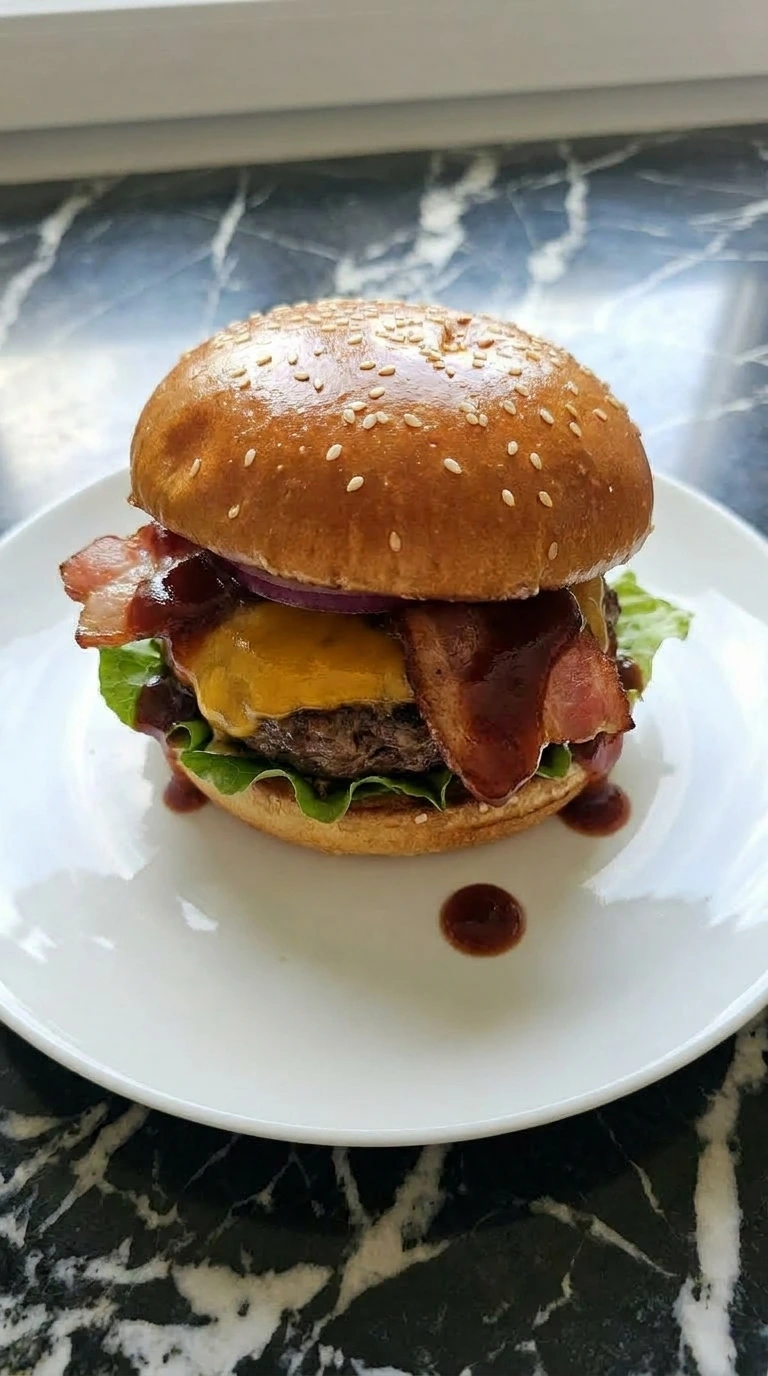
This is the best quick and simple burger recipe for your next backyard party or casual weeknight dinner. The secret is using high-fat ground beef and searing it on a screaming hot surface to lock in all the rich juices. You will get an amazing smoky look and a deeply savory texture that beats any restaurant version. It is an easy way to make healthy updates to a classic comfort food favorite without losing that iconic indulgent bite.
Print
Pin
Servings: 4
Ingredients
- 1.5 pounds ground chuck beef Look for an 80/20 lean-to-fat ratio to ensure maximum juiciness during searing.
- 4 thick slices sharp cheddar Real block cheese sliced thick for a rich, gooey melt over the hot meat.
- 8 strips thick-cut bacon Cooked until completely crispy to add a smoky crunch to the layers.
- 4 whole brioche buns Split and toasted lightly in butter for a soft, pillowy structure.
- 4 large leaves green leaf lettuce Washed and dried thoroughly to act as a crisp barrier for the bun.
- 1 medium red onion Cut into thin, sharp rings to cut through the rich fats.
- 0.5 cups barbecue sauce A smoky, sweet variety used to glaze the top and bottom layers.
- 1 tablespoon avocado oil Used to coat the skillet due to its extremely high smoke point.
- 1 tablespoon fine sea salt Applied generously to the raw exterior to build a savory crust.
- 1 teaspoon coarse black pepper Cracked fresh to provide a sharp, rustic bite to the meat.
Instructions
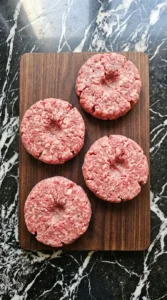
- Divide your chilled ground chuck beef into four equal portions on a clean wooden cutting board. Press each portion gently into a ball, then flatten it into a uniform disc that is roughly 4.5 inches wide and 1 inch thick. Do not overwork the meat during this process or the proteins will bind too tightly. Use your thumb to press a shallow indentation right into the center of each patty. This little dimple keeps the meat from puffing up into a basketball shape while it cooks. (I tried skipping the dimple on my first batch and the burgers swelled up so much that all the toppings slid right off into the pan.) Forming the discs slightly wider than your buns ensures a perfect fit after cooking. The meat naturally shrinks as the fat renders out over the high heat.
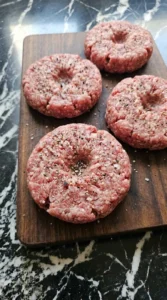
- Sprinkle your fine sea salt and coarse black pepper evenly over both sides of the shaped patties. Hold your hand about 10 inches above the meat to get a perfectly uniform scatter instead of heavy clumps. Do this step right before the meat hits the hot skillet. Letting salt sit on raw meat too long draws out moisture and alters the proteins. It creates a dry, cured texture that stops you from getting a tender bite. (My first kitchen test involved salting the meat an hour early and the resulting patties turned out completely dry and dense.) Apply the seasoning liberally until the surface is covered in fine crystals. This aggressive crust builds a deeply savory exterior during the high-heat searing process.
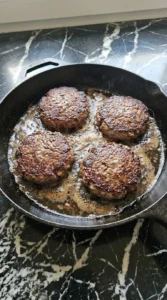
- Place the seasoned patties into a preheated 10-inch round cast-iron skillet over medium-high heat (about 7 on a 10-dial) with a splash of avocado oil. Cook the meat without moving it for exactly 3 minutes until a deep, dark brown crust forms on the bottom. You will hear a loud, aggressive sizzle the moment the beef contacts the hot metal surface. Flip the patties carefully using a sturdy metal spatula to reveal the beautifully browned exterior. The edges should look crisp and caramelized while the fat renders and bubbles rapidly around the base of each disc. Miss this timing window and you will lose the crust entirely or scorch the delicate juices. Cook for another 2 minutes on the second side to reach a safe, juicy medium-rare finish. Cooking over high heat triggers the Maillard reaction rapidly without drying out the inside.
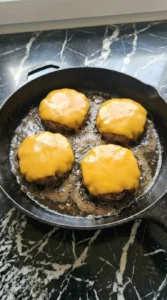
- Lay a thick slice of sharp cheddar cheese over the top of each hot beef patty inside the skillet. Pour a single tablespoon of water directly into the empty space of the pan and cover it immediately with a tight lid. The trapped steam will melt the dairy into a smooth, glossy blanket in exactly 45 seconds. Remove the skillet from the heat source completely once the cheese is fully melted and draped over the sides of the meat. The cheddar should look velvety and molten, hugging the contours of the deeply browned crust perfectly. Go past 60 seconds and the cheese will separate into a greasy mess. Let the burgers rest right in the warm pan for 2 minutes before assembling. Resting off the heat gives the internal juices time to redistribute throughout the meat fibers.
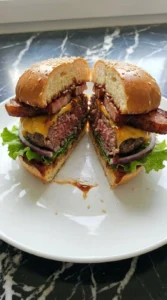
- Place the toasted bottom brioche buns onto individual white ceramic plates and spread a thin layer of barbecue sauce across the surface. Layer a single leaf of fresh green leaf lettuce and two thin rings of red onion onto each base. This green barrier keeps the bottom bun from turning soggy from the meat drippings. Transfer the cheese-covered beef patties carefully from the skillet and rest them right on top of the onions. Pile two crispy strips of thick-cut bacon over the melted cheddar and drizzle a final spoonful of sweet barbecue sauce across the top. Crown each assembly with the top bun and press down gently to anchor the layers. The final stack should look tall and rustic with the melted cheese, dark sauce, and wavy bacon edges peeking out naturally. Eat these immediately while the buns are warm and the juices are flowing freely.
Notes
Store any leftover cooked beef patties inside an airtight glass container in the refrigerator for up to three days. Do not store the burgers with the buns or fresh toppings already attached because the lettuce will wilt and the bread will absorb liquid. You can also freeze the cooked patties by wrapping them tightly in plastic wrap for up to two months. Reheat the cold patties inside a preheated oven at 350°F for roughly 8 to 10 minutes until the center is warm. Add two tablespoons of beef broth to the bottom of the baking dish and cover it with foil to keep the meat from drying out. Check the surface carefully for any sour odors or slimy textures before serving because those are clear indicators of spoilage.