
Ingredients
Method
- Let the 2-pound butternut squash sit at about 68°F for 10 minutes if it came from the refrigerator. Slice off both ends and peel it. Then halve it lengthwise and scrape out the seeds. Cut the flesh into irregular 1-inch cubes with a steady rocking motion. Aim for about 3 packed cups, and keep the pieces close in size so they roast together. The cubes should look matte orange with mostly flat sides and a few rough corners. You should smell a clean and slightly sweet squash aroma. Pieces larger than 1 1/4 inches stay firm in the center, but tiny pieces dry out before the rest brown. Keep the cuts close to 1 inch because even sizing controls moisture loss.
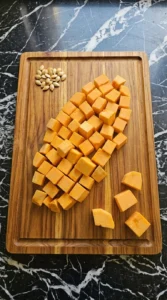
- Heat the oven to 425°F. Toss the 3 cups of squash cubes with 1 tablespoon extra-virgin olive oil and 1/2 teaspoon fine sea salt. Spread them in one loose layer with space between most pieces. Roast for 24 to 28 minutes and turn the cubes at minute 15 with broad scooping motions. (I tried 400°F first, the squash softened but never built enough roasted flavor.) Watch for deep golden edges and darker amber spots on the sides touching the pan. The centers should crush easily when pressed and smell nutty rather than raw. Pull them before minute 30 because blackened corners make the hummus bitter. Cool the cubes for 5 minutes until they reach about 110°F. High heat removes water and concentrates the squash sugars.

- Add 1/3 cup tahini and 3 tablespoons lemon juice to the food processor. Process for 45 seconds and scrape the sides halfway through. Add 1 small garlic clove and 1 teaspoon ground cumin and 1/2 teaspoon smoked paprika and 1/4 teaspoon fine sea salt. Stream in 3 tablespoons of 35°F ice water over 30 seconds until the mixture turns pale and thick. Next add the drained 15-ounce can of no-salt-added chickpeas and the warm roasted squash. Process for 2 to 3 minutes and stop once to fold the mixture toward the blade. The hummus should look golden orange and glossy, with soft ridges that hold for 2 seconds. Go past 4 minutes and friction dulls the lemon flavor. The cool emulsion keeps the puree silky instead of oily.

- Warm 2 medium whole wheat pita breads at 350°F for 4 to 5 minutes and cut each into 6 uneven wedges. Spoon the hummus into a shallow bowl and sweep the back of a spoon through it in two loose spirals. Drizzle the remaining 1 tablespoon extra-virgin olive oil into the grooves. Then scatter 2 tablespoons of Greek feta cheese. Add 2 tablespoons each of pomegranate arils and fresh cilantro leaves and roasted pepitas. Serve within 10 minutes while the pita edges feel warm and flexible. The hummus should hold rough swirls and show glossy oil in the channels. Keep the toppings uneven so every scoop tastes slightly different. Stirring them into the puree makes the color muddy and softens the pepitas. Finish after plating because contrast keeps the dip bright and textured.

Notes
Refrigerate the hummus within 2 hours in a shallow airtight glass container. Keep the Greek feta cheese and pomegranate in separate containers so the surface stays clean. It holds well for 4 days at 40°F or colder. Freeze the plain hummus without toppings for up to 2 months. Press reusable wrap against the surface and seal the container. Thaw it overnight in the refrigerator before stirring. For a warmer dip, spread it in a small baking dish and heat at 300°F for 10 to 12 minutes. Stir in 1 tablespoon cold water after heating to restore the creamy texture. Add fresh toppings only after it reaches the table. Discard the hummus if it smells fermented or develops bubbles and pink patches or a watery layer that won't mix back in.