Butternut Squash Hummus
I made this for the first time the week we moved into our house in 2019, boxes everywhere, no proper kitchen setup and somehow it turned out better than expected. What saved me that afternoon was letting the squash roast until the edges browned instead of rushing it. Since then it’s become my go-to when I’m tired but still want something that tastes real. Mark (my husband) always says it’s better than store-bought hummus and Emma, who’s usually suspicious of anything orange, asks for another pita wedge.
I keep it in the same rotation as our Party Dips when friends drop by because it feels special without extra work. The Greek feta cheese and pomegranate look fancy but the base stays simple enough for an ordinary weekday lunch. Ready in about 45 minutes with one sheet pan and one food processor. No fancy techniques.

The roasted squash makes it gently sweet while chickpeas and tahini keep that familiar hummus body. And because the dip chills well, I usually make it before lunch then pull it out when everyone starts hovering around the kitchen for their first snack together.
What Makes It Work
Roasting 1-inch squash cubes at 425°F removes surface water and caramelizes exposed edges, which prevents a loose and bland dip. Blending tahini with lemon and 35°F water first creates an emulsion that stays smooth when warm squash and chickpeas enter.
Cooling the squash to about 110°F preserves fresh lemon aroma while its warmth still helps the processor break down chickpea starch. For another creamy option, try our Cheese Dip and notice how controlled heat protects texture in both recipes.
Shopping List

- butternut squash: Peel, seed and cut it into about 3 packed cups of irregular 1-inch cubes.
- extra-virgin olive oil: Use 1 tablespoon for roasting and reserve 1 tablespoon for the final glossy drizzle.
- fine sea salt: Use 1/2 teaspoon on the squash and blend the remaining 1/4 teaspoon into the hummus.
- tahini: Choose a smooth pourable sesame paste and stir the jar before measuring.
- lemon: Juice it to obtain 3 tablespoons of fresh lemon juice.
- garlic: Peel it and leave it whole because the food processor will break it down.
- ground cumin: Adds warm earthiness that balances the natural sweetness of the roasted squash.
- smoked paprika: Adds a gentle smoky note and deepens the golden-orange color.
- ice water: Chill it to about 35°F and stream it slowly into the tahini mixture.
- no-salt-added chickpeas: Drain and rinse them well before blending to remove the canned liquid taste.
- Greek feta cheese: Crumble it into uneven small pieces for salty contrast.
- pomegranate arils: Keep them dry and chilled so their ruby color stays sharp.
- fresh cilantro: Use whole small leaves and tender stems for a fresh herbal finish.
- roasted pepitas: Use unsalted roasted seeds to add crisp texture without oversalting the dip.
- whole wheat pita bread: Warm the breads and cut each one into 6 uneven wedges for serving.
The Gear
- 8-inch chef’s knife: A sharp 8-inch blade gives enough leverage for the dense squash and a shorter dull knife can slip or create uneven cubes.
- 18×13-inch rimmed aluminum sheet pan: A bare heavy-gauge half-sheet pan spreads the cubes into one layer and a smaller crowded pan traps steam instead of browning.
- 10-cup food processor: A 10-cup processor circulates the thick puree around the blade and a mini chopper needs several batches that blend unevenly.
- Silicone spatula: A flexible heat-safe spatula reaches the processor walls cleanly and a rigid spoon leaves dense streaks outside the blade path.
- 10-inch shallow ceramic serving bowl: A broad 10-inch bowl leaves room for visible swirls and toppings while a deep narrow bowl hides the garnish and compresses the pita.
How to
Step 1: Peel and cube the squash

Let the 2-pound butternut squash sit at about 68°F for 10 minutes if it came from the refrigerator. Slice off both ends and peel it. Then halve it lengthwise and scrape out the seeds.
Cut the flesh into irregular 1-inch cubes with a steady rocking motion. Aim for about 3 packed cups, and keep the pieces close in size so they roast together. The cubes should look matte orange with mostly flat sides and a few rough corners.
You should smell a clean and slightly sweet squash aroma. Pieces larger than 1 1/4 inches stay firm in the center, but tiny pieces dry out before the rest brown. Keep the cuts close to 1 inch because even sizing controls moisture loss.
Tip: Pierce a stubborn squash six times, microwave it for 2 minutes and rest it 1 minute before peeling.
Step 2: Roast the squash until deeply golden
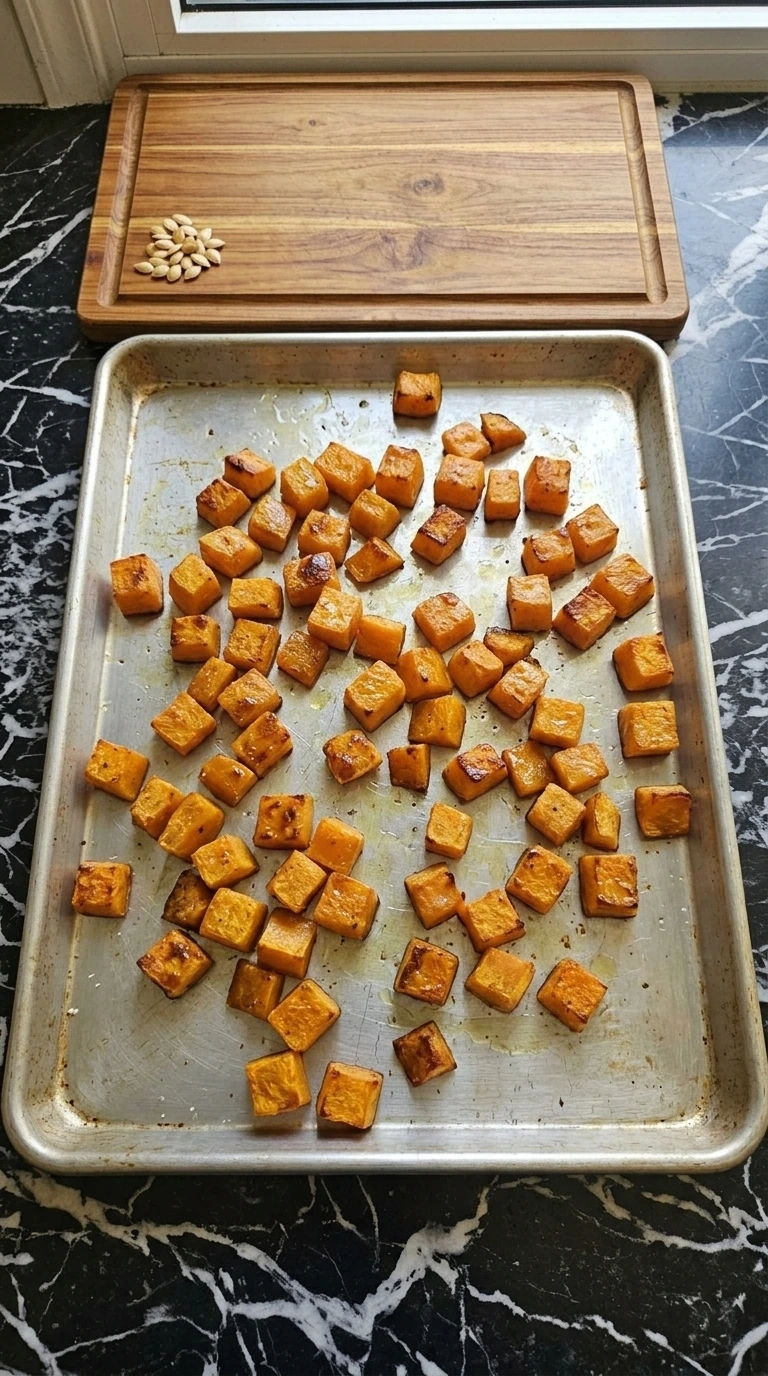
Heat the oven to 425°F. Toss the 3 cups of squash cubes with 1 tablespoon extra-virgin olive oil and 1/2 teaspoon fine sea salt. Spread them in one loose layer with space between most pieces. Roast for 24 to 28 minutes and turn the cubes at minute 15 with broad scooping motions.
(I tried 400°F first, the squash softened but never built enough roasted flavor. ) Watch for deep golden edges and darker amber spots on the sides touching the pan. The centers should crush easily when pressed and smell nutty rather than raw. Pull them before minute 30 because blackened corners make the hummus bitter.
Cool the cubes for 5 minutes until they reach about 110°F. High heat removes water and concentrates the squash sugars.
Tip: A bare aluminum pan browns evenly at 425°F. Parchment slows color and can add about 4 minutes.
Step 3: Blend the tahini base and squash

Add 1/3 cup tahini and 3 tablespoons lemon juice to the food processor. Process for 45 seconds and scrape the sides halfway through. Add 1 small garlic clove and 1 teaspoon ground cumin and 1/2 teaspoon smoked paprika and 1/4 teaspoon fine sea salt.
Stream in 3 tablespoons of 35°F ice water over 30 seconds until the mixture turns pale and thick. Next add the drained 15-ounce can of no-salt-added chickpeas and the warm roasted squash. Process for 2 to 3 minutes and stop once to fold the mixture toward the blade.
The hummus should look golden orange and glossy, with soft ridges that hold for 2 seconds. Go past 4 minutes and friction dulls the lemon flavor. The cool emulsion keeps the puree silky instead of oily.
Tip: Rub the rinsed chickpeas in a clean towel for 2 minutes to remove loose skins and create an even smoother puree.
Step 4: Swirl the hummus and add toppings

Warm 2 medium whole wheat pita breads at 350°F for 4 to 5 minutes and cut each into 6 uneven wedges. Spoon the hummus into a shallow bowl and sweep the back of a spoon through it in two loose spirals. Drizzle the remaining 1 tablespoon extra-virgin olive oil into the grooves. Then scatter 2 tablespoons of Greek feta cheese.
Add 2 tablespoons each of pomegranate arils and fresh cilantro leaves and roasted pepitas. Serve within 10 minutes while the pita edges feel warm and flexible. The hummus should hold rough swirls and show glossy oil in the channels. Keep the toppings uneven so every scoop tastes slightly different.
Stirring them into the puree makes the color muddy and softens the pepitas. Finish after plating because contrast keeps the dip bright and textured.
Tip: Add pomegranate arils only when serving if the hummus will sit longer than 2 hours because their juice can stain the surface.
My Favorite Tips
- Choose a 2-pound squash with a long solid neck because it yields more seedless flesh and makes the 1-inch cubes easier to cut.
- Leave at least 1/2 inch between most squash cubes at 425°F so steam can escape and the contact sides turn amber.
- Stir separated tahini until fully smooth before measuring 1/3 cup because dense paste from the jar bottom can make the hummus grainy.
- Cool the roasted squash for exactly 5 minutes before blending so it stays warm enough to puree without flattening the lemon aroma.
- Scrape the processor bowl at the 90-second mark because thick hummus can hide dry chickpea pockets above the blade.
- Taste the hummus after 3 minutes of blending and add no more than 1 tablespoon extra ice water if the ridges look stiff.
- Keep Greek feta cheese and pomegranate chilled below 40°F until serving so the cheese stays crumbly and the arils remain firm.
- Add 1 tablespoon harissa paste during blending for a warmer red-orange hummus with a gentle chile finish.
- Replace the cilantro with 2 tablespoons fresh thyme leaves and add 1/4 teaspoon black pepper for a woodsy autumn version.
- Omit the Greek feta cheese and double the roasted pepitas to 4 tablespoons for a dairy-free topping with stronger crunch.
- Blend in 2 tablespoons plain Greek yogurt and reduce the ice water to 1 tablespoon for a tangier and lighter texture.
Variations to Try
- Greek feta cheese: dairy-free feta — Use the same 2 tablespoons. Plant-based feta is usually softer and saltier, so reduce the fine sea salt by 1/8 teaspoon.
- whole wheat pita bread: certified gluten-free and egg-free crackers or vegetable sticks — Use about 3 cups for four servings and check packaged crackers for egg. Try our Air Fryer Fries for a hot gluten-free side, but expect a heavier plate.
- tahini: unsweetened sunflower seed butter — Replace it 1 to 1. The hummus becomes darker and less bitter, and it may need 1 extra tablespoon lemon juice.
- no-salt-added chickpeas: canned cannellini beans — Use one drained 15-ounce can. Cannellini beans make a softer and sweeter dip, so start with only 1 tablespoon ice water.
- pomegranate arils: dried cranberries — Use 1 tablespoon finely chopped cranberries instead of 2 tablespoons arils. The topping becomes chewier and noticeably sweeter.
- fresh cilantro: fresh flat-leaf parsley — Use the same 2 tablespoons. Parsley tastes milder and cleaner, but it won’t add cilantro’s citrusy edge.
How to Store
Refrigerate the hummus within 2 hours in a shallow airtight glass container. Keep the Greek feta cheese and pomegranate in separate containers so the surface stays clean. It holds well for 4 days at 40°F or colder. Freeze the plain hummus without toppings for up to 2 months.
Press reusable wrap against the surface and seal the container. Thaw it overnight in the refrigerator before stirring. For a warmer dip, spread it in a small baking dish and heat at 300°F for 10 to 12 minutes. Stir in 1 tablespoon cold water after heating to restore the creamy texture.
Add fresh toppings only after it reaches the table. Discard the hummus if it smells fermented or develops bubbles and pink patches or a watery layer that won’t mix back in.
Butternut Squash Hummus
Ingredients
- 1 medium, about 2 pounds butternut squash Peel, seed and cut it into about 3 packed cups of irregular 1-inch cubes.
- 2 tablespoons extra-virgin olive oil Use 1 tablespoon for roasting and reserve 1 tablespoon for the final glossy drizzle.
- 3/4 teaspoon fine sea salt Use 1/2 teaspoon on the squash and blend the remaining 1/4 teaspoon into the hummus.
- 1/3 cup tahini Choose a smooth pourable sesame paste and stir the jar before measuring.
- 1 large lemon Juice it to obtain 3 tablespoons of fresh lemon juice.
- 1 small clove garlic Peel it and leave it whole because the food processor will break it down.
- 1 teaspoon ground cumin Adds warm earthiness that balances the natural sweetness of the roasted squash.
- 1/2 teaspoon smoked paprika Adds a gentle smoky note and deepens the golden-orange color.
- 3 tablespoons ice water Chill it to about 35°F and stream it slowly into the tahini mixture.
- 1 can, 15 ounces no-salt-added chickpeas Drain and rinse them well before blending to remove the canned liquid taste.
- 2 tablespoons Greek feta cheese Crumble it into uneven small pieces for salty contrast.
- 2 tablespoons pomegranate arils Keep them dry and chilled so their ruby color stays sharp.
- 2 tablespoons fresh cilantro Use whole small leaves and tender stems for a fresh herbal finish.
- 2 tablespoons roasted pepitas Use unsalted roasted seeds to add crisp texture without oversalting the dip.
- 2 medium whole wheat pita bread Warm the breads and cut each one into 6 uneven wedges for serving.
Instructions
- Let the 2-pound butternut squash sit at about 68°F for 10 minutes if it came from the refrigerator. Slice off both ends and peel it. Then halve it lengthwise and scrape out the seeds. Cut the flesh into irregular 1-inch cubes with a steady rocking motion. Aim for about 3 packed cups, and keep the pieces close in size so they roast together. The cubes should look matte orange with mostly flat sides and a few rough corners. You should smell a clean and slightly sweet squash aroma. Pieces larger than 1 1/4 inches stay firm in the center, but tiny pieces dry out before the rest brown. Keep the cuts close to 1 inch because even sizing controls moisture loss.
- Heat the oven to 425°F. Toss the 3 cups of squash cubes with 1 tablespoon extra-virgin olive oil and 1/2 teaspoon fine sea salt. Spread them in one loose layer with space between most pieces. Roast for 24 to 28 minutes and turn the cubes at minute 15 with broad scooping motions. (I tried 400°F first, the squash softened but never built enough roasted flavor.) Watch for deep golden edges and darker amber spots on the sides touching the pan. The centers should crush easily when pressed and smell nutty rather than raw. Pull them before minute 30 because blackened corners make the hummus bitter. Cool the cubes for 5 minutes until they reach about 110°F. High heat removes water and concentrates the squash sugars.

- Add 1/3 cup tahini and 3 tablespoons lemon juice to the food processor. Process for 45 seconds and scrape the sides halfway through. Add 1 small garlic clove and 1 teaspoon ground cumin and 1/2 teaspoon smoked paprika and 1/4 teaspoon fine sea salt. Stream in 3 tablespoons of 35°F ice water over 30 seconds until the mixture turns pale and thick. Next add the drained 15-ounce can of no-salt-added chickpeas and the warm roasted squash. Process for 2 to 3 minutes and stop once to fold the mixture toward the blade. The hummus should look golden orange and glossy, with soft ridges that hold for 2 seconds. Go past 4 minutes and friction dulls the lemon flavor. The cool emulsion keeps the puree silky instead of oily.

- Warm 2 medium whole wheat pita breads at 350°F for 4 to 5 minutes and cut each into 6 uneven wedges. Spoon the hummus into a shallow bowl and sweep the back of a spoon through it in two loose spirals. Drizzle the remaining 1 tablespoon extra-virgin olive oil into the grooves. Then scatter 2 tablespoons of Greek feta cheese. Add 2 tablespoons each of pomegranate arils and fresh cilantro leaves and roasted pepitas. Serve within 10 minutes while the pita edges feel warm and flexible. The hummus should hold rough swirls and show glossy oil in the channels. Keep the toppings uneven so every scoop tastes slightly different. Stirring them into the puree makes the color muddy and softens the pepitas. Finish after plating because contrast keeps the dip bright and textured.

Notes
FAQ
Yes. Blend the hummus up to 3 days before serving and refrigerate it below 40°F in an airtight container. Add the Greek feta cheese and pomegranate and pepitas within 10 minutes of serving so the surface stays bright and the crunchy topping doesn’t soften.
The squash probably steamed instead of roasting or the ice water entered too quickly. Roast the cubes at 425°F with visible gaps and add only 1 tablespoon water at a time. If the finished dip looks loose, chill it for 45 minutes and blend in 2 tablespoons extra chickpeas.
Yes, but roast 3 cups directly from frozen at 425°F for 30 to 35 minutes. Spread the pieces widely because frozen squash releases more water. The flavor stays good, though the final hummus may feel slightly softer and need 1 tablespoon less ice water.
Use two sheet pans and rotate them between racks at minute 15. Blend in two batches unless your processor holds at least 14 cups, because an overloaded bowl leaves chickpea lumps. Combine both batches in one container and adjust salt by 1/8 teaspoon at a time.
Freeze the plain hummus without feta or pomegranate for up to 2 months. Leave 1/2 inch of headspace and press wrap against the surface before sealing. Thaw it overnight below 40°F and process for 30 seconds with 1 tablespoon cold water.
Serve it with warm whole wheat pita wedges and crisp cucumber spears or red bell pepper strips. For lunch, spoon about 1/2 cup into a grain bowl with roasted vegetables. Keep the hummus near room temperature for 15 minutes because its sesame flavor tastes fuller than straight from the refrigerator.
In Conclusion
If you make this on a weekend afternoon with music playing, the way I do, you’ll understand why it’s been in our family rotation for years now. The little trick I mentioned about blending the tahini first is honestly the difference between okay and really good.
Serve it with Mini Pizzas or beside Air Fryer Salmon, then tag me on Instagram because I love seeing what you cook. And Liam says hi, he ate almost half of this when I tested it, which is the highest endorsement you’ll get from a 5-year-old.
Butternut squash brings natural starch and roasted sweetness, so the hummus stays thick and creamy with just 2 tablespoons of extra-virgin olive oil.