Air Fryer Salmon
Last summer we were visiting my in-laws and my mother-in-law made this dish three nights in a row because the kids kept asking for it. I must have watched her make it four times before I figured out her little secret, she rubs the oil on the skin side first so it crisps up instantly. Now it’s on heavy rotation in our house too. Honestly it took me three tries to get the balance right (the first time I used too much garlic powder and it drowned everything else).
You want a fast dinner option that actually tastes good and keeps you full until morning. If you need another quick weekday idea, my Grilled Chicken Wraps are a total lifesaver. But this salmon takes the crown for speed.

You do not need any fancy seafood skills to make this work. We are keeping things completely casual because weeknights are busy. Just simple spices and a hot basket.
The Science Behind It
Cooking salmon at 380°F creates a powerful convection loop that renders surface fats instantly. This high heat forms a beautiful golden crust before the delicate inner proteins can dry out.
Keeping the skin on provides an insulating shield against the bottom heat. If you prefer classic beef textures instead, our [Steak with Garlic Butter](https://leagueofcooking.
com/steak-with-garlic-butter/) uses a similar high heat logic to keep juices locked tight.
Ingredients

- Atlantic salmon: Skin-on fillets, about 6 ounces each, cut to a uniform thickness.
- Pompeian Olive Oil: Used to coat the flesh so the dry spice rub adheres perfectly.
- garlic powder: Provides a savory aromatic crust on the top surface.
- kosher salt: Enhances the natural richness of the fish oils.
- black pepper: Coarsely ground for a sharp bite against the rich meat.
- lemon: Cut into fresh wedges for squeezing over the hot plated dish.
Tools You’ll Need
- 6-quart air fryer: A spacious 6-quart air fryer basket circulates heat efficiently so the fish crisps without steaming — a smaller basket will crowd the fillets and leave the sides soggy.
- Instant-read digital meat thermometer: A quick digital thermometer checks the internal temperature instantly so you never overcook the fish — guessing by eye leads to dry chalky salmon.
Method
Step 1: Dry and coat the fish
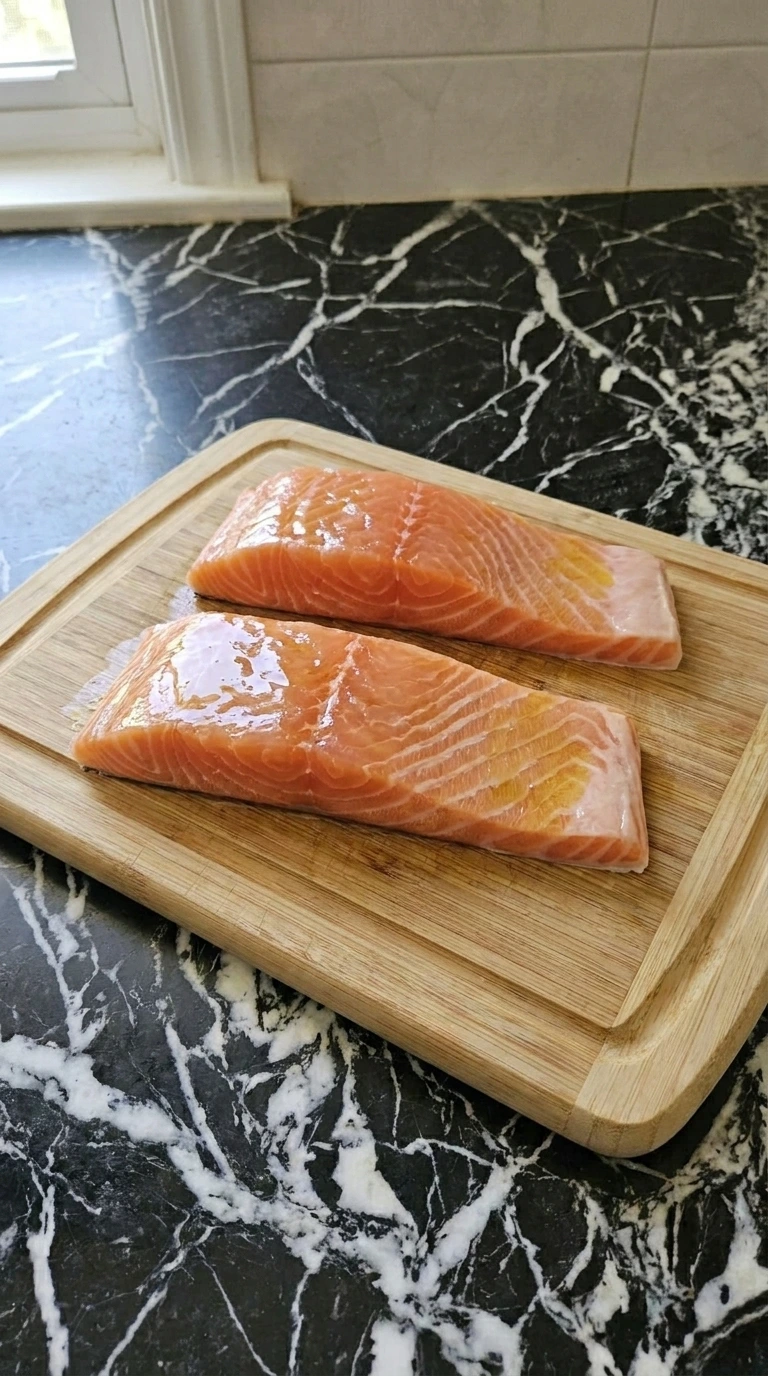
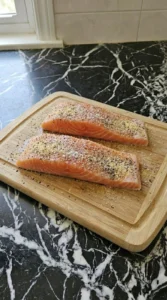
Start by patting your Atlantic salmon fillets completely dry with a paper towel. You want to remove every bit of surface moisture from the flesh and skin. Place the two fillets skin-side down on a wooden cutting board at room temperature.
Drizzle exactly one tablespoon of olive oil evenly across both pieces of fish. Rub the oil into the flesh using your fingers so every corner is coated. This helps the spices stick evenly.
Moisture is the ultimate enemy of a good sear. (I tried skipping the drying step during my first test, the spices turned into a soggy paste and the top never crisped). Coating the fish completely ensures the seasoning sticks to the surface instead of sliding off into the basket.
Tip: Use a heavy paper towel and press firmly down on the skin to draw out deep moisture.
Step 2: Apply the spice rub

Mix your garlic powder, kosher salt, and black pepper together in a small bowl. Sprinkle the seasoning mix evenly from high above the fillets. This technique gives you an even layer across the entire surface.
You will see the white salt crystals and dark flecks of pepper cover the pink flesh. The spices should form a visible layer but not a thick shell. The oil will absorb the dry mix quickly.
Press the spices gently into the flesh with your palms so they stay put. (My second batch lost half its seasoning because I didn’t press it down). Season right before cooking so the salt does not draw out hidden moisture.
Tip: Sprinkle from about twelve inches above the fish to get a perfectly uniform spice distribution.
Step 3: Arrange in the air fryer basket
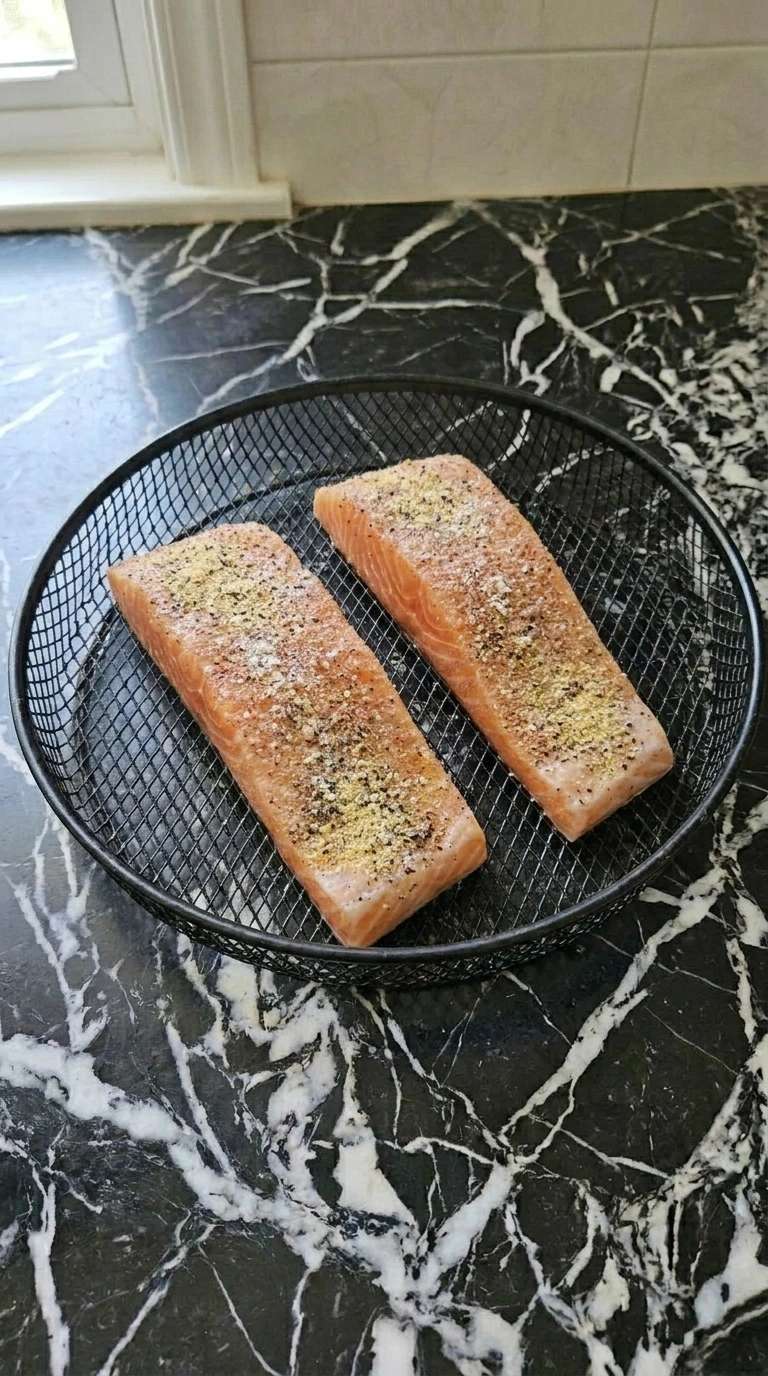
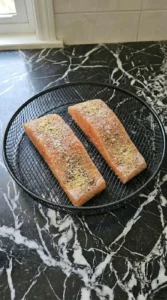
Place the seasoned fillets directly into your 6-quart air fryer basket. Position them skin-side down with at least an inch of space between the pieces. Do not let the sides touch at all.
The raw seasoned pink surface should face straight up toward the heating element. The black perforated metal basket will hold them securely. They should sit flat on the bottom mesh.
Crowding the basket traps steam and ruins your texture. Air needs to circulate fully around each piece to cook the sides. Putting them skin-side down provides a sturdy base while the top browns beautifully.
Tip: If your fillets are different sizes, place the thicker piece directly under the main heating element.
Step 4: Air fry until golden and flaky

Slide the basket in and cook at exactly 380°F for 8 to 10 minutes without opening. You will smell the rich garlic toast and sizzling fish fat around minute 6. That is your sign things are working.
The tops will turn a deep coral orange with an amber crust along the edges. The white albany protein lines will just start to show on the surface. The flesh will feel firm but yielding when tapped.
Pull the basket out the moment the internal temperature hits 135°F. Miss this window by two minutes and the fish dries out completely. High continuous heat finishes the fish fast so the interior juices stay trapped inside.
Tip: Pull the fish out when it is just under your target because carryover heat finishes the job.
Tips for Success
- Pat the fish with paper towels multiple times because bone-dry skin browns twice as fast.
- Keep the skin on during cooking because it acts as a thermal barrier protecting the delicate flesh.
- Check the thickest part of the fillet with your digital thermometer at minute 8 to prevent overcooking.
- Leave a clean one-inch space between your fillets so the circulating hot air cooks the sides evenly.
- Rub the oil onto the fish before adding spices so the seasoning blend dissolves and stays attached.
- Preheat your air fryer for three minutes at 380°F so the cooking process starts the second the fish hits the metal.
- Add one teaspoon of dark brown sugar to the spice blend for a sweet caramelized glaze finish.
- Dust the fillets with half a teaspoon of smoked paprika to create a deep smoky barbecue profile.
- Whisk a tablespoon of honey with a splash of soy sauce and brush it on during the final two minutes.
Variations to Try
- Atlantic salmon: steelhead trout — Trout looks almost identical but has a slightly milder flavor and thinner profile. Reduce the air fryer cook time by two minutes so it does not dry out.
- Pompeian Olive Oil: avocado oil — Avocado oil has an even higher smoke point than olive oil. The flavor is exceptionally neutral so your spice mix stands out more.
- garlic powder: onion powder — Onion powder offers a sweeter finish instead of the sharp punch of garlic. Use the exact same one to one ratio.
Storage Instructions
Store your leftover salmon fillets in a shallow glass airtight container for up to three days in the refrigerator. If you want to freeze them, wrap each cooled fillet tightly in plastic wrap and store in a freezer bag for two months.
Reheat the fillets in your air fryer basket at 300°F for four to 5 minutes until warm. Add a single teaspoon of fresh butter on top before heating to restore moisture.
Watch for an off sour smell or slimy surface texture as clear signs of spoilage.
Air Fryer Salmon
Ingredients
- 2 fillets Atlantic salmon Skin-on fillets, about 6 ounces each, cut to a uniform thickness.
- 1 tablespoon Pompeian Olive Oil Used to coat the flesh so the dry spice rub adheres perfectly.
- 1 teaspoon garlic powder Provides a savory aromatic crust on the top surface.
- 0.5 teaspoon kosher salt Enhances the natural richness of the fish oils.
- 0.25 teaspoon black pepper Coarsely ground for a sharp bite against the rich meat.
- 1 whole lemon Cut into fresh wedges for squeezing over the hot plated dish.
Instructions
- Start by patting your Atlantic salmon fillets completely dry with a paper towel. You want to remove every bit of surface moisture from the flesh and skin. Place the two fillets skin-side down on a wooden cutting board at room temperature. Drizzle exactly one tablespoon of olive oil evenly across both pieces of fish. Rub the oil into the flesh using your fingers so every corner is coated. This helps the spices stick evenly. Moisture is the ultimate enemy of a good sear. (I tried skipping the drying step during my first test, the spices turned into a soggy paste and the top never crisped). Coating the fish completely ensures the seasoning sticks to the surface instead of sliding off into the basket.
- Mix your garlic powder, kosher salt, and black pepper together in a small bowl. Sprinkle the seasoning mix evenly from high above the fillets. This technique gives you an even layer across the entire surface. You will see the white salt crystals and dark flecks of pepper cover the pink flesh. The spices should form a visible layer but not a thick shell. The oil will absorb the dry mix quickly. Press the spices gently into the flesh with your palms so they stay put. (My second batch lost half its seasoning because I didn’t press it down). Season right before cooking so the salt does not draw out hidden moisture.
- Place the seasoned fillets directly into your 6-quart air fryer basket. Position them skin-side down with at least an inch of space between the pieces. Do not let the sides touch at all. The raw seasoned pink surface should face straight up toward the heating element. The black perforated metal basket will hold them securely. They should sit flat on the bottom mesh. Crowding the basket traps steam and ruins your texture. Air needs to circulate fully around each piece to cook the sides. Putting them skin-side down provides a sturdy base while the top browns beautifully.
- Slide the basket in and cook at exactly 380°F for 8 to 10 minutes without opening. You will smell the rich garlic toast and sizzling fish fat around minute 6. That is your sign things are working. The tops will turn a deep coral orange with an amber crust along the edges. The white albany protein lines will just start to show on the surface. The flesh will feel firm but yielding when tapped. Pull the basket out the moment the internal temperature hits 135°F. Miss this window by two minutes and the fish dries out completely. High continuous heat finishes the fish fast so the interior juices stay trapped inside.

Notes
Nutrition
Questions I Get Asked
Yes you can cook them from frozen but you will miss out on the crispy spice crust. Run the air fryer at 350°F for five minutes to thaw the fish first. Then open the basket, add your oil and spices, and cook at 380°F for another seven minutes until the center is flaky.
Leftover salmon keeps beautifully for up to three days when stored properly. Place the cooled fillets into a shallow airtight glass container right away. Keep it tucked in the coldest part of your fridge and do not let it sit out on the counter.
That white substance is just albumin which is a completely safe protein that pushes out when muscle fibers tighten. It usually means your fish cooked slightly too fast or a bit too long. You can easily scrape it off with a knife before serving your dinner.
Pop the cold leftover fish back into your air fryer basket at 300°F for about four minutes. Spritz a tiny bit of water or olive oil over the top before heating. This gentle temperature warms the core without restarting the harsh cooking process.
You can double the ingredients easily but you must cook the fish in separate sequential batches. Never overlap or stack salmon fillets inside a standard basket because the blocked air leaves the middle raw. Keep the first batch warm under foil while the second cooks.
Before You Go
Every time I make this I think about the first time I tried it, nervous about screwing it up, convinced I’d need more experience. Turns out it’s one of those dishes that forgives you for being a beginner.
You can mess up the timing like I did those first three attempts and it still turns out good. If you try it, leave me a comment below, I read every single one.
And if you enjoyed this, check out my Best Ever Carrot Cake for a sweet treat to finish the night.
Salmon skin contains the highest concentration of healthy omega-3 fatty acids on the entire fish.