Irish Beef Stew
I wanted a stew that actually tasted like beef in every bite. Not just a thin broth with a hint of something. Real depth, real richness, and chunks that hold their shape. It took a few tries to get there.
Pale beef and watery broth just weren’t cutting it, and the vegetables kept going too soft too fast. This version fixes that with a proper sear and a steady simmer.
p=3482″>Shepherd’s Pie too. Now it’s a pot I come back to often. The beef stays tender, the carrots keep a little bite, and the potatoes don’t disappear into the sauce. Just a solid, cozy stew that feels right every time.
What Makes This Recipe Work
Browning the floured beef at medium-high heat around 400°F builds a crust that thickens the stew later without extra starch. Simmering gently at about 300°F keeps the collagen in the chuck breaking down slowly so it turns tender instead of dry. Adding the potatoes later controls their texture so they stay intact.
What You Will Need
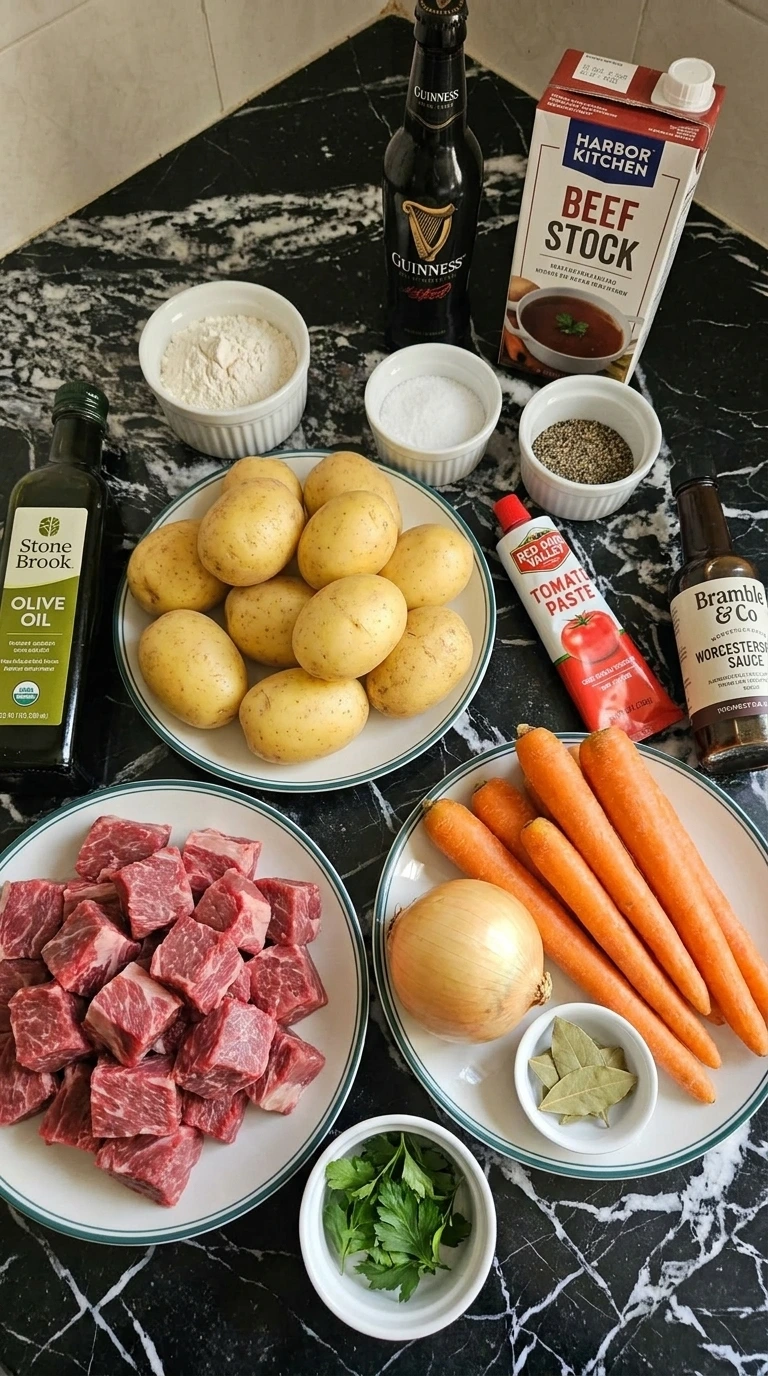
- beef chuck roast: Cut into uneven 1 1/2 inch cubes so some pieces get extra caramelized edges.
- all purpose flour: Lightly coats the beef to help form a crust and naturally thicken the stew.
- kosher salt: Season generously to bring out the beef’s richness.
- cracked black pepper: Freshly cracked for a mild heat and deeper aroma.
- extra virgin olive oil: Used to sear the beef and prevent sticking.
- yellow onion: Diced small so it melts into the base.
- fresh garlic cloves: Minced finely so it blends into the sauce.
- tomato paste: Cooked briefly to deepen color and flavor.
- Guinness stout: Adds a malty bitterness that balances the richness.
- low sodium beef stock: Builds the body of the stew without oversalting.
- Worcestershire sauce: A small splash for savory depth.
- orange carrots: Cut thick so they hold up through the simmer.
- Yukon gold potatoes: Chunked into uneven pieces for a rustic texture.
- fresh thyme sprigs: Adds a subtle earthy note during simmering.
- dried bay leaves: Infuses warmth as the stew cooks.
- fresh flat leaf parsley: Chopped fresh for brightness at the end.
Kitchen Equipment
How to Make It
Step 1: Coat the beef chuck roast
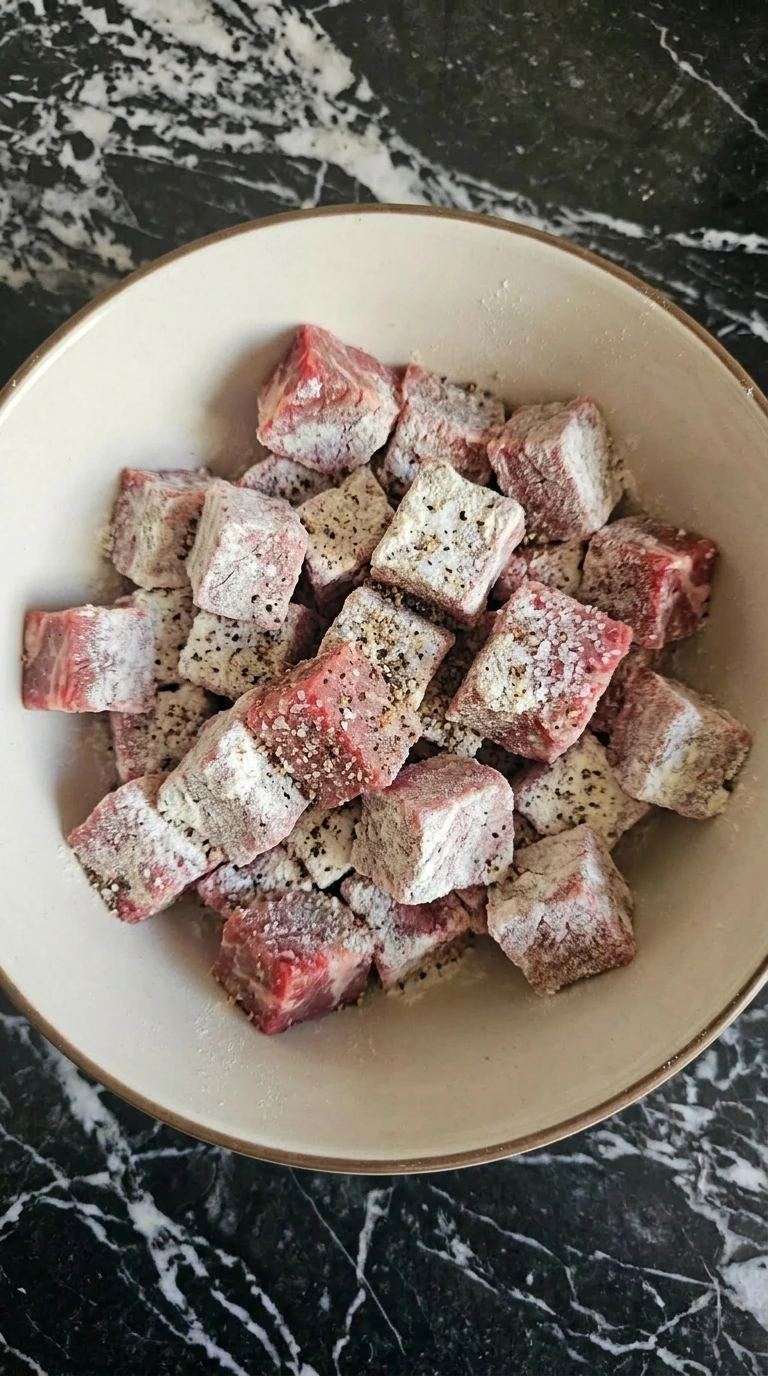
Set the beef cubes in a bowl and sprinkle with flour, salt, and pepper at room temperature, about 68°F. Toss with your hands using a lifting and dropping motion for 1 to 2 minutes until each piece has a thin, uneven coating. You’ll see dry patches and lightly coated spots, and that’s what you want. The flour should cling in thin layers, not thick clumps. If you overmix, it turns gummy and won’t brown properly.
Tip: Shake off any heavy excess flour so it doesn’t burn in the pan.
Step 2: Brown the beef chuck roast
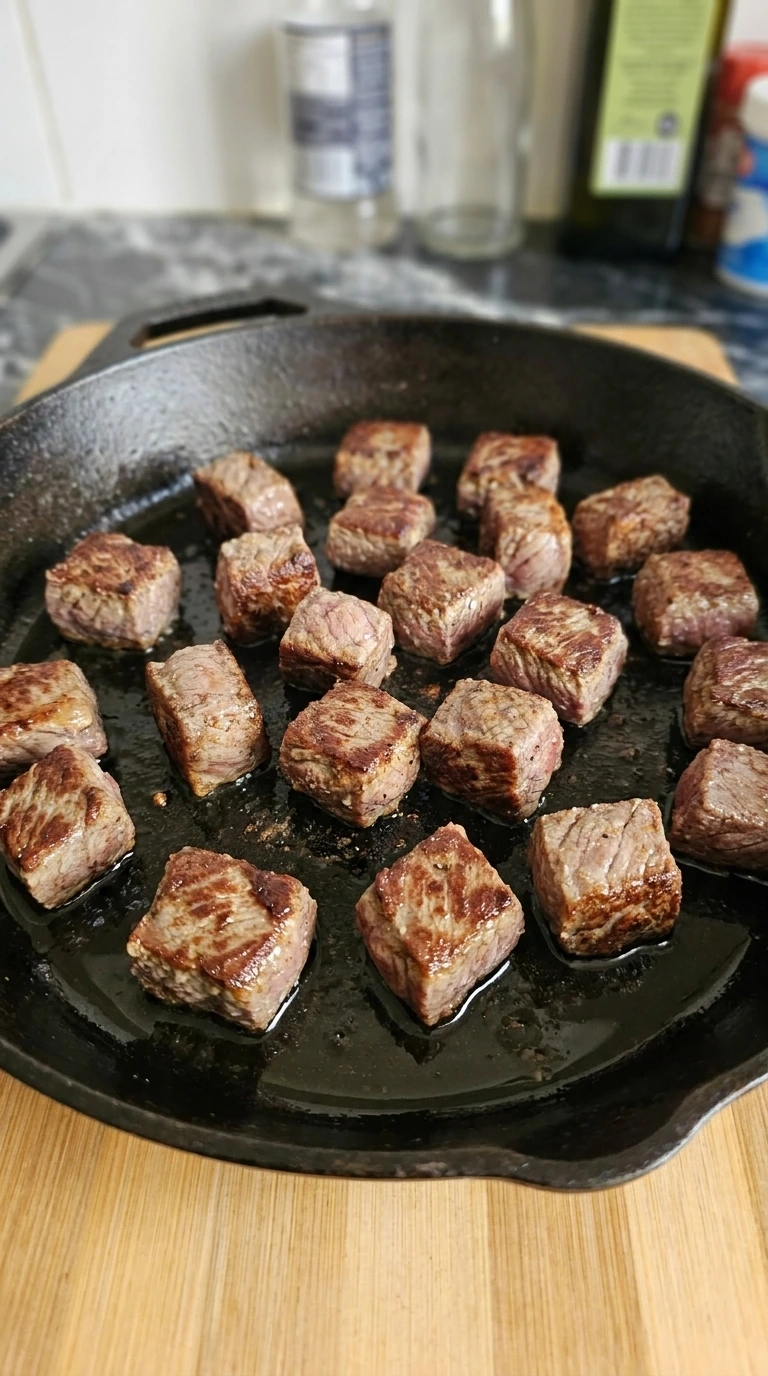
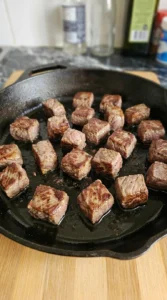
Heat olive oil in a heavy pot over medium-high heat, about 400°F, for 2 minutes. Add the beef in a single loose layer and let it sit untouched for 3 to 4 minutes before turning with tongs. Turn each piece and cook another 3 to 4 minutes until deep brown crust forms and you hear a steady sizzle. If you crowd the pan, the sound softens and the meat steams instead of browning. (I used to rush this step, but the stew always tasted flat.)
Tip: Work in batches if needed so each piece gets proper contact with the pan.
Step 3: Soften the yellow onion and garlic
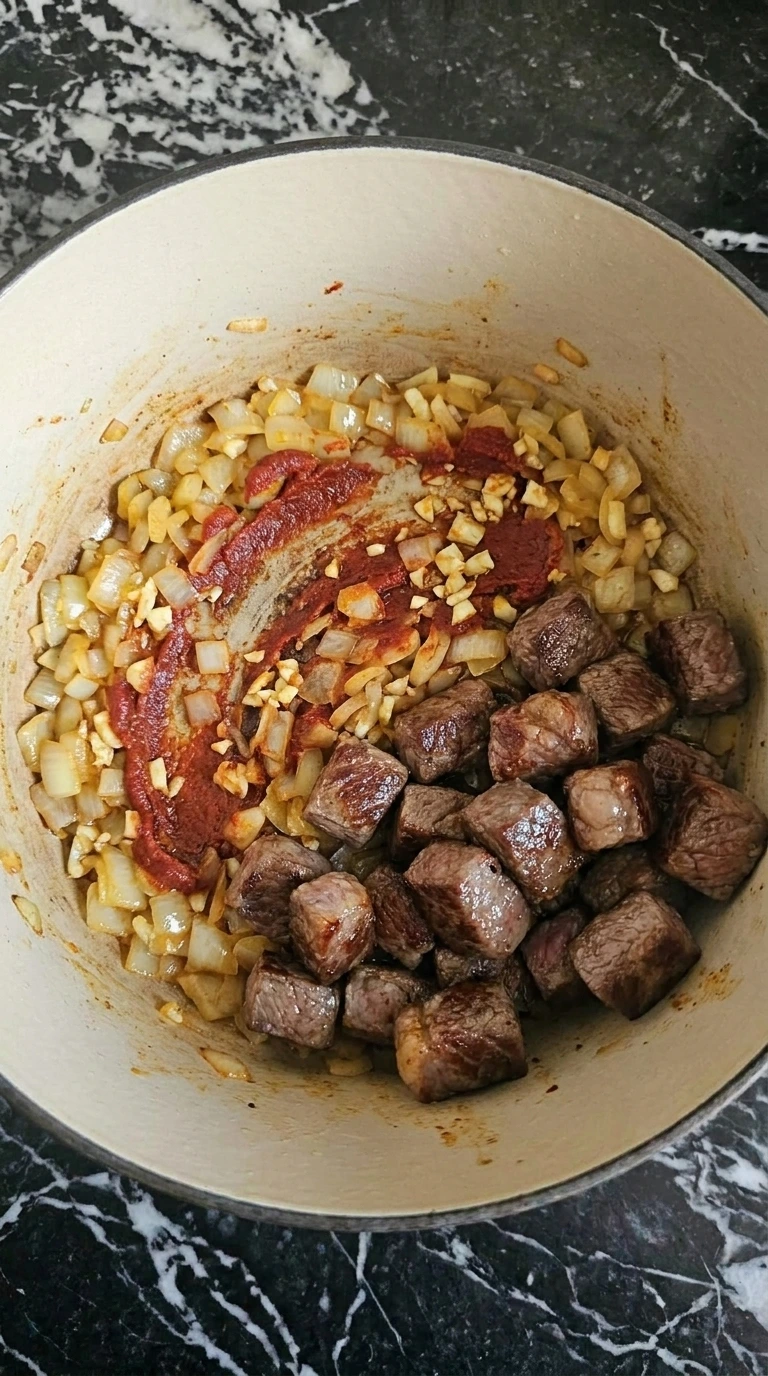
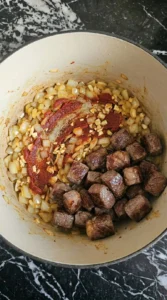
Lower heat to medium, about 325°F, and add the onion. Stir with a wooden spoon in slow circles for 5 to 6 minutes until glossy and soft, scraping up the browned bits as you go. Add garlic and tomato paste, then press and smear the paste into the pan for 1 to 2 minutes. You’ll smell it turn slightly sweet and deeper. Skip this and the stew tastes sharp instead of rich.
Tip: Keep stirring so the garlic doesn’t burn while the paste cooks.
Step 4: Simmer the stew base
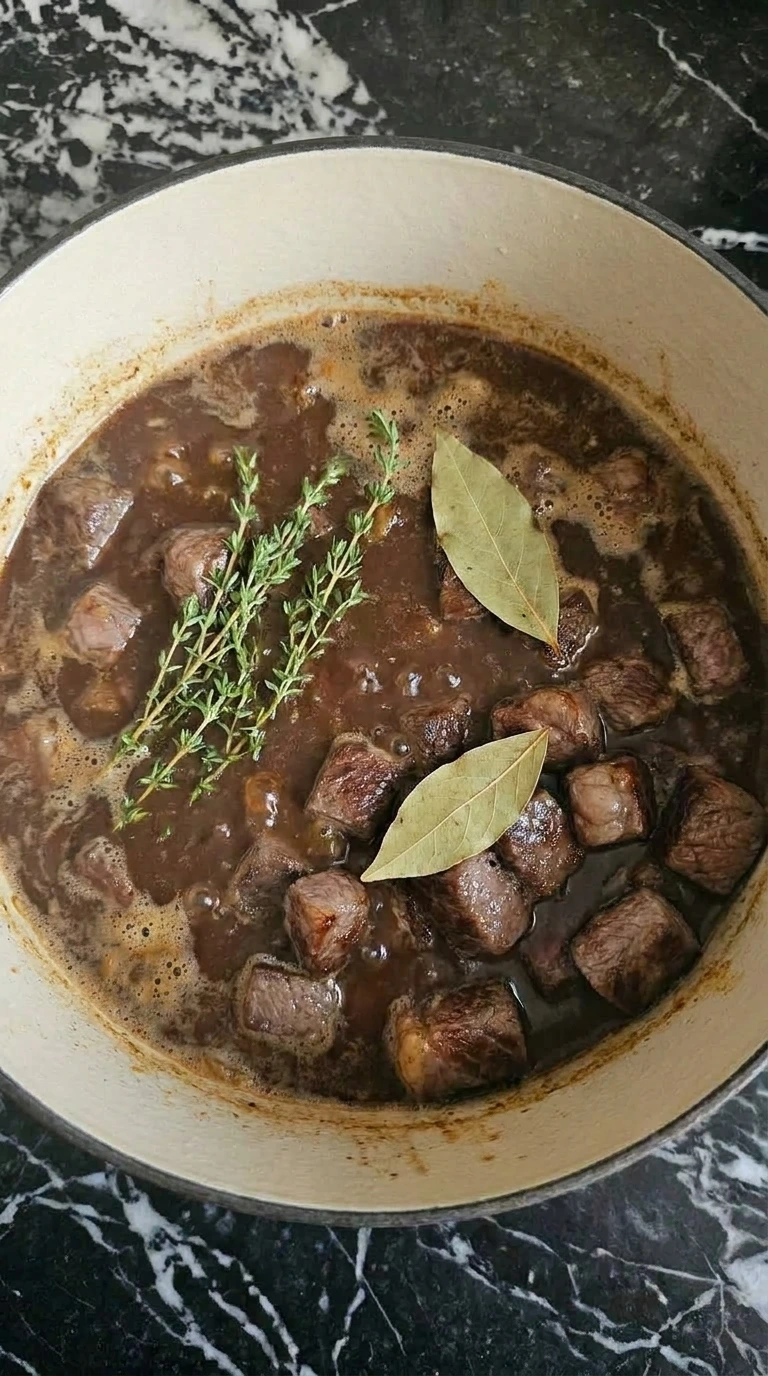
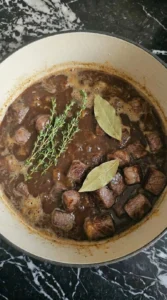
Pour in Guinness and beef stock, then add Worcestershire and herbs. Bring to a gentle simmer at about 300°F and let it bubble lightly for 45 to 60 minutes, stirring every 10 minutes with a slow sweep across the bottom. You’ll see small bubbles breaking the surface and smell a deep, malty aroma. If it boils hard, the beef tightens and dries out instead of softening.
Tip: Keep the lid slightly ajar to control the simmer and prevent overflow.
Step 5: Add orange carrots and Yukon gold potatoes
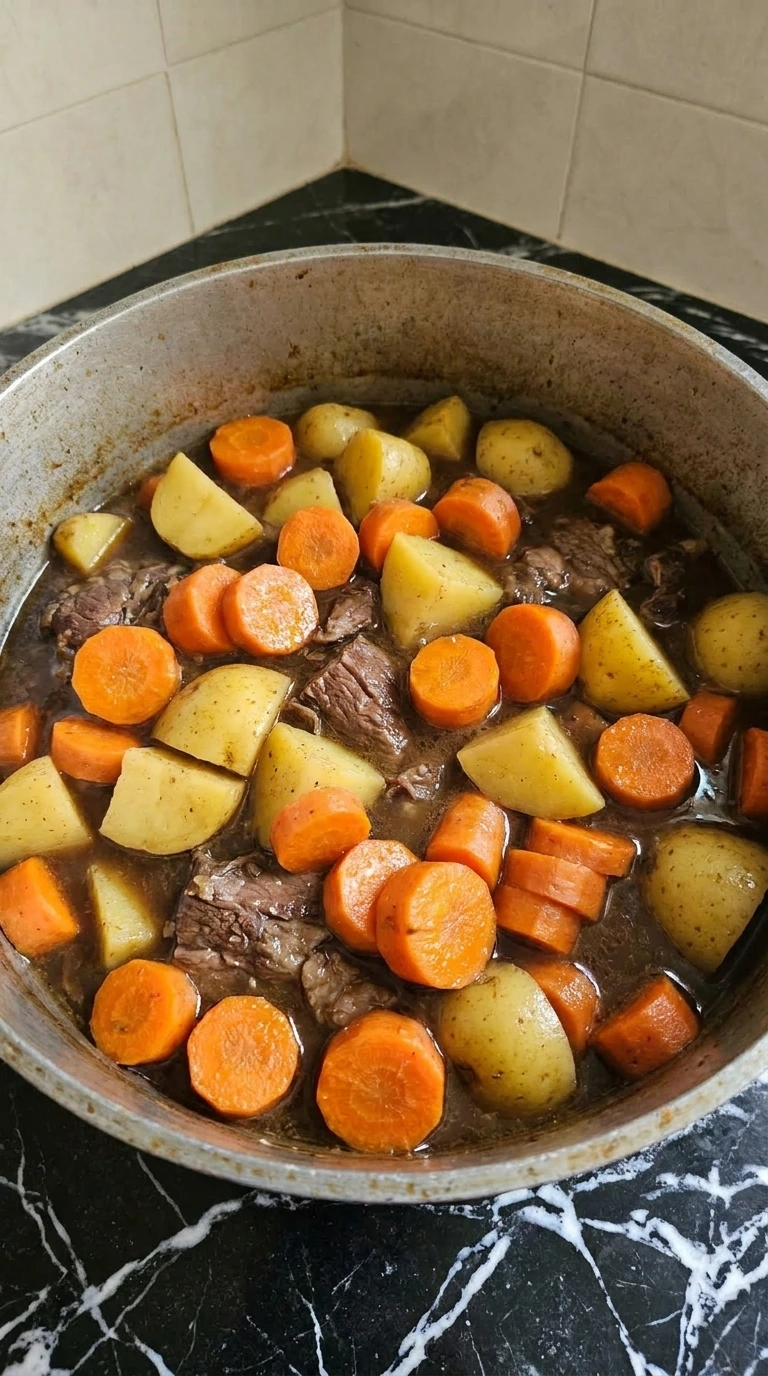
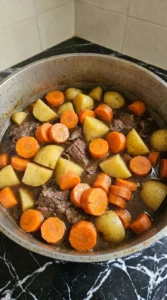
Add carrots and potatoes once the beef has simmered, keeping the heat at a steady 300°F. Stir gently with a folding motion so you don’t break the pieces, then cook for 25 to 30 minutes. The vegetables should soften but still hold their shape, and the stew will look fuller and thicker. If you add them too early, the potatoes collapse and turn the broth cloudy.
Tip: Cut vegetables into similar sizes so they cook evenly.
Step 6: Finish the thickened stew
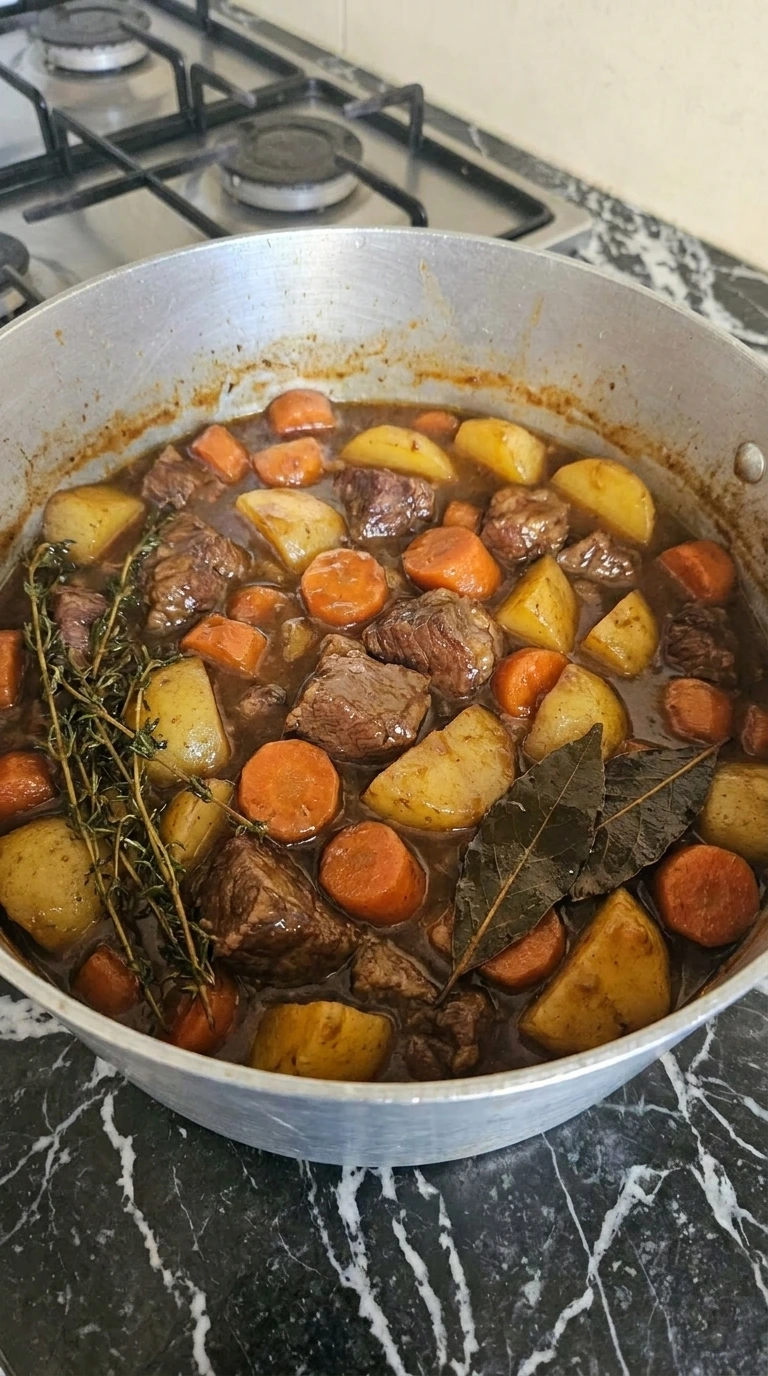
Let the stew continue at a low simmer, around 290°F, for another 15 to 20 minutes uncovered. Stir once halfway through with a slow scrape along the bottom. The sauce will thicken and coat the back of a spoon, and the beef should feel tender when pressed. If you stop too soon, the broth stays thin and the flavors don’t fully come together.
Tip: Fish out the bay leaves before serving so they don’t end up in a bowl.
Step 7: Serve with parsley
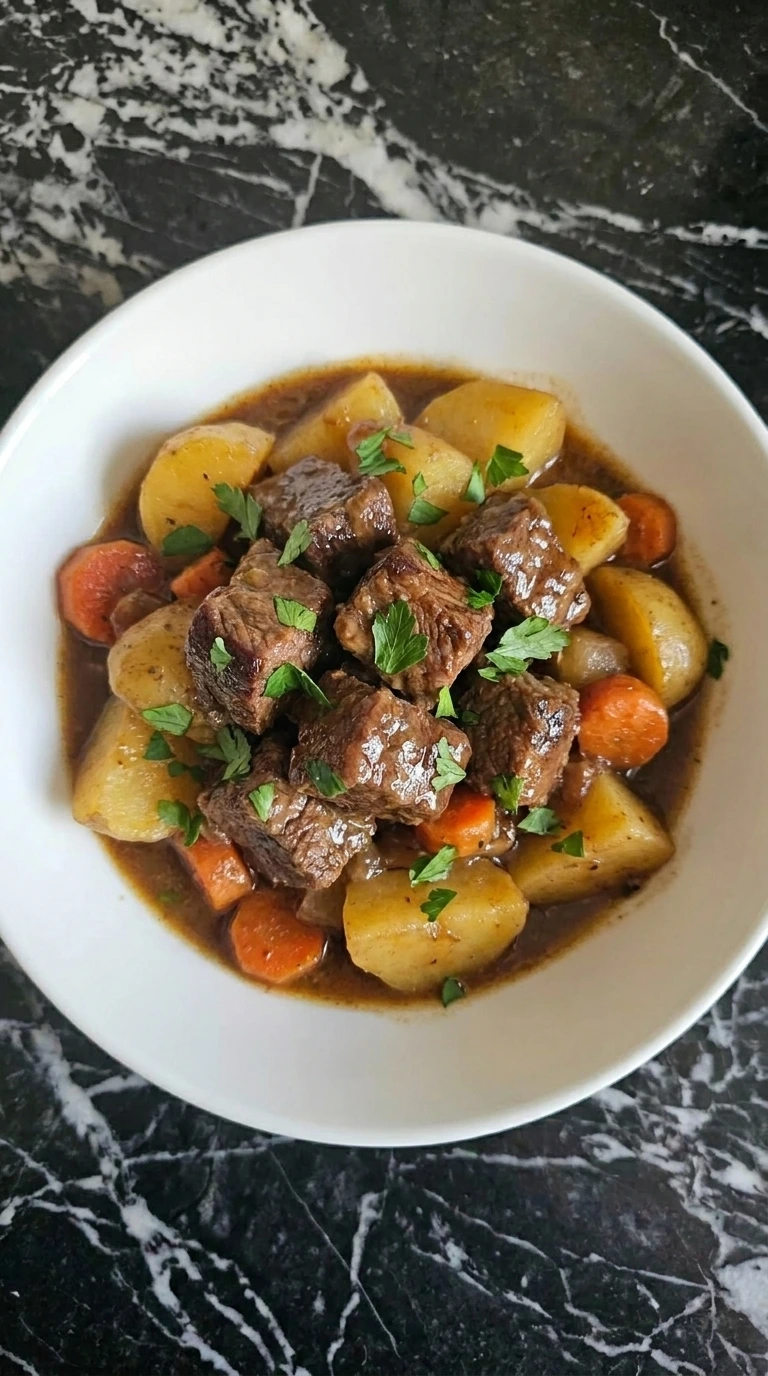
Ladle the stew into bowls while it’s hot, around 180°F, letting the gravy settle for about 2 minutes after serving. Sprinkle chopped parsley over the top with a light pinch and drop motion. You’ll see the glossy sauce settle and smell the fresh herbs brighten everything. Serve too fast and the stew feels loose and unfinished.
Tip: Warm the bowls slightly so the stew stays hot longer.
Helpful Tips
- Cut the beef into uneven chunks so it looks rustic but still cooks evenly.
- Take your time browning. That deep color is where the flavor builds.
- Add potatoes later so they stay intact instead of breaking down.
- Let the stew rest 10 minutes before serving so it thickens naturally.
Make It Your Own
- Guinness stout: extra beef stock — The stew will be lighter and less complex but still good.
- all purpose flour: cornstarch — Use half as much. The texture will be slightly smoother.
- Yukon gold potatoes: red potatoes — They hold shape well but are a bit firmer.
- beef chuck roast: stew beef — Convenient but can be less consistent in tenderness.
- Worcestershire sauce: soy sauce — Adds saltiness but lacks the same depth. Try pairing with dishes like <a href=”https://leagueofcooking.com/?p=3219″>Grilled Chicken Salad</a>.
Storing Leftovers
Let the stew cool completely before storing. Transfer to airtight containers and refrigerate for up to 4 days. It thickens in the fridge but loosens again when reheated. Warm gently on the stove over medium-low heat until hot all the way through. Freeze for up to 3 months and thaw overnight before reheating.
Irish Beef Stew
Ingredients
- 2 pounds beef chuck roast
- 1/3 cup all purpose flour
- 1 1/2 teaspoons kosher salt
- 1 teaspoon cracked black pepper
- 2 tablespoons extra virgin olive oil
- 1 large yellow onion
- 4 cloves fresh garlic cloves
- 2 tablespoons tomato paste
- 1 1/2 cups Guinness stout
- 3 cups low sodium beef stock
- 1 tablespoon Worcestershire sauce
- 3 large orange carrots
- 1 pound Yukon gold potatoes
- 4 sprigs fresh thyme sprigs
- 2 leaves dried bay leaves
- 2 tablespoons fresh flat leaf parsley
Instructions
-
Beef chuck roast cubes change from plain red pieces into flour dusted irregular chunks with kosher salt and cracked black pepper clinging in uneven patches.
-
The floury beef turns from pale coated cubes into browned pieces with darker crusty sides and a few soft floury corners still showing.
-
The yellow onion and fresh garlic cloves turn glossy and soft while tomato paste streaks the bottom with rusty red color around the browned beef bits.
-
Guinness stout and low sodium beef stock pull the browned beef into a dark bubbling broth while Worcestershire sauce and herbs spread through the pot.
-
Chunky orange carrots and Yukon gold potatoes change the dark stew into a fuller pot with bright color and uneven vegetable pieces partly sinking into the gravy.
-
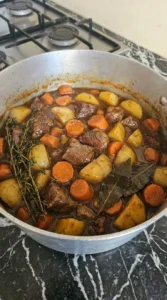
The broth turns glossy and thick while beef chuck roast softens and the orange carrots and Yukon gold potatoes settle into a rustic uneven stew.
-
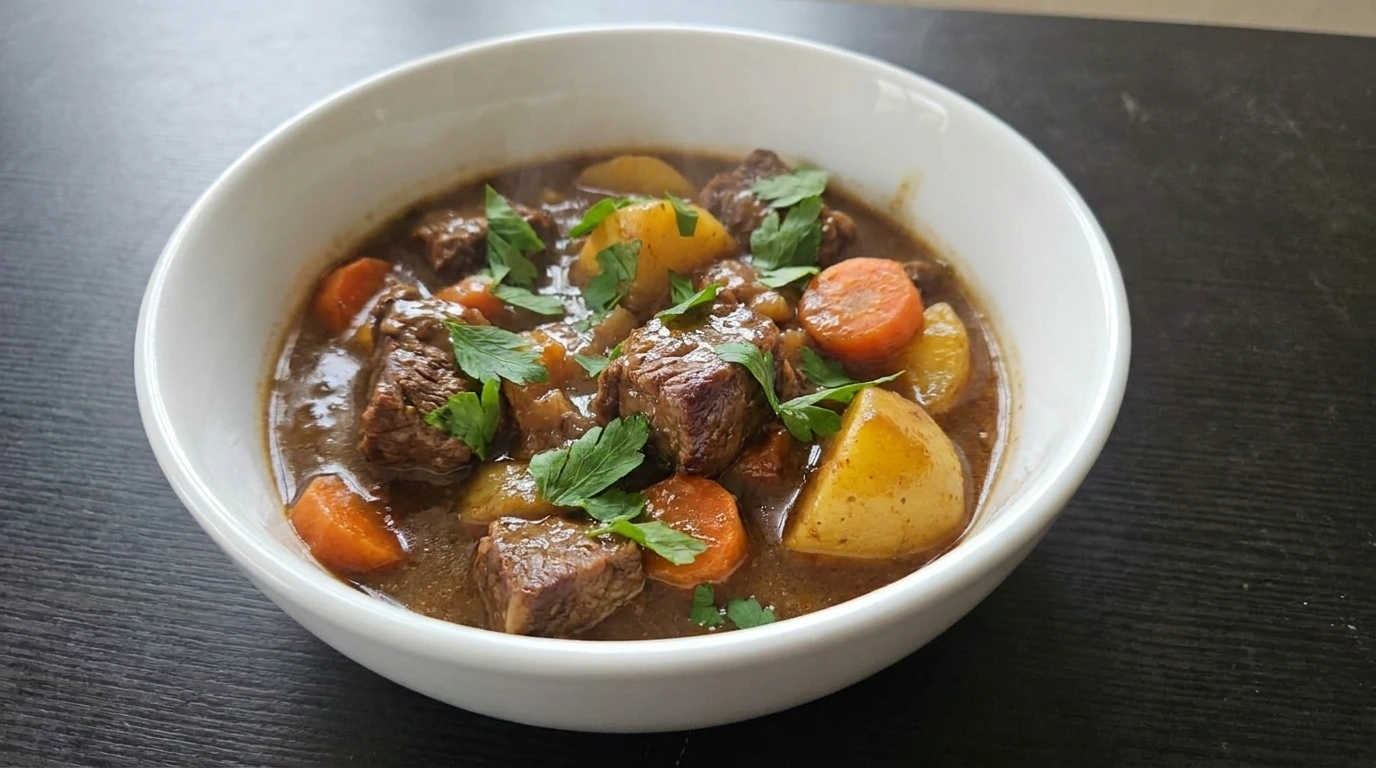
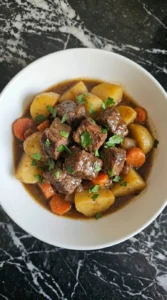
A single portion moves into a white bowl and becomes a finished serving with glossy gravy and tender beef and scattered fresh flat leaf parsley on top.
Notes
Nutrition
Frequently Asked Questions
Yes, you can swap it with more beef stock. The stew will be milder and less rich, but still satisfying. You might want to add a splash of Worcestershire for extra depth.
Beef chuck roast works best because it has enough fat and connective tissue. That breaks down during simmering and turns tender. Lean cuts won’t give you the same result.
Yes, and it often tastes better the next day. The flavors settle and deepen overnight. Just reheat gently so the beef stays tender.
The flour on the beef helps naturally thicken it. You can also simmer uncovered for 10 to 15 extra minutes. That reduces the liquid and concentrates the sauce.
It usually means it didn’t simmer long enough or the heat was too high. Keep the temperature low and give it time. Tough beef needs slow cooking to break down.
Final Thoughts
This Irish Beef Stew is the kind of meal you come back to when you want something warm and filling. It’s simple, steady cooking that pays off in flavor.
If you’re in the mood for another cozy dish, try Chicken Quesadillas next.
Guinness adds subtle bitterness that actually helps balance the richness of slow-cooked beef rather than making the stew taste like beer.