One Pan Lemon Garlic Chicken
I don’t cook chicken this way every week, but when I do, it’s usually this pan. Lemon, garlic, a little butter. That’s really all it takes. It’s the kind of dinner you can pull together without overthinking it.
Everything cooks in one place, and you get that nice mix of golden chicken and a light sauce at the bottom. If you like simple meals like this, you might also enjoy this Grilled Chicken Salad.

And no, it doesn’t turn out dry. The trick is how you cook it, not what you add. Get the heat right, don’t rush it, and the pan does most of the work.
What Makes This Recipe Work
Starting the chicken in a hot pan around medium heat lets the surface sear before the broth fully heats, so you get browning and moisture at the same time. The butter melts slowly into the broth, creating an emulsion that coats the chicken. Timing matters here, if you rush past the 15 minute mark without adjusting heat, the liquid reduces too fast and the bottom can scorch.
Ingredient List
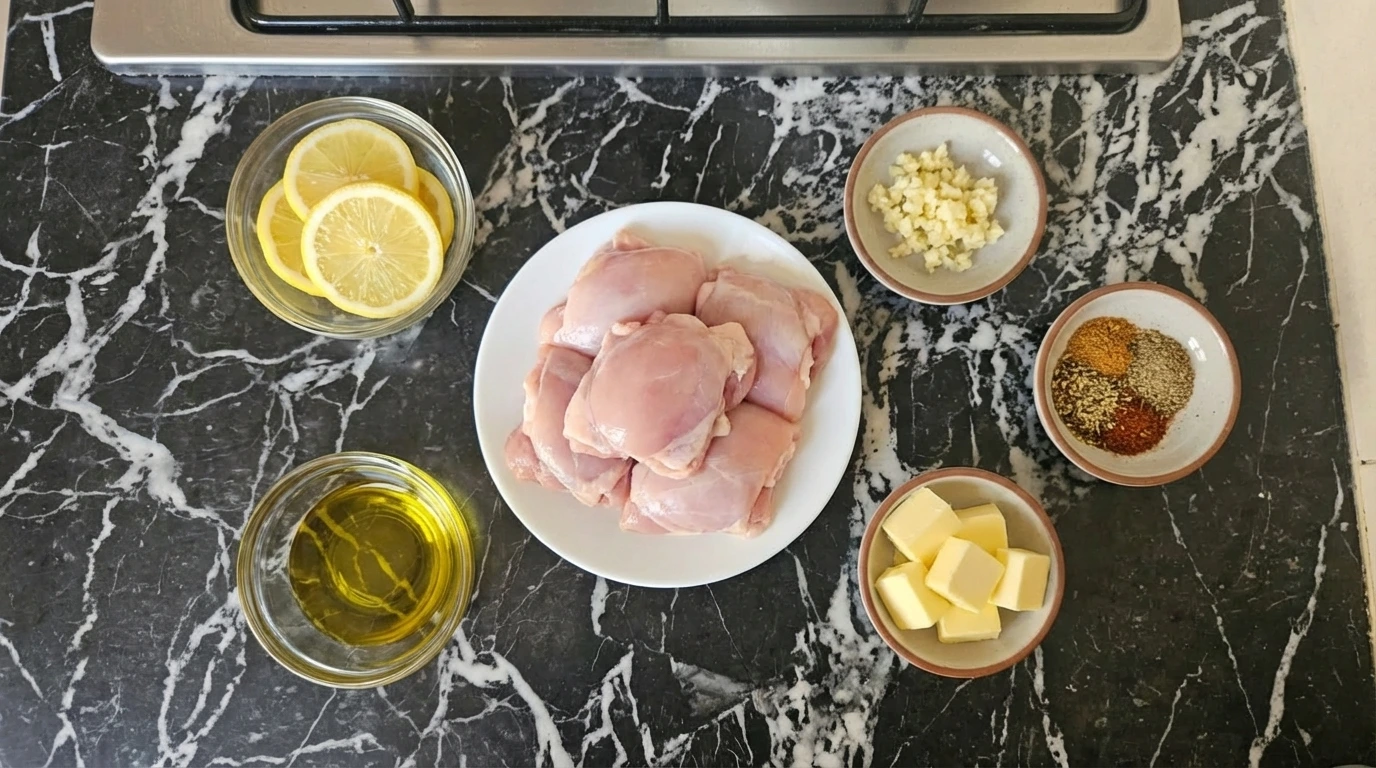
- chicken thighs: bone-in or boneless, holds moisture well during searing
- lemon: fresh slices or juice for acidity and balance
- garlic cloves: lightly crushed or minced for strong aroma
- olive oil: used to start the sear and prevent sticking
- butter: adds richness and helps build the pan sauce
- salt: brings out the natural flavor of the chicken
- black pepper: adds a mild, warm bite
- paprika: gives color and a subtle smoky note
- fresh parsley: chopped for a fresh finish
- chicken broth: keeps the pan moist and forms the sauce base
Kitchen Equipment
Step by Step
Step 1: Season the Chicken

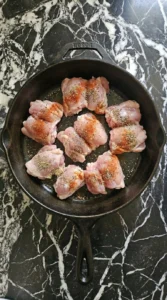
Set the skillet over medium heat, about 5 on a 10 dial, and add a thin layer of olive oil. Place the chicken thighs in the pan and season immediately with salt, pepper, and paprika. Use your fingers to press the seasoning in with a light patting motion, not rubbing hard. Let the chicken sit for about 2 minutes after seasoning so it starts to absorb. You’ll see the surface turn slightly damp and coated. If you skip this short rest, the seasoning can slide off once heat builds.
Tip: Pat the chicken dry before seasoning so it sticks better and browns faster.
Step 2: Add Garlic and Lemon

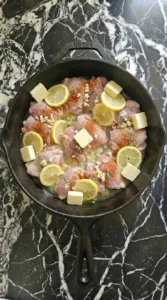
Keep the heat at medium, around 5 out of 10. Scatter the garlic across the pan and drop lemon slices around and over the chicken. Let some garlic hit the pan directly so it starts cooking in the oil. Give the pan one gentle shake at minute 2 to spread everything out. You’ll start to smell the garlic warming and softening. If the garlic stays piled on top, it won’t infuse the oil and the flavor stays flat.
Tip: Slice the lemon thin so it softens at the same rate as the chicken cooks.
Step 3: Add Liquid and Butter

Pour in the chicken broth slowly over 10 seconds so it spreads without splashing the seasoning off. Drop small pieces of butter across the pan. Keep the heat steady at medium. By minute 3 to 4, the butter should be melting and the liquid lightly bubbling. Tilt the pan once to move the liquid around. You’ll see a glossy surface forming. If you pour too fast or stir too much, the seasoning washes off and the sauce won’t build properly.
Tip: Use warm broth if possible so the pan temperature doesn’t drop too quickly.
Step 4: Cook Until Golden
Lower the heat slightly to medium-low, about 4 on a 10 dial, and let the chicken cook undisturbed for 12 to 15 minutes. Don’t move it. That’s what allows the browning to happen. At around minute 10, you’ll see golden patches forming and the edges of the lemon softening. The sauce will bubble gently. (I used to flip too early and never got that color.) If you move the chicken too soon, the surface stays pale and you lose that crust.
Tip: If the liquid reduces too fast, add a splash of broth to keep it from drying out.
Step 5: Finish and Garnish

Once the chicken reaches about 165°F internally, turn off the heat and let it sit for 3 minutes in the pan. Sprinkle chopped parsley over the top while it’s still hot. The sauce should coat the bottom lightly and look slightly thick. You’ll notice a buttery lemon smell coming through. If you skip the rest time, the juices run out and the chicken won’t stay as tender.
Tip: Spoon a bit of the sauce over the chicken right before serving for extra flavor.
Step 6: Serving Portion

Serve the chicken warm, straight from the pan or plated, within 5 minutes of finishing. The heat should still be around warm resting temperature, not actively cooking. Cut into one piece and check the texture. It should be juicy with a light coating of sauce. You’ll see the inside stay moist while the outside holds its color. If you wait too long, the sauce thickens too much and the chicken cools unevenly.
Tip: Serve with something that soaks up the sauce like rice or bread.
Pro Tips
- Bone-in chicken gives deeper flavor and stays juicier
- Let the chicken rest a few minutes before serving
- Leave space between pieces so they brown instead of steam
- Taste the sauce at the end and adjust salt or lemon
- Add mushrooms if you want a heartier pan
- Try thyme or rosemary for a different aroma
- Add chili flakes for a subtle heat boost
Make It Your Own
- butter: vegan butter — works fine but the sauce will taste slightly less rich
- chicken thighs: chicken breast — cooks faster and can dry out if overcooked
- chicken broth: vegetable broth — keeps it lighter but changes the depth slightly
- olive oil: avocado oil — similar result with a slightly cleaner taste
- parsley: cilantro — adds a different fresh note, not as classic but still good
- lemon: lime — brighter and sharper, pairs well if you also try this <a href=”https://leagueofcooking.com/?p=3234″>Quinoa Veggie Bowl</a>
Storing Leftovers
Store leftovers in an airtight container in the fridge for up to 4 days. The sauce will thicken as it sits, so add a splash of broth when reheating. You can prep the chicken ahead with seasoning and refrigerate it. Cook fresh when ready for the best texture.
One Pan Lemon Garlic Chicken
Ingredients
- 6 pieces chicken thighs
- 2 , sliced and juiced lemon
- 5 cloves, minced garlic cloves
- 3 tbsp olive oil
- 2 tbsp butter
- 1 tsp salt
- 1/2 tsp black pepper
- 1 tsp paprika
- 2 tbsp chopped fresh parsley
- 1/2 cup chicken broth
Instructions
-
Place the raw chicken thighs directly into the skillet, spacing them slightly apart but not perfectly aligned. Sprinkle salt, pepper, and paprika over the top. Some areas will have more seasoning than others, which is completely fine and adds to that homemade feel. As you rub the seasoning into the chicken, the surface starts to look slightly coated and a bit uneven. You’ll notice some spices clinging more heavily in certain spots, giving the chicken a natural, rustic appearance rather than a uniform coating.
-
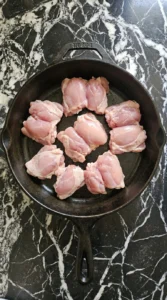
Scatter the minced garlic over and around the chicken, letting some fall into the gaps between pieces. Lay lemon slices casually across the top and around the edges. They shouldn’t be perfectly placed, some overlapping and tilting adds a natural look. At this stage, the skillet looks brighter with pops of yellow from the lemon and bits of garlic visible across the surface. The chicken is still raw but now layered with fresh ingredients that hint at the flavor to come.
-
Pour the chicken broth gently into the skillet, letting it pool unevenly around the chicken. Add small chunks of butter on top of the chicken and near the edges so they melt at different rates. Now the skillet begins to look glossy as the liquid spreads. The butter starts softening and the garlic slightly darkens in spots. Nothing is fully cooked yet, but the mixture is beginning to come together into a loose sauce.

-
As the chicken cooks, the skin turns golden in patches rather than evenly. Some areas will brown faster than others, creating a natural variation in color. The lemon slices soften and slightly caramelize at the edges. The sauce reduces slightly, becoming thicker and more concentrated. You’ll see bits of garlic lightly browned and small bubbles forming around the chicken, signaling that everything is cooking down nicely.
-
Once fully cooked, sprinkle chopped parsley over the top. The green color contrasts with the golden chicken and pale yellow lemon slices. The sauce should look slightly thickened but still loose enough to spoon over. Everything in the pan now looks cohesive but not overly styled. The chicken pieces may overlap slightly, and the sauce may pool unevenly, exactly how a homemade dish should look.

-
juicy chicken with visible texture and sauce

Notes
Makes 4 generous servings. This dish comes together in one pan with layers of flavor from the chicken, garlic, and lemon, then finished with a light sauce. You could easily double the recipe for a larger group. If making more, use a bigger pan so everything cooks evenly!
Common Questions
Yes, but reduce the cooking time slightly. Boneless pieces cook faster and can dry out if left too long. Keep an eye on the internal temperature.
Most likely the pan was overcrowded or the heat was too low. Give the chicken space and avoid moving it early so it can develop color.
You can prep everything ahead, but cook it fresh for the best texture. Reheated chicken is still good, just slightly less juicy.
A Final Note
This is one of those meals that just works every time. Simple steps, real flavor, and everything in one pan.
If you want another easy dinner idea, try this <a href=”https://leagueofcooking. com/?
p=3145″>Creamy Tomato Pasta next.
Lemon juice actually helps tenderize chicken slightly by breaking down surface proteins during cooking.