
Ingredients
Method
- Drop the long dry strands of Barilla spaghetti into a large stainless steel stockpot filled with rapidly boiling water on high heat. Add one tablespoon of sea salt directly to the water right as the pasta drops. Stir the strands immediately with a long fork to prevent sticking. Cook the pasta on high heat for exactly 9 minutes until it reaches an al dente state. The strands should look pliable but retain a firm chalky white center when snapped. (I used to skip checking the center - the pasta absorbs sauce later and turns to absolute mush if you overboil it here.) Carefully dip a glass measuring cup into the pot to save half a cup of the cloudy starchy liquid before draining. Pour the rest of the pasta into a colander in the sink. Boil hard at full heat - the convection finishes the gluten in 9 min, low heat leaves the center pasty.

- Heat two tablespoons of Bertolli extra virgin olive oil in a heavy 12-inch cast-iron skillet over medium-high heat (about 7 on a 10-dial). Arrange exactly 16 raw gray jumbo shrimp in a single flat layer with space between each piece. Season the tops evenly with a pinch of sea salt and crushed red pepper flakes. Sear the shrimp without moving them for exactly 2 minutes until the bottoms turn pink and white. Flip each shrimp using tongs and cook the second side for 60 seconds. Look for a opaque pink body with slight golden char spots along the curled edges. Miss this window by a minute and the crustacean proteins seize up into rubbery little hockey pucks. Transfer the seared pink shrimp immediately onto a clean white plate using your tongs. Sear 90 seconds without moving - the fond builds the sauce later.

- Lower the skillet burner to medium-low heat (about 3 on a 10-dial) and drop three tablespoons of Land O Lakes butter into the hot pan pan fat. Swirl the pan once at minute 1 to redistribute the melting liquid. Toss in six finely minced cloves of fresh garlic and let them sizzle gently. You will smell the garlic toast right when the cloves turn a pale golden color after 60 seconds. Pour in half a cup of Swanson chicken broth along with half a cup of heavy cream and half a cup of shredded parmesan cheese. Whisk the liquid continuously with a silicone whisk to combine the fat and dairy. Simmer the white liquid for 4 minutes until it thickens into a velvety glaze. The sauce coats the back of a spoon and a finger drawn across leaves a clean line. Reduce on medium-low heat - slow warmth keeps the dairy from separating before the cheese melts completely.
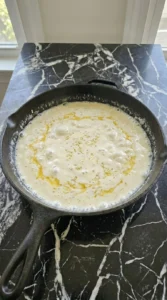
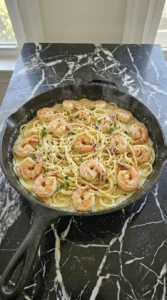
- Dump the cooked Barilla spaghetti and the seared pink shrimp directly into the simmering cream sauce inside the cast-iron skillet. Pour in two tablespoons of the reserved hot starchy pasta water to help the elements bind. Squeeze the juice of half a fresh yellow lemon across the surface. Toss the mixture thoroughly using tongs using a lifting and twisting motion for 2 minutes over low heat. Watch as the glossy white sauce clings tightly to each strand of pasta and wraps around the shrimp. (My first batch looked dry but adding that small splash of salty starch water binds everything into a silky restaurant finish.) The dish is done when the liquid is completely absorbed and no pools remain at the bottom of the pan. Sprinkle two tablespoons of chopped flat-leaf parsley and extra parmesan across the top. Toss over low heat - the starch emulsifies the sauce for a smooth texture.
Notes
Store any leftovers in a shallow airtight glass container in the refrigerator for up to two days. Make sure the pasta cools down to room temperature before sealing the lid to prevent condensation from thinning out the cream. Freezing is not recommended because the heavy cream and butter emulsion will separate upon thawing and leave you with a watery texture. To reheat the dish pour the leftovers into a skillet over low heat and add two tablespoons of fresh chicken broth. Stir the strands gently for five minutes until the sauce melts back into a silky glaze and warms the shrimp through. Watch out for a dull gray color or a strong sour smell because those are clear signs that the seafood has spoiled.