Garlic Butter Shrimp Pasta
You guys! When my wife tasted this recipe, she said. “I think that’s one of the best things you’ve ever done”! I have to say, it’s one of my top five favorites! A Saturday evening experiment turned into the best garlic butter shrimp pasta ever!
It has the same rich flavor as a high-end restaurant dish but it is made with wholesome ingredients and comes together in one single pan. This savory dinner is laced with fresh garlic and real butter while its base uses clean chicken broth and heavy cream. If you love this recipe, try our One Pot Chicken Alfredo Pasta for another quick weeknight option. I think you all know I am a hardcore comfort food lover, I already tasted rich cheeseburgers and so many heavy pasta bowls before, I rarely love a recipe that does not feel super indulgent but this one is just to die for! The recipe makes four big servings, I typically like to make things in smaller portions since I do so much cooking, but if you have a bigger group or want to make more, you can double the batch easily!

This pasta can be a stand-alone dinner, or you can pair it with some crisp greens for a tasty lunch. It is also great for active days when you need something satisfying. If you prefer a lighter poultry option instead, check out our Air Fryer Chicken Breast which works great for high-protein meal prep during a busy week!
The Secret to This Recipe
Searing the shrimp at medium-high heat creates a deep amber fond on the bottom of the cast-iron pan. This caramelized protein layer dissolves when you pour in the chicken broth and builds an incredible depth of flavor for the cream reduction.
Adding a splash of starchy pasta water at the end is the ultimate culinary technique for a cohesive dish. The starch acts as a natural emulsifier that links the fats from the butter with the liquids from the broth so your sauce stays silky smooth without ever separating.
Shopping List

- Barilla spaghetti: Dry durum wheat long strands boiled to al dente perfection.
- raw jumbo shrimp: Peeled and deveined with tails left on for visual presentation.
- Bertolli extra virgin olive oil: Used to sear the seafood at high heat without burning.
- Land O Lakes butter: Unsalted block melted to form the savory base for the garlic.
- fresh garlic: Finely minced to release maximum aromatic oils during cooking.
- Swanson chicken broth: Provides a savory liquid base to deglaze the pan fond.
- heavy cream: Adds a rich velvety body to the reduced skillet sauce.
- parmiggiano reggiano cheese: Finely shredded to melt smoothly into the hot cream emulsion.
- fresh yellow lemon: Juiced directly into the pan for a bright contrast to the fat.
- dried red pepper flakes: Optional spice added during the sear for a subtle warmth.
- fresh flat-leaf parsley: Finely chopped to add a clean herbal note at the very end.
- sea salt: Divided between the pasta boiling water and the shrimp seasoning.
- black peppercorns: Freshly cracked over the shrimp before they hit the skillet.
The Gear
- Heavy 12-inch cast-iron skillet: A thick cast-iron skillet distributes high heat evenly across the surface so your shrimp get a deep golden sear without boiling in their own juices.
- Large 6-quart stainless steel stockpot: A spacious stockpot holds enough water volume for the spaghetti strands to swim freely without clumping or dropping the water temperature too low.
- Stainless steel kitchen tongs: Sturdy metal tongs give you the best grip to flip delicate shrimp individually and twirl long pasta strands into the cream sauce smoothly.
How to Make It
Step 1: Boil the spaghetti
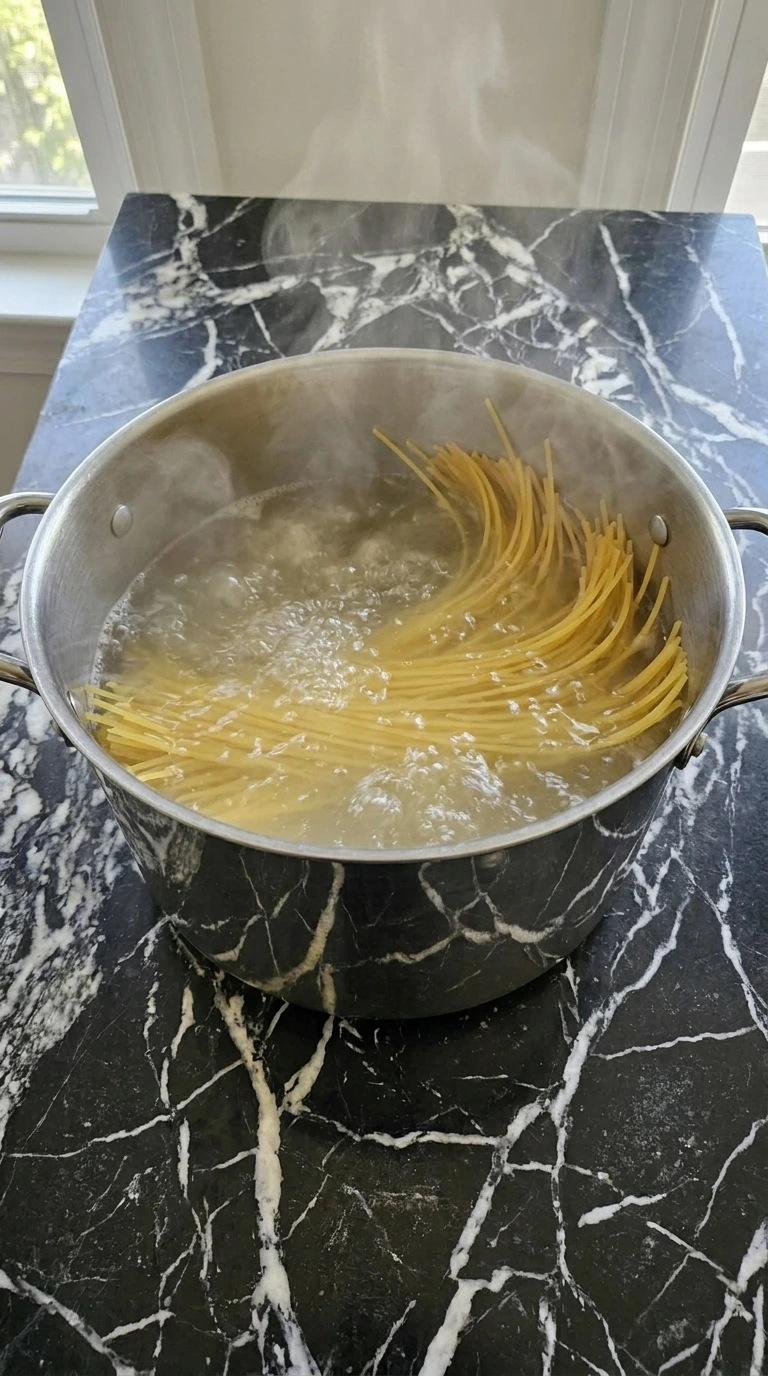
Drop the long dry strands of Barilla spaghetti into a large stainless steel stockpot filled with rapidly boiling water on high heat. Add one tablespoon of sea salt directly to the water right as the pasta drops. Stir the strands immediately with a long fork to prevent sticking.
Cook the pasta on high heat for exactly 9 minutes until it reaches an al dente state. The strands should look pliable but retain a firm chalky white center when snapped. (I used to skip checking the center – the pasta absorbs sauce later and turns to absolute mush if you overboil it here.
) Carefully dip a glass measuring cup into the pot to save half a cup of the cloudy starchy liquid before draining. Pour the rest of the pasta into a colander in the sink. Boil hard at full heat – the convection finishes the gluten in 9 min, low heat leaves the center pasty.
Tip: Never rinse the cooked pasta with cold water because you will strip away the surface starches that help your cream sauce cling to the strands.
Step 2: Sear the shrimp

Heat two tablespoons of Bertolli extra virgin olive oil in a heavy 12-inch cast-iron skillet over medium-high heat (about 7 on a 10-dial). Arrange exactly 16 raw gray jumbo shrimp in a single flat layer with space between each piece. Season the tops evenly with a pinch of sea salt and crushed red pepper flakes.
Sear the shrimp without moving them for exactly 2 minutes until the bottoms turn pink and white. Flip each shrimp using tongs and cook the second side for 60 seconds. Look for a opaque pink body with slight golden char spots along the curled edges.
Miss this window by a minute and the crustacean proteins seize up into rubbery little hockey pucks. Transfer the seared pink shrimp immediately onto a clean white plate using your tongs. Sear 90 seconds without moving – the fond builds the sauce later.
Tip: Pat the raw shrimp completely dry with paper towels before placing them in the skillet so they sear beautifully instead of steaming in their own moisture.
Step 3: Simmer the garlic cream sauce

Lower the skillet burner to medium-low heat (about 3 on a 10-dial) and drop three tablespoons of Land O Lakes butter into the hot pan pan fat. Swirl the pan once at minute 1 to redistribute the melting liquid. Toss in six finely minced cloves of fresh garlic and let them sizzle gently.
You will smell the garlic toast right when the cloves turn a pale golden color after 60 seconds. Pour in half a cup of Swanson chicken broth along with half a cup of heavy cream and half a cup of shredded parmesan cheese. Whisk the liquid continuously with a silicone whisk to combine the fat and dairy.
Simmer the white liquid for 4 minutes until it thickens into a velvety glaze. The sauce coats the back of a spoon and a finger drawn across leaves a clean line. Reduce on medium-low heat – slow warmth keeps the dairy from separating before the cheese melts completely.
Tip: Keep your pan heat low when adding the garlic because burned garlic turns intensely bitter and will ruin the entire flavor of your cream sauce.
Step 4: Toss and finish the pasta
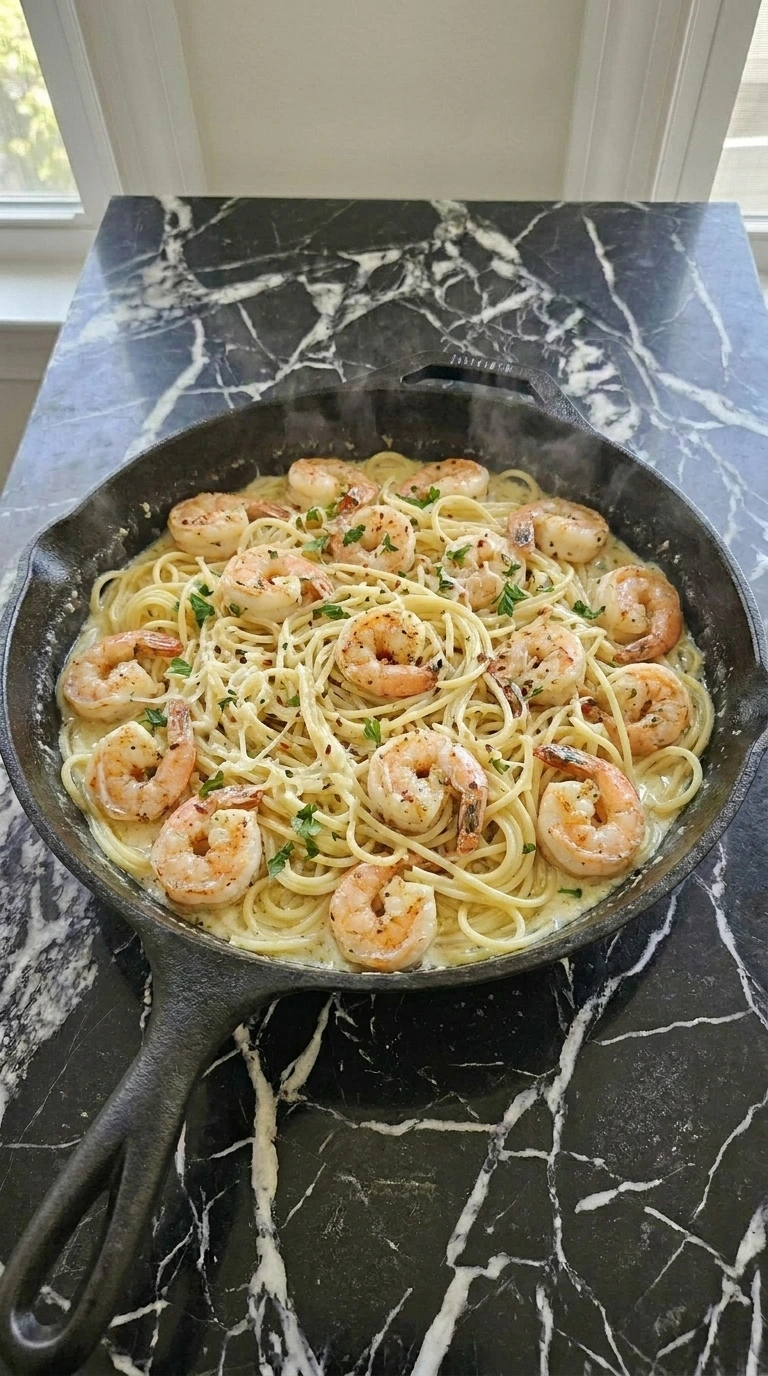
Dump the cooked Barilla spaghetti and the seared pink shrimp directly into the simmering cream sauce inside the cast-iron skillet. Pour in two tablespoons of the reserved hot starchy pasta water to help the elements bind. Squeeze the juice of half a fresh yellow lemon across the surface.
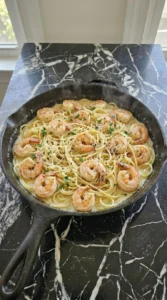
Toss the mixture thoroughly using tongs using a lifting and twisting motion for 2 minutes over low heat. Watch as the glossy white sauce clings tightly to each strand of pasta and wraps around the shrimp. (My first batch looked dry but adding that small splash of salty starch water binds everything into a silky restaurant finish.
) The dish is done when the liquid is completely absorbed and no pools remain at the bottom of the pan. Sprinkle two tablespoons of chopped flat-leaf parsley and extra parmesan across the top. Toss over low heat – the starch emulsifies the sauce for a smooth texture.
Tip: If your sauce looks too thick or clumps together simply add another tablespoon of the reserved pasta water to loosen it up instantly.
Tips for Success
- Buy raw tail-on shrimp instead of pre-cooked varieties because pre-cooked shrimp turn instantly tough and flavorless when reheated in a skillet pan.
- Mince your fresh garlic with a sharp knife rather than using a press because pressing forces out juices that burn instantly in hot butter fat.
- Warm your heavy cream to room temperature before pouring it into the hot skillet to prevent the dairy from curdling from a sudden temperature shock.
- Grate your own parmesan cheese from a solid block because pre-bagged cheeses contain powdery anti-caking cellulose agents that prevent a smooth melt.
- Reserve double the amount of pasta water you think you need because the spaghetti continues absorbing liquid as it sits on the kitchen counter.
- Use an old seasoned cast-iron skillet for searing seafood because the surface seasoning builds a better outer crust than slick Teflon non-stick pans.
- Add the fresh lemon juice at the absolute end of cooking because heat destroys the volatile citrus oils and diminishes the bright refreshing aroma.
- Toss in one cup of halved cherry tomatoes during the garlic sauté phase for a burst of sweet acidity that cuts through the rich butter.
- Fold in two cups of fresh baby spinach leaves during the final toss until they wilt down into the hot cream sauce for extra greens.
- Stir in one tablespoon of old bay seasoning with the red pepper flakes to give the entire dish a smoky coastal Maryland style spin.
Make It Your Own
- heavy cream: full-fat canned coconut milk — Works well for a dairy-free swap but it imparts a subtle tropical coconut flavor to the background.
- Barilla spaghetti: Jovial gluten-free brown rice spaghetti — A great alternative for gluten sensitivities but you must reduce the boiling time by two minutes to prevent breaking.
- raw jumbo shrimp: boneless chicken breast cubes — If you want a land-based alternative you can swap the protein. Check out our Grilled Chicken Wraps for more chicken inspiration.
- Swanson chicken broth: dry white wine like Pinot Grigio — Adds a sophisticated acidic depth to the pan reduction but requires an extra minute of simmering to cook off the alcohol aroma.
How to Store & Reheat
Store any leftovers in a shallow airtight glass container in the refrigerator for up to two days. Make sure the pasta cools down to room temperature before sealing the lid to prevent condensation from thinning out the cream.
Freezing is not recommended because the heavy cream and butter emulsion will separate upon thawing and leave you with a watery texture. To reheat the dish pour the leftovers into a skillet over low heat and add two tablespoons of fresh chicken broth.
Stir the strands gently for five minutes until the sauce melts back into a silky glaze and warms the shrimp through. Watch out for a dull gray color or a strong sour smell because those are clear signs that the seafood has spoiled.
Garlic Butter Shrimp Pasta
Ingredients
- 8 ounces Barilla spaghetti Dry durum wheat long strands boiled to al dente perfection.
- 1 pound raw jumbo shrimp Peeled and deveined with tails left on for visual presentation.
- 2 tablespoons Bertolli extra virgin olive oil Used to sear the seafood at high heat without burning.
- 3 tablespoons Land O Lakes butter Unsalted block melted to form the savory base for the garlic.
- 6 cloves fresh garlic Finely minced to release maximum aromatic oils during cooking.
- 0.5 cup Swanson chicken broth Provides a savory liquid base to deglaze the pan fond.
- 0.5 cup heavy cream Adds a rich velvety body to the reduced skillet sauce.
- 0.5 cup parmiggiano reggiano cheese Finely shredded to melt smoothly into the hot cream emulsion.
- 0.5 item fresh yellow lemon Juiced directly into the pan for a bright contrast to the fat.
- 0.5 teaspoon dried red pepper flakes Optional spice added during the sear for a subtle warmth.
- 2 tablespoons fresh flat-leaf parsley Finely chopped to add a clean herbal note at the very end.
- 1.5 tablespoons sea salt Divided between the pasta boiling water and the shrimp seasoning.
- 0.25 teaspoon black peppercorns Freshly cracked over the shrimp before they hit the skillet.
Instructions
- Drop the long dry strands of Barilla spaghetti into a large stainless steel stockpot filled with rapidly boiling water on high heat. Add one tablespoon of sea salt directly to the water right as the pasta drops. Stir the strands immediately with a long fork to prevent sticking. Cook the pasta on high heat for exactly 9 minutes until it reaches an al dente state. The strands should look pliable but retain a firm chalky white center when snapped. (I used to skip checking the center – the pasta absorbs sauce later and turns to absolute mush if you overboil it here.) Carefully dip a glass measuring cup into the pot to save half a cup of the cloudy starchy liquid before draining. Pour the rest of the pasta into a colander in the sink. Boil hard at full heat – the convection finishes the gluten in 9 min, low heat leaves the center pasty.

- Heat two tablespoons of Bertolli extra virgin olive oil in a heavy 12-inch cast-iron skillet over medium-high heat (about 7 on a 10-dial). Arrange exactly 16 raw gray jumbo shrimp in a single flat layer with space between each piece. Season the tops evenly with a pinch of sea salt and crushed red pepper flakes. Sear the shrimp without moving them for exactly 2 minutes until the bottoms turn pink and white. Flip each shrimp using tongs and cook the second side for 60 seconds. Look for a opaque pink body with slight golden char spots along the curled edges. Miss this window by a minute and the crustacean proteins seize up into rubbery little hockey pucks. Transfer the seared pink shrimp immediately onto a clean white plate using your tongs. Sear 90 seconds without moving – the fond builds the sauce later.

- Lower the skillet burner to medium-low heat (about 3 on a 10-dial) and drop three tablespoons of Land O Lakes butter into the hot pan pan fat. Swirl the pan once at minute 1 to redistribute the melting liquid. Toss in six finely minced cloves of fresh garlic and let them sizzle gently. You will smell the garlic toast right when the cloves turn a pale golden color after 60 seconds. Pour in half a cup of Swanson chicken broth along with half a cup of heavy cream and half a cup of shredded parmesan cheese. Whisk the liquid continuously with a silicone whisk to combine the fat and dairy. Simmer the white liquid for 4 minutes until it thickens into a velvety glaze. The sauce coats the back of a spoon and a finger drawn across leaves a clean line. Reduce on medium-low heat – slow warmth keeps the dairy from separating before the cheese melts completely.
- Dump the cooked Barilla spaghetti and the seared pink shrimp directly into the simmering cream sauce inside the cast-iron skillet. Pour in two tablespoons of the reserved hot starchy pasta water to help the elements bind. Squeeze the juice of half a fresh yellow lemon across the surface. Toss the mixture thoroughly using tongs using a lifting and twisting motion for 2 minutes over low heat. Watch as the glossy white sauce clings tightly to each strand of pasta and wraps around the shrimp. (My first batch looked dry but adding that small splash of salty starch water binds everything into a silky restaurant finish.) The dish is done when the liquid is completely absorbed and no pools remain at the bottom of the pan. Sprinkle two tablespoons of chopped flat-leaf parsley and extra parmesan across the top. Toss over low heat – the starch emulsifies the sauce for a smooth texture.
Notes
Nutrition
Frequently Asked Questions
A Final Note
If you make this on a weekend afternoon with music playing – the way I do – you’ll understand why it’s been in our family rotation for years now. The little trick I mentioned about not rushing the final step is honestly the difference between okay and really good.
Tag me on Instagram if you make it – I love seeing what you cook. And my family says hi (they ate almost half of this when I tested it, which is the highest endorsement you’ll get from a hungry household).
Did you know scampi-style cooking actually started back in Italy with tiny lobsters called langoustines? When Italian immigrants moved to America, those little guys were way too hard to find. So, they swapped them out for easy-to-get shrimp but kept that incredible signature garlic butter sauce we all love.