Neapolitan Pizza Dough Recipe (easy Authentic Napoli-style Crust)
Last summer we were visiting my in-laws. My mother-in-law made Neapolitan Pizza Dough Recipe (Easy Authentic Napoli-Style Crust) three nights in a row. The kids kept asking for it. I must have watched her shape the dough four times before I figured out her little secret. She presses only the center and never crushes the puffy rim. That small move made every pizza blister and rise instead of baking flat.
Now it’s on heavy rotation in our house too. Honestly it took me three tries to get the balance right. The first batch used too much flour and turned stiff. The second stuck to the peel. By the third try I learned to weigh everything and keep the dough slightly tacky. That’s when the crust finally baked thin in the middle and airy around the edge.

If you’re comfortable with bread dough, the method will feel familiar but much gentler. Our Easy Homemade Pumpkin Sourdough Bread uses a longer fermentation too. It’s a good next project when you want more practice. But this pizza dough needs less kneading and a hotter bake. Plan the cold rise the night before and pizza night feels surprisingly calm.
The Secret to Perfect Neapolitan Pizza Dough Recipe (Easy Authentic Napoli-Style Crust)
Neapolitan Pizza Dough Recipe (Easy Authentic Napoli-Style Crust) uses 64 percent hydration. The center stays flexible while the rim inflates. A 20-minute rest lets the flour absorb water before salt tightens the gluten.
Then the 18 to 24-hour cold rise builds deeper flavor without forcing the yeast. That balance matters in a home oven. A 550°F steel transfers heat fast enough to set the base before the center dries.
Leaving a 3/4-inch rim untouched preserves the gas that creates the puffy cornicione. The same careful flour hydration helps our Patty Pan Squash Savory Pancakes. It keeps them tender instead of tough.
Ingredient List
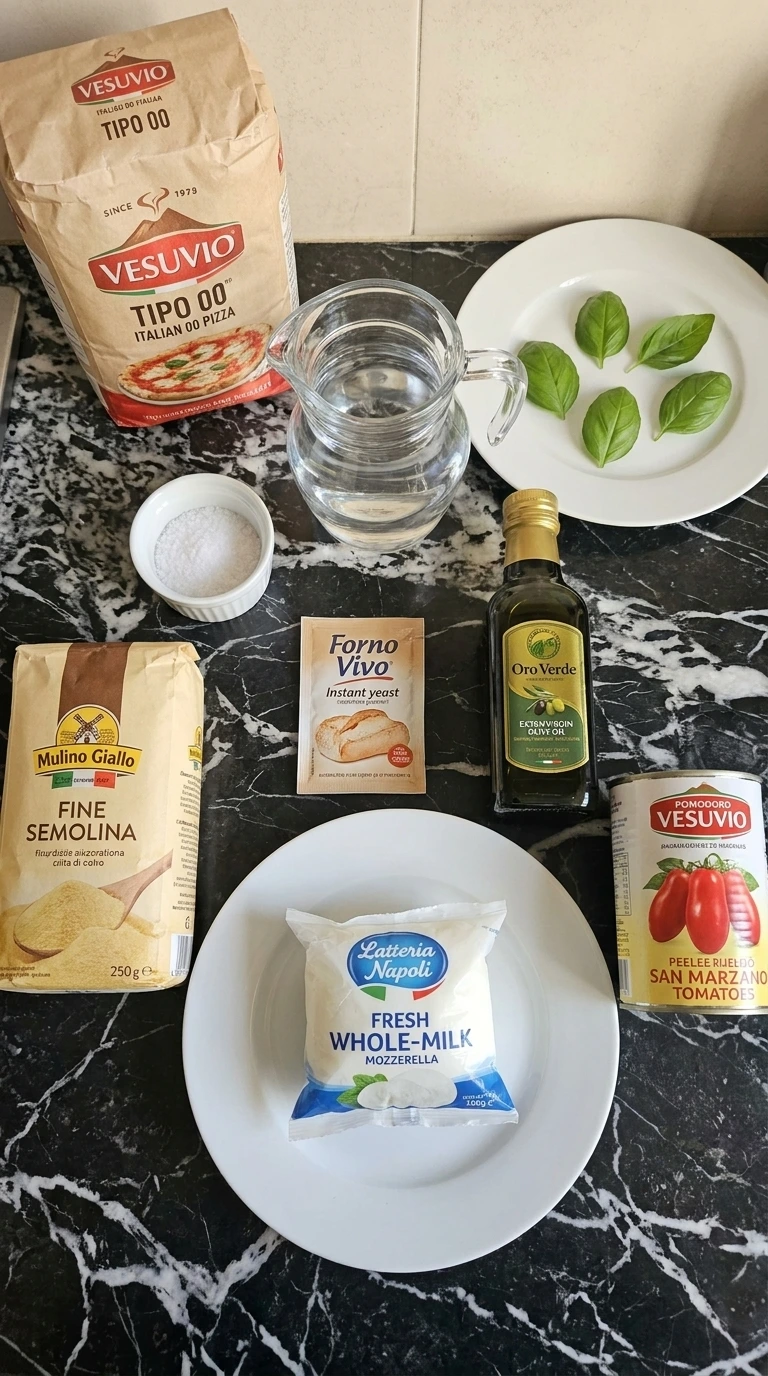
- Italian 00 pizza flour: Use a finely milled flour with about 11.5 to 12.5 percent protein for extensible dough and a tender chew.
- Filtered water: Warm to 75°F so the yeast starts steadily without racing.
- Fine sea salt: Use fine crystals so the salt dissolves evenly and strengthens the dough.
- Instant yeast: Use about 0.4 gram because the long cold rise needs only a small amount.
- Fine semolina flour: Use for dusting the peel so the topped dough slides without sticking.
- Canned whole peeled San Marzano tomatoes: Drain lightly and crush by hand so the sauce stays textured but not watery.
- Fresh whole-milk mozzarella: Tear into nine irregular pieces and drain for 30 minutes before topping.
- Fresh Genovese basil: Keep three leaves for baking and two fresh leaves for finishing.
- Extra-virgin olive oil: Divide between the unbaked topping and the finished pizza for a light fruity sheen.
Tools You’ll Need
- Digital kitchen scale: A scale measures flour and water to the gram so hydration stays consistent, and a model accurate to 1 gram prevents a small dough from drifting too wet or dry.
- Large clear glass mixing bowl: A 3-quart clear bowl gives the dough room to expand and lets you see bubbles, while a smaller bowl can restrict the rise and hide fermentation.
- Flexible bench scraper: A 5-inch flexible scraper lifts sticky dough without tearing it, while a rigid metal blade can cut the surface during shaping.
- Pizza steel: A 1/4-inch steel at least 14 inches wide transfers heat quickly for a crisp base, while a thin sheet pan won’t store enough heat for strong oven spring.
- Aluminum pizza peel: A 12-inch aluminum peel supports the stretched dough and releases it cleanly, while a peel smaller than the pizza can buckle the soft center.
- Instant-read thermometer: A fast thermometer checks 75°F water and 76°F to 78°F dough, while a slow dial model can miss temperature changes during kneading.
- Pizza wheel: A sharp 4-inch wheel cuts the rested pizza in one pass, while a dull cutter drags the mozzarella and crushes the airy rim.
Let’s Make Neapolitan Pizza Dough Recipe (Easy Authentic Napoli-Style Crust)
Step 1: Mix the shaggy dough
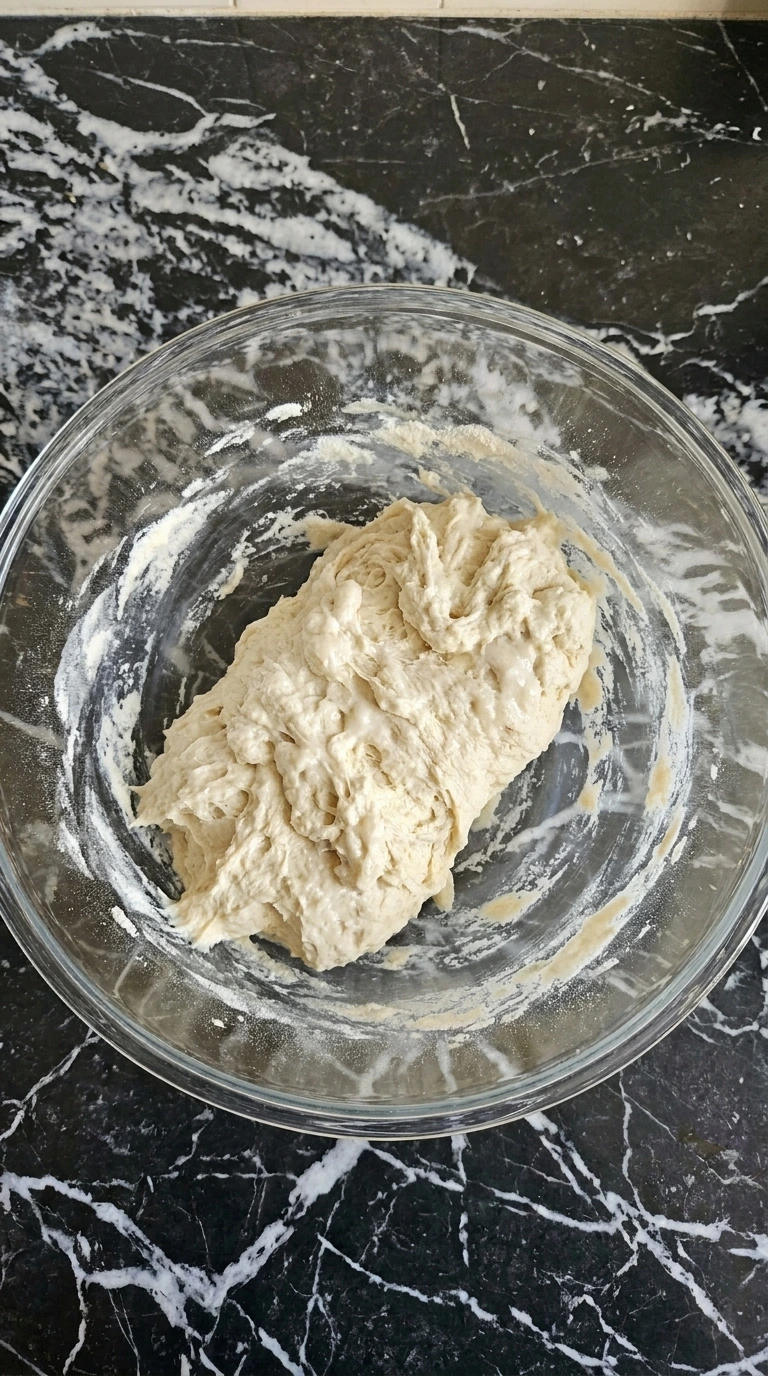
Pour 102 grams of filtered water at 75°F into the bowl and stir in 1/8 teaspoon instant yeast for 30 seconds. Add 160 grams Italian 00 pizza flour. Fold from the outside toward the center with your fingers for 2 to 3 minutes. Stop when no dry pockets remain.
Cover and rest the rough dough for exactly 20 minutes at 72°F. The dough should look shaggy and slightly sticky with uneven ridges across the surface. You’ll smell fresh flour but not strong yeast. Scrape the bowl once at minute 2 so every loose patch joins the mass.
Skip the 20-minute rest and the dough tears during kneading. This rest hydrates the flour before the gluten takes strain.
Tip: For Neapolitan Pizza Dough Recipe (Easy Authentic Napoli-Style Crust), weigh the water. A 10-gram change alters the texture.
Step 2: Knead in the salt
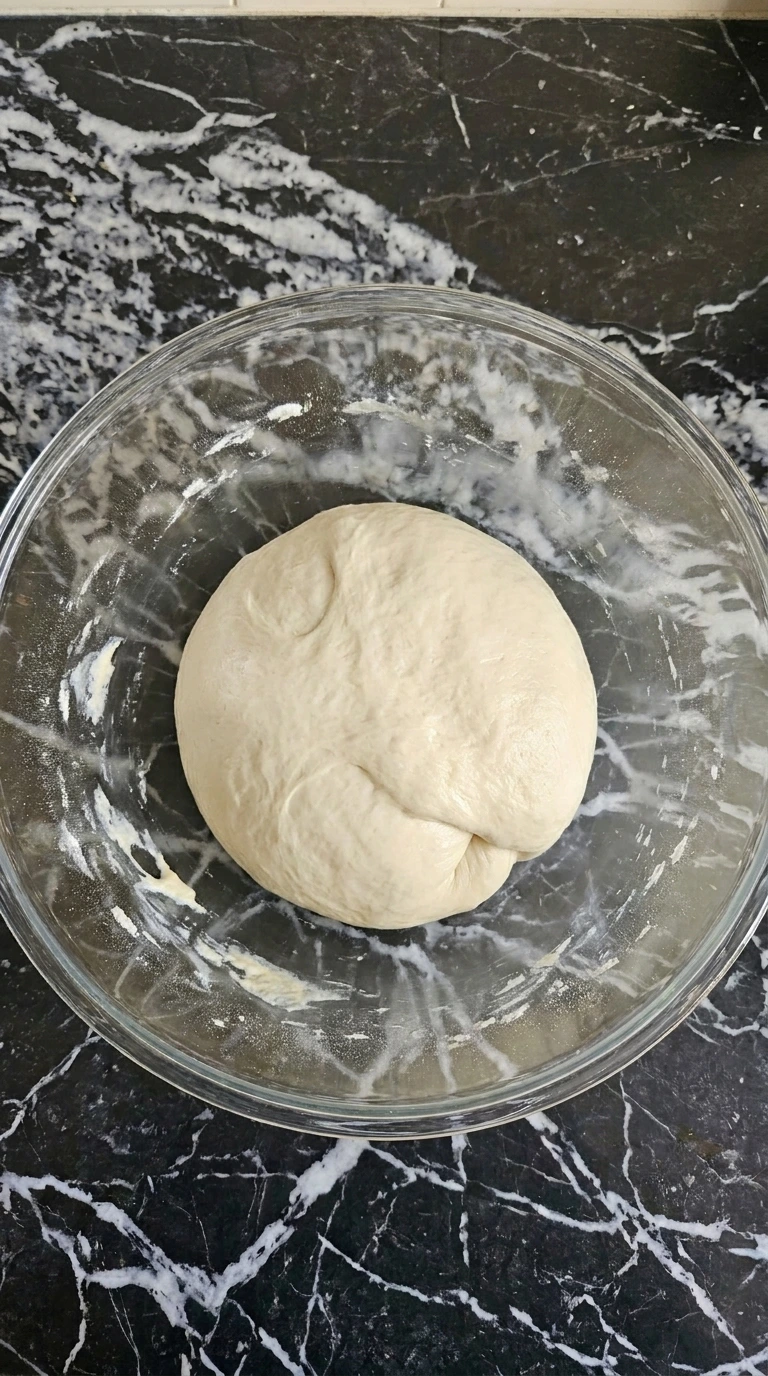
Sprinkle 5 grams fine sea salt over the rested dough at 72°F. Pinch it through the surface for 30 seconds and then knead for 8 to 10 minutes. Press with the heel of your hand and turn the dough 90 degrees between folds. Aim for a finished dough temperature of 76°F to 78°F.
(I used to add salt before hydration, the dough stayed stiff. This order fixes it. ) The rough ridges should disappear and the surface should become smooth with a soft satin sheen. Pull a small edge until it forms a thin window without tearing.
If the dough climbs above 80°F, stop for 5 minutes or it becomes sticky and weak. Controlled kneading aligns gluten without overheating the yeast. Preheat the oven to 550°F now so it’s fully hot by the time the pan goes in.
Tip: Wet your fingertips with 1 teaspoon of the measured water if the dough sticks instead of adding extra flour.
Step 3: Build flavor with a cold rise
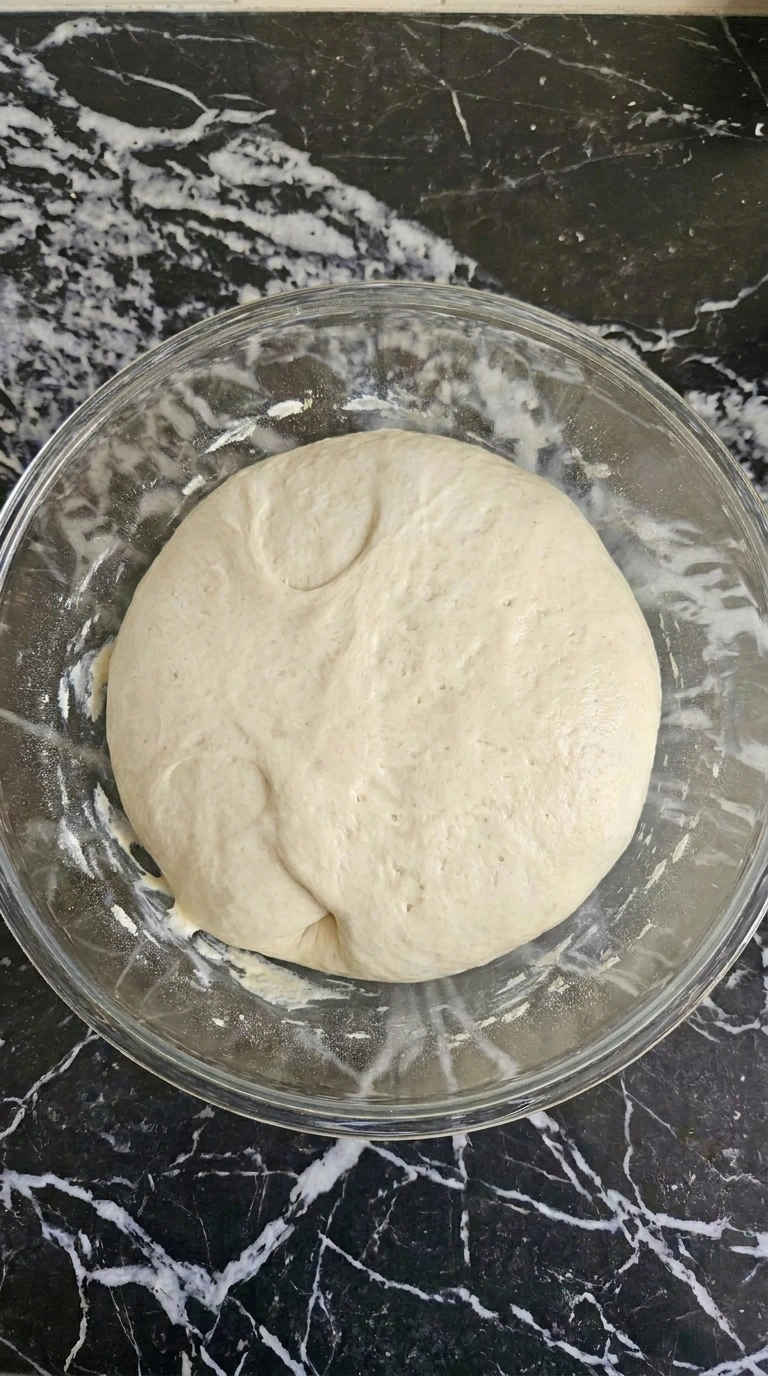
Tuck the dough into a loose round inside the same bowl. Cover it and hold it at 72°F for 2 hours. At minute 60, lift one edge and fold it across the center. Rotate the bowl a quarter turn and repeat three more times.
Then refrigerate at 38°F to 40°F for 18 to 24 hours. The dough should expand by about 60 percent and show small bubbles under its pale surface. A mild fermented aroma should replace the raw flour smell. The top may lean slightly toward one side after the fold.
Let it double fully and the gluten can weaken before baking. The cold rise creates flavor while keeping fermentation controlled.
Tip: Mark the starting dough height with a small piece of tape so you can judge a 60 percent rise accurately.
Step 4: Shape and proof the dough ball
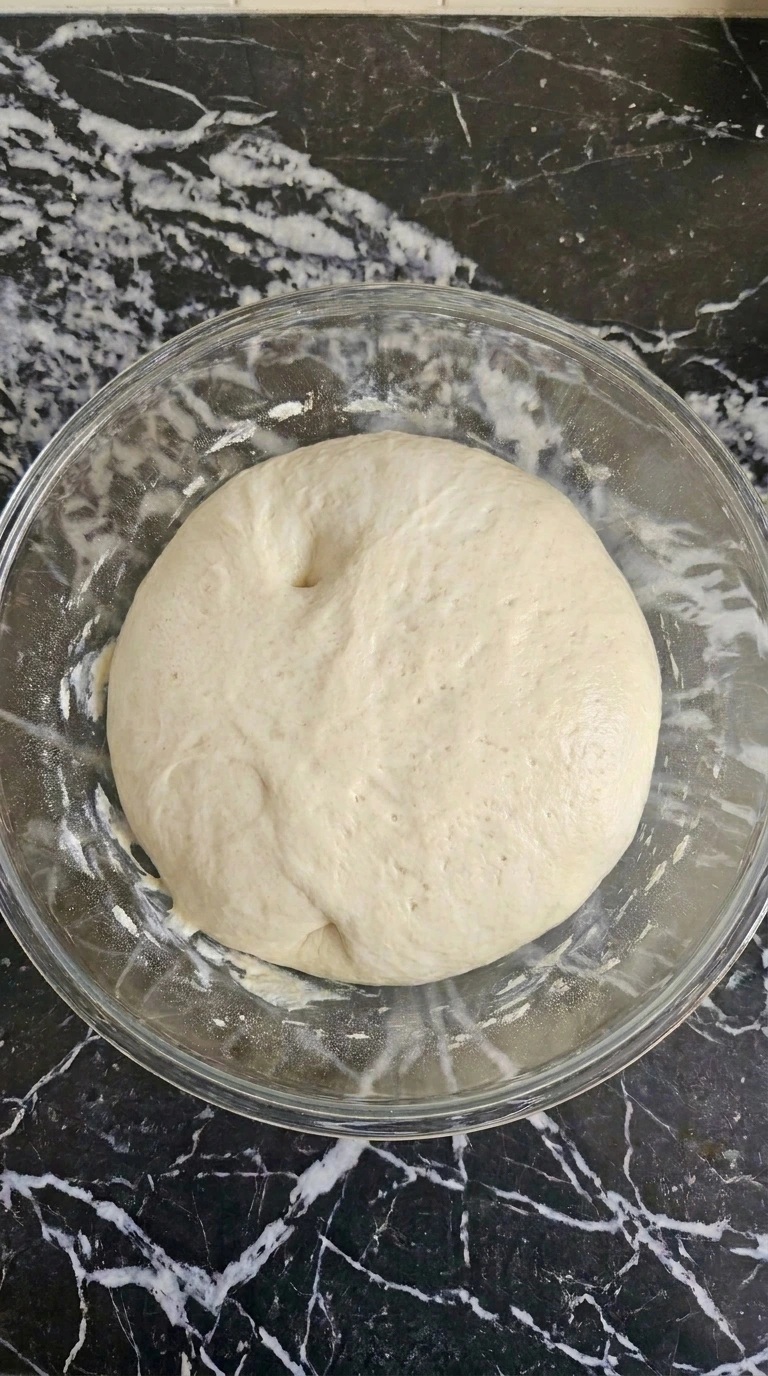
Remove the dough from the refrigerator and keep it at 72°F for 20 minutes. Lift the edges underneath and rotate the dough a quarter turn after each tuck. Repeat 8 to 10 times until the top feels taut. Return the seam-side-down ball to the same bowl.
Cover and proof for 2 hours at 72°F. This Neapolitan Pizza Dough Recipe (Easy Authentic Napoli-Style Crust) should become puffy but still hold a rounded shape. Press one fingertip 1/4 inch into the top. The dent should return halfway within 10 seconds.
A fast rebound means it needs 30 more minutes. A collapsed dent means it overproofed. Proper proofing preserves gas for the cornicione.
Tip: Keep the bowl away from direct sun because a surface above 78°F can proof faster than the center.
Step 5: Stretch and top the pizza
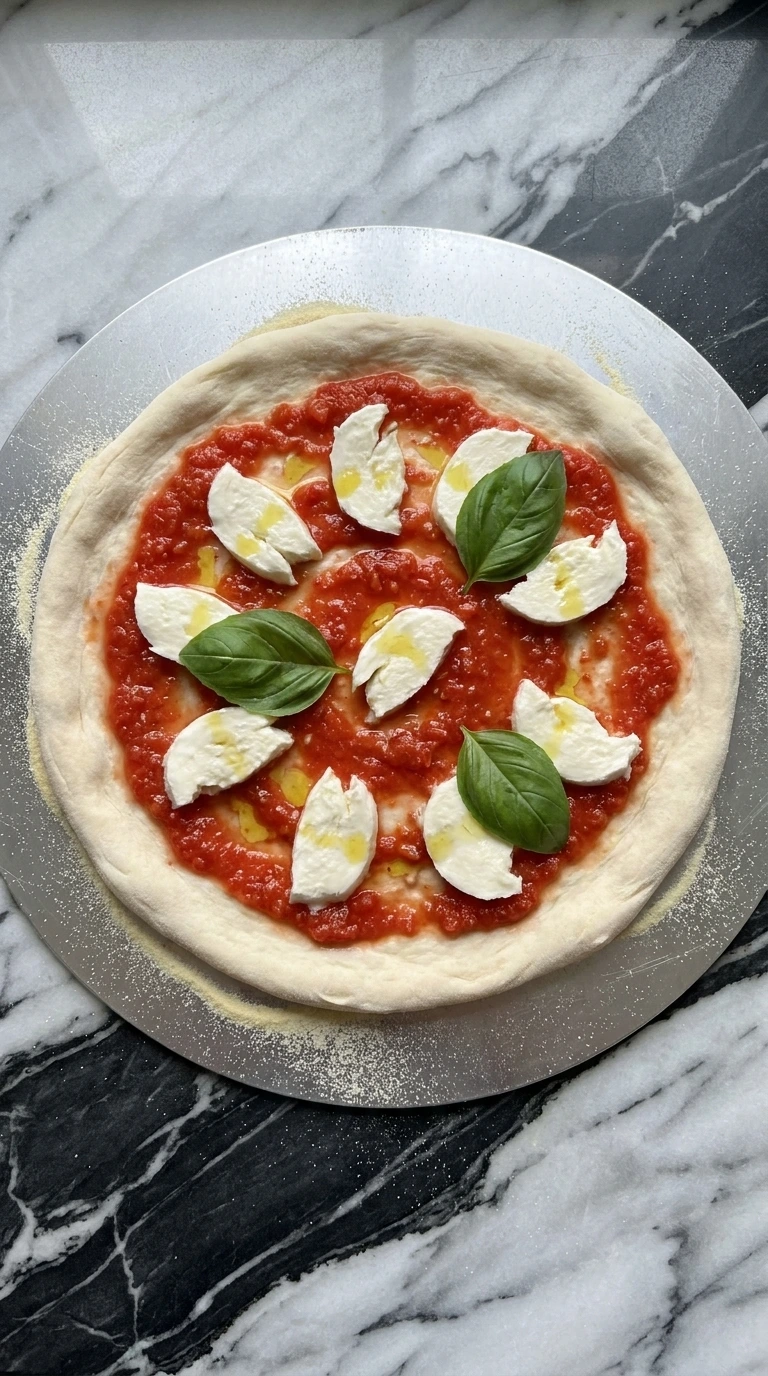
Heat a pizza steel at 550°F for 45 minutes. Dust the peel with 1 tablespoon fine semolina flour. Press the dough from the center outward and leave a 3/4-inch rim untouched. Stretch it to 10 inches with both hands.
Work within 4 minutes. Spread 1/2 cup hand-crushed San Marzano tomatoes and add 3 ounces drained fresh whole-milk mozzarella in nine uneven pieces. Add three Genovese basil leaves and drizzle 1/2 teaspoon extra-virgin olive oil in broken lines. The center should look thin and wet while the rim stays pale and puffy.
Shake the peel once and watch the pizza slide freely. Miss the 4-minute window and the damp center can stick. Gentle stretching keeps the rim’s trapped gas intact.
Tip: Drain the torn mozzarella for 30 minutes so excess whey doesn’t pool across the thin center.
Step 6: Bake until blistered
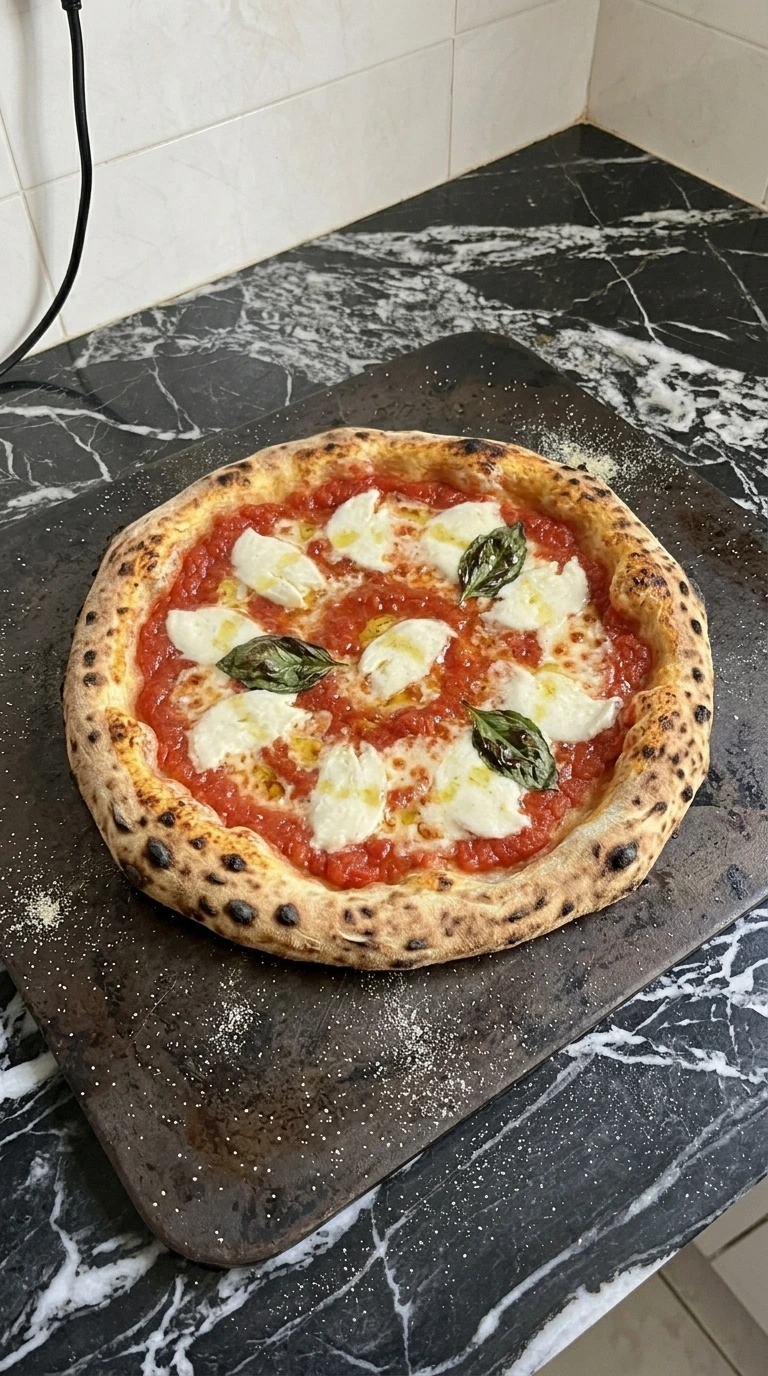
Slide the topped pizza onto the fully heated steel at 550°F. Bake for 5 to 7 minutes. Rotate it 180 degrees at minute 3 so the rim colors evenly. Watch the last 90 seconds closely.
(My first pizza baked on a cold stone, the rim stayed pale and dense. A fully heated steel fixed it. ) The rim should rise into uneven bubbles with deep golden patches and dark leopard spots. The mozzarella should melt into glossy pools while the tomato bubbles between them.
Lift one edge and look for a firm golden underside with scattered black freckles. Go past 8 minutes and the center turns dry. Fast heat sets the base before moisture escapes.
Tip: Place the steel 6 inches below the top element so the rim and underside finish at nearly the same time.
Step 7: Rest and serve one crisp slice
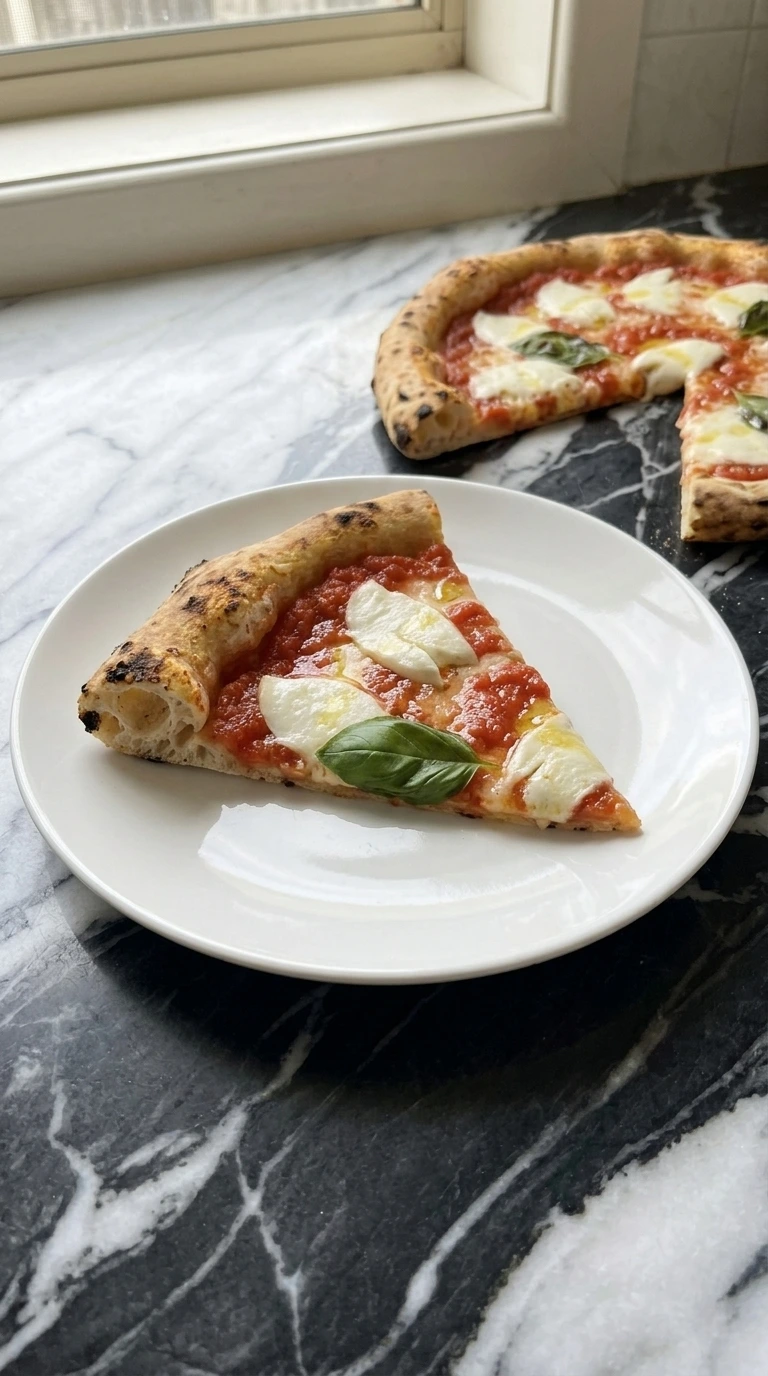
Transfer the pizza to a 12-inch white plate and rest it for 2 minutes at 72°F. Add the remaining two Genovese basil leaves and drizzle the final 1/2 teaspoon extra-virgin olive oil. Cut six wedges with one firm rolling motion.
Move one wedge onto a 9-inch white plate and keep the point facing the center. The cheese should settle without becoming firm and the cut edge should reveal an open honeycombed rim. You’ll hear a light crackle when the crust meets the cutter.
Slice immediately and hot cheese slides away from the tomato. Wait longer than 5 minutes and the center softens. A brief rest stabilizes the toppings while preserving crispness.
Tip: Serve the slice within 5 minutes and fold the tip slightly if the center feels especially thin.
Tips for Perfect Neapolitan Pizza Dough Recipe (Easy Authentic Napoli-Style Crust)
- For Neapolitan Pizza Dough Recipe (Easy Authentic Napoli-Style Crust), keep the dough between 76°F and 78°F. This keeps fermentation steady.
- Choose Italian 00 flour with 11.5 to 12.5 percent protein. Lower protein can tear and higher protein can resist stretching.
- Heat a 1/4-inch pizza steel at 550°F for a full 45 minutes before launching the pizza.
- Don’t add bench flour during kneading. Wet your hands for 5 seconds instead so the 64 percent hydration stays accurate.
- Drain torn fresh whole-milk mozzarella for 30 minutes and blot once because excess whey makes the center soggy.
- Top and launch within 4 minutes. Shake the peel after 2 minutes and add 1 teaspoon semolina under any sticky edge.
- Rotate the pizza 180 degrees at minute 3. Check the underside at minute 5 for golden color with dark freckles.
- Make a marinara version by skipping mozzarella and adding one thinly sliced garlic clove plus 1/2 teaspoon dried oregano before baking.
- Create a white pizza by replacing tomato with 1/3 cup whole-milk ricotta and adding 1 teaspoon lemon zest after baking.
- Add 1 tablespoon sliced Calabrian chile and reduce the tomato to 1/3 cup for a spicy version with a cleaner center.
- Top with 1/2 cup thinly sliced roasted vegetables and keep the total topping weight under 5 ounces so the crust still lifts.
Variations to Try
- Italian 00 pizza flour: 160 grams bread flour — Use the same weight and reduce the water to 98 grams. The crust becomes chewier and less delicate because bread flour absorbs more water.
- Instant yeast: 1/8 teaspoon active dry yeast — Dissolve it in the 75°F water for 5 minutes before adding flour. The rise may take 15 to 30 minutes longer.
- Fresh whole-milk mozzarella: 3 ounces dairy-free mozzarella — Choose a block-style product and use 2 1/2 ounces because many vegan cheeses melt more slowly. The topping will be less creamy and may need 1 extra minute.
- Italian 00 pizza flour: 160 grams gluten-free pizza flour blend — Use a blend labeled for yeast dough and follow its water ratio. It won’t create the same stretchy cornicione, so press rather than hand-stretch.
- Canned whole peeled San Marzano tomatoes: 1/3 cup Butternut Squash Hummus — Spread only 1/3 cup because hummus is thicker than tomato. The result becomes earthy and sweet, and it isn’t traditional Neapolitan pizza.
- Egg: No replacement needed — The dough is naturally egg-free and doesn’t need a wash. Adding egg would make the crumb richer and less authentically chewy.
Storing and Reheating Neapolitan Pizza Dough Recipe (Easy Authentic Napoli-Style Crust)
Store unbaked dough in a lightly oiled airtight container for up to 3 days at 38°F to 40°F. For longer storage, freeze the proofed ball after the cold rise. Wrap it tightly and place it in a freezer bag for up to 2 months. Thaw it overnight in the refrigerator.
Then proof at 72°F for 2 to 3 hours before stretching Neapolitan Pizza Dough Recipe (Easy Authentic Napoli-Style Crust). Reheat baked slices in a 325°F skillet for 3 minutes. Add 1 teaspoon water beside the crust and cover for 60 seconds. This softens the mozzarella while the base stays crisp.
Discard pizza with a sour dairy smell, slimy basil or visible mold. Discard raw dough if it turns gray throughout or smells sharply rotten rather than mildly fermented.
Neapolitan Pizza Dough Recipe (easy Authentic Napoli-style Crust)
Ingredients
- 160 grams Italian 00 pizza flour Use a finely milled flour with about 11.5 to 12.5 percent protein for extensible dough and a tender chew.
- 102 grams Filtered water Warm to 75°F so the yeast starts steadily without racing.
- 5 grams Fine sea salt Use fine crystals so the salt dissolves evenly and strengthens the dough.
- 1/8 teaspoon Instant yeast Use about 0.4 gram because the long cold rise needs only a small amount.
- 1 tablespoon Fine semolina flour Use for dusting the peel so the topped dough slides without sticking.
- 1/2 cup Canned whole peeled San Marzano tomatoes Drain lightly and crush by hand so the sauce stays textured but not watery.
- 3 ounces Fresh whole-milk mozzarella Tear into nine irregular pieces and drain for 30 minutes before topping.
- 5 leaves Fresh Genovese basil Keep three leaves for baking and two fresh leaves for finishing.
- 1 teaspoon Extra-virgin olive oil Divide between the unbaked topping and the finished pizza for a light fruity sheen.
Instructions
- Pour 102 grams of filtered water at 75°F into the bowl and stir in 1/8 teaspoon instant yeast for 30 seconds. Add 160 grams Italian 00 pizza flour. Fold from the outside toward the center with your fingers for 2 to 3 minutes. Stop when no dry pockets remain. Cover and rest the rough dough for exactly 20 minutes at 72°F. The dough should look shaggy and slightly sticky with uneven ridges across the surface. You’ll smell fresh flour but not strong yeast. Scrape the bowl once at minute 2 so every loose patch joins the mass. Skip the 20-minute rest and the dough tears during kneading. This rest hydrates the flour before the gluten takes strain.
- Sprinkle 5 grams fine sea salt over the rested dough at 72°F. Pinch it through the surface for 30 seconds and then knead for 8 to 10 minutes. Press with the heel of your hand and turn the dough 90 degrees between folds. Aim for a finished dough temperature of 76°F to 78°F. (I used to add salt before hydration, the dough stayed stiff. This order fixes it.) The rough ridges should disappear and the surface should become smooth with a soft satin sheen. Pull a small edge until it forms a thin window without tearing. If the dough climbs above 80°F, stop for 5 minutes or it becomes sticky and weak. Controlled kneading aligns gluten without overheating the yeast. Preheat the oven to 550°F now so it’s fully hot by the time the pan goes in.
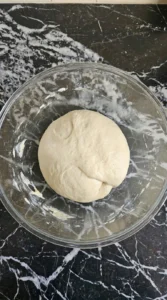
- Tuck the dough into a loose round inside the same bowl. Cover it and hold it at 72°F for 2 hours. At minute 60, lift one edge and fold it across the center. Rotate the bowl a quarter turn and repeat three more times. Then refrigerate at 38°F to 40°F for 18 to 24 hours. The dough should expand by about 60 percent and show small bubbles under its pale surface. A mild fermented aroma should replace the raw flour smell. The top may lean slightly toward one side after the fold. Let it double fully and the gluten can weaken before baking. The cold rise creates flavor while keeping fermentation controlled.
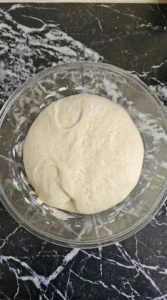
- Remove the dough from the refrigerator and keep it at 72°F for 20 minutes. Lift the edges underneath and rotate the dough a quarter turn after each tuck. Repeat 8 to 10 times until the top feels taut. Return the seam-side-down ball to the same bowl. Cover and proof for 2 hours at 72°F. This Neapolitan Pizza Dough Recipe (Easy Authentic Napoli-Style Crust) should become puffy but still hold a rounded shape. Press one fingertip 1/4 inch into the top. The dent should return halfway within 10 seconds. A fast rebound means it needs 30 more minutes. A collapsed dent means it overproofed. Proper proofing preserves gas for the cornicione.
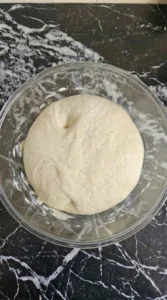
- Heat a pizza steel at 550°F for 45 minutes. Dust the peel with 1 tablespoon fine semolina flour. Press the dough from the center outward and leave a 3/4-inch rim untouched. Stretch it to 10 inches with both hands. Work within 4 minutes. Spread 1/2 cup hand-crushed San Marzano tomatoes and add 3 ounces drained fresh whole-milk mozzarella in nine uneven pieces. Add three Genovese basil leaves and drizzle 1/2 teaspoon extra-virgin olive oil in broken lines. The center should look thin and wet while the rim stays pale and puffy. Shake the peel once and watch the pizza slide freely. Miss the 4-minute window and the damp center can stick. Gentle stretching keeps the rim’s trapped gas intact.

- Slide the topped pizza onto the fully heated steel at 550°F. Bake for 5 to 7 minutes. Rotate it 180 degrees at minute 3 so the rim colors evenly. Watch the last 90 seconds closely. (My first pizza baked on a cold stone, the rim stayed pale and dense. A fully heated steel fixed it.) The rim should rise into uneven bubbles with deep golden patches and dark leopard spots. The mozzarella should melt into glossy pools while the tomato bubbles between them. Lift one edge and look for a firm golden underside with scattered black freckles. Go past 8 minutes and the center turns dry. Fast heat sets the base before moisture escapes.

- Transfer the pizza to a 12-inch white plate and rest it for 2 minutes at 72°F. Add the remaining two Genovese basil leaves and drizzle the final 1/2 teaspoon extra-virgin olive oil. Cut six wedges with one firm rolling motion. Move one wedge onto a 9-inch white plate and keep the point facing the center. The cheese should settle without becoming firm and the cut edge should reveal an open honeycombed rim. You’ll hear a light crackle when the crust meets the cutter. Slice immediately and hot cheese slides away from the tomato. Wait longer than 5 minutes and the center softens. A brief rest stabilizes the toppings while preserving crispness.

Notes
Nutrition
Frequently Asked Questions
Yes. Mix and knead the dough and then refrigerate it at 38°F to 40°F for up to 48 hours. Reduce the room-temperature bulk rise to 60 minutes so the dough doesn’t overproof before the longer cold rest. Bring it back to 72°F for 2 hours before stretching.
Keep unbaked dough in a lightly covered airtight container for 3 days from mixing. By day 4 it often smells sharply alcoholic and loses strength. Then it may spread instead of holding a puffy rim. Check the surface for gray patches or a rotten odor before using it.
You can use 160 grams all-purpose flour and reduce the water to 96 grams. The crust will brown faster at 550°F and the rim will be less elastic. Start checking the underside at minute 4. Rest the dough 25 minutes before kneading to improve extensibility.
The gluten is too tight or the dough is too cold. Cover it and rest at 72°F for 20 minutes before stretching again. Press only the center and rotate the dough after each gentle stretch. Don’t pull the rim because that releases the gas needed for oven spring.
Yes. Double every ingredient by weight and divide the fermented dough into two equal 267-gram balls. Proof them in separate covered containers for 2 hours so they don’t merge and lose their round shape. Bake one pizza at a time so the steel recovers its heat.
Heat a dry skillet over medium-low heat at about 325°F and warm the slice for 3 minutes. Add 1 teaspoon water beside the slice and cover for 60 seconds. The mozzarella softens without making the base limp. Remove the lid for the final 30 seconds to restore crispness.
Before You Go
Every time I make Neapolitan Pizza Dough Recipe (Easy Authentic Napoli-Style Crust), I remember my nervous first attempt. I was convinced I’d need more experience, but the slow rise makes this version surprisingly forgiving.
You can miss the timing as I did three times and still get a good crust. Try it and leave a comment below, then serve it with our Goat Cheese and Fig Jam Appetizer for Easy Entertaining.
Traditional Neapolitan-style dough uses just flour, water, salt, and yeast. You don’t need sugar or oil when the dough ferments properly and the oven is hot enough.