
Ingredients
Method
- Pour 102 grams of filtered water at 75°F into the bowl and stir in 1/8 teaspoon instant yeast for 30 seconds. Add 160 grams Italian 00 pizza flour. Fold from the outside toward the center with your fingers for 2 to 3 minutes. Stop when no dry pockets remain. Cover and rest the rough dough for exactly 20 minutes at 72°F. The dough should look shaggy and slightly sticky with uneven ridges across the surface. You'll smell fresh flour but not strong yeast. Scrape the bowl once at minute 2 so every loose patch joins the mass. Skip the 20-minute rest and the dough tears during kneading. This rest hydrates the flour before the gluten takes strain.
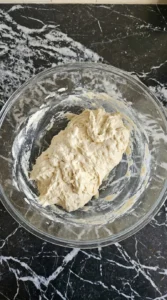
- Sprinkle 5 grams fine sea salt over the rested dough at 72°F. Pinch it through the surface for 30 seconds and then knead for 8 to 10 minutes. Press with the heel of your hand and turn the dough 90 degrees between folds. Aim for a finished dough temperature of 76°F to 78°F. (I used to add salt before hydration, the dough stayed stiff. This order fixes it.) The rough ridges should disappear and the surface should become smooth with a soft satin sheen. Pull a small edge until it forms a thin window without tearing. If the dough climbs above 80°F, stop for 5 minutes or it becomes sticky and weak. Controlled kneading aligns gluten without overheating the yeast. Preheat the oven to 550°F now so it's fully hot by the time the pan goes in.
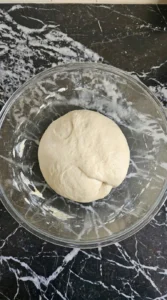
- Tuck the dough into a loose round inside the same bowl. Cover it and hold it at 72°F for 2 hours. At minute 60, lift one edge and fold it across the center. Rotate the bowl a quarter turn and repeat three more times. Then refrigerate at 38°F to 40°F for 18 to 24 hours. The dough should expand by about 60 percent and show small bubbles under its pale surface. A mild fermented aroma should replace the raw flour smell. The top may lean slightly toward one side after the fold. Let it double fully and the gluten can weaken before baking. The cold rise creates flavor while keeping fermentation controlled.
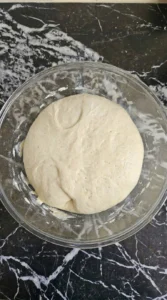
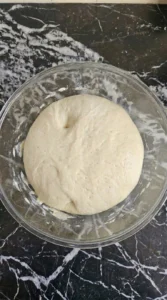
- Remove the dough from the refrigerator and keep it at 72°F for 20 minutes. Lift the edges underneath and rotate the dough a quarter turn after each tuck. Repeat 8 to 10 times until the top feels taut. Return the seam-side-down ball to the same bowl. Cover and proof for 2 hours at 72°F. This Neapolitan Pizza Dough Recipe (Easy Authentic Napoli-Style Crust) should become puffy but still hold a rounded shape. Press one fingertip 1/4 inch into the top. The dent should return halfway within 10 seconds. A fast rebound means it needs 30 more minutes. A collapsed dent means it overproofed. Proper proofing preserves gas for the cornicione.
- Heat a pizza steel at 550°F for 45 minutes. Dust the peel with 1 tablespoon fine semolina flour. Press the dough from the center outward and leave a 3/4-inch rim untouched. Stretch it to 10 inches with both hands. Work within 4 minutes. Spread 1/2 cup hand-crushed San Marzano tomatoes and add 3 ounces drained fresh whole-milk mozzarella in nine uneven pieces. Add three Genovese basil leaves and drizzle 1/2 teaspoon extra-virgin olive oil in broken lines. The center should look thin and wet while the rim stays pale and puffy. Shake the peel once and watch the pizza slide freely. Miss the 4-minute window and the damp center can stick. Gentle stretching keeps the rim's trapped gas intact.

- Slide the topped pizza onto the fully heated steel at 550°F. Bake for 5 to 7 minutes. Rotate it 180 degrees at minute 3 so the rim colors evenly. Watch the last 90 seconds closely. (My first pizza baked on a cold stone, the rim stayed pale and dense. A fully heated steel fixed it.) The rim should rise into uneven bubbles with deep golden patches and dark leopard spots. The mozzarella should melt into glossy pools while the tomato bubbles between them. Lift one edge and look for a firm golden underside with scattered black freckles. Go past 8 minutes and the center turns dry. Fast heat sets the base before moisture escapes.

- Transfer the pizza to a 12-inch white plate and rest it for 2 minutes at 72°F. Add the remaining two Genovese basil leaves and drizzle the final 1/2 teaspoon extra-virgin olive oil. Cut six wedges with one firm rolling motion. Move one wedge onto a 9-inch white plate and keep the point facing the center. The cheese should settle without becoming firm and the cut edge should reveal an open honeycombed rim. You'll hear a light crackle when the crust meets the cutter. Slice immediately and hot cheese slides away from the tomato. Wait longer than 5 minutes and the center softens. A brief rest stabilizes the toppings while preserving crispness.

Notes
Store unbaked dough in a lightly oiled airtight container for up to 3 days at 38°F to 40°F. For longer storage, freeze the proofed ball after the cold rise. Wrap it tightly and place it in a freezer bag for up to 2 months. Thaw it overnight in the refrigerator. Then proof at 72°F for 2 to 3 hours before stretching Neapolitan Pizza Dough Recipe (Easy Authentic Napoli-Style Crust). Reheat baked slices in a 325°F skillet for 3 minutes. Add 1 teaspoon water beside the crust and cover for 60 seconds. This softens the mozzarella while the base stays crisp. Discard pizza with a sour dairy smell, slimy basil or visible mold. Discard raw dough if it turns gray throughout or smells sharply rotten rather than mildly fermented.