
Ingredients
Method
- Set 1/2 cup unsalted butter out until it reaches about 65°F, then beat it with 3/4 cup light brown sugar and 1/4 cup granulated cane sugar for 2 to 3 minutes. Scrape the mixture once halfway through so no dense butter hides near the bottom. Keep mixing until the color turns one shade lighter and the texture looks fluffy rather than greasy. Don't keep going once it loosens too much. Next, look for soft ridges that hold for a few seconds after mixing. The mixture should smell buttery and lightly caramel-like. If the butter gets above about 72°F, the dough can spread too fast later. Cream at 65°F for 2 to 3 minutes because trapped air helps the cookies rise before they spread.

- Add 1 large egg and 2 teaspoons pure vanilla extract to the creamed mixture. Beat for 45 to 60 seconds at medium speed and scrape the sides after about 30 seconds. The mixture may look loose at first, but keep mixing until it turns smooth and slightly glossy. Stop as soon as the egg disappears because extra beating can warm the butter and weaken the dough. Then watch for a thick batter-like texture with no streaks of egg white. You should smell vanilla clearly, and the mixture should fall from the beater in heavy ribbons. If it looks oily or separated, chill it for 5 minutes before continuing. Mix only until emulsified because a stable butter and egg mixture keeps the crumb even.

- Whisk 1 3/4 cups all-purpose flour with 1/2 teaspoon baking soda and 1/2 teaspoon fine sea salt, then add the dry mix to the wet base. Fold with a rubber spatula using broad scooping turns for about 45 to 60 seconds. When only a few flour streaks remain, fold in 8 roughly broken Halloween Oreo sandwich cookies and 1/2 cup orange and dark candy-coated chocolate pieces. Stop after 8 to 10 folds. (I tested a batch with much finer Oreo crumbs, but they disappeared into the dough. Rough chunks give better pockets.) The dough should look thick and slightly rough with clear black cookie pieces and flashes of orange throughout. A few dry specks can vanish during the last folds. But if you keep stirring after the flour disappears, the baked cookies can turn firm instead of tender. Fold briefly because less mixing limits gluten development and keeps Halloween Oreo Cookies soft.
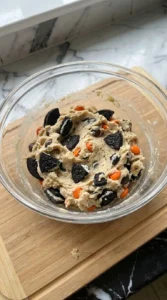
- Divide the dough into 12 portions of about 3 tablespoons each, then roll each portion loosely without pressing it smooth. Push the remaining 4 roughly broken Halloween Oreo sandwich cookies into the tops and add 1/4 cup orange and dark candy-coated chocolate pieces so the pieces stay visible. Chill the shaped dough at 38°F for 30 minutes. Space the portions apart while they chill so cold air reaches each mound evenly. After 30 minutes, the dough should feel firm around the edges but still yield slightly when pressed. The Oreo chunks will look embedded rather than buried. Skip the chill and warm butter can melt before the cookie structure sets, which causes wide flat edges. Chill at 38°F because firm butter delays spreading until the flour and egg structure begins to set.

- Heat the oven to 350°F and arrange the 12 chilled dough portions with at least 2 inches between them. Bake for 11 to 13 minutes and rotate the tray once at minute 7 if your oven browns unevenly. Pull the cookies when the edges look set and lightly golden but the centers still look soft and slightly puffed. Let them stand on the hot tray for exactly 8 minutes before moving them so the centers finish setting without drying out. Finally, look for cracked tops, soft centers and crisp-looking edges with orange creme and candy still visible. The cookies should smell like vanilla and toasted chocolate wafers. Go past 13 minutes and the centers lose their chewy texture. Bake at 350°F until the edges set because carryover heat finishes the middle gently.

Notes
Keep fully cooled Halloween Oreo Cookies in an airtight container at room temperature for 3 to 4 days. For longer storage, freeze individual cookies between sheets of parchment in a sealed container for up to 2 months so the Oreo chunks don't stick together. To warm one cookie, heat it at 300°F for 4 to 5 minutes or microwave it for about 10 seconds. Discard cookies that develop a sour smell, damp sticky patches or visible mold, since those signs mean they're no longer safe to eat.