
Ingredients
Method
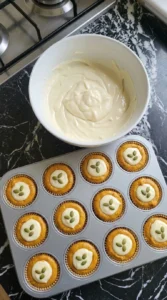
- Let the full-fat block cream cheese sit until it reaches 68°F, about 30 minutes. Beat it with 1/4 cup granulated sugar, the egg yolk and 1 teaspoon vanilla for 2 minutes. Scrape the bowl at minute 1 and keep the motion tight against the sides. Stop by minute 3 because extra air makes the filling puff and crack. The filling should look pale ivory, thick and glossy. It should fall in a slow ribbon and hold a soft mound for 5 seconds. You'll notice a mild cheesecake aroma as it smooths. If cold lumps remain, mix another 30 seconds, but don't continue after it turns silky. Room-temperature mixing prevents a lumpy center.
- Keep the pumpkin puree, whole milk and eggs near 68°F. Whisk them with avocado oil, light brown sugar, remaining granulated sugar and 2 teaspoons vanilla for 60 seconds. Then add all-purpose flour, baking soda, pumpkin pie spice, cinnamon and salt. Fold with a rubber spatula in a J-shaped motion for 12 to 15 strokes and scrape the bottom once. The batter should turn thick and deep orange with a few tiny flour streaks. Those streaks should disappear after two final folds. Don't chase a perfectly glossy batter because 20 extra strokes can create tunnels and a tough dome. The mixture should smell strongly of cinnamon and pumpkin. Gentle folding limits gluten so the crumb stays tender.

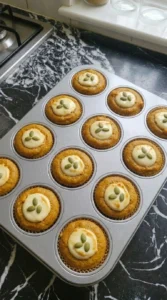
- Heat the oven to 350°F and line all 12 muffin cups. Spoon 2 tablespoons of pumpkin batter into each cup, then place 1 tablespoon of filling slightly off-center. Cover with another 2 tablespoons of batter and add 1 teaspoon filling on top. Finish the full tin within 8 minutes so the baking soda doesn't lose strength. Each cup should sit about three-quarters full with an uneven ivory swirl showing. Press 3 pepitas into each center and leave some tops slightly irregular. Overfill the cups and the batter spills onto the tin before the centers set. The batter should hold the filling without swallowing it. Three-quarter filling leaves room for a controlled rise.

- Bake at 350°F for 20 to 23 minutes. Rotate the tin front to back at minute 12 and don't open the door earlier. Check the pumpkin crumb beside the filling with an instant-read thermometer. Remove the tin at 200°F to 205°F. (My first 400°F batch domed fast, but the cream cheese stayed loose. 350°F fixed it.) The tops should look deep orange-brown with small natural cracks and set ivory centers. You'll smell cinnamon before the edges pull slightly from the liners. Go past 24 minutes and the crumb dries while the filling turns chalky. The pepitas should look lightly toasted but still green. Moderate heat sets both mixtures at the same pace.
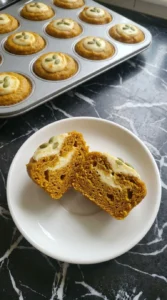
- Cool the muffins in the tin for 10 minutes at about 72°F. Then lift them by the liners and rest them for another 20 minutes. Split one muffin only after its center falls below 100°F and use a gentle sawing motion. Plate the two uneven halves with the cream cheese ribbon facing forward. The crumb should look moist and orange with small air pockets. The filling should stay creamy but hold a clean white layer. Cut before minute 20 and the hot center smears into the crumb. The top should keep its natural cracks and toasted pepitas. A full cooling window lets the crumb set around the filling.
Notes
Refrigerate cooled muffins within 2 hours because the centers contain cream cheese and egg yolk. Store them in a shallow airtight container for up to 5 days with parchment between layers. For freezing, wrap each muffin tightly and place them in a freezer bag for up to 2 months. Thaw overnight in the refrigerator so condensation doesn't soak the tops. Reheat one refrigerated muffin at 300°F for 7 to 9 minutes. A microwave works for 12 to 15 seconds, but it softens the pepitas. Let the muffin stand for 3 minutes before eating because the filling heats faster than the crumb. Discard muffins with a sour smell, wet sticky tops or any visible mold. When unsure, throw the muffin away rather than tasting it.