Pumpkin Cream Cheese Muffins
This is the kind of thing I wish I’d learned sooner. The first time I made these was for Thanksgiving 2020, when we couldn’t travel, and I overbaked them by almost 8 minutes. They were still the best part of brunch somehow. That’s when I realized this recipe is far more forgiving than most people admit. Even the slightly dry batch disappeared before lunch.
Since then I’ve made them for holiday breakfasts, random Tuesday mornings when friends dropped by and one potluck where three people asked for the recipe. If you want the same warm spice without the creamy center, try my Pumpkin Muffins. Both recipes smell like fall before the timer even rings. They also travel well without losing their soft crumb. These muffins have a moist orange crumb and a tangy cheesecake ribbon in every bite.

The pepitas add a little snap on top. And the whole method stays genuinely simple even when the ingredient list looks long. One bowl for the filling and one for the batter. That’s it. No piping bag and no bakery tricks are needed here at all.
The Secret to This Recipe
Layering the filling twice keeps it visible on top and creates a creamy ribbon inside. Baking at 350°F lets the pumpkin crumb rise before the cream cheese turns chalky. The oil keeps the crumb soft after chilling.
And the egg yolk gives the center enough structure without making it rubbery. Gentle J-shaped folding leaves only a few flour streaks before the final two turns. That limits gluten and prevents tall tunnels through the crumb.
The same restraint helps my Blueberry Muffins stay tender. A 20-minute cooling window then firms the crumb around the warm filling without drying its edges.
What You’ll Need

- Full-fat block cream cheese: Bring to 68°F before mixing so the filling turns smooth instead of lumpy.
- Granulated sugar: Divide evenly between the cream cheese filling and pumpkin batter for balanced sweetness.
- Large egg yolk: Use in the filling to help it set while keeping the texture creamy.
- Pure vanilla extract: Divide 1 teaspoon into the filling and 2 teaspoons into the batter.
- Pure pumpkin puree: Use plain puree rather than pumpkin pie filling so the spice and sugar stay controlled.
- Whole milk: Bring near room temperature so it blends smoothly with the oil and eggs.
- Large egg: Bring near 68°F before whisking to help the batter emulsify evenly.
- Avocado oil: Choose a neutral refined variety to keep the crumb moist without adding a grassy flavor.
- Light brown sugar: Pack it lightly so the molasses adds moisture without making the crumb heavy.
- All-purpose flour: Spoon and level to about 240 grams so the muffins stay tender.
- Baking soda: Use a fresh box so the thick pumpkin batter rises before the edges set.
- Pumpkin pie spice: Use a balanced blend with cinnamon, ginger, nutmeg and cloves.
- Ground cinnamon: Add extra warmth and a stronger bakery aroma to the pumpkin crumb.
- Fine sea salt: Distribute it through the flour to sharpen the spice and cream cheese flavors.
- Raw pepitas: Press exactly three into each muffin center for a light toasted crunch.
Tools You’ll Need
- Standard 12-cup muffin tin: A heavy 12-cup metal tin creates even domes and browned edges, while a thin disposable pan can warp and bake the centers unevenly.
- Paper muffin liners: Standard 2-inch paper liners hold the cream cheese filling neatly, while oversized tulip liners change the fill level and extend baking time.
- Large clear glass mixing bowl: A 4-quart bowl gives the batter room for gentle folds, while a narrow bowl forces extra stirring and develops too much gluten.
- Medium ceramic mixing bowl: A 2-quart bowl keeps the cream cheese mixture contained, while a shallow dish makes scraping difficult and leaves unmixed lumps.
- Balloon whisk: A sturdy 10-inch whisk blends the wet ingredients quickly, while a tiny whisk takes longer and encourages unnecessary mixing.
- Flexible rubber spatula: A heat-safe flexible spatula reaches the bowl bottom for J-shaped folds, while a rigid spoon leaves dry flour pockets.
- 2-tablespoon spring scoop: A spring-loaded scoop portions the thick batter cleanly, while a large ladle overfills the cups and causes spillover.
How to
Step 1: Mix the cream cheese filling

Let the full-fat block cream cheese sit until it reaches 68°F, about 30 minutes. Beat it with 1/4 cup granulated sugar, the egg yolk and 1 teaspoon vanilla for 2 minutes. Scrape the bowl at minute 1 and keep the motion tight against the sides.
Stop by minute 3 because extra air makes the filling puff and crack. The filling should look pale ivory, thick and glossy. It should fall in a slow ribbon and hold a soft mound for 5 seconds.
You’ll notice a mild cheesecake aroma as it smooths. If cold lumps remain, mix another 30 seconds, but don’t continue after it turns silky. Room-temperature mixing prevents a lumpy center.
Tip: Use an 8-ounce brick of full-fat cream cheese. Tub-style spread contains more water and can loosen the center.
Step 2: Fold the pumpkin batter
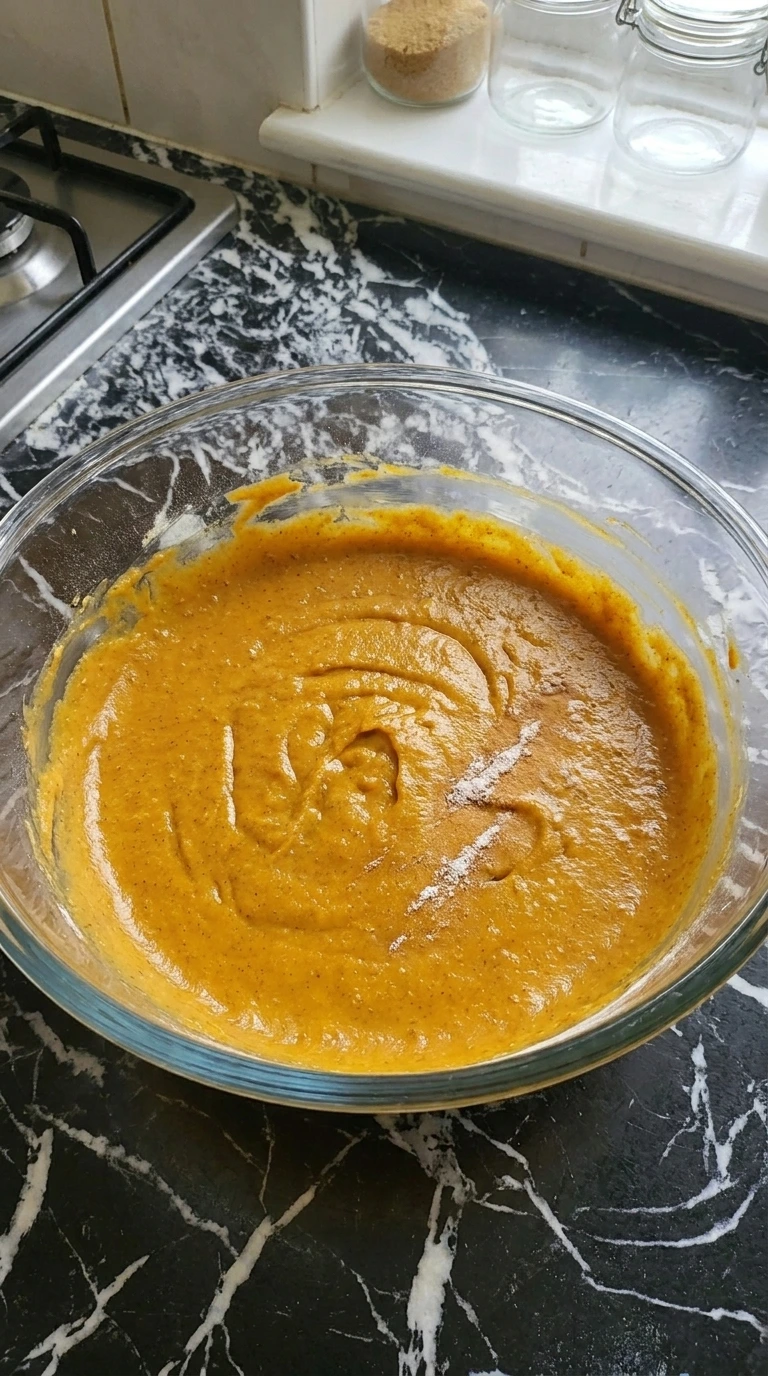
Keep the pumpkin puree, whole milk and eggs near 68°F. Whisk them with avocado oil, light brown sugar, remaining granulated sugar and 2 teaspoons vanilla for 60 seconds. Then add all-purpose flour, baking soda, pumpkin pie spice, cinnamon and salt.
Fold with a rubber spatula in a J-shaped motion for 12 to 15 strokes and scrape the bottom once. The batter should turn thick and deep orange with a few tiny flour streaks. Those streaks should disappear after two final folds.
Don’t chase a perfectly glossy batter because 20 extra strokes can create tunnels and a tough dome. The mixture should smell strongly of cinnamon and pumpkin. Gentle folding limits gluten so the crumb stays tender.
Tip: Weigh the all-purpose flour at 240 grams when possible. A packed cup can add 30 grams and dry the muffins.
Step 3: Layer batter and filling

Heat the oven to 350°F and line all 12 muffin cups. Spoon 2 tablespoons of pumpkin batter into each cup, then place 1 tablespoon of filling slightly off-center. Cover with another 2 tablespoons of batter and add 1 teaspoon filling on top.
Finish the full tin within 8 minutes so the baking soda doesn’t lose strength. Each cup should sit about three-quarters full with an uneven ivory swirl showing. Press 3 pepitas into each center and leave some tops slightly irregular.
Overfill the cups and the batter spills onto the tin before the centers set. The batter should hold the filling without swallowing it. Three-quarter filling leaves room for a controlled rise.
Tip: Use a 2-tablespoon spring scoop for the batter. It keeps the 12 portions close without making them look machine-perfect.
Step 4: Bake until domed and set

Bake at 350°F for 20 to 23 minutes. Rotate the tin front to back at minute 12 and don’t open the door earlier. Check the pumpkin crumb beside the filling with an instant-read thermometer. Remove the tin at 200°F to 205°F.
(My first 400°F batch domed fast, but the cream cheese stayed loose. 350°F fixed it. ) The tops should look deep orange-brown with small natural cracks and set ivory centers. You’ll smell cinnamon before the edges pull slightly from the liners.
Go past 24 minutes and the crumb dries while the filling turns chalky. The pepitas should look lightly toasted but still green. Moderate heat sets both mixtures at the same pace.
Tip: Check your oven with a hanging thermometer. A 25°F hot oven can dry the edges before the cheesecake center firms.
Step 5: Cool and reveal the center
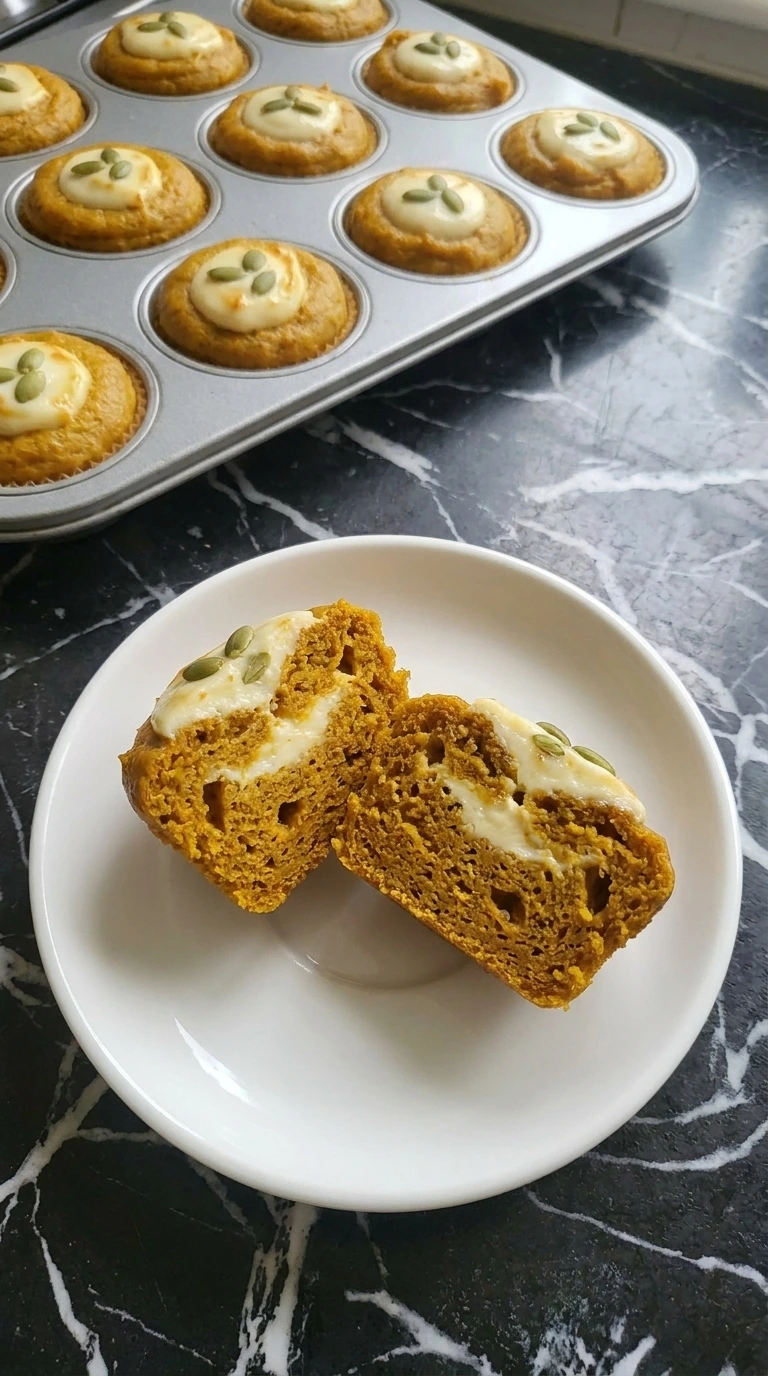
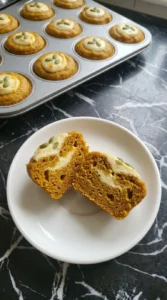
Cool the muffins in the tin for 10 minutes at about 72°F. Then lift them by the liners and rest them for another 20 minutes. Split one muffin only after its center falls below 100°F and use a gentle sawing motion.
Plate the two uneven halves with the cream cheese ribbon facing forward. The crumb should look moist and orange with small air pockets. The filling should stay creamy but hold a clean white layer.
Cut before minute 20 and the hot center smears into the crumb. The top should keep its natural cracks and toasted pepitas. A full cooling window lets the crumb set around the filling.
Tip: For cleaner halves, chill one muffin for 15 minutes after cooling and wipe the knife between cuts.
Chef’s Notes
- Bring the cream cheese to 68°F for about 30 minutes. Cold blocks leave tiny lumps that stay visible after baking.
- Measure the flour at 240 grams. Even 30 extra grams can turn the moist crumb dry and tight.
- Fill each liner only three-quarters full. Anything higher can overflow before the cream cheese center sets.
- Rotate the muffin tin once at minute 12. Earlier door opening can drop the oven temperature by 25°F and flatten the domes.
- Use plain Libby’s 100% Pure Pumpkin or another thick puree. Pumpkin pie filling adds sugar and changes the batter balance.
- Check the crumb beside the filling for 200°F to 205°F. Testing through the cream cheese gives a misleading soft reading.
- Press exactly 3 pepitas into each center. More than 5 can weigh down the soft cream cheese swirl.
- Add 1/2 cup miniature semisweet chocolate chips to the batter for a sweeter pumpkin and chocolate version.
- Replace the pepitas with 1/3 cup chopped toasted pecans for a buttery crunch and deeper holiday flavor.
- Stir 1 teaspoon finely grated orange zest into the filling for a brighter cheesecake center.
- Add 1 tablespoon maple syrup to the filling and reduce its granulated sugar by 1 tablespoon for a mild maple finish.
Variations to Try
- Full-fat block cream cheese: Dairy-free block-style cream cheese — Use the same 8-ounce amount and chill the filling for 15 minutes before layering. The center will taste less tangy and may set slightly softer.
- All-purpose flour: 1-to-1 gluten-free baking flour with xanthan gum — Use 2 cups by volume and rest the mixed batter for 10 minutes. The crumb will be a little more delicate and may need 2 extra baking minutes.
- Large eggs: Commercial egg replacer — Replace the 2 whole eggs according to the package ratio, but keep the filling yolk if possible. A fully egg-free version sets softer and can sink slightly around the center.
- Whole milk: Unsweetened oat milk — Use the same 1/4 cup and choose an unflavored variety. The crumb stays moist but tastes slightly less rich, and a Mango Smoothie makes a bright dairy-free pairing.
- Avocado oil: Refined canola oil — Use the same 1/2 cup. The texture stays nearly identical, though canola oil can taste slightly more neutral.
- Pure pumpkin puree: Homemade roasted sugar pumpkin puree — Use 1 cup after draining it for 20 minutes in a fine sieve. Watery homemade puree loosens the batter and can add 3 to 5 minutes to baking.
Storage Instructions
Refrigerate cooled muffins within 2 hours because the centers contain cream cheese and egg yolk. Store them in a shallow airtight container for up to 5 days with parchment between layers. For freezing, wrap each muffin tightly and place them in a freezer bag for up to 2 months.
Thaw overnight in the refrigerator so condensation doesn’t soak the tops. Reheat one refrigerated muffin at 300°F for 7 to 9 minutes. A microwave works for 12 to 15 seconds, but it softens the pepitas.
Let the muffin stand for 3 minutes before eating because the filling heats faster than the crumb. Discard muffins with a sour smell, wet sticky tops or any visible mold. When unsure, throw the muffin away rather than tasting it.
Pumpkin Cream Cheese Muffins
Ingredients
- 8 ounces Full-fat block cream cheese Bring to 68°F before mixing so the filling turns smooth instead of lumpy.
- 1/2 cup Granulated sugar Divide evenly between the cream cheese filling and pumpkin batter for balanced sweetness.
- 1 large Large egg yolk Use in the filling to help it set while keeping the texture creamy.
- 1 tablespoon Pure vanilla extract Divide 1 teaspoon into the filling and 2 teaspoons into the batter.
- 1 cup Pure pumpkin puree Use plain puree rather than pumpkin pie filling so the spice and sugar stay controlled.
- 1/4 cup Whole milk Bring near room temperature so it blends smoothly with the oil and eggs.
- 2 large Large egg Bring near 68°F before whisking to help the batter emulsify evenly.
- 1/2 cup Avocado oil Choose a neutral refined variety to keep the crumb moist without adding a grassy flavor.
- 3/4 cup Light brown sugar Pack it lightly so the molasses adds moisture without making the crumb heavy.
- 2 cups All-purpose flour Spoon and level to about 240 grams so the muffins stay tender.
- 1 teaspoon Baking soda Use a fresh box so the thick pumpkin batter rises before the edges set.
- 2 teaspoons Pumpkin pie spice Use a balanced blend with cinnamon, ginger, nutmeg and cloves.
- 1 teaspoon Ground cinnamon Add extra warmth and a stronger bakery aroma to the pumpkin crumb.
- 1/2 teaspoon Fine sea salt Distribute it through the flour to sharpen the spice and cream cheese flavors.
- 36 pepitas Raw pepitas Press exactly three into each muffin center for a light toasted crunch.
Instructions
- Let the full-fat block cream cheese sit until it reaches 68°F, about 30 minutes. Beat it with 1/4 cup granulated sugar, the egg yolk and 1 teaspoon vanilla for 2 minutes. Scrape the bowl at minute 1 and keep the motion tight against the sides. Stop by minute 3 because extra air makes the filling puff and crack. The filling should look pale ivory, thick and glossy. It should fall in a slow ribbon and hold a soft mound for 5 seconds. You’ll notice a mild cheesecake aroma as it smooths. If cold lumps remain, mix another 30 seconds, but don’t continue after it turns silky. Room-temperature mixing prevents a lumpy center.
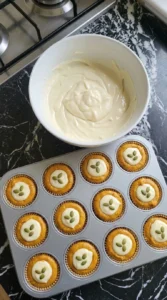
- Keep the pumpkin puree, whole milk and eggs near 68°F. Whisk them with avocado oil, light brown sugar, remaining granulated sugar and 2 teaspoons vanilla for 60 seconds. Then add all-purpose flour, baking soda, pumpkin pie spice, cinnamon and salt. Fold with a rubber spatula in a J-shaped motion for 12 to 15 strokes and scrape the bottom once. The batter should turn thick and deep orange with a few tiny flour streaks. Those streaks should disappear after two final folds. Don’t chase a perfectly glossy batter because 20 extra strokes can create tunnels and a tough dome. The mixture should smell strongly of cinnamon and pumpkin. Gentle folding limits gluten so the crumb stays tender.

- Heat the oven to 350°F and line all 12 muffin cups. Spoon 2 tablespoons of pumpkin batter into each cup, then place 1 tablespoon of filling slightly off-center. Cover with another 2 tablespoons of batter and add 1 teaspoon filling on top. Finish the full tin within 8 minutes so the baking soda doesn’t lose strength. Each cup should sit about three-quarters full with an uneven ivory swirl showing. Press 3 pepitas into each center and leave some tops slightly irregular. Overfill the cups and the batter spills onto the tin before the centers set. The batter should hold the filling without swallowing it. Three-quarter filling leaves room for a controlled rise.

- Bake at 350°F for 20 to 23 minutes. Rotate the tin front to back at minute 12 and don’t open the door earlier. Check the pumpkin crumb beside the filling with an instant-read thermometer. Remove the tin at 200°F to 205°F. (My first 400°F batch domed fast, but the cream cheese stayed loose. 350°F fixed it.) The tops should look deep orange-brown with small natural cracks and set ivory centers. You’ll smell cinnamon before the edges pull slightly from the liners. Go past 24 minutes and the crumb dries while the filling turns chalky. The pepitas should look lightly toasted but still green. Moderate heat sets both mixtures at the same pace.
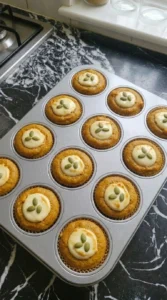
- Cool the muffins in the tin for 10 minutes at about 72°F. Then lift them by the liners and rest them for another 20 minutes. Split one muffin only after its center falls below 100°F and use a gentle sawing motion. Plate the two uneven halves with the cream cheese ribbon facing forward. The crumb should look moist and orange with small air pockets. The filling should stay creamy but hold a clean white layer. Cut before minute 20 and the hot center smears into the crumb. The top should keep its natural cracks and toasted pepitas. A full cooling window lets the crumb set around the filling.
Notes
Nutrition
Questions I Get Asked
Make the cream cheese filling up to 24 hours ahead and refrigerate it in a covered container. Let it sit at room temperature for 20 minutes before layering. Mix the pumpkin batter just before baking because baking soda loses strength once it meets the wet ingredients.
The filling was probably too warm or the cups were overfilled. Keep the filling near 68°F and fill each liner only three-quarters full. Also bake immediately after assembly because delayed batter rises less around the center.
Yes, but bake two 12-cup tins on separate oven racks at 350°F. Swap the tins top to bottom and rotate them at minute 12. Expect 22 to 26 minutes because two pans reduce airflow and slow the rise.
Insert an instant-read thermometer into the pumpkin crumb beside the cream cheese. Remove the muffins at 200°F to 205°F after about 20 to 23 minutes. The center should look set and the edges should pull slightly from the liners.
Freeze fully cooled muffins in a single layer for 2 hours, then wrap each one and bag them for up to 2 months. Thaw overnight in the refrigerator. Warm one muffin at 300°F for 8 minutes so the crumb softens without melting the center.
Serve them at brunch with fresh fruit and a cold milk drink. For a dessert plate, pair one muffin with lightly sweetened whipped cream. Keep the muffin near room temperature for 20 minutes so the cream cheese center tastes smooth rather than firm.
Final Thoughts
This is the kind of recipe I wish I had found years ago. It would have saved me so many rushed holiday mornings.
But now that I have it, I make it all the time because the creamy center makes every batch feel special. If you enjoyed this, check out my Pumpkin Muffins or Oatmeal Cookies next.
And leave a comment or tag your batch because I read every single one and it really makes my day.
Pumpkin puree replaces some of the water and fat in many muffin recipes, so the crumb stays soft even after it’s been refrigerated.