Christmas Morning Cinnamon Rolls
The smell of cinnamon drifting through the house before anyone opens a present is what I love most about Christmas breakfast. The first time I made Christmas Morning Cinnamon Rolls from scratch, I worried that the dough would take too long and we’d end up eating breakfast after noon. What saved me was making the rolls the night before and letting the fridge handle the long rest. By morning, all I had to do was let them warm up and bake. No rush.
Just soft rolls and that warm cinnamon smell. Since then I’ve kept this recipe close whenever December gets busy. The dough is rich with whole milk and butter while the filling melts into thick brown sugar swirls. And the frosting goes on while the rolls are still warm so it sinks into every little gap. If you’re planning a bigger breakfast, our Crockpot Breakfast Casserole adds a savory option without taking up oven space.
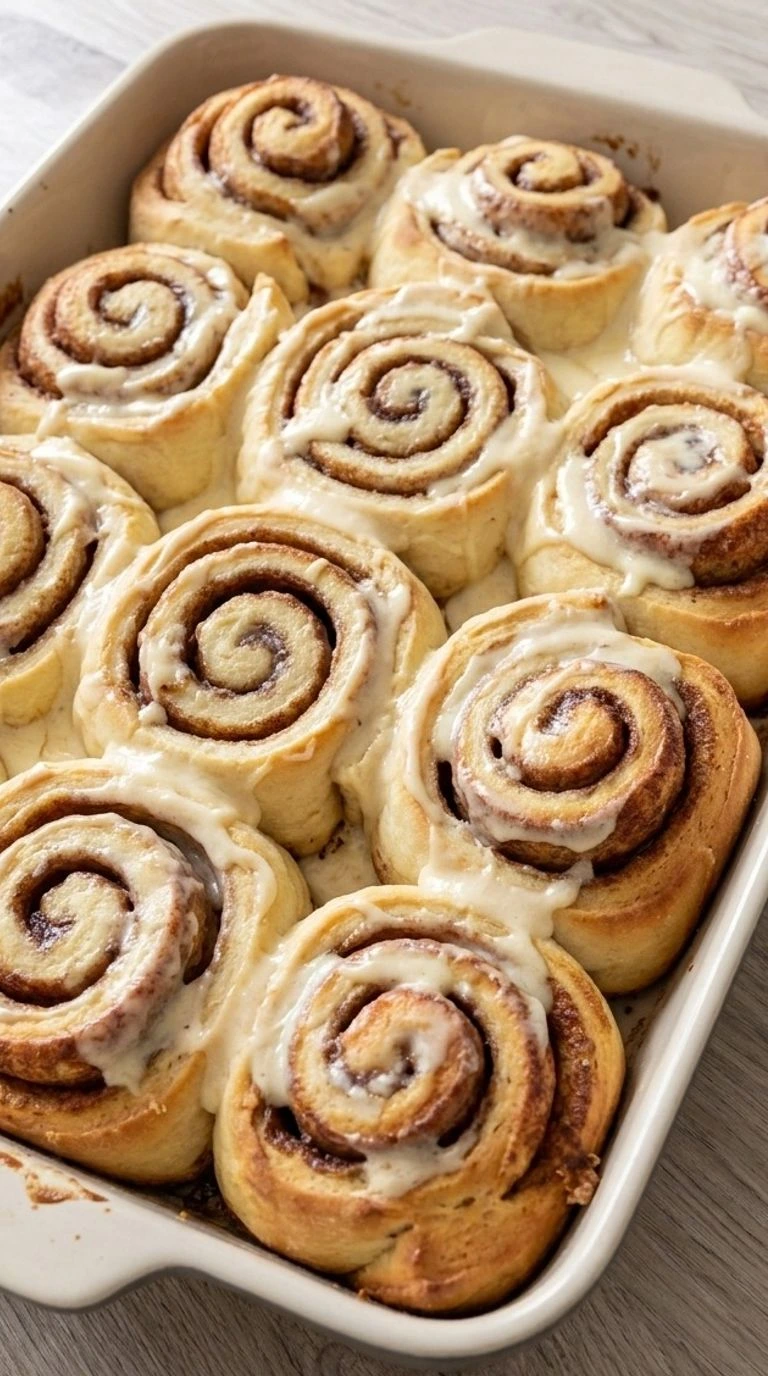
These easy christmas morning cinnamon rolls have become my favorite excuse to get into the kitchen before the house wakes up. You don’t need a fancy mixer or years of baking practice. Just a little patience with the dough and a baking dish big enough to give each roll room to rise. The overnight option makes everything easier. And when everyone finally wanders into the kitchen, breakfast is already on its way.
Why This Recipe Works
Christmas Morning Cinnamon Rolls stay tender because the whole milk, eggs and butter enrich the dough while an 8 to 10 minute knead builds enough gluten to hold the soft swirls. Baking at 350°F gives the thick centers time to reach 190°F to 195°F before the brown sugar edges darken too much.
The overnight chill slows yeast activity without stopping it, so the rolls can finish rising the next morning. If you want something savory alongside them, our Overnight Breakfast Casserole can also be planned ahead.
Ingredients
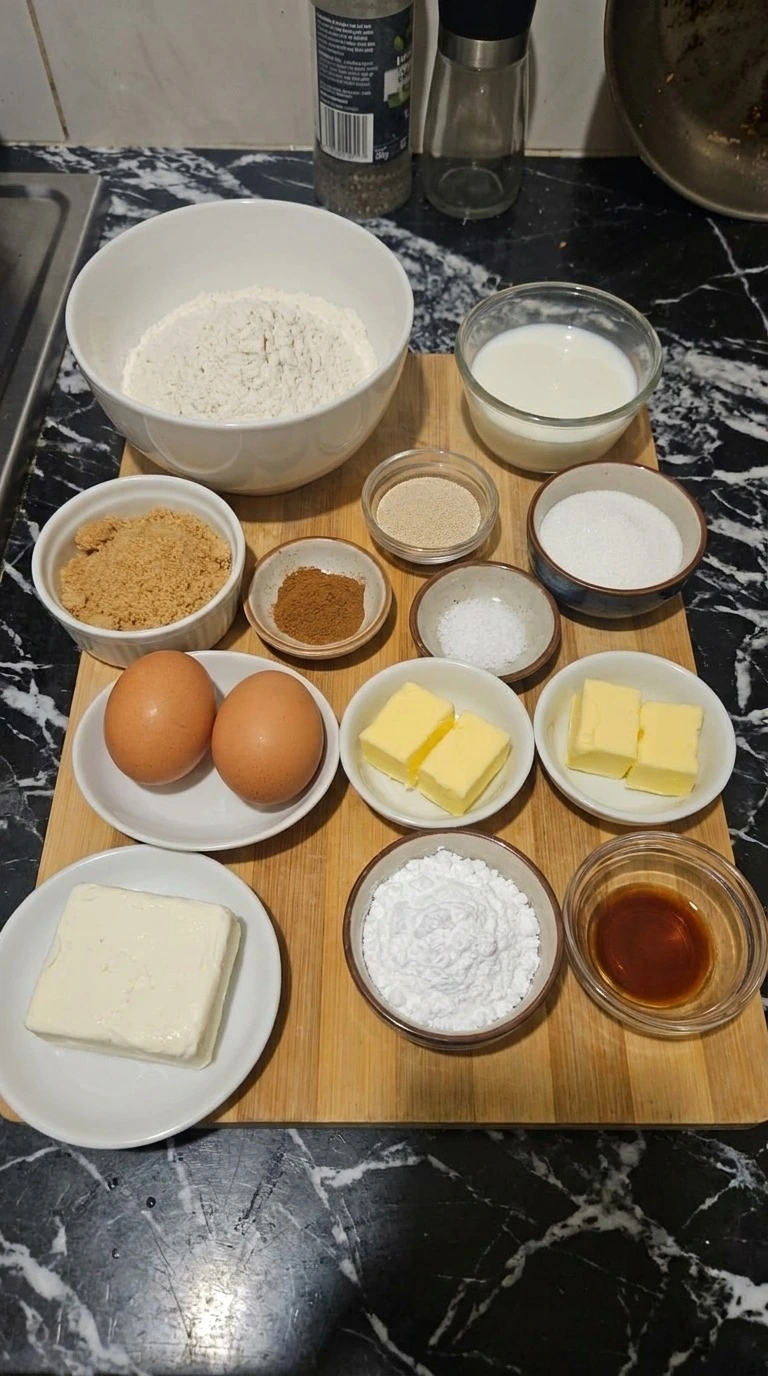
- All purpose wheat flour: Spoon and level if measuring by volume. Forms the soft but sturdy structure of the cinnamon roll dough.
- Whole milk: Warm to 105°F before mixing. Adds richness and helps the yeast work steadily.
- Instant dry yeast: Use fresh yeast from an unopened or well-sealed package for reliable rising.
- Granulated white sugar: Mix into the dough to add gentle sweetness and support yeast activity.
- Large eggs: Bring out of the fridge before mixing. Add richness and help the dough hold its soft structure.
- Unsalted butter: Divide into 4 tablespoons melted and cooled for the dough, 6 tablespoons softened for the filling and 4 tablespoons softened for the frosting. Use a little additional butter for greasing the bowl and baking dish.
- Fine sea salt: Mix into the dough to balance sweetness and strengthen the gluten structure.
- Light brown sugar: Mix with cinnamon for the filling. Its moisture helps create soft caramel-like ribbons.
- Ground Saigon cinnamon: Mix evenly with the brown sugar for a warm and pronounced cinnamon filling.
- Full fat brick cream cheese: Soften before beating. Creates a thick and tangy frosting that holds on the warm rolls.
- Powdered confectioners’ sugar: Sift before adding to the frosting to prevent lumps and create a smooth texture.
- Pure vanilla extract: Mix into the cream cheese frosting for a rounded sweet flavor.
Kitchen Equipment
- Large mixing bowl: Choose a bowl holding at least 4 quarts so the yeast dough can double without spilling over the rim.
- Stand mixer with dough hook: A mixer with a 5-quart or larger bowl kneads the enriched dough evenly, but you can knead by hand for 8 to 10 minutes instead.
- Rolling pin: A rolling pin at least 15 inches long helps form an even dough rectangle, while a shorter one needs more overlapping passes.
- 9 by 13 inch baking dish: Choose a ceramic or metal dish with sides at least 2 inches high so nine rolls have space to rise without overflowing.
- Thin serrated knife or unflavored dental floss: Use a sharp thin blade or clean unflavored floss to divide the dough into nine spirals without crushing their layers.
- Instant-read thermometer: Choose a probe that reads within a few seconds so you can check for 190°F to 195°F without losing much oven heat.
- Electric hand mixer: A hand mixer with two beaters whips the cream cheese frosting smoothly, while a sturdy whisk works if the ingredients are fully softened.
- Measuring cups and spoons: Use standard US measuring cups and level spoons to keep the yeast, cinnamon and sugar ratios consistent.
- Digital kitchen scale: A scale measuring in 1-gram increments makes it easier to use exactly 500 grams of flour and avoid a dry dough.
How to Make It
Step 1: Mix and knead the soft yeast dough
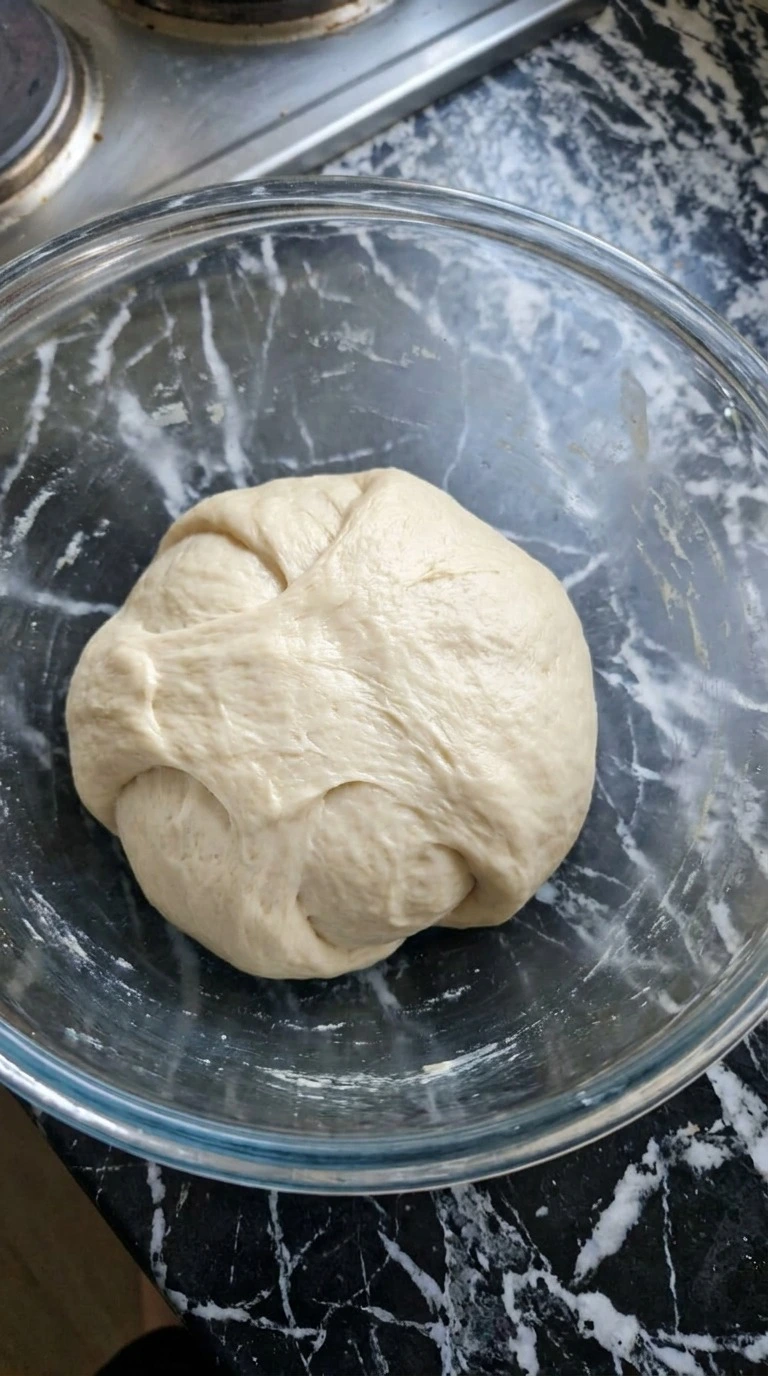
Warm 1 cup of whole milk to 105°F and pour it into a large mixing bowl. Add the instant dry yeast and granulated white sugar. Then stir in the two large eggs and 4 tablespoons of melted unsalted butter that has cooled to lukewarm. Add the all purpose wheat flour and fine sea salt.
Mix until a shaggy dough forms. Knead for 8 to 10 minutes by hand or 6 to 8 minutes with a mixer fitted with a dough hook. Press the dough forward with your palm and fold it back after each turn. Stop when it feels smooth and slightly tacky.
Next, check the dough with a gentle stretch. It should pull into a thin sheet without tearing at once. If it’s stiff and dry, you’ve likely added too much flour. Keep the dough soft because that moisture helps the bread stay tender.
Tip: Weigh the flour at 500 grams if you have a scale. Scooping straight from the bag can pack in extra flour.
Step 2: Let the dough rise until doubled
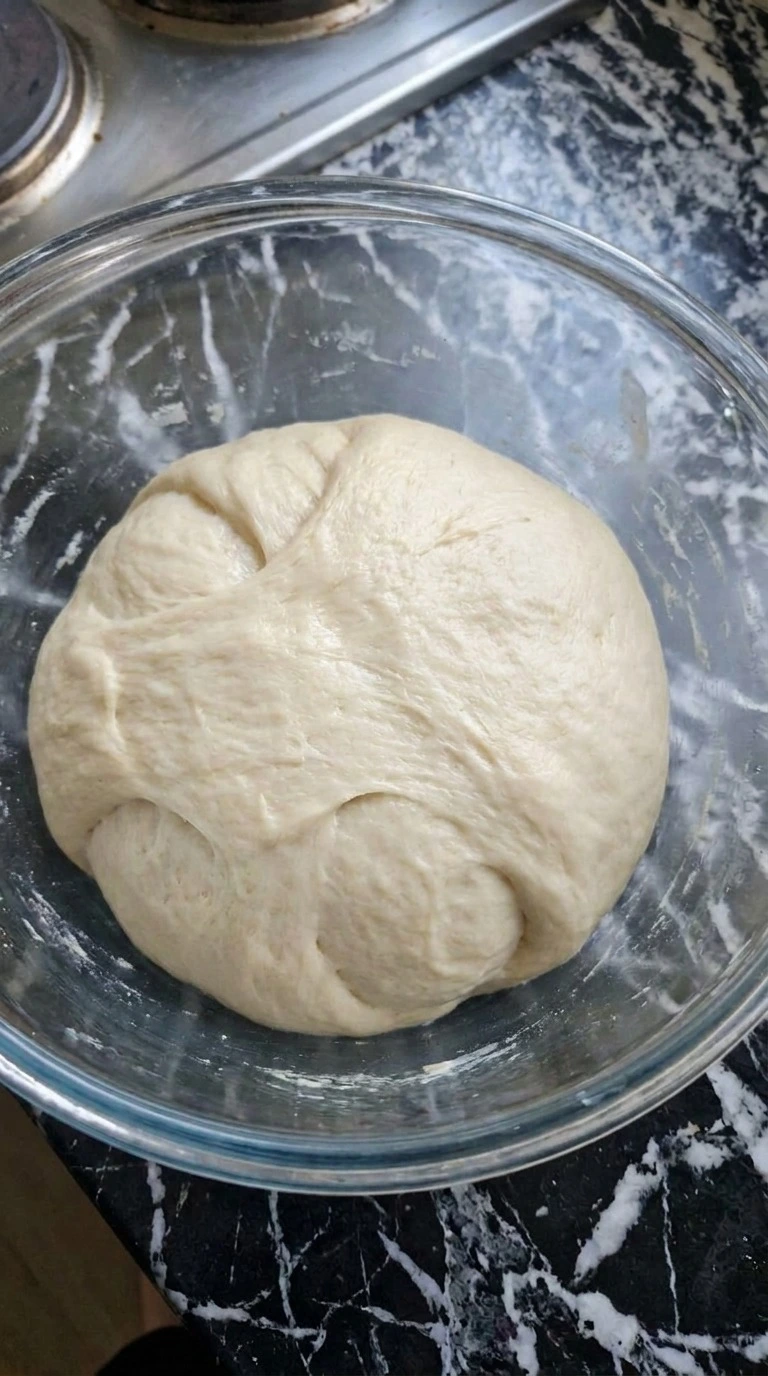
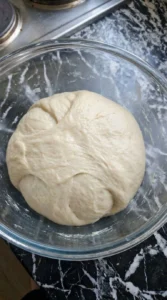
Shape the kneaded dough into a loose ball and place it back in the lightly buttered mixing bowl. Cover the bowl and leave it in a warm spot around 75°F to 80°F for 60 to 90 minutes. Don’t set it directly beside a hot oven because strong heat can weaken the yeast and dry the surface. The dough should slowly expand until it takes up about twice its starting space.
Gently press one finger into the top. If the dent fills back slowly then the dough has risen enough. Meanwhile, keep an eye on the surface. You’ll see small air pockets beneath the smooth skin and the dough will feel much lighter.
Don’t wait until it collapses in the center. A steady rise builds the soft crumb.
Tip: Mark the starting dough height on the outside of the bowl with removable tape so you can spot the doubled volume.
Step 3: Spread the cinnamon filling and cut nine spirals
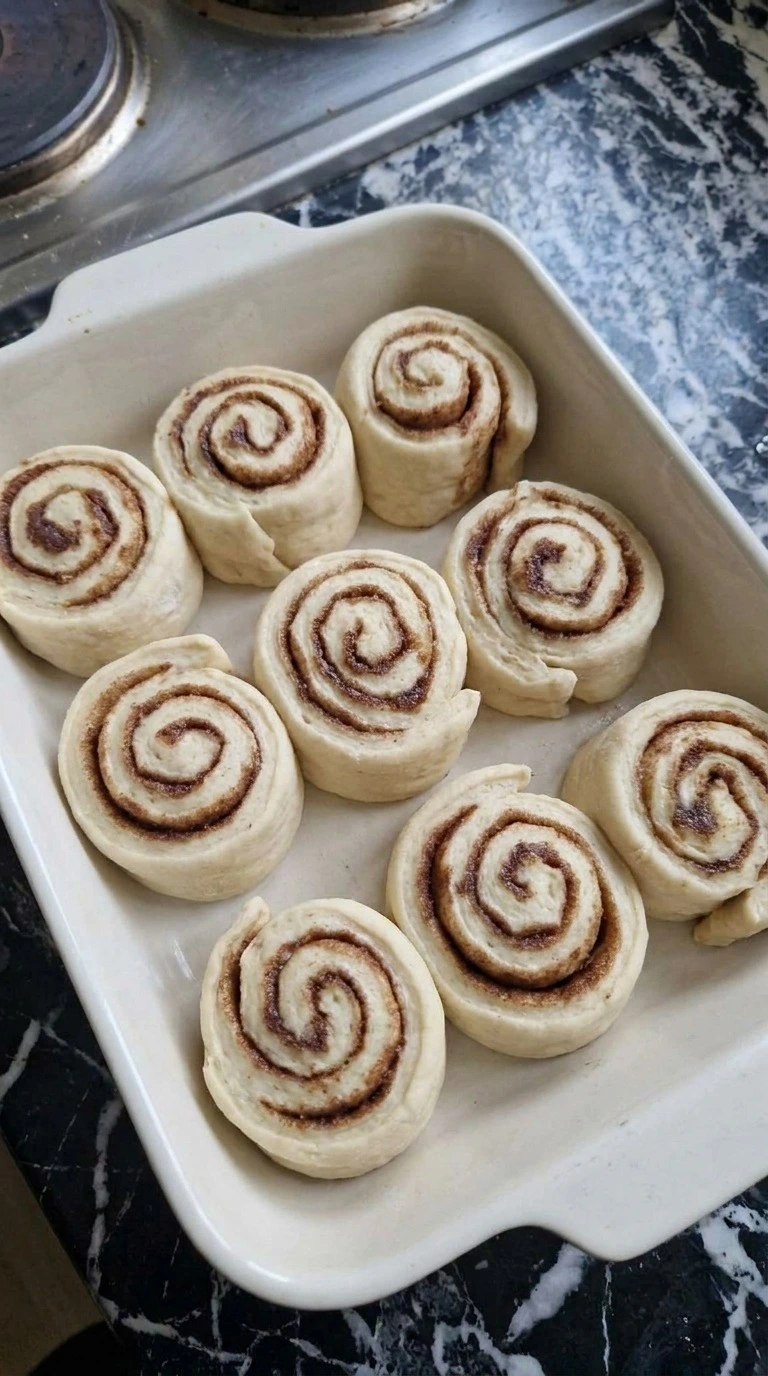
Gently press the risen dough down and roll it into a rectangle about 12 by 18 inches. Keep the long edge facing you. Spread 6 tablespoons of softened unsalted butter across the dough while leaving a half-inch strip bare along the far edge. Mix the packed light brown sugar with the ground Saigon cinnamon and scatter it over the butter.
Press the filling down lightly so it sticks. Then roll the dough into a snug log starting from the long edge nearest you. Pinch the seam closed and cut the log into 9 even pieces with a thin serrated knife or unflavored dental floss. Next, check the cut sides.
You should see distinct dark brown ribbons winding through pale dough. If the log feels too soft to cut cleanly, chill it for 10 minutes first. Gentle cuts preserve the air pockets.
Tip: Use the blunt back of a spoon to press the cinnamon sugar into the butter so less filling spills out while rolling.
Step 4: Proof the shaped rolls until puffy
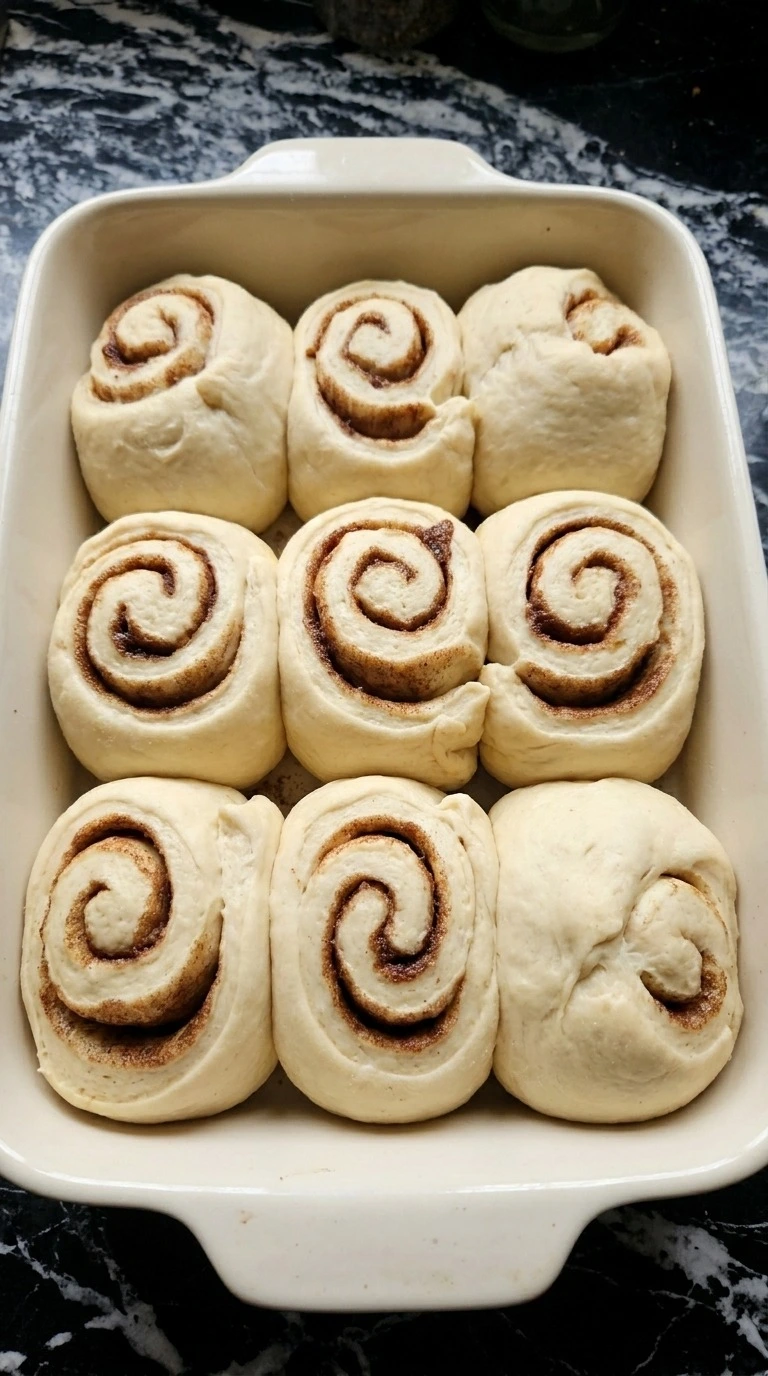
Place the 9 cinnamon rolls cut side up in the lightly buttered 9 by 13 inch baking dish. Leave a little space between the pieces so they can expand. For baking the same day, cover them and rest at about 75°F for 35 to 50 minutes.
For an overnight breakfast, cover the dish tightly and chill it for 8 to 12 hours at 40°F or below. The next morning, bring the dish out of the fridge and let the rolls stand for 60 to 90 minutes until visibly puffy. Don’t bake them while they’re still dense and cold.
You’ll know they’re close when the spirals have grown and the gaps between several rolls have narrowed. They should wobble slightly when the dish moves. A short proof makes heavy centers, so give the yeast time to expand.
Tip: For overnight baking, finish shaping before 9 p.m. so the rolls can chill without rushing the rest of your evening.
Step 5: Bake the rolls until golden and tender
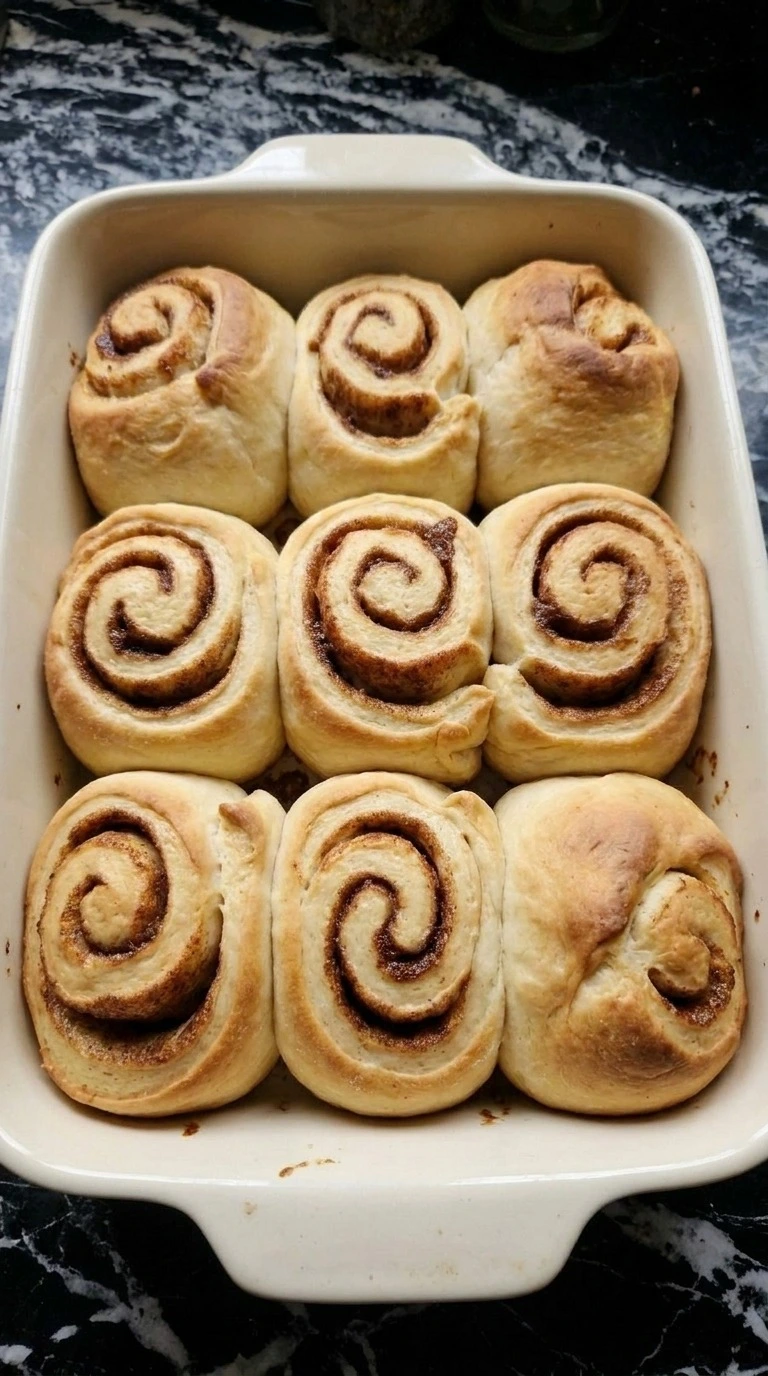
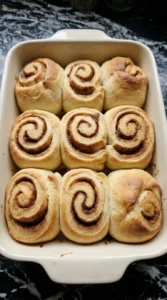
Heat the oven to 350°F with the rack in the middle position. Once the shaped rolls look well risen, place the baking dish on the middle rack and bake for 25 to 30 minutes. Rotate the dish once after 18 minutes if your oven heats unevenly. The tops should turn light golden brown while the outer edges develop a slightly deeper amber color.
Check the center roll with an instant-read thermometer. Aim for 190°F to 195°F in the bread portion rather than the melted filling. If the tops darken too fast, cover the dish loosely with foil. Then let the rolls rest in their dish for 8 to 10 minutes.
You’ll smell warm cinnamon and baked butter as the tops settle. Cutting too early can crush the soft centers. Brief cooling helps the crumb set.
Tip: Set the baking dish on a center rack rather than the oven floor. Strong bottom heat can burn the brown sugar filling.
Step 6: Whip the cream cheese frosting and serve warm
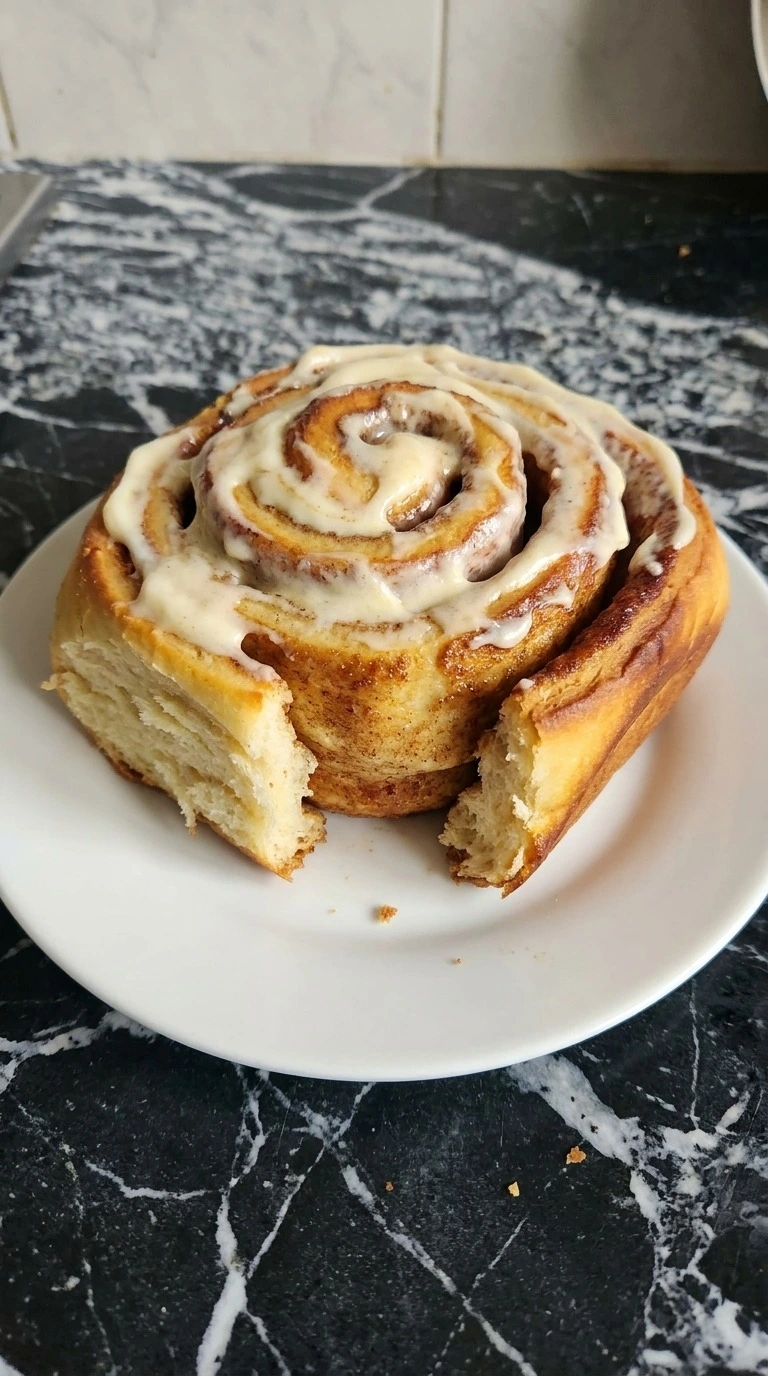
While the rolls cool for 8 to 10 minutes, beat the softened full fat brick cream cheese with 4 tablespoons of softened unsalted butter until smooth. Add the sifted powdered confectioners’ sugar and pure vanilla extract. Beat for 2 to 3 minutes until the frosting looks thick and creamy.
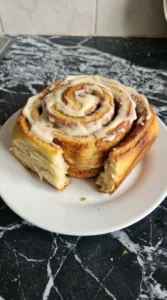
Spread it across the warm cinnamon rolls using gentle strokes so some frosting settles into the spiral grooves while the golden edges still show. Wait until the rolls have cooled slightly because very hot bread will melt the frosting into a thin glaze. Finally, lift one roll onto a small white serving plate.
Pull the outer coil apart just enough to show its soft layered center. You’ll see thick ivory frosting against the amber filling. The brief rest keeps the topping creamy.
Tip: For frosting that spreads smoothly, soften the cream cheese for 30 minutes before mixing rather than warming it in a microwave.
Pro Tips
- Check the whole milk with a thermometer before adding yeast. Aim for 105°F because liquid above 120°F can weaken yeast activity and slow the rise.
- Use fresh ground Saigon cinnamon for the filling. Two tablespoons give the 9 rolls a bold cinnamon flavor without needing extra brown sugar.
- Roll the dough into a 12 by 18 inch rectangle with even thickness. Thin patches can tear and let the buttery filling escape during baking.
- Chill the shaped rolls for 8 to 12 hours when planning Christmas breakfast. Cover the dish tightly so the dough doesn’t form a dry skin.
- Place the baking dish on the center oven rack at 350°F. If the tops darken before minute 25, cover them loosely with foil.
- Check the center roll near minute 25 with a digital thermometer. The bread should reach 190°F to 195°F without touching a pocket of melted filling.
- Leave the baked rolls uncovered for 8 to 10 minutes before frosting. The topping should soften and spread while keeping some thick creamy swirls.
- Add 1 teaspoon of finely grated orange zest to the frosting for a fresh Christmas flavor. Fold it in after beating so it spreads evenly.
- Make orange cinnamon rolls by adding 1 tablespoon of finely grated orange zest to the brown sugar filling and replacing half the vanilla extract in the frosting with fresh orange juice.
- For maple pecan cinnamon rolls, scatter 1/2 cup of finely chopped toasted pecans over the filling and replace 2 tablespoons of powdered sugar in the frosting with 1 tablespoon of pure maple syrup.
- Try a gingerbread-inspired version by mixing 1 teaspoon of ground ginger and 1/4 teaspoon of ground cloves into the cinnamon filling. The added spices bring a deeper holiday flavor without changing the baking time.
- Make dairy-free holiday cinnamon rolls with unsweetened oat milk, dairy-free baking butter and plant-based cream cheese. Keep the same measurements and watch the dough’s texture because different brands absorb moisture differently.
Substitutions & Variations
- Whole milk: Use 1 cup of unsweetened oat milk instead of 1 cup of whole milk. The dough will taste slightly less rich but should still rise well. Warm the oat milk to 105°F before mixing, and choose an unflavored variety to keep the cinnamon flavor clear.
- All purpose wheat flour: Replace the 500 grams of all purpose wheat flour with 500 grams of a gluten-free bread flour blend designed for yeast. The rolls will have a softer and more fragile structure because gluten-free flour can’t form the same stretchy dough. Choose a blend with a suitable binder and follow its hydration guidance. Regular cup-for-cup baking flour often produces dense cinnamon rolls when substituted without other changes.
- Large eggs: Replace the 2 large eggs with 6 tablespoons of plain unsweetened soy yogurt. The yogurt adds moisture but won’t give the dough quite as much lift or structure. Expect a slightly denser crumb and allow 15 to 25 extra minutes for the first rise if the dough needs it. For a different egg-free breakfast, try our Cinnamon Pear Muffins only after checking that recipe’s ingredients.
- Unsalted butter: Use the same amount of dairy-free baking butter in the dough, filling and frosting. Choose a firm baking stick with at least 75% fat rather than a soft spread. Low-fat spreads release extra moisture and can make the filling leak. For fully dairy-free rolls, also use oat milk and a dairy-free cream cheese alternative.
- Full fat brick cream cheese: Use 8 ounces of mascarpone instead of 8 ounces of cream cheese. Mascarpone makes the frosting smoother and milder with less tang. Beat it briefly at a cool room temperature because excessive mixing can loosen the texture. Reduce the added butter by 1 tablespoon if you prefer a firmer topping.
Storage Instructions
Keep leftover Christmas Morning Cinnamon Rolls in a tightly sealed food container in the refrigerator for up to 4 days because the frosting contains cream cheese. Let them cool before storing so trapped moisture doesn’t leave the tops soggy. For longer storage, freeze the rolls individually in food-safe wrapping and place them in a freezer bag for up to 2 months.
Freeze unfrosted portions when possible because fresh frosting gives the best texture after reheating. To reheat, cover refrigerated rolls loosely with foil and warm them at 300°F for 10 to 15 minutes. Add 1 teaspoon of whole milk around each unfrosted roll if the bread feels dry.
Discard rolls that develop mold, an unusual sour smell or slimy frosting. Don’t leave cream cheese frosted rolls at room temperature for more than 2 hours.
Christmas Morning Cinnamon Rolls
Ingredients
Method
- Warm 1 cup of whole milk to 105°F and pour it into a large mixing bowl. Add the instant dry yeast and granulated white sugar. Then stir in the two large eggs and 4 tablespoons of melted unsalted butter that has cooled to lukewarm. Add the all purpose wheat flour and fine sea salt. Mix until a shaggy dough forms. Knead for 8 to 10 minutes by hand or 6 to 8 minutes with a mixer fitted with a dough hook. Press the dough forward with your palm and fold it back after each turn. Stop when it feels smooth and slightly tacky. Next, check the dough with a gentle stretch. It should pull into a thin sheet without tearing at once. If it’s stiff and dry, you’ve likely added too much flour. Keep the dough soft because that moisture helps the bread stay tender.
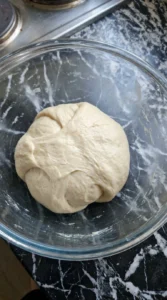
- Shape the kneaded dough into a loose ball and place it back in the lightly buttered mixing bowl. Cover the bowl and leave it in a warm spot around 75°F to 80°F for 60 to 90 minutes. Don’t set it directly beside a hot oven because strong heat can weaken the yeast and dry the surface. The dough should slowly expand until it takes up about twice its starting space. Gently press one finger into the top. If the dent fills back slowly then the dough has risen enough. Meanwhile, keep an eye on the surface. You’ll see small air pockets beneath the smooth skin and the dough will feel much lighter. Don’t wait until it collapses in the center. A steady rise builds the soft crumb.
- Gently press the risen dough down and roll it into a rectangle about 12 by 18 inches. Keep the long edge facing you. Spread 6 tablespoons of softened unsalted butter across the dough while leaving a half-inch strip bare along the far edge. Mix the packed light brown sugar with the ground Saigon cinnamon and scatter it over the butter. Press the filling down lightly so it sticks. Then roll the dough into a snug log starting from the long edge nearest you. Pinch the seam closed and cut the log into 9 even pieces with a thin serrated knife or unflavored dental floss. Next, check the cut sides. You should see distinct dark brown ribbons winding through pale dough. If the log feels too soft to cut cleanly, chill it for 10 minutes first. Gentle cuts preserve the air pockets.
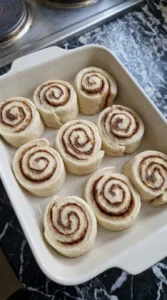
- Place the 9 cinnamon rolls cut side up in the lightly buttered 9 by 13 inch baking dish. Leave a little space between the pieces so they can expand. For baking the same day, cover them and rest at about 75°F for 35 to 50 minutes. For an overnight breakfast, cover the dish tightly and chill it for 8 to 12 hours at 40°F or below. The next morning, bring the dish out of the fridge and let the rolls stand for 60 to 90 minutes until visibly puffy. Don’t bake them while they’re still dense and cold. You’ll know they’re close when the spirals have grown and the gaps between several rolls have narrowed. They should wobble slightly when the dish moves. A short proof makes heavy centers, so give the yeast time to expand.
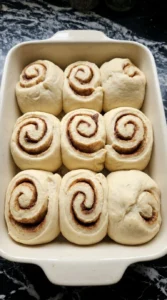
- Heat the oven to 350°F with the rack in the middle position. Once the shaped rolls look well risen, place the baking dish on the middle rack and bake for 25 to 30 minutes. Rotate the dish once after 18 minutes if your oven heats unevenly. The tops should turn light golden brown while the outer edges develop a slightly deeper amber color. Check the center roll with an instant-read thermometer. Aim for 190°F to 195°F in the bread portion rather than the melted filling. If the tops darken too fast, cover the dish loosely with foil. Then let the rolls rest in their dish for 8 to 10 minutes. You’ll smell warm cinnamon and baked butter as the tops settle. Cutting too early can crush the soft centers. Brief cooling helps the crumb set.
- While the rolls cool for 8 to 10 minutes, beat the softened full fat brick cream cheese with 4 tablespoons of softened unsalted butter until smooth. Add the sifted powdered confectioners’ sugar and pure vanilla extract. Beat for 2 to 3 minutes until the frosting looks thick and creamy. Spread it across the warm cinnamon rolls using gentle strokes so some frosting settles into the spiral grooves while the golden edges still show. Wait until the rolls have cooled slightly because very hot bread will melt the frosting into a thin glaze. Finally, lift one roll onto a small white serving plate. Pull the outer coil apart just enough to show its soft layered center. You’ll see thick ivory frosting against the amber filling. The brief rest keeps the topping creamy.
Notes
Frequently Asked Questions
Yes, and it’s one of the easiest ways to keep Christmas breakfast relaxed. Shape the 9 rolls and place them in the baking dish before covering them tightly and refrigerating for 8 to 12 hours at 40°F or below. The next morning, leave them covered for about 60 to 90 minutes until puffy. Then bake at 350°F for 25 to 30 minutes.
The most common causes are old yeast, cold dough or milk that’s too hot. Use milk near 105°F and give the first rise 60 to 90 minutes in a spot around 75°F to 80°F. If the dough barely grows after 90 minutes, check the yeast’s expiration date and your room temperature. Extra flour can also make the dough stiff and slow to expand.
Spread the 6 tablespoons of softened butter evenly and press the brown sugar mixture gently into it before rolling. Leave a half-inch border along the far edge and pinch the seam closed. If the dough gets very soft, refrigerate the log for 10 minutes before cutting. Some bubbling sugar around the edges is normal, but large pools often mean the roll was too loose.
Yes, double every ingredient to make 18 rolls and divide them between two 9 by 13 inch baking dishes. Don’t crowd all 18 into one pan because the centers may stay doughy. Bake at 350°F and rotate the dishes halfway through if using separate racks. Start checking after 25 minutes and look for a bread temperature of 190°F to 195°F.
You can replace the cream cheese topping with a simple vanilla glaze. Whisk 1 cup of powdered confectioners’ sugar with 1 to 2 tablespoons of whole milk and 1/2 teaspoon of vanilla extract. Drizzle it over rolls that have cooled for about 10 minutes. The glaze will be lighter and sweeter than the thick cream cheese topping.
For one roll, place it on a microwave-safe plate and cover it loosely with a slightly damp paper towel. Heat in 10-second bursts for about 15 to 25 seconds until warm. For several rolls, cover them with foil and reheat at 300°F for 10 to 15 minutes. Add a teaspoon of milk around each unfrosted roll if it seems dry.
Fully baked rolls freeze most reliably and keep their best quality for about 2 months. Cool them completely and freeze individually wrapped portions without frosting when possible. Thaw overnight in the fridge and reheat at 300°F for 10 to 15 minutes before adding fresh frosting. You can also freeze shaped unbaked rolls, but their final rise may take longer and results are less predictable.
Final Thoughts
When the house is quiet on Christmas morning and the oven starts filling the kitchen with cinnamon, you’ll understand why I keep coming back to Christmas Morning Cinnamon Rolls. The little trick of letting the shaped dough rest overnight is what makes these easy christmas morning cinnamon rolls so soft without rushing breakfast.
And the thick cream cheese frosting makes every warm spiral feel a little special. Try this christmas morning cinnamon rolls recipe with our Christmas Fruit Salad or Non Alcoholic Christmas Punch, then share a photo of your batch.
I always love seeing the different swirls people make. Someone will probably ask for seconds.
Cinnamon rolls have strong roots in Scandinavian baking, especially Sweden’s beloved kanelbullar. Swedish cinnamon buns often use cardamom in the dough and pearl sugar on top instead of thick frosting. In the United States, cream cheese frosting became a familiar finish. That rich topping is one reason these soft homemade rolls feel so fitting for a Christmas breakfast.