Patty Pan Squash Egg Muffins
You guys! When my mom tasted this recipe, she said. “I think that’s one of the best things you’ve ever done”! I have to say, it’s one of my top five favorites! A Saturday morning experiment turned into the best Patty Pan Squash Egg Muffins ever! They have tender centers like cafe-style egg bites, but they’re packed with fresh squash and spinach and feta.
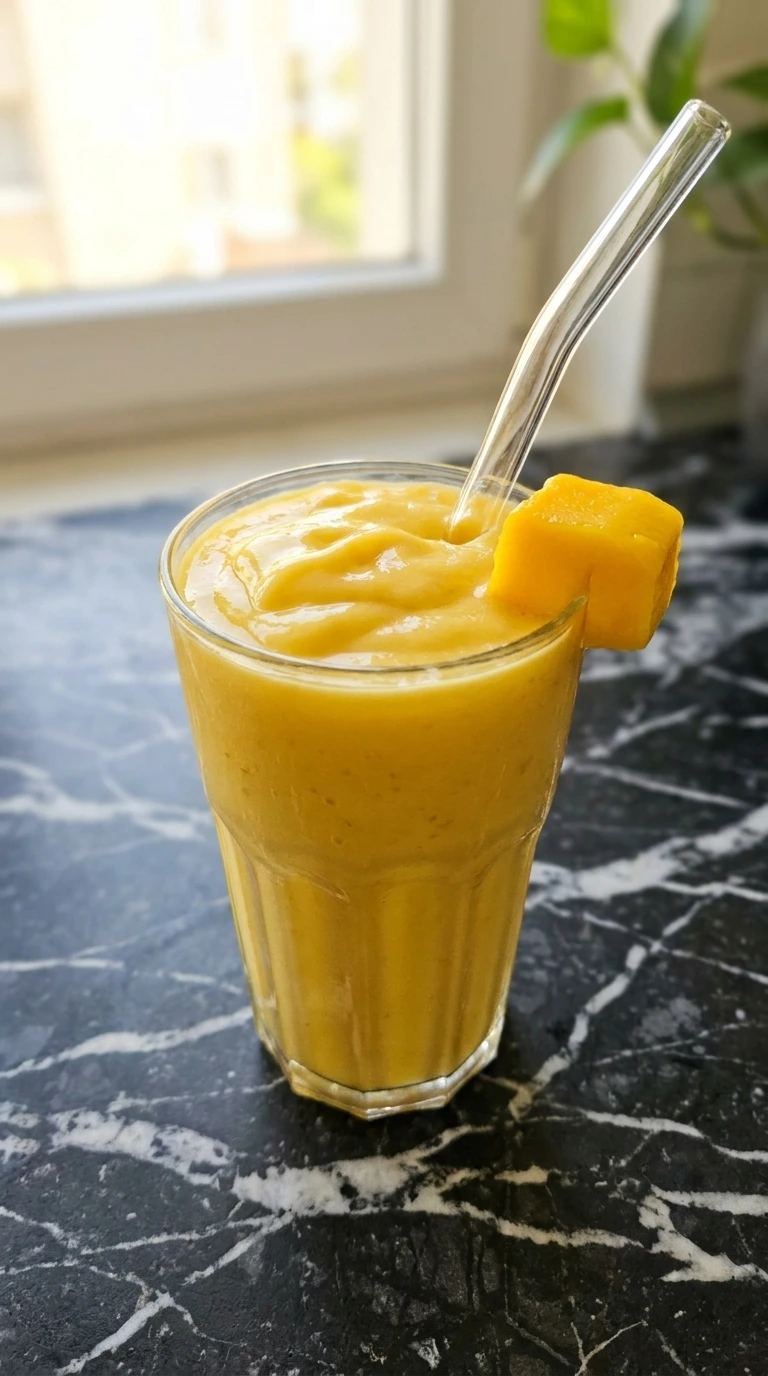
These muffins get their savory flavor from feta and thyme, and their base is eggs with whole milk. I think you all know I’m a sweet breakfast lover. I’ve already made Mango Smoothie and plenty of bakery muffins before. I rarely love a breakfast without something sweet, but these are just to die for! The recipe makes 12 muffins. You can double the batch and make 24 for a bigger group.

These muffins can be breakfast, or you can pair them with fresh fruit and coffee for a tasty brunch. They’re also great for meal prep. Make a large batch and store them in the freezer. Then take out a couple for busy mornings during the week! The squash keeps each bite tender, while the browned cheese edges make them feel a little special.
What Makes It Work
Patty pan squash holds plenty of water, so sautéing it for 8 to 10 minutes matters. The dry surface keeps that moisture from leaking into the egg custard. Baking at 375°F then sets the eggs evenly without toughening the outer edge.
A 5-minute cooling pause also protects the eggs from partial scrambling. Whole milk softens the proteins while feta adds salty pockets and sharp cheddar helps the tops color. Filling each cup three-quarters full leaves room for a gentle rise.
The same controlled baking approach keeps Pumpkin Muffins tender instead of dry. It’s a small detail, but it gives both recipes a softer center.
Ingredient List

- Yellow patty pan squash: Stemmed and cut into irregular 1/4-inch cubes so the pieces soften without disappearing.
- Extra-virgin olive oil: Used to sauté the squash and carry the fresh thyme flavor.
- Baby spinach: Roughly chopped so the leaves wilt into short deep-green ribbons.
- Oil-packed sun-dried tomatoes: Drained well and finely chopped for concentrated tang without excess oil.
- Fresh thyme: Leaves stripped from the stems to add a warm herbal note.
- Large egg: Brought close to room temperature so they whisk smoothly with the milk.
- Whole milk: Adds enough fat to keep the egg centers tender after reheating.
- Feta cheese: Crumbled into small irregular pieces for salty creamy pockets.
- Sharp cheddar cheese: Finely grated so it melts through the eggs and browns in tiny spots.
- Fresh flat-leaf parsley: Finely chopped, with 1 tablespoon folded inside and 1 tablespoon reserved for serving.
- Fine sea salt: Seasons the egg base evenly without leaving coarse crystals.
- Freshly ground black pepper: Adds a mild peppery finish without covering the squash flavor.
- Avocado oil spray: Lightly coats the parchment liners so the tender egg sides release cleanly.
What You’ll Use
- 10-inch heavy skillet: A heavy 10-inch skillet drives off squash moisture evenly, while a thin pan hot-spots and can scorch the edges before the centers soften.
- 12-cup standard metal muffin tin: A standard 12-cup metal tin gives even browning, while oversized silicone cups extend baking and leave pale soft sides.
- Tan parchment muffin liners: Twelve parchment liners release egg muffins cleanly, while ordinary paper liners can tear and hold a layer of cooked egg.
- Large clear glass mixing bowl: A 3-quart glass bowl leaves room for folding without crushing squash, while a narrow bowl forces overmixing and splashes.
- Balloon whisk: A 10-inch balloon whisk blends eggs quickly without excessive foam, while a tiny whisk takes longer and encourages overbeating.
- Instant-read thermometer: A fast thermometer confirms a 165°F center, while slow dial models can overcook the muffins before the reading settles.
- Small silicone spatula: A narrow flexible spatula loosens the fluted sides without tearing them, while a rigid metal knife can cut the parchment and scratch the tin.
Step-by-Step Instructions
Step 1: Sauté the squash and greens
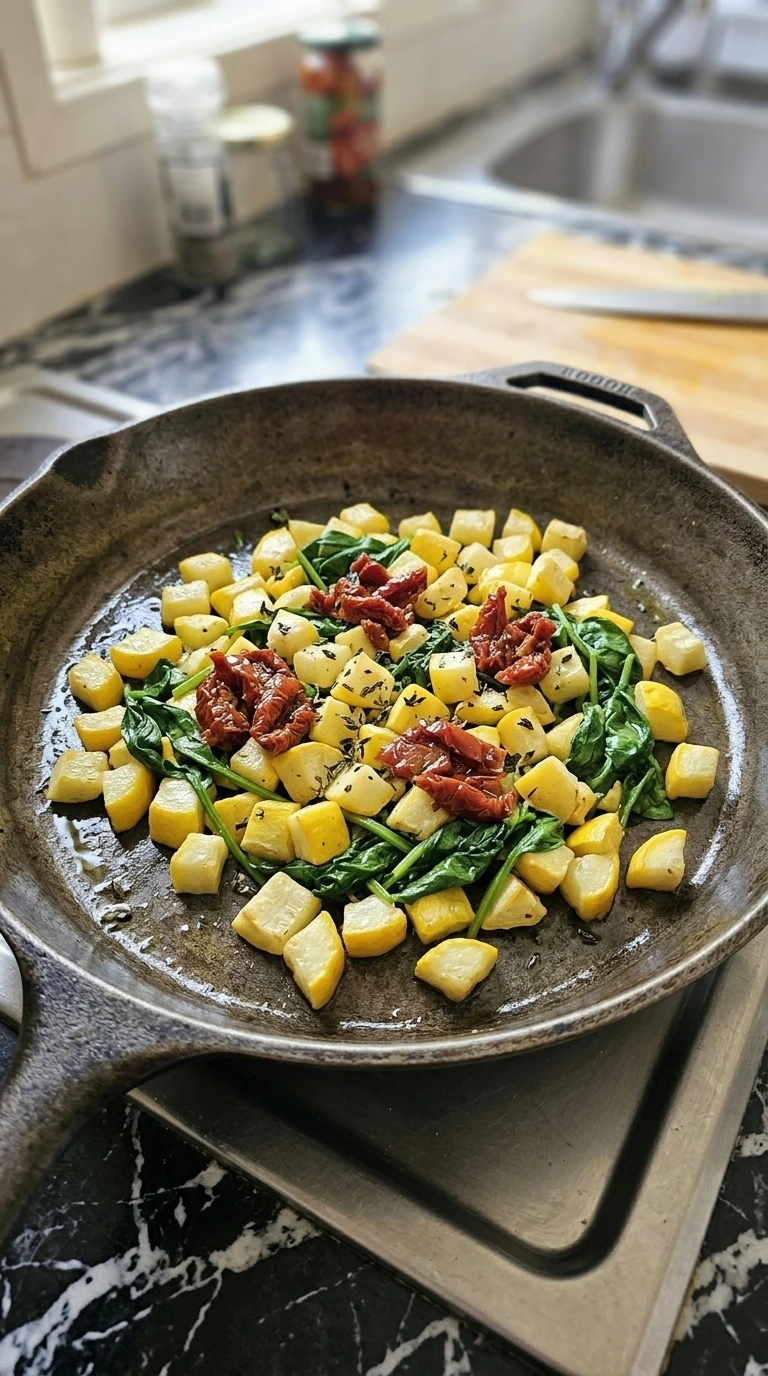
Set a 10-inch skillet over medium heat, about 5 on a 10-dial, and add the extra-virgin olive oil. Add the 1/4-inch squash cubes and spread them into one loose layer. Cook for 6 minutes and stir every 90 seconds. Then fold in baby spinach, sun-dried tomatoes and thyme.
Cook 2 to 4 minutes more. The squash should look pale golden at the edges and dry across the cut faces. The spinach turns deep green and the tomatoes look glossy. You’ll smell thyme just before the pan is ready.
Go past 10 minutes and the squash can turn mushy. Stop while the cubes still hold shape. Dry sautéing removes water before the eggs set.
Tip: Choose patty pan squash under 4 inches wide because larger squash has tougher seeds and may need peeling.
Step 2: Whisk and fold the egg mixture
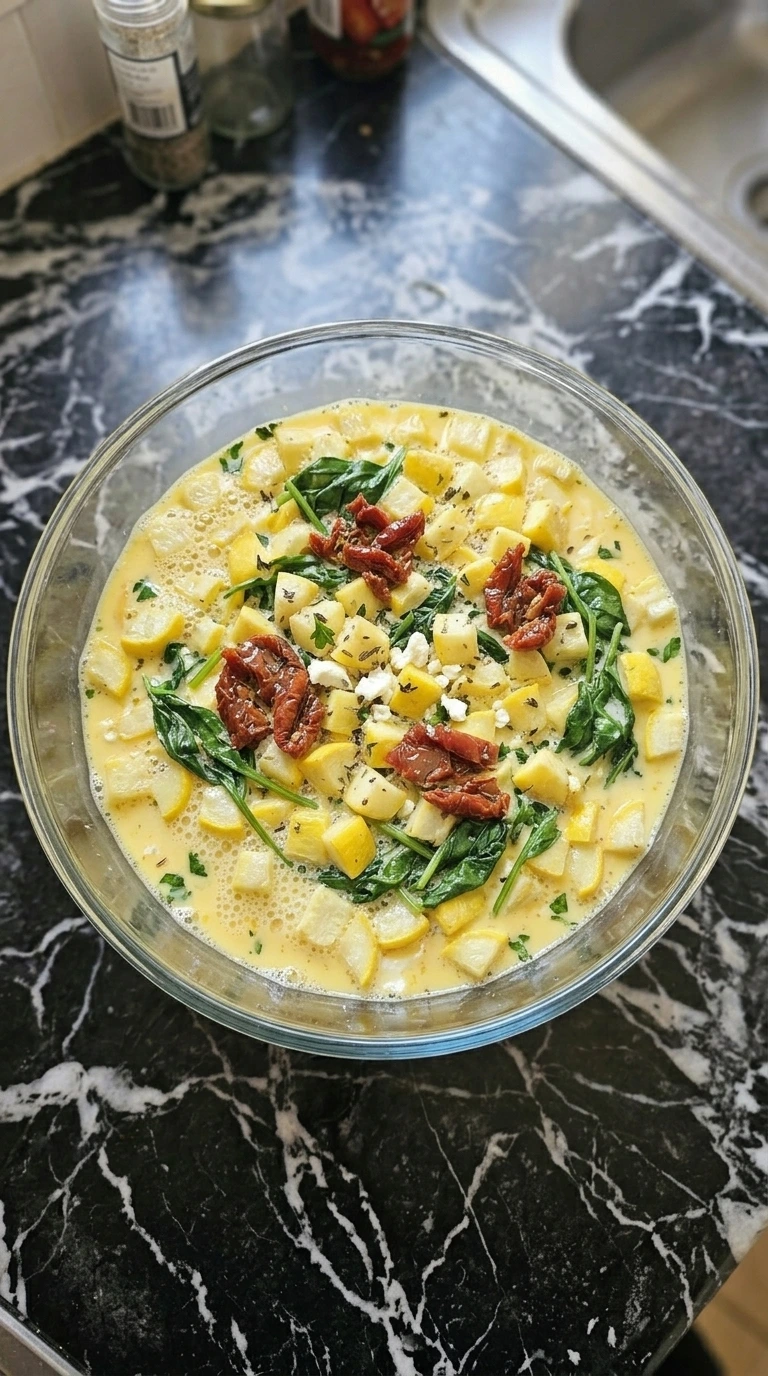
Transfer the hot vegetable mixture to a wide plate and cool it for 5 minutes, until it falls below 110°F. Meanwhile, whisk the eggs and whole milk for 45 seconds. Use quick circles and lift through the center every few strokes. Add sea salt and black pepper.
Then fold in feta, sharp cheddar and 1 tablespoon parsley. The eggs should look pale yellow with small bubbles and no streaks of white. The cooled vegetables stay distinct instead of melting into the mixture. Fold them in for 20 seconds, just until evenly suspended.
Overmixing crushes the squash and makes the custard foamy. Cooling first prevents the hot vegetables from scrambling the eggs.
Tip: Use full-fat feta with about 4 grams of fat per ounce because reduced-fat crumbles dry out faster.
Step 3: Portion the mixture into muffin cups

Keep the oven at 375°F and line all 12 muffin cups with tan parchment liners. Coat each liner with avocado oil spray. Divide the egg mixture within 5 minutes. Scoop from the bowl’s bottom each time so every cup gets squash and spinach.
Fill each cup three-quarters full. Tap the tin twice against a folded towel to release large air pockets. The 12 portions should look uneven but balanced, with green ribbons and red tomato flecks visible near each surface. No cup should reach the rim.
If the bowl sits longer than 5 minutes, the vegetables sink and the last muffins become heavy. Prompt portioning keeps solids evenly suspended through the custard.
Tip: Use parchment liners rather than thin paper liners because egg muffins release more cleanly after a 5-minute rest.
Step 4: Bake until the centers set

Bake the filled tin at 375°F for 18 to 22 minutes on the center rack. Rotate the tin 180 degrees at minute 12. Check the center muffins with an instant-read thermometer after minute 18. Remove the tin when the centers reach 165°F.
(My first batch baked at 400°F, the tops set before the centers. 375°F fixed it. ) The tops should puff slightly and show irregular yellow-gold patches with amber edges. Feta stays white while sharp cheddar forms tiny toasted spots.
You’ll smell toasted cheese when the center is set. A thin knife should leave only moist crumbs. Bake past 22 minutes and the eggs turn rubbery. Moderate heat sets the proteins before their moisture escapes.
Tip: Start checking at minute 18 because dark metal tins can brown the edges 2 to 3 minutes faster.
Step 5: Rest and serve one muffin
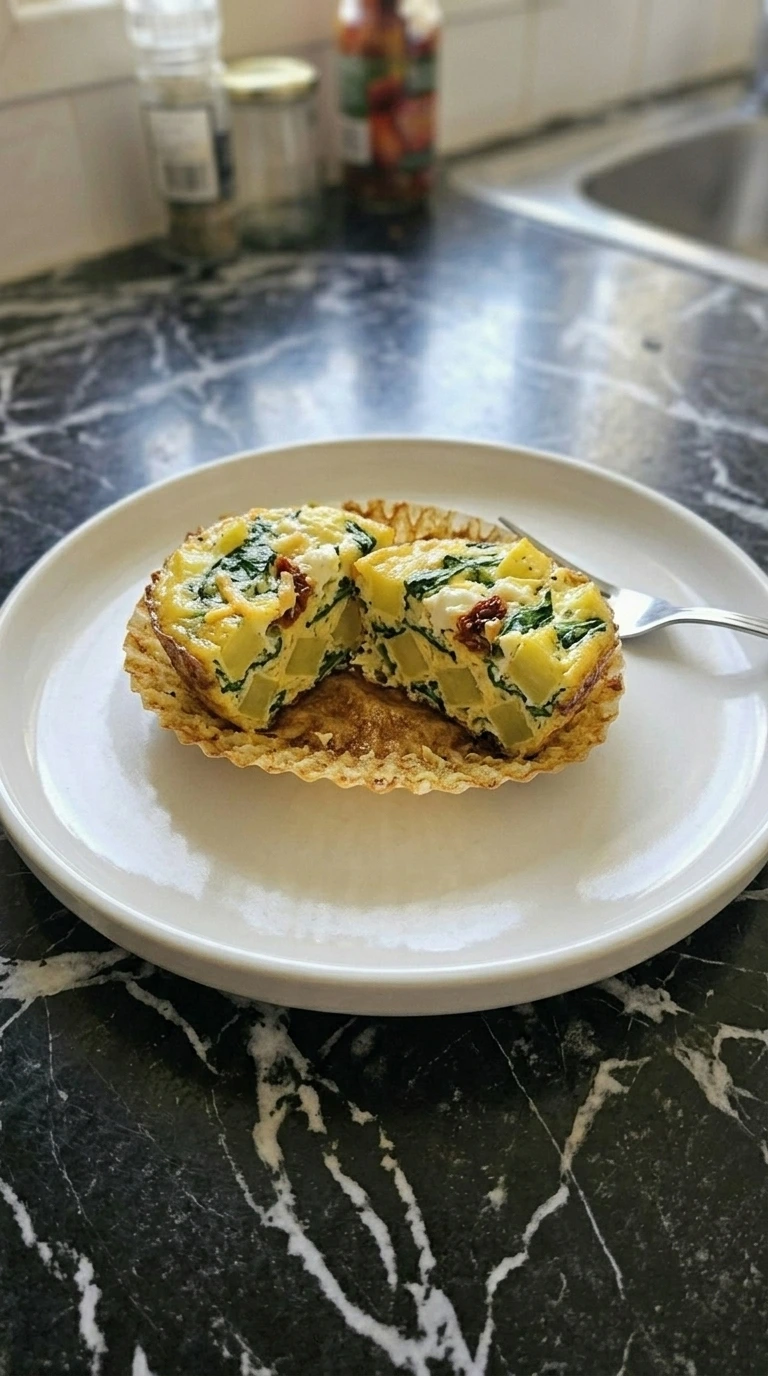
Rest the tin at room temperature for exactly 5 minutes. Run a thin silicone spatula around each muffin and lift gently from opposite sides. Move one muffin to a plate and cut it in half after 2 more minutes. Scatter the reserved parsley over the cut halves.
Serve while the center stays above 140°F. The cut center should look moist but fully set, with soft squash cubes and clear feta pockets. The edges stay amber and slightly springy. If you unmold before 5 minutes, the tender sides can tear.
Wait longer than 15 minutes and steam softens the edges. Brief resting lets the egg structure settle before cutting.
Tip: Cool the remaining 11 muffins uncovered for 20 minutes before packing so trapped steam doesn’t make the liners damp.
Pro Tips
- Cut the squash into 1/4-inch cubes because larger pieces stay watery after 22 minutes and smaller pieces disappear into the eggs.
- Choose patty pan squash under 4 inches wide with firm skin and no soft spots for sweeter flesh and fewer tough seeds.
- Fill each muffin cup only three-quarters full because the eggs rise about 1/4 inch before settling during the 5-minute rest.
- Cool the sautéed vegetables below 110°F before folding them into eggs so the mixture stays smooth instead of forming cooked strands.
- Rotate the tin at minute 12 because most home ovens run hotter near the back and brown the rear muffins first.
- Check for 165°F centers at minute 18, especially with a dark metal tin that transfers heat faster than pale aluminum.
- Finish each serving with 1 teaspoon chopped parsley and a pinch of black pepper for fresher aroma and stronger color contrast.
- Add 1/2 cup cooked turkey sausage and reduce the cheddar to 1/4 cup for a heartier breakfast with balanced salt.
- Replace the thyme with 1 teaspoon chopped fresh basil and add 1/4 cup diced roasted red pepper for a sweeter summer version.
- Stir in 1/4 teaspoon smoked paprika and 2 tablespoons sliced scallions for a warmer flavor with a gentle smoky edge.
- Use dairy-free milk and cheeses in equal amounts for a dairy-free batch, then bake 2 minutes longer if the centers remain soft.
Ingredient Swaps
- Whole milk and dairy cheese: Use unsweetened oat milk and equal amounts of dairy-free feta and dairy-free cheddar. — Use the same quantities, but expect softer tops and less browning. Add 2 extra baking minutes if the centers haven’t reached 165°F.
- Large egg: Use 1 cup chickpea flour, 1 cup water and 2 tablespoons nutritional yeast. — This egg-free version sets in 25 to 28 minutes at 375°F. It tastes nuttier and feels denser, so it won’t mimic the custardy original.
- Gluten-containing add-ins: No flour swap is needed because the base is naturally gluten-free. — Check the sun-dried tomato and oil spray labels for shared equipment warnings. For a sweet brunch companion, serve these with Blueberry Muffins.
- Yellow patty pan squash: Use 1 pound small zucchini. — Cut it into 1/4-inch cubes and sauté 2 minutes longer. Zucchini releases more water and gives a softer less buttery bite.
- Oil-packed sun-dried tomatoes: Use 1/3 cup well-drained roasted red pepper. — Pat the pepper dry and keep the same quantity. The muffins become sweeter and milder with less concentrated tomato tang.
- Feta cheese: Use 1/2 cup crumbled goat cheese. — The centers become creamier and slightly tangier. Goat cheese melts more, so expect fewer distinct white pockets after baking.
How to Store & Reheat
Cool the muffins uncovered for 20 minutes, then refrigerate them in a shallow airtight container for up to 4 days. Place parchment between layers so the tops don’t stick. For freezing, wrap each muffin tightly and place them in a freezer bag. Freeze for up to 2 months, then thaw overnight below 40°F for the most even reheating.
Label the bag with the freezing date. Reheat refrigerated muffins at 325°F for 8 to 10 minutes, until the centers reach 165°F. From frozen, use 325°F for 18 to 20 minutes. A microwave also works at 50 percent power in 45-second bursts.
Discard muffins with a sour smell, sticky surface or pooled liquid. Pair reheated muffins with Potato Salad for a quick lunch plate.
Patty Pan Squash Egg Muffins
Ingredients
- 1 pound Yellow patty pan squash Stemmed and cut into irregular 1/4-inch cubes so the pieces soften without disappearing.
- 1 tablespoon Extra-virgin olive oil Used to sauté the squash and carry the fresh thyme flavor.
- 2 cups Baby spinach Roughly chopped so the leaves wilt into short deep-green ribbons.
- 1/3 cup Oil-packed sun-dried tomatoes Drained well and finely chopped for concentrated tang without excess oil.
- 1 teaspoon Fresh thyme Leaves stripped from the stems to add a warm herbal note.
- 8 large Large egg Brought close to room temperature so they whisk smoothly with the milk.
- 1/2 cup Whole milk Adds enough fat to keep the egg centers tender after reheating.
- 1/2 cup Feta cheese Crumbled into small irregular pieces for salty creamy pockets.
- 1/2 cup Sharp cheddar cheese Finely grated so it melts through the eggs and browns in tiny spots.
- 2 tablespoons Fresh flat-leaf parsley Finely chopped, with 1 tablespoon folded inside and 1 tablespoon reserved for serving.
- 1/2 teaspoon Fine sea salt Seasons the egg base evenly without leaving coarse crystals.
- 1/4 teaspoon Freshly ground black pepper Adds a mild peppery finish without covering the squash flavor.
- 1 teaspoon Avocado oil spray Lightly coats the parchment liners so the tender egg sides release cleanly.
Instructions
- Set a 10-inch skillet over medium heat, about 5 on a 10-dial, and add the extra-virgin olive oil. Add the 1/4-inch squash cubes and spread them into one loose layer. Cook for 6 minutes and stir every 90 seconds. Then fold in baby spinach, sun-dried tomatoes and thyme. Cook 2 to 4 minutes more. The squash should look pale golden at the edges and dry across the cut faces. The spinach turns deep green and the tomatoes look glossy. You’ll smell thyme just before the pan is ready. Go past 10 minutes and the squash can turn mushy. Stop while the cubes still hold shape. Dry sautéing removes water before the eggs set.

- Transfer the hot vegetable mixture to a wide plate and cool it for 5 minutes, until it falls below 110°F. Meanwhile, whisk the eggs and whole milk for 45 seconds. Use quick circles and lift through the center every few strokes. Add sea salt and black pepper. Then fold in feta, sharp cheddar and 1 tablespoon parsley. The eggs should look pale yellow with small bubbles and no streaks of white. The cooled vegetables stay distinct instead of melting into the mixture. Fold them in for 20 seconds, just until evenly suspended. Overmixing crushes the squash and makes the custard foamy. Cooling first prevents the hot vegetables from scrambling the eggs.

- Keep the oven at 375°F and line all 12 muffin cups with tan parchment liners. Coat each liner with avocado oil spray. Divide the egg mixture within 5 minutes. Scoop from the bowl’s bottom each time so every cup gets squash and spinach. Fill each cup three-quarters full. Tap the tin twice against a folded towel to release large air pockets. The 12 portions should look uneven but balanced, with green ribbons and red tomato flecks visible near each surface. No cup should reach the rim. If the bowl sits longer than 5 minutes, the vegetables sink and the last muffins become heavy. Prompt portioning keeps solids evenly suspended through the custard.

- Bake the filled tin at 375°F for 18 to 22 minutes on the center rack. Rotate the tin 180 degrees at minute 12. Check the center muffins with an instant-read thermometer after minute 18. Remove the tin when the centers reach 165°F. (My first batch baked at 400°F, the tops set before the centers. 375°F fixed it.) The tops should puff slightly and show irregular yellow-gold patches with amber edges. Feta stays white while sharp cheddar forms tiny toasted spots. You’ll smell toasted cheese when the center is set. A thin knife should leave only moist crumbs. Bake past 22 minutes and the eggs turn rubbery. Moderate heat sets the proteins before their moisture escapes.

- Rest the tin at room temperature for exactly 5 minutes. Run a thin silicone spatula around each muffin and lift gently from opposite sides. Move one muffin to a plate and cut it in half after 2 more minutes. Scatter the reserved parsley over the cut halves. Serve while the center stays above 140°F. The cut center should look moist but fully set, with soft squash cubes and clear feta pockets. The edges stay amber and slightly springy. If you unmold before 5 minutes, the tender sides can tear. Wait longer than 15 minutes and steam softens the edges. Brief resting lets the egg structure settle before cutting.

Notes
Nutrition
FAQ
Yes. Cook the vegetable filling up to 2 days ahead and refrigerate it below 40°F in a covered container. Let it sit for 15 minutes before mixing, then bake the assembled muffins at 375°F for 18 to 22 minutes. Don’t mix the eggs until baking day.
The squash probably entered the eggs before its surface looked dry. Sauté 1/4-inch cubes for 8 to 10 minutes and cool them below 110°F. Also drain the sun-dried tomatoes well, because trapped oil and water can collect beneath the liners.
Frozen squash isn’t the best choice because thawing breaks its cells and releases extra water. If it’s your only option, thaw 12 ounces overnight and squeeze it firmly. Sauté it for 10 to 12 minutes before adding spinach. Expect a softer texture than fresh squash.
Double every ingredient and use two separate 12-cup tins. Place them on the same center rack if they fit with 2 inches between them. Rotate and swap their positions at minute 12, then verify every center reaches 165°F. Add 2 minutes only if needed.
Freeze fully cooled muffins on a tray for 1 hour, then wrap each one and store them for 2 months. Reheat from frozen at 325°F for 18 to 20 minutes, or microwave at 50 percent power in 45-second bursts. Stop once the center reaches 165°F.
Serve two muffins per person with fresh fruit and coffee for breakfast. For brunch, add a crisp salad or roasted potatoes. Keep hot muffins above 140°F and place them on the table within 10 minutes of reheating. A light tomato salad also works well.
Final Thoughts
If you make these on a weekend morning with music playing, the way I do, you’ll understand why they’ve joined our regular breakfast rotation. The little trick I mentioned about cooking the squash dry before adding it is honestly the difference between okay and really good.
Tag me on Instagram if you make them, and add Mini Sliders or Blueberry Muffins if you’re building a bigger brunch spread. And Liam says hi (he ate almost half the batch when I tested them, which is the highest endorsement you’ll get from a 5-year-old).
Patty pan squash gets its name from its scalloped shape, which resembles a small fluted baking pan.