Cinnamon Maple Roasted Carrots
I made these for the first time the week we moved into our house in 2019, boxes everywhere and no proper kitchen setup. Somehow they turned out better than expected. What saved me that night was keeping the carrots in one loose layer. Since then they’ve become my go-to when I’m exhausted but still want something that tastes real. That evening. Mark, my husband, always says the sticky edges taste like the best part of a holiday dinner.
Emma is usually suspicious of vegetables but she asks for seconds. Ready in about 45 minutes and made with one pan. No fancy techniques. Just carrots with a warm maple glaze that smells like cinnamon as it roasts. The cleanup is small too. I usually serve them beside Roast Chicken when friends come over.

But they’re just as useful on a busy Tuesday with leftovers or grains. The glaze turns deep amber without becoming candy-sweet. And the pomegranate finish adds a tart little pop that keeps every bite balanced. It also works at room temperature on a buffet. Easily.
Why This Recipe Works
Roasting at 425°F quickly drives off surface moisture before maple syrup can dilute, while cut-side contact with hot metal builds broad caramelized edges. The same high-heat approach gives Air Fryer Salmon a browned exterior without drying its center, because fast surface heat limits moisture loss.
Butter carries cinnamon aroma and olive oil keeps the glaze fluid, while light brown sugar adds molasses for a deeper mahogany finish. Flipping at minute 15 prevents scorching, and a 3-minute rest thickens dissolved sugars so the coating clings after it leaves the oven without muting maple flavor or soft texture.
Shopping List

- medium carrot: Scrubbed, rough spots peeled and halved lengthwise into 24 pieces.
- pure maple syrup: Use Grade A amber syrup for a clean maple flavor and glossy glaze.
- light brown sugar: Packed firmly to add molasses flavor and deepen caramelization.
- unsalted butter: Melted and kept near 100°F so it blends smoothly into the glaze.
- extra-virgin olive oil: Adds fluidity and helps the buttered glaze tolerate high roasting heat.
- ground cinnamon: Measured level so the warmth stays balanced and doesn’t taste dusty.
- Diamond Crystal kosher salt: Divided through the glaze to sharpen sweetness without making it salty.
- freshly ground black pepper: Ground medium-fine for gentle heat across the sweet glaze.
- fresh rosemary: Finely chop the leaves for the glaze and reserve needles from the sprigs for finishing.
- pomegranate arils: Kept chilled until plating for a tart pop and firm texture.
- flaky sea salt: Crushed lightly over the finished carrots for small crisp bursts.
Tools You’ll Need
- 18×13-inch rimmed sheet pan: A heavy dark metal pan gives the carrot cut faces direct heat for caramelization, while a thin warped pan creates pale spots and burnt glaze.
- Large clear glass mixing bowl: A 4-quart bowl leaves enough room to fold 24 carrot halves without spilling, while a smaller bowl strips glaze from the pieces.
- 8-inch chef’s knife: A sharp 8-inch blade halves medium carrots in one controlled cut, while a dull short knife can slip on their rounded sides.
- Y-shaped vegetable peeler: A sharp Y-peeler removes rough skin in thin strips, while a blunt swivel peeler wastes flesh and leaves ragged surfaces.
- Heatproof pastry brush: A 1.5-inch silicone brush spreads pooled glaze across hot carrots, while natural bristles can shed or scorch at 425°F.
- Thin metal turner: A flexible 3-inch turner releases caramelized cut faces cleanly, while a thick spatula can tear softened tips.
Step-by-Step Instructions
Step 1: Halve the carrots lengthwise
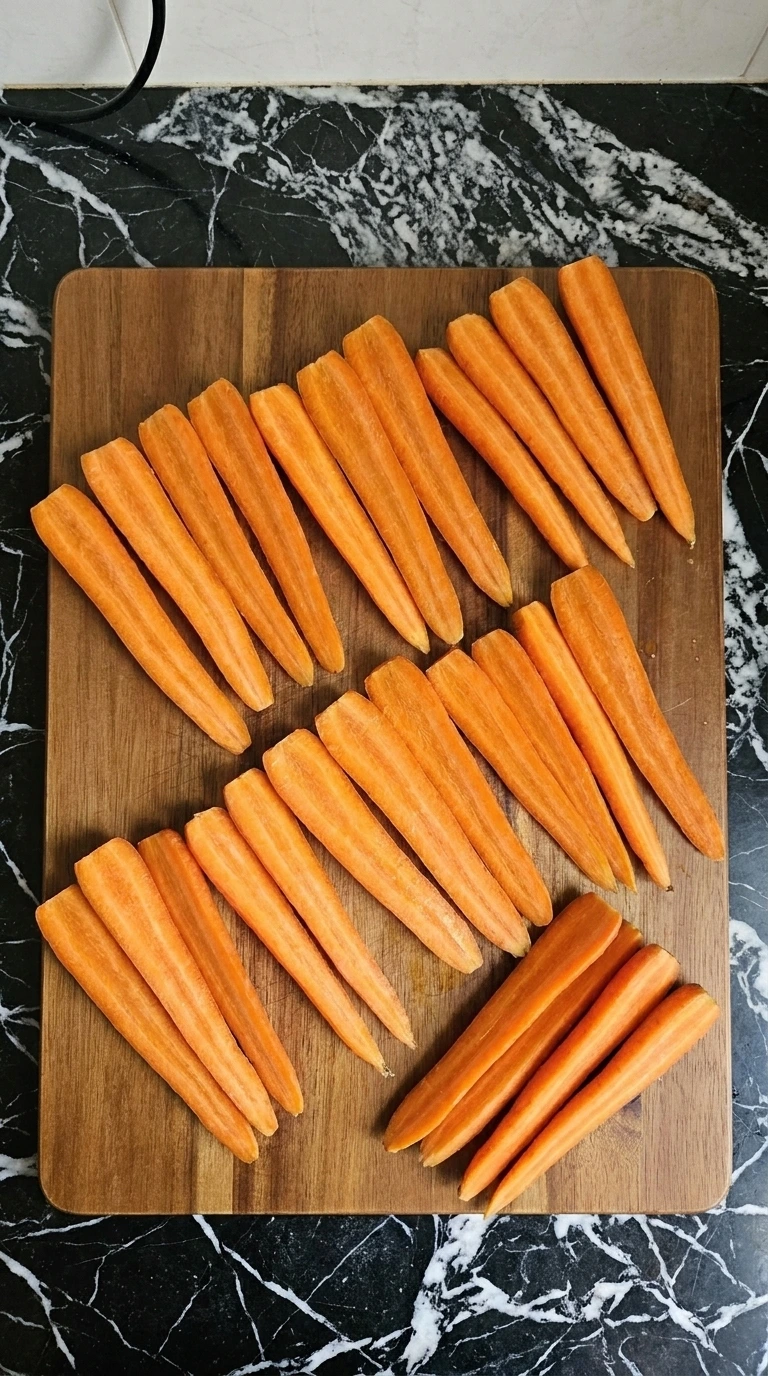
Heat the oven to 425°F and let it preheat for 10 minutes. Meanwhile scrub 12 medium carrots and peel only rough patches. Trim the tops and halve each carrot lengthwise with one firm cut. Keep every piece 5 to 7 inches long.
Aim for shoulders between 1/2 and 1 inch thick so all 24 halves soften together. Spread the 24 carrot halves out and compare their thickness. The cut faces should look moist and bright orange while the pointed ends stay intact. Uneven shapes are natural but no piece should be dramatically thicker.
Miss this size window and thin tips scorch before thick centers soften. Even halves expose enough surface for steady caramelization.
Tip: Choose carrots close to 6 inches long because oversized carrots stay firm after the 30-minute roast.
Step 2: Coat the carrots with maple glaze

Keep the melted butter near 100°F so it stays fluid. Whisk pure maple syrup with light brown sugar, butter, extra-virgin olive oil, cinnamon, kosher salt, black pepper and chopped rosemary for 60 to 90 seconds. Use fast circles until no sugar lumps remain. Add all 24 carrot halves and fold from bottom to top for 2 minutes.
The glaze should cling in a thin amber film and gather lightly along each cut face. You’ll smell cinnamon and maple before the carrots reach the pan. Dry patches mean the bowl wasn’t scraped. (I once left them coated for 20 minutes, the bowl filled with orange liquid.
) Wait too long and salt pulls out water. A thin coat roasts instead of steaming.
Tip: Measure maple syrup with a lightly oiled tablespoon so all 3 tablespoons slide cleanly into the bowl.
Step 3: Roast the carrots cut-side down

Transfer the 24 glazed carrot halves to an 18×13-inch rimmed sheet pan. Arrange them cut-side down in one loose layer with small gaps. Roast at 425°F for 15 minutes without stirring. Press each flat face against the metal before the pan goes in.
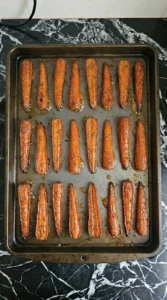
That direct contact starts the dark caramelized stripe seen on finished carrots. At minute 15 the glaze should bubble quietly around the edges. Lift one carrot and look for a bronze cut face with darker spots near the shoulder. The rounded sides will still look bright orange and slightly firm.
Crowd the pan and trapped steam makes the glaze pale and watery. Direct metal contact concentrates the sugars before the centers soften.
Tip: Use a dark heavy sheet pan because pale thin aluminum can delay browning by several minutes.
Step 4: Flip and deepen the glaze
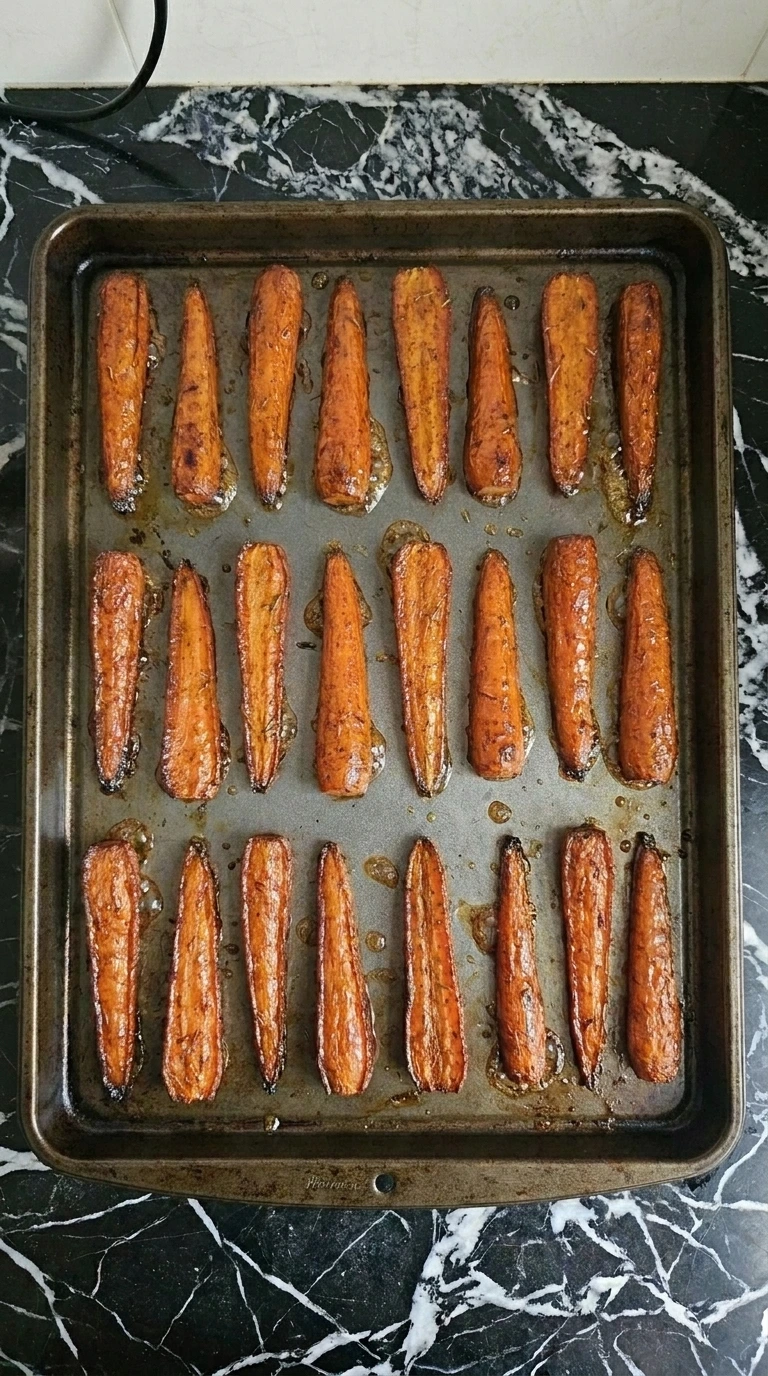
Flip every carrot so the bronze cut face points upward. Shift the pieces toward open areas and brush the pooled pan glaze across their tops. Return the same sheet pan to the 425°F oven for 12 to 15 minutes. Rotate the pan once at minute 7.
Remove it when a fork meets only slight resistance at the thickest shoulder. The carrots should turn deep mahogany-orange with glossy ridges and darker caramelized edges. Their tips will wrinkle slightly and the maple aroma will smell toasted rather than raw. Go past 15 minutes and the sugar can taste bitter.
At 18 minutes the darker glaze starts masking the clean maple flavor. The second roast sets a lacquer without drying the centers.
Tip: Pull smaller carrot halves 2 minutes early if their pointed ends darken faster than the thicker pieces.
Step 5: Rest and finish the carrots

Rest the carrots on the sheet pan for exactly 3 minutes off the heat. Then transfer 6 halves per serving to a plate while they’re about 150 to 160°F. Spoon a little thick pan glaze over the top.
Scatter pomegranate arils, reserved rosemary needles and flaky sea salt unevenly so the orange surface still shows. The glaze should stop bubbling and turn tacky enough to hold each garnish. Ruby arils will sit between the carrot halves instead of sliding into a puddle.
Plate immediately and the glaze runs thin. Wait longer than 10 minutes and the surface loses some shine. A short rest lets dissolved sugars thicken around each carrot.
Tip: Use only 1 tablespoon of pomegranate arils per plate because more can hide the caramelized surface.
Recipe Notes
- Buy carrots between 5 and 7 inches long because very thick roots need more than 30 minutes to soften.
- Leave at least 1/2 inch between most pieces so 425°F air can circulate and the maple glaze won’t steam.
- Use Grade A amber maple syrup because very dark syrup can overwhelm the 3/4 teaspoon of cinnamon.
- Flip at minute 15 and rotate the pan at minute 22 so the darker back corner doesn’t scorch.
- Scrape pooled glaze over the carrots only once because repeated brushing cools the pan and delays caramelization.
- Check the thickest shoulder with a fork at minute 27. It should yield with slight resistance and stay intact.
- Add pomegranate arils after a 3-minute rest so they remain firm and don’t bleed into the hot glaze.
- Add 1/2 teaspoon smoked paprika to the glaze for a warm smoky edge that works with roast chicken.
- Replace the pomegranate arils with 2 tablespoons toasted chopped pecans for a crunchier holiday finish.
- Add 1 teaspoon orange zest after roasting for a brighter citrus note without thinning the maple coating.
- Use vegan butter and omit the flaky sea salt for a fully plant-based version with a softer finish.
Variations to Try
- unsalted butter: 2 tablespoons vegan butter or 1 1/2 tablespoons extra-virgin olive oil — Use vegan butter one-to-one for a dairy-free glaze. If using olive oil, reduce it to 1 1/2 tablespoons because a full 2 tablespoons tastes greasy.
- pure maple syrup: 3 tablespoons runny clover honey — Use the same amount but check the carrots 2 minutes early. Honey darkens faster and tastes more floral, and it isn’t vegan.
- light brown sugar: 1 tablespoon coconut sugar — Use a one-to-one swap. The glaze becomes less glossy and slightly earthier because coconut sugar dissolves more slowly.
- fresh rosemary: 1 tablespoon fresh thyme leaves — Use the same volume for a softer herbal flavor. Thyme is less piney and works especially well beside Ground Beef Meal Prep.
- medium carrot: replace up to 1 pound with medium parsnips — Cut the parsnips to the same thickness and add 3 to 5 minutes. They’ll taste nuttier and soften slightly faster at the tips.
- ground cinnamon and seasonings: certified gluten-free labeled versions — Use certified versions in the same measured amounts. The recipe is already egg-free and naturally gluten-free, but labels matter when cross-contact is a concern.
Storage Tips
Cool leftovers within 2 hours and store them in a shallow airtight container for up to 4 days. Keep pomegranate arils and rosemary garnish in separate small containers. You can freeze the glazed carrots without garnish for 2 months. First freeze them in one layer for 1 hour.
Then pack them tightly in a freezer bag with excess air pressed out. Reheat refrigerated carrots at 400°F for 8 to 10 minutes and brush them with 1 teaspoon maple syrup halfway through. Thawed carrots need 10 to 12 minutes and may feel softer. Don’t microwave longer than 90 seconds because the glaze can turn runny.
Discard leftovers with a sour smell, sticky slime or visible mold. Fresh glaze should smell warm and sweet.
Cinnamon Maple Roasted Carrots
Ingredients
- 12 medium, about 2 pounds medium carrot Scrubbed, rough spots peeled and halved lengthwise into 24 pieces.
- 3 tablespoons pure maple syrup Use Grade A amber syrup for a clean maple flavor and glossy glaze.
- 1 tablespoon light brown sugar Packed firmly to add molasses flavor and deepen caramelization.
- 2 tablespoons unsalted butter Melted and kept near 100°F so it blends smoothly into the glaze.
- 1 tablespoon extra-virgin olive oil Adds fluidity and helps the buttered glaze tolerate high roasting heat.
- 3/4 teaspoon ground cinnamon Measured level so the warmth stays balanced and doesn’t taste dusty.
- 3/4 teaspoon Diamond Crystal kosher salt Divided through the glaze to sharpen sweetness without making it salty.
- 1/4 teaspoon freshly ground black pepper Ground medium-fine for gentle heat across the sweet glaze.
- 1 tablespoon leaves plus 3 small sprigs fresh rosemary Finely chop the leaves for the glaze and reserve needles from the sprigs for finishing.
- 1/4 cup pomegranate arils Kept chilled until plating for a tart pop and firm texture.
- 1/4 teaspoon flaky sea salt Crushed lightly over the finished carrots for small crisp bursts.
Instructions
- Heat the oven to 425°F and let it preheat for 10 minutes. Meanwhile scrub 12 medium carrots and peel only rough patches. Trim the tops and halve each carrot lengthwise with one firm cut. Keep every piece 5 to 7 inches long. Aim for shoulders between 1/2 and 1 inch thick so all 24 halves soften together. Spread the 24 carrot halves out and compare their thickness. The cut faces should look moist and bright orange while the pointed ends stay intact. Uneven shapes are natural but no piece should be dramatically thicker. Miss this size window and thin tips scorch before thick centers soften. Even halves expose enough surface for steady caramelization.
- Keep the melted butter near 100°F so it stays fluid. Whisk pure maple syrup with light brown sugar, butter, extra-virgin olive oil, cinnamon, kosher salt, black pepper and chopped rosemary for 60 to 90 seconds. Use fast circles until no sugar lumps remain. Add all 24 carrot halves and fold from bottom to top for 2 minutes. The glaze should cling in a thin amber film and gather lightly along each cut face. You’ll smell cinnamon and maple before the carrots reach the pan. Dry patches mean the bowl wasn’t scraped. (I once left them coated for 20 minutes, the bowl filled with orange liquid.) Wait too long and salt pulls out water. A thin coat roasts instead of steaming.

- Transfer the 24 glazed carrot halves to an 18×13-inch rimmed sheet pan. Arrange them cut-side down in one loose layer with small gaps. Roast at 425°F for 15 minutes without stirring. Press each flat face against the metal before the pan goes in. That direct contact starts the dark caramelized stripe seen on finished carrots. At minute 15 the glaze should bubble quietly around the edges. Lift one carrot and look for a bronze cut face with darker spots near the shoulder. The rounded sides will still look bright orange and slightly firm. Crowd the pan and trapped steam makes the glaze pale and watery. Direct metal contact concentrates the sugars before the centers soften.
- Flip every carrot so the bronze cut face points upward. Shift the pieces toward open areas and brush the pooled pan glaze across their tops. Return the same sheet pan to the 425°F oven for 12 to 15 minutes. Rotate the pan once at minute 7. Remove it when a fork meets only slight resistance at the thickest shoulder. The carrots should turn deep mahogany-orange with glossy ridges and darker caramelized edges. Their tips will wrinkle slightly and the maple aroma will smell toasted rather than raw. Go past 15 minutes and the sugar can taste bitter. At 18 minutes the darker glaze starts masking the clean maple flavor. The second roast sets a lacquer without drying the centers.
- Rest the carrots on the sheet pan for exactly 3 minutes off the heat. Then transfer 6 halves per serving to a plate while they’re about 150 to 160°F. Spoon a little thick pan glaze over the top. Scatter pomegranate arils, reserved rosemary needles and flaky sea salt unevenly so the orange surface still shows. The glaze should stop bubbling and turn tacky enough to hold each garnish. Ruby arils will sit between the carrot halves instead of sliding into a puddle. Plate immediately and the glaze runs thin. Wait longer than 10 minutes and the surface loses some shine. A short rest lets dissolved sugars thicken around each carrot.

Notes
Nutrition
Questions I Get Asked
Yes, halve the carrots up to 24 hours ahead and refrigerate them in an airtight container lined with a dry towel. Mix the glaze separately and chill it. Bring the butter mixture to about 70°F before coating so it spreads evenly.
Store cooled carrots for up to 4 days in a shallow airtight container on the coldest refrigerator shelf. Keep the pomegranate arils separate so they stay firm and bright. Discard the carrots if the glaze smells fermented, the surface becomes slimy or dark mold appears.
The pan was probably crowded or the coated carrots sat too long before roasting. Leave roughly 1/2 inch between most pieces and move them into a fully heated 425°F oven within 5 minutes. Water then evaporates before it can dilute the glaze.
Double every ingredient but use two 18×13-inch sheet pans so the carrots remain in loose single layers. Roast them on separate racks and swap rack positions at minute 15. One crowded pan traps steam and can add 10 minutes without producing dark cut faces.
Serve them with roast chicken, baked ham or salmon and add a plain grain or crisp green salad. Their sweet glaze benefits from a savory protein and something neutral. For four people, plan on six carrot halves per plate and about 1 tablespoon of garnish.
Freeze the roasted carrots without garnish for up to 2 months in one flat layer. Reheat from thawed at 400°F for 8 to 10 minutes. The centers become softer after freezing, but the hot oven restores some surface tackiness.
In Conclusion
Make these on a weekend afternoon with some music playing, like I do, and you’ll see why they’ve been a family favorite for years. Don’t skip that final 3-minute rest.
It may seem small, but it’s what takes them from just okay to really good. Serve them with dinner, then save our Pumpkin Muffins for your next cozy baking day.
Tag me on Instagram when you make them. Liam says hi too because he ate almost half the batch while we were testing them.
Carrots get sweeter as they roast. The heat drives out water, so their natural sugars become more concentrated along the cut sides.