Spaghetti Squash Bake
A golden layer of bubbly mozzarella is what makes this Spaghetti Squash Bake so hard to resist. Underneath all that cheese you’ll find tender strands of roasted squash tossed with garlicky spinach and rich tomato sauce. Scoop out a big piece while the cheese is still soft and stretchy. Dinner is looking good! Hi! Meet your new favorite easy spaghetti squash bake with all the saucy and cheesy goodness of a pasta casserole but a little lighter on the plate. It’s warm and filling and packed with those simple Italian flavors that make you want another bite.
And the best part? You get those lovely noodle-like strands without cooking any pasta. If you’re into vegetable-packed dinners like this one, our Thanksgiving Butternut Squash is another dish worth keeping around. That’s right. We’re asking that funny yellow squash to turn into tender little noodles and soak up a whole lot of tomato sauce. And she delivers. The ricotta melts into creamy pockets while the spinach adds little bits of green between the golden strands.
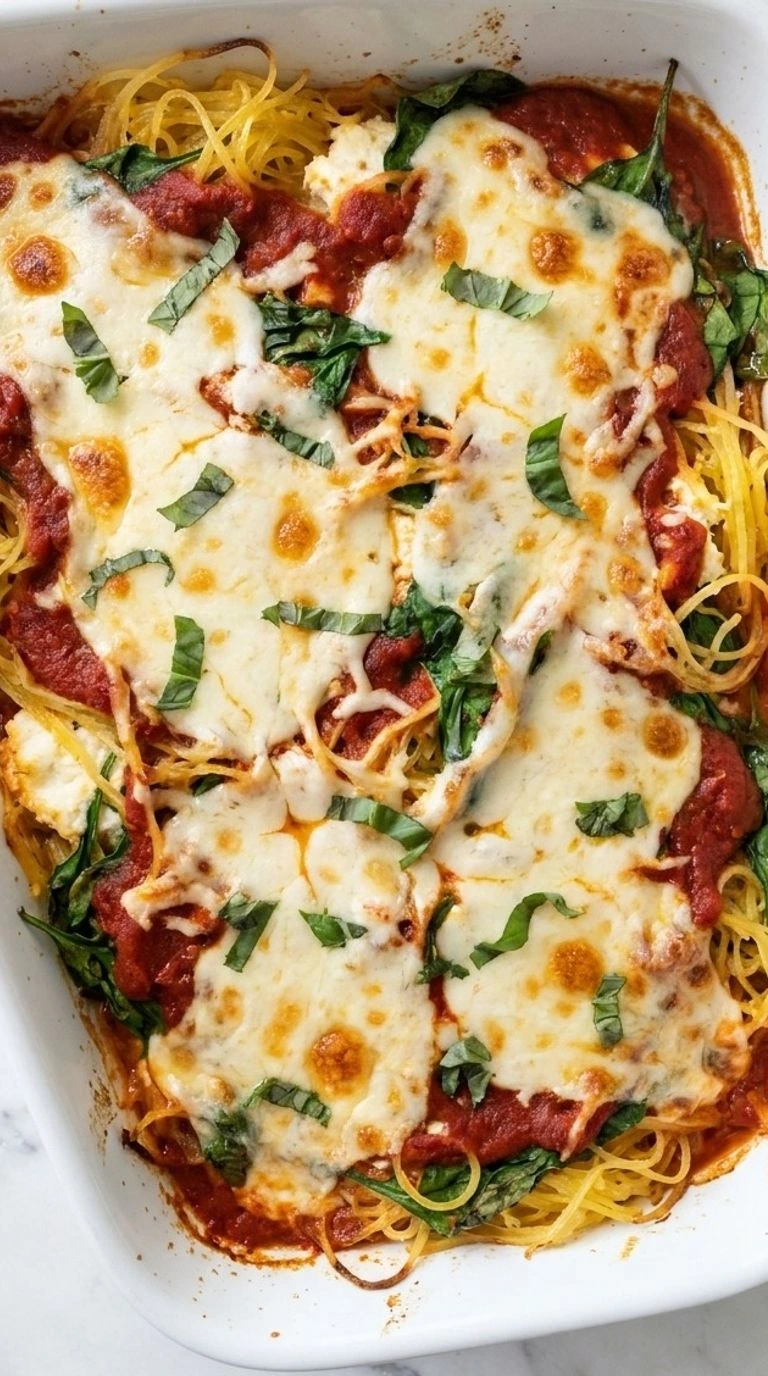
Then the mozzarella goes on top and gets all bubbly in the oven. It’s the kind of winter spaghetti squash bake that makes a chilly evening feel a whole lot better. And here’s something I really love about this recipe. You can put the whole casserole together ahead of time and bake it when you’re ready for dinner. The squash takes a little time to roast but most of that happens while you get on with other things. Nothing fussy. Just good food with enough cheese to make everyone happy.
Why This Recipe Works
Roasting the squash cut side down at 400°F helps the flesh turn tender while some of its water cooks away. Then a 5-minute drain removes more moisture before the strands meet the marinara and ricotta.
That’s what keeps this Spaghetti Squash Bake from turning into a puddle of tomato sauce. Baking at 375°F gives the filling time to heat through while the mozzarella melts and develops golden patches.
Ingredients
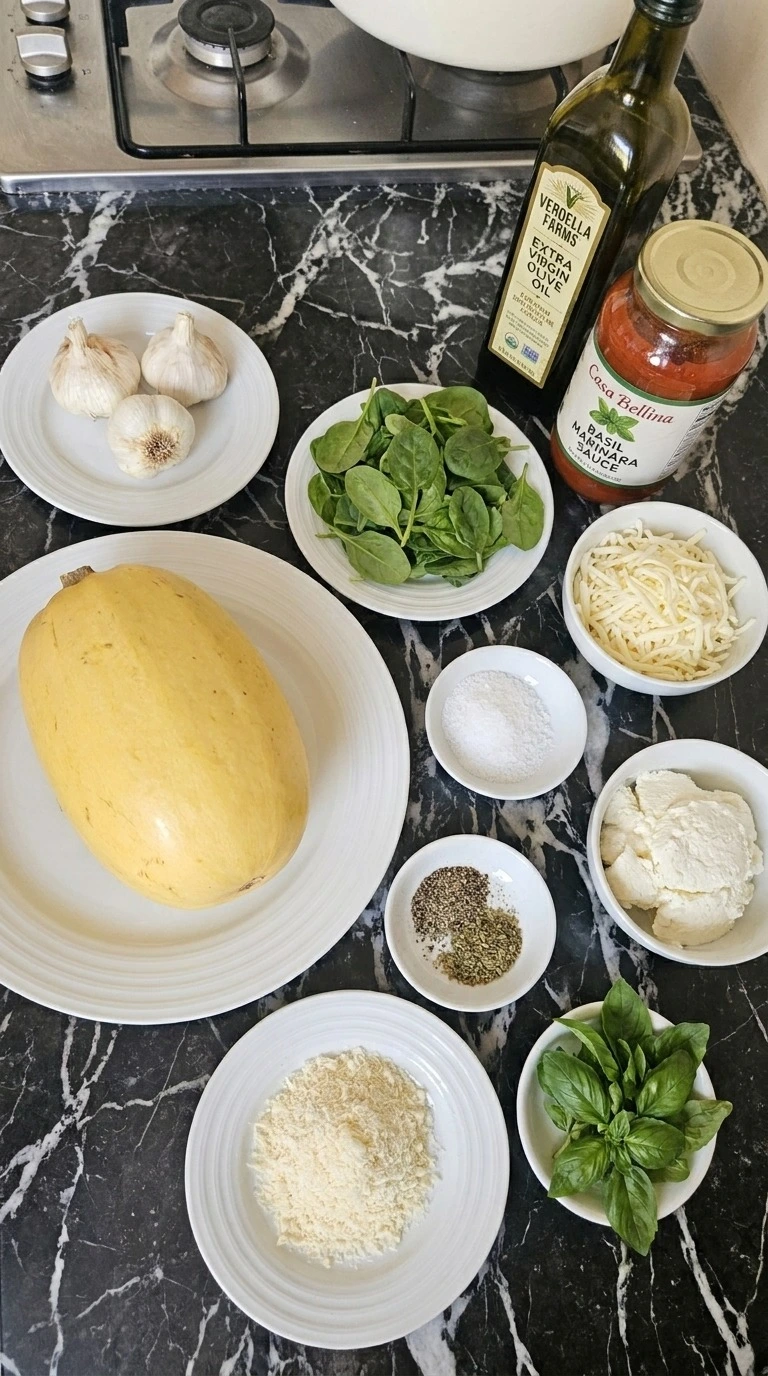
- Spaghetti squash: Cut lengthwise and seeded before roasting. Yields approximately 5 cups of tender golden strands that form the base of the casserole.
- Extra virgin olive oil: Divided between brushing the squash and sautéing the garlic and spinach. Adds richness and helps the vegetables cook evenly.
- Kosher salt: Divided between the roasted squash and casserole filling. Brings out the mild sweetness of the squash.
- Freshly ground black pepper: Divided between the roasting step and filling. Adds a gentle peppery bite without overpowering the vegetables.
- Garlic cloves: Peeled and finely minced before sautéing. Adds a fragrant savory base to the spinach and tomato filling.
- Baby spinach: Washed and dried before cooking. Wilts into tender green leaves that add color and a mild earthy flavor.
- Basil marinara sauce: Use a thick tomato-based sauce without excess liquid. Coats the squash strands with rich tomato flavor.
- Part-skim ricotta: Spoon directly into the filling and fold gently to leave small creamy pockets. Adds richness without making the casserole too heavy.
- Dried Italian seasoning: Sprinkled into the squash filling. Adds a balanced blend of dried herbs that complements the marinara.
- Part-skim low-moisture mozzarella: Shredded and scattered over the assembled casserole. Melts into a stretchy topping with lightly golden edges.
- Parmigiano Reggiano: Finely grated before use. Adds a salty nutty flavor and helps create small toasted spots across the topping.
- Fresh sweet basil: Leaves torn just before serving and scattered over the six portions. Adds a fresh herbal finish to the warm tomato sauce.
Kitchen Equipment
- Large chef’s knife: A sharp 8-inch chef’s knife helps split the firm squash safely, while a dull or flimsy blade can slip against its hard skin.
- Sturdy cutting board: A non-slip cutting board at least 15 inches long gives the squash a stable base, while a small board lets it wobble during cutting.
- Large rimmed baking sheet: A sturdy 13-by-18-inch baking sheet holds both squash halves with room for airflow, while a crowded small sheet traps moisture.
- Parchment paper: An oven-safe parchment sheet rated to at least 400°F prevents the squash from sticking, while thin paper with a lower heat rating can scorch.
- Metal spoon: A firm tablespoon-sized spoon scoops out squash seeds without removing too much flesh, while a flexible plastic spoon struggles with the fibers.
- Dinner fork: A standard four-tine fork pulls the roasted flesh into long strands, while a wide serving fork can tear it into thick chunks.
- 10-inch skillet: A 10-inch heavy-bottomed skillet gives garlic and spinach enough room to sauté evenly, while a small pan crowds the leaves and traps water.
- Wooden spoon: A heat-safe wooden spoon moves garlic and spinach without scratching the skillet, while a short or rigid utensil makes stirring less controlled.
- Large colander: A colander holding at least 3 quarts lets moisture drain from the squash strands, while tiny or widely spaced holes can let strands escape.
- Large mixing bowl: A 5-quart mixing bowl provides room to fold the squash with sauce and ricotta, while a smaller bowl causes spills and crushed strands.
- Rubber spatula: A flexible heat-safe spatula folds the filling gently and spreads it into the dish, while a stiff spoon can break the squash strands.
- 9-by-13-inch baking dish: A 9-by-13-inch oven-safe ceramic or glass baking dish gives the casserole a fairly shallow layer for even heating, while a smaller dish can make the center watery.
- Instant-read food thermometer: A digital food thermometer with a thin probe checks that the casserole center reaches 165°F, while a slow dial thermometer makes the reading harder to judge.
- Wide serving spatula: A serving spatula at least 3 inches wide supports each tender casserole portion, while a narrow turner lets the strands fall apart.
How to Make It
Step 1: Halve and Roast the Spaghetti Squash
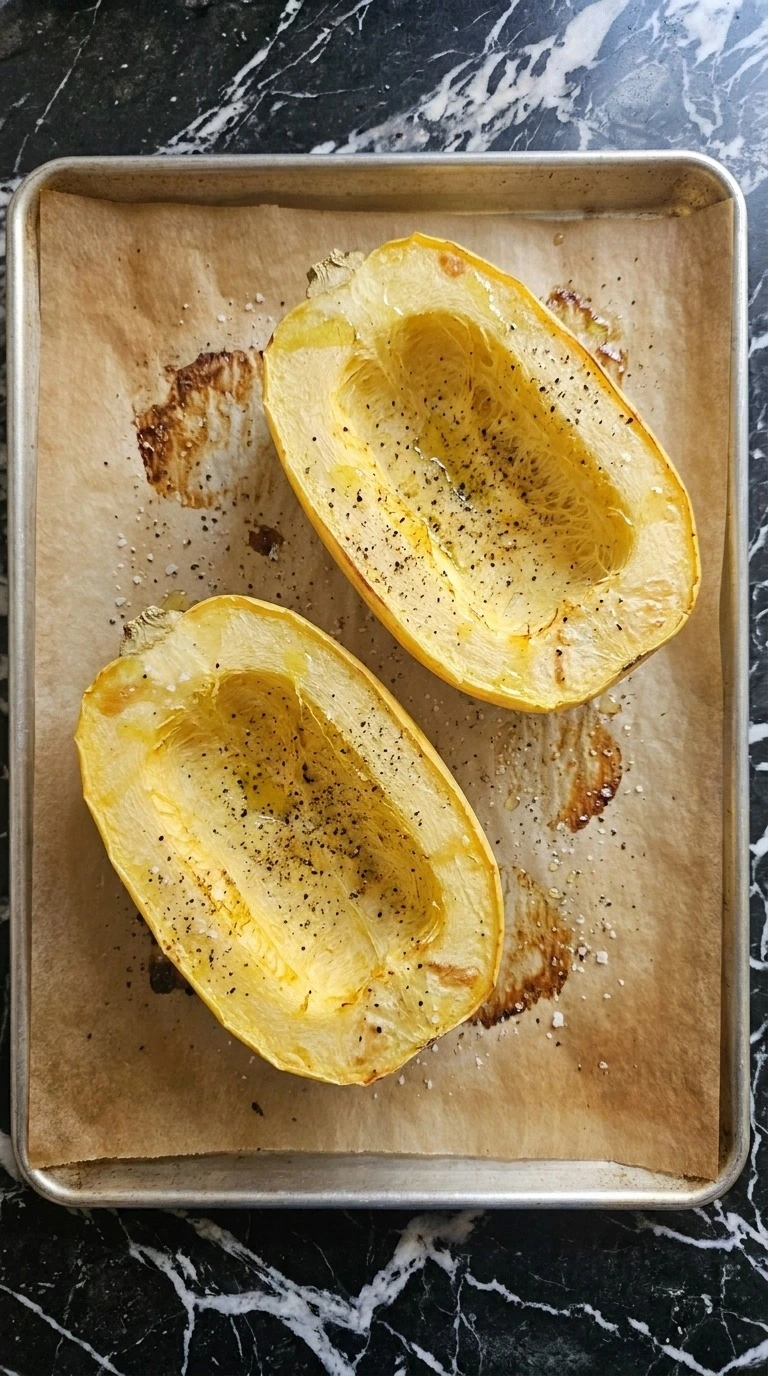
Heat your oven to 400°F and line a large baking sheet with parchment paper. Carefully cut the spaghetti squash lengthwise from stem to base. Scoop out the seeds and loose strings with a spoon. Brush the cut sides with 1 tablespoon of extra virgin olive oil and season with 1/4 teaspoon kosher salt and a pinch of the measured black pepper.
Set both halves cut side down on the sheet. Roast for 35 to 45 minutes until the flesh gives when pressed with a fork. Don’t rush it. Next, let the halves cool for 10 minutes before handling them.
The skin should look slightly wrinkled and the flesh should be tender but not mushy. Roast too long and the strands turn limp. The high heat softens the squash while driving off excess moisture.
Tip: Choose a spaghetti squash weighing about 3 pounds with firm skin and no soft spots. A heavier squash often has more usable flesh.
Step 2: Sauté the Garlic and Wilt the Spinach
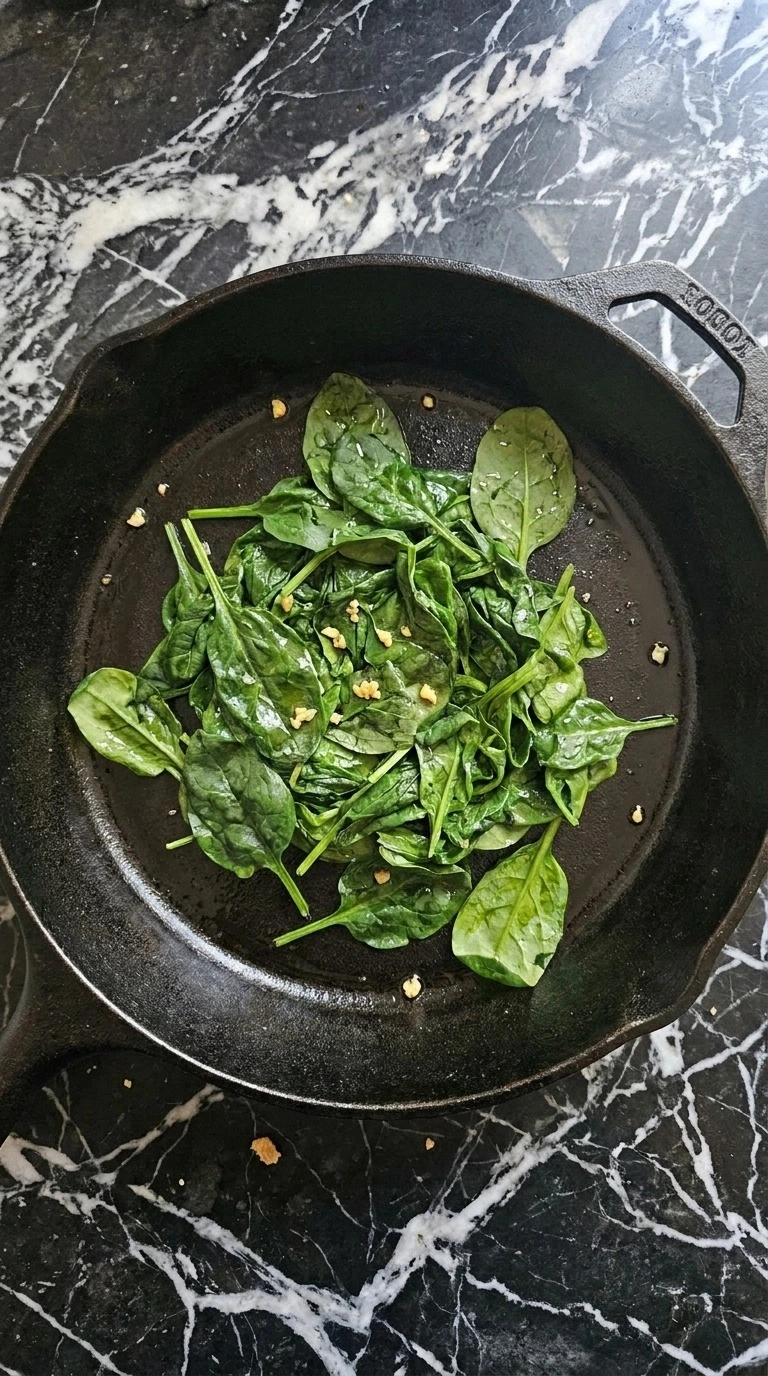
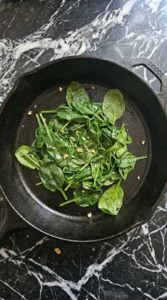
While the squash roasts at 400°F, warm the remaining 1 tablespoon of extra virgin olive oil in a 10-inch skillet over medium heat. Add 3 minced garlic cloves and stir with a wooden spoon for 30 to 45 seconds until fragrant. Then add 3 packed cups of baby spinach in two batches. Turn the leaves gently as they shrink and soften.
Cook for 2 to 3 minutes until the spinach turns dark green and most visible moisture has evaporated. Keep the garlic moving so it doesn’t scorch. Meanwhile, watch for the spinach to collapse into a small mound with no liquid pooling underneath. The garlic should smell sweet rather than sharp.
Leave it too long and the leaves turn dull. Brief heat keeps the greens tender and limits water in the filling.
Tip: If your baby spinach has thick stems, pinch them off before cooking. Tender leaves wilt more evenly during the 3-minute sauté.
Step 3: Scrape the Squash Strands and Mix the Filling
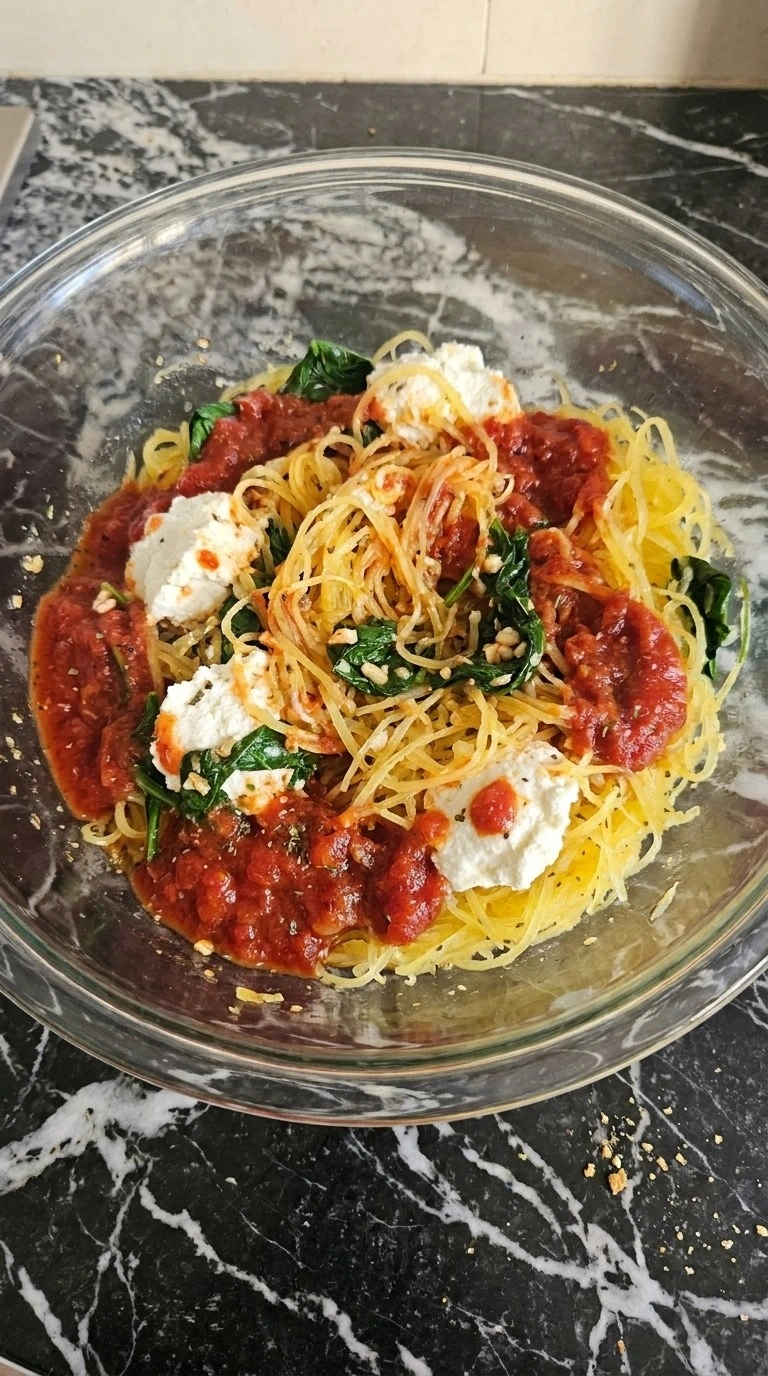
Once the roasted squash has cooled for 10 minutes, drag a fork across the flesh to loosen its long golden strands. Transfer about 5 cups of strands into a colander and let them drain for 5 minutes. Press gently with the back of a spoon without crushing them. Then move the drained squash into a large mixing bowl.
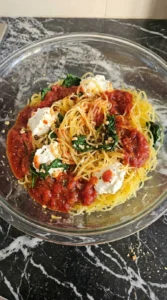
Add the wilted spinach and garlic, 1 1/2 cups of marinara sauce, 3/4 cup of part-skim ricotta and 1 teaspoon of dried Italian seasoning. Sprinkle in the remaining 1/2 teaspoon kosher salt and black pepper. Next, fold everything together until the strands look lightly coated and the ricotta forms small creamy pockets. The mixture should hold together without sauce collecting underneath.
Mix too hard and the fibers break. Gentle folding keeps the strands distinct and the filling from turning pasty.
Tip: Measure the squash after roasting rather than before. Aim for roughly 5 packed cups of strands so the sauce stays thick.
Step 4: Layer the Squash Filling and Add the Cheese
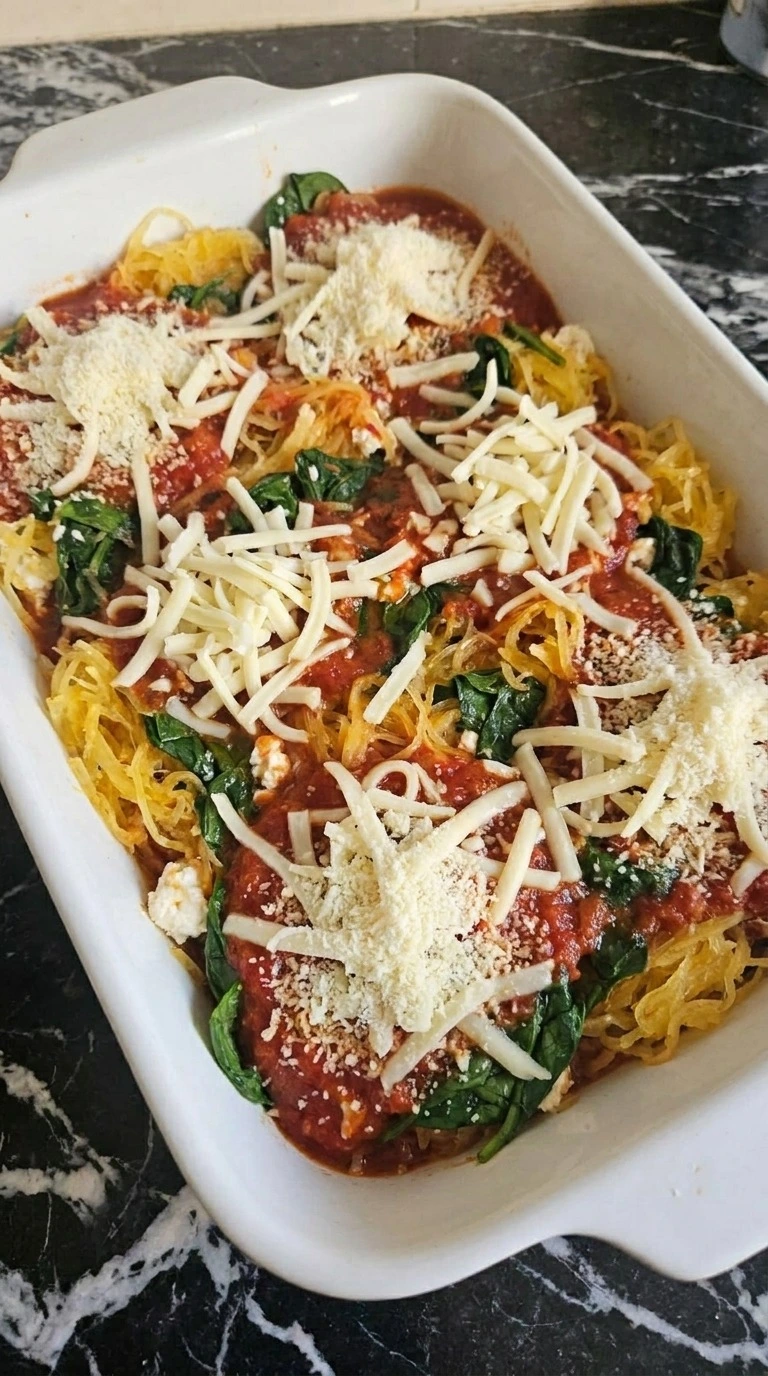
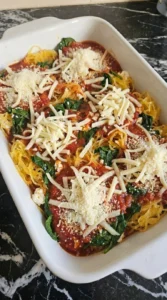
Lower the oven temperature to 375°F. Spread the squash mixture into a lightly greased 9-by-13-inch baking dish and press it into an even layer with a spatula. Leave some loose strands near the edges instead of packing everything tightly. Scatter 1 cup of shredded part-skim mozzarella across the top and follow with 1/4 cup of freshly grated Parmesan.
Cover most of the red filling but leave a few strands and spinach leaves peeking through. This takes about 3 to 5 minutes once everything is mixed. Now the dish should show patches of white cheese over a red and golden filling. Some strands will curl around the edges.
Don’t press the topping flat or it’ll form a dense cap. Loose layers let heat move through the filling more evenly.
Tip: Use freshly grated Parmesan instead of shelf-stable powdered Parmesan. The fresh cheese melts into little savory patches rather than forming a dry layer.
Step 5: Bake Until the Cheese Melts and Turns Golden
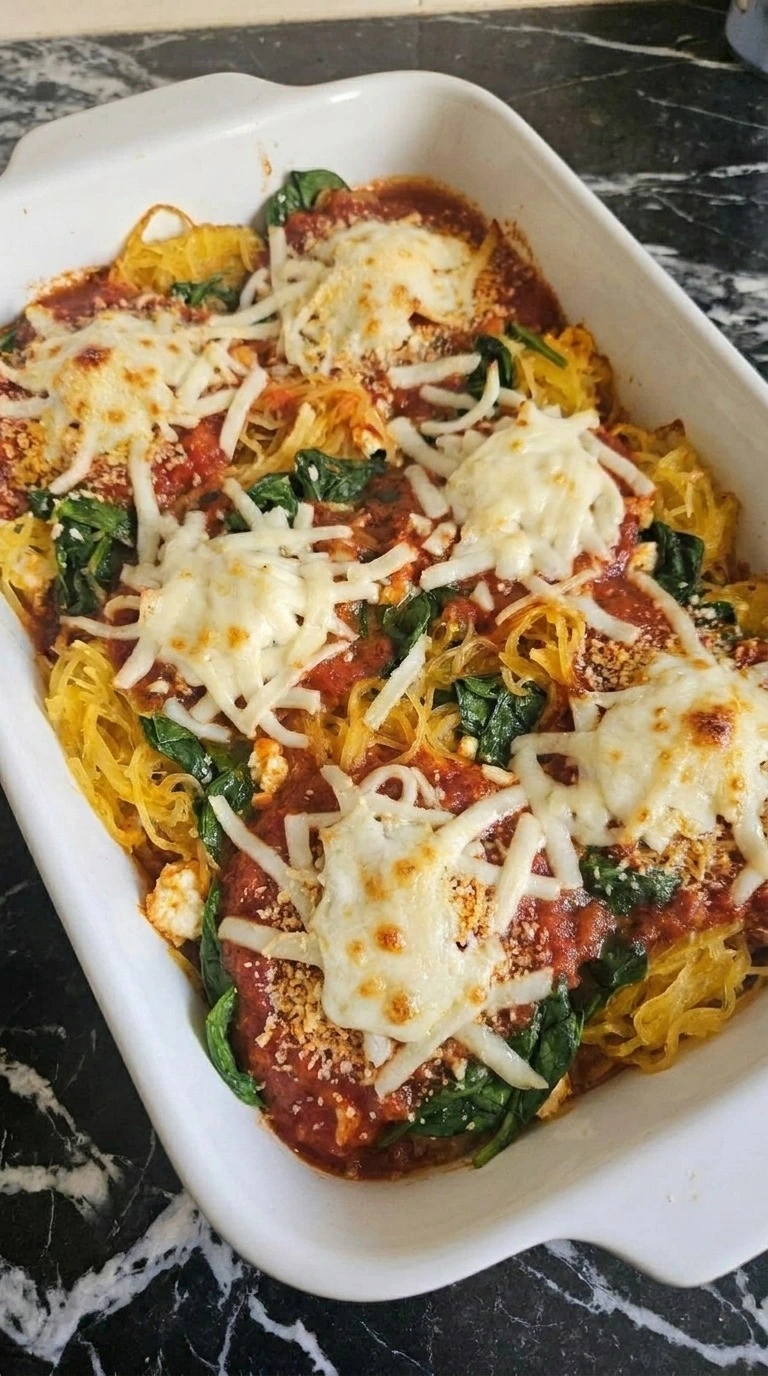
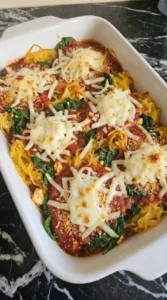
Place the baking dish on the middle rack of your 375°F oven and bake uncovered for 20 to 25 minutes. Watch for the mozzarella to melt into uneven creamy patches while the Parmesan forms tiny amber spots. The sauce should bubble gently at the edges and the center should reach at least 165°F when checked with a food thermometer. If the cheese needs more color, switch to the broiler for 1 to 2 minutes while watching closely.
Don’t leave the dish unattended under the broiler. Finally, remove the bake and let it rest for 10 minutes before cutting. The cheese will settle slightly and the filling will stop bubbling. (I prefer a full 10-minute rest because the first slice holds together much better.
) Cut too soon and the filling spreads. Resting lets the hot sauce thicken around the squash strands.
Tip: For a deeper golden topping, position the dish about 6 inches below the broiler for the final minute. Watch constantly to prevent burning.
Step 6: Cut a Portion and Finish With Fresh Basil
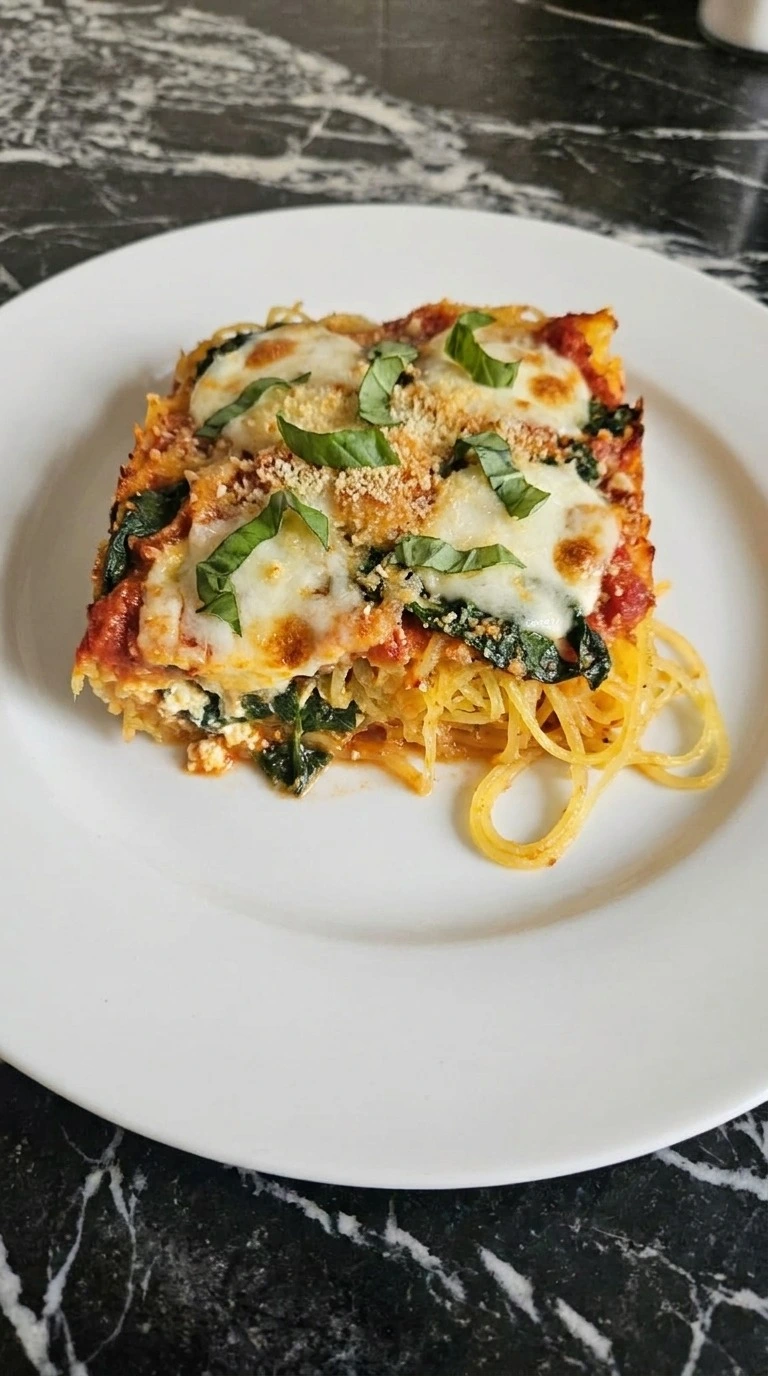
After the 10-minute rest, cut the casserole into 6 portions using a sharp knife. Slide a wide spatula under one piece and lift it onto a warm white dinner plate. Let a few loose squash strands fall naturally beside the serving. Then tear 2 tablespoons of fresh basil leaves and scatter them over the portions just before serving.
Aim for a serving temperature around 145°F to 160°F so the cheese stays soft without burning your mouth. Serve while the center still feels warm and tender. The finished portion should reveal tangled golden squash strands and little green spinach leaves beneath a melted cheese top. You’ll smell basil as soon as it meets the warm sauce.
Wait too long to serve and the topping firms up. Adding basil last keeps its fresh flavor bright.
Tip: For neat portions, cut the baking dish into 3 rows and 2 columns. Use a wide spatula to support the tender strands.
Pro Tips
- Choose a spaghetti squash weighing about 3 pounds with smooth yellow skin and no soft patches. A firm squash gives you better strands after roasting.
- For a less watery Spaghetti Squash Bake, drain the roasted strands for 5 minutes and press gently. Don’t squeeze hard or they’ll lose their shape.
- Use a thick marinara that clings to a spoon instead of running off immediately. If yours is thin, simmer it for 5 to 8 minutes.
- Shred the part-skim mozzarella from a block when possible. Pre-shredded cheese often contains starch that can make the 375°F topping melt less smoothly.
- Keep the casserole uncovered during its 20 to 25 minutes in the oven. Covering it traps moisture and can leave the golden squash strands soggy.
- For deeper cheese color, broil for 1 to 2 minutes after baking. Stay nearby because mozzarella can scorch before the filling changes much.
- If you’re making dinner ahead, roast the squash up to 2 days early. Refrigerate the drained strands and assemble the casserole when you’re ready.
- Tear the 2 tablespoons of fresh basil just before serving. Adding it after baking keeps the leaves green and their flavor fresh.
- For a smoky tomato version, stir 1/2 teaspoon of smoked paprika into the marinara and add 1/4 teaspoon of crushed red pepper flakes.
- Make a Mediterranean-inspired casserole by adding 1/3 cup of chopped Kalamata olives and replacing 1/4 cup of mozzarella with crumbled feta.
- For a mushroom and spinach version, sauté 8 ounces of sliced cremini mushrooms for 7 to 9 minutes until their liquid evaporates, then fold them into the filling.
- Give the casserole a brighter finish by adding 1 teaspoon of finely grated lemon zest to the ricotta and sprinkling 2 tablespoons of chopped fresh flat-leaf parsley over the baked top.
Substitutions & Variations
- Part-skim ricotta: Use 3/4 cup of plain whole-milk cottage cheese instead. Blend the cottage cheese until smooth before adding it to the filling. It’ll taste slightly tangier and may release more moisture, so drain it first.
- Part-skim low-moisture mozzarella: Use 1 cup of shredded dairy-free mozzarella and replace the ricotta with 3/4 cup of thick dairy-free ricotta. Skip the Parmigiano Reggiano or use 1/4 cup of dairy-free Parmesan. The topping may melt less evenly, so watch it closely during the final 5 minutes.
- Basil marinara sauce: Use 1 1/2 cups of thick homemade tomato sauce or prepared roasted garlic marinara. Avoid thin tomato sauce because the squash already holds moisture. Simmer a watery sauce for 5 to 8 minutes before mixing it in. For another roasted vegetable dish, try our Sheet Pan Roasted Butternut Squash Soup.
- Baby spinach: Use 3 packed cups of chopped fresh baby kale with the thick stems removed. Cook the kale for 5 to 7 minutes instead of 2 to 3 minutes. It’ll stay a little chewier and taste more earthy.
- Spaghetti squash: Use 5 cups of cooked and thoroughly drained zucchini noodles for a different vegetable casserole. Salt the zucchini noodles lightly and drain them for 15 minutes before squeezing out moisture. They’ll be softer and wetter than squash. This recipe is naturally egg-free and can be gluten-free when you choose a certified gluten-free marinara.
Storage Instructions
Let the casserole cool slightly and refrigerate it within 2 hours of baking. Transfer leftovers to shallow airtight containers and keep them in the refrigerator for up to 4 days. This Spaghetti Squash Bake can also be frozen in individual portions for up to 2 months for the best quality. Wrap each cooled portion tightly or use a freezer-safe container with a secure lid.
The squash may release a little extra liquid once thawed, so don’t expect quite the same texture as the fresh casserole. For reheating, place a chilled portion in an oven-safe dish with 1 tablespoon of marinara and cover loosely with foil. Warm at 350°F for 15 to 20 minutes or until the center reaches 165°F. Thaw frozen portions overnight in the refrigerator first.
Discard leftovers if you notice mold, a sour smell or a slimy texture. Don’t taste food to check whether it’s spoiled.
Spaghetti Squash Bake
Ingredients
Method
- Heat your oven to 400°F and line a large baking sheet with parchment paper. Carefully cut the spaghetti squash lengthwise from stem to base. Scoop out the seeds and loose strings with a spoon. Brush the cut sides with 1 tablespoon of extra virgin olive oil and season with 1/4 teaspoon kosher salt and a pinch of the measured black pepper. Set both halves cut side down on the sheet. Roast for 35 to 45 minutes until the flesh gives when pressed with a fork. Don’t rush it. Next, let the halves cool for 10 minutes before handling them. The skin should look slightly wrinkled and the flesh should be tender but not mushy. Roast too long and the strands turn limp. The high heat softens the squash while driving off excess moisture.

- While the squash roasts at 400°F, warm the remaining 1 tablespoon of extra virgin olive oil in a 10-inch skillet over medium heat. Add 3 minced garlic cloves and stir with a wooden spoon for 30 to 45 seconds until fragrant. Then add 3 packed cups of baby spinach in two batches. Turn the leaves gently as they shrink and soften. Cook for 2 to 3 minutes until the spinach turns dark green and most visible moisture has evaporated. Keep the garlic moving so it doesn’t scorch. Meanwhile, watch for the spinach to collapse into a small mound with no liquid pooling underneath. The garlic should smell sweet rather than sharp. Leave it too long and the leaves turn dull. Brief heat keeps the greens tender and limits water in the filling.
- Once the roasted squash has cooled for 10 minutes, drag a fork across the flesh to loosen its long golden strands. Transfer about 5 cups of strands into a colander and let them drain for 5 minutes. Press gently with the back of a spoon without crushing them. Then move the drained squash into a large mixing bowl. Add the wilted spinach and garlic, 1 1/2 cups of marinara sauce, 3/4 cup of part-skim ricotta and 1 teaspoon of dried Italian seasoning. Sprinkle in the remaining 1/2 teaspoon kosher salt and black pepper. Next, fold everything together until the strands look lightly coated and the ricotta forms small creamy pockets. The mixture should hold together without sauce collecting underneath. Mix too hard and the fibers break. Gentle folding keeps the strands distinct and the filling from turning pasty.
- Lower the oven temperature to 375°F. Spread the squash mixture into a lightly greased 9-by-13-inch baking dish and press it into an even layer with a spatula. Leave some loose strands near the edges instead of packing everything tightly. Scatter 1 cup of shredded part-skim mozzarella across the top and follow with 1/4 cup of freshly grated Parmesan. Cover most of the red filling but leave a few strands and spinach leaves peeking through. This takes about 3 to 5 minutes once everything is mixed. Now the dish should show patches of white cheese over a red and golden filling. Some strands will curl around the edges. Don’t press the topping flat or it’ll form a dense cap. Loose layers let heat move through the filling more evenly.
- Place the baking dish on the middle rack of your 375°F oven and bake uncovered for 20 to 25 minutes. Watch for the mozzarella to melt into uneven creamy patches while the Parmesan forms tiny amber spots. The sauce should bubble gently at the edges and the center should reach at least 165°F when checked with a food thermometer. If the cheese needs more color, switch to the broiler for 1 to 2 minutes while watching closely. Don’t leave the dish unattended under the broiler. Finally, remove the bake and let it rest for 10 minutes before cutting. The cheese will settle slightly and the filling will stop bubbling. (I prefer a full 10-minute rest because the first slice holds together much better.) Cut too soon and the filling spreads. Resting lets the hot sauce thicken around the squash strands.
- After the 10-minute rest, cut the casserole into 6 portions using a sharp knife. Slide a wide spatula under one piece and lift it onto a warm white dinner plate. Let a few loose squash strands fall naturally beside the serving. Then tear 2 tablespoons of fresh basil leaves and scatter them over the portions just before serving. Aim for a serving temperature around 145°F to 160°F so the cheese stays soft without burning your mouth. Serve while the center still feels warm and tender. The finished portion should reveal tangled golden squash strands and little green spinach leaves beneath a melted cheese top. You’ll smell basil as soon as it meets the warm sauce. Wait too long to serve and the topping firms up. Adding basil last keeps its fresh flavor bright.

Notes
Frequently Asked Questions
Yes! You can roast the squash and cook the spinach up to 2 days before serving. Keep them in separate covered containers in the fridge until you’re ready to assemble. Once you’ve added the sauce and cheese, cover the dish and refrigerate it for up to 24 hours. Bake at 375°F for 30 to 35 minutes from cold and check that the center reaches 165°F.
Spaghetti squash holds quite a bit of water, especially if it’s roasted for too long or mixed with thin sauce. After roasting at 400°F, give the strands 5 minutes in a colander before adding the marinara. You can also reduce the tomato sauce over medium-low heat for 5 to 8 minutes if it looks thin. Don’t cover the casserole during baking because that traps extra moisture.
For a dairy-free version, replace the ricotta with 3/4 cup of dairy-free ricotta and use 1 cup of plant-based mozzarella. Leave out the Parmigiano Reggiano or replace it with dairy-free Parmesan. The cheese may melt differently, but the squash will still be tender. This dish contains no wheat-based ingredients, though you should check the marinara and cheese labels if you need it to be strictly gluten-free.
Absolutely. Use 2 medium spaghetti squash and double the remaining ingredients to make about 12 servings. Divide the mixture between two 9-by-13-inch baking dishes instead of piling everything into one deep pan. Bake both at 375°F for 25 to 35 minutes and rotate their positions halfway through. Check each center for 165°F because two dishes can heat at different rates.
A crisp green salad with a tangy dressing works well because the casserole already has plenty of cheese and tomato flavor. Try our Fall Salad Dressing over mixed greens with cucumber for a fresh side. If you’d like something warm, serve a small portion of Maple Glazed Carrots alongside it. Plan on about 1/6 of the casserole per person.
Yes, although the squash strands will be softer after thawing. Cool the casserole promptly and divide it into individual freezer-safe containers. Freeze for up to 2 months for the best texture. Thaw overnight in the refrigerator and reheat at 350°F for 20 to 25 minutes until the middle reaches 165°F. If it looks wet after thawing, remove excess liquid before reheating.
Place a serving in a small oven-safe dish and add 1 tablespoon of marinara around the edges. Cover loosely with foil and warm at 350°F for 15 to 20 minutes until the center reaches 165°F. Remove the foil during the last 3 minutes if you want the mozzarella to soften on top. For a faster option, microwave a portion in 60-second intervals until heated through.
Final Thoughts
On a chilly evening with music playing and the kitchen smelling like toasted cheese, you’ll see why this Spaghetti Squash Bake deserves a place in your dinner rotation. That little trick of draining the strands before baking makes all the difference between a watery casserole and a rich one, so don’t skip it.
And if you’re collecting easy spaghetti squash bake ideas for the colder months, try this one alongside our Maple Roasted Butternut Squash with Cranberries or finish dinner with No Bake Pumpkin Cheesecake. Tag me on Instagram if you make it because I love seeing your kitchen wins. And don’t be surprised when someone asks for the last cheesy corner piece.
It works just as well when you are after winter spaghetti squash bake and spaghetti squash bake recipe.
Spaghetti squash gets its name from the way its flesh separates into long noodle-like strands after cooking. It’s still a winter squash, though! Unlike most pasta, the strands form naturally as the squash softens, so you don’t need a spiralizer or any special cutting tool.