Maple Roasted Butternut Squash with Cranberries
This is exactly the kind of thing I wish I’d learned sooner. The first time I made it was for Thanksgiving 2020, when we couldn’t travel, and I roasted the squash almost 10 minutes too long. It was still the best part of the meal somehow. That’s when I realized this recipe is way more forgiving than most people admit.
Since then I’ve made it for holiday dinners, random Tuesday nights when friends dropped by and once for a potluck where three people asked for the recipe. It’s sweet and savory with crisp edges and genuinely simple even if the ingredient list looks long. I usually serve it before a tray of Best Pumpkin Chocolate Chip Muffins appears at breakfast the next morning. The maple glaze clings to every orange cube while the cranberries stay chewy and bright.
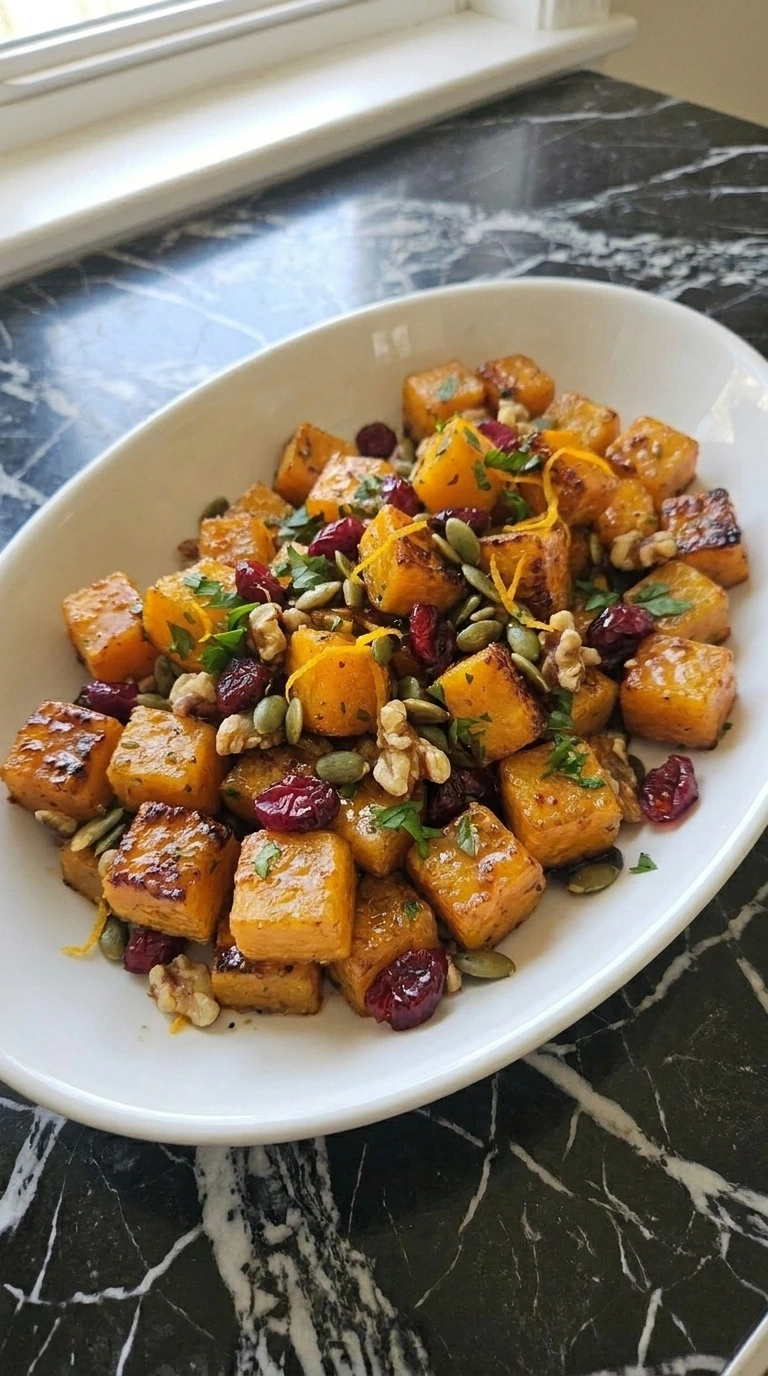
Walnuts and pepitas bring enough crunch to keep the dish from feeling soft or heavy. And because the vegetables roast on one pan, cleanup stays reasonable. A little parsley and orange zest wake everything up right before serving. That’s the part I appreciate most on a busy holiday.
Why This Recipe Works
Roasting at 425°F drives off surface moisture before the squash turns mushy or loses its cube shape. Wide spacing keeps maple-coated cubes in direct contact with hot metal, which builds crisp amber corners instead of pale steamed sides.
Apple cider vinegar balances the syrup and keeps the finished dish from tasting candy-sweet after 30 minutes of concentrated heat. Adding walnuts and pepitas only during the final 10 to 12 minutes prevents their oils from scorching and tasting bitter.
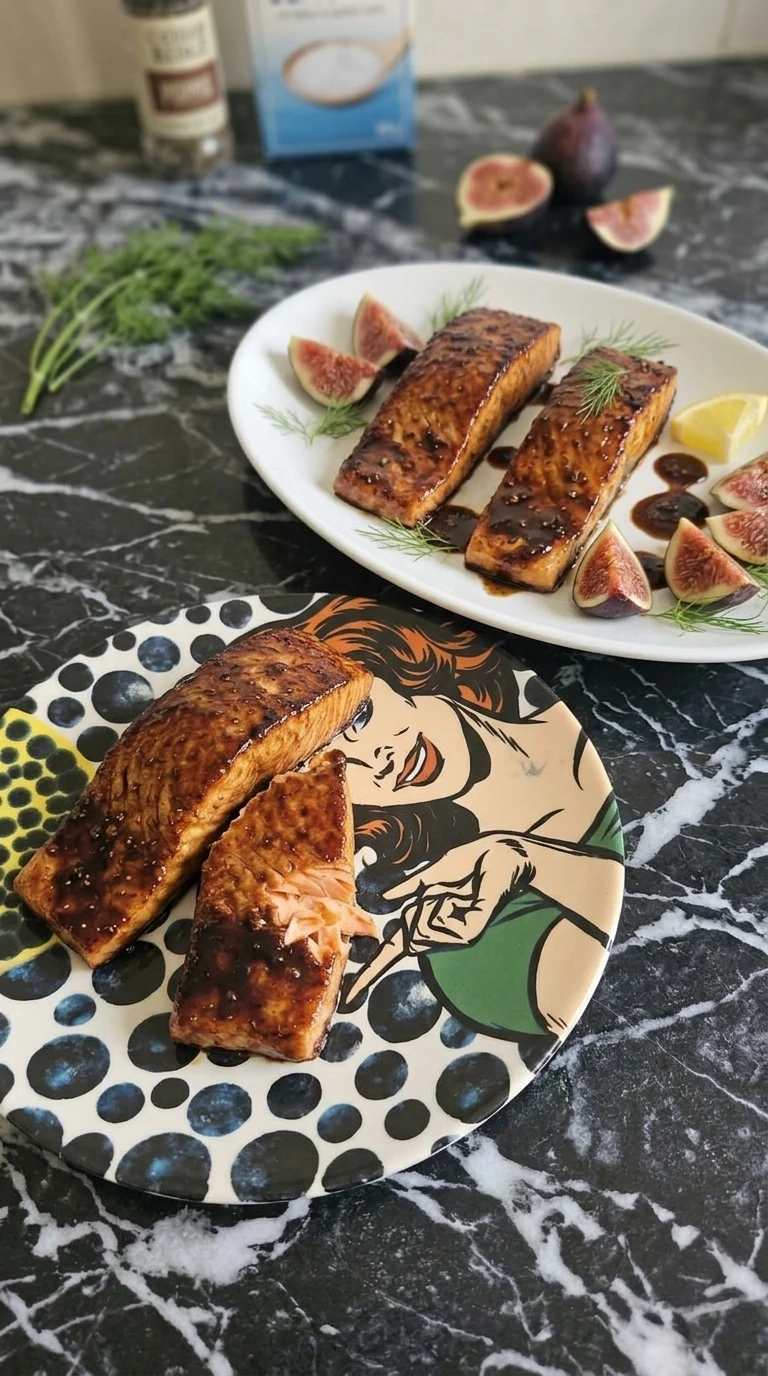
Cranberries go in after roasting so they remain chewy and ruby-colored instead of becoming hard. Serve the squash beside Air Fryer Salmon because its crisp exterior contrasts with the tender glazed cubes.
The Ingredients

- butternut squash: Peeled, seeded and cut into irregular 1-inch cubes for tender centers and caramelized edges.
- pure maple syrup: Use dark robust syrup for a deeper maple flavor and glossy coating.
- extra-virgin olive oil: Helps the squash brown while keeping the maple glaze fluid.
- apple cider vinegar: Adds acidity so the finished dish doesn’t taste overly sweet.
- Diamond Crystal kosher salt: Use 1 teaspoon in the glaze and reserve 1/4 teaspoon for finishing the portions.
- black pepper: Freshly ground for a gentle savory bite.
- ground cinnamon: Adds warm aroma without pushing the dish toward dessert.
- fresh thyme: Strip the leaves from the stems before mixing into the glaze.
- raw walnut halves: Roughly broken into uneven pieces so they toast without disappearing.
- raw pepitas: Toast beside the squash for a crisp green seed finish.
- sweetened dried cranberries: Fold in after roasting so they stay chewy and ruby-colored.
- flat-leaf parsley: Roughly chopped and added warm for fresh color and herbal contrast.
- navel orange: Zest 1 teaspoon from the peel for a bright citrus finish.
What You’ll Use
- 18-by-13-inch rimmed aluminum sheet pan: A sturdy light-colored pan gives the squash enough room to caramelize, while a small or dark pan causes steaming or scorched maple.
- Large clear glass mixing bowl: A 4-quart bowl lets you fold the squash without bruising it, while a shallow bowl sends cubes over the rim.
- Sharp 8-inch chef’s knife: A rigid sharp blade cuts the dense squash safely, while a flexible or dull knife can twist and slip.
- Y-shaped vegetable peeler: A wide stainless blade removes the tough skin in long strips, while a narrow dull peeler catches on the squash ridges.
- Low-rimmed white serving plate: A 10-inch plate shows the caramelized cubes and garnishes clearly, while a deep bowl hides the crisp edges.
Let’s Make It
Step 1: Cube and coat the butternut squash

Heat the oven to 425°F. Peel the squash in long downward strokes and halve it through the neck. Scoop out the seeds and cut 2. 5 pounds into uneven 1-inch cubes.
Whisk maple syrup, olive oil, apple cider vinegar, kosher salt, black pepper, cinnamon and thyme for 30 seconds. Then fold the cubes through the glaze for 60 seconds with broad scooping motions. The cubes should look glossy but not sit in a puddle. You’ll smell cinnamon and thyme before the tray enters the oven.
Take 10 to 12 minutes for this prep. Cut smaller than 1 inch and the edges dry before the centers soften. Cut larger and the maple darkens first. Uniform-enough cubes roast at the same pace.
Tip: Microwave the whole squash for 60 seconds before peeling if the skin feels especially hard.
Step 2: Roast and flip the squash cubes

Spread the coated cubes across a rimmed sheet pan so most pieces have bare metal around them. Roast at 425°F for 15 minutes. Then turn every cube with a thin spatula and shift the pale pieces toward the hotter outer edges. Keep the darker pieces closer to the center.
(I tested 400°F first, the squash softened but never developed the same caramelized corners. ) At minute 15, the undersides should show amber patches while the tops stay bright orange. You’ll hear a soft sizzle when the pan leaves the oven. If syrup pools between crowded cubes, they’ll steam and turn watery.
Miss the flip and one side scorches before the center becomes tender. High heat evaporates surface moisture and starts caramelization.
Tip: Use a light-colored aluminum sheet pan because dark pans can overbrown the maple glaze by minute 12.
Step 3: Toast the walnuts and pepitas with the squash
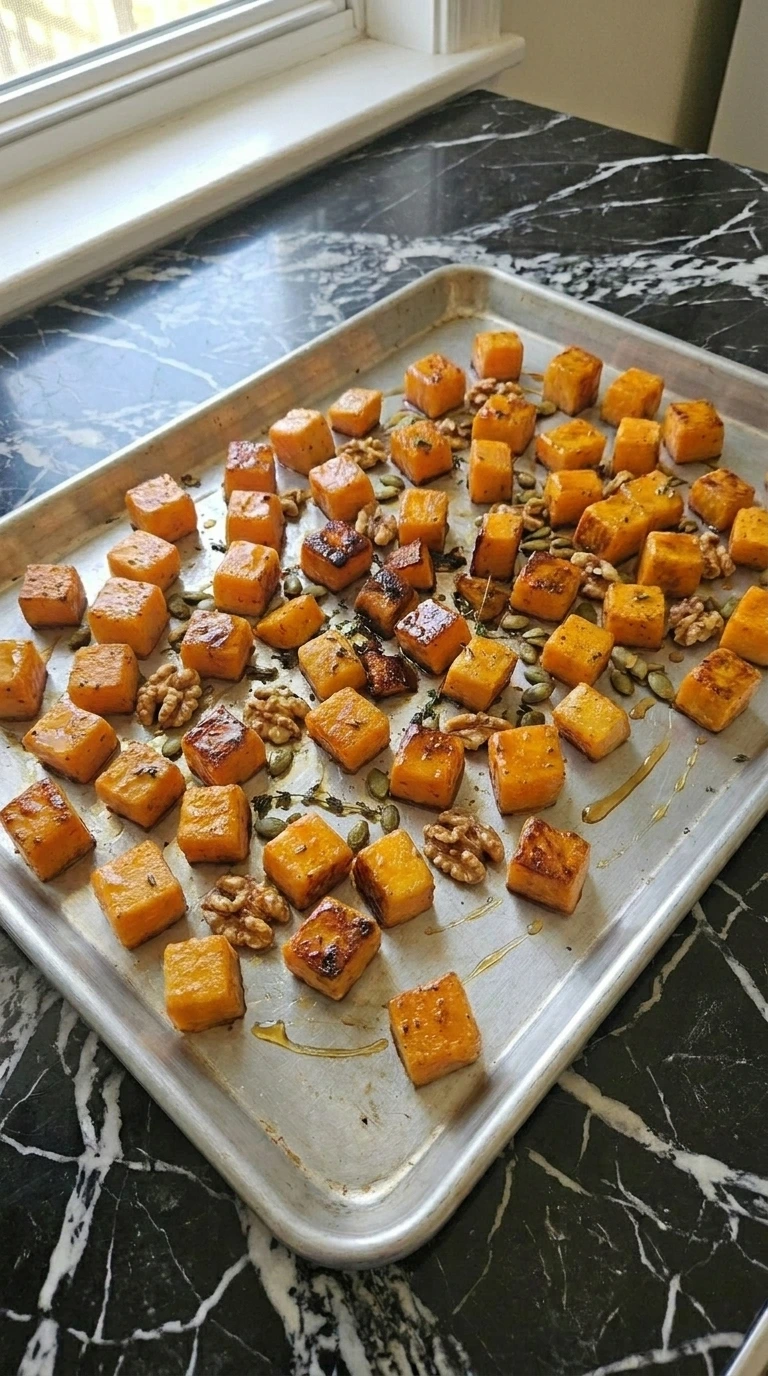
Scatter the walnut pieces and pepitas between the flipped squash cubes. Return the pan to 425°F for 10 to 12 minutes. At minute 7, slide the pan forward and back once so the seeds settle into new gaps. Don’t stir again.
The squash needs direct contact with the pan while the nuts toast beside it. The squash should turn deep orange with dark amber corners. A fork should enter the thickest cube with slight resistance. Meanwhile, the walnuts smell toasted and the pepitas begin to pop softly.
Go past 12 minutes and the nuts turn bitter while the maple burns. The final blast browns the sugars without collapsing the cubes.
Tip: Freeze leftover walnut halves for up to 3 months so their oils stay fresh and sweet.
Step 4: Fold in the cranberries and finish the plate

Rest the pan off the 425°F oven for 3 minutes. Add the dried cranberries, chopped parsley and orange zest. Use two broad folding motions from the pan edges toward the center. Then spoon one warm portion onto a low-rimmed white plate.
Keep the cubes intact and leave several cranberries visible on top. The glaze should look glossy and lightly tacky. The cranberries stay ruby and plump while the parsley remains green. You’ll smell fresh citrus as the zest hits the warm squash.
Toss immediately and the parsley wilts. Wait longer than 10 minutes and the glaze clumps around the nuts. A short rest thickens the glaze without dulling the garnish.
Tip: Reserve 1/4 teaspoon of the measured kosher salt and sprinkle it over the four portions for sharper maple contrast.
Pro Tips
- Cut the squash into 1-inch cubes and accept slight irregularity. Pieces under 3/4 inch can dry out before minute 25.
- Choose a butternut squash with matte tan skin and a heavy feel. A 3-pound whole squash usually yields about 2.5 pounds trimmed.
- Leave at least 1/2 inch between most cubes on an 18-by-13-inch pan. Crowding traps steam and prevents dark amber edges.
- Flip the squash at minute 15 with a thin metal spatula. It lifts the sticky maple crust without tearing the softened sides.
- Add walnuts and pepitas only for the final 10 to 12 minutes. Earlier addition can make their natural oils taste bitter.
- Fold in cranberries after a 3-minute rest. The warm glaze softens them slightly without turning them hard or leathery.
- Zest 1 teaspoon of orange directly over the warm plate. The released oils smell strongest during the first 5 minutes.
- Add 1/2 teaspoon smoked paprika to the glaze for a savory version that pairs well with grilled chicken.
- Replace the parsley with 2 tablespoons chopped fresh sage for a deeper Thanksgiving flavor.
- Stir in 1/3 cup crumbled feta after the squash cools for 5 minutes to add a salty creamy contrast.
- Add 1 cup halved Brussels sprouts and increase olive oil by 1 tablespoon for a greener fall vegetable mix.
Substitutions & Variations
- extra-virgin olive oil: avocado oil — Use the same 2 tablespoons for a milder flavor. The dish stays dairy-free and the edges brown at the same 425°F temperature.
- raw walnut halves: raw sunflower seeds — Use 1/3 cup for a nut-free version. The crunch becomes smaller and lighter, so add the seeds during the final 6 minutes.
- pure maple syrup: honey — Use 2 1/2 tablespoons because honey tastes sweeter and thickens faster. Expect darker edges and check the pan 2 minutes early.
- butternut squash: orange sweet potato — Use the same 2.5-pound weight and cut 1-inch cubes. Roast for 22 to 25 minutes because sweet potato softens faster, then serve it with Ground Beef Meal Prep.
- sweetened dried cranberries: dried tart cherries — Use the same 3/4 cup. The result tastes less sweet and more wine-like, and the recipe remains egg-free and gluten-free when the package is certified.
- apple cider vinegar: fresh lemon juice — Use 2 teaspoons because lemon tastes sharper. The finish becomes brighter but loses the warm apple note.
Storage Tips
Cool the squash for no more than 2 hours and refrigerate it in a shallow airtight glass container. It keeps well for 4 days. For freezing, leave out the parsley and orange zest. Spread the cooled mixture in a flat freezer bag and press out excess air.
Freeze for up to 2 months. The walnuts soften slightly after thawing, but the flavor remains good. Reheat refrigerated portions at 400°F for 8 to 10 minutes on a sheet pan. Stir once at minute 5 and add 1 teaspoon maple syrup if the glaze looks dry.
Reheat thawed frozen squash for 10 to 12 minutes. Add fresh parsley and orange zest after heating. Discard leftovers with a sour smell, slimy surfaces or dark liquid pooling in the container.
Maple Roasted Butternut Squash with Cranberries
Ingredients
- 2.5 pounds butternut squash Peeled, seeded and cut into irregular 1-inch cubes for tender centers and caramelized edges.
- 3 tablespoons pure maple syrup Use dark robust syrup for a deeper maple flavor and glossy coating.
- 2 tablespoons extra-virgin olive oil Helps the squash brown while keeping the maple glaze fluid.
- 1 tablespoon apple cider vinegar Adds acidity so the finished dish doesn’t taste overly sweet.
- 1 1/4 teaspoons Diamond Crystal kosher salt Use 1 teaspoon in the glaze and reserve 1/4 teaspoon for finishing the portions.
- 1/2 teaspoon black pepper Freshly ground for a gentle savory bite.
- 1/2 teaspoon ground cinnamon Adds warm aroma without pushing the dish toward dessert.
- 1 teaspoon fresh thyme Strip the leaves from the stems before mixing into the glaze.
- 1/2 cup raw walnut halves Roughly broken into uneven pieces so they toast without disappearing.
- 1/4 cup raw pepitas Toast beside the squash for a crisp green seed finish.
- 3/4 cup sweetened dried cranberries Fold in after roasting so they stay chewy and ruby-colored.
- 1/4 cup flat-leaf parsley Roughly chopped and added warm for fresh color and herbal contrast.
- 1 large navel orange Zest 1 teaspoon from the peel for a bright citrus finish.
Instructions
- Heat the oven to 425°F. Peel the squash in long downward strokes and halve it through the neck. Scoop out the seeds and cut 2.5 pounds into uneven 1-inch cubes. Whisk maple syrup, olive oil, apple cider vinegar, kosher salt, black pepper, cinnamon and thyme for 30 seconds. Then fold the cubes through the glaze for 60 seconds with broad scooping motions. The cubes should look glossy but not sit in a puddle. You’ll smell cinnamon and thyme before the tray enters the oven. Take 10 to 12 minutes for this prep. Cut smaller than 1 inch and the edges dry before the centers soften. Cut larger and the maple darkens first. Uniform-enough cubes roast at the same pace.
- Spread the coated cubes across a rimmed sheet pan so most pieces have bare metal around them. Roast at 425°F for 15 minutes. Then turn every cube with a thin spatula and shift the pale pieces toward the hotter outer edges. Keep the darker pieces closer to the center. (I tested 400°F first, the squash softened but never developed the same caramelized corners.) At minute 15, the undersides should show amber patches while the tops stay bright orange. You’ll hear a soft sizzle when the pan leaves the oven. If syrup pools between crowded cubes, they’ll steam and turn watery. Miss the flip and one side scorches before the center becomes tender. High heat evaporates surface moisture and starts caramelization.
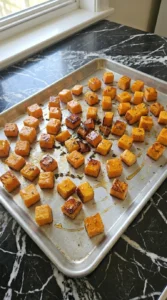
- Scatter the walnut pieces and pepitas between the flipped squash cubes. Return the pan to 425°F for 10 to 12 minutes. At minute 7, slide the pan forward and back once so the seeds settle into new gaps. Don’t stir again. The squash needs direct contact with the pan while the nuts toast beside it. The squash should turn deep orange with dark amber corners. A fork should enter the thickest cube with slight resistance. Meanwhile, the walnuts smell toasted and the pepitas begin to pop softly. Go past 12 minutes and the nuts turn bitter while the maple burns. The final blast browns the sugars without collapsing the cubes.

- Rest the pan off the 425°F oven for 3 minutes. Add the dried cranberries, chopped parsley and orange zest. Use two broad folding motions from the pan edges toward the center. Then spoon one warm portion onto a low-rimmed white plate. Keep the cubes intact and leave several cranberries visible on top. The glaze should look glossy and lightly tacky. The cranberries stay ruby and plump while the parsley remains green. You’ll smell fresh citrus as the zest hits the warm squash. Toss immediately and the parsley wilts. Wait longer than 10 minutes and the glaze clumps around the nuts. A short rest thickens the glaze without dulling the garnish.

Notes
Nutrition
Questions I Get Asked
Peel and cube the squash up to 2 days ahead. Store it dry in an airtight container and keep the glaze separate. Toss everything together just before the 425°F roast so the salt doesn’t pull out moisture and make the cubes watery.
Refrigerate leftovers within 2 hours and use them within 4 days. Keep them in a shallow airtight glass container so the cubes cool evenly. Store extra parsley and orange zest separately because both darken much faster than the roasted squash.
The pan was probably crowded or the cubes were wet before coating. Use an 18-by-13-inch sheet pan and leave visible gaps between most pieces. Roast at 425°F and flip at minute 15 so steam escapes and both sides contact hot metal.
Double every ingredient but divide the squash between two full sheet pans. Rotate the pans from top to bottom at minute 15 and keep the oven at 425°F. One crowded pan will steam nearly 5 pounds of squash instead of browning it.
Serve it with roast turkey, baked ham or salmon because the vinegar and orange cut through richer proteins. For a meatless plate, add cooked quinoa and chickpeas. Plan about 3/4 cup per person as a side or 1 1/4 cups for a meatless main.
Freeze the roasted squash without parsley for up to 2 months in a flat freezer bag. Reheat from thawed at 400°F for 10 to 12 minutes. Add fresh cranberries, parsley and orange zest after reheating so the texture and color stay lively.
In Conclusion
This is the kind of recipe I wish I had found years ago. It would’ve saved me several stressful holiday dinners, including the year I burned the first tray.
But now I make it often because the maple glaze tastes balanced and the cranberries stay bright. Try Party Dips or Oatmeal Cookies, then leave a comment because I read every one.
Butternut squash gets sweeter when it roasts. The heat removes moisture, so its natural sugars become more concentrated.