Dump-and-Bake Meatball Casserole – Easy Cheesy Weeknight Dinner Recipe
This casserole started as one of those throw-it-together nights when I didn’t feel like cooking. I wasn’t expecting much. But after one bite, it went straight into the regular rotation.
It bakes up like a classic cheesy pasta dish, but without the extra steps. Everything goes into one dish and the oven does the work. If you’re already into simple dinners like these Street Style Chicken Tacos, this one fits right in.
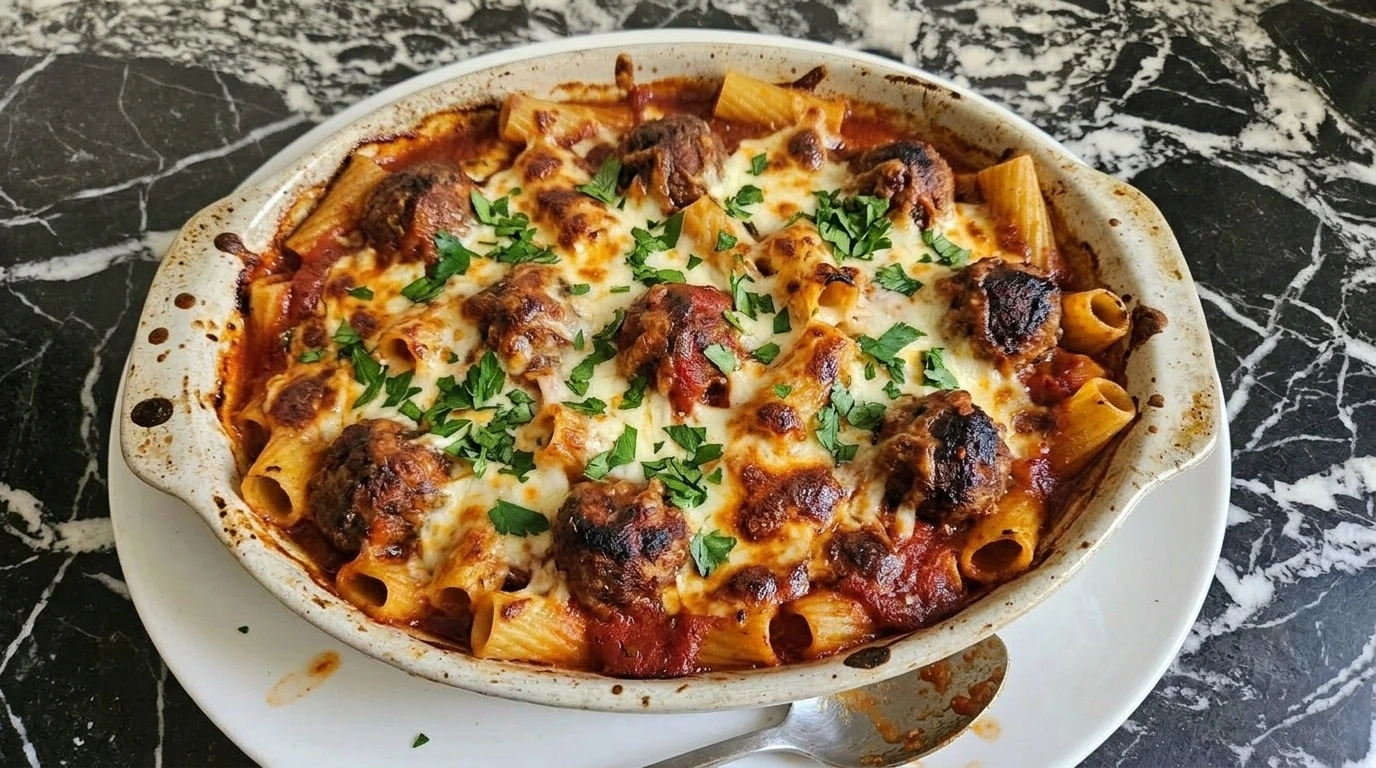
It’s cozy, filling, and actually holds up well for leftovers. And honestly, those cheesy golden spots on top are what everyone goes for first.
What Makes This Recipe Work
The pasta cooks directly in the sauce at 375°F, absorbing flavor instead of plain water. Keeping the mix slightly uneven at the start lets some edges bake firmer while others stay saucy. That contrast is what makes each bite feel layered instead of mushy.
Ingredients You Will Need
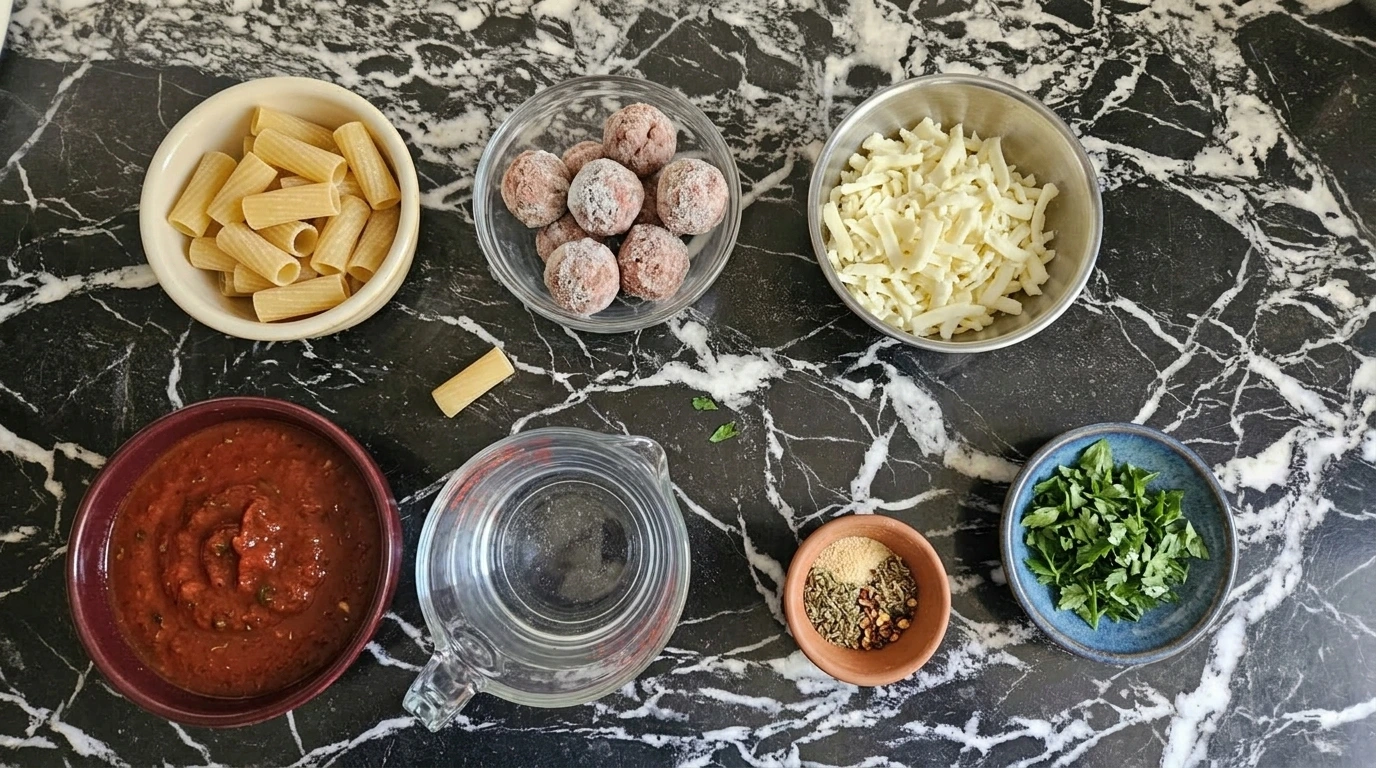
- frozen meatballs: fully cooked frozen meatballs, straight from the freezer
- uncooked pasta: short pasta like penne or rotini for even cooking
- marinara sauce: smooth tomato sauce with balanced acidity
- water: helps the pasta soften and cook evenly in the oven
- mozzarella cheese: shredded for melting and stretch
- parmesan cheese: finely grated for sharp, salty finish
- Italian seasoning: dried herb blend for depth
- salt: balances the sauce
- black pepper: adds mild heat
- fresh parsley: chopped for a fresh finish
Kitchen Equipment
Step by Step
Step 1: Combine Pasta and Sauce
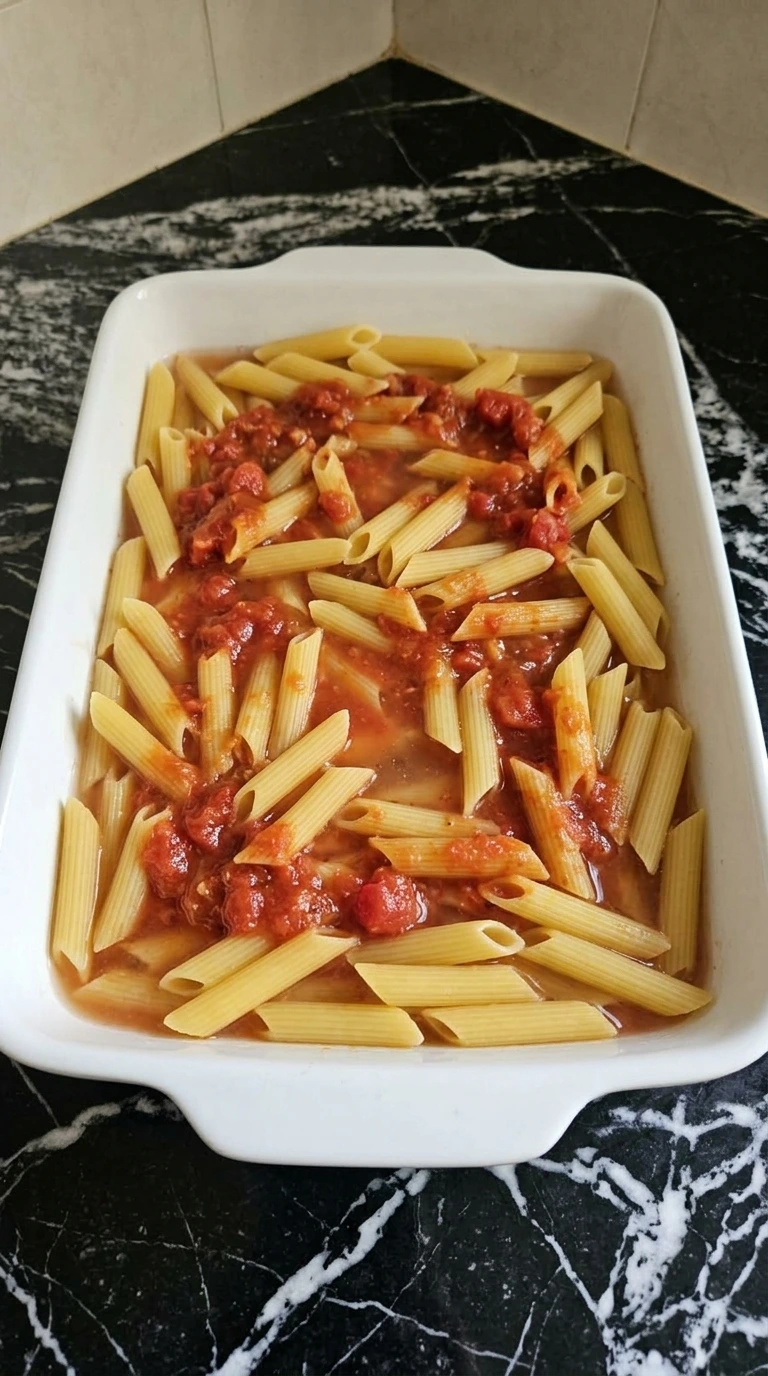
Preheat your oven to 375°F. Add the uncooked pasta to a baking dish, then pour over the marinara and water. Let it sit for about 1 to 2 minutes so the liquid starts settling into the pasta. Use a light shake or tilt motion instead of stirring hard. You’ll see streaks of sauce and water with dry edges still showing. That’s what you want. If you fully mix it now, the pasta can cook too evenly and lose that layered texture.
Tip: Use a dish deep enough so the liquid can move around as it bakes.
Step 2: Add Meatballs
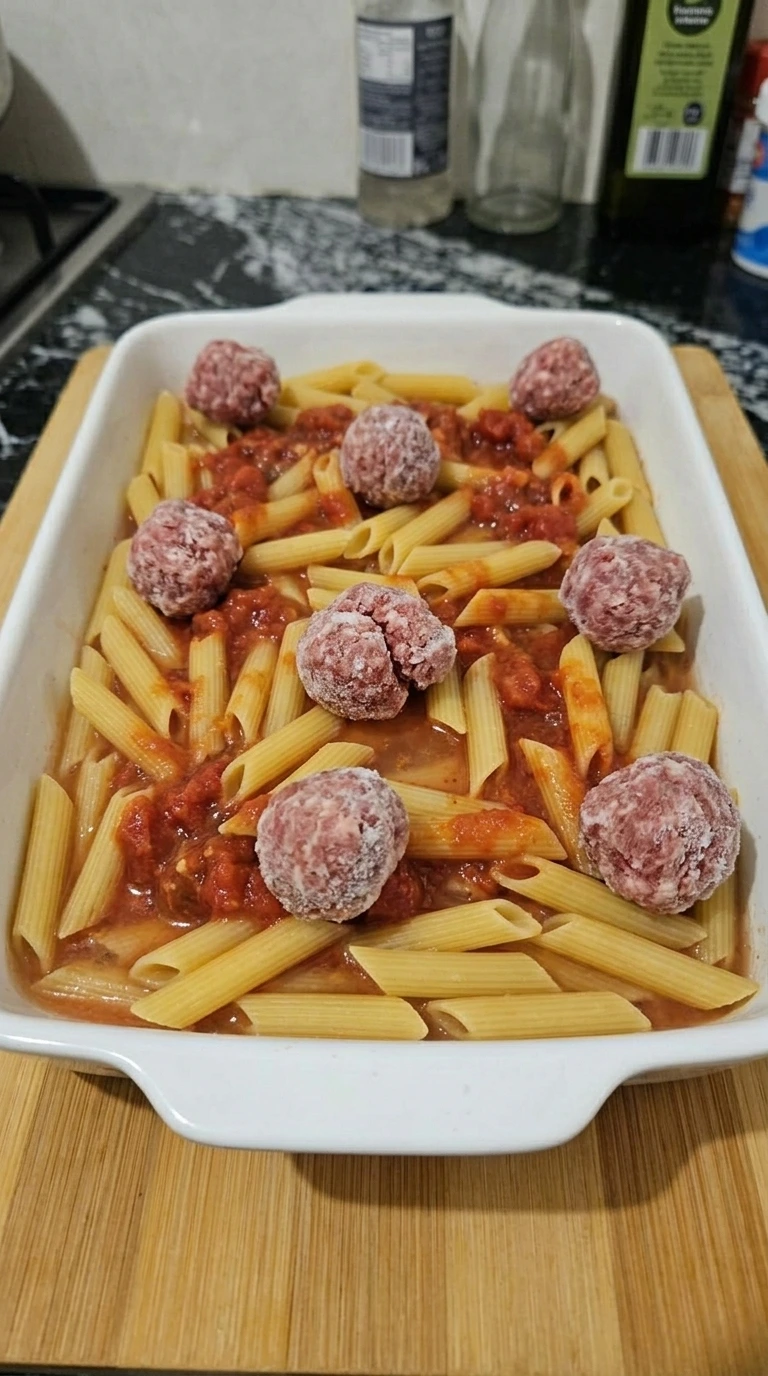
Place the frozen meatballs right on top of the pasta mixture. Space them out loosely and don’t press them down. This takes about 2 minutes and keeps the structure intact for baking at 375°F. Some meatballs will sink slightly and others stay on top. You’ll notice the sauce just starting to cling to them. If you push them in too far, they’ll steam instead of roast lightly.
Tip: Keep a little space between meatballs so heat can circulate.
Step 3: Season the Dish
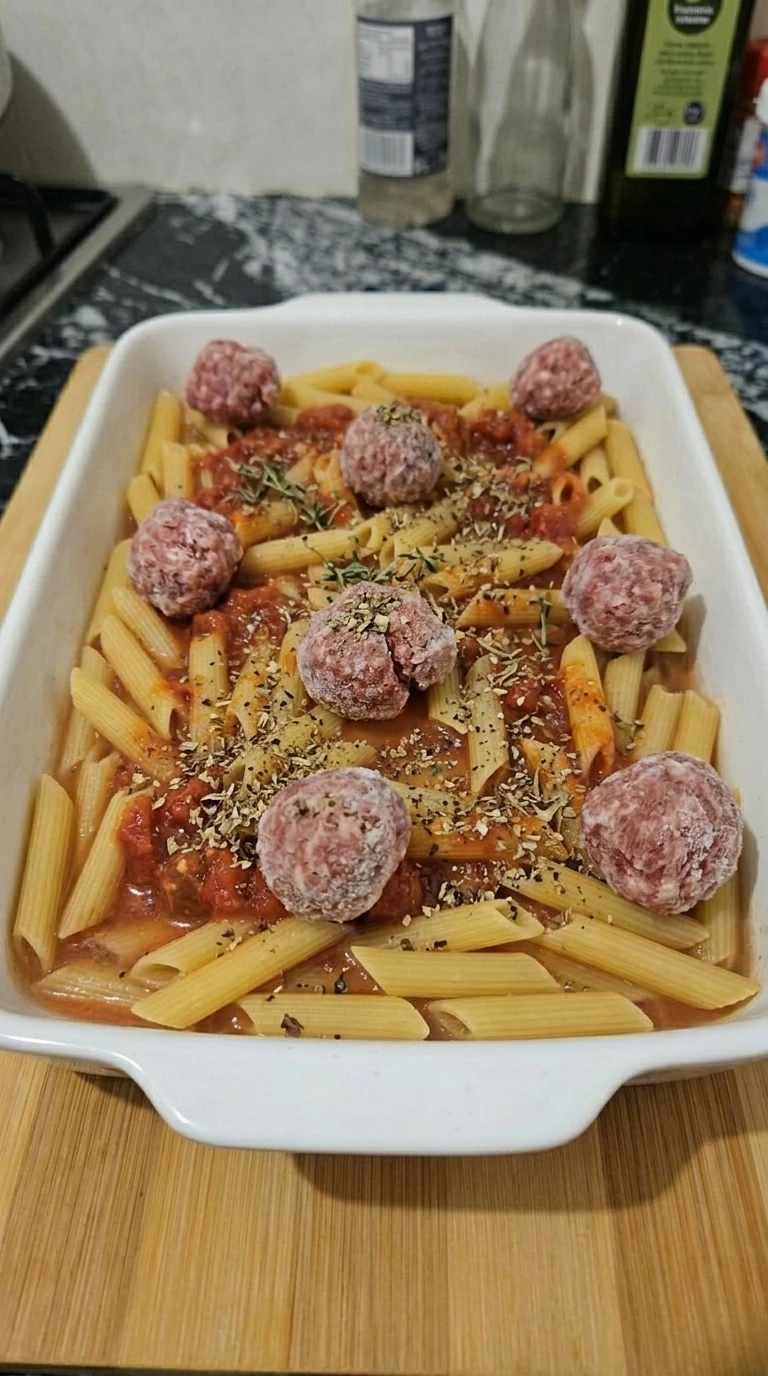
Sprinkle the Italian seasoning, salt, and pepper evenly over everything. Take about 30 to 45 seconds and sprinkle from a few inches above for better coverage. You’ll see the herbs sit right on the sauce and meatballs. That’s perfect. If you dump it all in one spot, you’ll get uneven bites later and some areas can taste flat.
Tip: Season lightly at first. You can always adjust after baking.
Step 4: Initial Mixing
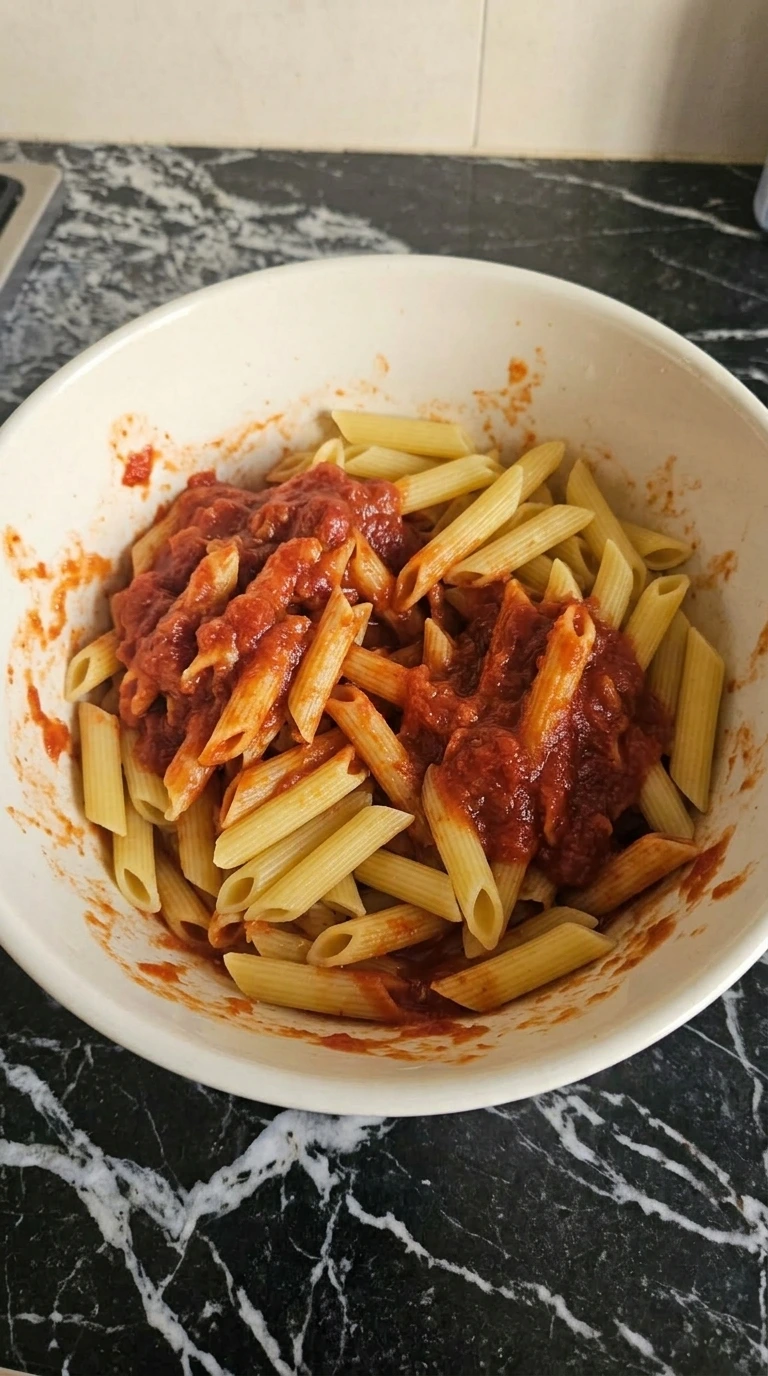
Gently fold the mixture once or twice using a spoon, just enough to coat some of the pasta. This should take about 60 seconds before it goes into the 375°F oven. Use a slow scoop-and-turn motion. Some pasta should still look dry. That contrast helps as it bakes. (I used to mix it completely, but it always turned out too soft.) If you overmix, everything cooks at the same rate and loses texture.
Tip: Stop as soon as most pasta is lightly coated.
Step 5: Add Cheese Layer
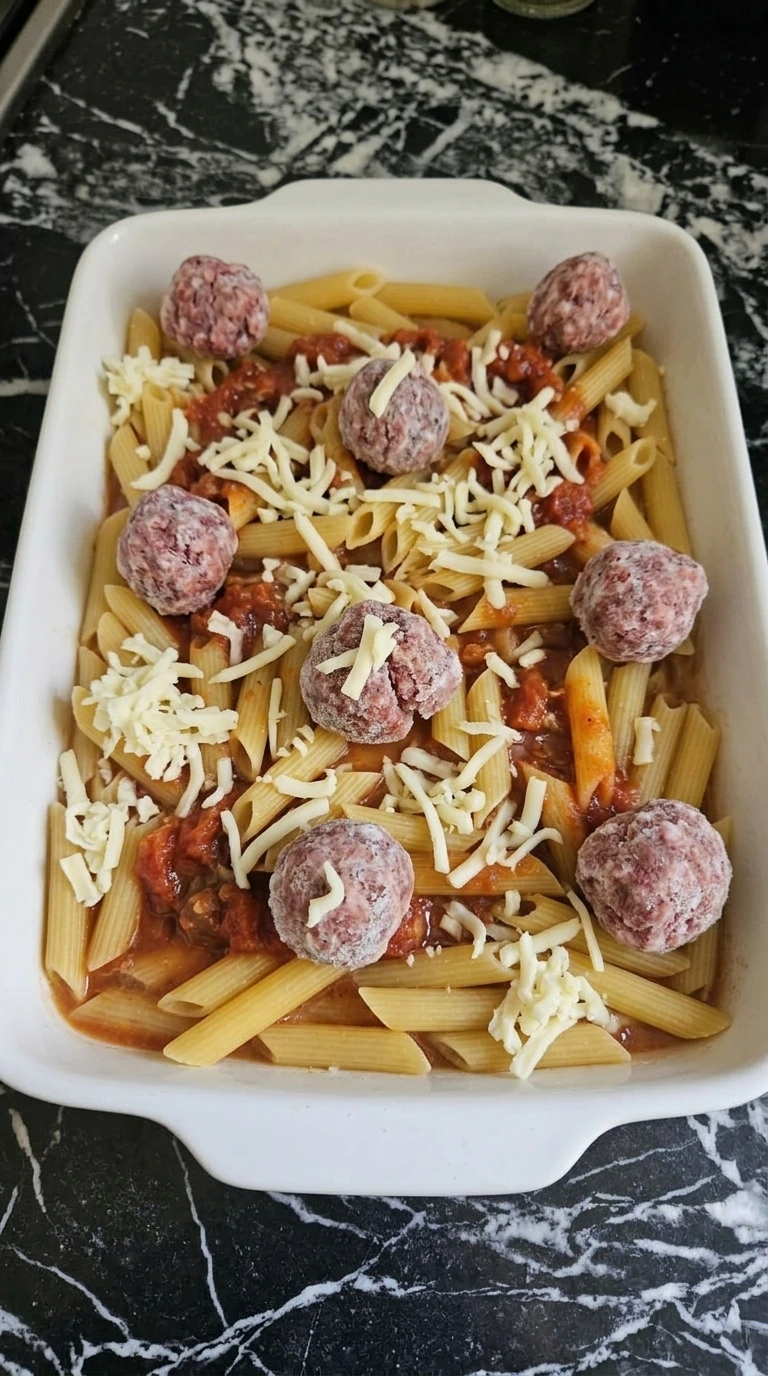
Scatter the mozzarella over the top in loose handfuls, then sprinkle the parmesan. This takes about 1 minute and should stay light and uneven. Don’t press the cheese down. You’ll see gaps where sauce shows through. That’s key. If you pack it in, the top won’t melt properly and you miss those bubbly spots later.
Tip: Leave a few open areas so steam can escape while baking.
Step 6: Softening and Absorbing
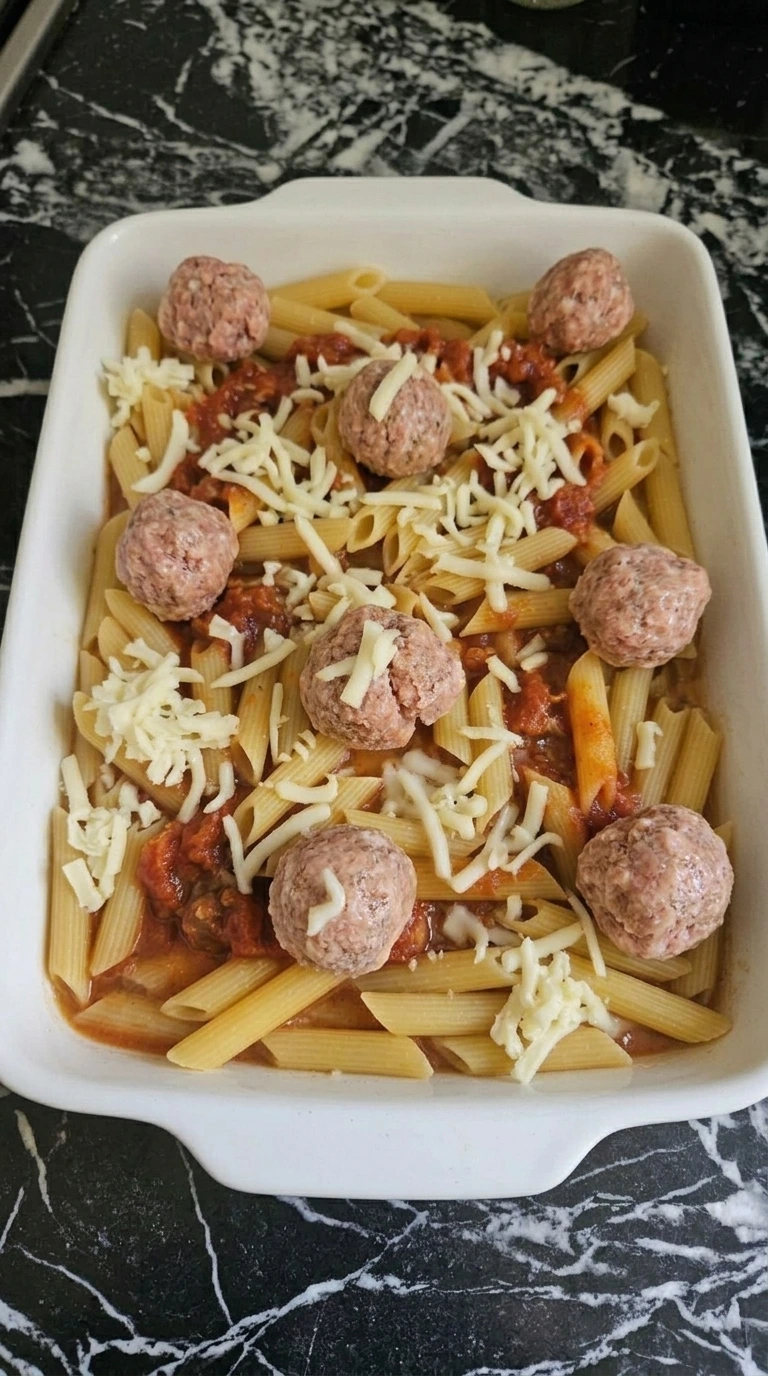
Bake uncovered at 375°F for 25 to 30 minutes. Around minute 15, you’ll see the pasta start to swell and the liquid reduce. Give the dish a quick shake at minute 20 if needed. The pasta should look softer and the sauce thicker. You’ll smell the tomato deepen. If you pull it too early, the pasta stays firm in the center.
Tip: Rotate the dish halfway through for even cooking.
Step 7: Melting and Binding
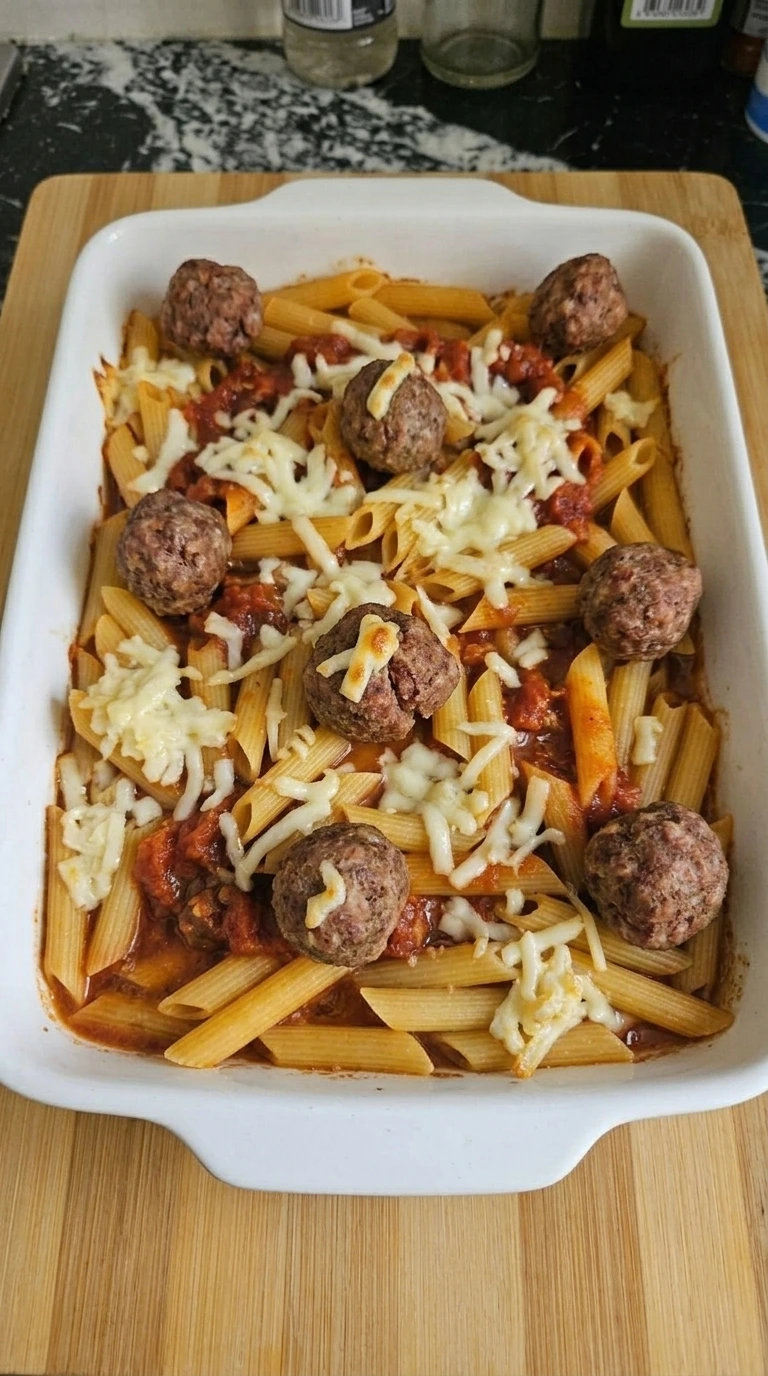
Continue baking at 375°F for another 10 to 12 minutes. The cheese will melt fully and start bubbling in spots. Look for small bubbling areas and glossy melted cheese. That means everything is binding together. If you stop before this stage, the top stays patchy and the dish won’t hold together when served.
Tip: Watch the center, not just the edges, for full melt.
Step 8: Final Browning and Finish
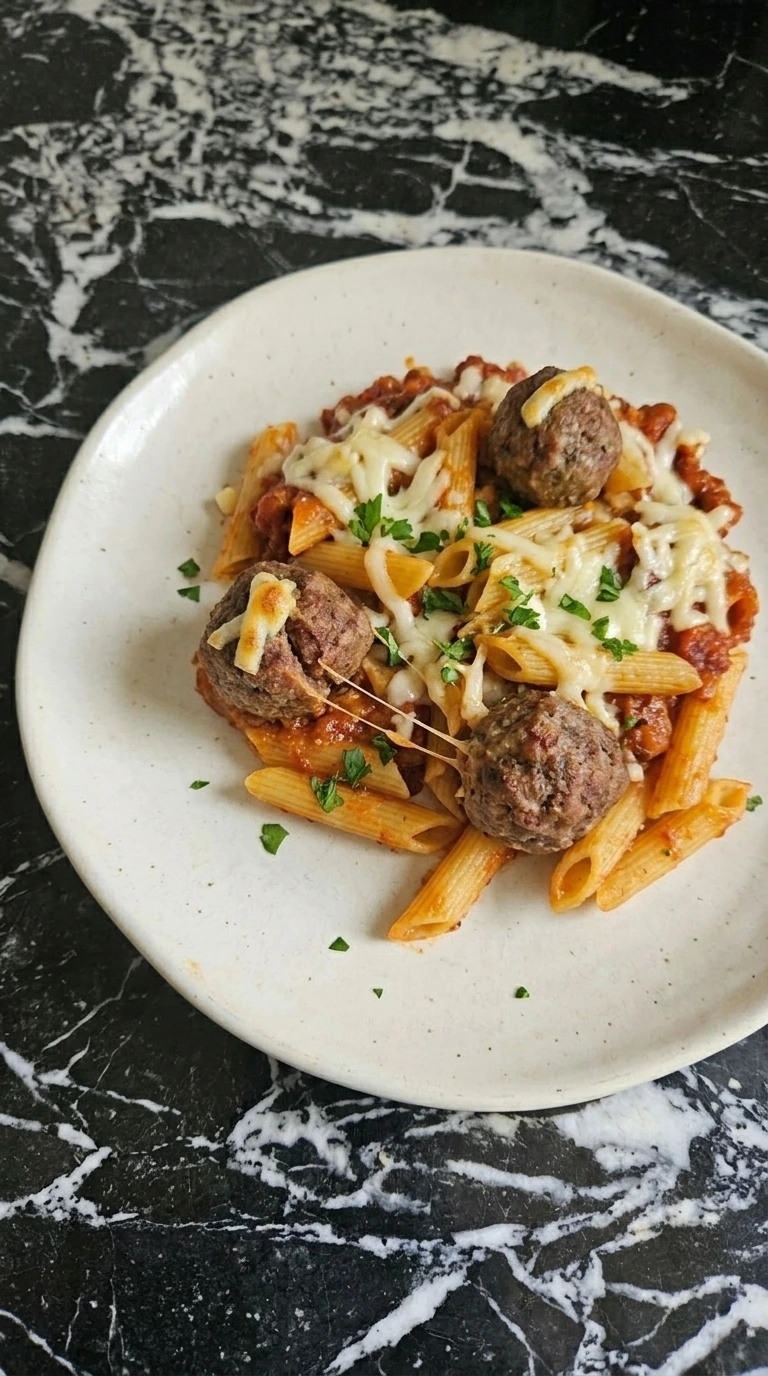
Switch to broil for 2 to 3 minutes at the end. Keep the dish on the middle rack and watch closely. You’ll see golden spots form and some edges crisp slightly. That’s the finish you want. (I’ve walked away before and burned the top in under a minute.) If you miss this window, the cheese can go from golden to bitter fast.
Tip: Turn the dish once under the broiler for even browning.
Step 9: Garnish and Plate
Let the casserole rest for 5 to 8 minutes at room temperature after removing from the 375°F oven. Then sprinkle fresh parsley over the top. Use a wide spoon to scoop portions. You’ll see layers of pasta, sauce, and melted cheese hold together. If you serve it too soon, it falls apart and looks watery.
Tip: Use a sharp spatula for cleaner portions.
My Best Tips
- Use a marinara you already like. It makes a big difference here
- Mix just enough, not all the way through
- Add a little extra mozzarella if you want more cheesy pockets
- Let it sit a few minutes so it firms up before serving
Make It Your Own
- mozzarella cheese: dairy-free shredded cheese — melts differently and won’t stretch as much but still works
- parmesan cheese: nutritional yeast — adds a similar savory note but less sharp
- uncooked pasta: gluten-free pasta — can soften faster so check at minute 25
- frozen meatballs: plant-based meatballs — texture is softer but still holds shape if not overbaked
- marinara sauce: homemade tomato sauce — works great, try pairing with this Homemade Burrito for another easy meal idea
How to Store
Store leftovers in an airtight container in the fridge for up to 3 days. Reheat at 350°F for 10 to 15 minutes or microwave in short bursts. Add a splash of water if it looks dry.
Dump-and-Bake Meatball Casserole – Easy Cheesy Weeknight Dinner Recipe
Ingredients
- 500 g frozen meatballs
- 2 cups uncooked pasta
- 3 cups marinara sauce
- 2 cups water
- 2 cups shredded mozzarella cheese
- 1/2 cup grated parmesan cheese
- 1 tsp Italian seasoning
- 1/2 tsp salt
- 1/2 tsp black pepper
- 2 tbsp chopped fresh parsley
Instructions
- Uncooked pasta is poured into a large baking dish, spreading unevenly with some pieces overlapping. Marinara sauce is then poured over, landing in thick patches across the pasta. Water is added slowly, pooling in corners and partially mixing with the sauce, creating streaks of lighter and darker red throughout the dish.
- Frozen meatballs are placed over the pasta mixture, scattered loosely without a pattern. Some sit on top while others sink slightly into the sauce. The sauce begins to coat parts of the meatballs, leaving some areas exposed and others lightly covered.
- Italian seasoning, salt, and pepper are sprinkled over the top, falling unevenly across meatballs and sauce. Some areas receive more seasoning, creating variation in color. The top begins to look more textured with visible herbs sitting on sauce and meatballs.
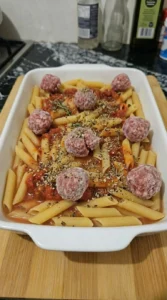
- A gentle mix is done, folding pasta and sauce slightly. Some pasta gets fully coated while others remain partially dry. The mixture looks more combined but still uneven, with visible layers of sauce and pasta.
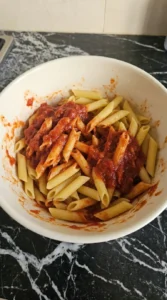
- Shredded mozzarella is scattered over the top, falling in clumps and leaving gaps where sauce is still visible. Parmesan is sprinkled lightly, settling into the spaces between mozzarella strands.
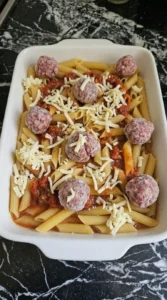
- The pasta begins to absorb liquid, appearing slightly swollen and less rigid. The sauce thickens in patches, clinging more to the pasta. Cheese starts to soften and sink slightly into the sauce, losing its dry shredded look.
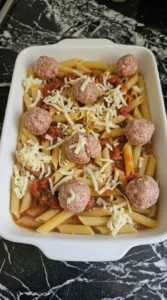
- Cheese melts further, forming uneven gooey patches across the surface. Some areas bubble slightly while others remain stringy. The sauce becomes richer and thicker, coating meatballs and pasta more evenly but still with visible variation.
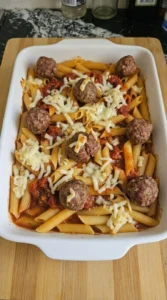
- The top develops light golden-brown spots where cheese has melted more deeply. Some edges look slightly crisp while others remain soft. The dish looks fully combined, with thick sauce, tender pasta, and juicy meatballs peeking through melted cheese.
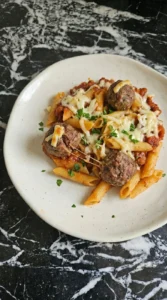
- Fresh parsley is sprinkled over the top, adding bright green contrast in random spots. Some pieces fall into melted cheese while others sit on meatballs. The casserole is scooped onto a plate, showing layers of pasta, sauce, and melted cheese with natural, imperfect portions.
Notes
Common Questions
Yes, but make sure they’re fully cooked first. Raw meatballs won’t cook properly in the same time and can release extra moisture.
No, it cooks right in the sauce at 375°F. That’s what makes this recipe so simple and keeps the flavor stronger.
You can assemble it a few hours ahead and refrigerate. Just add 5 to 10 extra minutes to the bake time.
A Final Note
This is one of those dinners you’ll come back to when you want something simple but still satisfying. The layers, the cheese, the ease.
It just works. If you like meals like this, try the Loaded Nachos Recipe next.
Pasta baked directly in sauce absorbs more flavor than pre-boiled pasta because it cooks while soaking in seasoned liquid.