The Best Homemade Lasagna Recipe
This lasagna is the kind you make when you want something warm and filling without overthinking every step. It’s layered, a little messy, and that’s exactly why it works. I don’t aim for perfect lines here.
The layers shift, the cheese melts unevenly, and it all settles into something that feels real. If you like simple comfort food, this sits right next to recipes like Healthy Avocado Toast (https://leagueofcooking. com/healthy-avocado-toast/) in terms of reliability.
It’s great for family dinners or when you want leftovers that actually taste better the next day. And once you’ve made it once, you won’t need to look back at the recipe much.
The Secret to This Recipe
Letting the layered lasagna rest at room temperature for about 15 minutes before baking helps the pasta absorb moisture evenly, so it cooks through without drying out. Cooking the meat just to a light brown, not fully crisp, keeps it tender during the 375°F bake. The slightly uneven layering traps pockets of sauce, which prevents the final dish from turning dry.
Ingredient List
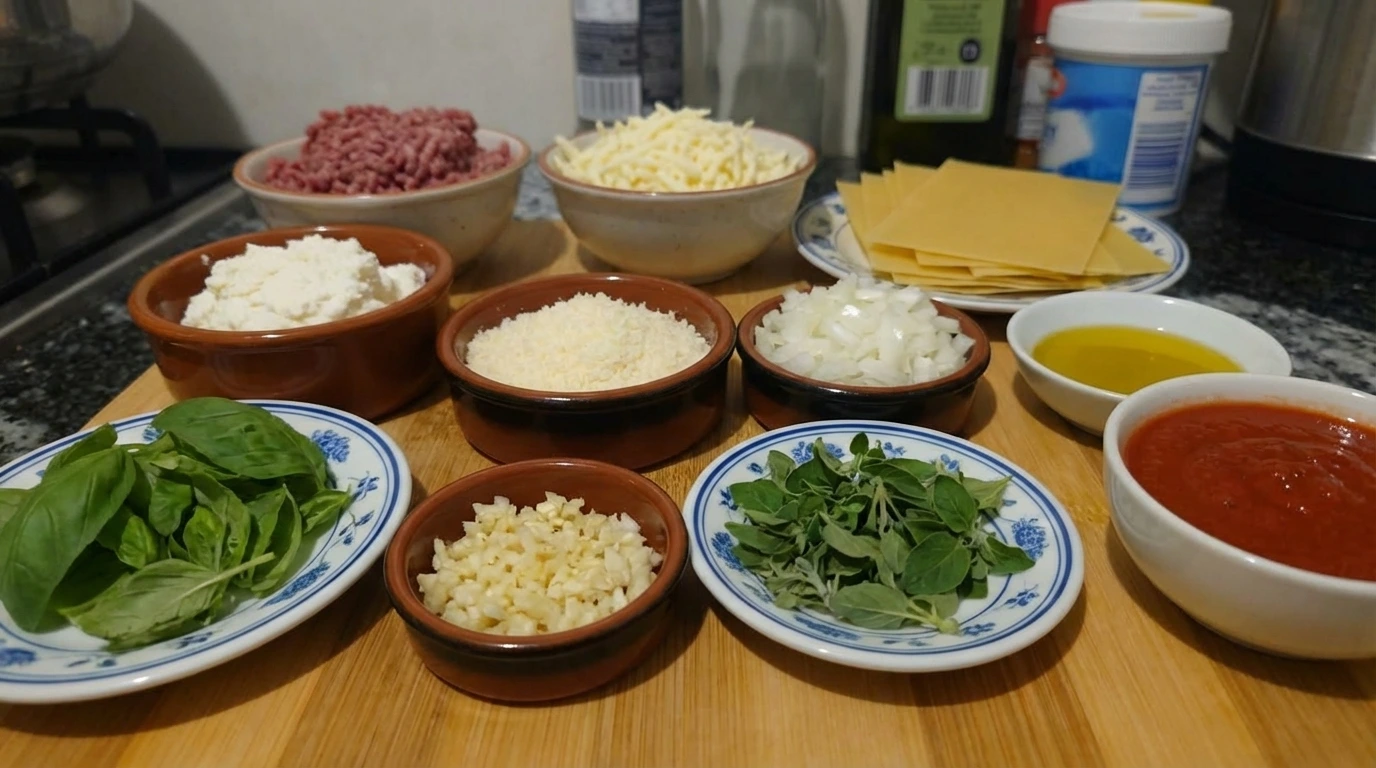
- lasagna sheets: dry or fresh sheets that create structured layers
- ground beef: main protein, slightly fatty for better flavor
- ricotta cheese: soft cheese for creamy filling
- mozzarella cheese: melts into stretchy, golden top layer
- parmesan cheese: finely grated for sharp, salty depth
- tomato sauce: smooth base that keeps layers moist
- onion: finely chopped for sweetness and depth
- garlic: minced for strong aroma
- olive oil: used to soften aromatics and add richness
- salt: enhances all flavors
- black pepper: adds mild heat and balance
- dried oregano: earthy herb that flavors the meat
- fresh basil: torn leaves for freshness at the end
Kitchen Equipment
How to Make It
Step 1: Prepare and Chop Ingredients
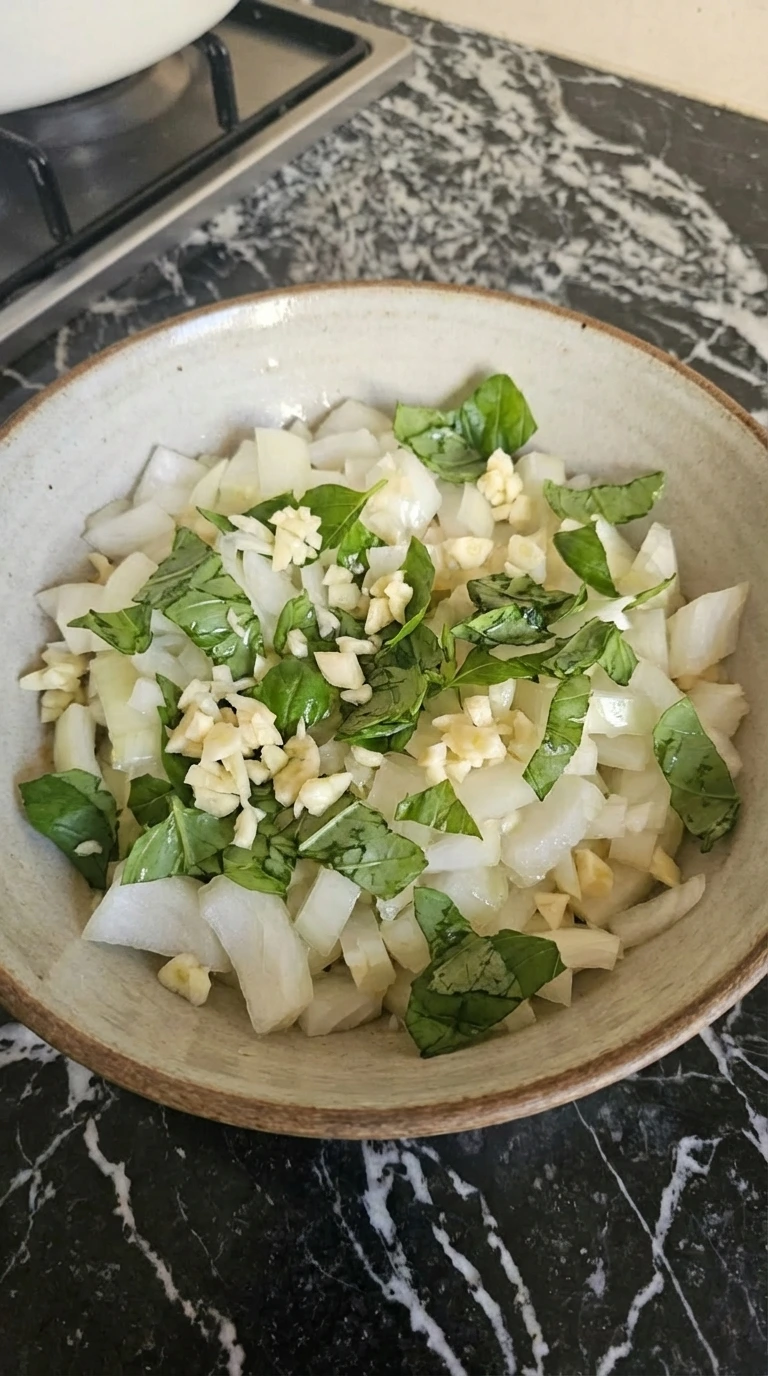
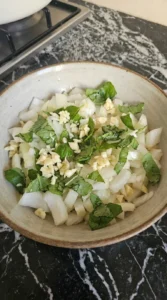
Start at room temperature, about 70°F, and give yourself 8 to 10 minutes to prep everything. Chop the onion into uneven pieces, mince the garlic fine, and tear the basil with your hands instead of cutting it. Use a rocking motion with the knife for the onion and a quick press for the garlic. You’ll notice the onion smells sharp and the basil releases a sweet aroma as you tear it. If you rush and cut everything too fine, the onion cooks too fast later and loses texture. (I used to dice everything perfectly, but it always turned too soft in the final dish.)
Tip: Keep basil torn by hand so it doesn’t bruise and turn dark too early.
Step 2: Season the Meat
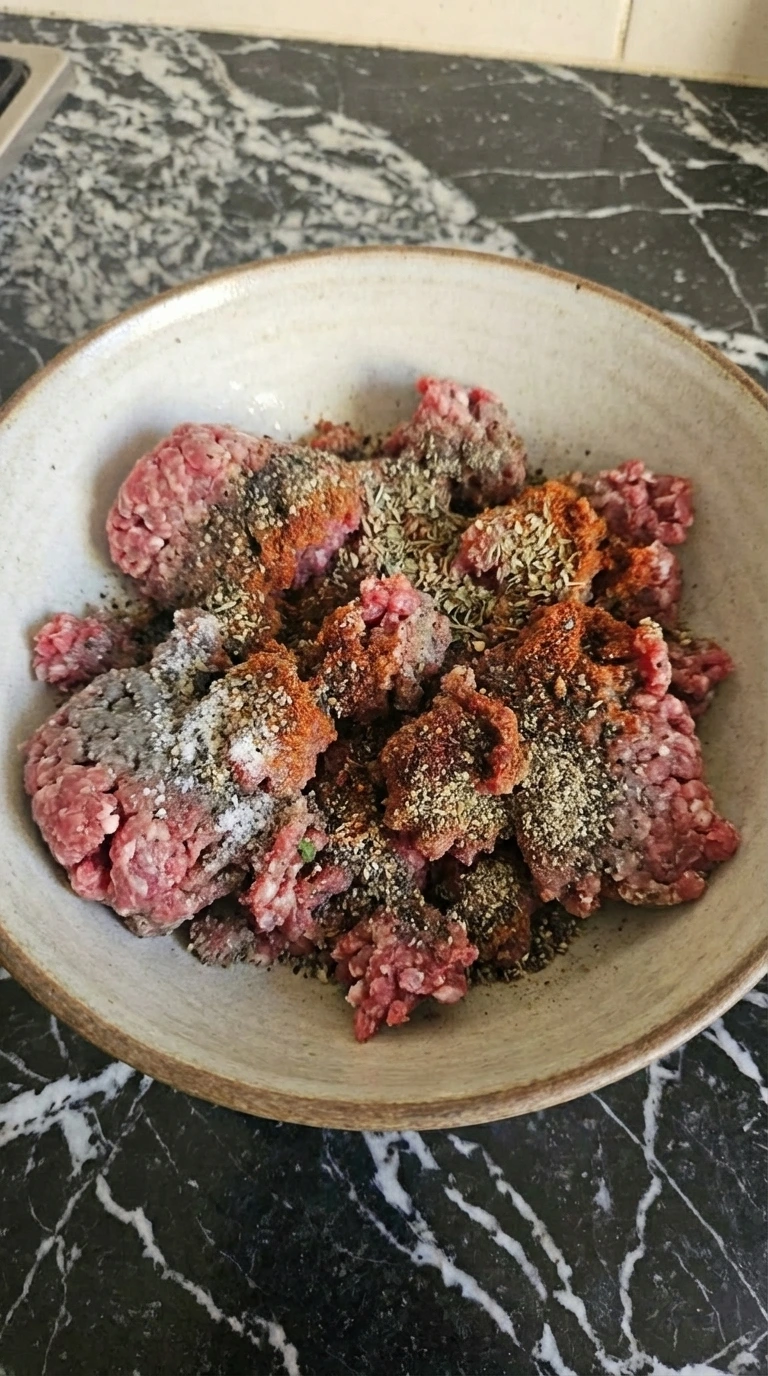
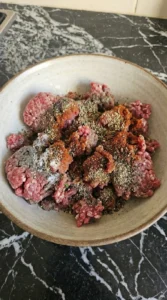
Work at room temperature and spend about 2 to 3 minutes mixing. Sprinkle salt, pepper, and oregano over the ground beef, then fold it gently with your fingers using a lifting motion instead of squeezing. The meat should look slightly darker where the seasoning sticks, not fully blended. If you overwork it, the beef turns dense and cooks up tough instead of tender.
Tip: Let the seasoned meat sit for 5 minutes before cooking so flavors absorb better.
Step 3: Combine Sauce and Aromatics
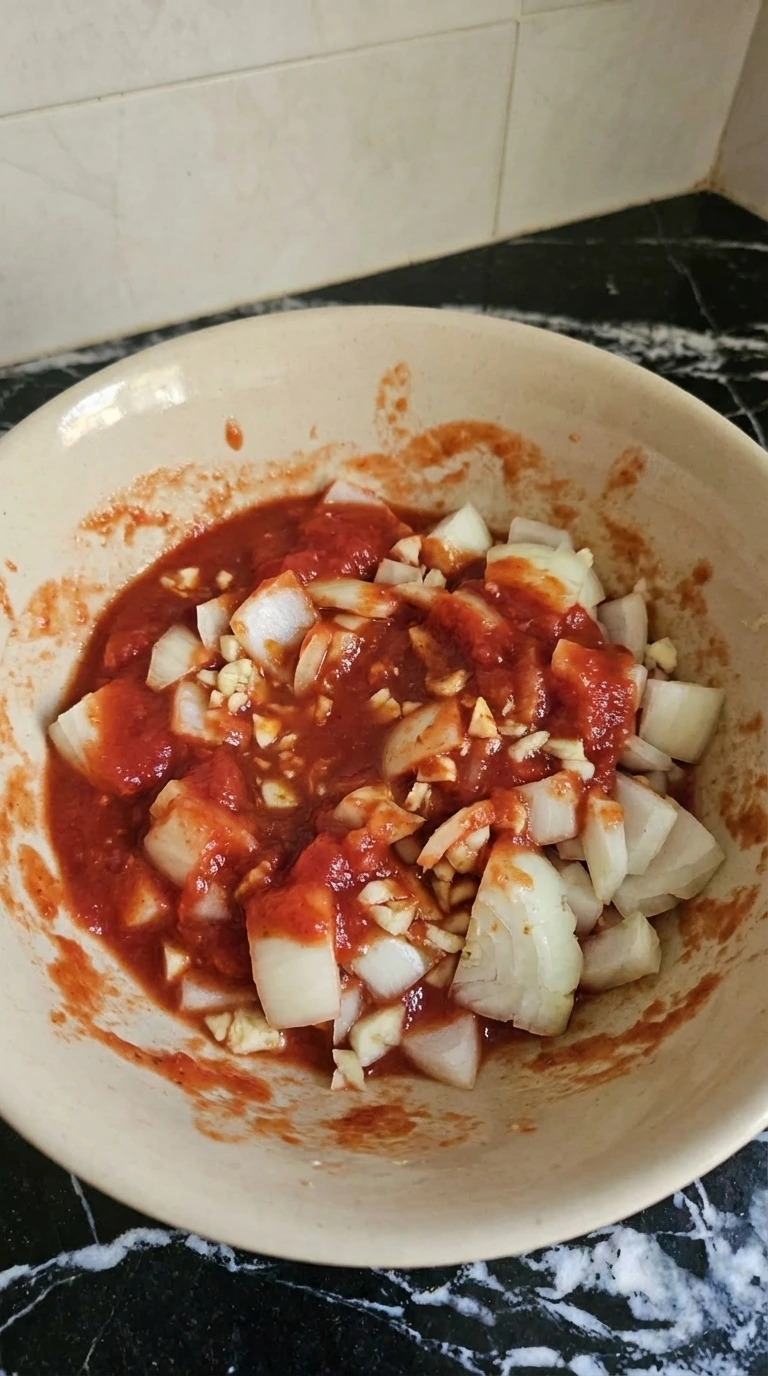
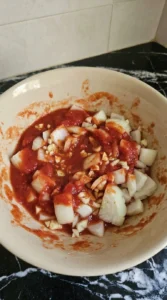
Heat a pan to medium, about level 5 on a 10 dial, and give it 1 minute to warm. Add olive oil, then stir in onion and garlic for 3 to 4 minutes using a slow circular motion before adding the tomato sauce. You’ll smell the garlic turn slightly sweet and see the onion soften but not brown. If you go past 5 minutes here, the garlic can burn and turn bitter, which carries through the whole dish.
Tip: Add a splash of water if the sauce thickens too quickly while stirring.
Step 4: Mix Cheese Filling
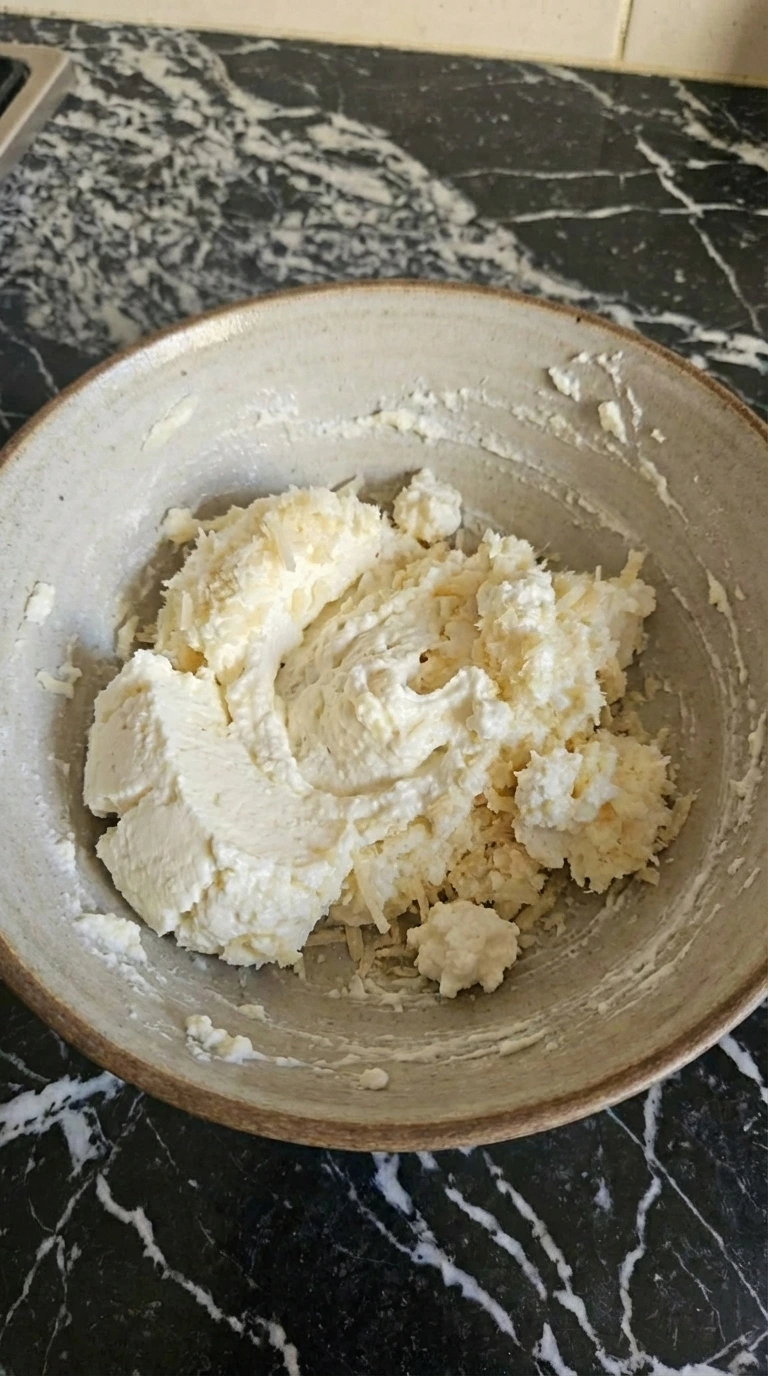
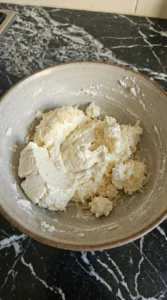
Keep everything chilled and mix for about 2 minutes. Stir ricotta and parmesan together with a folding motion, scraping the sides halfway through. The texture should stay slightly lumpy and thick. If you keep mixing past 3 minutes, it turns too smooth and loses that soft layered contrast later.
Tip: Use a wide spoon instead of a whisk to avoid overworking the mixture.
Step 5: Start Layering Base
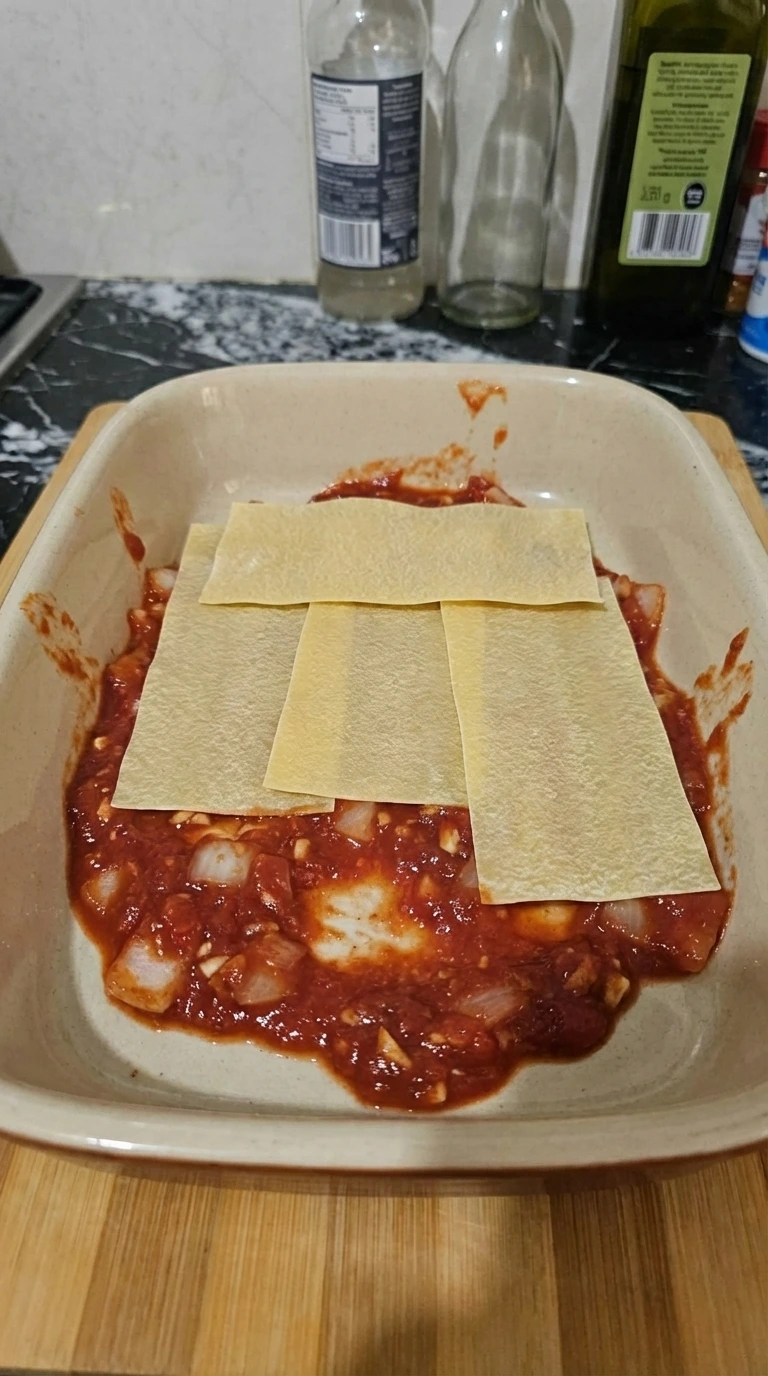
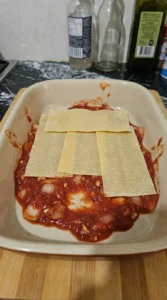
Work at room temperature and take 3 to 4 minutes to spread the base. Spoon sauce into the dish and drag it outward with the back of a spoon, leaving thin spots before placing the pasta sheets on top. You’ll see some gaps where sauce peeks through. That’s good. If you fully cover the base, the bottom layer can turn too wet and slip apart after baking.
Tip: Lightly oil the dish first so the bottom layer doesn’t stick.
Step 6: Add Meat Layer
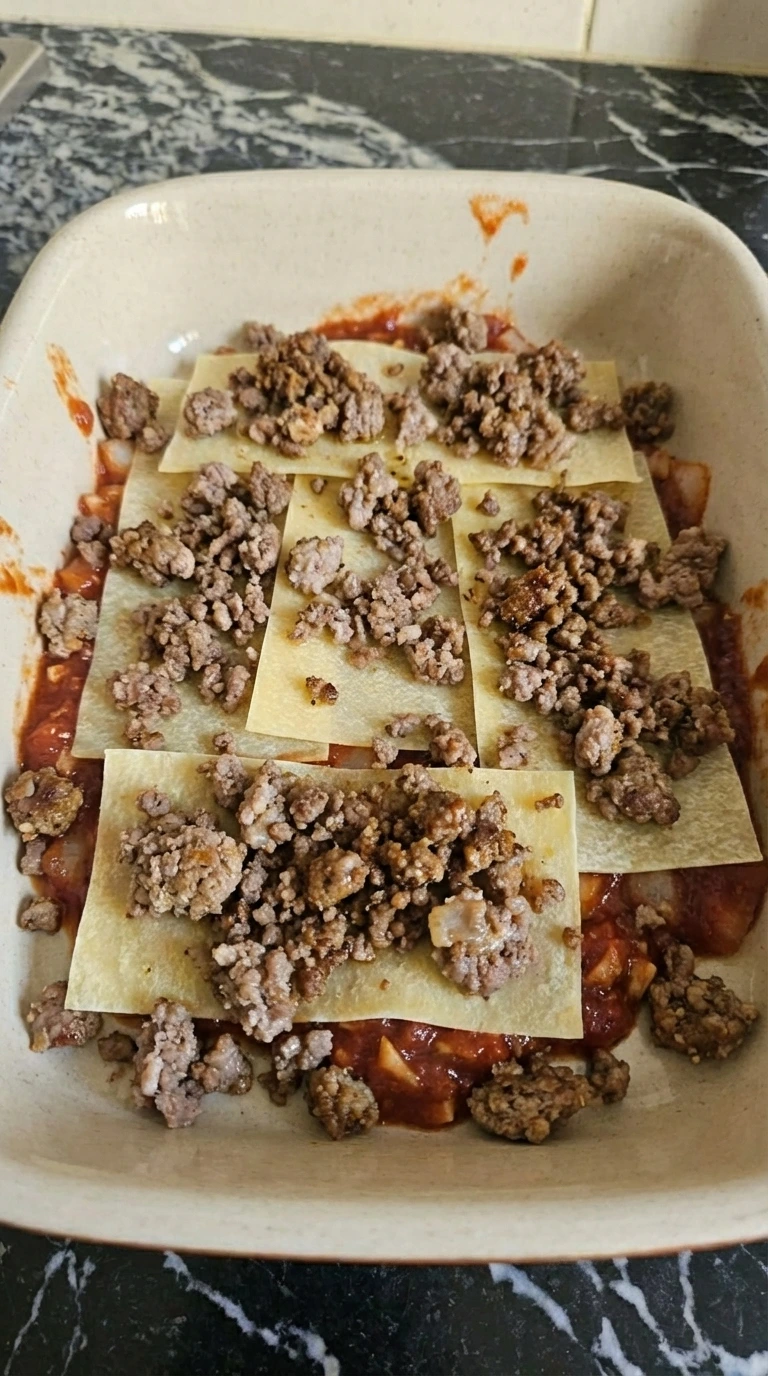
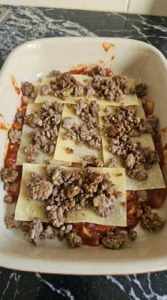
Use the meat while it’s still slightly cool and spread it over 2 to 3 minutes. Drop it in small clusters and gently press with your fingertips instead of smoothing flat. The surface should look uneven with small pockets. If you pack it down, the layer becomes dense and won’t absorb sauce during baking.
Tip: Leave a few lighter spots so sauce can settle between layers.
Step 7: Spread Cheese Layer
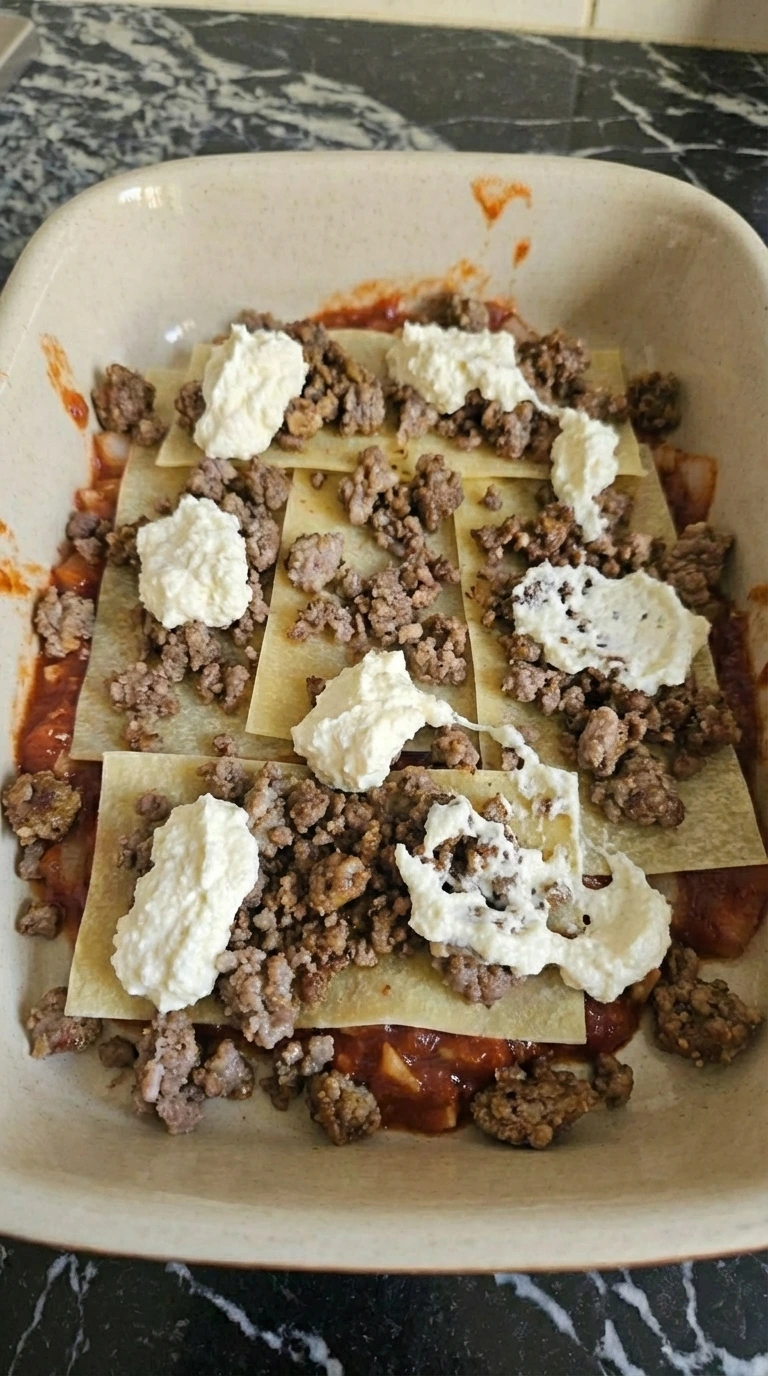
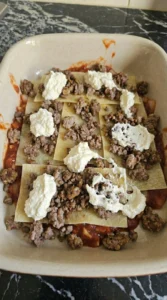
Work quickly while the mixture is still cool and spend about 2 minutes here. Add ricotta in spoonfuls and lightly nudge it outward with the back of the spoon using short strokes. You’ll see it soften slightly but still hold shape. If you spread it too thin, it disappears into the layers and you lose that creamy bite.
Tip: Dip your spoon in water to keep the cheese from sticking while spreading.
Step 8: Repeat Layers
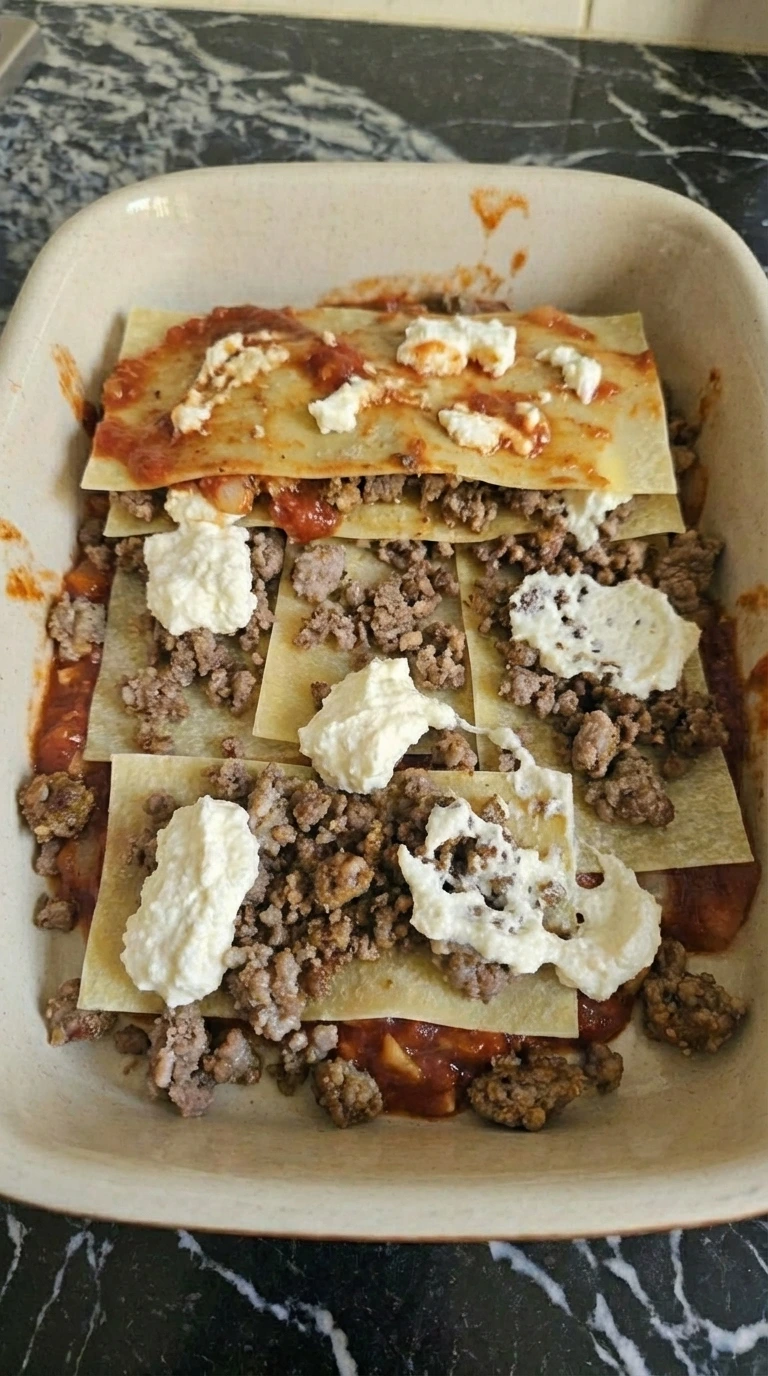
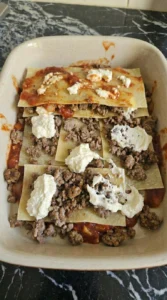
Continue layering at room temperature over 8 to 10 minutes. Add pasta, sauce, meat, and cheese again using the same loose pattern, stacking without pressing down. The dish will look fuller and slightly uneven at the edges. If you compress the layers, the final bake turns dense and loses that soft, layered texture. (I used to press it flat, but it always baked up heavy.)
Tip: Stop when the dish is about 1 inch from the top to avoid overflow.
Step 9: Top with Cheese
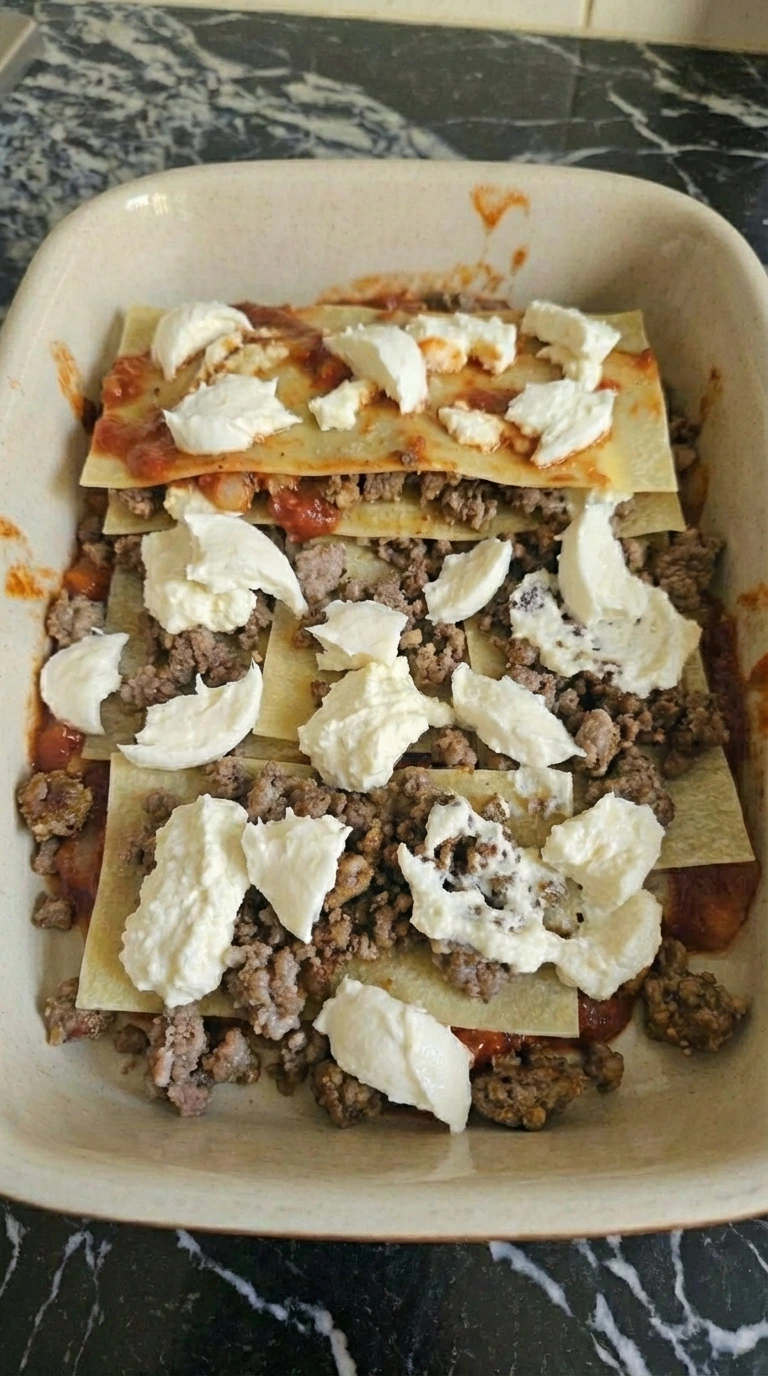
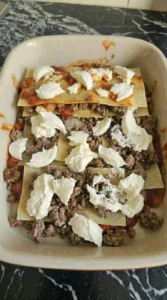
Scatter mozzarella over the top in about 1 to 2 minutes. Use loose handfuls and drop from a few inches above so it spreads naturally. You’ll see some sauce still visible underneath. If you fully cover it, the top can steam instead of browning during baking.
Tip: Add a light sprinkle of parmesan on top for better browning.
Step 10: Rest and Set
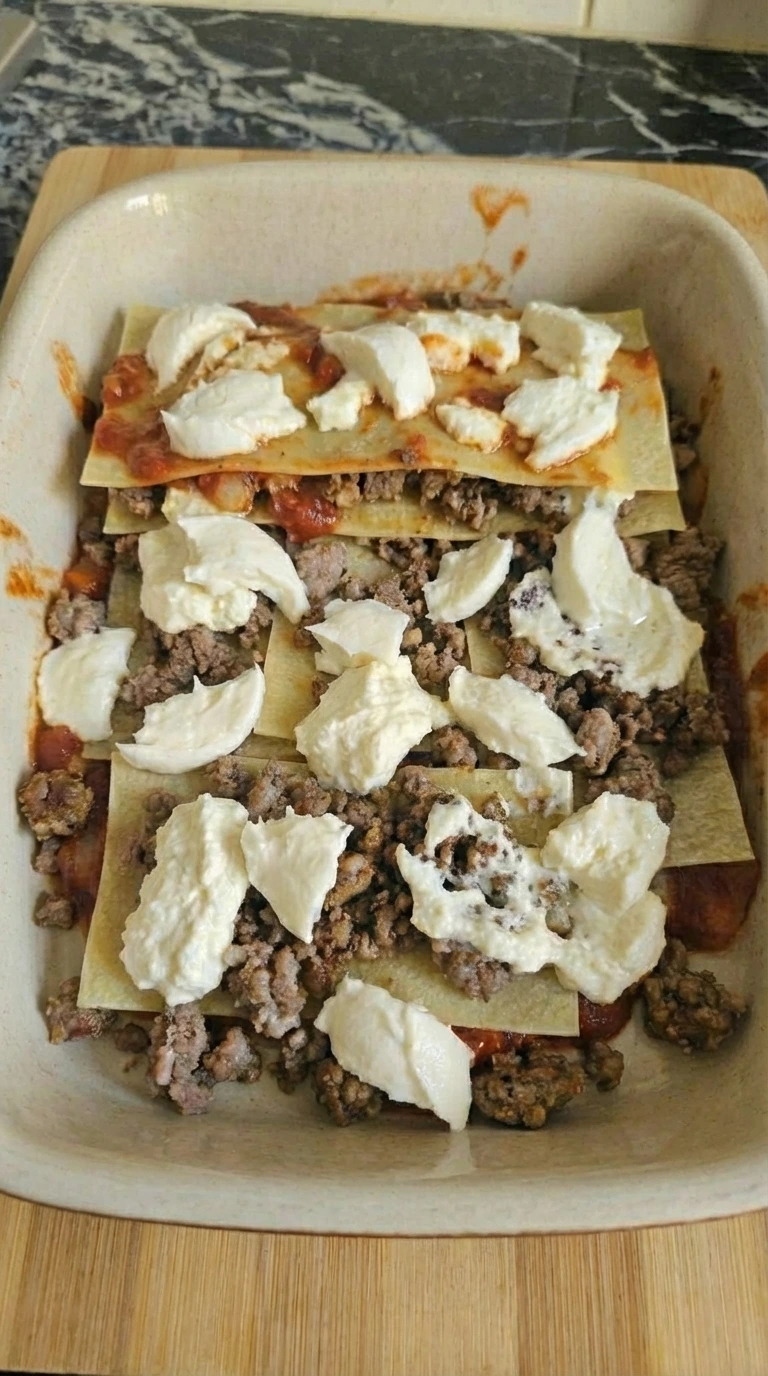
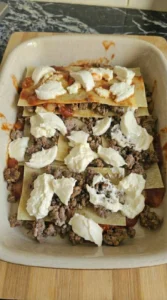
Let the assembled lasagna sit at room temperature for 10 to 15 minutes before baking. This gives the pasta time to absorb some moisture from the sauce. You’ll notice the edges soften slightly and the top looks a bit glossy. If you skip this rest, the layers can cook unevenly and stay dry in spots.
Tip: Cover loosely with foil if resting longer to prevent drying.
Step 11: Final Plated Dish
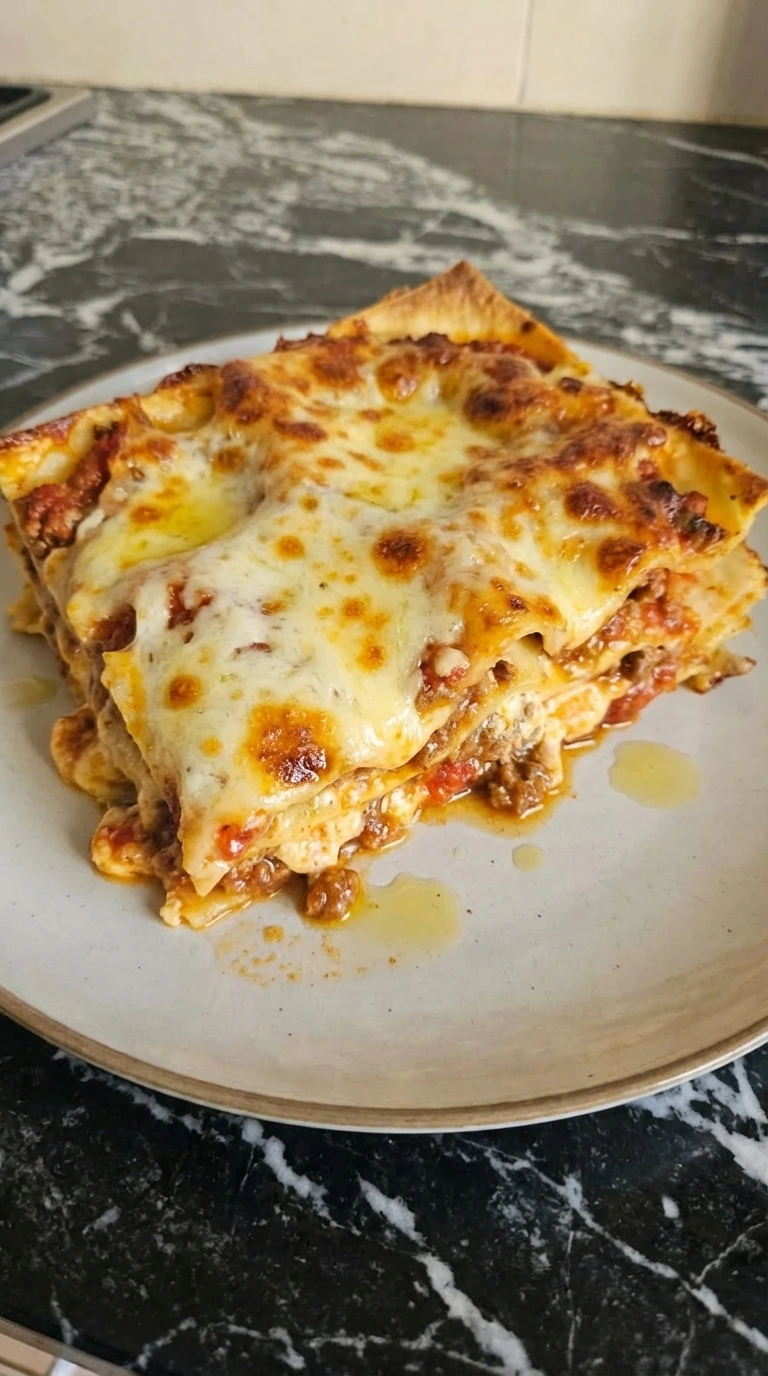
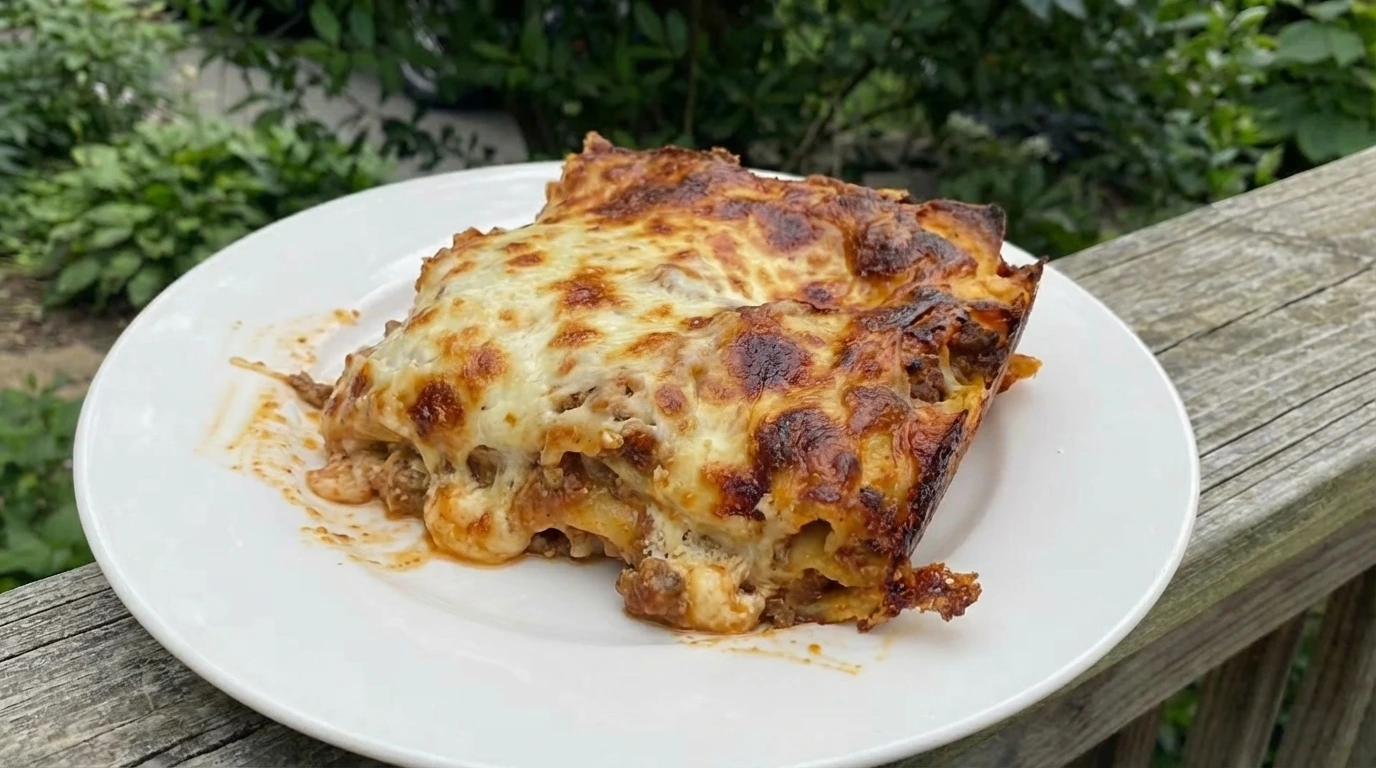
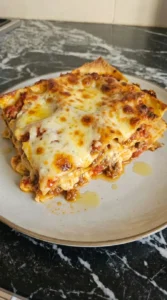
After baking at 375°F for 35 to 40 minutes, let it cool for exactly 10 minutes before slicing. Use a downward press with a sharp knife, then lift slowly with a spatula. The top should be golden in spots and the inside soft but holding together. If you cut it too early, the layers slide apart and won’t hold shape.
Tip: Wipe the knife between cuts for cleaner slices.
My Best Tips
- Keep layers slightly uneven so textures stay interesting
- Stop mixing cheese once it’s just combined
- Always let the lasagna sit before cutting
- Scatter toppings instead of spreading them flat
Make It Your Own
- ground beef: ground turkey — lighter but less rich, you may need extra seasoning
- ricotta cheese: cottage cheese — slightly looser texture, works but less creamy
- mozzarella cheese: dairy-free mozzarella — melts differently and won’t brown the same
- lasagna sheets: gluten-free pasta sheets — texture is softer, don’t overbake or they break apart
- parmesan cheese: nutritional yeast — adds a savory note but lacks sharpness, similar to recipes like Quinoa Veggie Bowl (https://leagueofcooking.com/?p=3234)
Storing Leftovers
Store leftovers in an airtight container in the fridge for up to 3 days. Reheat at 350°F for 15 to 20 minutes so the layers warm through evenly without drying out.
The Best Homemade Lasagna Recipe
Ingredients
- 12 sheets lasagna sheets
- 400 g ground beef
- 250 g ricotta cheese
- 300 g mozzarella cheese
- 50 g parmesan cheese
- 500 ml tomato sauce
- 1 small, chopped onion
- 3 cloves, minced garlic
- 2 tbsp olive oil
- 1 tsp salt
- 1/2 tsp black pepper
- 1 tsp dried oregano
- a handful fresh basil
Instructions
-
Chopped onion pieces appear uneven in size, while garlic is finely minced and slightly sticky. Fresh basil leaves are loosely torn into irregular shapes, not perfectly uniform. Everything sits in the bowl with a casual mix of textures, sharp edges from onions, soft leafy basil, and slightly moist garlic creating a natural prep stage.
-
Ground beef is placed into a bowl and sprinkled with salt, pepper, and oregano. The seasoning sits unevenly across the surface, with some areas more coated than others. As the mixture is gently pressed and turned, the spices begin to cling to the meat, creating a slightly darker and more textured appearance.
-
Tomato sauce is poured over the chopped onion and garlic, partially covering them. The oil drizzles over the surface, forming glossy patches. As the mixture is stirred, the sauce thickens slightly, coating the pieces unevenly while small chunks remain visible.
-
Ricotta is scooped into a bowl and mixed with a portion of parmesan. The texture starts thick and slightly grainy. As it’s stirred, it becomes smoother but still uneven, with small lumps remaining for a natural homemade feel.
-
A layer of sauce is spread across the bottom of the dish, not fully covering it. Some areas show more sauce while others remain thinner. Lasagna sheets are placed on top, slightly overlapping and not perfectly aligned.
-
Seasoned meat is scattered over the pasta, not evenly distributed. Some spots have more while others remain lighter. The texture looks slightly more cohesive now, with sauce clinging to the meat.
-
Ricotta mixture is spooned over the meat in uneven dollops. Some areas are thicker while others barely covered. As it spreads slightly, it blends into the meat layer creating a creamy contrast.
-
More pasta sheets, sauce, meat, and cheese are added in repeating layers. Each layer looks slightly messier, with edges misaligned and fillings peeking out. The dish becomes fuller and heavier, showing a stacked, rustic structure.
-
Mozzarella is scattered over the top in loose handfuls. Some areas are heavily covered while others show sauce beneath. The cheese begins to soften slightly, clumping together in uneven patches.
-
The assembled lasagna sits as the layers settle. Moisture spreads slightly, softening the pasta edges and blending layers together. Cheese appears more relaxed and slightly glossy as it begins to meld into the top.
-
A slice is lifted onto a plate, revealing layers that hold together but shift slightly. Cheese on top is melted unevenly with golden-brown patches and soft white areas. Sauce peeks through in irregular streaks, and edges look slightly crisp while the inside remains soft and rich.
Notes
The best feature are the layers that shift and settle. Watch everyone reach for the slices with the MOST layers, because the edges hold all the flavor!
Before you start, please read the IMPORTANT NOTES in Notes section below. Thank you!
Frequently Asked Questions
Yes, assemble it fully and store it covered in the fridge for up to 24 hours. Let it sit at room temperature for 15 minutes before baking so it cooks evenly.
Too much sauce or skipping the resting step causes this. Letting it sit before and after baking helps the layers absorb moisture properly.
Not always. If your sauce is slightly loose and you rest the layers before baking, the pasta softens during the bake.
Final Thoughts
This is the kind of lasagna you come back to because it just works. It’s layered, a little imperfect, and full of comfort.
If you like dishes like Shepherd’s Pie (https://leagueofcooking. com/?
p=3482), this fits right into that same cozy lineup.
Traditional lasagna in Italy was originally made without tomato sauce and used layered pasta with simple cheese and butter.