Lemon Chicken Orzo Soup
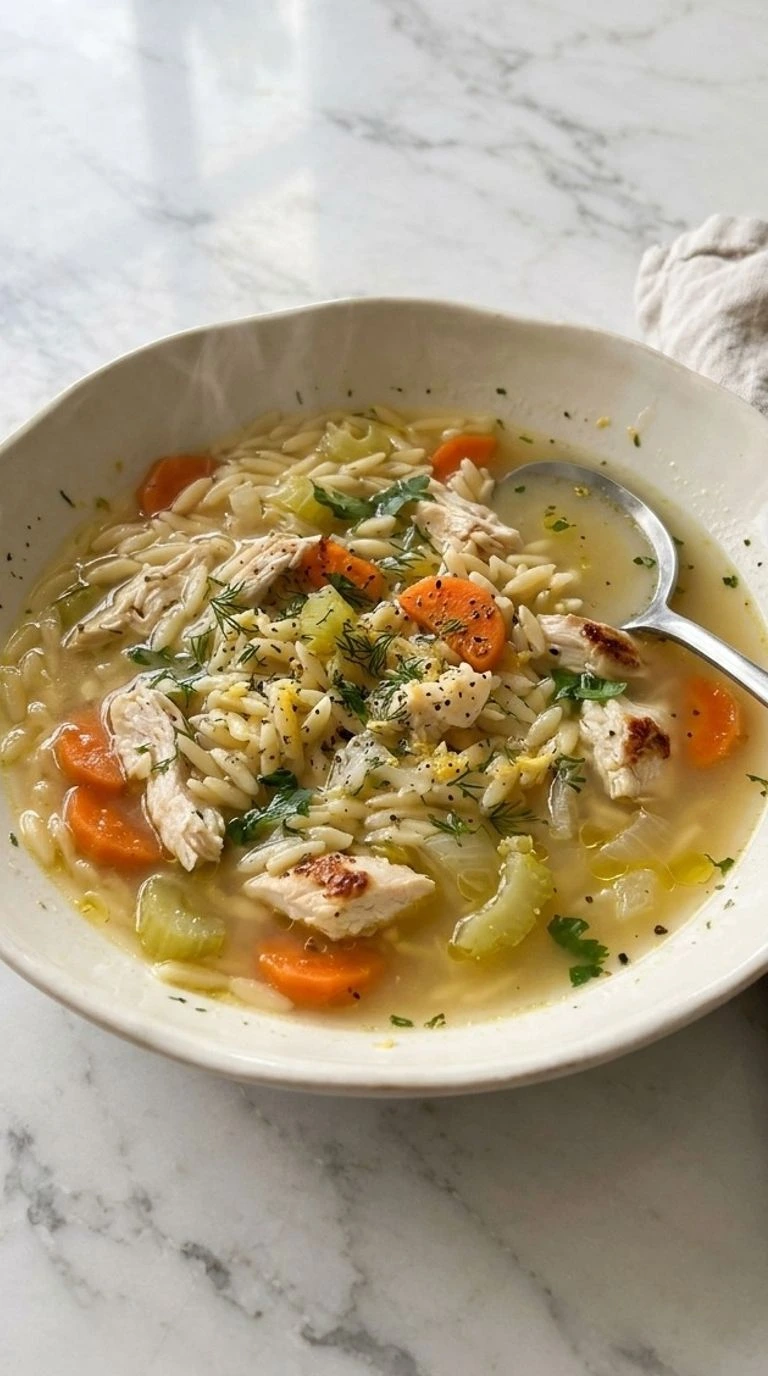
A cold evening calls for something warm and bright, and Lemon Chicken Orzo Soup is exactly what I want bubbling away on the stove. It’s got tender chicken and tiny orzo pasta tucked into a golden broth with carrots and celery. Then comes the fresh lemon. One spoonful and you’ll see why this easy lemon chicken orzo soup deserves a spot in your dinner plans. Hi!
Meet your new favorite chicken soup with soft little pasta pieces and a broth that’s light enough for lunch but filling enough for dinner. So simple. So fresh. And if you love a good bowl of homemade soup as much as I do, our Creamy Chicken Noodle Soup is another one you’ll want to make. That’s right.
We’re calling upon a couple of fresh lemons to wake up an ordinary pot of chicken soup and give it a bright little twist. And they really do the job. The chicken stays juicy while the orzo makes each spoonful feel just a bit more filling. Nothing heavy. Just the kind of dinner you’ll want to curl up with when the air turns chilly.
Why This Recipe Works
The trick with Lemon Chicken Orzo Soup is cooking the small orzo pasta right in the broth. As the pasta softens over 8 to 10 minutes, it releases a little starch that gives the soup a fuller feel without cream.
And searing the chicken first builds a savory base that plain boiled chicken can’t quite match. Then the lemon goes in after the heat is off.
This keeps its fresh flavor bright instead of dull.
Ingredients
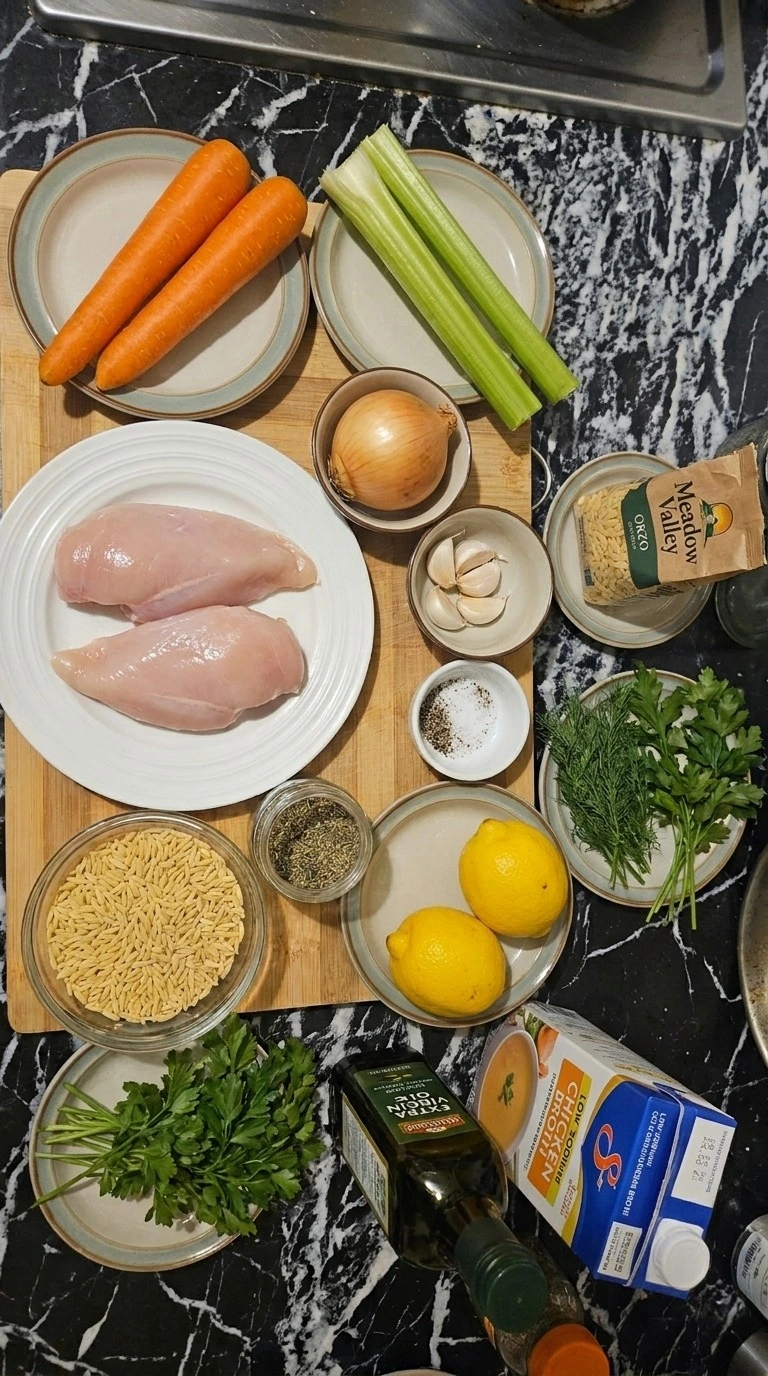
- Boneless skinless chicken breast: Patted dry and left whole for searing and simmering, then shredded into tender bite-sized pieces.
- Extra virgin olive oil: Divided between searing the chicken and softening the vegetables for a light savory base.
- Yellow onion: Peeled and finely diced to add mild sweetness and depth to the broth.
- Carrot: Peeled and sliced into thin half-moons about 1/4 inch thick for color and gentle sweetness.
- Celery stalk: Trimmed and sliced into small pieces for a fresh savory note and soft texture.
- Garlic clove: Peeled and finely minced to give the broth a warm garlic flavor without overpowering the lemon.
- Dried thyme: Added with the garlic to bring an earthy herbal note to the soup.
- Low-sodium chicken broth: Used as the main soup base and to simmer the chicken and orzo while keeping the salt easy to control.
- Dry durum wheat orzo pasta: Small rice-shaped pasta added directly to the broth for a tender bite and naturally fuller texture.
- Fresh lemon: Juiced to provide 3 tablespoons of fresh juice with 1 teaspoon of finely grated zest, keeping extra lemon available for serving.
- Fresh dill: Finely chopped and stirred in after cooking to add a soft herbal flavor.
- Fresh flat-leaf parsley: Finely chopped and added at the end for a fresh green finish.
- Kosher salt: Divided between seasoning the chicken before searing and adjusting the finished broth, with the final amount depending on broth saltiness.
- Freshly ground black pepper: Used to season the chicken before searing and give the soup a gentle peppery warmth.
Kitchen Equipment
- Large heavy-bottomed soup pot: A 5 to 6-quart heavy-bottomed pot gives the chicken room to sear and holds the full soup batch without spilling, while a thin pot can cause the vegetables to scorch.
- Wooden spoon: A sturdy wooden spoon with a flat edge helps scrape browned bits from the bottom of the pot, while a rounded spoon may leave flavorful bits stuck.
- Chef’s knife: An 8-inch chef’s knife with a comfortable grip makes even carrot, celery and onion pieces, while a dull blade can crush delicate herbs and slow down prep.
- Cutting board: A non-slip cutting board at least 12 by 18 inches gives enough room for vegetables and herbs, and a separate board for raw chicken helps prevent cross-contamination.
- Instant-read meat thermometer: A fast digital thermometer with a narrow probe lets you check the chicken at 165°F, while a slow or inaccurate thermometer can lead to dry or undercooked meat.
- Two dinner forks: Two sturdy dinner forks pull the chicken into uneven bite-sized shreds, while very small forks can make the job awkward and slow.
- Microplane zester: A fine Microplane zester removes thin yellow lemon zest without the bitter white pith, while a coarse grater can produce unpleasantly large pieces.
- Citrus juicer: A handheld citrus juicer catches lemon seeds and extracts juice efficiently, while squeezing by hand may leave seeds in the soup.
- Ladle: A 4 to 6-ounce ladle transfers broth and solid ingredients into serving bowls with fewer spills, while a shallow spoon makes portioning uneven.
How to Make It
Step 1: Sear the chicken until lightly golden
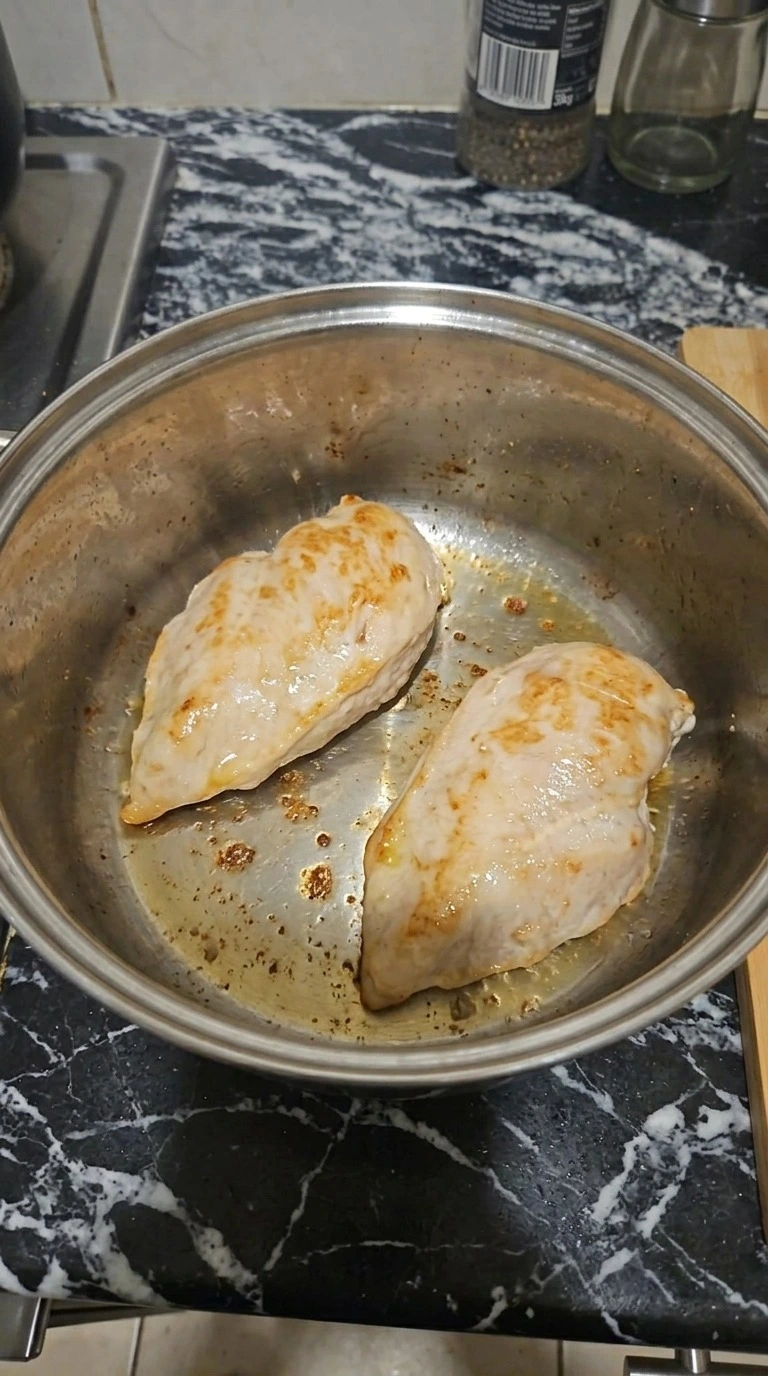
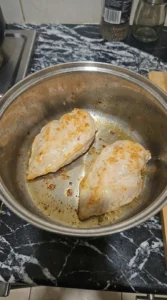
Pat 2 boneless skinless chicken breasts dry and season both sides with 1/2 teaspoon kosher salt and 1/4 teaspoon freshly ground black pepper. Set a large pot over medium-high heat (about 7 on a 10-dial) and add 1 tablespoon extra virgin olive oil. Once the oil shimmers, lay in the chicken with space between the pieces. Sear for 3 minutes on the first side and 2 minutes on the second.
Turn each breast once and then move both to a clean plate. They’ll finish cooking in the broth. Look for pale golden patches along the chicken edges and a thin brown layer on the bottom of the pot. The centers will still be raw.
Don’t sear past 6 minutes or the outer meat can dry out. That light crust gives the broth a deeper savory flavor.
Tip: If your chicken breasts are thicker than 1 inch, keep them whole and use a thermometer during simmering instead of guessing from their color.
Step 2: Soften the carrots, celery and onion
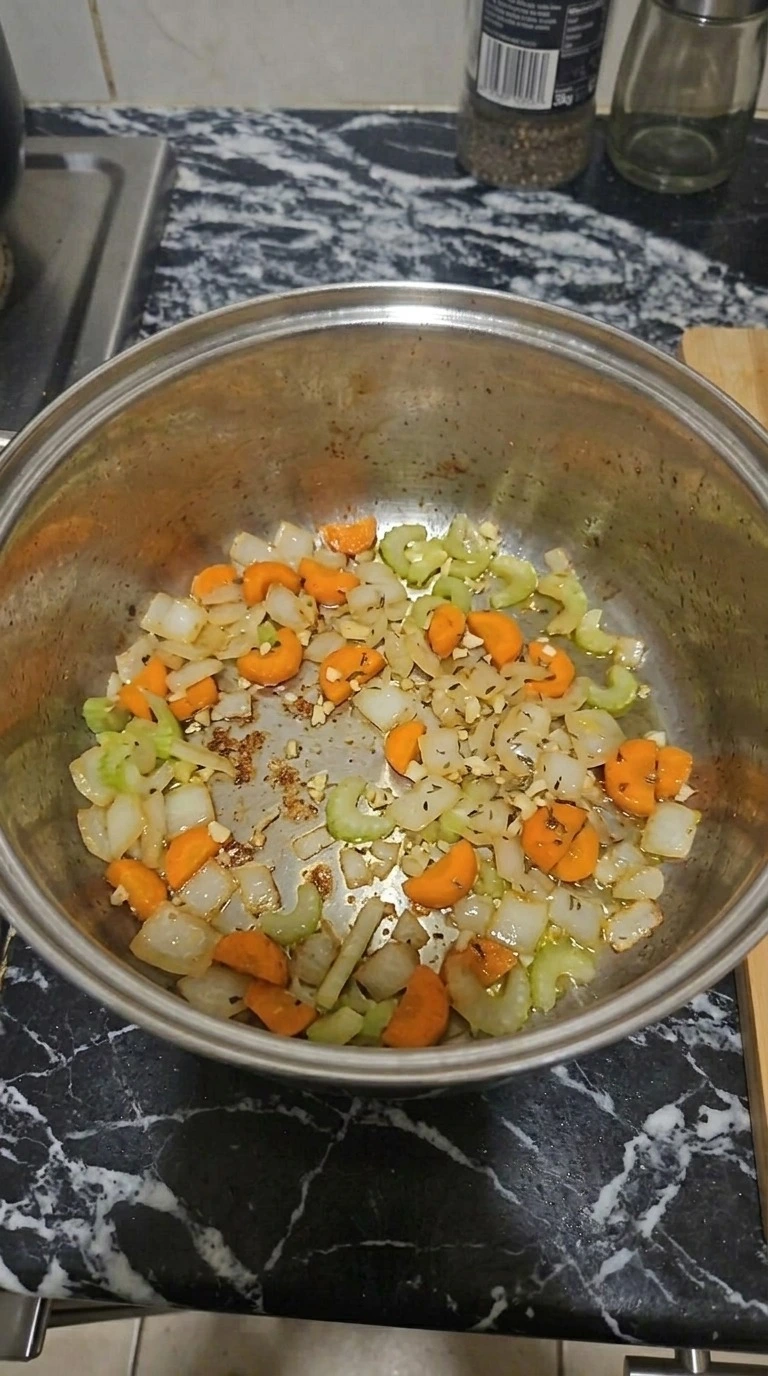
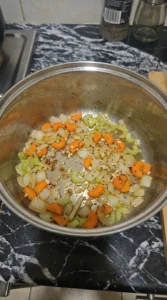
Lower the heat to medium (about 5 on a 10-dial) and pour the remaining 1 tablespoon extra virgin olive oil into the same pot. Add 1 diced medium yellow onion with 2 diced medium carrots and 2 diced celery stalks. Stir with a wooden spoon and scrape up the golden bits left by the chicken. Let the vegetables soften for 5 to 6 minutes while you stir every minute or so.
Then add 4 minced garlic cloves and 1 teaspoon dried thyme. Stir for another 30 to 45 seconds. Next, check the onion. It should look pale and see-through around the edges while the carrots stay orange with a little bite.
You’ll smell the garlic as soon as it warms. Don’t let it turn dark or the broth will taste bitter. Gentle heat brings out the vegetables’ natural sweetness.
Tip: Cut the carrots into pieces about 1/4 inch thick so they’ll soften evenly without falling apart during the chicken’s simmer.
Step 3: Simmer the chicken in golden broth
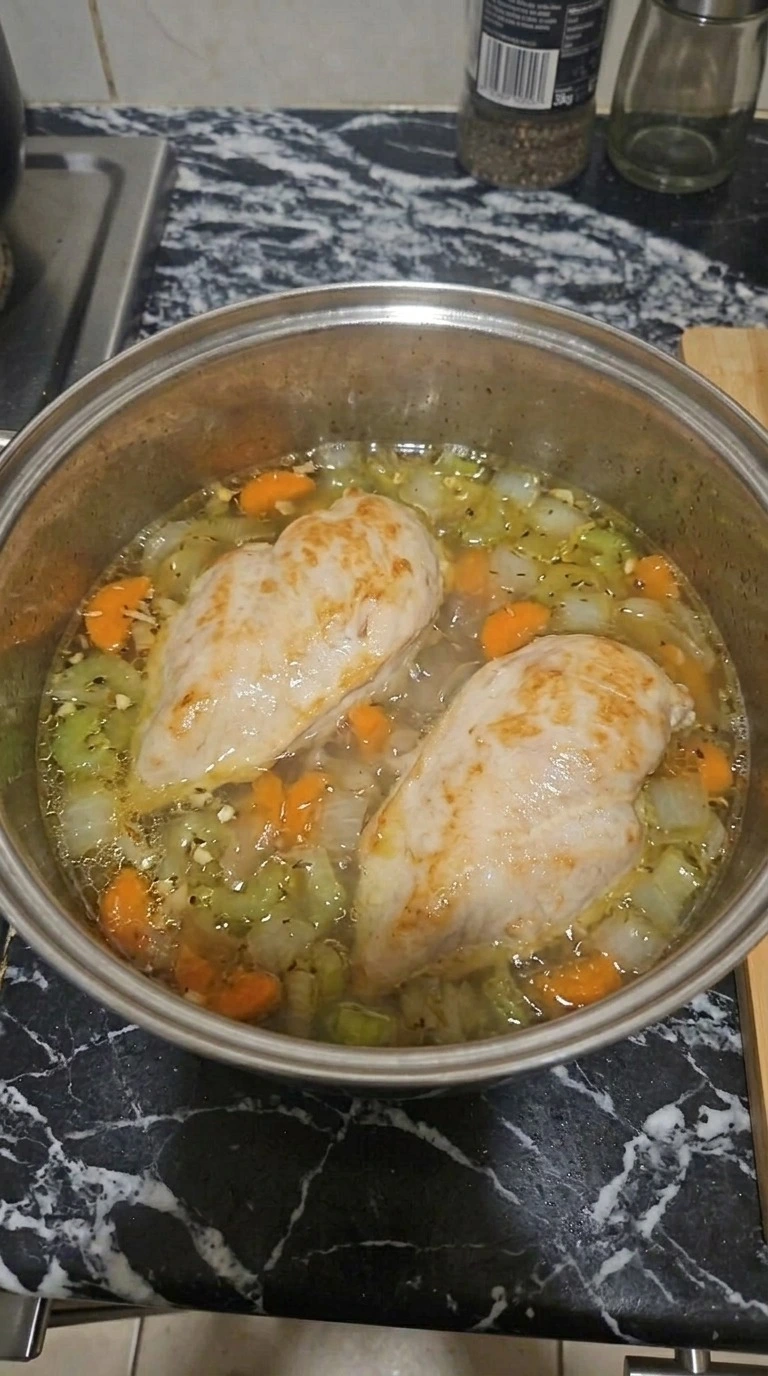
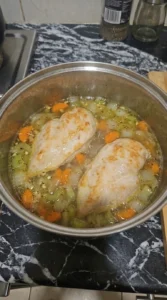
Pour 6 cups low-sodium chicken broth into the pot and scrape the bottom once more to loosen any bits of flavor. Return both chicken breasts along with the juices from their plate. Raise the heat to medium-high until the broth reaches a gentle boil at about 212°F. Then lower it to medium-low so small bubbles rise steadily without a hard boil.
Cover loosely and simmer for 10 to 15 minutes. Check the thickest part of each breast with a thermometer and remove it once it reaches 165°F. The broth should look light gold and the vegetables will start to soften. Meanwhile, the chicken should feel firm and show no raw pink center.
A hard boil can make it tough. (I used to rush this part and the chicken turned stringy. ) A gentle simmer keeps the meat tender.
Tip: If foam gathers on the broth during the first 3 minutes, skim it away for a clearer soup without losing flavor.
Step 4: Cook the orzo and fold in shredded chicken
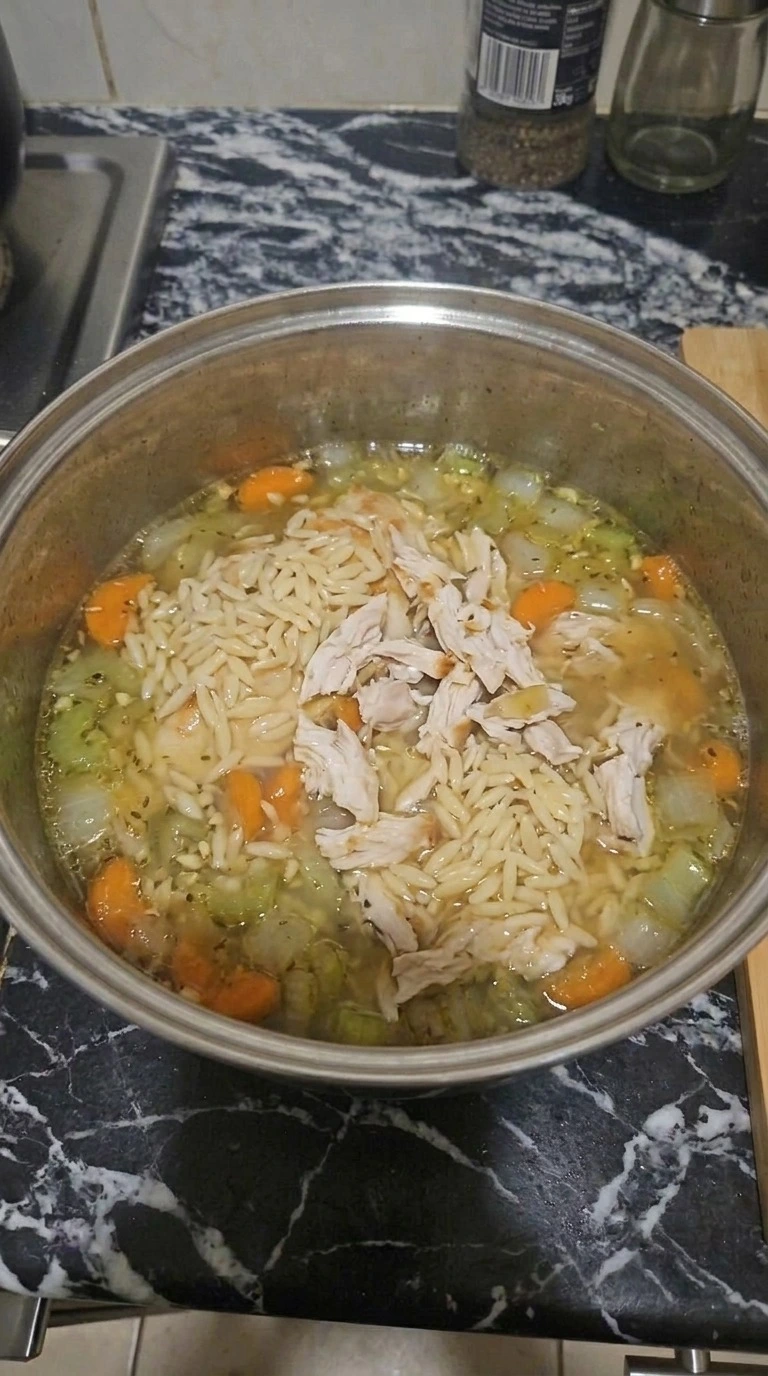
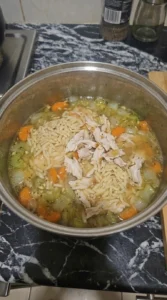
Transfer the chicken to a clean plate and let it rest for 3 minutes. Meanwhile, raise the broth to a steady simmer over medium heat (about 5 on a 10-dial). Pour in 3/4 cup dry orzo pasta and stir across the bottom so the small pieces don’t stick. Cook for 8 to 10 minutes and stir twice more as the pasta softens.
During that time, pull the chicken into bite-sized irregular shreds with two forks. Return the shredded meat to the pot during the final 2 minutes so everything heats through. Watch the orzo carefully. It should swell into plump rice-shaped pieces with a slight bite at the center.
If you pass 10 minutes, the pasta may turn too soft and soak up too much broth. Lemon Chicken Orzo Soup tastes best when the orzo still has some bite.
Tip: For soup that will sit before dinner, stop cooking the orzo 1 minute early because it keeps softening in the hot broth.
Step 5: Finish with fresh lemon and serve
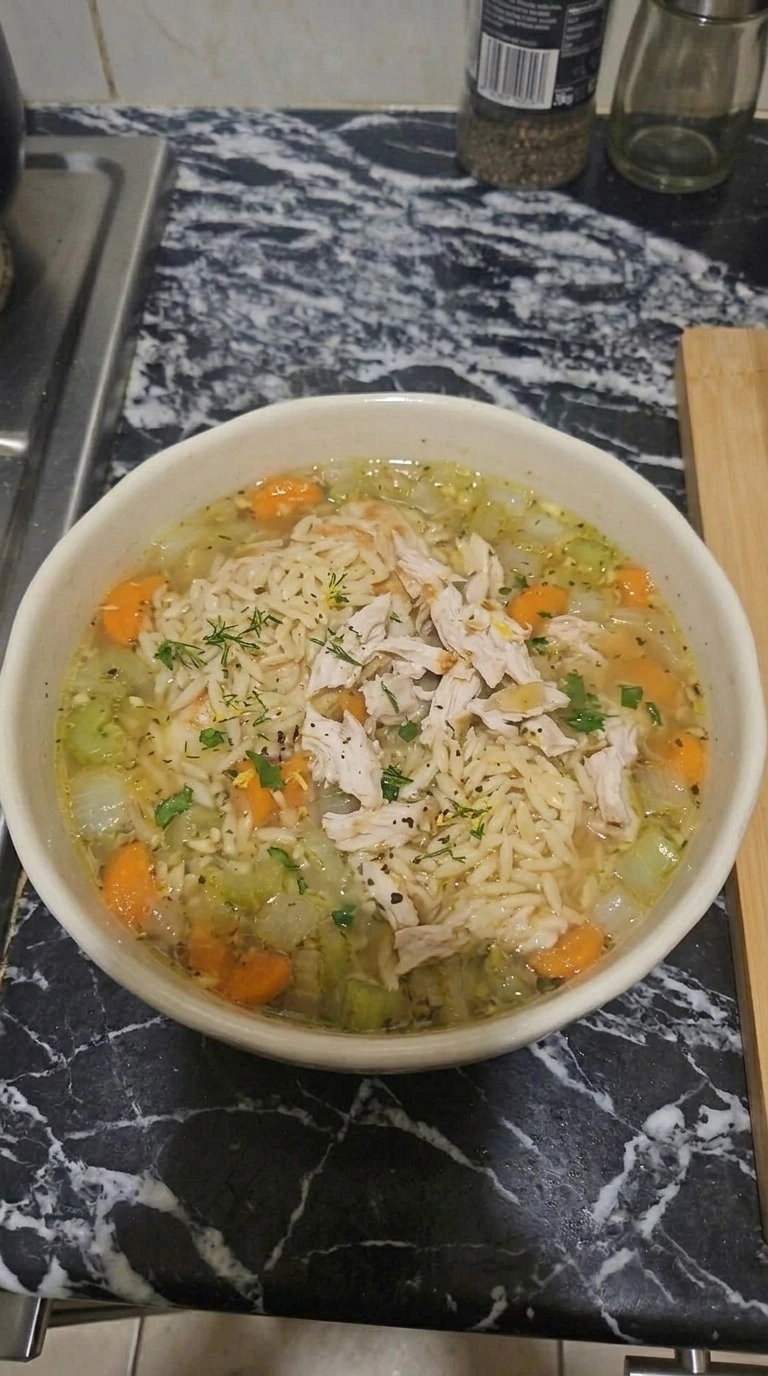
Turn off the heat once the orzo is tender and wait 1 minute for the bubbling to settle. Stir in 3 tablespoons fresh lemon juice and 1 teaspoon finely grated lemon zest. Add 2 tablespoons chopped fresh dill and 2 tablespoons chopped fresh flat-leaf parsley. Fold everything through the broth with a spoon using 3 or 4 slow turns.
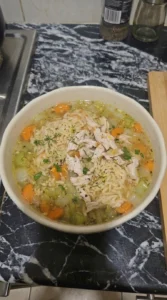
Taste and add the remaining 1/2 teaspoon kosher salt if needed. Let the soup stand for 2 minutes off the heat and then ladle it into 4 serving bowls. Now the broth should smell bright and fresh. You’ll see tiny green herb flecks mixed through the golden soup and some pale golden chicken edges among the soft pasta.
Don’t keep boiling after adding the lemon or its fresh flavor can fade. Adding lemon off the heat keeps its sharp citrus taste.
Tip: If you prefer a more lemony bowl, serve each portion with an extra squeeze from a fresh lemon wedge rather than adding more juice to the whole pot.
Pro Tips
- Choose chicken breasts about 1 inch thick so they cook at a similar rate, and check the thickest section for 165°F before shredding.
- Use low-sodium chicken broth with less than 150 milligrams sodium per cup when possible, so you can adjust the seasoning without making the soup too salty.
- Scrape the bottom of the pot for 20 to 30 seconds when adding the broth because those golden chicken bits hold loads of savory flavor.
- Keep the broth at a gentle simmer after adding the chicken, with small bubbles rising steadily instead of a rolling boil that can toughen the meat.
- Stir the orzo every 2 to 3 minutes and reach all the way across the pot bottom so the pasta doesn’t form sticky clumps.
- Zest the fresh lemon before cutting it and measure 1 teaspoon of yellow zest without scraping into the bitter white pith.
- If dinner is running 20 minutes late, keep the fully cooked orzo separate from the hot broth to prevent it from soaking up too much liquid.
- For an extra fresh finish, sprinkle 1 teaspoon of chopped dill over each bowl right before serving instead of adding more dried thyme.
- For a green vegetable twist, stir 2 packed cups baby spinach into the hot soup during its final 2 minutes until the leaves soften.
- For a Greek-inspired version, whisk 1 large egg with 2 tablespoons fresh lemon juice and slowly add 1/2 cup warm broth before stirring it into the pot off the heat, without letting the soup boil afterward.
- For a heartier winter dinner, add 1 cup drained canned cannellini beans during the final 5 minutes so the beans warm through without falling apart.
- For a spring version, replace 1 carrot with 1 cup chopped asparagus and add the asparagus during the final 4 minutes for a firmer green bite.
Substitutions & Variations
- Dry durum wheat orzo pasta: Use 3/4 cup gluten-free rice-shaped pasta or 3/4 cup uncooked long-grain white rice. Gluten-free pasta can soften faster, so start checking at 6 minutes and follow the package timing. White rice takes about 15 to 18 minutes and gives the soup a softer texture. For another gluten-free dinner, try our Gluten Free Chicken Noodle Soup.
- Boneless skinless chicken breast: Replace with 1 pound boneless skinless chicken thighs or 2 cups cooked shredded rotisserie chicken. Chicken thighs taste richer and stay juicy but need cooking until they reach at least 165°F. For rotisserie chicken, skip the searing and add the shredded meat during the final 3 minutes of cooking. Check its salt level before adding more seasoning.
- Low-sodium chicken broth: Use 6 cups low-sodium vegetable broth or 4 cups regular chicken broth mixed with 2 cups water. Vegetable broth gives the soup a lighter flavor and less chicken richness. Diluting regular broth helps control salt, but the finished soup may taste slightly less savory. Taste before adding the final 1/2 teaspoon of kosher salt.
- Fresh dill: Replace 2 tablespoons fresh dill with 2 tablespoons fresh flat-leaf parsley or 2 teaspoons fresh thyme leaves. Extra parsley gives the soup a milder green flavor while thyme adds a more earthy note. Use less thyme because its flavor is stronger. The lemon will stand out more without dill.
- Extra virgin olive oil: Use 2 tablespoons avocado oil or 2 tablespoons unsalted butter. Avocado oil keeps the recipe dairy-free and has a mild flavor. Unsalted butter adds a richer taste but removes the dairy-free option. If using butter, keep the heat at medium during the initial sear to reduce scorching and allow extra time for golden edges.
Storage Instructions
Let Lemon Chicken Orzo Soup cool slightly and transfer it to shallow airtight containers within 2 hours of cooking. Keep it in the refrigerator at 40°F or below for 3 to 4 days. The pasta will slowly soak up the broth, so the leftovers will be thicker. For freezing, it’s best to set aside portions before adding the orzo.
Freeze the chicken and vegetable broth in airtight freezer-safe containers with 1 inch of headspace for up to 3 months at 0°F for best quality. Add freshly cooked orzo after reheating. To reheat, warm a portion in a small saucepan over medium-low heat for about 5 to 8 minutes, stirring until it reaches 165°F. Add 1/4 to 1/2 cup extra chicken broth if the pasta has absorbed too much liquid.
Finally, add a small squeeze of fresh lemon to bring back the bright flavor. Throw away the soup if it develops a sour smell unrelated to the lemon, visible mold or an unusual slimy texture. Don’t taste food to check whether it’s spoiled.
Lemon Chicken Orzo Soup
Ingredients
Method
- Pat 2 boneless skinless chicken breasts dry and season both sides with 1/2 teaspoon kosher salt and 1/4 teaspoon freshly ground black pepper. Set a large pot over medium-high heat (about 7 on a 10-dial) and add 1 tablespoon extra virgin olive oil. Once the oil shimmers, lay in the chicken with space between the pieces. Sear for 3 minutes on the first side and 2 minutes on the second. Turn each breast once and then move both to a clean plate. They’ll finish cooking in the broth. Look for pale golden patches along the chicken edges and a thin brown layer on the bottom of the pot. The centers will still be raw. Don’t sear past 6 minutes or the outer meat can dry out. That light crust gives the broth a deeper savory flavor.
- Lower the heat to medium (about 5 on a 10-dial) and pour the remaining 1 tablespoon extra virgin olive oil into the same pot. Add 1 diced medium yellow onion with 2 diced medium carrots and 2 diced celery stalks. Stir with a wooden spoon and scrape up the golden bits left by the chicken. Let the vegetables soften for 5 to 6 minutes while you stir every minute or so. Then add 4 minced garlic cloves and 1 teaspoon dried thyme. Stir for another 30 to 45 seconds. Next, check the onion. It should look pale and see-through around the edges while the carrots stay orange with a little bite. You’ll smell the garlic as soon as it warms. Don’t let it turn dark or the broth will taste bitter. Gentle heat brings out the vegetables’ natural sweetness.
- Pour 6 cups low-sodium chicken broth into the pot and scrape the bottom once more to loosen any bits of flavor. Return both chicken breasts along with the juices from their plate. Raise the heat to medium-high until the broth reaches a gentle boil at about 212°F. Then lower it to medium-low so small bubbles rise steadily without a hard boil. Cover loosely and simmer for 10 to 15 minutes. Check the thickest part of each breast with a thermometer and remove it once it reaches 165°F. The broth should look light gold and the vegetables will start to soften. Meanwhile, the chicken should feel firm and show no raw pink center. A hard boil can make it tough. (I used to rush this part and the chicken turned stringy.) A gentle simmer keeps the meat tender.
- Transfer the chicken to a clean plate and let it rest for 3 minutes. Meanwhile, raise the broth to a steady simmer over medium heat (about 5 on a 10-dial). Pour in 3/4 cup dry orzo pasta and stir across the bottom so the small pieces don’t stick. Cook for 8 to 10 minutes and stir twice more as the pasta softens. During that time, pull the chicken into bite-sized irregular shreds with two forks. Return the shredded meat to the pot during the final 2 minutes so everything heats through. Watch the orzo carefully. It should swell into plump rice-shaped pieces with a slight bite at the center. If you pass 10 minutes, the pasta may turn too soft and soak up too much broth. Lemon Chicken Orzo Soup tastes best when the orzo still has some bite.
- Turn off the heat once the orzo is tender and wait 1 minute for the bubbling to settle. Stir in 3 tablespoons fresh lemon juice and 1 teaspoon finely grated lemon zest. Add 2 tablespoons chopped fresh dill and 2 tablespoons chopped fresh flat-leaf parsley. Fold everything through the broth with a spoon using 3 or 4 slow turns. Taste and add the remaining 1/2 teaspoon kosher salt if needed. Let the soup stand for 2 minutes off the heat and then ladle it into 4 serving bowls. Now the broth should smell bright and fresh. You’ll see tiny green herb flecks mixed through the golden soup and some pale golden chicken edges among the soft pasta. Don’t keep boiling after adding the lemon or its fresh flavor can fade. Adding lemon off the heat keeps its sharp citrus taste.
Notes
Frequently Asked Questions
Yes, and it’s a great way to make dinner feel less rushed. Cook the chicken and vegetables in the broth up to 2 days ahead and refrigerate them at 40°F or below within 2 hours. When you’re ready to eat, bring the broth to a simmer and add the dry orzo for its final 8 to 10 minutes of cooking.
Store the soup in a sealed container at 40°F or below for up to 3 to 4 days, counting the day you cook it. Chill it within 2 hours and use shallow containers to help it cool. The orzo will absorb broth as it sits, so expect a thicker soup on day three than on the first night.
Absolutely, but you’ll need to replace the wheat-based orzo. Use 3/4 cup certified gluten-free rice-shaped pasta and check its texture starting around minute 6 because some varieties soften sooner. Choose a certified gluten-free broth if needed and check all package labels. The finished soup may be slightly cloudier because some gluten-free pasta releases more starch.
Orzo keeps taking in liquid after cooking, especially when the soup stays hot for another 20 to 30 minutes. If the pot becomes thick, add 1/2 cup warm chicken broth at a time until you like the texture. For your next batch, cook the pasta separately and combine each portion just before serving.
Yes, double the ingredients to make approximately 8 servings and use an 8 to 10-quart pot. Brown the 4 chicken breasts in two batches so they develop golden edges rather than steaming. After adding the broth, simmer until every breast reaches 165°F. The orzo should still take roughly 8 to 10 minutes once the broth returns to a steady simmer.
A slice of toasted sourdough bread works well because it soaks up the light lemon broth. For a fuller dinner, add a green salad with about 1 tablespoon of olive oil dressing per serving. If you’d like a vegetable side, roast carrots at 425°F for 20 to 25 minutes until their edges turn golden.
Yes, but freeze the chicken and broth without the orzo for the best texture. Use freezer-safe containers with about 1 inch of headspace and keep them frozen at 0°F for up to 3 months for best quality. Thaw overnight in the refrigerator and heat to 165°F before serving. Add freshly cooked orzo so the pasta doesn’t turn mushy.
Final Thoughts
Some nights I wish I’d made Lemon Chicken Orzo Soup years ago because that fresh lemon finish makes an ordinary chicken dinner feel special. This easy lemon chicken orzo soup has become one I’d happily make again, especially when I want something lighter than our White Chicken Lasagna Soup. And if you’re collecting winter lemon chicken orzo soup ideas, save this recipe alongside our Crockpot Chicken and Rice Soup for another chilly evening.
Give it a try and leave me a comment because I love hearing how your dinner turned out. It works just as well when you are after lemon chicken orzo soup recipe.
Orzo means barley in Italian, even though this tiny pasta is usually made from wheat. Its rice-like shape makes it especially good in soup because it fits right onto a spoon with the chicken and vegetables. And unlike larger pasta shapes, it blends into the broth without taking over the bowl.