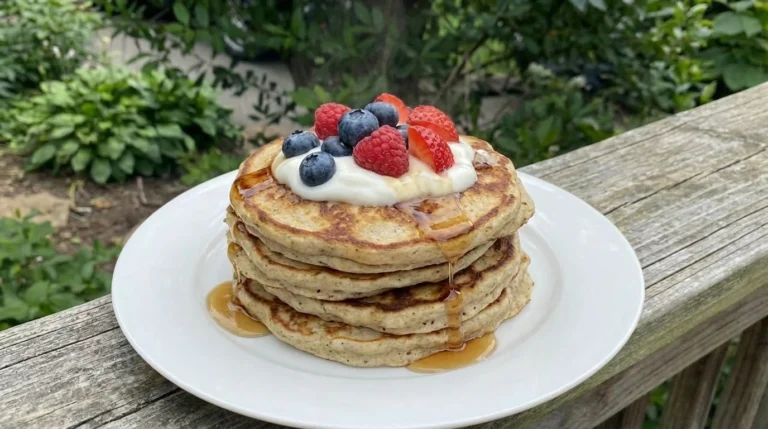
Quick Breakfast Egg Muffins
These egg muffins are what I reach for when mornings feel rushed but I still want something warm and filling. You get fluffy eggs, little bites of vegetables, and just enough cheese to make them feel like breakfast, not a compromise. They’re also the kind of thing you can make once and eat for days.
I like pairing them with something fresh like this Detox Green Smoothie (https://leagueofcooking. com/? p=3204) when I want a quick but balanced start.

And honestly, they just work. Eggs do their thing, everything bakes together, and you end up with something you’ll actually look forward to eating again.
Why You Will Love This
Whisking the eggs with milk adds just enough liquid to keep them tender instead of rubbery at 350°F. Letting the vegetables sit with salt for a few minutes softens them so they don’t release excess water during baking. That short rest helps the muffins set cleanly without turning watery in the center.
Ingredient List
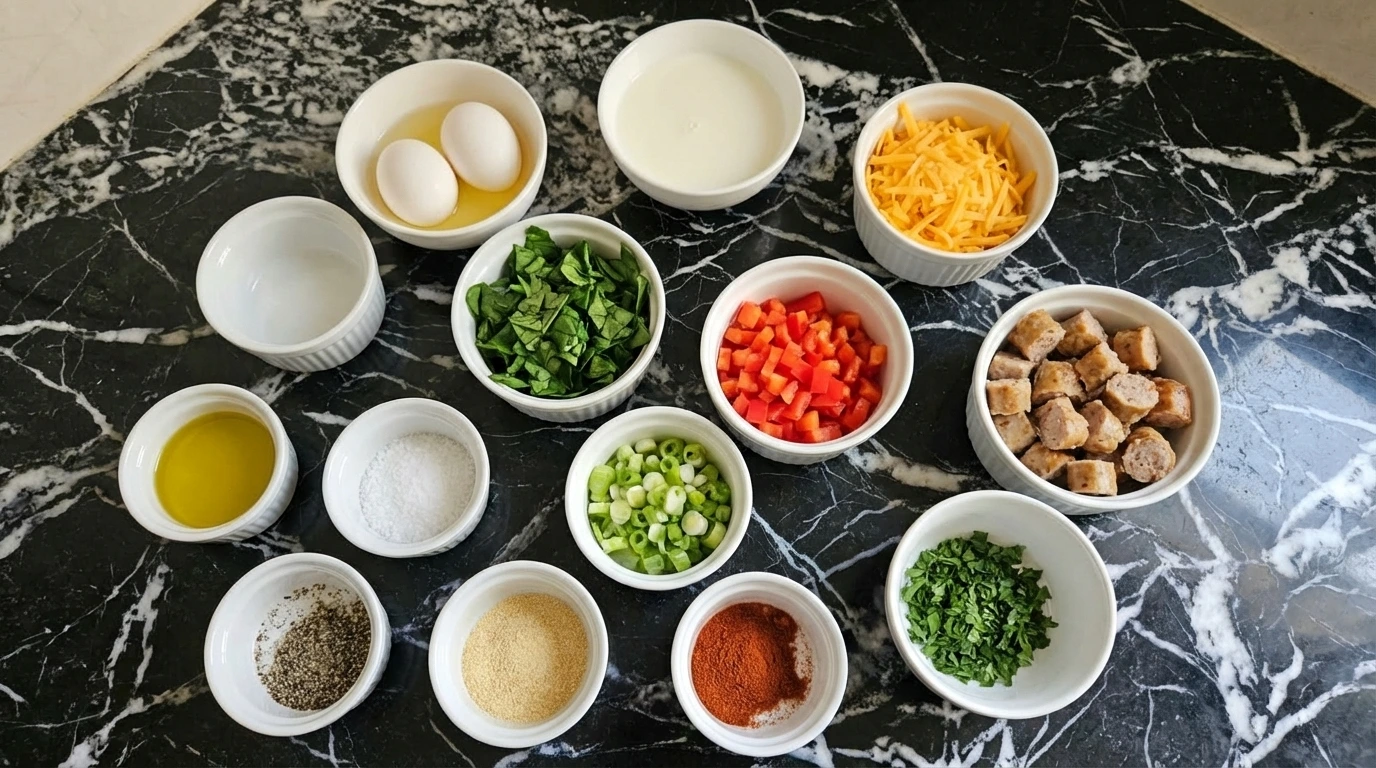
- large eggs: use fresh eggs for the best structure and lift in the muffins
- milk: adds moisture so the baked eggs stay soft instead of dense
- shredded cheddar cheese: melts into pockets and browns slightly on top
- baby spinach: finely chopped so it softens quickly and blends into the eggs
- red bell pepper: diced small for even cooking and a bit of sweetness
- green onions: thinly sliced for a mild sharp bite
- cooked turkey sausage: fully cooked and chopped into small pieces for even distribution
- olive oil: used to lightly coat vegetables and prevent sticking
- salt: enhances the overall flavor of the eggs and filling
- black pepper: adds a subtle heat that balances the eggs
- garlic powder: brings a steady savory base without extra moisture
- paprika: adds light color and a soft smoky note
- fresh parsley: chopped for a fresh finish right before serving
Kitchen Equipment
Method
Step 1: Chop and measure everything
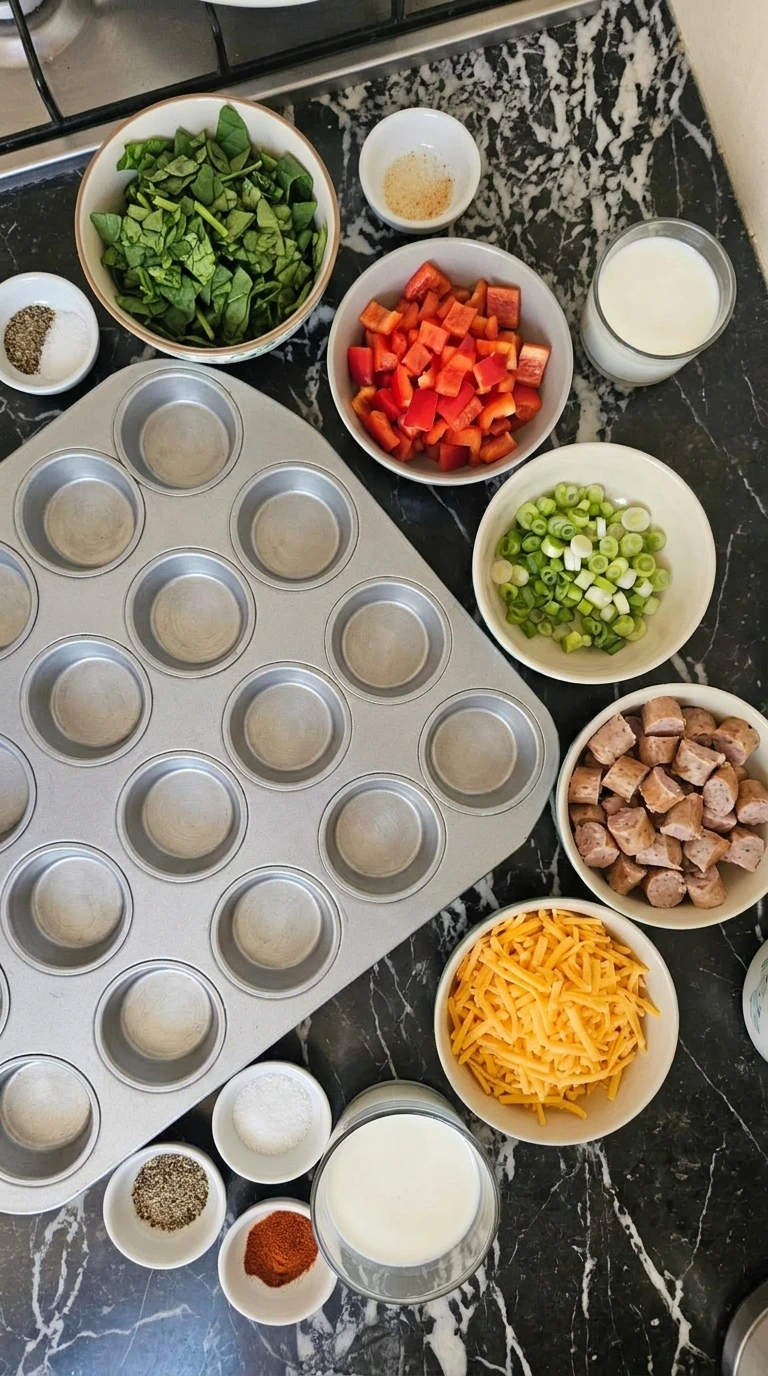
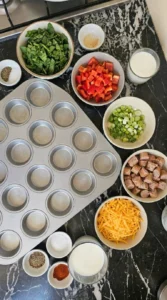
Start with everything cold from the fridge, around 40°F, so it’s easier to handle. Chop the spinach into thin ribbons, dice the pepper into small cubes, and slice the green onions into rounds. Take about 5 to 7 minutes and keep your knife moving in short, quick strokes so the pieces stay small and uneven. Cut the sausage into bite-size pieces and measure out the milk, cheese, oil, and spices into separate bowls. You’ll notice the colors pop and the board looks busy but organized. If you rush and leave big chunks, they won’t cook evenly and you’ll get dense spots in the muffins.
Tip: Keep a small bowl nearby for scraps so your workspace stays clear and easy to manage.
Step 2: Season and coat the vegetables
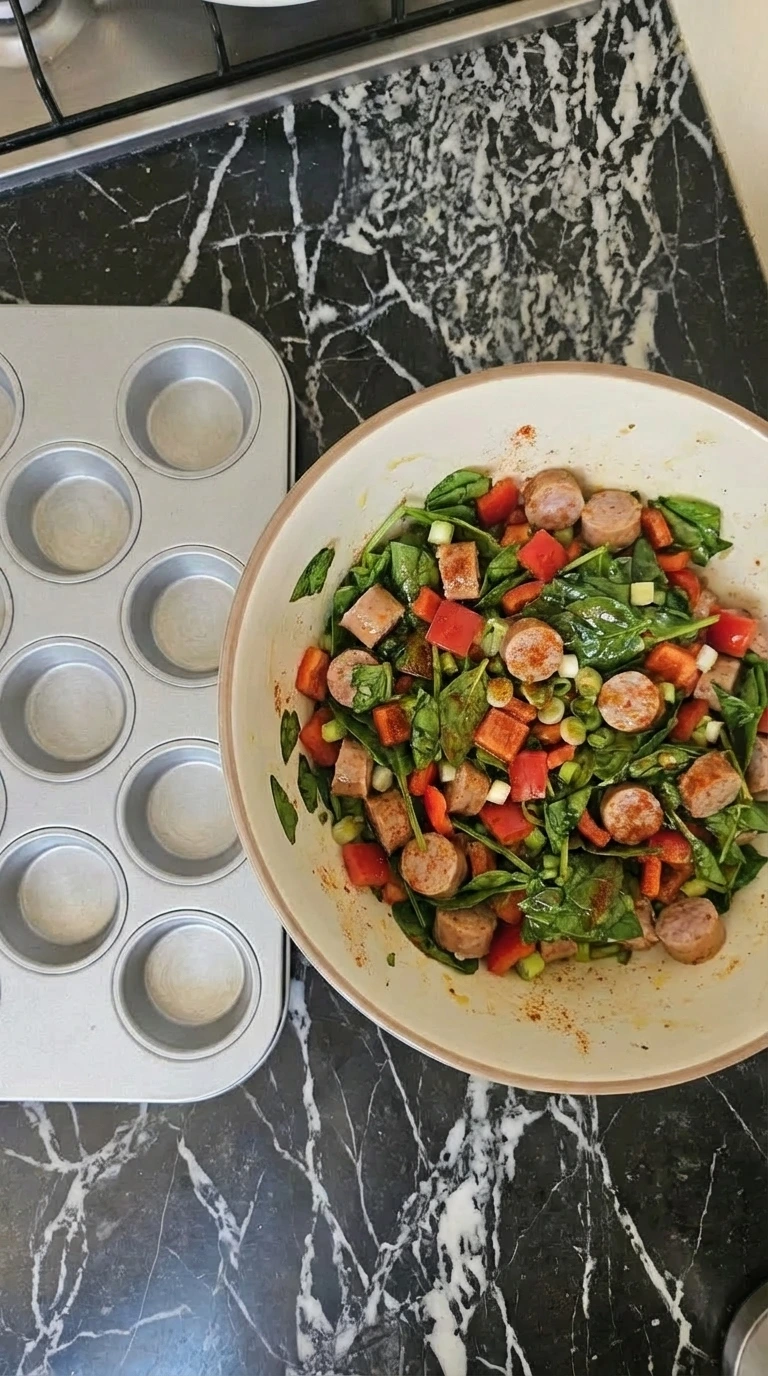
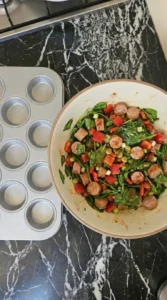
Place everything into a bowl and drizzle the olive oil over the top at room temperature, about 70°F. Sprinkle in the salt, pepper, garlic powder, and paprika. Spend about 60 to 90 seconds tossing with your hands or a spoon, lifting from the bottom and folding over. The vegetables should look lightly glossy and slightly darker, especially the spinach. You’ll smell the garlic powder start to come through. If you skip coating evenly, the seasoning will sink later and the muffins taste flat in spots.
Tip: Use your hands if you can, it coats everything faster and more evenly than a spoon.
Step 3: Let the filling sit briefly
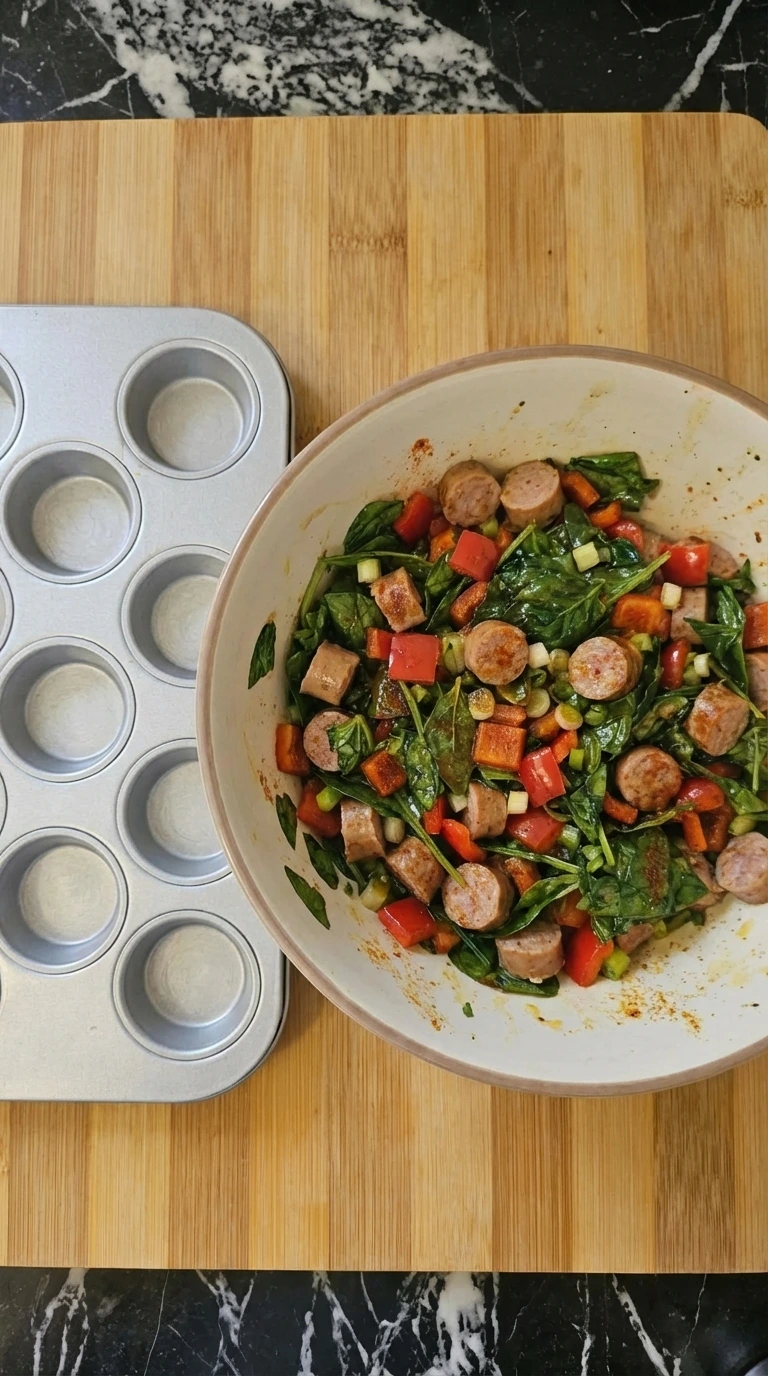
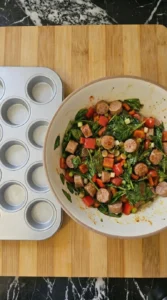
Leave the bowl on the counter at room temperature, about 70°F, for 5 minutes. Don’t stir it during this time. The salt starts pulling moisture out and softening the vegetables on its own. You’ll see the spinach relax and darken, and the onions lose their sharp stiffness. If you skip this rest, the vegetables release water in the oven and the muffins can turn soggy in the center. (I used to rush this step, and the texture was always a little off.)
Tip: If your kitchen is cold, give it closer to 7 minutes so the softening still happens.
Step 4: Whisk the eggs and milk
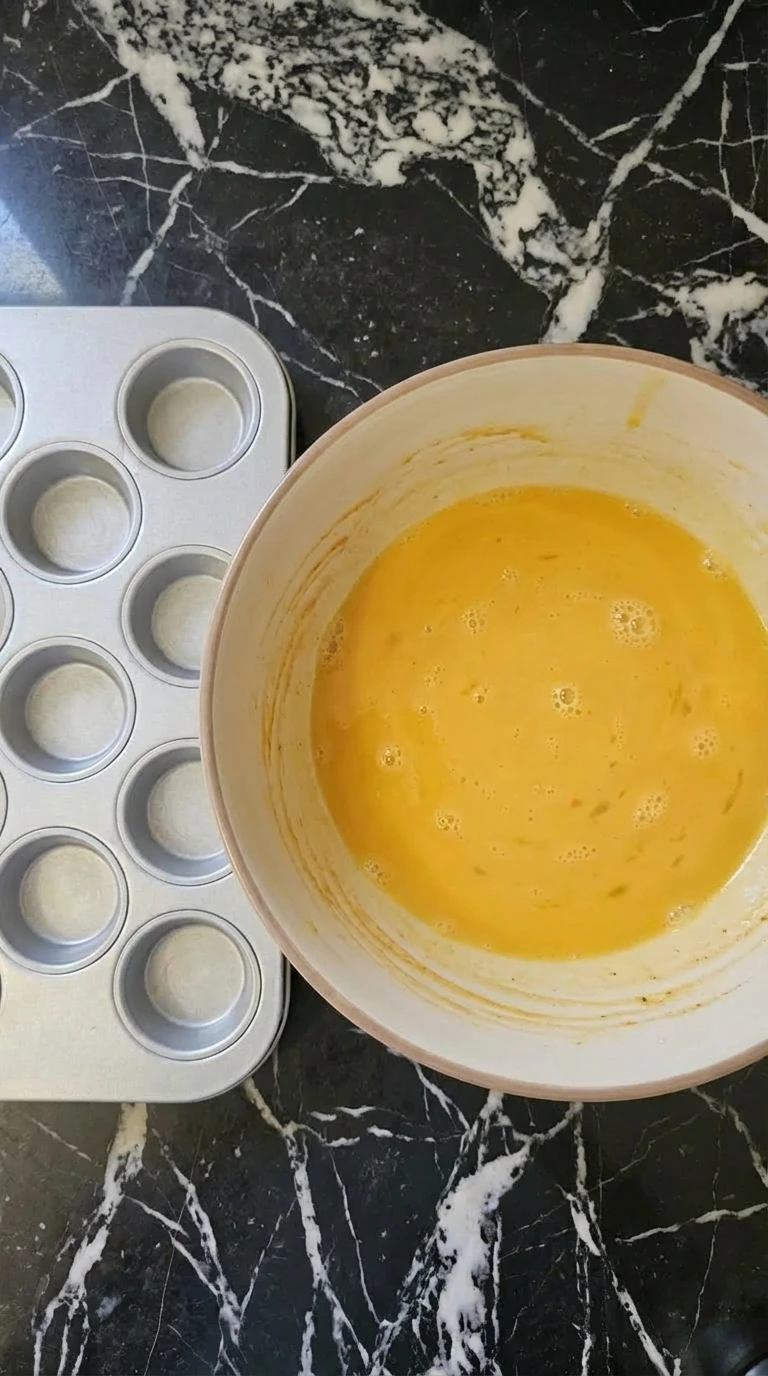
Crack the eggs into a bowl and add the milk straight from the fridge, around 38 to 40°F. Whisk for 60 to 75 seconds using a quick circular motion, then switch to a side-to-side motion to break any remaining streaks. The mixture should turn fully golden with tiny bubbles across the top. It’ll look smooth and slightly foamy. If you stop too early, you’ll see clear streaks and the muffins bake unevenly with rubbery patches.
Tip: Use a wide bowl so your whisk has room to move and incorporate air.
Step 5: Combine the eggs, filling, and cheese
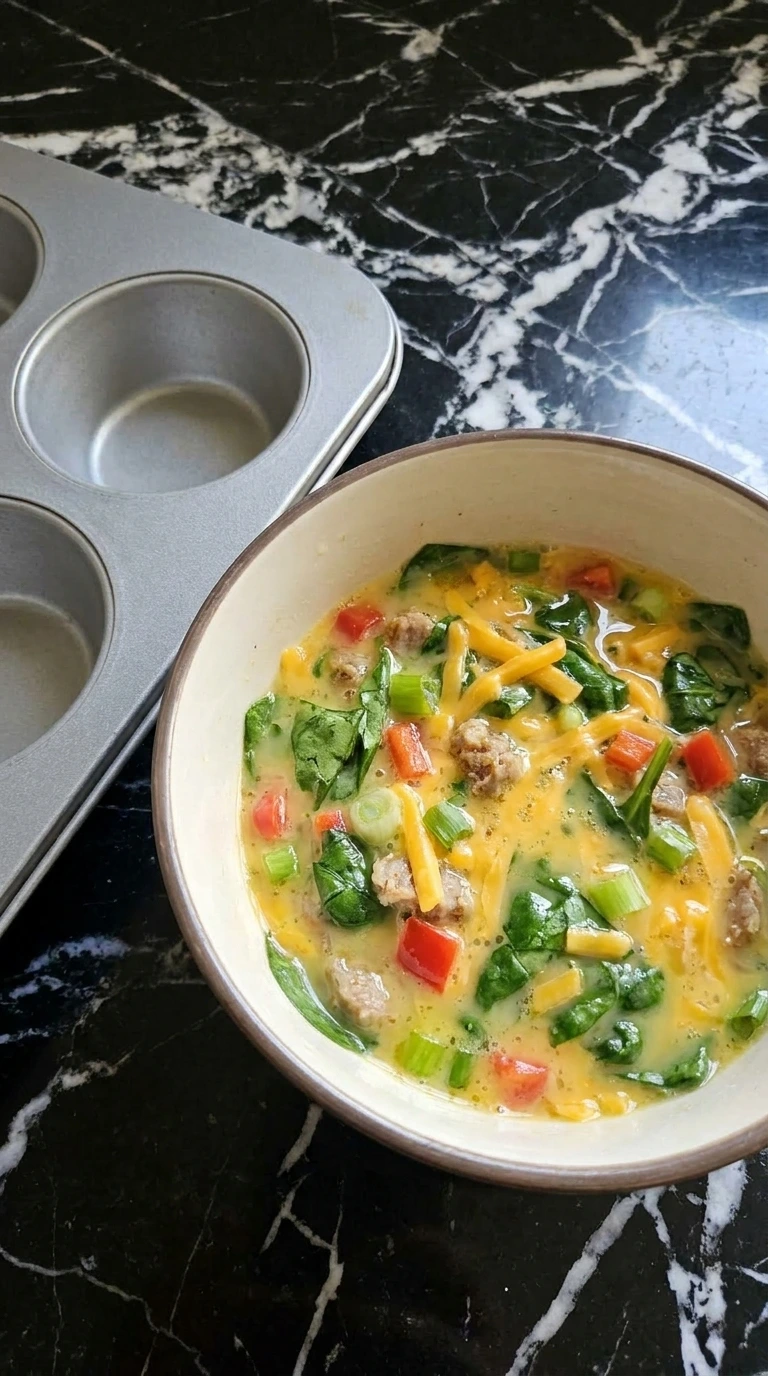
Pour the vegetable mixture into the eggs and add most of the cheese, keeping a small handful aside. Stir gently for about 30 to 45 seconds using a slow folding motion, scooping from the bottom and turning over. You’ll see the vegetables suspend throughout the eggs instead of sinking. The cheese will start to soften and cling slightly. If you overmix, everything sinks and packs together, and the muffins bake dense instead of light.
Tip: Give the bowl a quick scrape halfway through so nothing sticks at the bottom.
Step 6: Fill and arrange the muffin cups

Preheat your oven to 350°F before you start filling. Lightly oil the muffin tin, then scoop the mixture into each cup, filling about three quarters full. This should take 3 to 5 minutes. Let the vegetables fall naturally and sprinkle the reserved cheese on top. You’ll see uneven color and texture in each cup, which is what you want. If you overfill, they spill and bake into flat tops instead of lifting properly.
Tip: Stir the mixture every two scoops so each cup gets an even mix of ingredients.
Step 7: Show the muffins after cooking
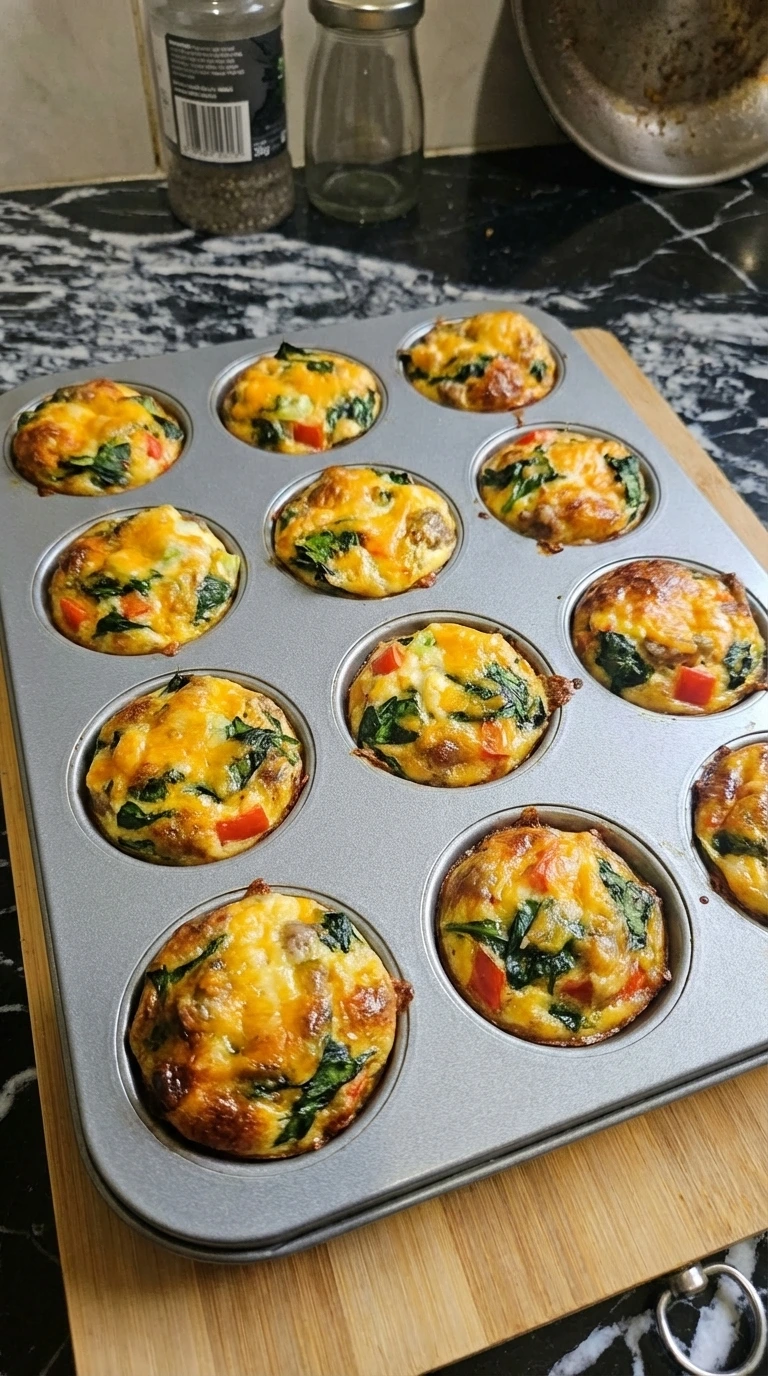
Bake at 350°F for 18 to 22 minutes, rotating the pan once at minute 12. The tops will puff and turn lightly golden, and you’ll smell the cheese browning near the end. They’re done when the centers are just set and don’t jiggle when you tap the pan. The edges will pull slightly away from the tin. If you go past 22 minutes, the bottoms start to dry out and the texture turns firm instead of tender.
Tip: Use the center muffin as your test, it cooks the slowest.
Step 8: Plate and garnish

Let the muffins rest in the tin for 5 minutes after baking at 350°F, then gently lift them out with a small spatula. Arrange them on a plate while still warm. Sprinkle chopped parsley over the top and serve right away or at room temperature. You’ll see soft centers and lightly browned edges. If you remove them too early, they can stick and tear instead of releasing cleanly.
Tip: Run a thin knife around the edges if any muffin sticks slightly.
Tips and Tricks
- Keep vegetable pieces small so every bite cooks evenly and slices clean.
- Save a bit of cheese for the top so you get better browning and texture.
- Let the filling rest so the vegetables soften before baking.
- Fill cups only three quarters full so they puff without spilling.
Substitutions & Variations
- milk: unsweetened almond milk — works well but the muffins will be slightly less rich
- cheddar cheese: dairy-free shredded cheese — melts differently and won’t brown as much
- turkey sausage: cooked bacon or ham — adds more salt so you may need to reduce seasoning slightly
- spinach: kale or zucchini — kale stays firmer and zucchini adds more moisture
- olive oil: avocado oil — neutral swap with very similar results
- red bell pepper: mushrooms — mushrooms release more water so cook them first or pair with Healthy Avocado Toast https://leagueofcooking.com/healthy-avocado-toast/ for balance
How to Store
Let the muffins cool completely before storing so condensation doesn’t build up. Keep them in an airtight container in the fridge for up to 4 days. For longer storage, freeze them in a single layer first, then transfer to a bag for up to 2 months. Reheat in the microwave or oven until warmed through.
Quick Breakfast Egg Muffins
Ingredients
- 8 large eggs
- 1/4 cup milk
- 3/4 cup shredded cheddar cheese
- 1 cup, finely chopped baby spinach
- 1/2 cup, small diced red bell pepper
- 2 , thinly sliced green onions
- 1/2 cup, chopped cooked turkey sausage
- 1 tablespoon olive oil
- 1/2 teaspoon salt
- 1/4 teaspoon black pepper
- 1/4 teaspoon garlic powder
- 1/4 teaspoon paprika
- 1 tablespoon, chopped fresh parsley
Instructions
-
Finely chop the spinach into soft ribbons, dice the red bell pepper into small uneven cubes, and slice the green onions into thin rounds. Chop the cooked turkey sausage into casual bite-size pieces so the pieces vary a little instead of looking perfectly matched. Measure the milk, cheese, olive oil, and seasonings into separate small bowls. By the end of this step, the ingredients look organized but still relaxed and homemade, with natural size variation in the vegetables and sausage.
-
Place the chopped spinach, red bell pepper, green onions, and turkey sausage into a mixing bowl. Drizzle the olive oil over the top, then sprinkle in the salt, black pepper, garlic powder, and paprika. Toss everything until the vegetables and sausage look lightly glossy and unevenly coated. The peppers look brighter, the spinach starts to relax slightly, and the seasoning clings in scattered specks instead of covering everything perfectly.
-
Leave the seasoned vegetable mixture in the bowl for a few minutes so the salt can start softening the spinach and onions. The spinach darkens slightly and slumps into the mix, while the onions lose a little of their stiffness. Nothing is fully cooked yet, but the filling looks more cohesive and less dry than before. The vegetables settle together naturally, with some pieces overlapping and some still peeking out brightly.
-
Crack the eggs into a large bowl and pour in the milk. Whisk until the yolks and whites fully blend into a smooth golden mixture with a few tiny bubbles across the surface. The liquid changes from streaky yellow-and-clear to creamy and unified. It should look glossy, light, and loose enough to pour, with no visible egg white strands left behind.

-
Add the rested vegetable mixture to the bowl of whisked eggs, then scatter in most of the shredded cheddar, saving a little for the tops. Stir gently so the vegetables float through the eggs instead of sinking into one packed corner. The mixture now looks thick with color and texture. The spinach threads, pepper cubes, and sausage pieces are suspended throughout the egg base, while the cheese begins to soften at the edges and cling in uneven strands.

-
Lightly coat the muffin cups, then spoon the egg mixture into each one. Let the vegetables and sausage fall where they naturally land, and top each cup with a loose pinch of the remaining cheddar. The cups should look intentionally imperfect, with some peppers closer to the top, some spinach tucked deeper inside, and cheese scattered unevenly across the surface. A few cups can be slightly fuller than others for a natural home-cooked look.

-
The muffin tin now holds fully set egg muffins with puffed tops and softened centers. The cheese has melted unevenly into glossy patches, the spinach has turned tender and darker, and the peppers look softened but still bright in little pops of color. Around the edges, the muffins show slight browning and gentle collapse in a few spots, which makes them look real and homemade. Some tops are more golden than others, and a few cheese strands have baked into irregular craggy spots.

-
Lift the muffins from the tin and place them onto a plate in a casual cluster rather than a perfect pattern. Scatter chopped parsley over the tops so a little lands on the plate and a little catches in the melted cheese. The final dish looks fully cooked and ready to serve, with golden-brown edges, fluffy centers, uneven melted cheese, and visible vegetables in every muffin. The tops are not identical, the browning varies naturally, and the whole plate feels warm, hearty, and homemade.

Notes
Questions I Get Asked
Yes, and that’s one of the best parts. Make them once, store them in the fridge, and reheat during the week. They hold their texture well if you don’t overbake.
You can. Bacon, ham, or chicken sausage all work. Just make sure it’s fully cooked and chopped small so it heats evenly.
That’s normal. They puff in the oven from steam and air, then settle as they cool. It actually gives them a softer texture inside.
Yes. Let them cool fully, then freeze and reheat when needed. They’re great for quick breakfasts on busy days.
Make sure the muffin tin is well oiled and let them rest for a few minutes after baking. That short rest helps them release cleanly.
Wrap Up
These egg muffins are simple, reliable, and easy to keep on hand. They bake up soft in the center with just enough golden edges to make them feel finished.
If you want to round it out, try them with a Cottage Cheese Protein Bowl https://leagueofcooking. com/cottage-cheese-protein-bowl/ for a fuller breakfast.
Egg muffins became popular because they mimic a full omelet but bake faster and store better in portioned form.