Sausage Breakfast Casserole
Cold mornings at our house usually start with someone asking what is baking, and this Sausage Breakfast Casserole became the answer after a few family tests. I watched how the layers changed when the eggs soaked into the hashbrowns instead of sitting on top. Now it’s one of the dishes we make when everyone wants a warm breakfast casserole with hashbrowns that feeds the table without stress.
I learned that small details matter here. The sausage needs enough time to brown and the egg mixture needs space to settle into the layers. If you enjoy other comforting morning recipes, you might also like our Potato Egg and Cheese Breakfast Tacos when you want a different breakfast option.
The first few batches taught me a lot. I added too much liquid once and the center stayed soft for too long. After adjusting the timing and texture, this version became a regular choice for family mornings, gatherings and make ahead plans.
Why This Recipe Works
The key is browning the sausage before mixing because the deep color creates stronger flavor in the final dish. Baking at 375°F for 35 to 40 minutes keeps the egg layer tender while the hashbrowns absorb the seasoned milk mixture.
The balance between sharp cheddar and frozen shredded hashbrowns gives this breakfast casserole its structure. For another comforting option, try our Fall Casserole for Dinner when you want a baked family meal.
Ingredients
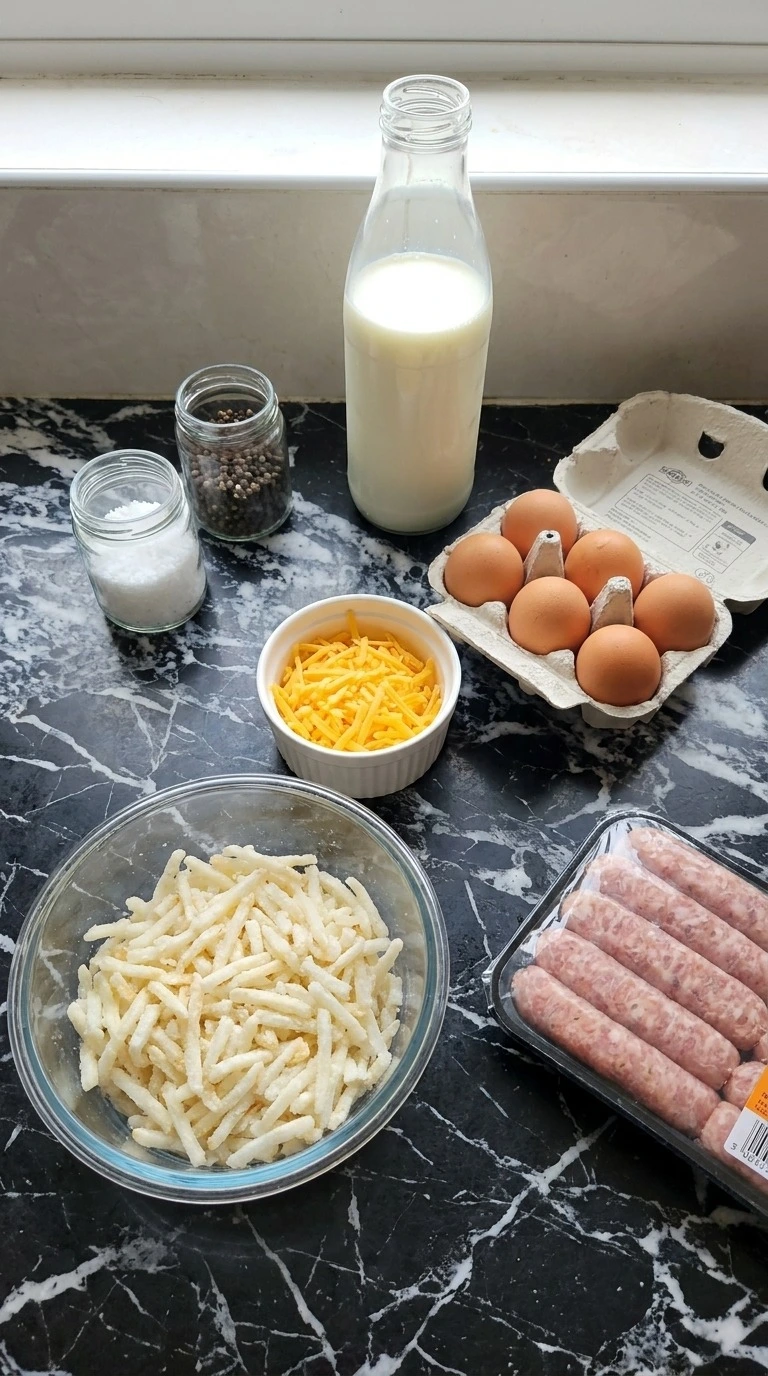
- breakfast sausage: Browned into crumbles to add savory flavor and rich texture.
- large eggs: Whisked to create the soft set structure of the casserole.
- whole milk: Added to keep the egg layer tender and smooth.
- frozen shredded hashbrowns: Mixed through the base for a hearty potato texture.
- sharp cheddar: Shredded and folded in for melted cheese flavor.
- salt: Balances the savory ingredients.
- black pepper: Adds gentle spice to the egg mixture.
Kitchen Equipment
- 9×13 ceramic baking dish: A 9×13 ceramic baking dish holds the casserole evenly and should be deep enough for the layers, while a shallow dish can dry the edges before the center sets.
- large mixing bowl: A large mixing bowl gives space for combining eggs and fillings without spills, and a 4 quart size prevents crowded mixing.
- wooden spoon: A wooden spoon breaks sausage into small crumbles during cooking and should feel sturdy enough to handle firm meat without bending.
How to Make It
Step 1: Brown the breakfast sausage
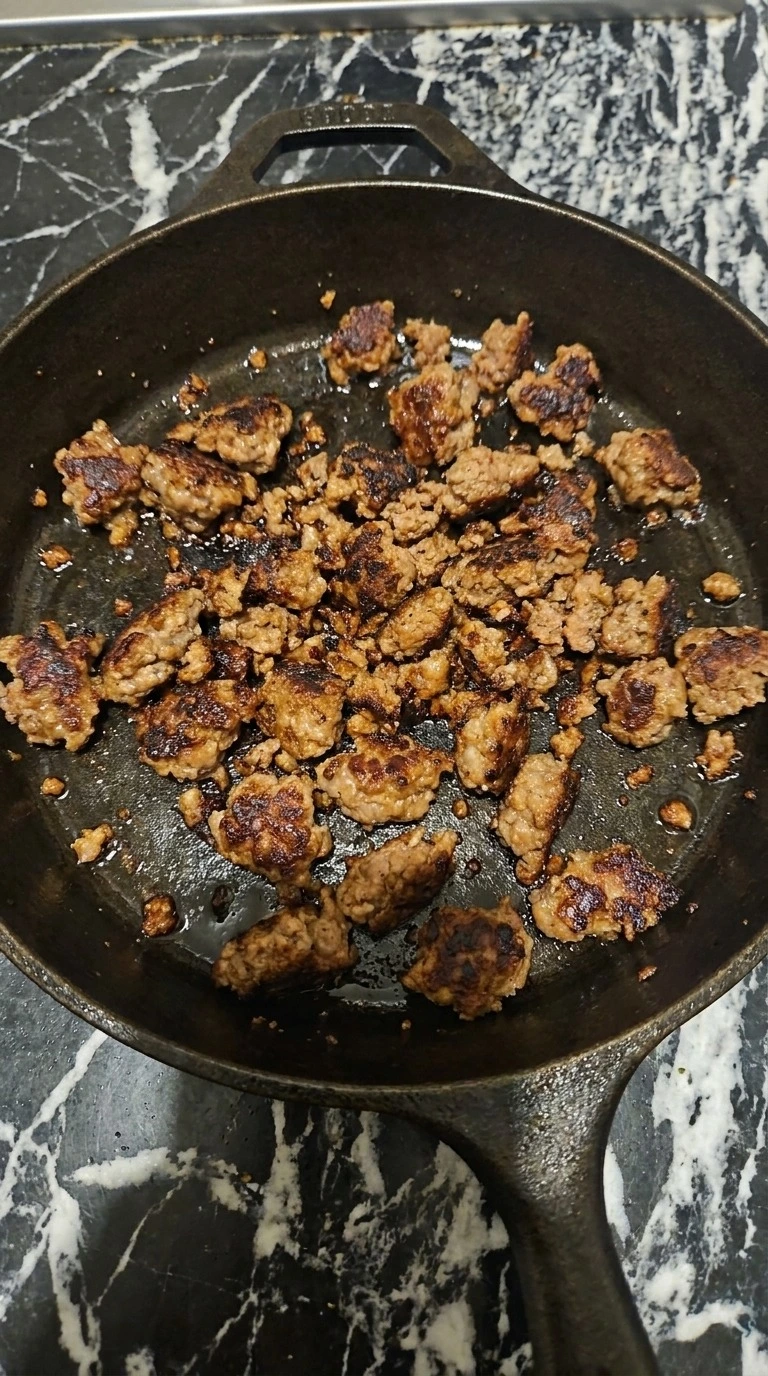
Cook 1 pound breakfast sausage at medium-high heat for 8 to 10 minutes while breaking it into uneven crumbles with a wooden spoon. Stir until the meat reaches a deep brown color and no pink remains. (I tried rushing this once and the casserole lacked flavor.
) The smell should turn savory and rich. Watch for crisp edges and a light sizzling sound before moving on. Skip this window and the sausage can stay greasy.
Keep the browned bits because they add depth later. Brown the sausage fully for better flavor.
Tip: Choose breakfast sausage with a balanced spice blend and avoid very lean versions because they can dry out during the bake.
Step 2: Mix the egg and filling base
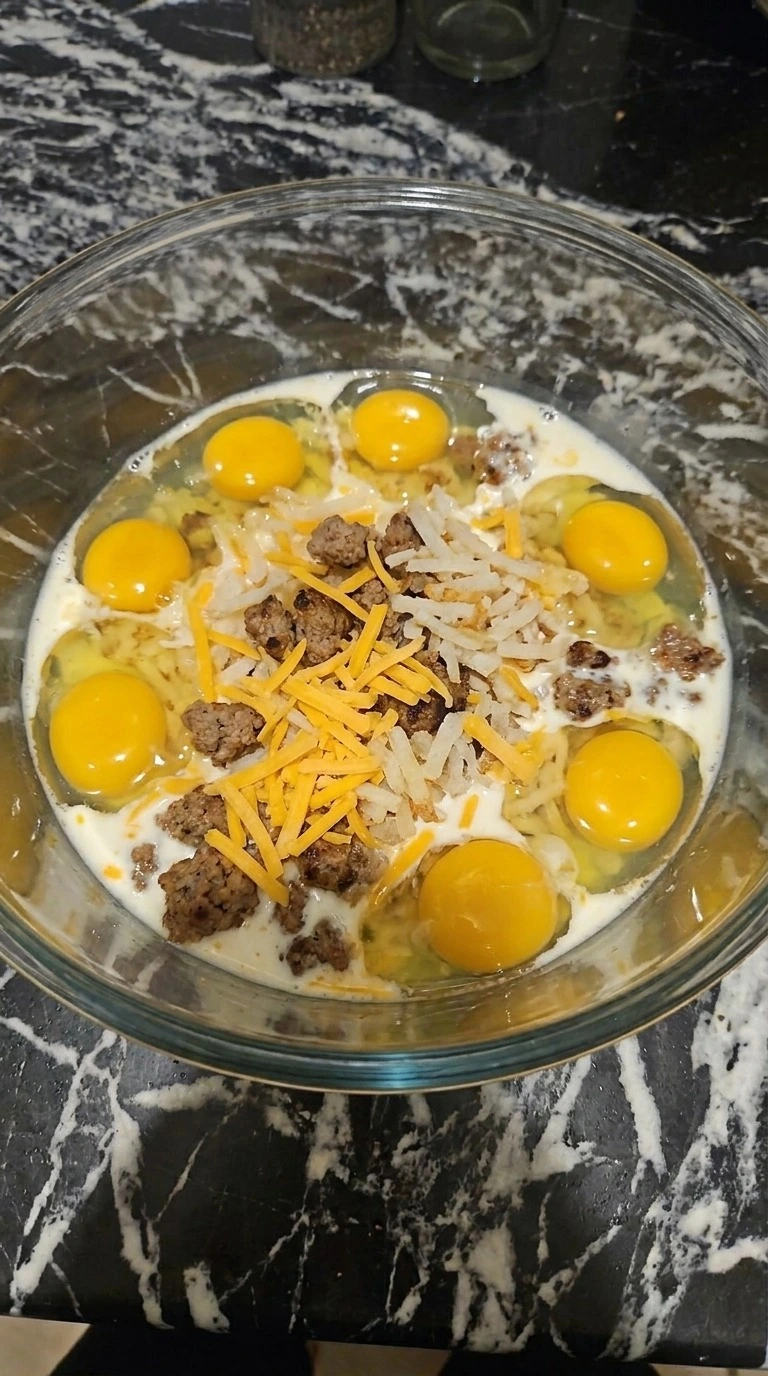
Whisk 8 large eggs with 1 cup whole milk and seasonings at room temperature for 3 to 4 minutes using a circular whisk motion. Fold in 3 cups frozen shredded hashbrowns, 1 cup shredded sharp cheddar and the browned breakfast sausage until the mixture is evenly combined. You’ll see the egg coating cling to the hashbrowns.
Miss this mixing time and dry spots can form. The mixture should look thick with scattered sausage pieces and melted cheese beginning to soften. It smells lightly savory.
Mix gently so the hashbrowns keep their shape. Even coating keeps the texture balanced.
Tip: Thaw frozen shredded hashbrowns for 20 minutes before mixing so extra ice does not water down the egg base.
Step 3: Layer the casserole mixture
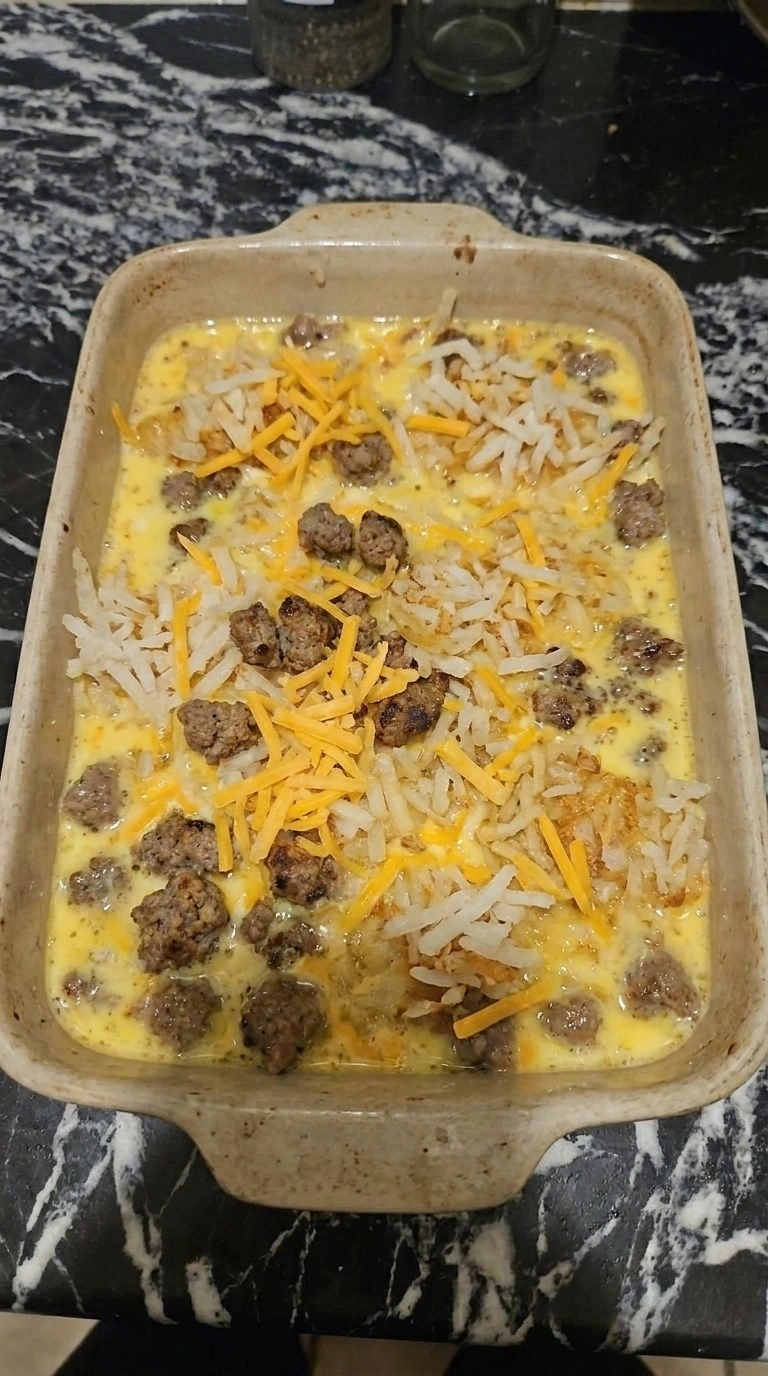
Spread the mixture into a greased 9×13 ceramic baking dish and level it gently for 2 minutes using a spatula. Keep the sausage pieces unevenly distributed instead of pressing everything flat. The surface should look moist and textured.
I used to pack the layer too tightly and the center cooked slowly. The filled dish should show visible hashbrowns, cheese and sausage across the surface. Let it rest for 10 minutes before baking.
Skip the short rest and the eggs may not settle evenly. Resting helps the egg base hold the layers.
Tip: Use a 9×13 baking dish because a deeper pan changes the cooking time and can leave the middle soft.
Step 4: Bake until the center sets
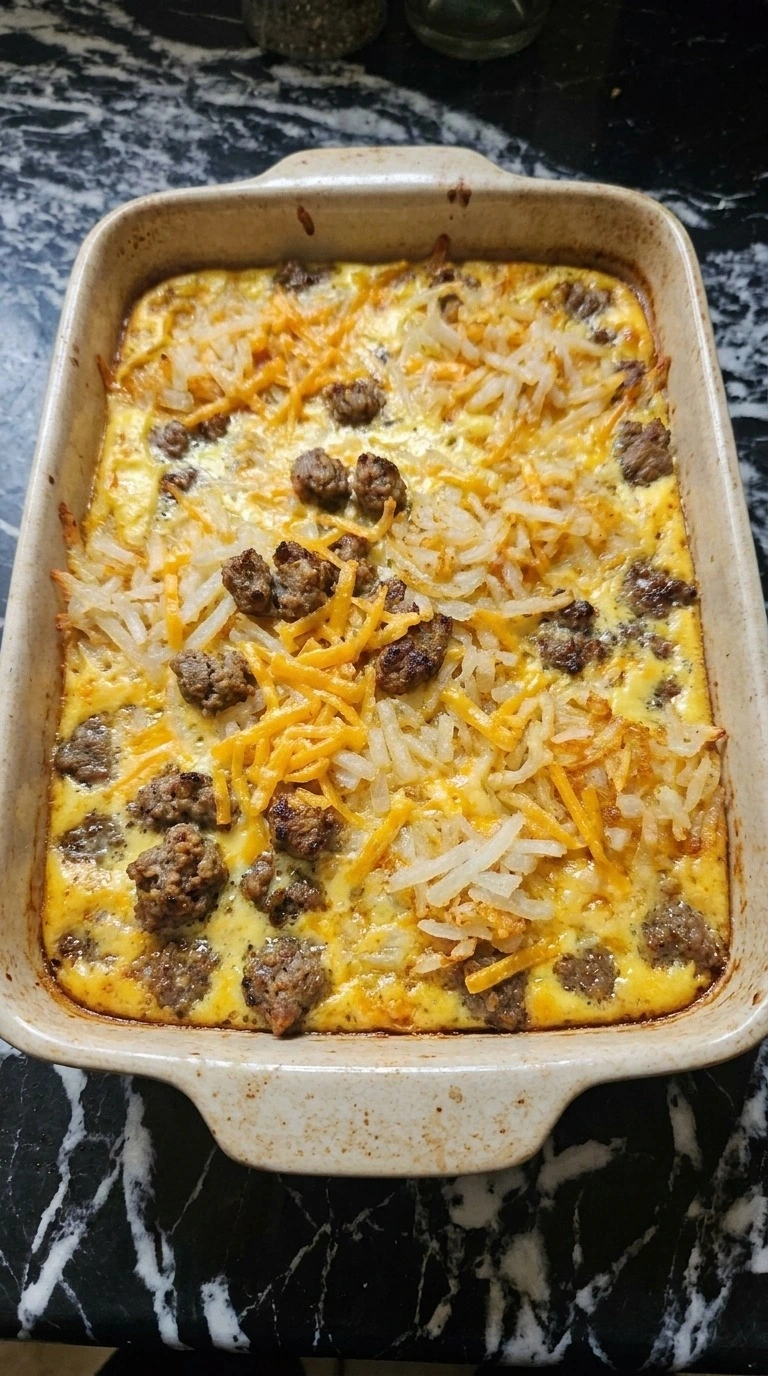
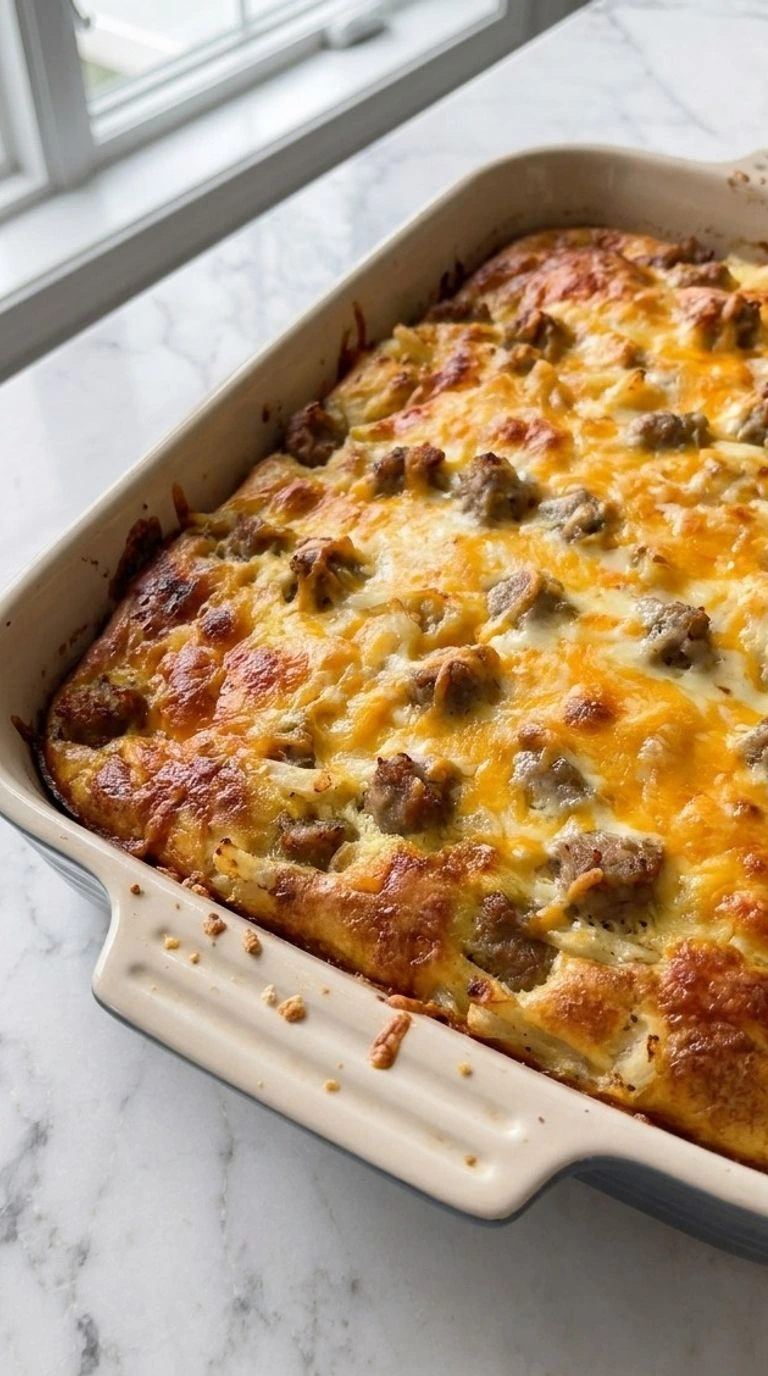
Bake the filled casserole at 375°F for 35 to 40 minutes until the center reaches 160°F internal temperature. Rotate the dish once at minute 20 for even heat and check the surface with a gentle press. The top should become golden with melted cheese spots.
Go past the baking window and the eggs become rubbery. You’ll notice a warm sausage aroma and firm edges while the center stays tender. (My first batch went into a 400°F oven and the top set before the middle cooked.
375°F fixed it. ) The steady heat lets the eggs set without drying. Bake at 375°F so the egg structure forms evenly.
Tip: Cover loosely with foil after 25 minutes if the cheese color becomes darker than you prefer.
Step 5: Slice and serve the casserole
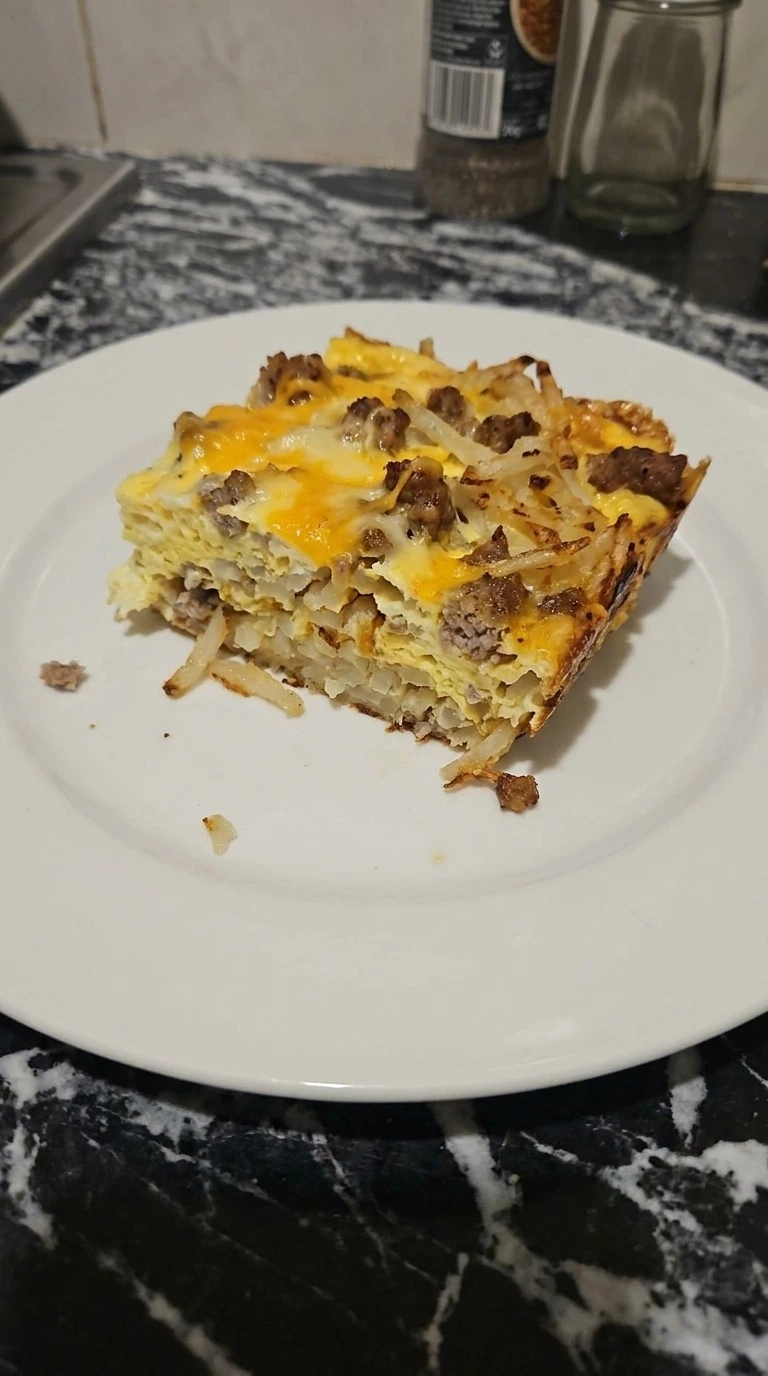
Rest the baked casserole for 10 minutes at room temperature then cut one portion with a clean downward slice. Lift the piece carefully so the layers stay together and place it on a white plate. The inside should show melted sharp cheddar, shredded hashbrowns and sausage pieces.
Skip the rest and the layers can slide apart. The serving portion should have golden edges and a soft center. Add fresh herbs if desired after slicing.
The smell stays rich and the texture remains tender. Rest 10 minutes after baking because the layers need time to set.
Tip: Slice portions about 3 inches wide for 4 servings and keep the edges intact for the best texture.
Pro Tips
- Brown the breakfast sausage for 8 to 10 minutes until deep brown because this builds a richer flavor than lightly cooked crumbles.
- Choose sharp cheddar aged for a stronger taste and shred 1 cup fresh instead of using pre-shredded cheese that may melt less smoothly.
- Grease the 9×13 baking dish evenly before adding the filling because dry corners can form during the 375°F bake.
- Mix the casserole filling no more than 3 minutes after adding hashbrowns so the potato texture stays distinct and not mushy.
- Let the casserole rest for 10 minutes after baking because cutting too early can release moisture from the egg layer.
- Use a thermometer at the center after 35 minutes and look for 160°F to confirm the eggs have set safely.
- Add chopped green onion after baking for a fresh finish and use about 2 tablespoons so the sausage flavor stays balanced.
- Add 1/2 cup cooked bacon pieces and 1 teaspoon smoked paprika for a smoky breakfast twist with extra savory flavor.
- Mix in 1 cup sautéed bell peppers and onions for a colorful vegetable version that adds sweetness and texture.
- Replace sharp cheddar with pepper jack cheese and add 1/4 teaspoon crushed red pepper for a spicy variation.
- Prepare it the night before as an overnight breakfast casserole by covering the unbaked dish and chilling it up to 12 hours before baking.
Substitutions & Variations
- sharp cheddar: pepper jack cheese or Monterey Jack cheese. Use the same 1 cup amount for a different flavor. Pepper jack adds heat while Monterey Jack makes the texture slightly softer.
- whole milk: unsweetened almond milk. Use 1 cup almond milk for a dairy free option. The casserole will be a little less rich but still sets well because the eggs provide structure.
- breakfast sausage: turkey breakfast sausage. Replace with 1 pound turkey sausage for a lighter version. It has less fat so add extra seasoning if the flavor seems mild.
- frozen shredded hashbrowns: fresh shredded russet potato. Use 3 cups fresh shredded russet potato and squeeze out moisture first. Fresh potato creates a slightly firmer texture than frozen hashbrowns.
- large eggs: egg substitute. Use an equivalent amount based on the package directions. The texture may become less fluffy because whole eggs provide a richer set.
Storage Instructions
Keep leftover Sausage Breakfast Casserole in an airtight container in the refrigerator for up to 4 days. You can freeze slices for up to 2 months by wrapping each piece tightly with plastic wrap and placing them in a freezer bag.
Reheat portions at 350°F for about 15 to 20 minutes and add a small spoon of milk before covering if the texture feels dry. Discard leftovers if you notice sour smells, unusual moisture or mold growth.
Sausage Breakfast Casserole
Ingredients
Method
- Cook 1 pound breakfast sausage at medium-high heat for 8 to 10 minutes while breaking it into uneven crumbles with a wooden spoon. Stir until the meat reaches a deep brown color and no pink remains. (I tried rushing this once and the casserole lacked flavor.) The smell should turn savory and rich. Watch for crisp edges and a light sizzling sound before moving on. Skip this window and the sausage can stay greasy. Keep the browned bits because they add depth later. Brown the sausage fully for better flavor.

- Whisk 8 large eggs with 1 cup whole milk and seasonings at room temperature for 3 to 4 minutes using a circular whisk motion. Fold in 3 cups frozen shredded hashbrowns, 1 cup shredded sharp cheddar and the browned breakfast sausage until the mixture is evenly combined. You’ll see the egg coating cling to the hashbrowns. Miss this mixing time and dry spots can form. The mixture should look thick with scattered sausage pieces and melted cheese beginning to soften. It smells lightly savory. Mix gently so the hashbrowns keep their shape. Even coating keeps the texture balanced.

- Spread the mixture into a greased 9×13 ceramic baking dish and level it gently for 2 minutes using a spatula. Keep the sausage pieces unevenly distributed instead of pressing everything flat. The surface should look moist and textured. I used to pack the layer too tightly and the center cooked slowly. The filled dish should show visible hashbrowns, cheese and sausage across the surface. Let it rest for 10 minutes before baking. Skip the short rest and the eggs may not settle evenly. Resting helps the egg base hold the layers.

- Bake the filled casserole at 375°F for 35 to 40 minutes until the center reaches 160°F internal temperature. Rotate the dish once at minute 20 for even heat and check the surface with a gentle press. The top should become golden with melted cheese spots. Go past the baking window and the eggs become rubbery. You’ll notice a warm sausage aroma and firm edges while the center stays tender. (My first batch went into a 400°F oven and the top set before the middle cooked. 375°F fixed it.) The steady heat lets the eggs set without drying. Bake at 375°F so the egg structure forms evenly.

- Rest the baked casserole for 10 minutes at room temperature then cut one portion with a clean downward slice. Lift the piece carefully so the layers stay together and place it on a white plate. The inside should show melted sharp cheddar, shredded hashbrowns and sausage pieces. Skip the rest and the layers can slide apart. The serving portion should have golden edges and a soft center. Add fresh herbs if desired after slicing. The smell stays rich and the texture remains tender. Rest 10 minutes after baking because the layers need time to set.

Notes
Frequently Asked Questions
Yes, you can assemble the dish up to 12 hours before baking and keep it covered in the refrigerator. Let it sit for 20 minutes before placing it in a 375°F oven so the cold dish does not slow the center from setting evenly.
Store leftovers in a sealed container in the refrigerator for up to 4 days. Reheat individual slices at 350°F for about 15 minutes until the center reaches a warm temperature and the cheese softens again.
Yes, most ingredients are naturally gluten free, but check the sausage label before buying. Use certified gluten free breakfast sausage and keep the same 375°F baking time because the egg structure stays unchanged.
Extra moisture usually comes from wet hashbrowns or too much milk. Squeeze thawed potatoes well and bake for an additional 5 to 10 minutes at 375°F if the center still looks loose.
Yes, double the ingredients and use two 9×13 baking dishes instead of making one deeper casserole. Bake both dishes at 375°F and check the centers around 35 to 45 minutes.
Freeze cooled portions wrapped tightly for up to 2 months. Thaw overnight in the refrigerator and reheat at 350°F for 20 minutes until the inside is hot and the texture returns.
Final Thoughts
Making this Sausage Breakfast Casserole on a quiet weekend morning with coffee nearby feels like one of those simple family traditions that stays around. The little trick of resting the casserole before slicing is what keeps the layers together and makes this version special.
Try it and share your results because I love seeing how people make breakfast recipes their own. You can also explore our Grilled Sausage and Potato Egg and Cheese Breakfast Tacos for more morning ideas.
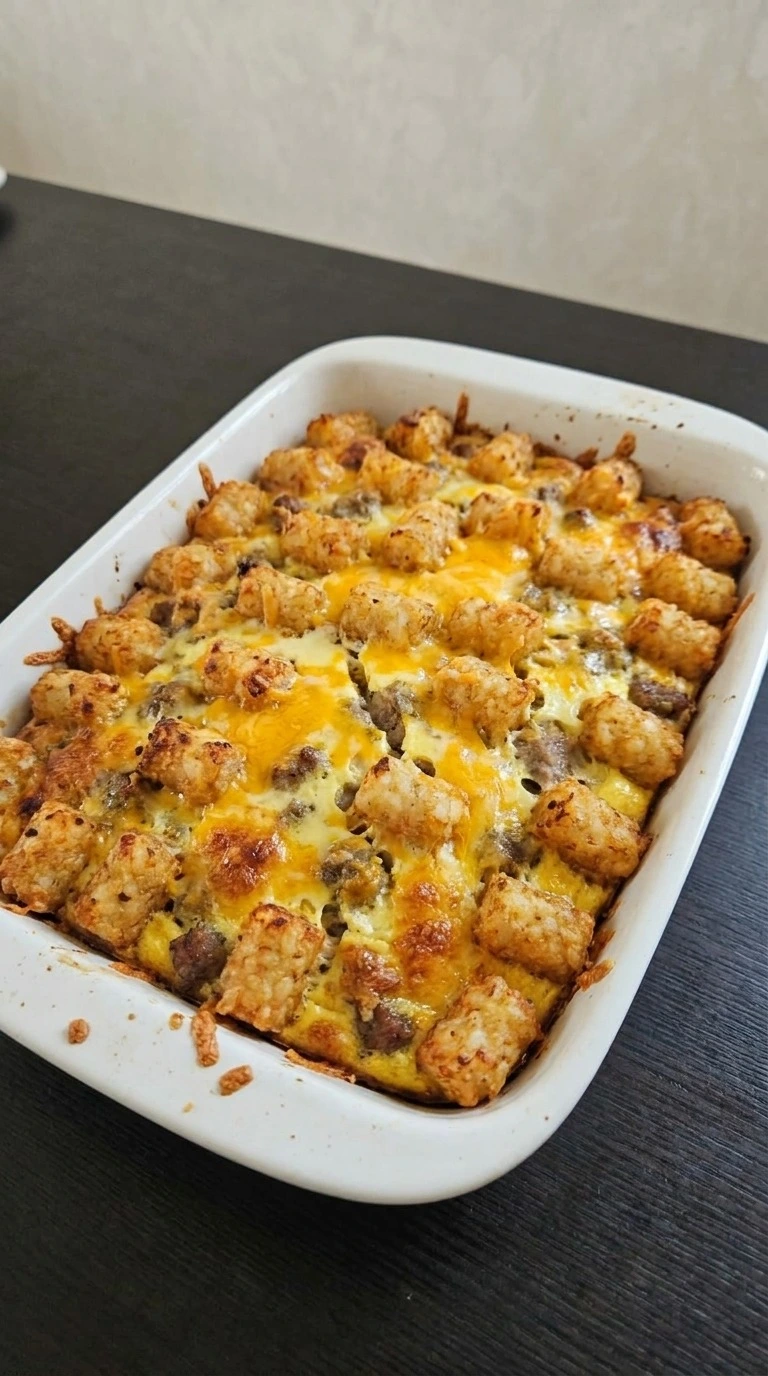
The same batch covers tater tot breakfast casserole, hashbrown breakfast casserole and overnight breakfast casserole without a single change.
Breakfast casseroles became popular because they let families combine simple pantry ingredients into one shared dish. The overnight style grew as a way to save morning time before gatherings and holidays.