Croissant Breakfast Casserole
During a busy winter weekend, I first made this Croissant Breakfast Casserole when the fridge was almost empty and breakfast needed to feed everyone. The croissants were a last-minute choice, but they soaked up the egg mixture so well that I kept the recipe. Since then it’s become my favorite when I want a warm breakfast without standing in the kitchen all morning.
My family loves how soft the center stays while the top gets a light golden finish. It reminds me of classic breakfast casserole with hashbrowns, but the flaky croissant layers give it a richer texture. If you enjoy simple morning dishes, you might also like our Potato Egg and Cheese Breakfast Tacos for another filling option.

This version works for slow weekend mornings and busy holiday plans because you can prepare parts ahead. It’s also a great choice beside other brunch recipes like an overnight breakfast casserole when you need something comforting and easy to share.
Why This Recipe Works
The croissants act like a sponge because their flaky layers hold the egg custard without turning completely dense. Baking at 375°F for 30 to 35 minutes lets the center set while the sharp cheddar melts into the gaps.
I tested this timing with different breads and the butter croissant gave the best texture. For another brunch idea, try our Whipped Ricotta Toast with Berry Jam Recipe | How to Make Blackberry Toast, Blackberry Ricotta Toast, Breakfast Foods when you want a lighter option.
Ingredients

- butter croissant: Torn into uneven bite-size pieces to create flaky layers that absorb the egg mixture.
- large eggs: Whisked into the custard base to bind the casserole and create a soft texture.
- whole milk: Added to the eggs for a rich custard that soaks into the croissant layers.
- sharp cheddar: Shredded and added on top for melted flavor and a golden finish.
- salt: Mixed into the custard to balance the rich ingredients.
- black pepper: Added for gentle heat and savory depth.
- fresh thyme: Added to bring a light herbal note to the egg mixture.
Kitchen Equipment
- 9×13 ceramic baking dish: A 9×13 ceramic baking dish holds the casserole layers evenly and should be deep enough for the egg mixture so a shallow pan doesn’t dry the edges.
- large clear glass mixing bowl: A large clear glass mixing bowl lets you combine the custard smoothly and should hold at least 3 quarts so the eggs don’t spill while whisking.
- sharp knife: A sharp knife creates cleaner portions after resting and should have a sturdy blade because a dull knife tears the soft layers.
How to Make It
Step 1: Tear the croissants and arrange the base
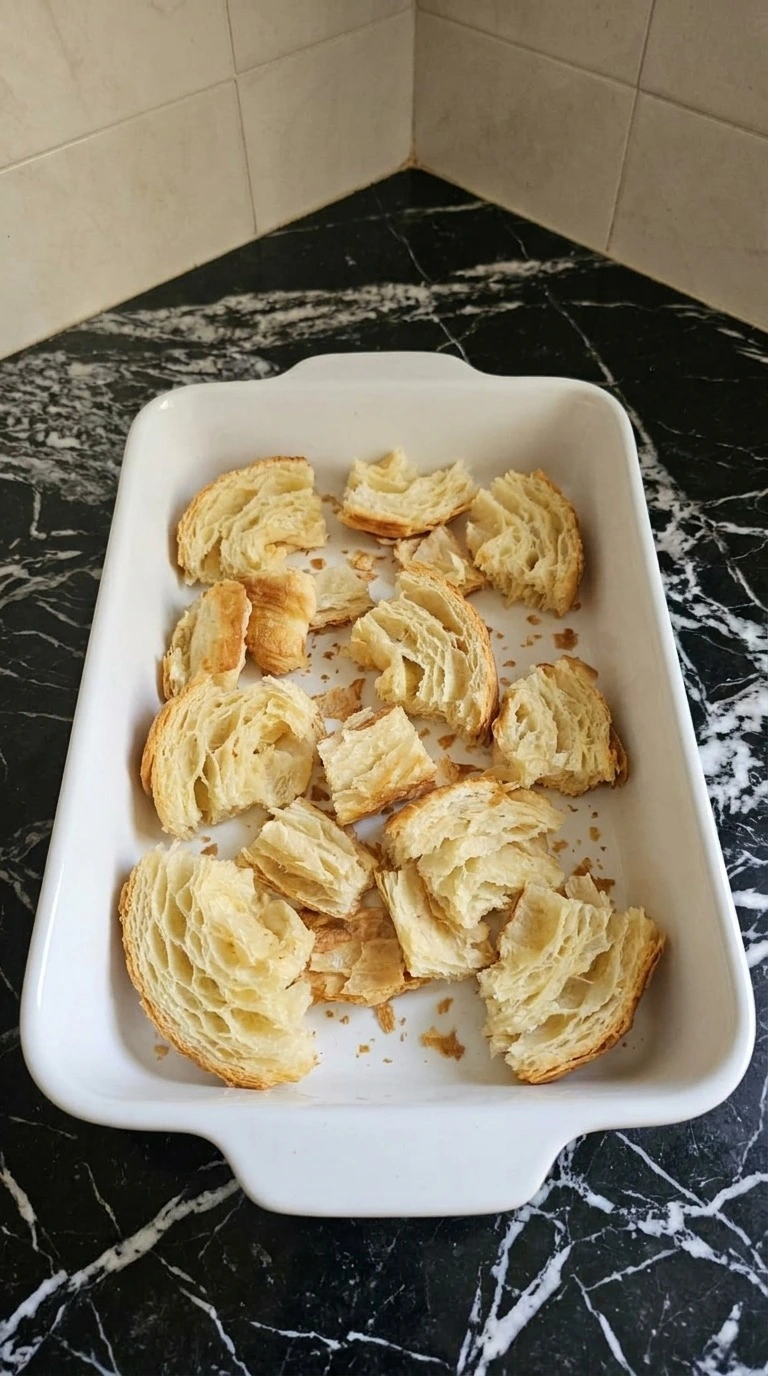
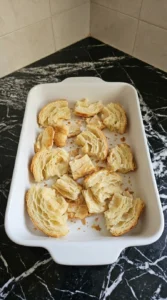
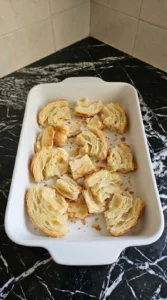
Tear 6 large butter croissants into uneven bite-size pieces and spread them in a 9×13 ceramic baking dish. Keep the pieces loose with natural gaps. Work at 375°F later and allow 10 minutes for the torn pieces to absorb flavor after the egg mixture is added.
(I tried smaller pieces first and they turned soggy faster. Larger chunks keep the layers better. ) You’ll see flaky layers with soft centers and crisp edges.
The smell should stay buttery and fresh. Miss this size balance and the casserole loses its texture. Even pieces soak evenly because the croissant layers need room to hold the custard.
Tip: Use day-old croissants when possible because they absorb more liquid and stay structured during the 30-minute bake.
Step 2: Whisk the egg custard mixture
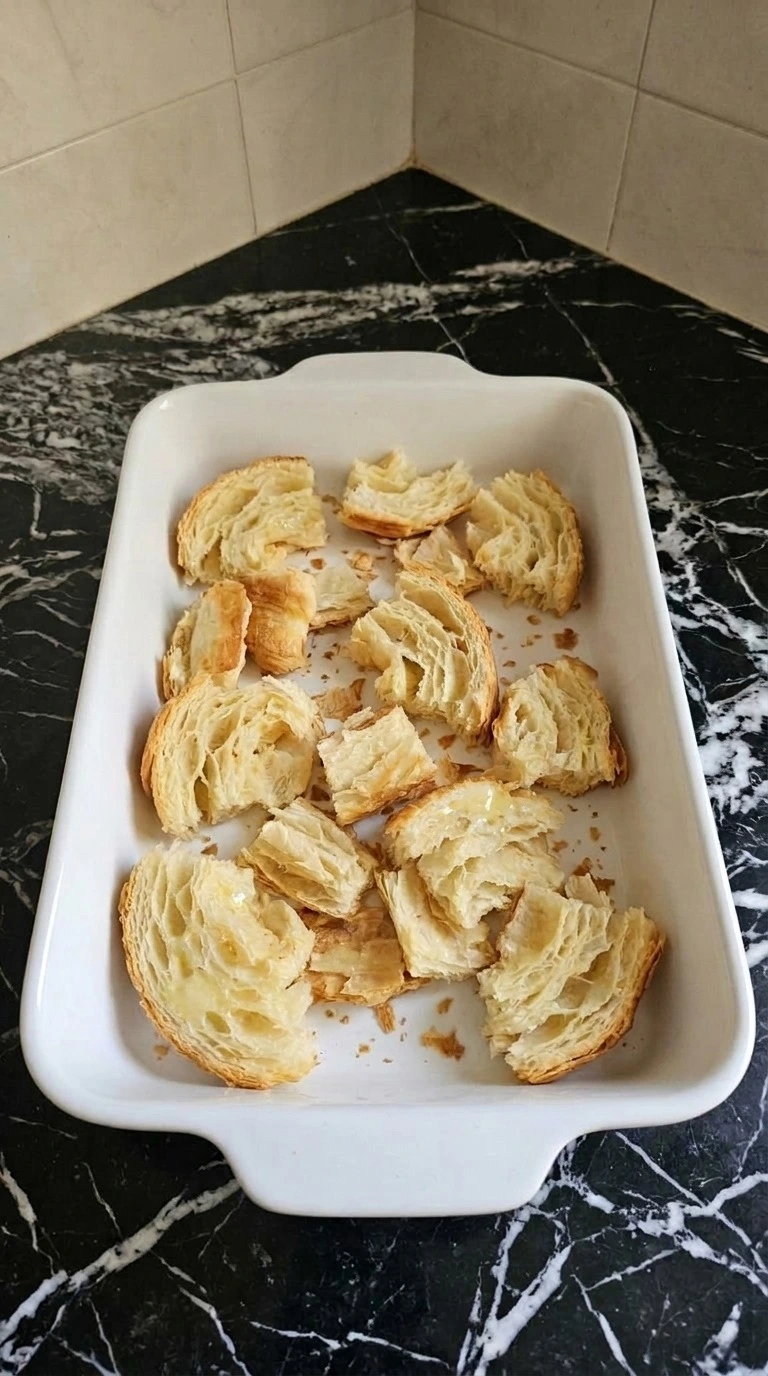
Whisk 8 large eggs with 2 cups whole milk, 1 teaspoon salt pepper and thyme in a large clear glass mixing bowl for 2 to 3 minutes. Pour the mixture slowly over the croissant pieces and press gently with a spatula so the liquid reaches the lower layers. Let it rest for 15 minutes before baking at 375°F.
The croissants should look soaked but not flooded. You’ll notice the top becomes soft and glossy while the herbs smell fresh. Skip the rest and dry spots can remain inside.
Resting gives the egg mixture time to settle through the flaky layers.
Tip: Pour the custard in two passes instead of one so the lower croissant pieces don’t stay dry.
Step 3: Add cheese and bake the casserole
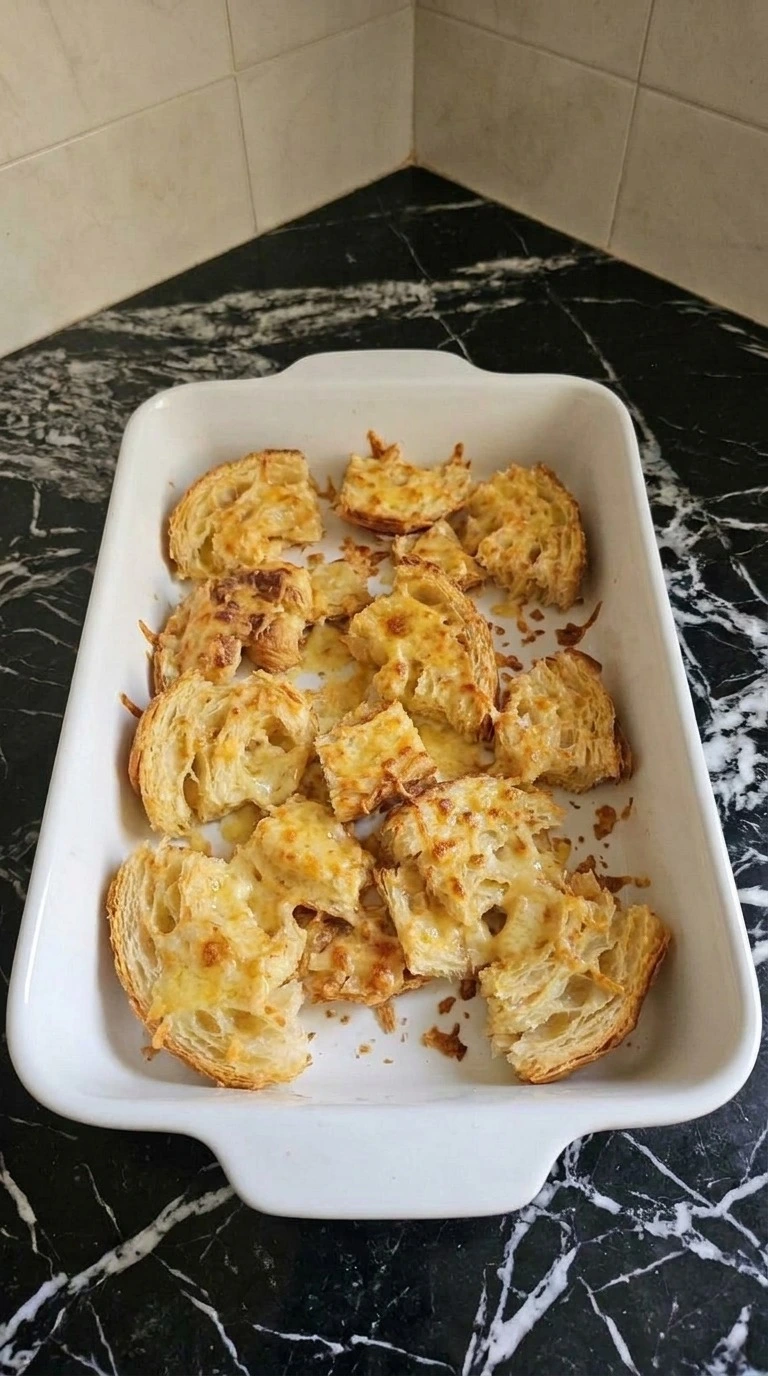
Scatter 1 1/2 cups shredded sharp cheddar evenly over the soaked croissant mixture and bake at 375°F for 30 to 35 minutes. Cover loosely for the first 20 minutes then uncover so the top can brown. Use a gentle folding motion with a spatula before adding cheese to keep the layers connected.
The surface turns golden and the cheese melts into small pools between the croissant pieces. You’ll smell the toasted butter notes when it nears the finish. Go past 35 minutes and the edges can become dry.
Baking at 375°F lets the center set before the top overbrowns.
Tip: Check the center at minute 30 because ceramic dishes hold heat and can continue cooking after removal.
Step 4: Rest and serve a warm portion
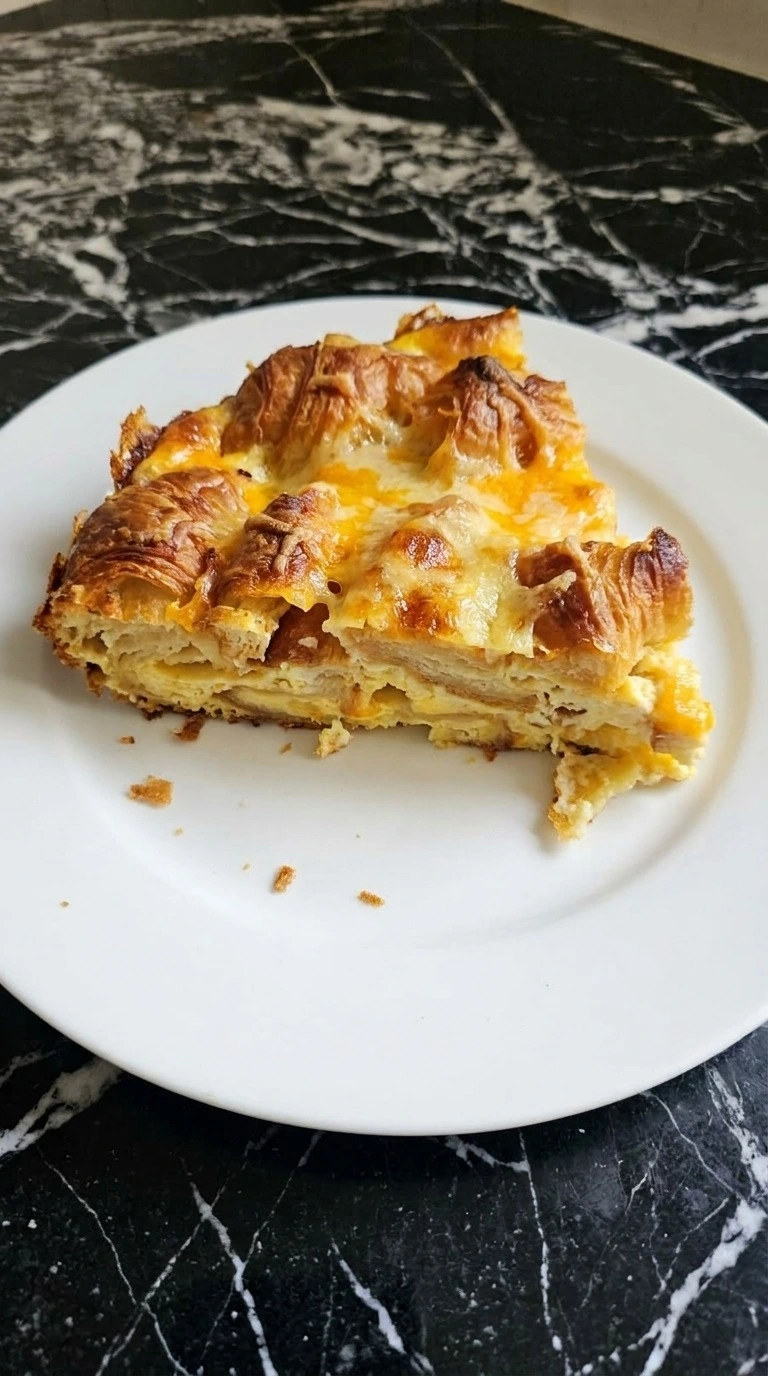
Remove the baked casserole from the oven and rest it for 10 minutes at room temperature before slicing. Cut through the uneven layers with a sharp knife and transfer one portion to a white plate. Keep the pieces natural rather than forcing clean squares because the flaky croissants separate differently.
The inside should show soft egg layers with melted cheese and browned croissant edges. You’ll hear a light crust crack when the top is cut. Skip this rest and the filling may slide apart.
Resting 10 minutes helps the egg custard hold its structure.
Tip: Add chopped fresh parsley after slicing if you want a brighter finish without changing the bake.
Pro Tips
- Choose butter croissants that are one day old because their drier layers absorb the custard better during the 15 minute soak time.
- Whisk the eggs for 2 to 3 minutes until the mixture looks smooth because a fully blended custard gives the Croissant Breakfast Casserole a softer texture.
- Bake in a 9×13 ceramic baking dish when possible because the thick sides hold steady heat and help prevent dry edges during the 30 minute bake.
- Keep the shredded sharp cheddar cold until the final layering step so it stays separate and creates melted pockets after 375°F baking.
- Avoid cutting the casserole before a 10 minute rest because the egg layers need time to firm and keep each serving intact.
- Add 1/2 teaspoon smoked paprika with the thyme for a deeper savory note if you want a warmer.
- For meal prep, assemble the dish up to 12 hours ahead and cover it tightly before baking the next morning.
- Use day-old croissants from a local bakery when available because fresh soft croissants can absorb too much liquid and lose their flaky texture.
- Add 1 cup cooked crumbled breakfast sausage before baking for a heartier version with extra savory flavor and more protein.
- Mix 1 cup sautéed spinach with the egg custard for a vegetable version that adds color and a softer texture.
- Replace sharp cheddar with pepper jack and add 1/2 teaspoon crushed red pepper for a mild spicy twist.
- Create a holiday brunch variation by adding 1/2 cup diced roasted red peppers and fresh parsley before the casserole goes into the oven.
Substitutions & Variations
- whole milk: unsweetened almond milk. Use the same 2 cups amount for a lighter result. The custard becomes slightly less rich and the croissant layers may feel a little softer.
- sharp cheddar: shredded mozzarella. Replace with 1 1/2 cups shredded mozzarella for a milder flavor. It melts smoothly but gives less sharp taste and color than cheddar.
- butter croissant: gluten-free bread cubes. Use about 6 cups of gluten-free bread cubes if needed. The texture changes because the flaky layers are replaced with a firmer baked crumb.
- large eggs: egg substitute. Use an equivalent amount based on the package directions. The casserole can set, but the custard will usually be less rich than one made with fresh eggs.
- fresh thyme: dried thyme. Use 1/3 teaspoon dried thyme instead of 1 teaspoon fresh. The flavor is stronger and slightly earthier, so add it carefully.
Storage Instructions
Keep leftover Croissant Breakfast Casserole in an airtight glass container in the refrigerator for up to 3 days. You can freeze portions for up to 2 months by wrapping them tightly in plastic wrap and placing them in a freezer bag.
Reheat refrigerated slices at 350°F for 12 to 15 minutes and add a small splash of milk if the center feels dry. Discard portions with sour smells, unusual moisture, or mold spots.
Croissant Breakfast Casserole
Ingredients
Method
- Tear 6 large butter croissants into uneven bite-size pieces and spread them in a 9×13 ceramic baking dish. Keep the pieces loose with natural gaps. Work at 375°F later and allow 10 minutes for the torn pieces to absorb flavor after the egg mixture is added. (I tried smaller pieces first and they turned soggy faster. Larger chunks keep the layers better.) You’ll see flaky layers with soft centers and crisp edges. The smell should stay buttery and fresh. Miss this size balance and the casserole loses its texture. Even pieces soak evenly because the croissant layers need room to hold the custard.
- Whisk 8 large eggs with 2 cups whole milk, 1 teaspoon salt pepper and thyme in a large clear glass mixing bowl for 2 to 3 minutes. Pour the mixture slowly over the croissant pieces and press gently with a spatula so the liquid reaches the lower layers. Let it rest for 15 minutes before baking at 375°F. The croissants should look soaked but not flooded. You’ll notice the top becomes soft and glossy while the herbs smell fresh. Skip the rest and dry spots can remain inside. Resting gives the egg mixture time to settle through the flaky layers.
- Scatter 1 1/2 cups shredded sharp cheddar evenly over the soaked croissant mixture and bake at 375°F for 30 to 35 minutes. Cover loosely for the first 20 minutes then uncover so the top can brown. Use a gentle folding motion with a spatula before adding cheese to keep the layers connected. The surface turns golden and the cheese melts into small pools between the croissant pieces. You’ll smell the toasted butter notes when it nears the finish. Go past 35 minutes and the edges can become dry. Baking at 375°F lets the center set before the top overbrowns.

- Remove the baked casserole from the oven and rest it for 10 minutes at room temperature before slicing. Cut through the uneven layers with a sharp knife and transfer one portion to a white plate. Keep the pieces natural rather than forcing clean squares because the flaky croissants separate differently. The inside should show soft egg layers with melted cheese and browned croissant edges. You’ll hear a light crust crack when the top is cut. Skip this rest and the filling may slide apart. Resting 10 minutes helps the egg custard hold its structure.

Notes
Frequently Asked Questions
Yes, you can assemble the casserole up to 12 hours ahead and keep it covered in the refrigerator. Let it sit for 20 minutes before baking at 375°F so the ceramic dish does not go from cold to hot too quickly.
Store leftovers in an airtight container for up to 3 days. Reheat individual portions at 350°F for 12 to 15 minutes until the center is warm and the cheese softens again.
You can use unsweetened almond milk and dairy-free shredded cheese for a dairy-free version. The texture will be slightly less creamy, so bake for the same 30 to 35 minutes and check that the center is set.
A watery result usually comes from too much liquid or not enough resting time before baking. Let the croissant pieces absorb the custard for 15 minutes and bake until the center no longer looks loose.
Yes, double the ingredients and use two 9×13 baking dishes instead of making one deeper casserole. Keep the oven at 375°F and check each dish around the 30 minute mark.
Serve slices with fresh fruit, yogurt, or a simple green salad for balance. It pairs well with other morning recipes and works for a family brunch or holiday gathering.
Final Thoughts
After making this Croissant Breakfast Casserole for many slow mornings, I keep coming back to the flaky layers and rich egg filling. It saves me when I need a breakfast casserole that feels special without extra work.
If you enjoy this recipe, explore our Patty Pan Squash Breakfast Tacos and Potato Egg and Cheese Breakfast Tacos for more morning ideas. Try this hashbrown breakfast casserole style meal too and share your version with me.
The same batch covers tater tot breakfast casserole and overnight breakfast casserole without a single change.
Croissants were originally inspired by Austrian kipferl pastries before becoming a famous French bakery favorite. Their layered dough makes them especially good at soaking up custard without losing all of their flaky character.