Salmon and Quinoa Bowls
A warm bowl of quinoa with tender salmon and sweet roasted carrots is exactly the kind of dinner I want when it’s cold outside. These Salmon and Quinoa Bowls bring together flaky fish and fluffy grains with fresh spinach and a creamy lemon tahini dressing. Spoon everything into a bowl and dinner is sorted! Hi! Meet your new favorite weeknight dinner.
We’re talking about easy salmon and quinoa bowls with smoky roasted salmon and golden carrots that get a little sweet around the edges. It’s filling without feeling heavy. And that lemon dressing? So good. If you love roasted vegetables as much as I do, you’ll also want to try these Maple Glazed Carrots alongside another dinner.
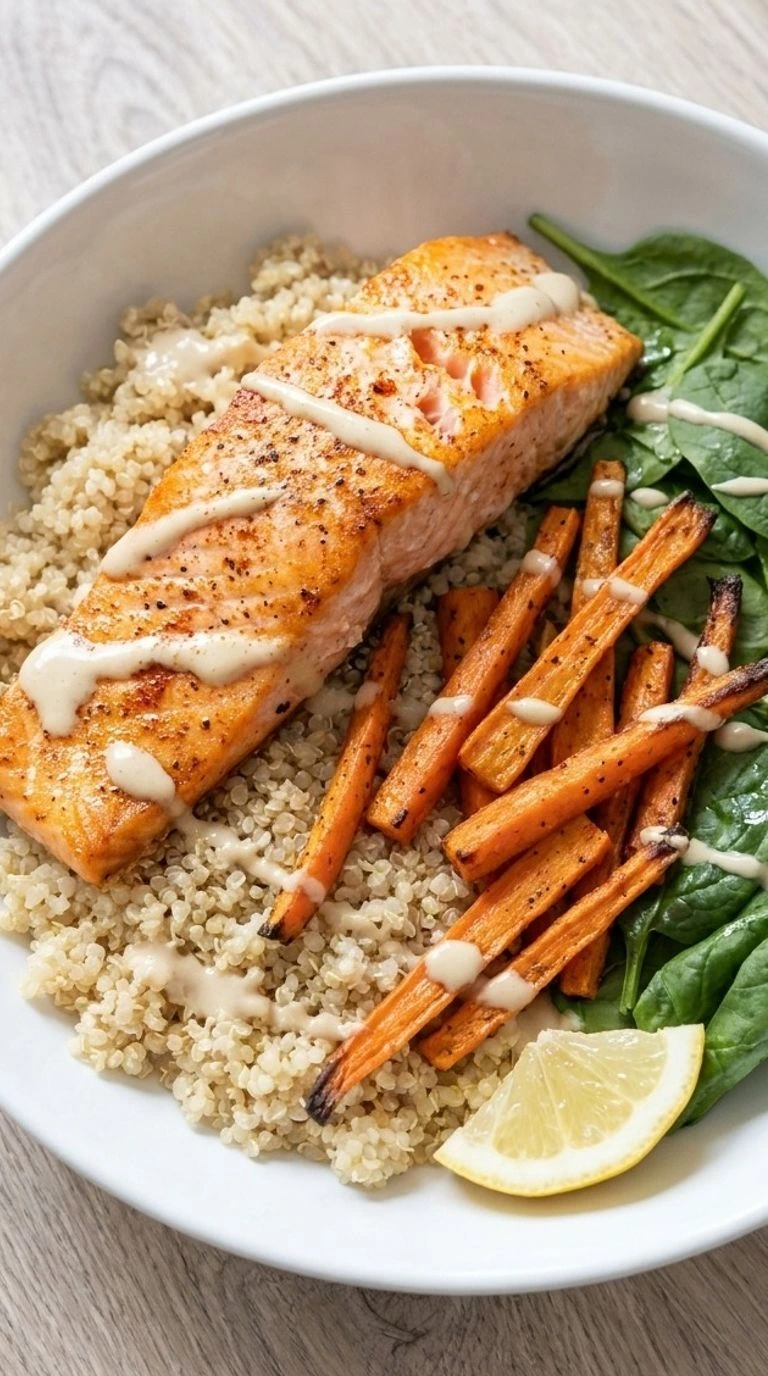
That’s right. We’re letting a few simple ingredients do most of the work here because quinoa soaks up the bright dressing while the salmon stays soft and flaky. Nothing fancy. Just a warm salmon quinoa bowl with plenty of color and enough flavor to make you look forward to the leftovers.
Why This Recipe Works
The trick with Salmon and Quinoa Bowls is giving the carrots a 12-minute head start at 425°F before adding the fish. Carrots need more heat time than salmon, so this keeps the fillets from drying out while the vegetables turn sweet and golden.
And rinsing the quinoa first helps the grains taste clean instead of bitter. The lemon juice cuts through the rich salmon while tahini brings a smooth nutty finish.
Adding warm water slowly keeps the dressing from turning into a thick paste. If you’re fond of bright homemade dressings, our Fall Salad Dressing is another one to keep in your recipe rotation.
Ingredients
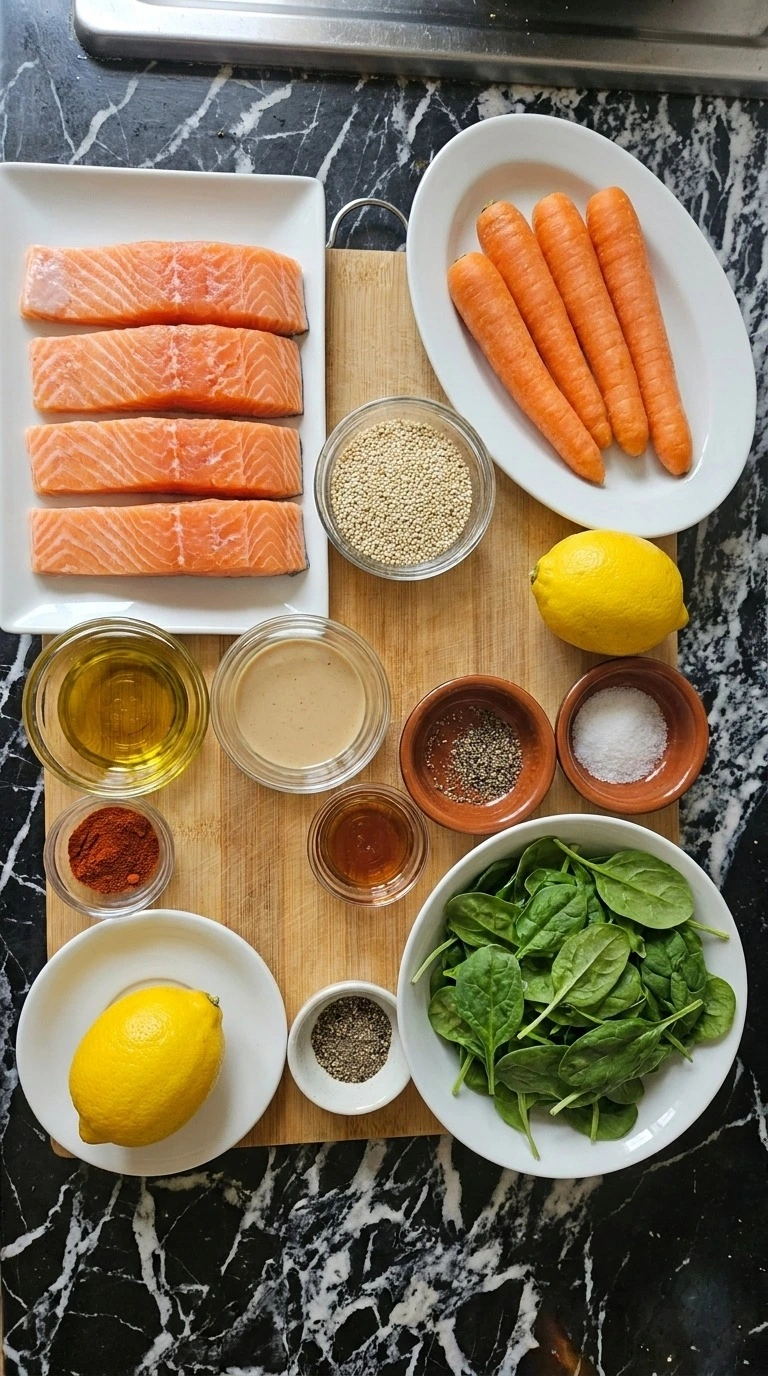
- Atlantic salmon fillets: Skin-on fillets of similar thickness, patted dry before roasting for a lightly golden surface and tender flakes.
- White quinoa: Dry and rinsed under cold water for 30 seconds to remove surface bitterness before simmering.
- Water: Used to simmer the dry white quinoa until tender and fluffy.
- Orange carrots: Peeled and sliced into slender batons about 1/4 inch thick and 3 inches long for even roasting.
- Baby spinach: Fresh and washed, with any tough stems removed before dividing among the serving bowls.
- Extra virgin olive oil: Divided between the carrots and the salmon to encourage even roasting and lightly golden edges.
- Kosher salt: Divided equally between the quinoa, carrots and salmon to bring out their natural flavors.
- Freshly ground black pepper: Sprinkled across the salmon before roasting for mild warmth and a peppery finish.
- Smoked paprika: Used to season the fish and add a gentle smoky note and warm reddish-orange color.
- Tahini: Smooth sesame paste whisked with lemon juice and water to make a creamy dressing without dairy.
- Large yellow lemon: Juiced to provide 2 tablespoons for the dressing, with the remaining lemon cut into small wedges for serving.
- Pure maple syrup: Adds a touch of sweetness to soften the tart lemon flavor and earthy sesame notes.
- Warm water: Whisked gradually into the tahini dressing to create a smooth and lightly pourable consistency.
Kitchen Equipment
- Medium saucepan with lid: A heavy-bottomed 2 to 3-quart saucepan gives the quinoa room to simmer while a close-fitting lid traps moisture and prevents dry patches.
- Fine-mesh strainer: A strainer with a fine stainless steel mesh rinses the small quinoa grains without letting them escape through large holes.
- Large rimmed baking sheet: A sturdy 18 by 13-inch rimmed baking sheet holds four salmon fillets and the carrots with enough space to roast rather than steam.
- Parchment paper: Oven-safe parchment rated for at least 425°F limits sticking and makes it easier to lift the salmon without tearing its delicate flesh.
- Sharp chef’s knife: An 8-inch chef’s knife cuts the carrots into even batons and works better than a short dull blade that can slip on firm vegetables.
- Vegetable peeler: A sharp swivel peeler removes the thin carrot skin without taking off too much flesh and offers better control than a large knife.
- Small mixing bowl: A 1 to 2-cup mixing bowl provides enough space to whisk the tahini sauce without splashing and a shallow saucer may let the mixture spill.
- Fork or small whisk: A small balloon whisk or sturdy fork blends tahini with lemon juice and water until the sauce becomes smooth and pourable.
- Instant-read food thermometer: A thin-probe digital thermometer checks the center of each salmon fillet for 145°F without forcing you to guess from surface color.
- Four shallow serving bowls: Four shallow bowls measuring about 8 inches across give the quinoa and toppings space to remain visible without crowding or spilling.
How to Make It
Step 1: Simmer the quinoa until fluffy
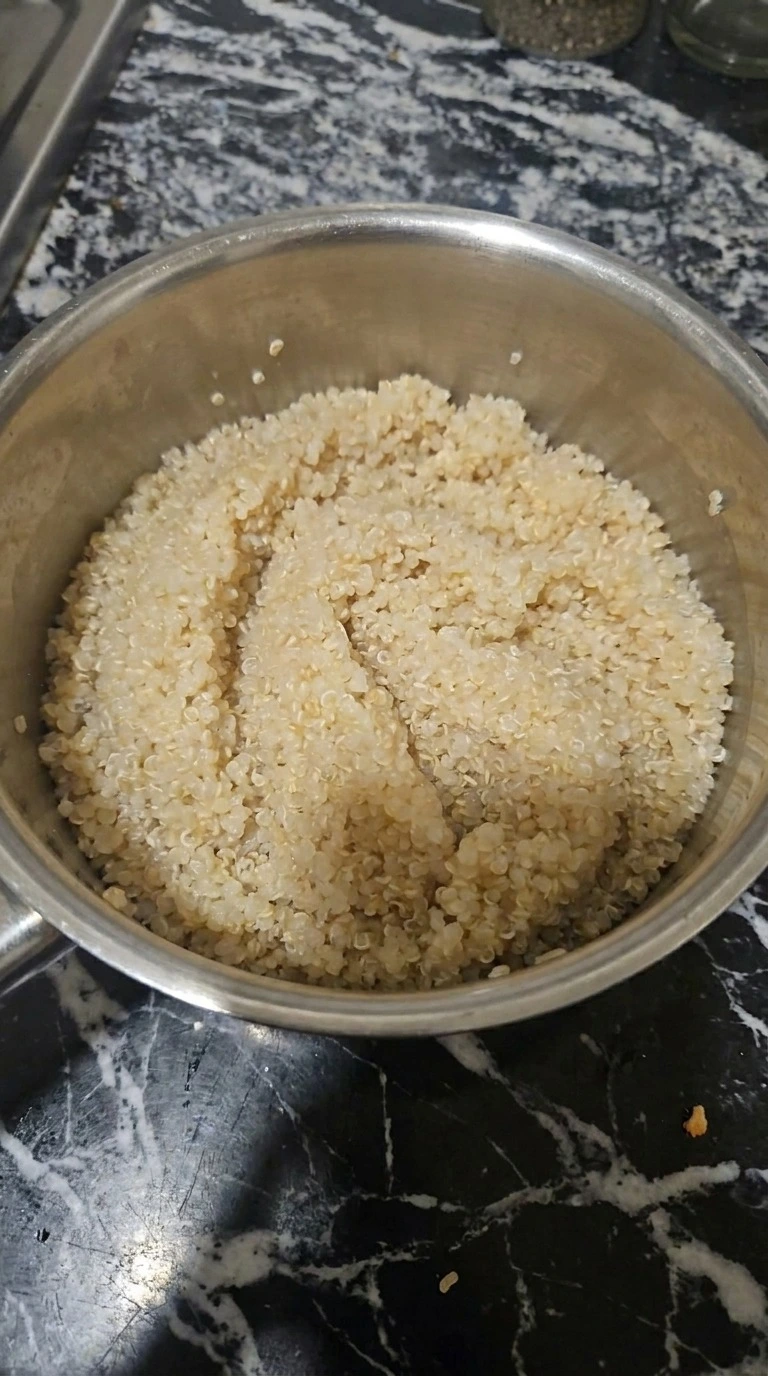
Start by rinsing 1 cup of dry white quinoa under cold running water for 30 seconds. Move it to a medium saucepan and add 2 cups of water with 1/4 teaspoon of kosher salt. Bring the mixture to a boil over medium-high heat. Then lower the heat to a gentle simmer at roughly 200°F and cover with a tight lid.
Let it cook for 15 minutes without stirring because moving the grains too often can leave them sticky and break their delicate shape. Turn off the heat and let the quinoa stand covered for another 5 minutes. Next, lift the lid and look for tiny white spirals around the grains. The water should be gone and the quinoa should feel light when you fluff it with a fork.
If water remains after 15 minutes, keep simmering for 2 more minutes. Don’t let the bottom dry out and scorch. The covered rest helps the grains absorb their last bit of moisture.
Tip: For a slightly nuttier flavor, toast the rinsed and well-drained quinoa in a dry saucepan for 2 minutes before adding water.
Step 2: Slice and roast the carrots
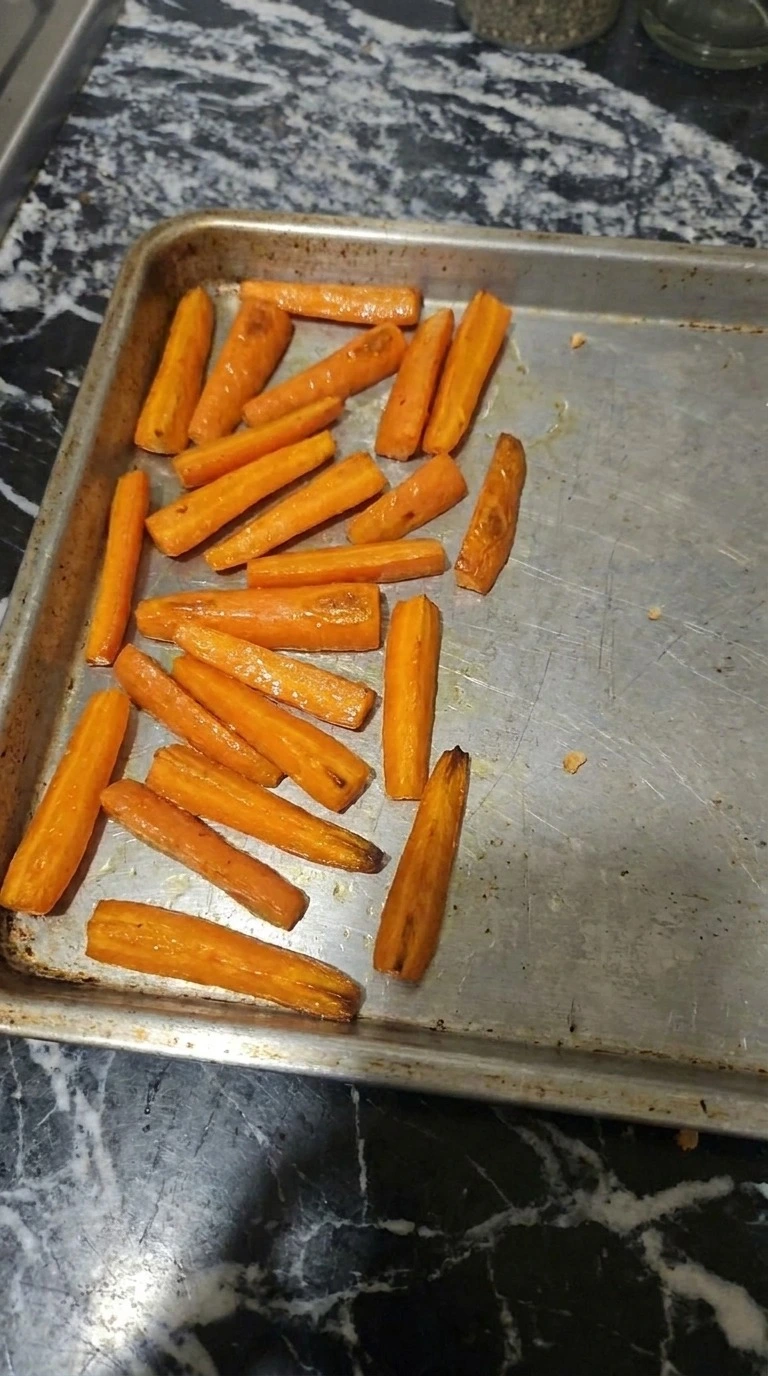
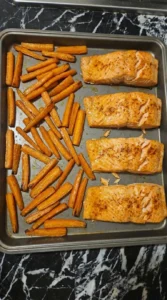
Meanwhile, heat your oven to 425°F and line a large rimmed baking sheet with parchment paper. Peel 4 medium orange carrots and cut them into slender batons about 1/4 inch thick and 3 inches long. Toss them with 1 tablespoon of extra virgin olive oil and 1/4 teaspoon of kosher salt. Then spread the pieces in a loose single layer across one side of the baking sheet and leave the other side open for the salmon.
Roast for 12 minutes on the middle rack. Flip the carrots once at minute 8 so the edges start to color without burning. After 12 minutes, the carrot tips should show small golden patches while their centers remain fairly firm. You’ll smell a mild sweetness as the edges start to roast.
Avoid cutting thick pieces because they’ll stay hard when the fish finishes. Thin cuts help the carrots soften during the second roasting stage.
Tip: Choose carrots close to 1 inch thick at their widest point so the batons roast at similar speeds without excessive trimming.
Step 3: Season and roast the salmon fillets
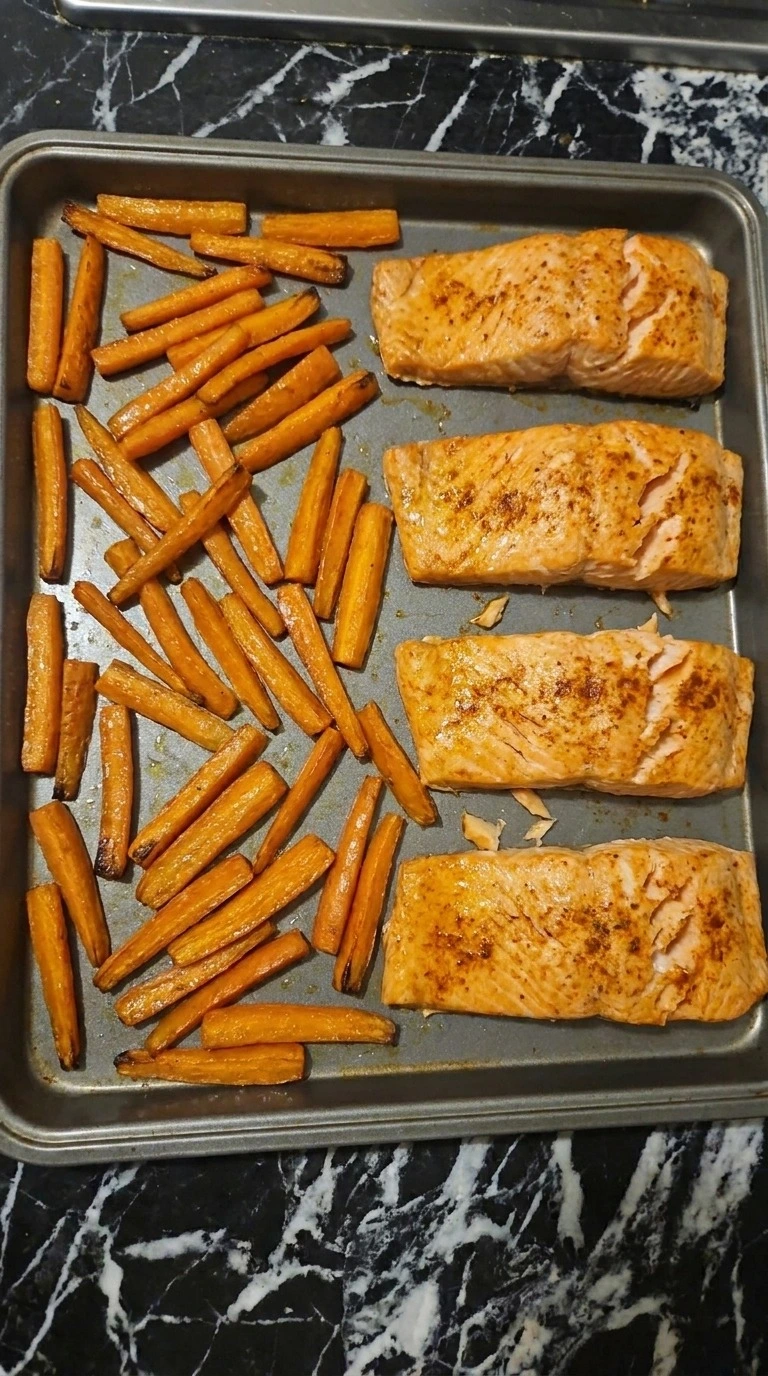
Take 4 skin-on Atlantic salmon fillets from the refrigerator and pat their surfaces dry. Each fillet should weigh about 5 ounces. Brush them with the remaining 1 tablespoon of extra virgin olive oil and sprinkle evenly with 1 teaspoon of smoked paprika, 1/4 teaspoon of kosher salt and 1/2 teaspoon of freshly ground black pepper. Then place the fillets skin-side down on the empty side of the baking sheet beside the partly roasted carrots.
Leave a little room between them. Roast at 425°F for 12 to 15 minutes until the thickest part of each fillet reaches 145°F on an instant-read thermometer. The tops should turn a deeper orange with a few golden spots. And when you press gently with a fork, the flesh should separate into moist opaque flakes.
Avoid roasting past the temperature target because the flesh dries out quickly. (I first tried roasting the salmon with the carrots from the start. The fish dried out before the carrots softened. ) The staggered roast keeps the salmon moist while the carrots finish browning.
Tip: Buy four fillets with similar thicknesses, ideally about 1 inch thick, so they reach the target temperature within the same roasting window.
Step 4: Whisk the lemon tahini dressing and assemble the bowls
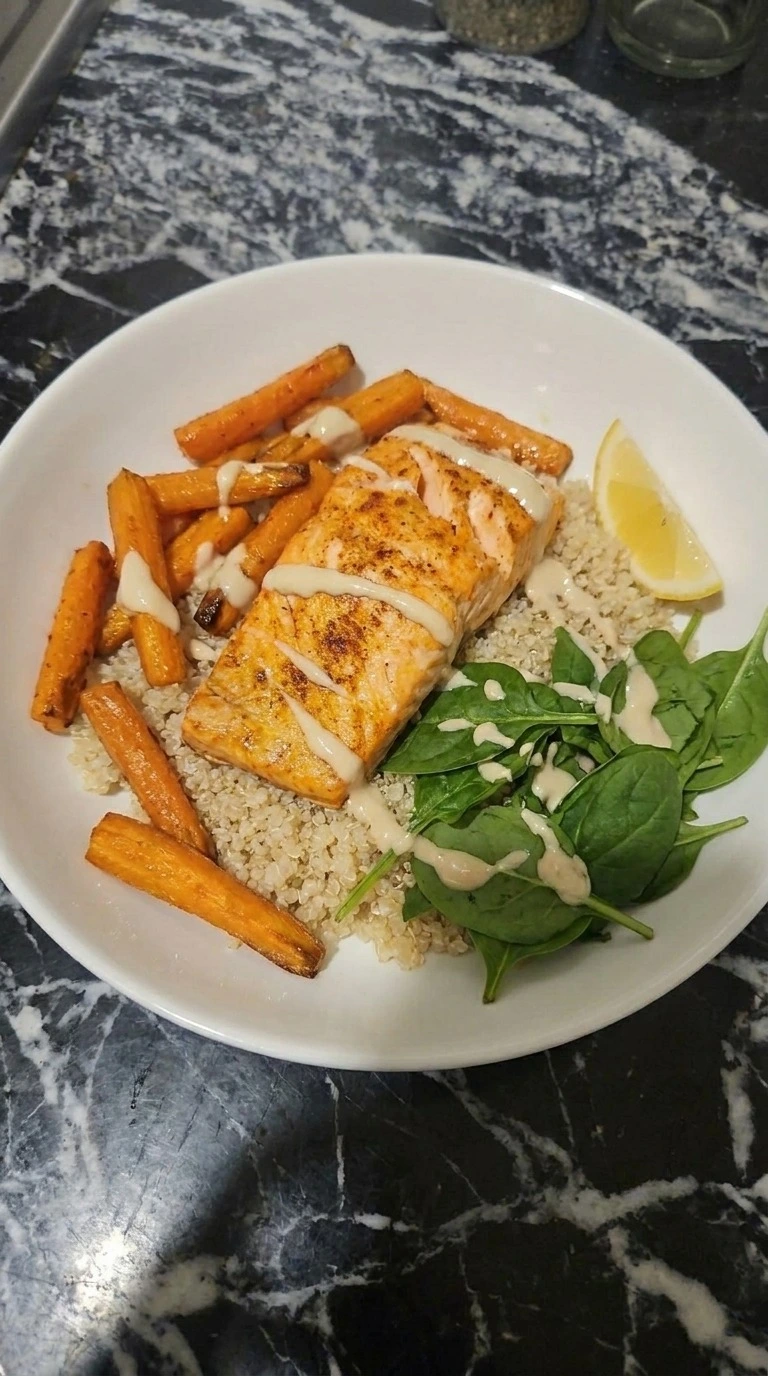
While the fish rests for 3 minutes, add 1/4 cup of tahini to a small bowl. Squeeze in 2 tablespoons of juice from 1 large lemon and add 2 teaspoons of pure maple syrup. Whisk with a fork for 30 seconds. The sauce may thicken at first.
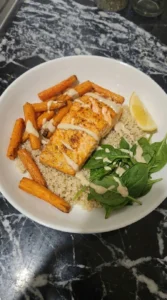
Then add 3 tablespoons of warm water a little at a time and whisk for another 45 to 60 seconds until it flows slowly from the fork. Set aside a small lemon wedge from the remaining lemon for each serving. Divide the quinoa among 4 shallow serving bowls and add 1 cup of fresh baby spinach to each. Spoon the roasted carrot batons alongside the greens and place one salmon fillet on top of each portion.
Finally, drizzle about 1 tablespoon of the lemon tahini sauce across each salmon quinoa bowl and share the remaining dressing at the table. You’ll see pale ribbons settling between the warm grains while the spinach starts to soften slightly. Don’t soak the quinoa too early or it’ll lose its light texture. A last-minute drizzle keeps the grains fluffy and the greens fresh.
Tip: If your tahini comes from the refrigerator, let the measured 1/4 cup stand for 10 minutes before whisking to reduce lumps.
Pro Tips
- Choose salmon fillets close to 1 inch thick and similar in size. Uneven pieces can reach 145°F at different times, leaving smaller portions dry.
- Rinse white quinoa for 30 seconds in a fine-mesh strainer before simmering. This helps wash away the bitter coating that some brands retain.
- Use a large 18 by 13-inch baking sheet so the salmon and carrots have space. Crowding traps moisture and makes the vegetables steam.
- Cut carrot batons about 1/4 inch thick and 3 inches long. Thicker sticks may remain firm after the salmon reaches its safe internal temperature.
- Check the salmon with a digital thermometer at the thickest point after 12 minutes. Remove each fillet when its center reaches 145°F.
- Whisk 3 tablespoons of warm water into the tahini gradually. Adding it all at once makes stubborn lumps harder to smooth out.
- Let the roasted salmon rest for 3 minutes before placing it over quinoa. The flakes will hold together better during serving.
- Add about 1 tablespoon of lemon tahini dressing to each bowl just before eating. Keep extra sauce separate so the grains stay fluffy.
- For a warmer winter version, replace 2 of the carrots with 2 cups of peeled butternut squash cut into 1/2-inch cubes and roast until tender.
- For a spicy salmon bowl, add 1/4 teaspoon of cayenne pepper to the smoked paprika before seasoning the four salmon fillets.
- For a citrus twist, replace 1 tablespoon of lemon juice with 1 tablespoon of fresh orange juice and add 1 teaspoon of finely grated orange zest.
- For an extra-crunchy version, scatter 2 tablespoons of toasted pumpkin seeds across the four finished bowls just before serving.
Substitutions & Variations
- Atlantic salmon fillets: Use 4 skin-on rainbow trout fillets of approximately 5 ounces each. Rainbow trout has a milder flavor and thinner flesh, so start checking after 9 minutes at 425°F. Cook to 145°F in the thickest part. The result is a little more delicate but still tastes great with lemon tahini.
- White quinoa: Replace 1 cup of dry white quinoa with 1 cup of dry brown basmati rice. Use 1 3/4 cups of water and simmer for approximately 35 minutes according to the package instructions. Brown basmati rice has a firmer bite and a nuttier flavor. It’s gluten-free like quinoa, but the longer cooking time means you’ll need to start it earlier. For another grain-based dish, try our Fall Pasta Salad.
- Tahini: Use 1/4 cup of plain unsweetened Greek yogurt instead. Start with 1 tablespoon of water instead of 3 because yogurt is already thinner than tahini. The dressing tastes tangier and less nutty. This swap contains dairy, while the original tahini dressing is naturally dairy-free and egg-free.
- Pure maple syrup: Replace 2 teaspoons of pure maple syrup with 2 teaspoons of honey. Honey gives the dressing a floral sweetness and slightly thicker texture. Whisk in an extra teaspoon of warm water if necessary. Keep the original maple syrup if you’re avoiding honey.
- Baby spinach: Replace 4 cups of baby spinach with 4 cups of chopped curly kale. Remove the thick stems and massage the kale with 1 teaspoon of extra virgin olive oil for 1 minute. Kale stays chewier and tastes more earthy than spinach. It’s a good choice when you’re packing lunch because the leaves hold their shape longer.
Storage Instructions
Store leftover Salmon and Quinoa Bowls in separate airtight containers in the refrigerator at 40°F or below for up to 3 days. Keep the roasted salmon and quinoa apart from the fresh spinach and dressing. Refrigerate everything within 2 hours of cooking. You can freeze the salmon and quinoa separately for up to 2 months.
Wrap each salmon fillet tightly and place it in a freezer-safe container. Don’t freeze the assembled bowls because the spinach turns limp and the tahini dressing may separate. To reheat, thaw frozen portions overnight in the refrigerator. Warm the salmon in a covered oven-safe dish at 300°F for about 10 to 15 minutes or until it reaches 165°F throughout.
Heat the quinoa with 1 tablespoon of water per serving until steaming hot. Then add fresh spinach and dressing. Discard leftovers with mold or an unusual odor. And remember that unsafe food doesn’t always smell bad.
Salmon and Quinoa Bowls
Ingredients
Method
- Start by rinsing 1 cup of dry white quinoa under cold running water for 30 seconds. Move it to a medium saucepan and add 2 cups of water with 1/4 teaspoon of kosher salt. Bring the mixture to a boil over medium-high heat. Then lower the heat to a gentle simmer at roughly 200°F and cover with a tight lid. Let it cook for 15 minutes without stirring because moving the grains too often can leave them sticky and break their delicate shape. Turn off the heat and let the quinoa stand covered for another 5 minutes. Next, lift the lid and look for tiny white spirals around the grains. The water should be gone and the quinoa should feel light when you fluff it with a fork. If water remains after 15 minutes, keep simmering for 2 more minutes. Don’t let the bottom dry out and scorch. The covered rest helps the grains absorb their last bit of moisture.
- Meanwhile, heat your oven to 425°F and line a large rimmed baking sheet with parchment paper. Peel 4 medium orange carrots and cut them into slender batons about 1/4 inch thick and 3 inches long. Toss them with 1 tablespoon of extra virgin olive oil and 1/4 teaspoon of kosher salt. Then spread the pieces in a loose single layer across one side of the baking sheet and leave the other side open for the salmon. Roast for 12 minutes on the middle rack. Flip the carrots once at minute 8 so the edges start to color without burning. After 12 minutes, the carrot tips should show small golden patches while their centers remain fairly firm. You’ll smell a mild sweetness as the edges start to roast. Avoid cutting thick pieces because they’ll stay hard when the fish finishes. Thin cuts help the carrots soften during the second roasting stage.
- Take 4 skin-on Atlantic salmon fillets from the refrigerator and pat their surfaces dry. Each fillet should weigh about 5 ounces. Brush them with the remaining 1 tablespoon of extra virgin olive oil and sprinkle evenly with 1 teaspoon of smoked paprika, 1/4 teaspoon of kosher salt and 1/2 teaspoon of freshly ground black pepper. Then place the fillets skin-side down on the empty side of the baking sheet beside the partly roasted carrots. Leave a little room between them. Roast at 425°F for 12 to 15 minutes until the thickest part of each fillet reaches 145°F on an instant-read thermometer. The tops should turn a deeper orange with a few golden spots. And when you press gently with a fork, the flesh should separate into moist opaque flakes. Avoid roasting past the temperature target because the flesh dries out quickly. (I first tried roasting the salmon with the carrots from the start. The fish dried out before the carrots softened.) The staggered roast keeps the salmon moist while the carrots finish browning.
- While the fish rests for 3 minutes, add 1/4 cup of tahini to a small bowl. Squeeze in 2 tablespoons of juice from 1 large lemon and add 2 teaspoons of pure maple syrup. Whisk with a fork for 30 seconds. The sauce may thicken at first. Then add 3 tablespoons of warm water a little at a time and whisk for another 45 to 60 seconds until it flows slowly from the fork. Set aside a small lemon wedge from the remaining lemon for each serving. Divide the quinoa among 4 shallow serving bowls and add 1 cup of fresh baby spinach to each. Spoon the roasted carrot batons alongside the greens and place one salmon fillet on top of each portion. Finally, drizzle about 1 tablespoon of the lemon tahini sauce across each salmon quinoa bowl and share the remaining dressing at the table. You’ll see pale ribbons settling between the warm grains while the spinach starts to soften slightly. Don’t soak the quinoa too early or it’ll lose its light texture. A last-minute drizzle keeps the grains fluffy and the greens fresh.
Notes
Frequently Asked Questions
Yes! Cook the quinoa and roast the carrots up to 3 days ahead. Cool them promptly and keep them in separate airtight containers at 40°F or below. For the best texture, roast the salmon on the day you plan to eat it. You can also whisk the tahini dressing 3 days ahead and store it in a sealed jar.
Store the cooked salmon and quinoa in airtight containers at 40°F or below for up to 3 days. Keep the fresh spinach and lemon tahini sauce separate so they don’t turn soggy. Refrigerate cooked ingredients within 2 hours of preparation, or within 1 hour if the surrounding temperature exceeds 90°F. Discard any portions that have spent too long unrefrigerated.
Absolutely. Whisk 1/4 cup of plain unsweetened Greek yogurt with 2 tablespoons of fresh lemon juice and 2 teaspoons of maple syrup. Start with 1 tablespoon of water and add more until the sauce pours easily. This version tastes brighter and tangier but won’t have the same toasted sesame flavor. Use dairy-free yogurt if you need to avoid milk.
Too much water or a simmer that’s too low can leave white quinoa wet and heavy. Use 1 cup of dry quinoa with 2 cups of water and simmer gently for about 15 minutes. Then let it sit covered for 5 minutes before fluffing. If liquid remains after cooking, simmer uncovered for another 1 to 2 minutes and check frequently.
Yes. Use 8 salmon fillets and 8 medium carrots along with 2 cups of dry quinoa and 4 cups of water. Roast the salmon and carrots on two large baking sheets so nothing gets crowded. Keep the oven at 425°F and rotate the pans halfway through roasting. Check every fillet separately because the thickest pieces may take longer to reach 145°F.
These bowls already include a grain and vegetables, so I usually serve them with something small and fresh. Try a side of thinly sliced cucumber with 1 tablespoon of lemon juice or a handful of crisp greens. For a warmer side, our Maple Glazed Carrots are another option. Prepare them separately and reduce the carrots in the bowls if you prefer more variety.
You can freeze the salmon and quinoa separately for up to 2 months for the best texture. Cool both quickly and use airtight freezer-safe containers. Thaw overnight in the refrigerator and reheat the salmon at 300°F until its center reaches 165°F. Warm the quinoa with 1 tablespoon of water per serving until steaming hot. Add fresh spinach and dressing after reheating.
Final Thoughts
I still remember the first time I made Salmon and Quinoa Bowls and worried that the fish would dry out before the carrots softened. Turns out a little head start for the vegetables makes all the difference. That’s why this salmon and quinoa bowls recipe has become one of my favorite easy salmon and quinoa bowls for dinner.
The lemon tahini drizzle makes the whole thing feel a little special too. If you give it a try, leave me a comment below. I read every single one.
And for another simple meal or a sweet finish, check out our Fall Pasta Salad and Pecan Pie Bars. Come back to it whenever you need winter salmon and quinoa bowls.
Quinoa isn’t a true cereal grain. It’s a seed from a plant related to spinach and beets. And those tiny white curls you see after cooking? They’re the seed’s germ separating as it softens. That’s one reason fluffy quinoa has such a fun texture.