Honey Garlic Salmon
The first time I served Honey Garlic Salmon at dinner, the sticky glaze and tender flakes had everyone reaching for another bite. I wanted a fish recipe with the flavor of a restaurant meal but the ease of cooking at home. This easy honey garlic salmon has a sweet garlic sauce, lightly golden edges and a soft center that stays moist when you watch the cooking time.
It’s become one of my favorite ways to make salmon without a long list of ingredients. The sauce uses honey, fresh garlic, soy sauce and a little lemon juice, so every bite tastes sweet, savory and bright. If you enjoy simple dinners with bold garlic flavor, you’ll also want to try our Easy Lemon Garlic Butter Chicken Bites. This honey garlic salmon recipe serves four, and you can adjust the sauce easily if you’re cooking for a larger group or saving portions for lunch the next day.
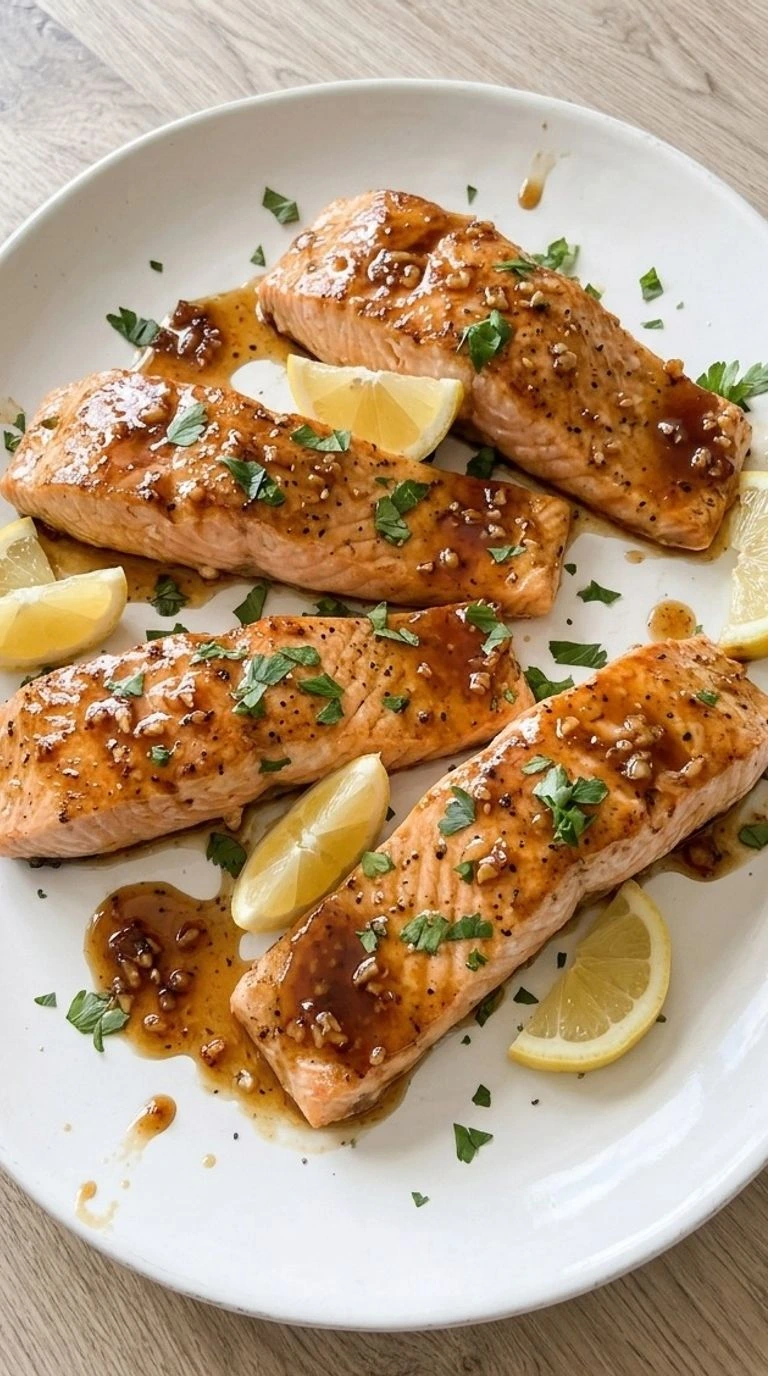
Serve these salmon fillets with steamed rice, roasted vegetables or a crisp green salad. They’re a great choice for a weeknight dinner because the sauce takes only a few minutes to make and the fish cooks quickly. And if you’re planning a full meal, our Garlic Parmesan Roasted Carrots make a savory side that works well with the sweet glaze.
Why This Recipe Works
The key to Honey Garlic Salmon is to sear the fish before adding the honey mixture. That gives the skin a crisp edge while the glaze reduces over medium-low heat, where the sugars can thicken without scorching.
Cornstarch helps the sauce cling to the fillets, and lemon juice cuts through the sweetness so each bite still tastes bright. Pull the pan from the heat as soon as the thickest part reaches 145°F and the glaze coats the back of a spoon.
Ingredients
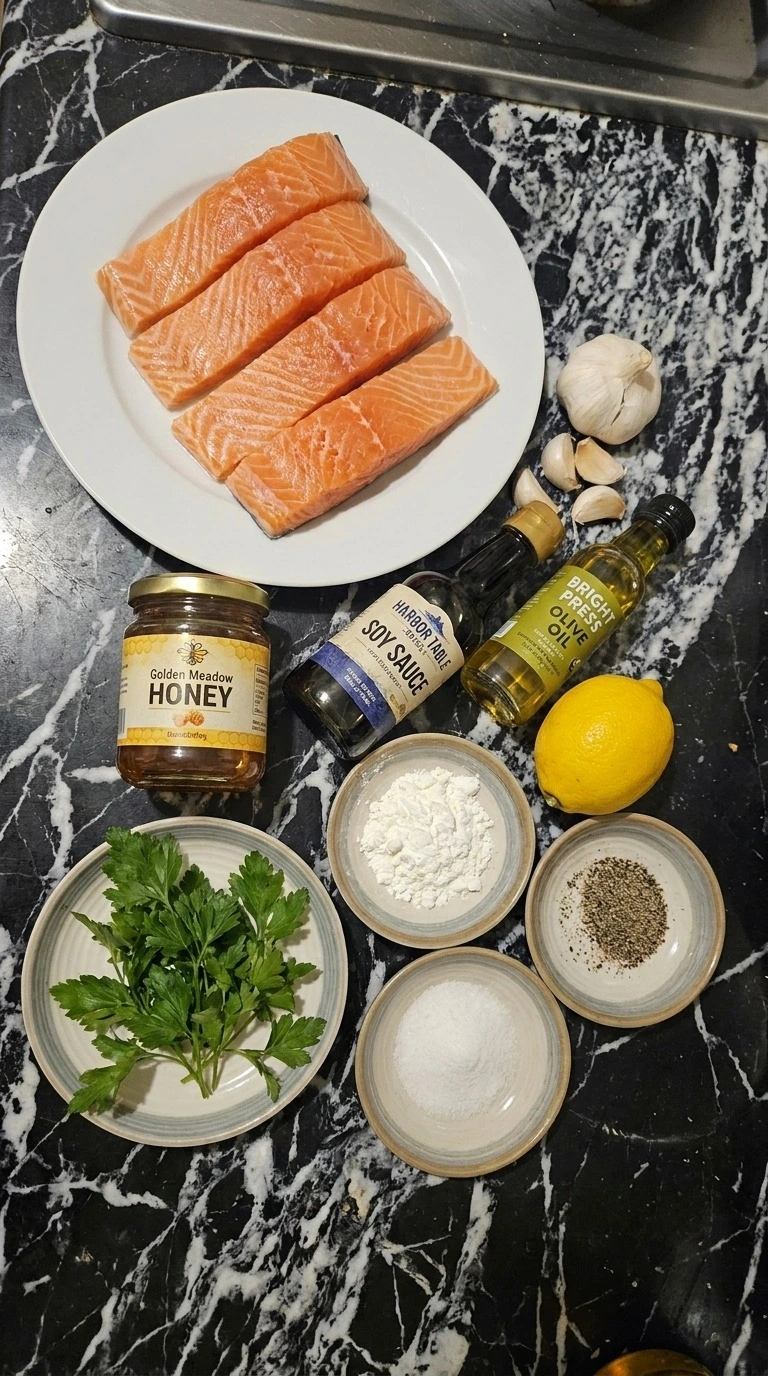
- Atlantic salmon: Skin on and patted dry before seasoning, with similar thickness for even cooking.
- Honey: Use a pourable honey to create a sweet glaze that thickens as it simmers.
- Low-sodium soy sauce: Adds savory depth and salt while keeping the glaze from becoming overly salty.
- Garlic cloves: Finely minced so the garlic flavor spreads through the sauce and softens as it cooks.
- Fresh lemon juice: Adds acidity to balance the honey and brighten the savory glaze.
- Cornstarch: Whisked into the sauce to help it cling to the salmon after a short reduction.
- Olive oil: Coats the skillet lightly and helps the salmon skin sear without sticking.
- Fine salt: Seasoned over both sides of the salmon before searing.
- Black pepper: Adds a gentle peppery note that offsets the sweet glaze.
- Fresh parsley: Finely chopped and scattered over the plated salmon for a fresh herbal finish.
- Lemon: Cut into 4 wedges for serving alongside the glazed fillets.
- Water: Added only if the glaze reduces too quickly and needs a little loosening.
Kitchen Equipment
- 12-inch heavy-bottomed skillet: A heavy-bottomed skillet gives four salmon fillets room to sear and helps the honey glaze reduce evenly, while a thin pan can create hot spots that burn the sugars.
- Medium mixing bowl: A bowl with a 1 to 2 quart capacity gives the honey, soy sauce, garlic and cornstarch enough space to blend, while a very small bowl makes whisking and scraping difficult.
- Small whisk: A compact whisk breaks up cornstarch lumps in the glaze, while a fork works as a substitute but may leave thicker clumps around the bowl’s edges.
- Thin fish spatula: A flexible fish spatula slides beneath delicate salmon fillets with less breakage, while a thick rigid turner can tear the flesh during flipping.
- Instant-read thermometer: A fast digital thermometer checks the thickest part of each fillet for 145°F, while judging doneness by color alone can leave thick centers undercooked.
- Measuring spoons and cups: Accurate measurements keep the honey and soy sauce in balance, while guessing the cornstarch or honey can make the glaze too thin or overly sticky.
How to Make It
Step 1: Whisk the honey garlic sauce
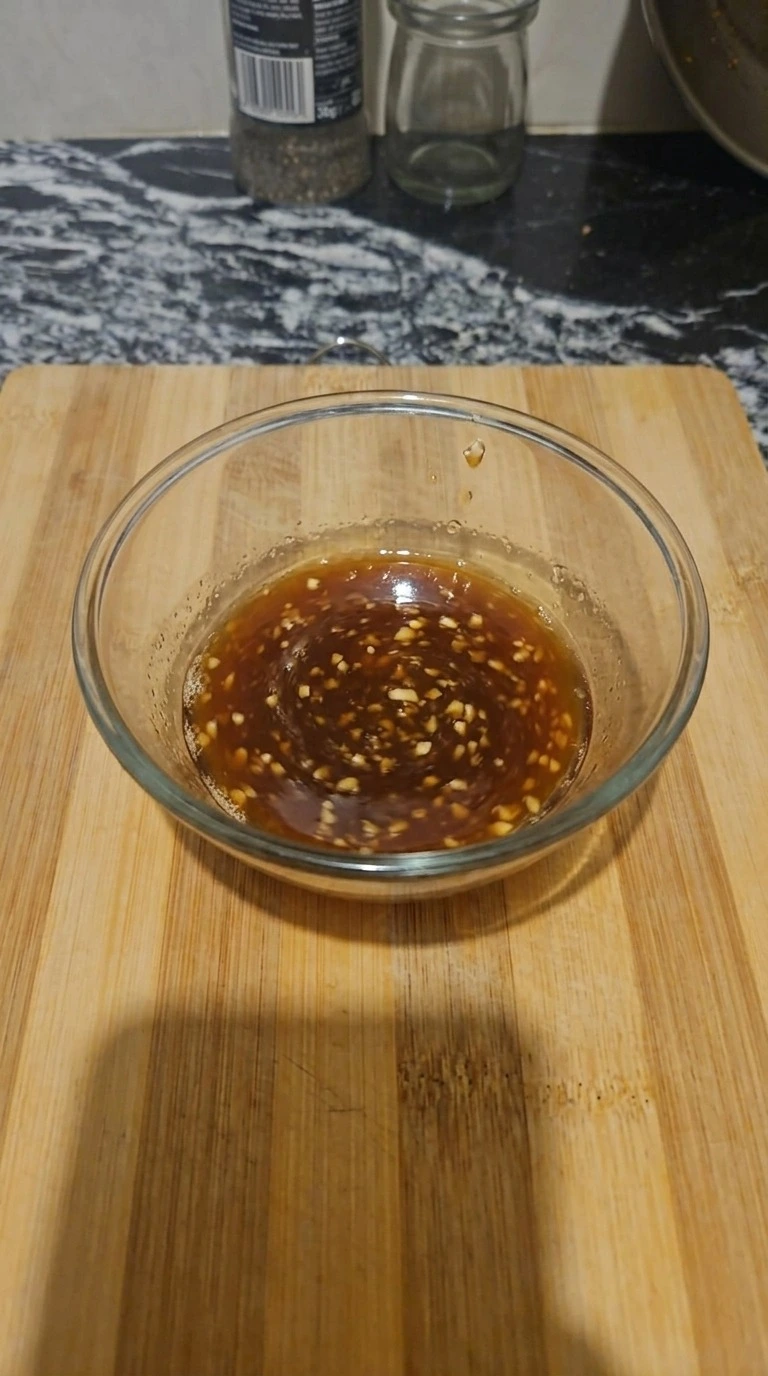
Measure 1/3 cup honey, 3 tablespoons low-sodium soy sauce, 4 finely minced garlic cloves, 1 tablespoon fresh lemon juice and 1 teaspoon cornstarch into a mixing bowl. Whisk at room temperature for 45 to 60 seconds, using small circular strokes until the cornstarch disappears and the sauce turns evenly amber.
Keep the mixture smooth before it touches the fish. Look for a thin, even glaze with tiny garlic flecks and no dry starch clumps.
Work the whisk around the bowl’s edge, because missed clumps can leave pale streaks in the finished sauce. Whisk thoroughly so the starch thickens the glaze evenly.
Tip: Use runny honey rather than crystallized honey so it blends with the soy sauce without leaving hard sugar grains.
Step 2: Sear the salmon fillets
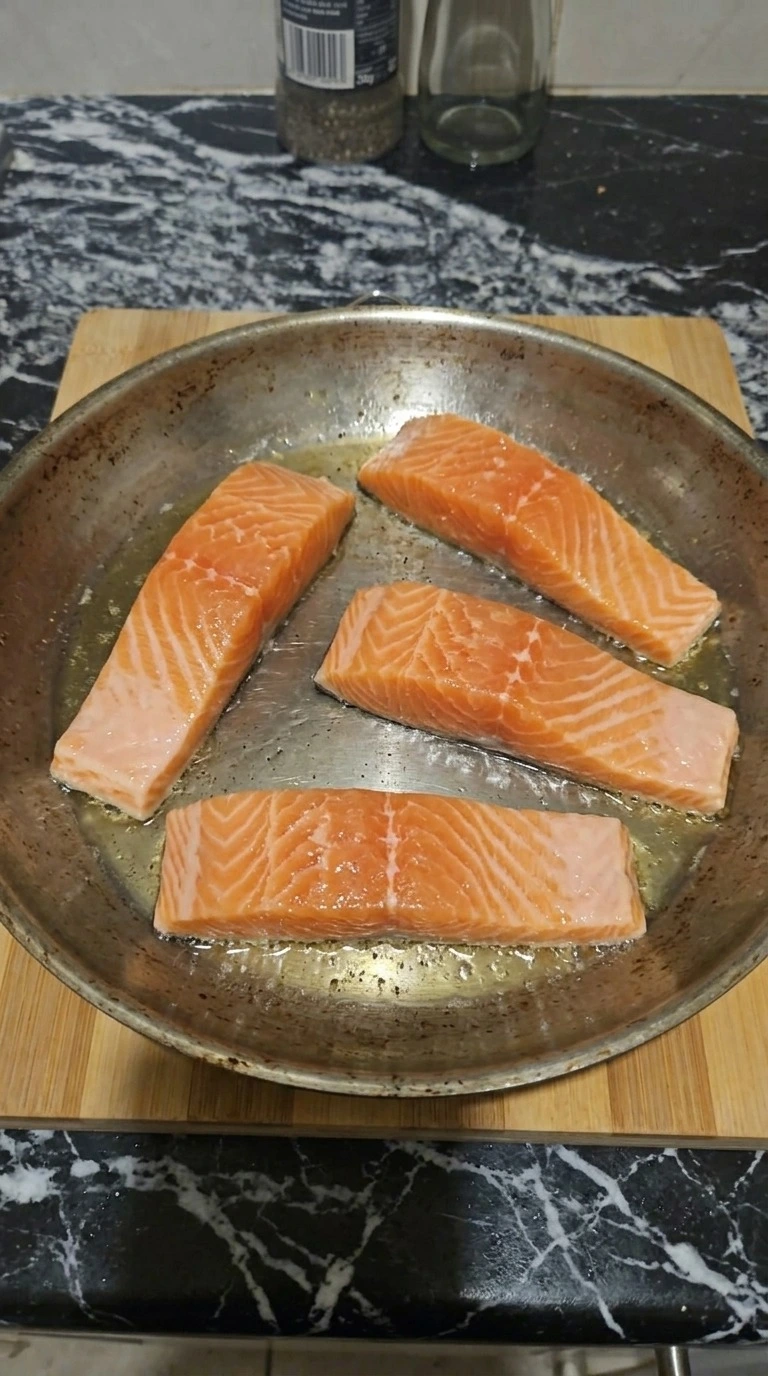
Pat 4 skin-on salmon fillets, about 6 ounces each, dry with paper towels and season both sides with 1/2 teaspoon fine salt and 1/4 teaspoon black pepper. Heat 1 tablespoon olive oil in a 12-inch skillet over medium-high heat, about 400°F at the cooking surface, then place the fillets skin-side down with natural gaps between them. Press each fillet gently for 10 seconds to prevent curling and sear for 4 to 5 minutes without moving them.
The skin should turn crisp and golden while the lower sides become opaque coral. If the oil smokes heavily, lower the heat before the garlic sauce goes in. Don’t crowd the pan, or the fish will steam instead of sear.
Sear over steady heat to build a crust before glazing.
Tip: Choose fillets of similar thickness so they finish at nearly the same time, even if their shapes aren’t identical.
Step 3: Flip the fillets and cook the centers
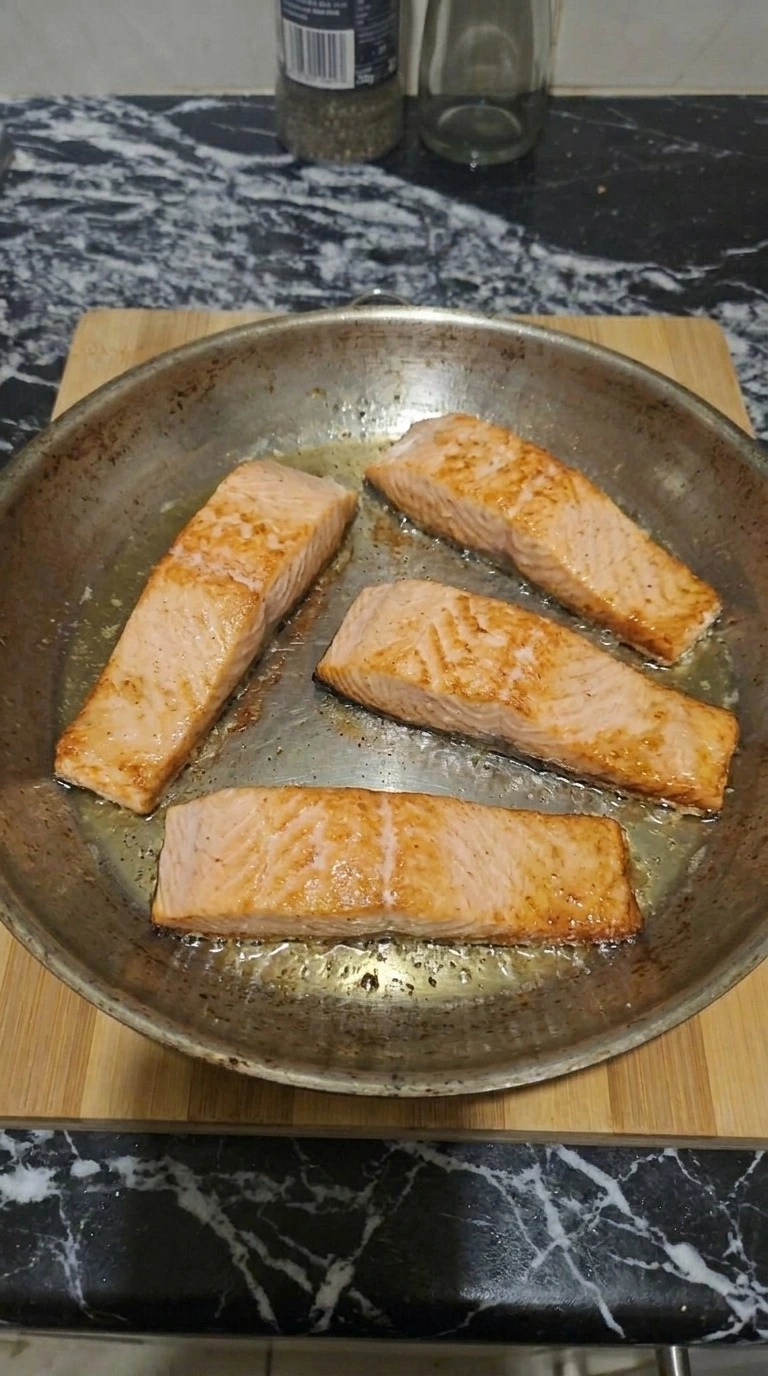
Slide a thin spatula beneath each fillet and turn it carefully so the flesh faces the hot skillet. Cook over medium heat, around 350°F at the cooking surface, for 2 to 3 minutes, adjusting the time for thickness. Spoon a little of the pan oil over any pale areas, but keep the fillets spaced apart so heat reaches their sides.
Check the thickest part with an instant-read thermometer as the color changes. The flesh should look opaque coral around the edges and slightly translucent only at the center until it reaches 145°F internally. If the surface darkens before the middle warms, reduce the heat and give it another short interval.
Turn once and cook gently so the fillets stay intact.
Tip: Insert the thermometer sideways into the thickest part of a fillet for a more accurate reading without splitting the fish.
Step 4: Pour in the glaze and coat the salmon
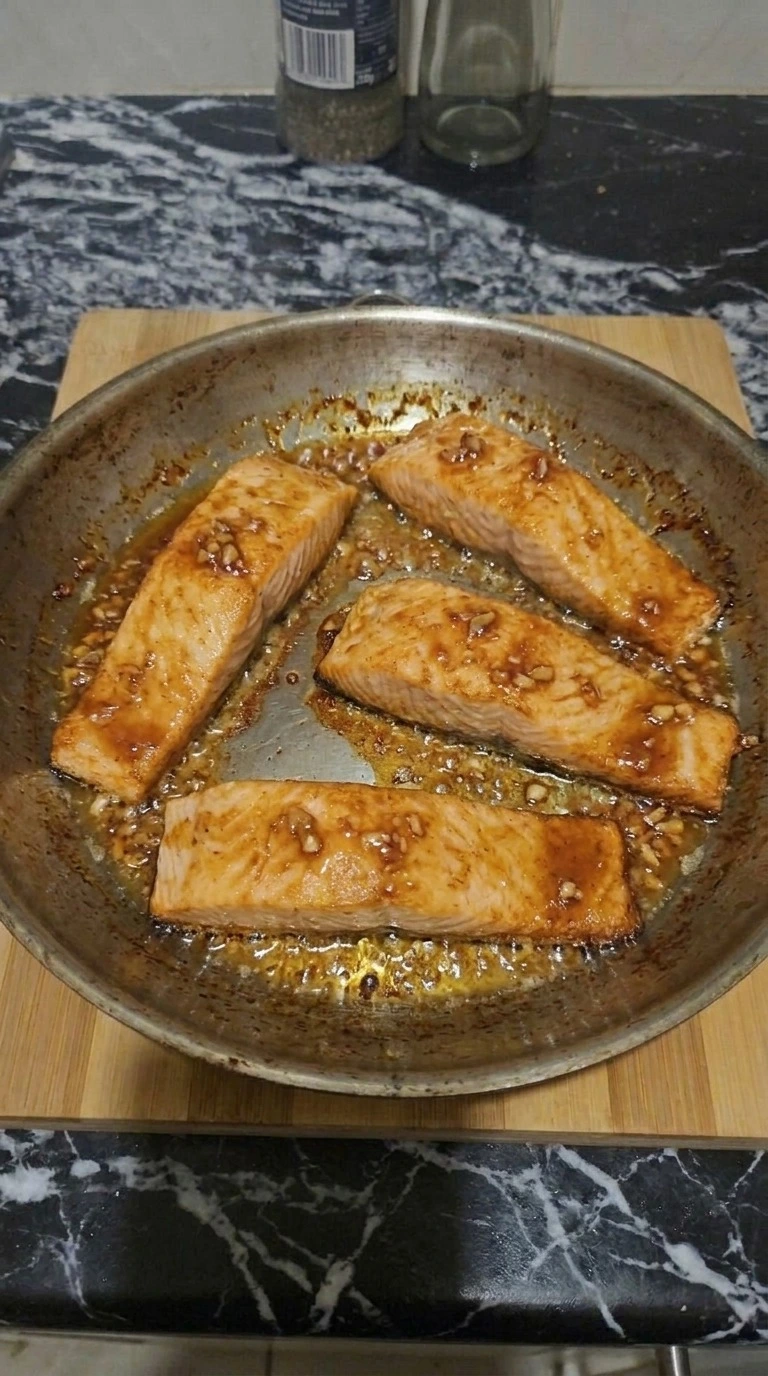
Pour the prepared honey garlic mixture into the skillet around the 4 salmon fillets, then lower the heat to medium-low, about 300°F at the cooking surface. Let the sauce bubble gently for 2 to 4 minutes while you spoon it over the tops in slow strokes. Turn the fillets once more only if needed for even coating, and check that the thickest center reaches 145°F.
The glaze should cling rather than run like water. Watch for small steady bubbles and a deeper amber color around the edges. If the sauce thickens too quickly, add 1 tablespoon water and swirl the skillet gently.
Stop before the honey darkens to a bitter brown. Gentle reduction thickens the glaze without burning the honey.
Tip: Keep 1 tablespoon of warm water nearby to loosen the glaze if it reduces faster than the salmon finishes.
Step 5: Plate the salmon and add fresh garnish
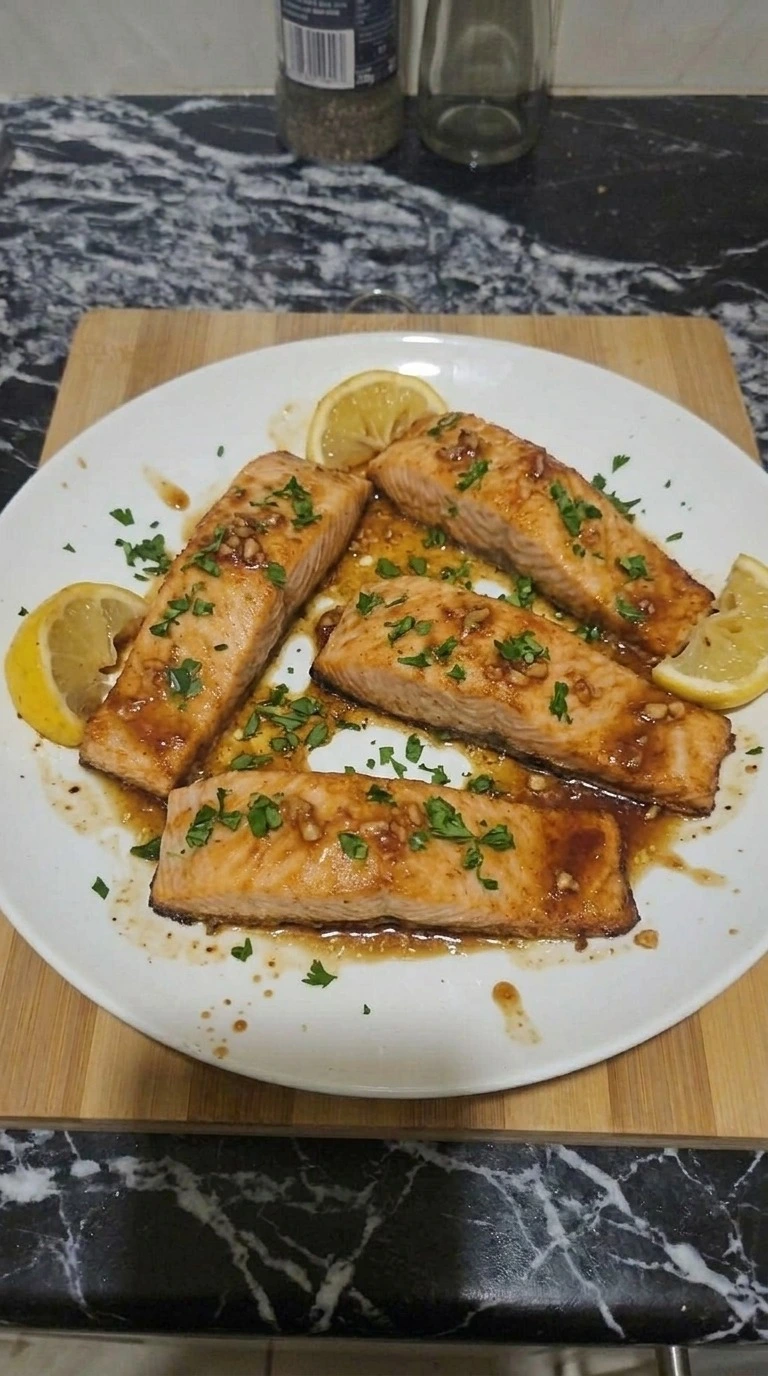
Transfer the 4 glazed salmon fillets to a large white serving plate, keeping their skin intact and leaving natural gaps between them. Spoon the remaining sauce over the fish, then scatter 1 tablespoon finely chopped fresh parsley across the fillets. Add 4 lemon wedges around the edges and let the salmon rest for 2 minutes before serving.
The thickest part should have reached 145°F before it leaves the skillet. Look for sticky amber glaze, lightly crisp edges and moist coral flakes that separate easily with a fork. Keep some skin visible, and don’t bury the fish under sauce or garnish.
Rest briefly so the juices settle and the glaze stays in place.
Tip: Warm the serving plate with hot water and dry it before plating to help the salmon stay warm through dinner.
Pro Tips
- Pat each salmon fillet dry with paper towels before seasoning, then let it sit for 5 minutes while you measure the sauce ingredients so the surface sears instead of steaming.
- Choose salmon fillets that are roughly 1 to 1 1/2 inches thick and similar in size, because thin tails can dry out before thicker centers reach 145°F.
- Use a heavy-bottomed 12-inch skillet for four 6-ounce portions, leaving a little space between them so the fish develops golden edges instead of releasing moisture into a crowded pan.
- Keep the honey glaze over medium-low heat for 2 to 4 minutes, and remove the skillet from the burner if the bubbles grow large or the sauce starts turning dark brown.
- Measure the cornstarch carefully at 1 teaspoon and whisk it into the cool sauce before cooking, because extra starch can leave a pasty coating instead of a thin, sticky glaze.
- Prepare the lemon wedges and chop 1 tablespoon of fresh parsley before the salmon enters the pan, so you can plate the fish within 2 minutes of finishing the sauce.
- For a brighter finish, squeeze a little fresh lemon juice over the plated fillets just before serving, starting with 1 teaspoon and adding more only if the honey tastes too sweet.
- If you’re cooking rice alongside the salmon, start it about 15 minutes before the fish, then serve everything while the glaze is warm and the skin still has some crispness.
- For a spicy honey garlic salmon, whisk 1/2 teaspoon red pepper flakes or 1 teaspoon sriracha into the sauce before cooking for a gentle heat that builds behind the sweetness.
- For a ginger-forward version, add 1 tablespoon freshly grated ginger and reduce the lemon juice to 2 teaspoons for a warmer, sharper flavor that pairs well with steamed rice.
- For a citrus twist, replace half the lemon juice with 1 tablespoon fresh orange juice and add 1 teaspoon finely grated orange zest, which gives the glaze a fruity aroma and softer acidity.
- For a sesame finish, stir 1 teaspoon toasted sesame oil into the glaze after removing the skillet from the heat, then sprinkle 1 teaspoon toasted sesame seeds over the plated fish.
Substitutions & Variations
- Low-sodium soy sauce: Use 3 tablespoons gluten-free tamari or coconut aminos. Tamari keeps the savory depth and works at a 1:1 ratio. Coconut aminos taste sweeter and less salty, so reduce the honey to 1/4 cup if you prefer a less sweet glaze. Check labels if you need a strictly gluten-free meal.
- Honey: Use 1/3 cup pure maple syrup. Maple syrup gives the sauce a deeper, woodsy sweetness and a slightly thinner finish. Reduce it over medium-low heat for 2 to 4 minutes and watch closely because the sugars can darken quickly.
- Olive oil: Use 1 tablespoon avocado oil. Avocado oil handles the medium-high searing heat well and has a mild flavor that won’t compete with the garlic. Use the same amount, and avoid strongly flavored oils that can overpower the honey glaze.
- Cornstarch: Use 2 teaspoons arrowroot powder mixed into the cool sauce. Arrowroot thickens the glaze without changing its flavor, although the finish may be slightly more translucent. Keep the sauce at a gentle simmer rather than boiling it hard, since prolonged high heat can weaken arrowroot’s thickening power.
- Atlantic salmon: Use four skinless salmon portions of similar thickness, about 6 ounces each. Skinless portions work well, but they can break more easily when flipped and may cook a little faster. Start checking the thickest center after 3 minutes on the first side and cook until it reaches 145°F.
Storage Instructions
Place leftover Honey Garlic Salmon in an airtight container and refrigerate it within 2 hours of cooking. Keep it chilled at 40°F or below and eat it within 3 days.
For longer storage, wrap each cooled fillet tightly and freeze it in a freezer-safe bag for up to 2 months, removing as much air as possible to limit freezer burn. To reheat, place a portion in a covered oven-safe dish at 275°F for 10 to 15 minutes, adding 1 teaspoon of water to the sauce if it looks thick.
Heat the center to 165°F, and avoid repeated reheating because the fish dries out quickly. Discard leftovers with an unusual odor, a slimy texture or uncertain storage history.
Honey Garlic Salmon
Ingredients
Method
- Measure 1/3 cup honey, 3 tablespoons low-sodium soy sauce, 4 finely minced garlic cloves, 1 tablespoon fresh lemon juice and 1 teaspoon cornstarch into a mixing bowl. Whisk at room temperature for 45 to 60 seconds, using small circular strokes until the cornstarch disappears and the sauce turns evenly amber. Keep the mixture smooth before it touches the fish. Look for a thin, even glaze with tiny garlic flecks and no dry starch clumps. Work the whisk around the bowl’s edge, because missed clumps can leave pale streaks in the finished sauce. Whisk thoroughly so the starch thickens the glaze evenly.
- Pat 4 skin-on salmon fillets, about 6 ounces each, dry with paper towels and season both sides with 1/2 teaspoon fine salt and 1/4 teaspoon black pepper. Heat 1 tablespoon olive oil in a 12-inch skillet over medium-high heat, about 400°F at the cooking surface, then place the fillets skin-side down with natural gaps between them. Press each fillet gently for 10 seconds to prevent curling and sear for 4 to 5 minutes without moving them. The skin should turn crisp and golden while the lower sides become opaque coral. If the oil smokes heavily, lower the heat before the garlic sauce goes in. Don’t crowd the pan, or the fish will steam instead of sear. Sear over steady heat to build a crust before glazing.
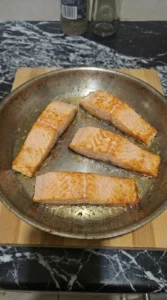
- Slide a thin spatula beneath each fillet and turn it carefully so the flesh faces the hot skillet. Cook over medium heat, around 350°F at the cooking surface, for 2 to 3 minutes, adjusting the time for thickness. Spoon a little of the pan oil over any pale areas, but keep the fillets spaced apart so heat reaches their sides. Check the thickest part with an instant-read thermometer as the color changes. The flesh should look opaque coral around the edges and slightly translucent only at the center until it reaches 145°F internally. If the surface darkens before the middle warms, reduce the heat and give it another short interval. Turn once and cook gently so the fillets stay intact.
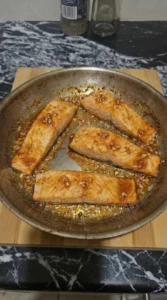
- Pour the prepared honey garlic mixture into the skillet around the 4 salmon fillets, then lower the heat to medium-low, about 300°F at the cooking surface. Let the sauce bubble gently for 2 to 4 minutes while you spoon it over the tops in slow strokes. Turn the fillets once more only if needed for even coating, and check that the thickest center reaches 145°F. The glaze should cling rather than run like water. Watch for small steady bubbles and a deeper amber color around the edges. If the sauce thickens too quickly, add 1 tablespoon water and swirl the skillet gently. Stop before the honey darkens to a bitter brown. Gentle reduction thickens the glaze without burning the honey.
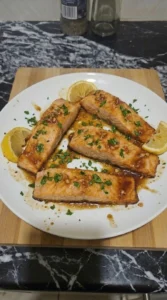
- Transfer the 4 glazed salmon fillets to a large white serving plate, keeping their skin intact and leaving natural gaps between them. Spoon the remaining sauce over the fish, then scatter 1 tablespoon finely chopped fresh parsley across the fillets. Add 4 lemon wedges around the edges and let the salmon rest for 2 minutes before serving. The thickest part should have reached 145°F before it leaves the skillet. Look for sticky amber glaze, lightly crisp edges and moist coral flakes that separate easily with a fork. Keep some skin visible, and don’t bury the fish under sauce or garnish. Rest briefly so the juices settle and the glaze stays in place.
Notes
Frequently Asked Questions
Yes. Whisk the honey, low-sodium soy sauce, minced garlic, lemon juice and cornstarch together up to 24 hours ahead, then refrigerate the mixture in a sealed container. Stir it well before using because the starch can settle, and let it stand for about 10 minutes while you pat the salmon dry.
Store leftover salmon in an airtight container in the refrigerator for up to 3 days, keeping it at 40°F or below. For the best texture, separate the fillets from any rice or vegetables and check for an unusual smell, slimy surface or other signs of spoilage before reheating.
Yes. Replace the 3 tablespoons of low-sodium soy sauce with 3 tablespoons of coconut aminos for a soy-free alternative, provided your other ingredients meet your dietary needs. The glaze will taste sweeter and less salty, so start with 1/4 cup honey and add more only after tasting the sauce.
The sauce may not have simmered long enough, or excess moisture from the salmon may have diluted it. Move the fillets briefly to a plate if needed, then simmer the sauce over medium-low heat for another 1 to 2 minutes until it coats a spoon, adding a little water only if it becomes too thick.
Yes, double every ingredient to serve eight, but cook the salmon in two batches rather than crowding one skillet. Keep the first batch warm in a 170°F oven while the second sears, then combine the portions with the glaze for about 1 minute and check that each fillet reaches 145°F.
Steamed jasmine rice, roasted broccoli or garlicky green beans all work well with the sweet-savory sauce. For a fuller dinner, serve the salmon with our Garlic Parmesan Roasted Carrots and plan about 1 cup of cooked rice per person if rice is your main side.
Yes. Freeze cooled portions in freezer-safe airtight packaging for up to 2 months, separating pieces with parchment if you plan to thaw them individually. Thaw overnight in the refrigerator, then reheat covered at 275°F for about 10 to 15 minutes until the center reaches 165°F, adding a teaspoon of water to loosen the glaze if needed.
Final Thoughts
On a quiet evening with dinner cooking and the kitchen smelling of garlic and honey, this is the kind of meal I like to make again. The trick is letting the glaze thicken just enough to cling to the salmon while keeping the center tender, which makes this honey garlic salmon recipe stand out.
Give this easy honey garlic salmon a try and share how you served it. If you want another simple dinner idea, our Garlic Parmesan Roasted Carrots make a lovely side.
Honey has long been used in cooking because its natural sugars help sauces thicken and develop color. In this recipe, the honey also balances the salty soy sauce and sharp garlic, while lemon juice keeps the glaze from tasting too sweet.