Fig Balsamic Salmon
This is the kind of thing I wish I’d learned sooner. The first time I made it was for Thanksgiving 2020, when we couldn’t travel, and I overcooked the salmon by almost 10 minutes. It was still the best part of the meal somehow. That’s when I realized this recipe is way more forgiving than most people admit. The sticky fig glaze protects the surface and keeps each bite flavorful.
Since then I’ve made it for holiday dinners, random Tuesday nights when friends dropped by and once for a potluck where three people asked for the recipe. I was searching Dinner Recipes To Impress Guests and even Chicken Thigh Goat Cheese Recipes. Then I realized salmon could do the job with much less fuss. For another dependable main, my Roast Chicken has the same relaxed dinner-table feel. It’s juicy, packed with flavor and genuinely simple even if the ingredient list looks long.
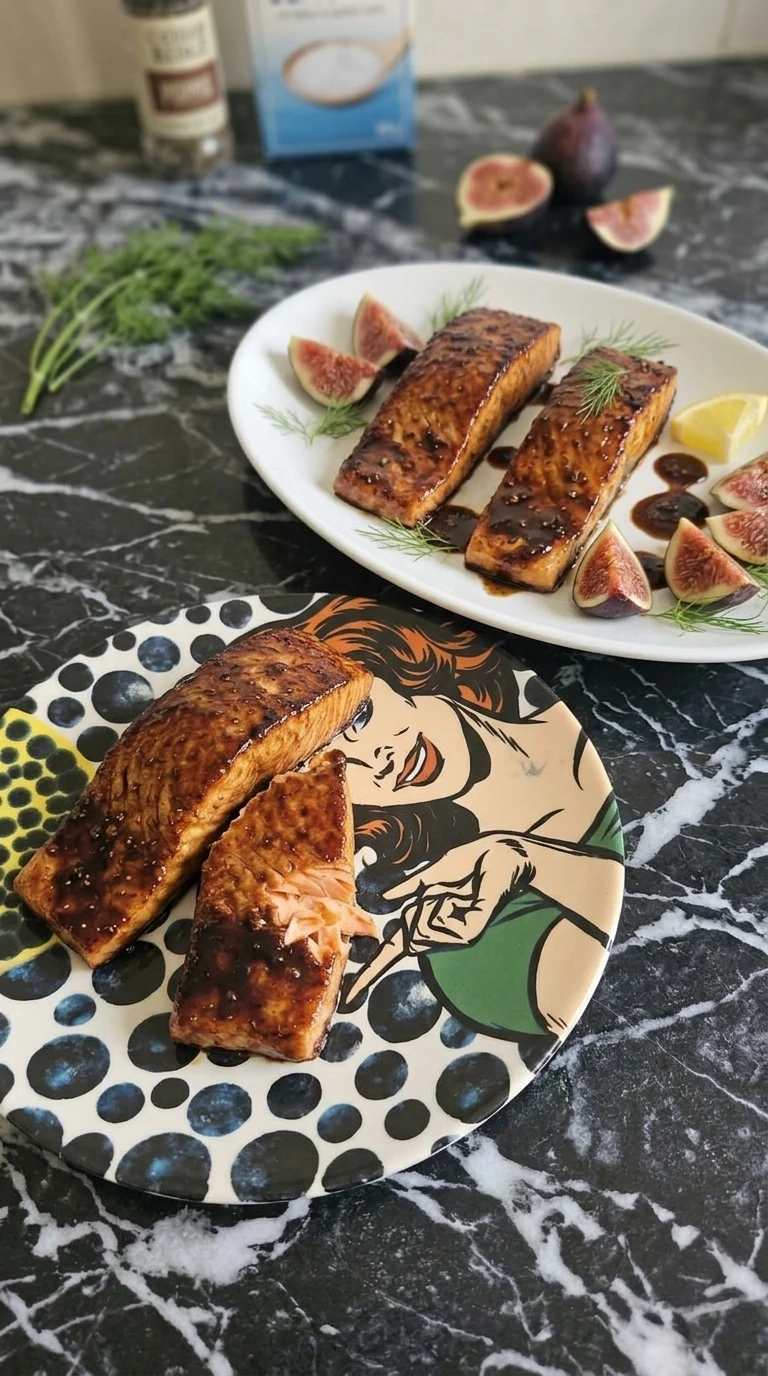
The fig preserves give the balsamic glaze body while Dijon and lemon keep it from tasting flat. And the salmon only needs a fast sear plus a short oven finish. The result looks glossy and special. Yet the method stays calm enough for a busy weeknight or a dinner where guests arrive early.
The Secret to This Recipe
Patting the salmon dry and searing it near 425°F creates a thin amber crust before moisture escapes. The fig preserves cling to that crust while balsamic vinegar and Dijon balance sweetness with acid.
So the glaze tastes concentrated rather than sugary, and a 10-minute seasoning rest prevents a wet surface. Finishing at 400°F for 6 to 8 minutes sets the glaze without scorching its fruit sugars.
The same staged approach makes Ground Beef Meal Prep practical because controlled heat protects texture. Pulling the salmon at 145°F keeps the center moist even when the fillets vary slightly in thickness during cooking.
Ingredient List
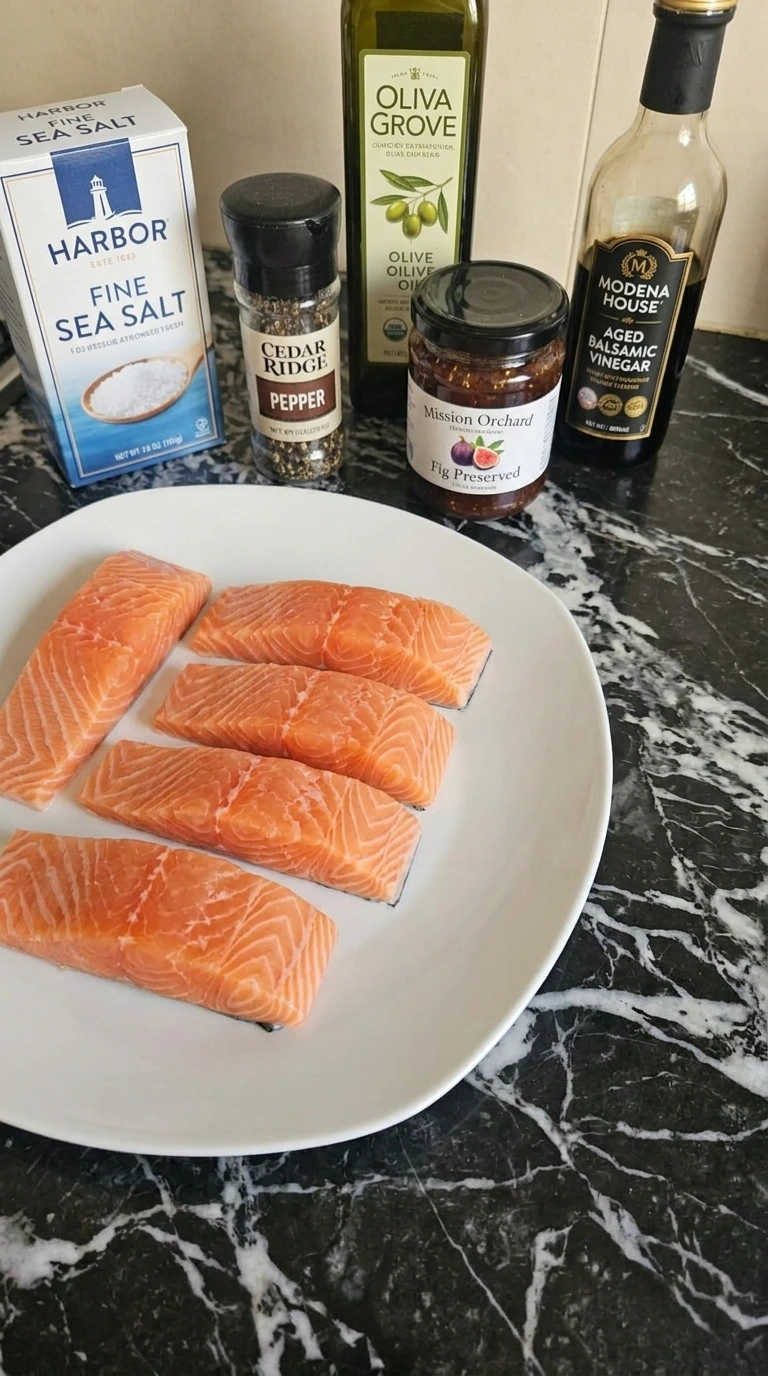
- Atlantic salmon fillet: Choose center-cut skinless pieces about 1 inch thick for even cooking.
- fine sea salt: Use fine crystals so the seasoning spreads evenly across all four fillets.
- black pepper: Grind it shortly before cooking for a sharper aroma.
- extra-virgin olive oil: Divide it between coating the salmon and searing in the skillet.
- Black Mission fig preserves: Choose preserves with visible fruit and seeds for a textured glaze.
- aged balsamic vinegar of Modena: Use a balanced vinegar with gentle sweetness and clear acidity.
- Dijon mustard: Whisk it into the glaze to sharpen flavor and improve cling.
- garlic: Mince finely so the pieces soften during the short reduction.
- fresh thyme: Strip and lightly chop the leaves before adding them to the glaze.
- fresh lemon: Juice 1 tablespoon for the glaze and cut the remainder into four wedges.
- unsalted butter: Whisk it in off heat to smooth the glaze and add shine.
- fresh dill: Tear the fronds loosely and scatter them just before serving.
- Black Mission fig: Quarter each fig to provide two pieces for every plated portion.
Kitchen Equipment
- 12-inch oven-safe cast-iron skillet: A heavy 12-inch skillet holds four fillets without crowding and moves safely into a 400°F oven, while a smaller or thin pan traps steam and weakens the crust.
- 1.5-quart heavy-bottomed saucepan: A 1.5-quart saucepan reduces the glaze in a shallow layer and limits scorching, while a wide thin pan can evaporate the vinegar before the fig preserves loosen.
- Instant-read thermometer: A fast digital thermometer confirms 145°F at the thickest center, while a slow dial model can overcook the salmon before the reading settles.
- Heatproof pastry brush: A 1.5-inch silicone brush spreads the sticky glaze without shedding bristles, while a wide barbecue brush can drag and tear the delicate salmon surface.
Step-by-Step Instructions
Step 1: Season and lightly coat the salmon

Keep four 6-ounce center-cut skinless salmon fillets at 40°F until 15 minutes before cooking. Pat every side dry and brush with 1 teaspoon extra-virgin olive oil. Then season with fine sea salt and black pepper. Press the seasoning lightly with your fingertips and rest the fillets for exactly 10 minutes.
Don’t leave them longer than 20 minutes or the surface starts releasing water. Next, the coral flesh should look matte with a faint oily sheen and visible pepper specks. The fillets should feel slightly tacky rather than wet. You’ll smell clean salmon and pepper, but no sharp fishy odor.
If beads of moisture form, blot them once before searing or the crust will steam. The short rest seasons the fish without drawing out excess moisture.
Tip: Choose fillets within 1/4 inch of each other in thickness so all four reach 145°F together.
Step 2: Reduce the fig balsamic glaze
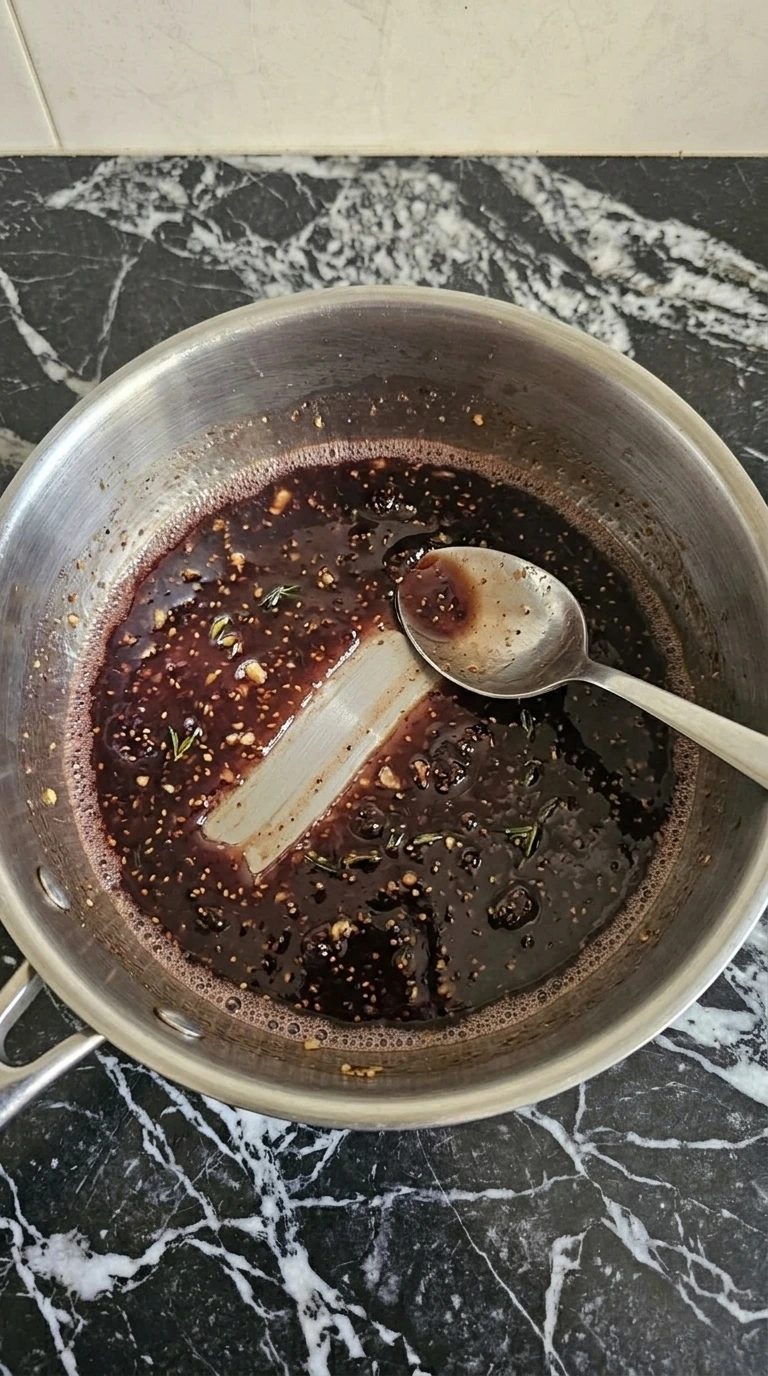
Combine fig preserves and balsamic vinegar with Dijon mustard and minced garlic in a 1. 5-quart saucepan. Add fresh thyme leaves and lemon juice. Cook over medium-low heat at about 4 on a 10-dial for 8 to 10 minutes. Whisk every 30 seconds and scrape the bottom in wide circles.
Remove the pan and whisk in unsalted butter for 20 seconds. Go past 10 minutes and the fruit sugars can catch along the edges. Meanwhile, the mixture will shift from loose purple-red syrup to a glossy mahogany glaze. Tiny bubbles should rise steadily without splashing. Drag a spoon through the glaze at minute 8.
A clean line should hold for 2 seconds before slowly closing. If it smells bitter instead of fruity, remove it immediately. Gentle reduction concentrates flavor without burning the fig sugars.
Tip: Use preserves with visible fig seeds and at least 50% fruit for stronger body and a less candy-like finish.
Step 3: Sear the salmon until amber
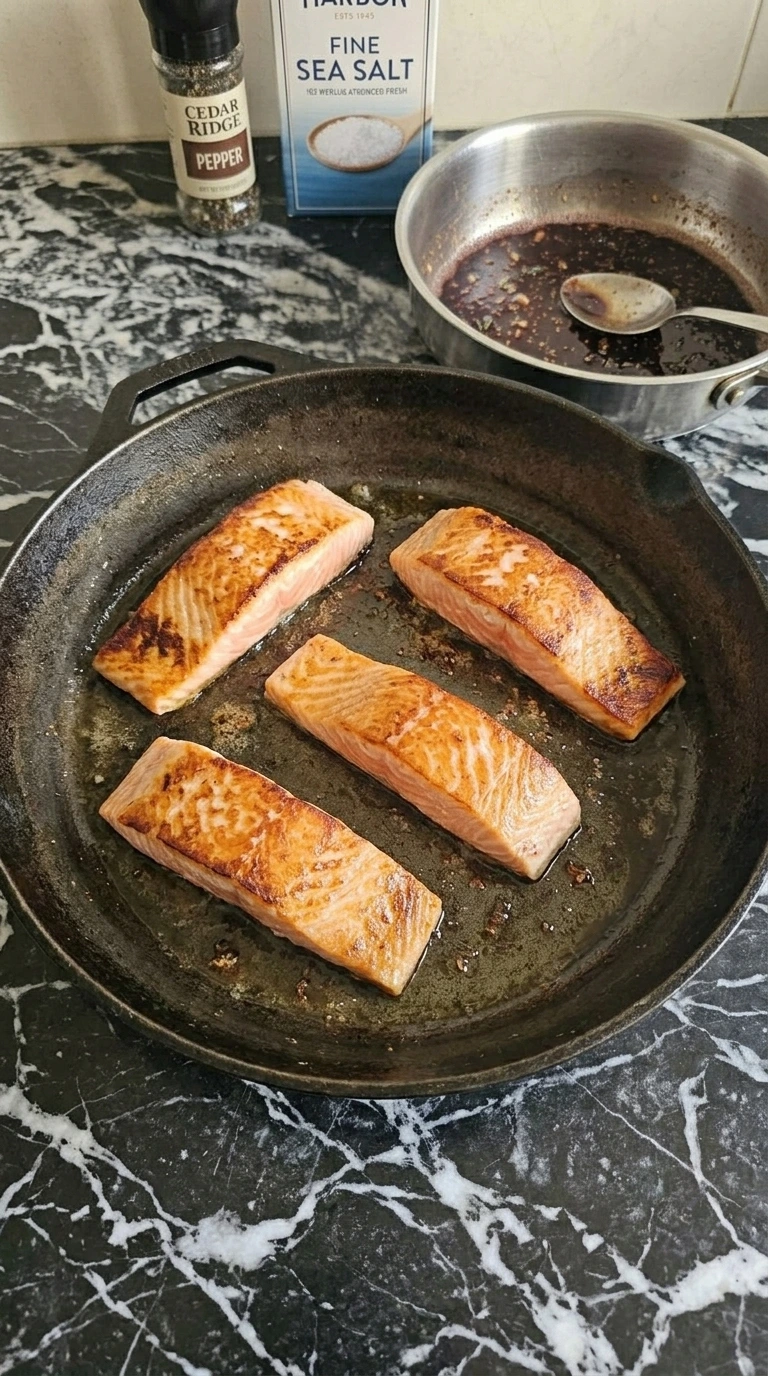
Heat a 12-inch oven-safe cast-iron skillet over medium-high until the surface reaches about 425°F. Add the remaining 2 teaspoons extra-virgin olive oil and tilt once to coat. Lay the four fillets away from you with uneven spacing. Press each top for 10 seconds and sear without moving for 3 minutes.
Flip once and sear the second side for exactly 90 seconds. You’ll hear a strong steady sizzle that softens near minute 3. The first side should show an irregular amber crust while the edges turn opaque by about 1/4 inch. If the fillets cling, wait 20 seconds because forcing them tears the surface.
Miss the hot window and the fish releases water instead of browning. High heat builds fond before the salmon releases too much moisture.
Tip: Set a splatter screen nearby but leave it off during the first minute because trapped steam softens the forming crust.
Step 4: Glaze and finish the salmon

Brush half of the warm fig balsamic glaze over the four seared fillets and push the glaze toward the uneven edges. Transfer the skillet to a 400°F oven for 6 to 8 minutes. At minute 4, rotate the skillet 180 degrees and brush on 2 more tablespoons. Check the thickest fillet at minute 6.
Remove each fillet when its center reaches 145°F. The tops should deepen from amber to glossy mahogany with small dark caramelized patches. The centers should look opaque and flake under light pressure. (I tried 425°F first, the glaze darkened before the thickest fillet reached temperature.
400°F fixed it. ) Go beyond 150°F and the layers tighten and dry. Moderate oven heat sets the glaze before the fig sugars burn.
Tip: Reserve 2 tablespoons glaze before brushing so the final plates get a clean glossy spoonful without pan drippings.
Step 5: Rest and plate each portion
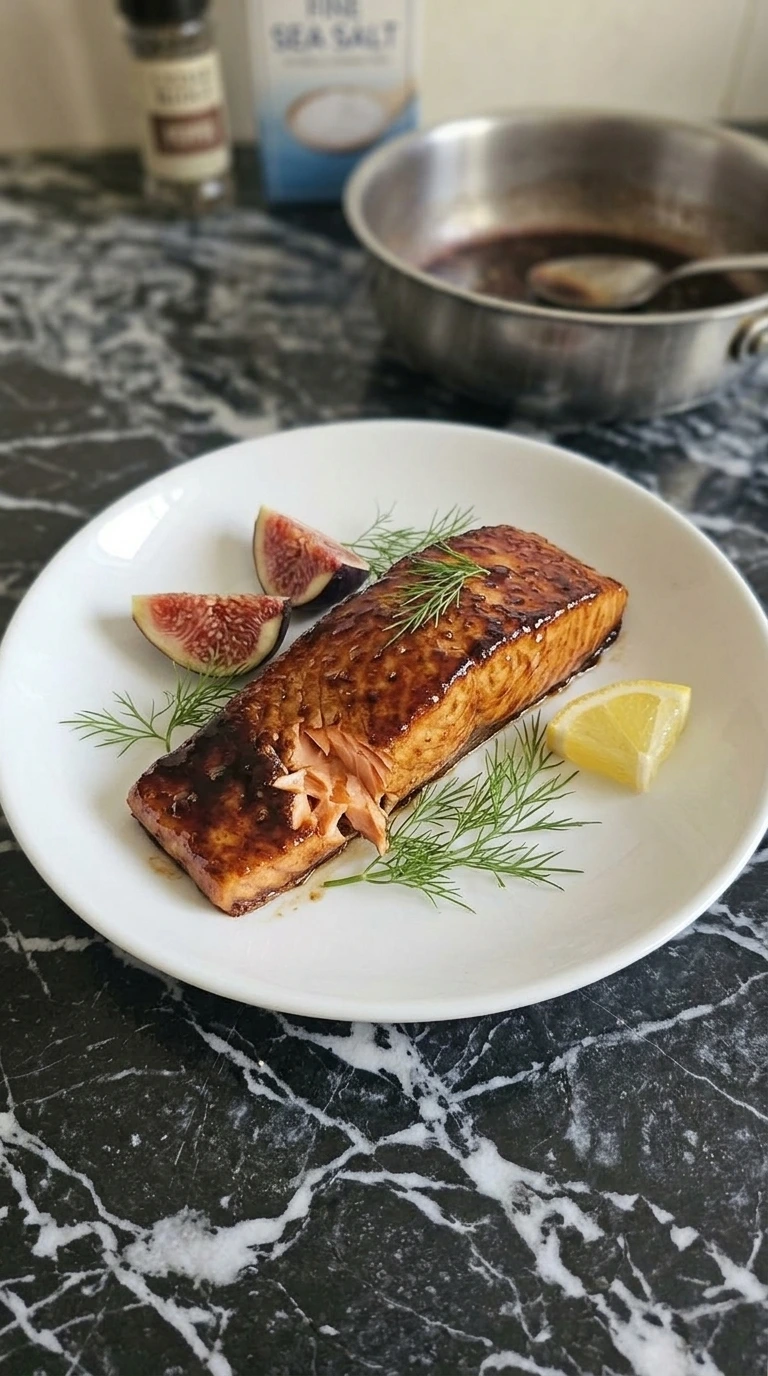
Rest the skillet off heat for 5 minutes in a 68°F to 72°F kitchen. Then lift one fillet onto each plate and spoon the reserved glaze over the center. Tuck two Black Mission fig quarters beside every portion. Scatter fresh dill unevenly and add one lemon wedge.
Don’t cut during the rest or the juices escape and thin the glaze on the plate. Finally, each fillet should show a dark glossy top and moist coral flakes at one broken edge. The fig quarters stay deep purple and fresh while the dill looks feathery and bright. Squeeze lemon only at the table so the glaze stays thick.
If the glaze pools too loosely, let it sit 1 minute before serving. Resting lets the salmon fibers relax and hold their moisture.
Tip: Warm the serving plates at 170°F for 5 minutes so the glaze stays fluid while everyone sits down.
My Favorite Tips
- Buy four salmon fillets between 3/4 and 1 inch thick. A thicker center cut gives the glaze time to set before the fish reaches 145°F.
- Blot each fillet for 30 seconds with clean paper towels. A visibly matte surface browns faster than a damp one.
- Use a 12-inch skillet for four 6-ounce fillets. Crowding them closer than 1 inch apart traps steam and leaves pale edges.
- Measure the glaze before brushing and reserve 2 tablespoons in a clean bowl. That portion stays smooth for the final spoon-over.
- Check the glaze at minute 8 by drawing a line through it. Remove it when the line stays open for 2 seconds.
- Insert the thermometer through the side into the thickest center. This avoids puncturing the glossy top and gives a steadier 145°F reading.
- Finish each plate with no more than 1 teaspoon fresh lemon juice. More acid can thin the warm glaze and overpower the figs.
- Add 1/2 teaspoon crushed red pepper to the glaze for a gentle heat that cuts through the fig sweetness.
- Replace the lemon juice with 1 tablespoon fresh orange juice and add 1 teaspoon orange zest for a warmer citrus finish.
- Scatter 2 tablespoons toasted chopped walnuts over the plated salmon for extra crunch and a deeper autumn flavor.
- Roast 12 ounces halved Brussels sprouts beside the skillet at 400°F for 20 minutes and serve them under the salmon.
Make It Your Own
- unsalted butter: extra-virgin olive oil — Use 2 teaspoons oil for a dairy-free glaze. It stays glossy but tastes lighter and won’t feel quite as rounded.
- Dijon mustard: certified gluten-free whole-grain mustard — Use the same 1 tablespoon amount for a gluten-free option. The glaze will show more seeds and taste slightly less sharp.
- egg: no replacement needed — This recipe is naturally egg-free because the fig preserves and mustard provide enough cling. Don’t add an egg wash because it turns patchy under the sticky glaze.
- Atlantic salmon fillet: Arctic char fillet — Use four 6-ounce fillets and begin checking at minute 5 in the oven. Arctic char is thinner and richer, so it may reach 145°F sooner.
- Black Mission fig preserves: apricot preserves — Use 1/3 cup and reduce the balsamic vinegar to 3 tablespoons. The result tastes brighter and less earthy with a lighter amber color.
- fresh thyme: fresh sage — Use 1/2 teaspoon finely chopped sage because it’s stronger. The flavor leans warmer and pairs nicely with the herb profile in Stuffing.
How to Store & Reheat
Cool leftover salmon for no more than 2 hours and refrigerate it at 40°F or colder. Use a shallow airtight glass container and keep the fillets in one layer for up to 3 days. For longer storage, wrap each cooled portion tightly and place it in a freezer bag for up to 2 months.
Freeze the extra glaze separately in a small sealed container so it doesn’t soak into the fish. Thaw frozen salmon overnight in the refrigerator. Reheat it covered at 300°F for 10 to 15 minutes and add 1 teaspoon water or reserved glaze before warming.
Stop when the center reaches 165°F. Discard the salmon if it smells sour, feels slimy or shows gray dry patches with leaking liquid. Fresh dill and lemon should always be added after reheating.
Fig Balsamic Salmon
Ingredients
- 4 fillets, 6 ounces each Atlantic salmon fillet Choose center-cut skinless pieces about 1 inch thick for even cooking.
- 1 teaspoon fine sea salt Use fine crystals so the seasoning spreads evenly across all four fillets.
- 1/2 teaspoon black pepper Grind it shortly before cooking for a sharper aroma.
- 1 tablespoon extra-virgin olive oil Divide it between coating the salmon and searing in the skillet.
- 1/3 cup Black Mission fig preserves Choose preserves with visible fruit and seeds for a textured glaze.
- 1/4 cup aged balsamic vinegar of Modena Use a balanced vinegar with gentle sweetness and clear acidity.
- 1 tablespoon Dijon mustard Whisk it into the glaze to sharpen flavor and improve cling.
- 2 cloves garlic Mince finely so the pieces soften during the short reduction.
- 1 teaspoon fresh thyme Strip and lightly chop the leaves before adding them to the glaze.
- 1 large fresh lemon Juice 1 tablespoon for the glaze and cut the remainder into four wedges.
- 1 tablespoon unsalted butter Whisk it in off heat to smooth the glaze and add shine.
- 2 tablespoons fresh dill Tear the fronds loosely and scatter them just before serving.
- 2 fresh Black Mission fig Quarter each fig to provide two pieces for every plated portion.
Instructions
- Keep four 6-ounce center-cut skinless salmon fillets at 40°F until 15 minutes before cooking. Pat every side dry and brush with 1 teaspoon extra-virgin olive oil. Then season with fine sea salt and black pepper. Press the seasoning lightly with your fingertips and rest the fillets for exactly 10 minutes. Don’t leave them longer than 20 minutes or the surface starts releasing water. Next, the coral flesh should look matte with a faint oily sheen and visible pepper specks. The fillets should feel slightly tacky rather than wet. You’ll smell clean salmon and pepper, but no sharp fishy odor. If beads of moisture form, blot them once before searing or the crust will steam. The short rest seasons the fish without drawing out excess moisture.

- Combine fig preserves and balsamic vinegar with Dijon mustard and minced garlic in a 1.5-quart saucepan. Add fresh thyme leaves and lemon juice. Cook over medium-low heat at about 4 on a 10-dial for 8 to 10 minutes. Whisk every 30 seconds and scrape the bottom in wide circles. Remove the pan and whisk in unsalted butter for 20 seconds. Go past 10 minutes and the fruit sugars can catch along the edges. Meanwhile, the mixture will shift from loose purple-red syrup to a glossy mahogany glaze. Tiny bubbles should rise steadily without splashing. Drag a spoon through the glaze at minute 8. A clean line should hold for 2 seconds before slowly closing. If it smells bitter instead of fruity, remove it immediately. Gentle reduction concentrates flavor without burning the fig sugars.

- Heat a 12-inch oven-safe cast-iron skillet over medium-high until the surface reaches about 425°F. Add the remaining 2 teaspoons extra-virgin olive oil and tilt once to coat. Lay the four fillets away from you with uneven spacing. Press each top for 10 seconds and sear without moving for 3 minutes. Flip once and sear the second side for exactly 90 seconds. You’ll hear a strong steady sizzle that softens near minute 3. The first side should show an irregular amber crust while the edges turn opaque by about 1/4 inch. If the fillets cling, wait 20 seconds because forcing them tears the surface. Miss the hot window and the fish releases water instead of browning. High heat builds fond before the salmon releases too much moisture.

- Brush half of the warm fig balsamic glaze over the four seared fillets and push the glaze toward the uneven edges. Transfer the skillet to a 400°F oven for 6 to 8 minutes. At minute 4, rotate the skillet 180 degrees and brush on 2 more tablespoons. Check the thickest fillet at minute 6. Remove each fillet when its center reaches 145°F. The tops should deepen from amber to glossy mahogany with small dark caramelized patches. The centers should look opaque and flake under light pressure. (I tried 425°F first, the glaze darkened before the thickest fillet reached temperature. 400°F fixed it.) Go beyond 150°F and the layers tighten and dry. Moderate oven heat sets the glaze before the fig sugars burn.
- Rest the skillet off heat for 5 minutes in a 68°F to 72°F kitchen. Then lift one fillet onto each plate and spoon the reserved glaze over the center. Tuck two Black Mission fig quarters beside every portion. Scatter fresh dill unevenly and add one lemon wedge. Don’t cut during the rest or the juices escape and thin the glaze on the plate. Finally, each fillet should show a dark glossy top and moist coral flakes at one broken edge. The fig quarters stay deep purple and fresh while the dill looks feathery and bright. Squeeze lemon only at the table so the glaze stays thick. If the glaze pools too loosely, let it sit 1 minute before serving. Resting lets the salmon fibers relax and hold their moisture.

Notes
Nutrition
Frequently Asked Questions
Yes, cook the glaze up to 5 days ahead and refrigerate it in a sealed glass jar. Warm it over low heat for 2 to 3 minutes. Whisk in 1 teaspoon water if it’s too thick to brush smoothly again.
Refrigerate the salmon within 2 hours of cooking and keep it at 40°F or colder for up to 3 days. Store each fillet in a shallow airtight container so the glaze stays on the fish instead of rubbing onto foil.
Yes, but use fillets close to 6 ounces and check them early because they often run thinner. Start testing at minute 5 in a 400°F oven and remove the fish when the thickest center reaches 145°F. Their delicate flakes dry faster than thick salmon.
The glaze probably didn’t reduce long enough or the salmon released moisture into the skillet. Simmer the reserved sauce for another 2 to 4 minutes over medium-low heat. Brush it on when a spoon line holds for 2 full seconds.
Yes, but use two 12-inch skillets or sear in two batches so the fillets stay at least 1 inch apart. Finish both pans at 400°F and check each thickest piece separately because one pan may reach 145°F a minute earlier.
Serve it with roasted Brussels sprouts, wild rice or a bitter arugula salad to balance the sweet glaze. Plan about 3/4 cup cooked rice or 1.5 cups vegetables per person and add the lemon wedge at the table. The contrast keeps every bite balanced.
Freeze cooled portions for up to 2 months after wrapping each fillet tightly and placing it in a freezer bag. Thaw overnight, add 1 teaspoon water or glaze and reheat covered at 300°F for 10 to 15 minutes. Stop at 165°F and add fresh dill afterward for better color.
Before You Go
This is the kind of recipe I wish I had found years ago. It would have saved me so many stressful dinner nights when I needed Dinner Recipes To Impress Guests.
But now that I have it, I make it often because the seared crust and glossy glaze feel special. If Goat Cheese Chicken is also on your dinner list, finish this salmon meal with Chocolate Cake and leave a comment because I read every single one.
Readers also use it for: Goat Cheese Crusted Chicken, Chicken Goat Cheese Recipes, Goat Cheese Stuffed Chicken Thighs.
Fig preserves do more than sweeten the sauce. Their fruit solids and pectin help the balsamic glaze cling to the salmon without needing flour or cornstarch.