Creamy Cabbage Soup
I still remember the first time I made this. It was one of those cold afternoons where you just want something warm simmering on the stove. My mom took one bite and said it might be my best soup yet, and honestly, I didn’t argue.
It’s got that cozy, creamy feel you’d expect, but it doesn’t weigh you down. The cabbage softens into something sweet and mellow, and the potato quietly thickens everything without needing flour. If you like lighter comfort meals, this sits right next to something like Healthy Quinoa Salad for me.

I usually keep the batch small since I’m always testing recipes, but it doubles easily. Make it for lunch, or turn it into dinner with toast and a salad. And if you’ve got a busy week ahead, this one holds up really well in the fridge.
What Makes This Recipe Work
The potato simmers at a steady 212°F until it breaks down just enough to thicken the broth naturally, so you don’t need flour. Blending only part of the soup creates a balance between creamy base and soft cabbage texture. Keeping the heat low after adding cream prevents the fat from separating, which is what keeps the soup silky instead of grainy.
What You Will Need

Kitchen Equipment
Instructions
Step 1: Soften the onion carrot and celery

Set a large pot over medium heat, about 5 on a 10-dial, and add the butter with the diced onion, carrot, and celery. Cook for 6 to 8 minutes, stirring with a slow scoop from the edges toward the center so everything softens evenly. You’ll see the vegetables turn glossy and slightly slumped, and the onion smell shifts from sharp to sweet. Stop right before any browning starts. Go past 8 minutes and the butter picks up a toasted note that throws off the final creaminess.
Tip: If your pan runs hot, drop to medium-low so the vegetables soften without browning.
Step 2: Wilt the cabbage with garlic and thyme
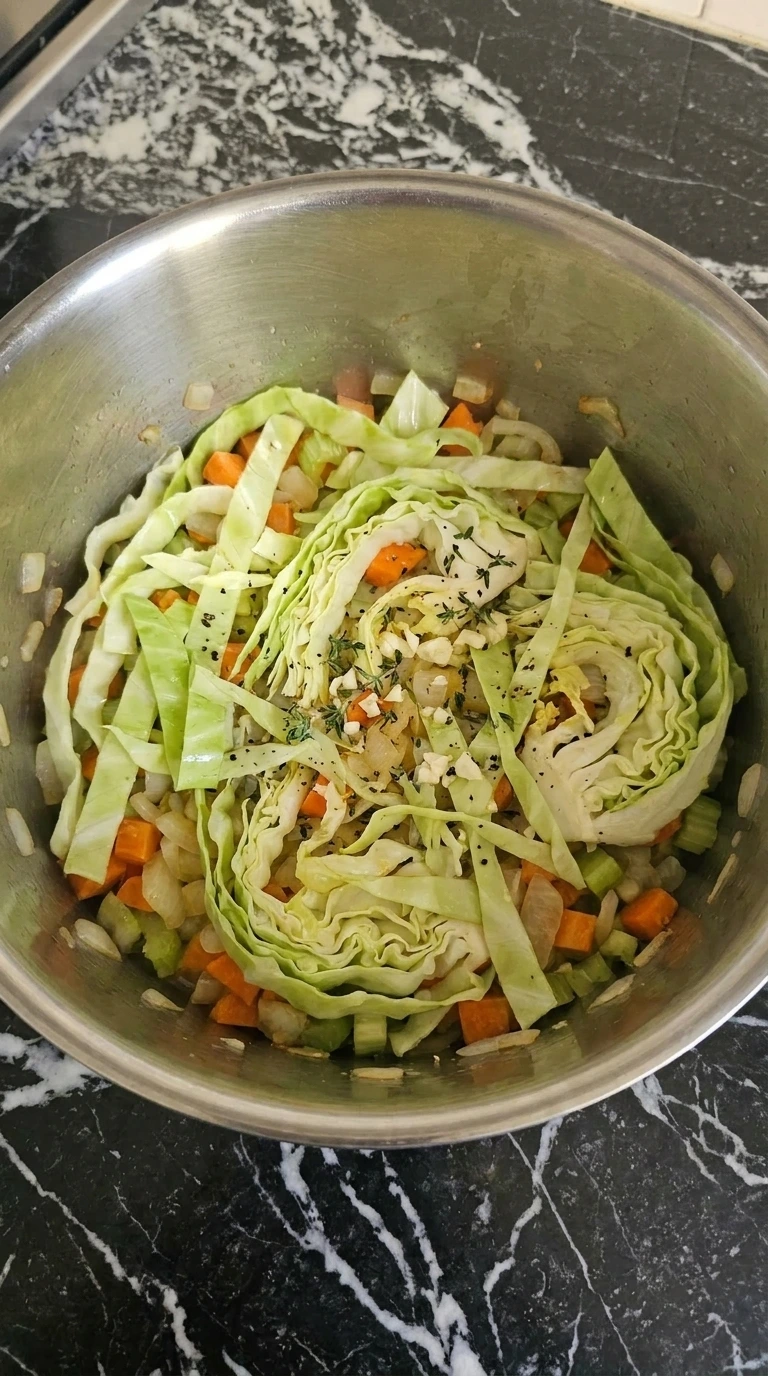
Keep the heat at medium, about 5 on a 10-dial, then add the cabbage, garlic, thyme, salt, and pepper. Fold everything together for 7 to 9 minutes, lifting from the bottom every 90 seconds so the cabbage cooks evenly. The cabbage should shrink by about half and turn a glossy pale green. You’ll smell the garlic right when it’s ready. Miss that moment and the garlic can brown too fast before the cabbage softens, which leaves a slightly bitter edge.
Tip: If the pot feels packed, add the cabbage in stages so it wilts down without spilling over.
Step 3: Simmer the potato in broth

Add the diced Yukon Gold potato and pour in the broth, bringing it to a gentle simmer at 212°F. Let it cook for 18 to 20 minutes, giving a slow stir every 5 minutes to keep everything moving. The potato should press easily against the side of the pot, and the cabbage will look soft and silky. Stop too early and the soup won’t blend properly later. (I used to cut this short, and the texture always felt thin and unfinished.)
Tip: Keep the simmer gentle, not a rolling boil, so the cabbage stays sweet.
Step 4: Blend part of the soup until creamy

Take the pot off the heat and let it cool for exactly 5 minutes, down to about 180°F. Transfer about half the soup to a blender and pulse first, then blend for 30 to 45 seconds until smooth. The blended portion should look pale and creamy, while the rest stays chunky with cabbage ribbons. That contrast matters. Blend everything and you lose texture. Blend it too hot and steam can push the lid up, which gets messy fast.
Tip: Hold the blender lid down with a towel to catch any escaping steam safely.
Step 5: Stir in cream and finish gently

Return the blended soup to the pot and set it over low heat, about 3 on a 10-dial. Stir in the cream for 3 to 4 minutes using slow figure-eight motions so everything combines smoothly. The soup should coat the back of a spoon and leave a clean line when you run your finger through it. Don’t let it boil here. If it gets too hot, the cream can separate and turn slightly grainy around the edges.
Tip: Warm the cream slightly before adding so it blends in more smoothly.
Step 6: Serve the soup with parsley
Ladle the soup into bowls while it’s around 165°F, then scatter fresh parsley over the top in loose pinches. Let it sit for about 2 minutes before serving so the surface settles. You’ll see a smooth, creamy top with cabbage ribbons peeking through. That’s what you want. Serve it too quickly and the surface can look thin instead of rich and settled.
Tip: Use flat-leaf parsley for a brighter flavor and softer texture.
My Best Tips
- Slice cabbage thin but uneven so some pieces melt while others stay visible.
- Keep the heat low after adding cream to avoid a grainy texture.
- Use low-sodium broth so you can control the final seasoning.
- Blend only half for the best mix of creamy and chunky texture.
Substitutions & Variations
- heavy cream: full-fat coconut milk — Adds a slight coconut flavor and makes the soup less classic, but still creamy.
- Yukon Gold potato: russet potato — Works fine but can make the soup slightly thicker and less buttery in flavor.
- chicken broth: vegetable broth — Great for a vegetarian version, just a bit lighter in overall depth.
- butter: olive oil — Still works well, though you lose a bit of richness in the base.
- fresh thyme: dried thyme — Use about one-third the amount. Flavor is slightly less bright but still good. Pairs nicely with something like Healthy Avocado Toast.
Storing Leftovers
Let the soup cool completely, then store it in an airtight container in the fridge for up to 4 days. Reheat over low heat for 8 to 10 minutes, stirring often so the cream stays smooth. If you plan to freeze it, skip the cream at first. Thaw overnight, warm gently, then stir in fresh cream right before serving for the best texture.
Creamy Cabbage Soup
Ingredients
- 1 small head, about 1 1/2 pounds green cabbage
- 1 medium, peeled and diced Yukon Gold potato
- 1 medium, diced yellow onion
- 1 large, diced carrot
- 1 large, diced celery rib
- 3 cloves, minced garlic cloves
- 3 tablespoons unsalted butter
- 4 cups low-sodium chicken broth
- 3/4 cup heavy cream
- 1 teaspoon fresh thyme leaves
- 1 teaspoon, plus more to taste fine sea salt
- 1/2 teaspoon black pepper
- 2 tablespoons, chopped fresh parsley
Instructions
- Set a large pot over medium heat, about 5 on a 10-dial, and cook the unsalted butter with the diced yellow onion, carrot and celery rib for 6 to 8 minutes. Stir with a slow scooping motion from the edges toward the center so the small pieces soften evenly. The vegetables should look glossy and a little slumped, and you’ll smell the onion turn sweet instead of sharp. Stop before the carrot browns, because go past 8 minutes and the butter can taste toasted in a way that fights the cream.

- Keep the pot at medium heat, about 5 on a 10-dial, then add the sliced green cabbage, minced garlic cloves, fresh thyme leaves, fine sea salt and black pepper. Fold the cabbage through the softened vegetables for 7 to 9 minutes, lifting from the bottom and turning the ribbons over every 90 seconds. The cabbage should shrink by almost half and the edges should turn glossy pale green. You’ll smell the garlic right when it’s ready. Miss that window and the garlic can brown before the cabbage has softened enough.

- Add the diced Yukon Gold potato and pour in the low-sodium chicken broth while the pot stays at 212°F at a gentle simmer. Cook for 18 to 20 minutes, nudging the potato pieces under the broth with a slow stir every 5 minutes. The potato should break easily when pressed against the side of the pot and the cabbage should look relaxed and silky. If you stop before 18 minutes, the soup won’t blend smooth enough and the potato can taste separate. (I used to rush this part, and the soup always tasted thin. The extra few minutes fixes it.)

- Let the soup cool off the heat for exactly 5 minutes until it drops to about 180°F, then blend about half of it in a blender jar for 30 to 45 seconds. Pulse first, then blend steady so the potato thickens the broth while some cabbage pieces stay whole in the pot. The blended portion should look pale and creamy, while the unblended pot still has soft cabbage ribbons and carrot bits. Blend it all and the soup loses that homemade texture. Blend too hot and steam can push the lid up.

- Return the blended soup to the large pot and set it over low heat, about 3 on a 10-dial, then stir in the heavy cream for 3 to 4 minutes. Use slow figure-eight strokes so the creamy portion and chunky cabbage settle into one thick soup. The soup should coat a spoon and leave a soft line when you drag a finger through it. Don’t let it boil after the cream goes in, because miss this window and the cream can turn grainy around the edges.

- Ladle one portion into a bowl while the soup is around 165°F, then scatter chopped fresh parsley over the top in loose uneven pinches. Let it sit for 2 minutes before serving so the creamy surface settles and the cabbage peeks through. The finished bowl should look silky with soft cabbage ribbons, tiny carrot pieces and green parsley scattered naturally. Serve too fast and the surface looks runny instead of creamy.

Notes
Nutrition
Common Questions
Yes, and it actually gets better after a day. The cabbage softens more and the flavors settle into the broth. Just reheat it gently so the cream stays smooth.
You can, but cream-based soups can separate a bit. For best results, freeze it before adding cream, then stir in fresh cream after reheating.
Blend a larger portion of the soup or add an extra small potato during simmering. Avoid flour since it can make the texture feel heavy.
It’s great with toast, a crisp salad, or roasted vegetables. If you want something more filling, serve it alongside a pasta dish like Creamy Tomato Pasta.
You can, but it won’t have the same creamy texture. Blending part of it is what gives that thick, smooth base without extra ingredients.
A Final Note
This is one of those soups that just feels right when it’s simmering on the stove.
Once you nail the gentle finish with the cream, the texture really shines.
If you’re in the mood for something sweet after, Strawberry Cheesecake makes a perfect follow-up.
Cabbage naturally sweetens as it cooks because heat breaks down its sulfur compounds and releases mild sugars.