Banana Cake
This is the kind of thing I wish I’d learned sooner. The first time I made it was for Thanksgiving 2020, when we couldn’t travel, and I overbaked it by almost 10 minutes. It was still the best part of dessert somehow. That’s when I realized Banana Cake is way more forgiving than most people admit. The ripe fruit keeps the crumb soft and the cream cheese frosting covers a lot of small mistakes.
Since then I’ve made it for holiday dinners and random Tuesday nights when friends dropped by. I once carried a pan to a potluck where three people asked for the recipe. It’s tender and packed with real banana flavor. And it’s genuinely simple even when the ingredient list looks long. The walnuts bring a little crunch while the cool frosting keeps each square from tasting too sweet.
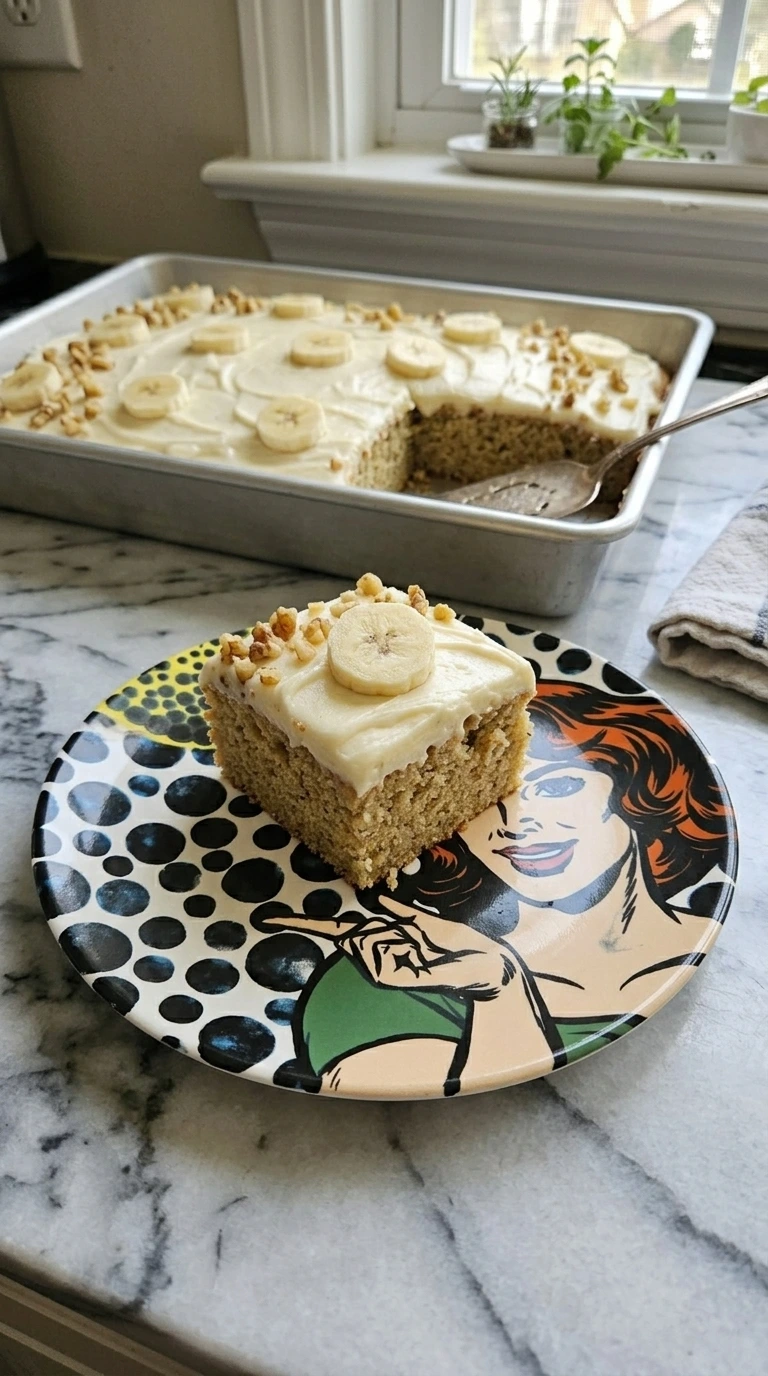
If you like a soft bakery-style crumb, you’ll probably enjoy our Blueberry Muffins too. This cake feels just as cozy but it’s built for slicing and sharing. Use bananas with plenty of brown spots because they mash smoothly and taste sweeter. Then let the cake cool fully before frosting. That pause feels annoying but it protects the creamy top from melting into the crumb.
Why You’ll Love It
Mashing the ripe bananas until mostly smooth spreads moisture evenly through the batter. Melted butter carries banana aroma better than neutral oil and adds a warmer finish. Sour cream adds acidity and fat, so the crumb stays tender without turning gummy.
The brown sugar also holds water after baking and keeps the cut edges soft. Folding the flour only until the last dry streak disappears limits gluten development. Baking at 350°F gives the center time to set before the edges dry out.
A 15-minute pan rest firms the crumb before cooling continues outside the pan. The same gentle mixing keeps our Chocolate Cupcakes soft rather than chewy.
Ingredients

- Cavendish banana: Use 3 very ripe bananas for about 340 grams mashed fruit and reserve 1 for 12 thin garnish coins.
- all-purpose flour: Spoon into the measuring cup and level it so the crumb stays tender rather than dry.
- baking soda: Provides the main lift and reacts with the sour cream and banana acids.
- baking powder: Adds steady oven lift so the center rises without creating a tall dome.
- ground cinnamon: Adds warm spice without covering the ripe banana flavor.
- fine sea salt: Use 1/2 teaspoon in the batter and 1/4 teaspoon in the frosting.
- unsalted butter: Melt 1/2 cup for the batter and soften the remaining 1/2 cup to 65°F for the frosting.
- light brown sugar: Pack it firmly because its molasses helps the baked crumb retain moisture.
- granulated sugar: Balances the brown sugar and keeps the banana flavor bright.
- large egg: Bring to about 70°F so they blend smoothly into the melted butter mixture.
- full-fat sour cream: Bring to about 70°F to add acidity and tenderness without cooling the butter.
- pure vanilla extract: Use 2 teaspoons in the batter and 1 teaspoon in the frosting.
- canola oil: Brush a thin coat inside the pan to release the cake without greasy edges.
- full-fat cream cheese: Soften to about 65°F so the frosting turns smooth without becoming runny.
- powdered sugar: Sift before mixing to prevent gritty pockets in the cream cheese frosting.
- walnut: Chop into uneven small pieces so the topping has natural crunch and varied texture.
The Gear
- 9×13-inch light aluminum cake pan: A straight-sided light aluminum pan bakes the center evenly, while dark metal can overbrown the edges before the middle reaches 200°F.
- 4-quart clear glass mixing bowl: A 4-quart bowl leaves room for broad folding strokes, while a smaller bowl crowds the batter and encourages overmixing.
- Balloon whisk: A medium balloon whisk blends the wet base without excessive aeration, while a very large whisk can splash the thick banana mixture.
- Flexible rubber spatula: A broad flexible spatula folds flour with fewer strokes, while a stiff spoon develops more gluten and leaves dry pockets.
- Electric hand mixer: A five-speed hand mixer smooths the frosting in under 5 minutes, while a high-powered blender can overheat and loosen the cream cheese.
- Instant-read thermometer: A thin-tip thermometer confirms the cake reaches 200°F to 205°F, while timing alone can miss an underbaked center in a cool oven.
Step-by-Step Instructions
Step 1: Mash the bananas and blend the wet base
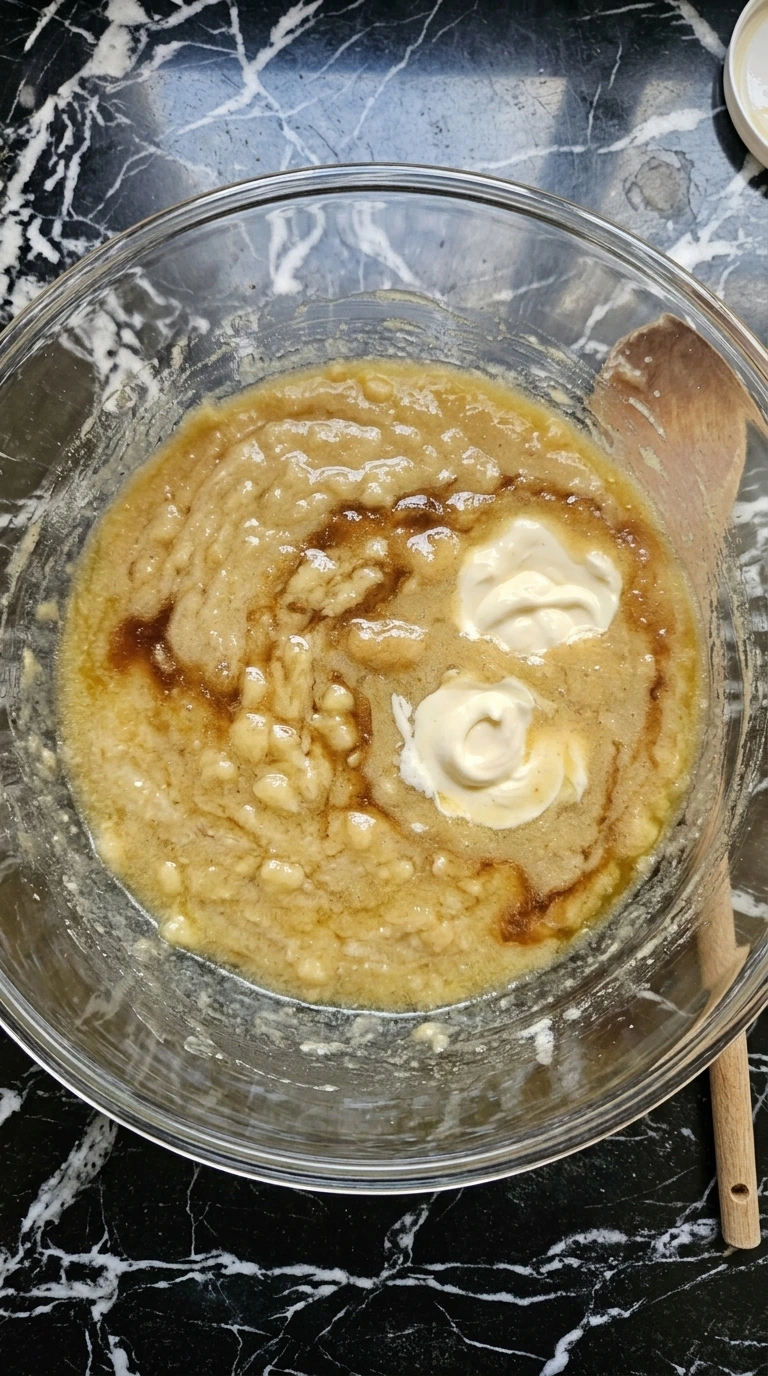
Set the eggs, sour cream and melted butter at about 70°F. Mash 3 very ripe Cavendish bananas for 60 to 90 seconds. Stop when only pea-sized pieces remain. Then whisk in light brown sugar and granulated sugar for 30 seconds.
Add the eggs one at a time and whisk 15 seconds after each. Finish with sour cream and vanilla extract. The mixture should look thick and glossy with tiny banana flecks. You’ll smell ripe fruit and vanilla before the sugars fully dissolve.
Scrape the sides once at minute 2 so no butter pools remain. Stop after 3 minutes total because extra whisking adds too much air. Even mixing now prevents wet pockets in the baked crumb.
Tip: Weigh the mashed bananas at about 340 grams so oversized fruit doesn’t make the center gummy.
Step 2: Fold the dry ingredients into the batter

Keep the wet mixture near 70°F. Sift all-purpose flour, baking soda, baking powder, ground cinnamon and fine sea salt directly over it. Fold with a rubber spatula in slow J-shaped strokes for 45 to 60 seconds. Turn the bowl a quarter turn after every three folds.
Stop as soon as the last flour streak disappears. The batter should look thick and slightly lumpy with visible banana flecks. It will fall from the spatula in heavy ribbons after about 20 folds. Don’t chase every small lump because another minute develops too much gluten.
Overmixing makes the cake tight and bready. Gentle folding keeps the crumb soft and even.
Tip: Sift the baking soda with the flour so one salty alkaline pocket doesn’t survive in the finished slice.
Step 3: Bake the batter until the center sets

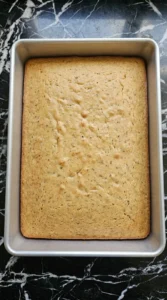
Brush a 9×13-inch light aluminum cake pan with 1 tablespoon canola oil. Spread the batter into the pan and push it gently into the corners. Level the surface with three broad strokes. Bake in a 350°F oven for 28 to 34 minutes.
Rotate the pan 180 degrees at minute 20 if your oven browns unevenly. Don’t open the door before minute 24. The top should turn golden tan and spring back near the center. A thermometer inserted there should read 200°F to 205°F.
You’ll smell toasted banana and cinnamon around minute 27. (I tried 375°F first, the edges dried before the middle set. ) Go past 205°F and the crumb loses moisture quickly. Moderate heat sets the center before the edges overbake.
Tip: Set the pan on the middle rack with at least 3 inches of air space on every side.
Step 4: Cool the cake and whip the frosting
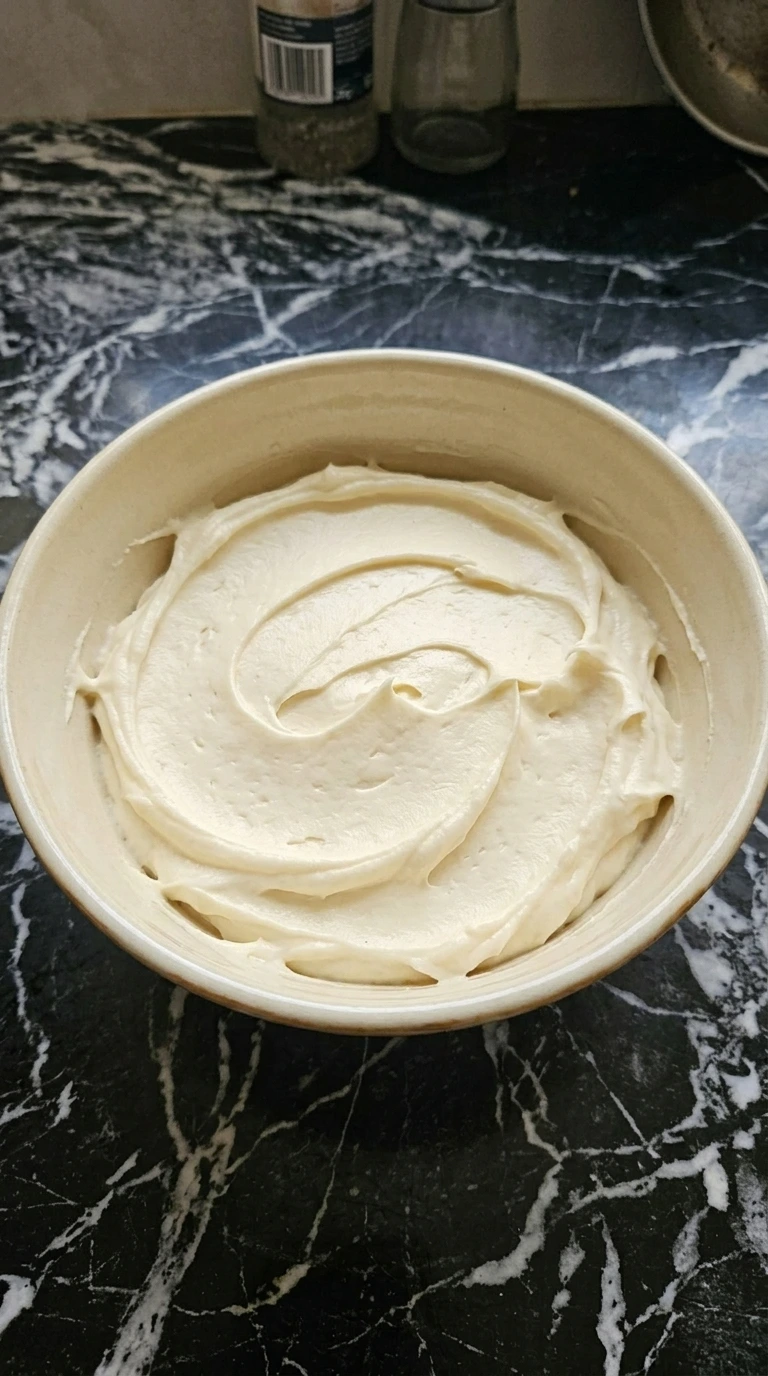
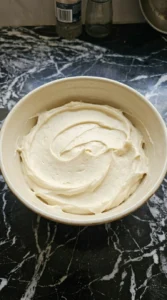
Cool the cake in its pan for 15 minutes at room temperature. Then continue cooling for 60 to 75 minutes until the center reaches 75°F. Meanwhile beat full-fat cream cheese and unsalted butter at 65°F for 90 seconds. Add powdered sugar in three additions and beat 30 seconds after each.
Mix in vanilla extract and fine sea salt. The frosting should turn pale ivory and hold soft curved ridges. Rub a small amount between two fingers after 3 minutes. It should feel smooth without gritty sugar.
If the cake stays warmer than 80°F, the frosting slides and melts. If you beat past 5 minutes, the mixture can loosen. Cool cake and controlled mixing keep the frosting thick enough to spread.
Tip: Use block cream cheese rather than whipped tubs because the lower water content keeps the frosting firm.
Step 5: Frost, garnish and cut one square

Keep the cake at 75°F or cooler. Spread the cream cheese frosting from the center outward for 3 to 4 minutes. Leave loose swirls instead of polishing the surface flat. Scatter chopped walnuts unevenly and add 12 thin Cavendish banana slices just before serving.
Chill the frosted cake for 20 minutes so the top firms slightly. Cut one square with a thin clean blade and place it on a white dessert plate. The crumb should look moist and golden tan with tiny dark banana flecks. The frosting should stay creamy and leave a clean edge.
Skip the brief chill and the topping smears across each cut. Add banana slices too early and they’ll brown. A short chill gives the frosting enough structure for neat slices.
Tip: Toast the walnuts at 325°F for 6 minutes and cool them fully before scattering for a deeper nutty flavor.
Tips and Tricks
- Use Cavendish bananas with at least 60% brown spotting because greener fruit adds starch and weaker banana flavor.
- Keep the mashed banana near 340 grams. More than 380 grams can leave a wet line beneath the cake’s center.
- Bring eggs and sour cream to 70°F for 30 minutes so the melted butter stays emulsified instead of forming small greasy beads.
- Fold the flour with about 20 slow strokes and stop when the final pale streak disappears. Another minute can toughen the crumb.
- Bake in light aluminum at 350°F. Reduce to 325°F if you only have a dark nonstick pan and check at minute 30.
- Start testing at minute 28 and remove the cake between 200°F and 205°F. A wet toothpick means the center needs 3 more minutes.
- Chill the frosted cake for 20 minutes before cutting and wipe the blade after every two slices for cleaner edges.
- Fold 3/4 cup semisweet chocolate chips into the batter for a richer version that still bakes within the same 28 to 34 minutes.
- Replace the walnuts with 1/2 cup toasted coconut flakes and add 1/4 teaspoon coconut extract to the frosting.
- Add 1/4 teaspoon ground nutmeg and 1/8 teaspoon ground cloves for a warmer holiday version without changing the bake time.
- Swirl 1/3 cup smooth peanut butter into the finished frosting for a salty banana pairing and chill the cake 30 minutes before slicing.
Make It Your Own
- all-purpose flour: A cup-for-cup gluten-free baking blend with xanthan gum — Use the same 2-cup amount and rest the batter for 10 minutes before baking. The crumb will be slightly more fragile and may need 2 extra minutes.
- full-fat sour cream: Full-fat plain Greek yogurt — Use a 1:1 swap. The cake tastes a little tangier and the crumb sets slightly tighter because yogurt contains more protein.
- unsalted butter: Plant-based butter sticks — Use a 1:1 swap for both cake and frosting. The flavor is less rich and the frosting softens faster, so chill it for 30 minutes.
- large egg: Two flax eggs — Mix 2 tablespoons ground flaxseed with 5 tablespoons water and rest 10 minutes. The cake will be denser and won’t rise quite as evenly.
- Cavendish banana: 340 grams thawed frozen Cavendish banana — Drain about 1 tablespoon of released liquid before mashing. For a banana-free bake, make our Pumpkin Muffins because pumpkin isn’t a direct swap.
- walnut: Pecan halves or no nuts — Use 1/2 cup chopped pecans for a sweeter toasted flavor. Omitting nuts keeps the cake softer and doesn’t change the baking time.
How to Store
Store frosted Banana Cake in a shallow airtight container in the refrigerator for up to 4 days. Place parchment between stacked slices so the frosting doesn’t stick. For freezing, chill individual squares for 45 minutes and wrap them twice.
Keep the wrapped pieces in a rigid freezer container for up to 2 months. Freeze without fresh banana coins because they turn watery after thawing. For frosted slices, skip reheating and let them stand at room temperature for 20 to 30 minutes.
Warm unfrosted slices at 300°F for 6 to 8 minutes and cool them 10 minutes before adding fresh frosting. Discard cake with a sour fermented smell, watery frosting or visible mold. Dry edges alone aren’t spoilage, but they signal the container wasn’t sealed tightly.
Banana Cake
Ingredients
- 4 large Cavendish banana Use 3 very ripe bananas for about 340 grams mashed fruit and reserve 1 for 12 thin garnish coins.
- 2 cups all-purpose flour Spoon into the measuring cup and level it so the crumb stays tender rather than dry.
- 1 teaspoon baking soda Provides the main lift and reacts with the sour cream and banana acids.
- 1/2 teaspoon baking powder Adds steady oven lift so the center rises without creating a tall dome.
- 1 teaspoon ground cinnamon Adds warm spice without covering the ripe banana flavor.
- 3/4 teaspoon fine sea salt Use 1/2 teaspoon in the batter and 1/4 teaspoon in the frosting.
- 1 cup unsalted butter Melt 1/2 cup for the batter and soften the remaining 1/2 cup to 65°F for the frosting.
- 3/4 cup light brown sugar Pack it firmly because its molasses helps the baked crumb retain moisture.
- 1/4 cup granulated sugar Balances the brown sugar and keeps the banana flavor bright.
- 2 large large egg Bring to about 70°F so they blend smoothly into the melted butter mixture.
- 1/2 cup full-fat sour cream Bring to about 70°F to add acidity and tenderness without cooling the butter.
- 3 teaspoons pure vanilla extract Use 2 teaspoons in the batter and 1 teaspoon in the frosting.
- 1 tablespoon canola oil Brush a thin coat inside the pan to release the cake without greasy edges.
- 8 ounces full-fat cream cheese Soften to about 65°F so the frosting turns smooth without becoming runny.
- 1 1/2 cups powdered sugar Sift before mixing to prevent gritty pockets in the cream cheese frosting.
- 1/2 cup walnut Chop into uneven small pieces so the topping has natural crunch and varied texture.
Instructions
- Set the eggs, sour cream and melted butter at about 70°F. Mash 3 very ripe Cavendish bananas for 60 to 90 seconds. Stop when only pea-sized pieces remain. Then whisk in light brown sugar and granulated sugar for 30 seconds. Add the eggs one at a time and whisk 15 seconds after each. Finish with sour cream and vanilla extract. The mixture should look thick and glossy with tiny banana flecks. You’ll smell ripe fruit and vanilla before the sugars fully dissolve. Scrape the sides once at minute 2 so no butter pools remain. Stop after 3 minutes total because extra whisking adds too much air. Even mixing now prevents wet pockets in the baked crumb.

- Keep the wet mixture near 70°F. Sift all-purpose flour, baking soda, baking powder, ground cinnamon and fine sea salt directly over it. Fold with a rubber spatula in slow J-shaped strokes for 45 to 60 seconds. Turn the bowl a quarter turn after every three folds. Stop as soon as the last flour streak disappears. The batter should look thick and slightly lumpy with visible banana flecks. It will fall from the spatula in heavy ribbons after about 20 folds. Don’t chase every small lump because another minute develops too much gluten. Overmixing makes the cake tight and bready. Gentle folding keeps the crumb soft and even.
- Brush a 9×13-inch light aluminum cake pan with 1 tablespoon canola oil. Spread the batter into the pan and push it gently into the corners. Level the surface with three broad strokes. Bake in a 350°F oven for 28 to 34 minutes. Rotate the pan 180 degrees at minute 20 if your oven browns unevenly. Don’t open the door before minute 24. The top should turn golden tan and spring back near the center. A thermometer inserted there should read 200°F to 205°F. You’ll smell toasted banana and cinnamon around minute 27. (I tried 375°F first, the edges dried before the middle set.) Go past 205°F and the crumb loses moisture quickly. Moderate heat sets the center before the edges overbake.
- Cool the cake in its pan for 15 minutes at room temperature. Then continue cooling for 60 to 75 minutes until the center reaches 75°F. Meanwhile beat full-fat cream cheese and unsalted butter at 65°F for 90 seconds. Add powdered sugar in three additions and beat 30 seconds after each. Mix in vanilla extract and fine sea salt. The frosting should turn pale ivory and hold soft curved ridges. Rub a small amount between two fingers after 3 minutes. It should feel smooth without gritty sugar. If the cake stays warmer than 80°F, the frosting slides and melts. If you beat past 5 minutes, the mixture can loosen. Cool cake and controlled mixing keep the frosting thick enough to spread.
- Keep the cake at 75°F or cooler. Spread the cream cheese frosting from the center outward for 3 to 4 minutes. Leave loose swirls instead of polishing the surface flat. Scatter chopped walnuts unevenly and add 12 thin Cavendish banana slices just before serving. Chill the frosted cake for 20 minutes so the top firms slightly. Cut one square with a thin clean blade and place it on a white dessert plate. The crumb should look moist and golden tan with tiny dark banana flecks. The frosting should stay creamy and leave a clean edge. Skip the brief chill and the topping smears across each cut. Add banana slices too early and they’ll brown. A short chill gives the frosting enough structure for neat slices.

Notes
Nutrition
Common Questions
Bake the cake up to 24 hours ahead and cool it completely. Wrap the unfrosted layer tightly in its pan and keep it at room temperature. Frost it the next day and chill for 20 minutes before slicing. This schedule protects the crumb from refrigerator drying.
Too much mashed banana or an underbaked center usually causes a gummy line. Keep the fruit near 340 grams and bake until the middle reaches 200°F to 205°F. Also stop folding when the last flour streak disappears because overmixing traps the dense wet crumb.
Use plant-based butter sticks and full-fat dairy-free sour cream in equal amounts. Choose a firm dairy-free cream cheese and reduce powdered sugar to 1 1/4 cups first. Chill the frosting for 30 minutes because dairy-free versions often soften faster at room temperature.
Divide a doubled batch between two separate 9×13-inch pans. Don’t pour it into one deeper pan because the center can remain wet after the edges dry. Bake both at 350°F and switch rack positions at minute 20. Start checking each pan at minute 30.
Freeze individual frosted squares uncovered for 45 minutes and then wrap each one twice. Store them in a freezer container for up to 2 months. Thaw overnight in the refrigerator and let each slice stand 20 minutes before serving. Add fresh banana coins after thawing.
Serve slightly chilled squares with coffee or black tea for brunch. For a party, cut the cake into 24 smaller pieces and add one walnut piece to each. Keep the tray below 75°F and return leftovers to the refrigerator within 2 hours.
Before You Go
This is the kind of recipe I wish I had found years ago. It would’ve saved me so many dry banana cakes, but now I make this version whenever the fruit bowl gets too ripe.
What makes it special is the soft cinnamon crumb and cool tangy frosting. If you enjoyed it, try our Pumpkin Pie or Red White Blue Cupcakes next and leave a comment because I read every one.
Bananas with dark brown spots have more simple sugars, so they’re sweeter and easier to mash than yellow-green ones.