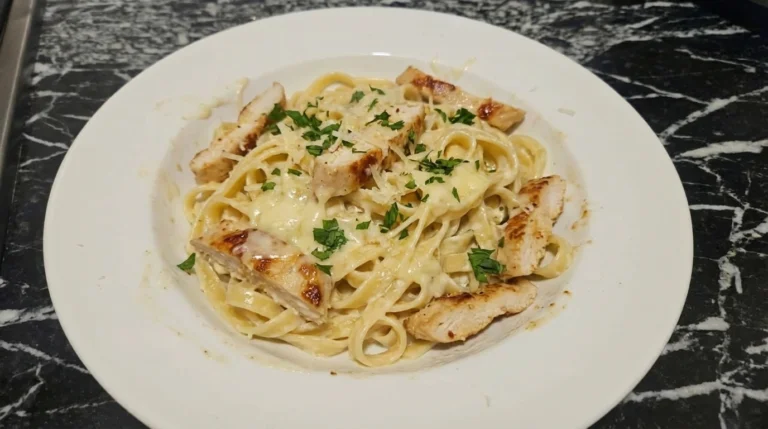
chicken alfredo
When you’re greedy like me and want proper creamy parmesan sauce in every bite and not just a faint hint of vaguely alfredo maybe making chicken alfredo suddenly becomes harder than it sounds. I really thought it would be simple and cook some chicken and toss it with pasta and call it done.
But every option had problems and thin sauces slipped off the noodles while heavy ones turned gluey and dry chicken made the whole thing feel flat. Then there was the balance because too much cream dulled the cheese and too much cheese made the sauce tight and heavy.
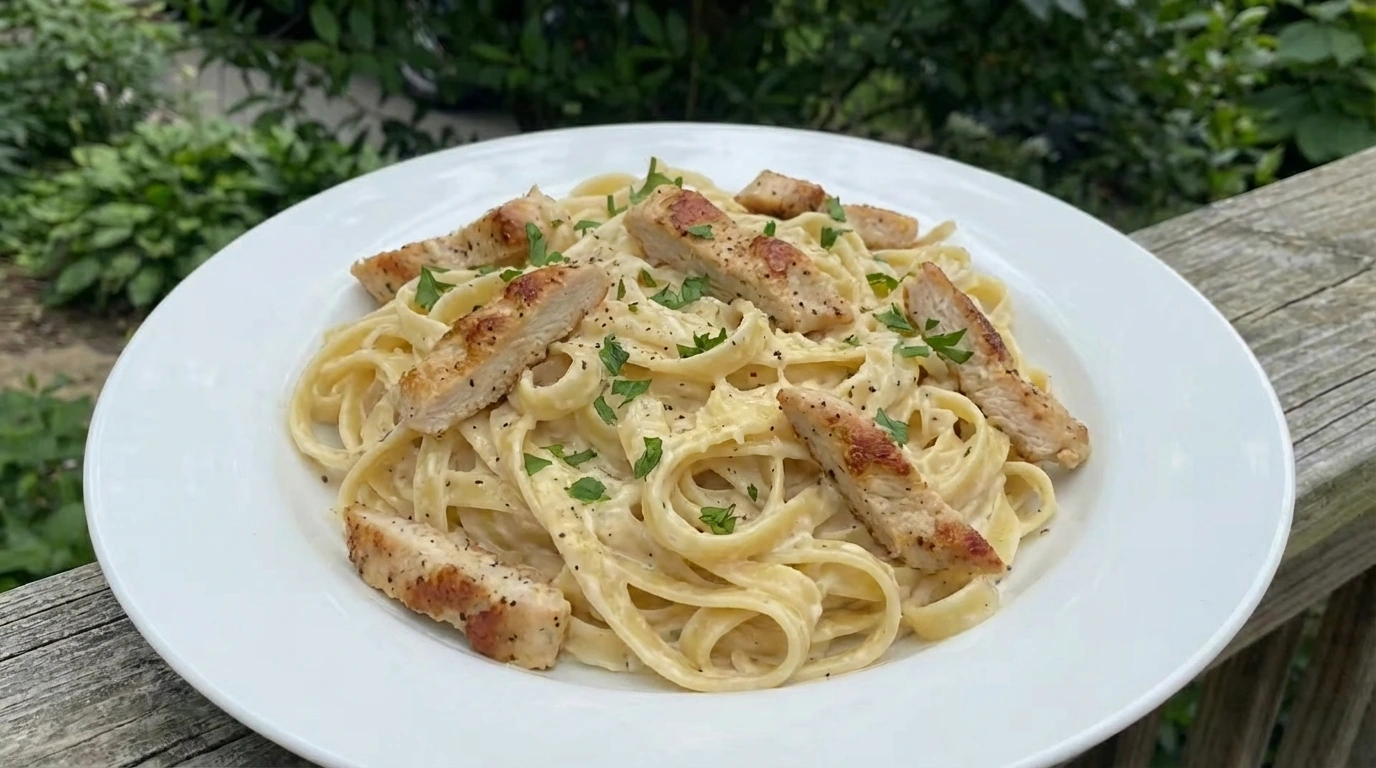
Getting juicy chicken and silky pasta and a sauce that actually clings took more testing than I expected.
Ingredients
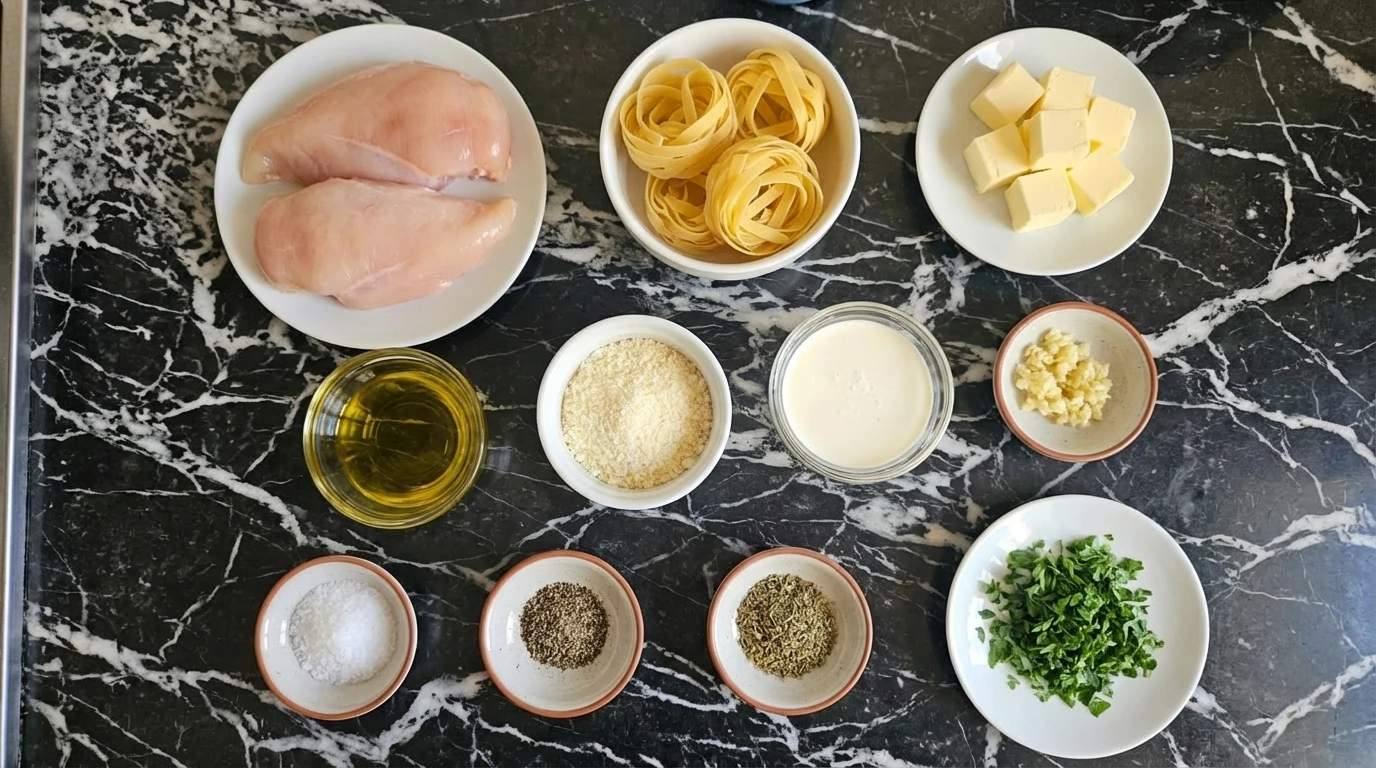
- boneless skinless chicken breasts: Lean protein that cooks into juicy bite sized pieces and adds savory depth.
- fettuccine: Wide pasta that holds the creamy sauce across its surface.
- unsalted butter: Adds richness and helps the sauce turn glossy.
- garlic: Builds a warm savory base for the sauce.
- heavy cream: Creates the smooth body of the alfredo sauce.
- finely grated parmesan cheese: Melts into the cream for salty nutty flavor and thickness.
- olive oil: Helps the chicken brown and keeps the meat tender.
- kosher salt: Seasons the chicken and balances the sauce.
- black pepper: Adds mild heat and rounds out the rich flavors.
- Italian seasoning: Gives the chicken a gentle herb note.
- fresh parsley: Adds fresh color as a final finish.
Kitchen Equipment
- wooden cutting board: Used for slicing and seasoning the chicken.
- large pot: Used for cooking the fettuccine until tender.
- cast iron skillet: Used for browning the seasoned chicken pieces.
- saucepan: Used for simmering the alfredo sauce and combining the pasta.
- white plate: Used for serving a single finished portion.
How to Make It
Step 1: Slice and season the chicken
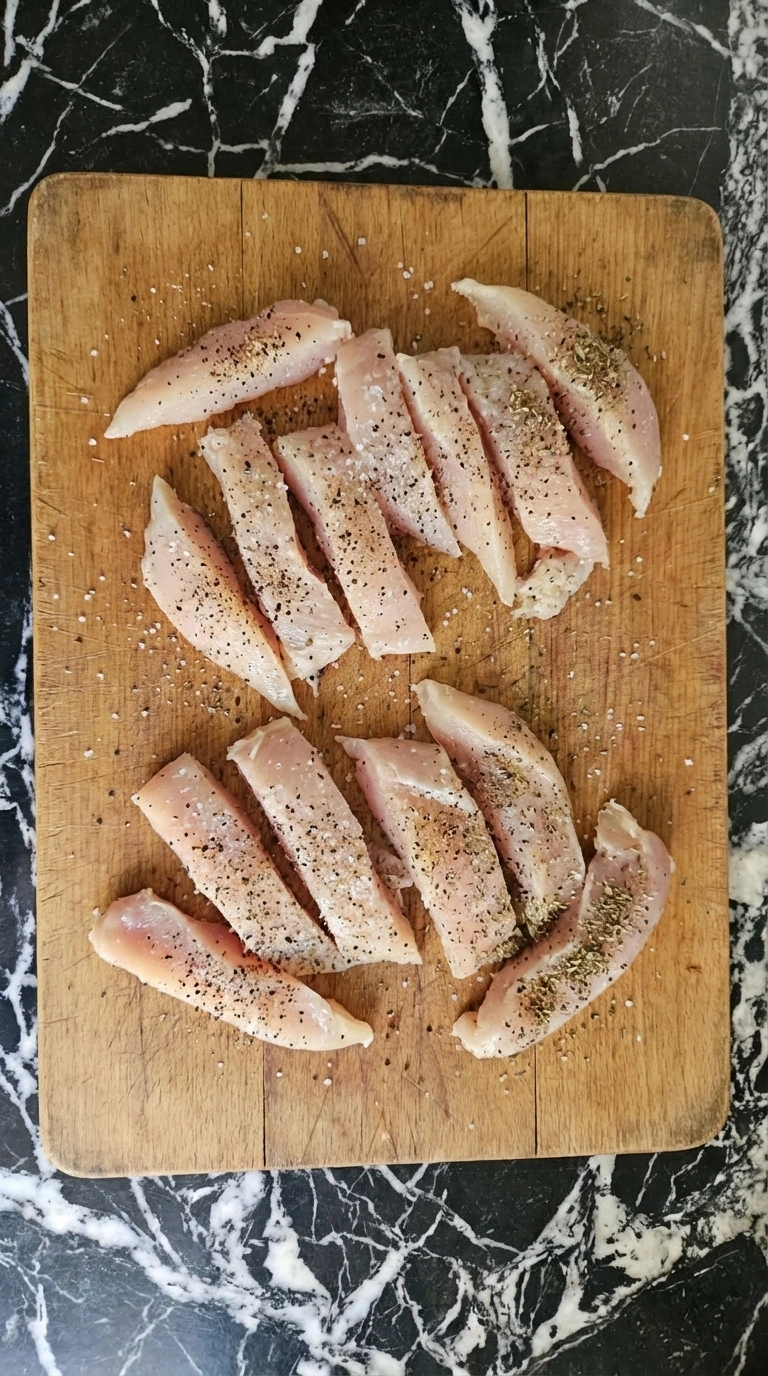
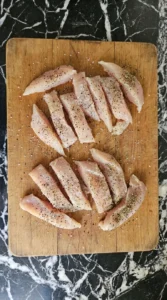
Cut the two chicken breasts into uneven bite sized strips and then scatter them loosely across a wooden cutting board with salt and pepper and Italian seasoning clinging in patchy spots. The pieces should look irregular and slightly different in size and the seasoning should sit heavier on some edges than others.
Tip: Keep the chicken pieces close in size so they cook at the same pace while still looking natural.
Step 2: Cook the fettuccine until softened
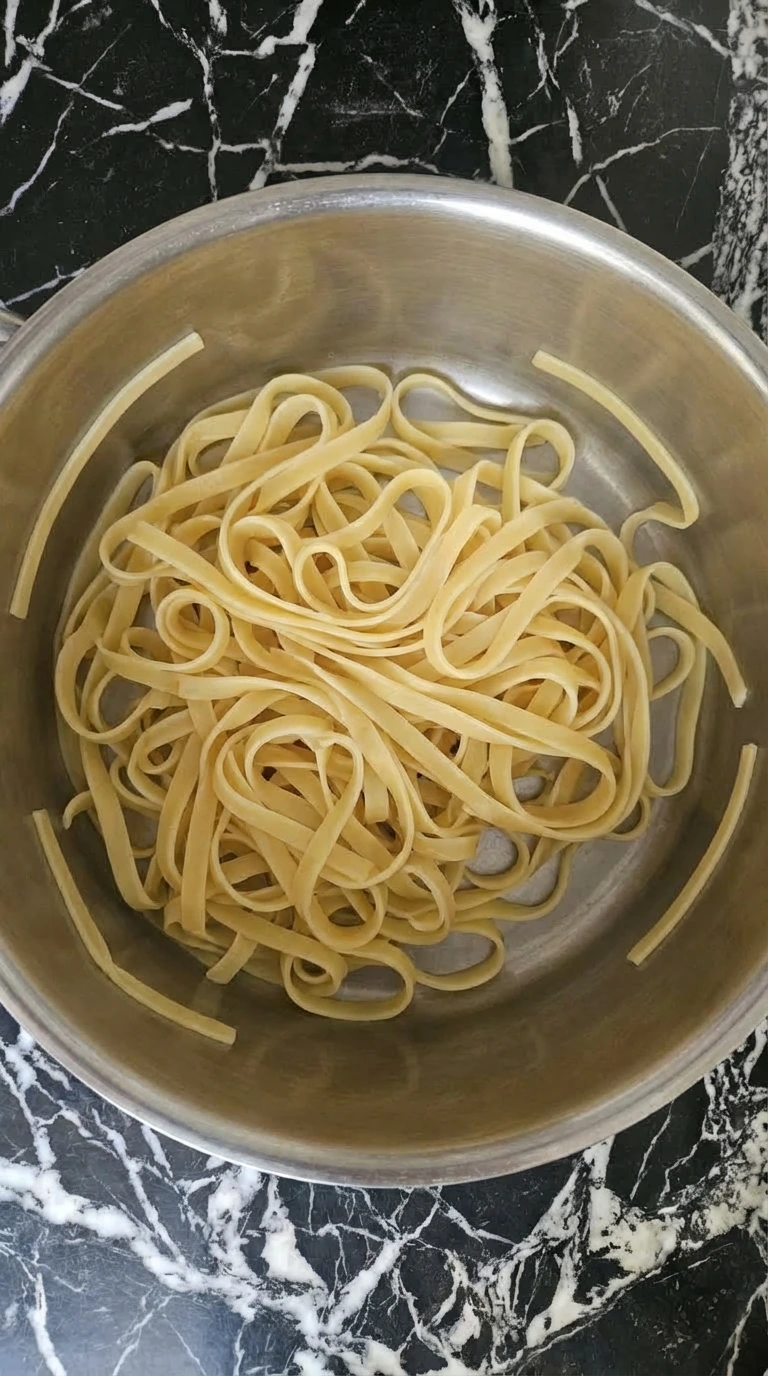
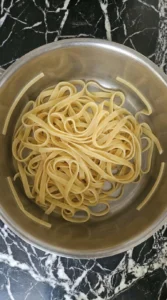
The dry fettuccine changes from stiff pale bundles into softened ribbons that bend and curl through the water in a loose tangle. Some strands float higher and some sink lower so the pasta looks relaxed and uneven rather than neat or perfectly lined up.
Tip: Stop cooking when the noodles are just tender so they finish in the sauce without turning too soft.
Step 3: Brown the chicken pieces
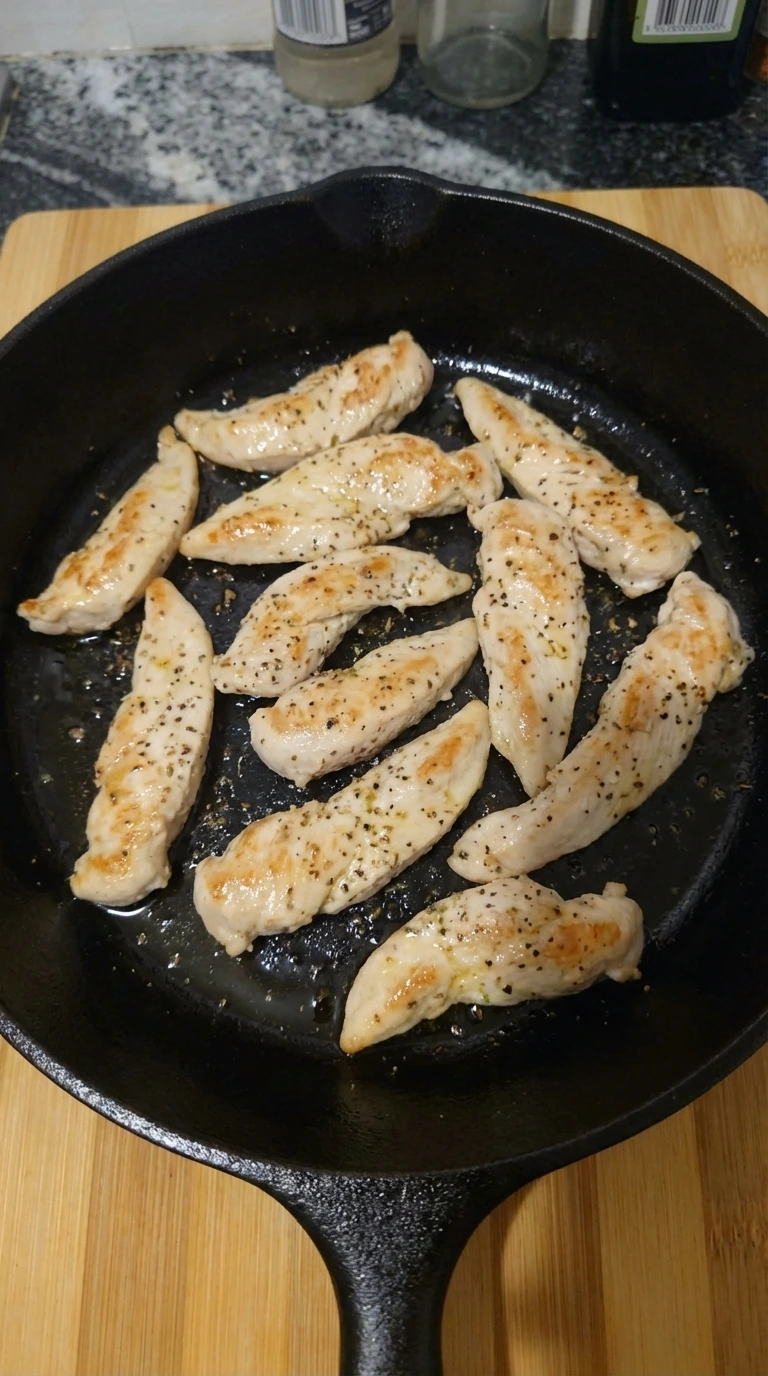
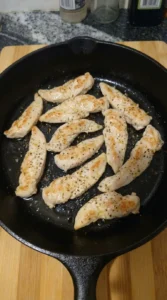
The seasoned chicken strips turn opaque and then develop pale golden spots with deeper color on a few edges while their surfaces tighten and look slightly glossy from the oil. The pieces shift into a casual cluster with small gaps between them and a few browned bits collecting where the seasoning meets the meat.
Tip: Let the chicken sit long enough to color before moving it so you get a little browning.
Step 4: Simmer the cream and parmesan sauce
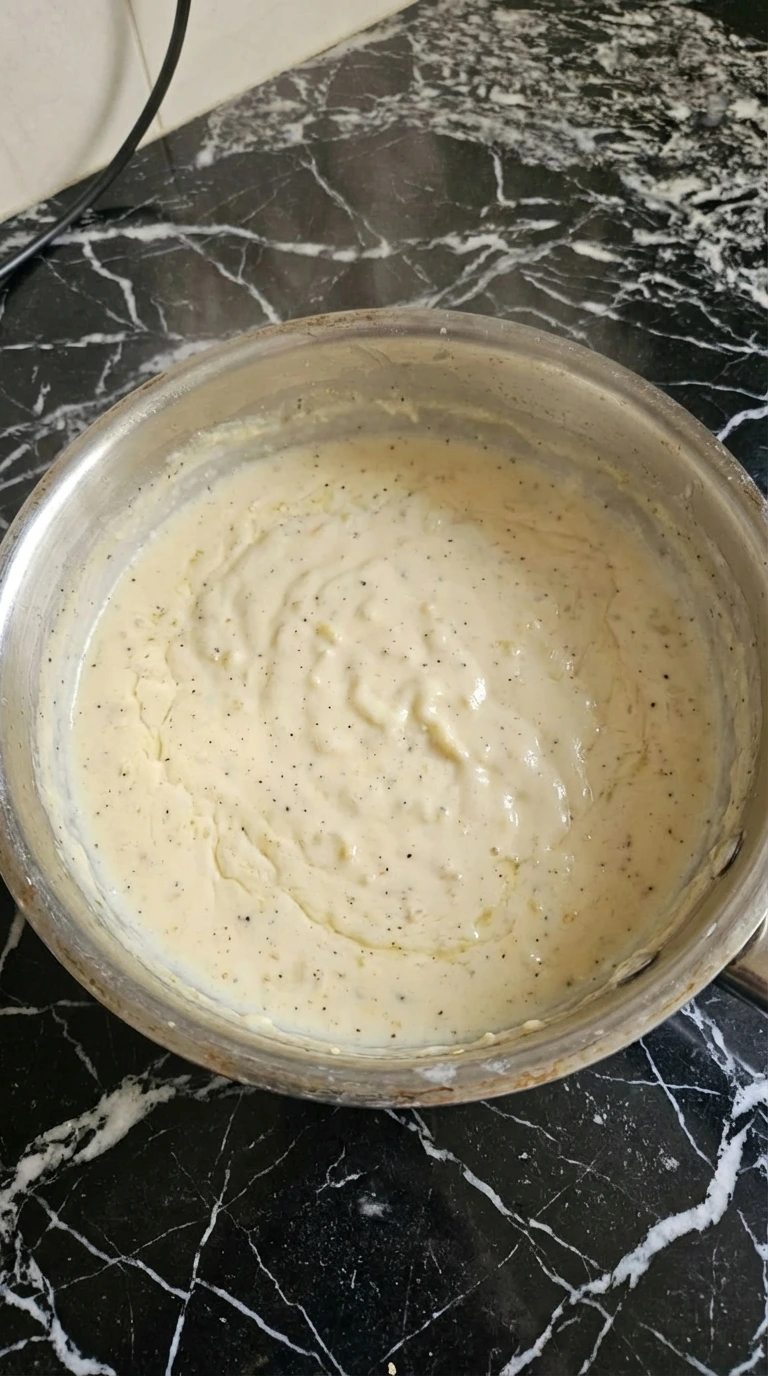
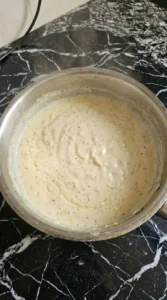
Butter and garlic melt into the cream and then the parmesan turns the mixture from thin and pale into a thicker sauce with soft ripples and a slightly uneven cheesy surface. A few darker pepper specks stay visible and the sauce gathers in gentle folds instead of running flat which shows it is ready to cling to the pasta.
Tip: Add the parmesan gradually so the sauce melts smooth instead of clumping.
Step 5: Fold the pasta and chicken into the sauce
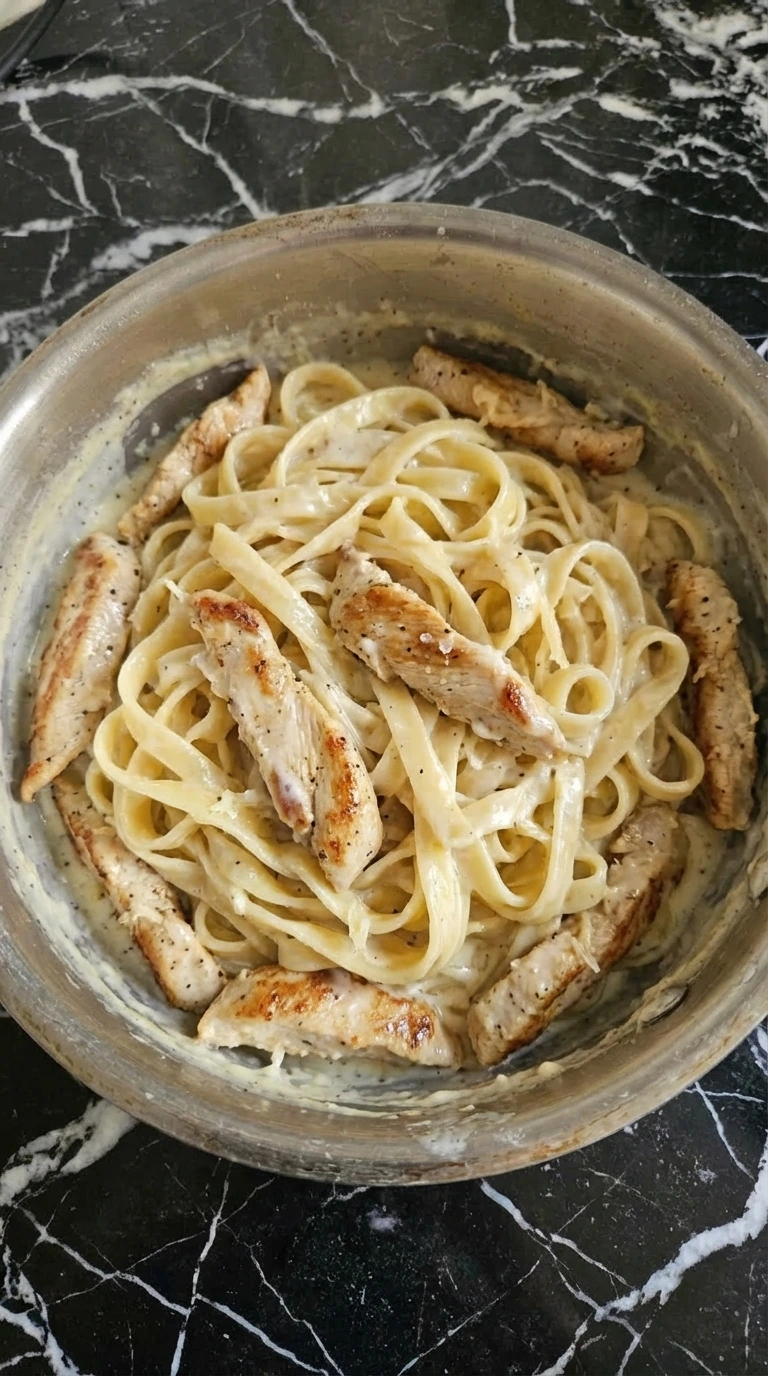
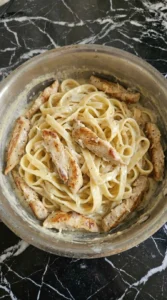
The softened fettuccine and browned chicken are added to the sauce and then everything changes into one glossy tangled mixture with ribbons coated from edge to edge and chicken tucked through the pasta. The sauce sits thicker in some folds and lighter in others so the dish looks rich and homemade with uneven coating and natural overlap.
Tip: Reserve a splash of pasta water if needed so the sauce stays silky while you toss.
Step 6: Plate and finish with parmesan and parsley
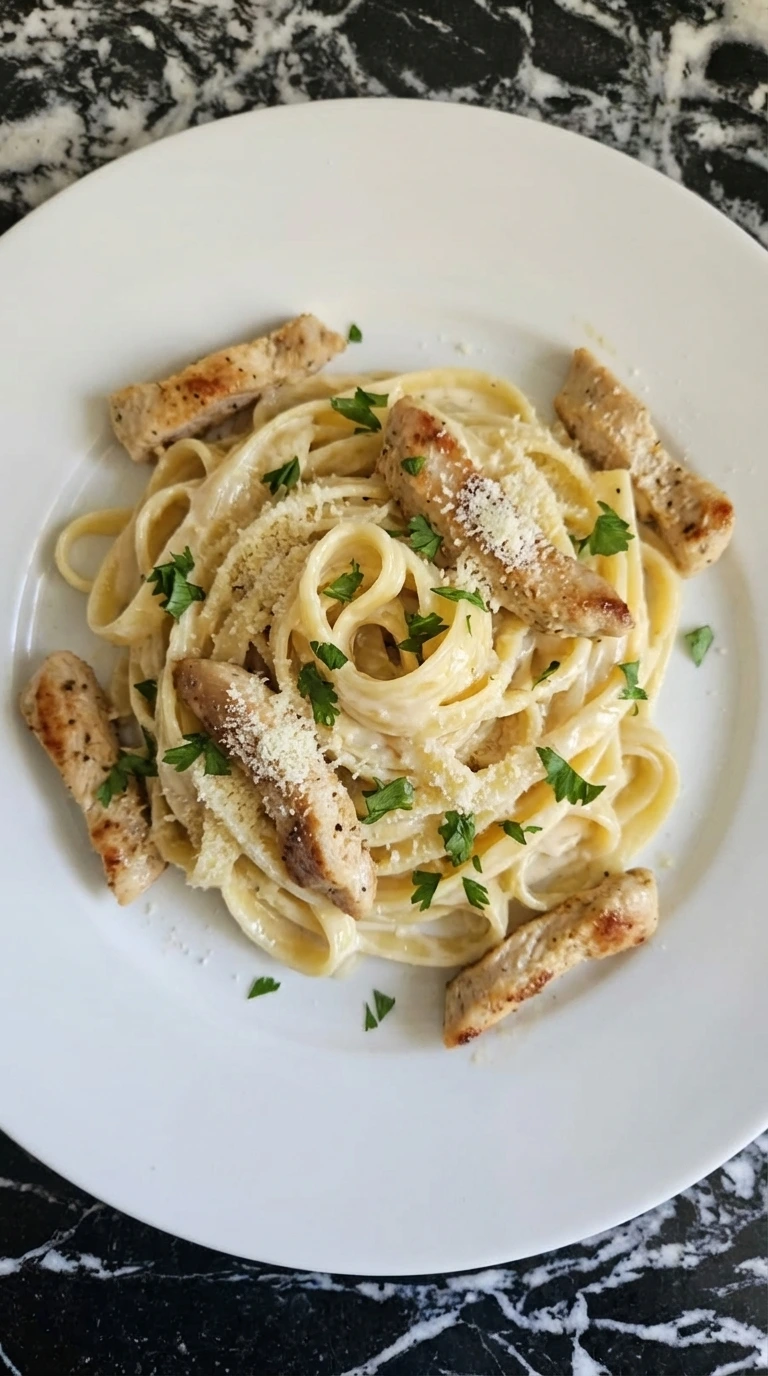
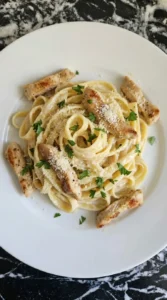
A single serving is twirled into a loose mound on the plate and then topped with scattered chicken and extra parmesan and parsley so the final dish shows creamy folds and melted cheese and a few browned spots from the chicken. The colors stay slightly uneven and the noodles fall in relaxed layers which makes the plate look homemade and ready to eat.
Tip: Finish with extra parmesan right away so it softens into the hot sauce.
Pro Tips
- Cut the chicken into uneven but similarly thick pieces so it stays juicy and still looks natural.
- Grate the parmesan finely so it melts faster and leaves fewer clumps in the sauce.
- Save a little pasta water so you can loosen the sauce if it thickens too much.
- Add parsley at the end for fresh contrast against the rich creamy pasta.
Storage Instructions
Store leftover chicken alfredo in a sealed container in the fridge for up to three days and keep the parsley separate if you want the color to stay fresh. Reheat gently with a splash of milk or cream so the sauce loosens again and the pasta turns silky instead of stiff.
chicken alfredo
Ingredients
Method
- Cut the two chicken breasts into uneven bite sized strips and then scatter them loosely across a wooden cutting board with salt and pepper and Italian seasoning clinging in patchy spots. The pieces should look irregular and slightly different in size and the seasoning should sit heavier on some edges than others.
- The dry fettuccine changes from stiff pale bundles into softened ribbons that bend and curl through the water in a loose tangle. Some strands float higher and some sink lower so the pasta looks relaxed and uneven rather than neat or perfectly lined up.
- The seasoned chicken strips turn opaque and then develop pale golden spots with deeper color on a few edges while their surfaces tighten and look slightly glossy from the oil. The pieces shift into a casual cluster with small gaps between them and a few browned bits collecting where the seasoning meets the meat.
- Butter and garlic melt into the cream and then the parmesan turns the mixture from thin and pale into a thicker sauce with soft ripples and a slightly uneven cheesy surface. A few darker pepper specks stay visible and the sauce gathers in gentle folds instead of running flat which shows it is ready to cling to the pasta.
- The softened fettuccine and browned chicken are added to the sauce and then everything changes into one glossy tangled mixture with ribbons coated from edge to edge and chicken tucked through the pasta. The sauce sits thicker in some folds and lighter in others so the dish looks rich and homemade with uneven coating and natural overlap.
- A single serving is twirled into a loose mound on the plate and then topped with scattered chicken and extra parmesan and parsley so the final dish shows creamy folds and melted cheese and a few browned spots from the chicken. The colors stay slightly uneven and the noodles fall in relaxed layers which makes the plate look homemade and ready to eat.
Notes
Frequently Asked Questions
Can I use chicken thighs instead of chicken breasts?
Yes and chicken thighs stay juicy and add a deeper flavor though they may need a little more cooking time.
How do I keep the alfredo sauce from turning grainy?
Use finely grated parmesan and add it gradually over gentle heat so the cheese melts smoothly into the cream.
Can I make chicken alfredo ahead for meal prep?
Yes and it reheats well when stored chilled and warmed gently with a splash of cream or milk to loosen the sauce.
What pasta works best besides fettuccine?
Linguine and tagliatelle work very well because the broad strands catch the sauce in a similar way.
Final Thoughts
This simple chicken alfredo is creamy and cozy!
Tender chicken with a rich parmesan sauce and twirled fettuccine.
So simple and oh-so good!
Alfredo sauce became famous for its rich butter and cheese base and modern home versions often add cream and chicken for a fuller dinner.