Christmas Morning Breakfast Casserole
Cold holiday mornings call for something warm and filling. The first time I made this breakfast casserole was for Christmas morning when my family arrived earlier than expected and I rushed the bake time by a few minutes. It still disappeared from the table. That’s when I realized this recipe is more forgiving than most people think.
Since then I’ve made it for family gatherings, relaxed weekends and a few brunches where everyone wanted the recipe. It’s hearty, full of flavor and simple even when the ingredient list looks busy. A good breakfast casserole with hashbrowns should feel special without making you spend the whole morning cooking. The potatoes give it a firm base while the eggs and cheese create a soft center that holds together after baking.

If you enjoy other comforting dishes, try our Potato Egg and Cheese Breakfast Tacos for another filling morning idea. This Christmas Morning Breakfast Casserole brings together familiar breakfast flavors in one pan. It works beside sweet treats like Christmas Cookies and makes a great choice when you need an overnight breakfast casserole that feeds several people without extra stress.
Why This Recipe Works
The balance comes from the frozen shredded hashbrowns and egg mixture. Baking at 375°F lets the center set slowly while the cheese melts without drying the edges.
The sour cream adds moisture and the resting time helps the slices stay together. For another comforting casserole idea, try our Fall Casserole for Dinner when planning seasonal meals.
Ingredients
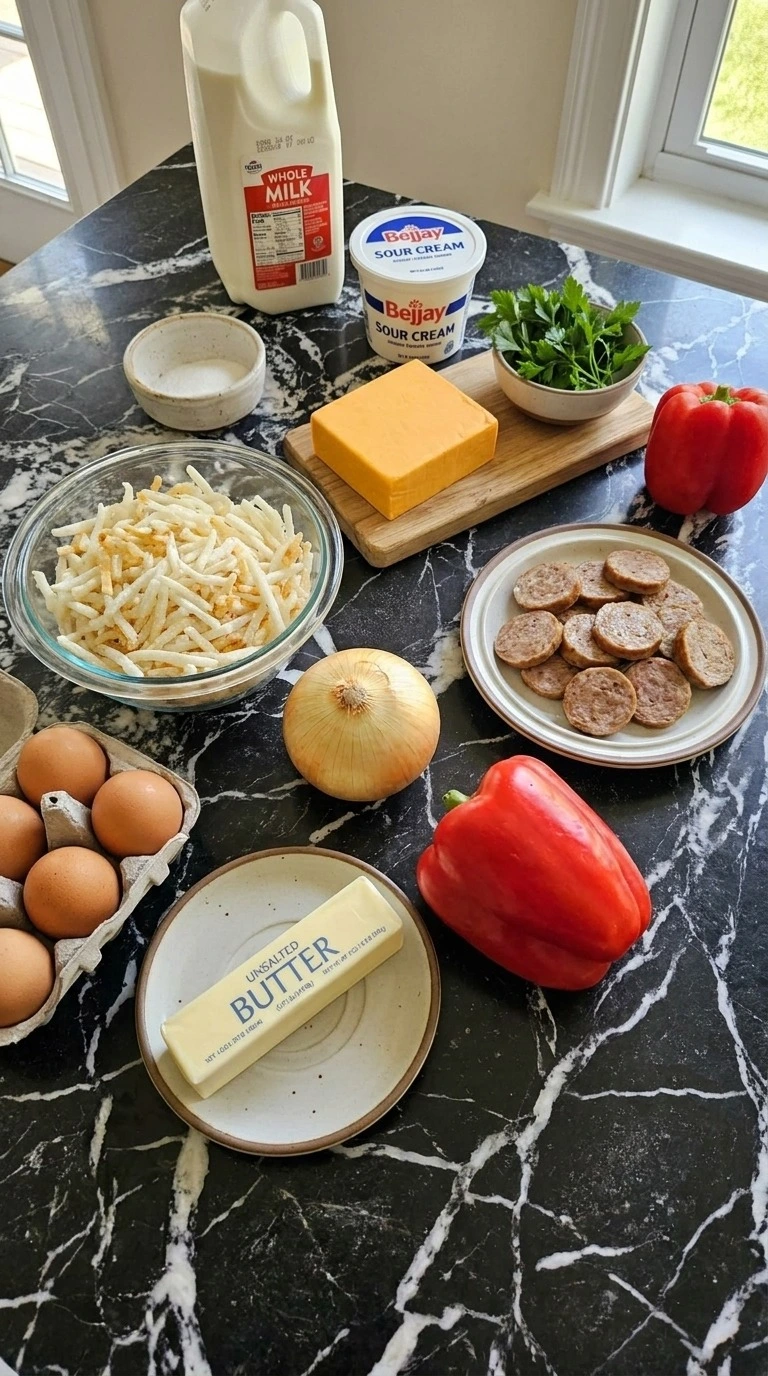
- frozen shredded hashbrowns: Used as the potato base and kept loose for a firm texture after baking.
- unsalted butter: Melted to coat the potatoes and add richness.
- large eggs: Whisked into the mixture to create the set custard layer.
- whole milk: Added for a softer egg texture and smoother consistency.
- sour cream: Mixed in for tang and a creamy interior.
- sharp cheddar: Shredded to provide melted cheese flavor throughout the casserole.
- cooked breakfast sausage: Crumbled and added for savory flavor and hearty texture.
- yellow onion: Diced to bring sweetness and aroma.
- red bell pepper: Diced for color and mild pepper flavor.
- fresh parsley: Chopped and added as a fresh finishing touch.
Kitchen Equipment
- 9×13 ceramic baking dish: A 9×13 ceramic baking dish holds this breakfast casserole evenly and should have sturdy sides because a thin pan can cook the edges too fast.
- large clear glass mixing bowl: A large clear glass mixing bowl gives space for folding the ingredients together and should be at least 4 quarts so the mixture doesn’t spill.
- rubber spatula: A rubber spatula gently combines the egg mixture and potatoes without crushing the shreds, and a flexible edge works better than a stiff spoon.
How to Make It
Step 1: Combine the potato base and egg mixture

Cut the frozen shredded hashbrowns into loose sections if needed, then combine them with melted unsalted butter in a large clear glass mixing bowl. Add large eggs, whole milk, sour cream, sharp cheddar, cooked breakfast sausage, yellow onion and red bell pepper. Mix with a rubber spatula using slow folding motions for 2 to 3 minutes at room temperature before transferring the mixture. You’ll want the egg mixture fully coating the potatoes.
(I tried skipping the rest once. The center stayed uneven, so the short pause matters. ) The mixture should look creamy with shredded potatoes spread unevenly throughout. You’ll smell the onion and sausage as they blend together.
Skip this balance and the casserole can bake with dry potato spots. Mix for 3 minutes at room temperature, the ingredients bond evenly before baking.
Tip: Use frozen shredded hashbrowns straight from the bag for a firmer base and measure 24 ounces before mixing.
Step 2: Layer the casserole mixture in the baking dish

Spread the combined mixture into a greased 9×13 ceramic baking dish and press it gently into an even layer. Bake at 375°F for 25 to 30 minutes after covering loosely with foil for the first 15 minutes. Use the back of a spoon to smooth thick areas and leave some uneven potato texture.
You’ll know the stage is right when the edges begin to firm and the center still has a slight wobble. The top starts pale and then gains a light golden shade near the edges. The smell changes from raw egg to savory sausage and baked potato.
Go beyond 30 minutes and the outer layer dries before the center sets. Bake at 375°F with gentle layering, the egg structure sets without drying.
Tip: Grease the baking dish with 1 tablespoon butter so the edges release cleanly after cooling for 5 minutes.
Step 3: Bake until the center sets and cheese melts
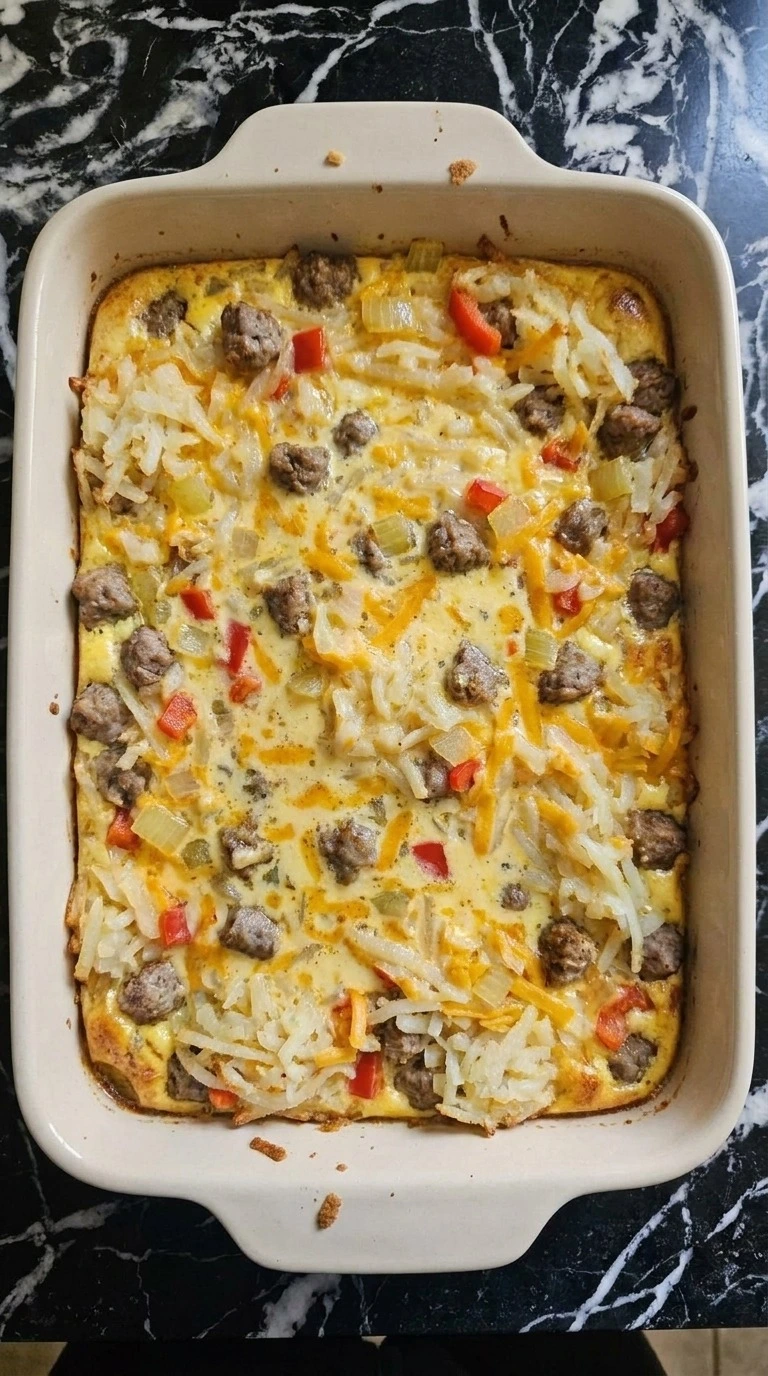
Remove the foil and continue baking the casserole at 375°F for 10 to 15 minutes until the sharp cheddar melts across the top. Rotate the dish halfway through and gently press the center with a spoon to check the texture. The top should develop golden spots while the middle reaches 160°F internally.
(My first batch used 400°F and the top browned too fast. The lower heat fixed the center. ) The cheese should look melted and slightly uneven with small browned patches.
You’ll hear a soft bubbling sound around the edges. Miss the temperature window and the eggs may turn rubbery. Bake at 375°F until the proteins set, the texture stays tender.
Tip: Let the casserole rest uncovered for 10 minutes before cutting so the layers hold their shape.
Step 4: Slice and serve the finished casserole
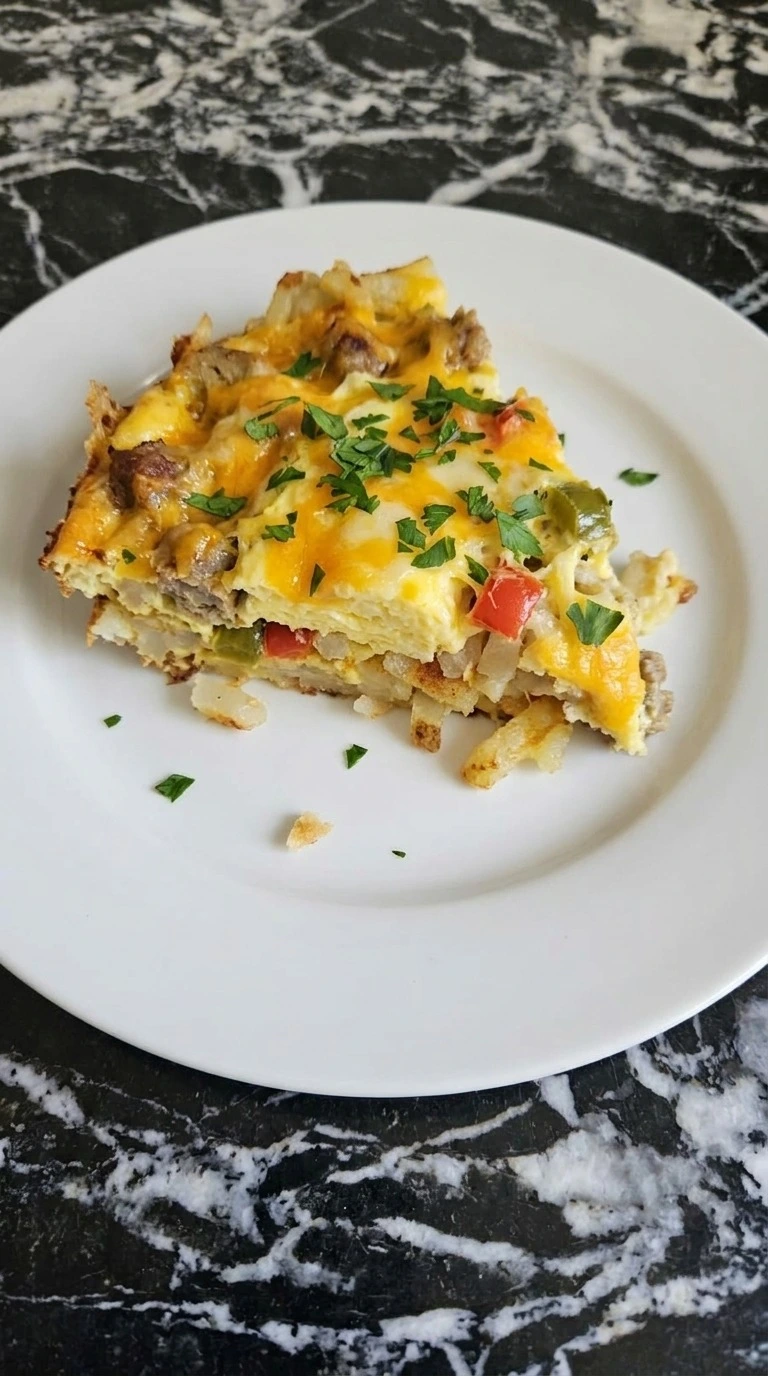
Rest the baked casserole for 10 minutes, then cut portions with a sharp knife and move one slice onto a white plate. Lift the piece carefully so the layers stay visible. Add chopped fresh parsley and serve while warm within 15 minutes of slicing.
The portion should show melted cheese, soft egg layers and crisp potato edges. The slice should hold together with slight cracks and uneven layers. You’ll notice the savory smell from the sausage and baked cheddar.
Skip the rest and the filling may slide apart. Rest 10 minutes before serving, the layers stabilize for cleaner slices.
Tip: Cut smaller squares for brunch plates because the casserole is rich and pairs well with fresh fruit.
Pro Tips
- Use freshly shredded sharp cheddar when possible because it melts more smoothly than pre-shredded cheese and creates better texture at 375°F.
- Cook the breakfast sausage until it reaches a deep brown color before mixing, about 8 to 10 minutes, so the casserole gets richer flavor.
- Grease the 9×13 baking dish with 1 tablespoon butter before adding the mixture because stuck edges make clean slices harder after baking.
- Prepare the casserole the night before and chill it for up to 12 hours, then add 5 to 10 minutes to the bake time if it starts cold.
- Don’t overload the dish with extra vegetables because more moisture can make the eggs watery. Keep added vegetables under 1 cup.
- Let the baked casserole rest for exactly 10 minutes before cutting because the layers become firmer and easier to serve.
- Add 2 tablespoons chopped fresh parsley after baking for a bright finish that balances the rich sausage and cheese flavors.
- Add 1 cup cooked spinach and 1/2 cup crumbled feta for a vegetable version with a fresh savory taste.
- Swap the breakfast sausage for 1 pound cooked bacon pieces to create a smoky holiday breakfast option.
- Mix in 1 teaspoon smoked paprika and 1/2 cup diced jalapeño for a spicy morning casserole with extra flavor.
- Use 24 ounces of frozen tater tots instead of hashbrowns for a crispier tater tot breakfast casserole variation.
Substitutions & Variations
- sharp cheddar: pepper jack or Monterey Jack. Use the same 2 cups because these cheeses melt well. Pepper jack adds heat while Monterey Jack gives a milder flavor and softer texture.
- whole milk: unsweetened oat milk. Replace the 1 cup whole milk with 1 cup oat milk for a dairy-free option. The casserole will be slightly less rich but still creamy.
- sour cream: plain Greek yogurt. Use 1 cup plain Greek yogurt instead of sour cream. It adds a similar tang with a slightly firmer texture after baking.
- cooked breakfast sausage: cooked turkey sausage. Replace the 1 pound sausage with turkey sausage for a lighter version. The flavor becomes milder so add extra herbs if desired. For another breakfast idea, try our Patty Pan Squash Breakfast Tacos.
- frozen shredded hashbrowns: frozen tater tots. Use 24 ounces of tater tots for a tater tot breakfast casserole style. The top becomes crispier but the center needs about 5 extra minutes to set.
Storage Instructions
Keep leftover Christmas Morning Breakfast Casserole in an airtight container in the refrigerator for up to 4 days. You can freeze portions wrapped tightly for up to 2 months, then thaw overnight before reheating.
Warm slices at 350°F for 10 to 15 minutes and add a small sprinkle of fresh cheese if the texture needs moisture. Discard leftovers if you notice sour smells, unusual moisture or mold.
Christmas Morning Breakfast Casserole
Ingredients
Method
- Cut the frozen shredded hashbrowns into loose sections if needed, then combine them with melted unsalted butter in a large clear glass mixing bowl. Add large eggs, whole milk, sour cream, sharp cheddar, cooked breakfast sausage, yellow onion and red bell pepper. Mix with a rubber spatula using slow folding motions for 2 to 3 minutes at room temperature before transferring the mixture. You’ll want the egg mixture fully coating the potatoes. (I tried skipping the rest once. The center stayed uneven, so the short pause matters.) The mixture should look creamy with shredded potatoes spread unevenly throughout. You’ll smell the onion and sausage as they blend together. Skip this balance and the casserole can bake with dry potato spots. Mix for 3 minutes at room temperature, the ingredients bond evenly before baking.

- Spread the combined mixture into a greased 9×13 ceramic baking dish and press it gently into an even layer. Bake at 375°F for 25 to 30 minutes after covering loosely with foil for the first 15 minutes. Use the back of a spoon to smooth thick areas and leave some uneven potato texture. You’ll know the stage is right when the edges begin to firm and the center still has a slight wobble. The top starts pale and then gains a light golden shade near the edges. The smell changes from raw egg to savory sausage and baked potato. Go beyond 30 minutes and the outer layer dries before the center sets. Bake at 375°F with gentle layering, the egg structure sets without drying.

- Remove the foil and continue baking the casserole at 375°F for 10 to 15 minutes until the sharp cheddar melts across the top. Rotate the dish halfway through and gently press the center with a spoon to check the texture. The top should develop golden spots while the middle reaches 160°F internally. (My first batch used 400°F and the top browned too fast. The lower heat fixed the center.) The cheese should look melted and slightly uneven with small browned patches. You’ll hear a soft bubbling sound around the edges. Miss the temperature window and the eggs may turn rubbery. Bake at 375°F until the proteins set, the texture stays tender.

- Rest the baked casserole for 10 minutes, then cut portions with a sharp knife and move one slice onto a white plate. Lift the piece carefully so the layers stay visible. Add chopped fresh parsley and serve while warm within 15 minutes of slicing. The portion should show melted cheese, soft egg layers and crisp potato edges. The slice should hold together with slight cracks and uneven layers. You’ll notice the savory smell from the sausage and baked cheddar. Skip the rest and the filling may slide apart. Rest 10 minutes before serving, the layers stabilize for cleaner slices.

Notes
Frequently Asked Questions
Yes, assemble the casserole up to 12 hours ahead and keep it covered in the refrigerator. Bake it at 375°F and add about 5 to 10 minutes because the chilled center needs more time to heat through.
Store leftovers in an airtight container for up to 4 days. Reheat individual portions at 350°F for 10 to 15 minutes until the center reaches a warm temperature and the cheese softens again.
Yes, choose gluten free breakfast sausage and check every packaged ingredient label before mixing. The casserole naturally works without bread, but some sausage brands contain fillers that add gluten.
Extra moisture usually comes from thawed hashbrowns that were not drained or from adding too many vegetables. Use frozen shredded hashbrowns and bake at 375°F until the center reaches 160°F.
Yes, double the ingredients and use two 9×13 baking dishes instead of one deeper pan. Bake both casseroles at 375°F and check each center after 35 to 45 minutes.
Serve slices with fresh fruit, coffee or a light salad for brunch. A breakfast casserole pairs well with sweet options like pastries because the eggs and sausage provide a savory balance.
Final Thoughts
Making this breakfast casserole still reminds me of the first Christmas morning I served it. I worried the layers would fall apart, but this version is much more forgiving than I expected.
The combination of a hashbrown breakfast casserole base and creamy eggs makes it a special holiday dish. If you try it, share your results and enjoy it with recipes like Potato Egg and Cheese Breakfast Tacos or Christmas Cookies for a festive spread.
It works just as well when you are after tater tot breakfast casserole and overnight breakfast casserole.
Breakfast casseroles became popular because they let families prepare large morning meals ahead of time. This style is especially useful during holidays when everyone gathers early.