Roasted Carrots
I made this for the first time the week we moved into our house in 2019, boxes everywhere, no proper kitchen setup, and somehow it turned out better than expected. What saved me that night was keeping the oven at 425°F instead of blasting the carrots too hard. Since then it’s become my go-to when I’m exhausted but still want something that tastes real. Mark (my husband) always says they’re better than restaurant sides, and Emma, who’s usually suspicious of vegetables, asks for seconds.
Ready in about 35 minutes, one pan, no fancy techniques. What surprised me most was how much flavor carrots pick up once they actually have space to roast instead of steam. The edges turn dark and sweet while the centers stay soft without falling apart. I usually pair them with our High Protein Chicken Bowl when I need dinner to feel complete without extra work.
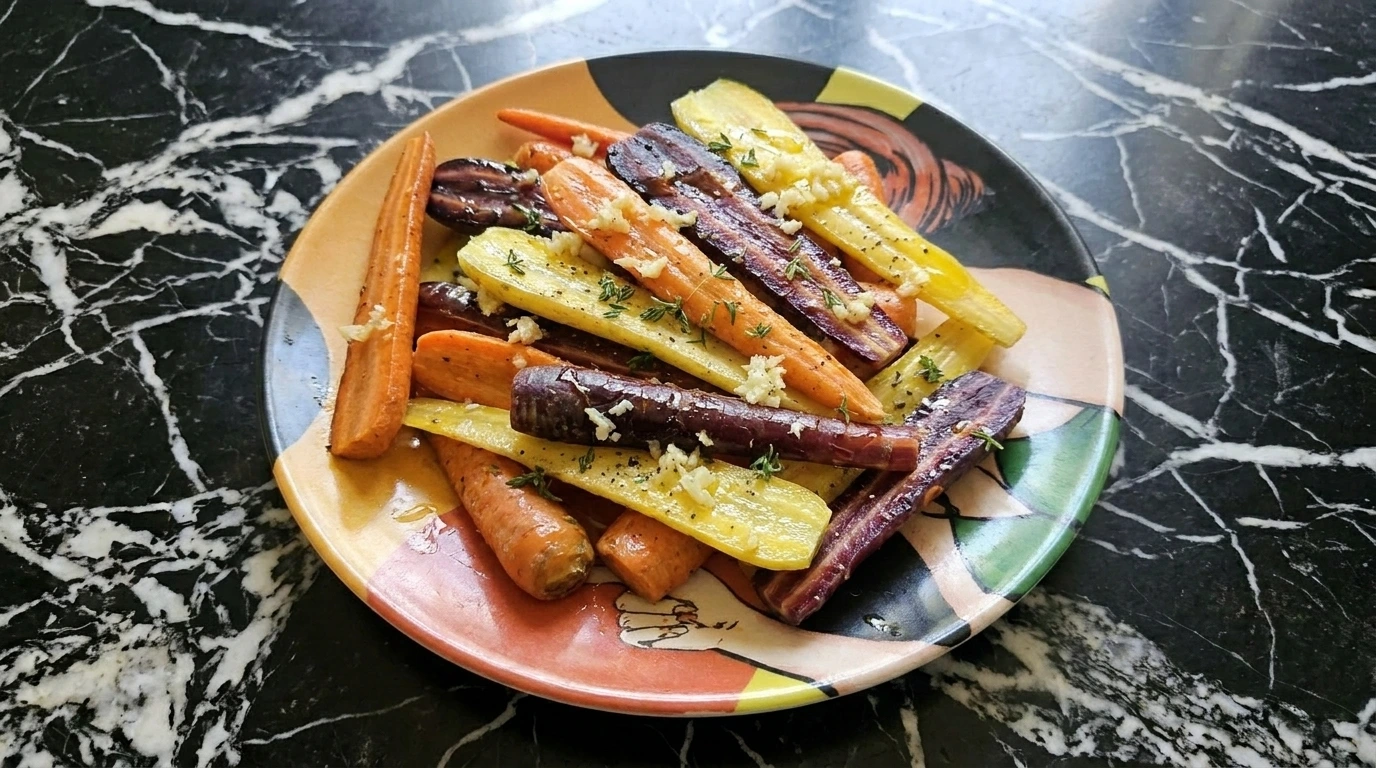
And honestly, roasted carrots are one of those sides that quietly fit into everything. I’ve served them next to holiday mains and tossed leftovers into grain bowls the next day. They even work cold straight from the fridge, which I definitely discovered standing in the kitchen at midnight.
The Science Behind It
Roasting the carrots at 425°F gives the natural sugars enough heat to caramelize before the centers turn mushy. The small amount of honey thickens into a glaze while the olive oil keeps the surface from drying out too early. And spacing the carrots apart matters more than people think because trapped steam softens the edges instead of browning them. If you like roasted vegetables with hearty meals then our Quinoa Veggie Bowl uses the same high-heat roasting trick for deeper flavor.
Shopping List

- rainbow carrots: Peeled and halved lengthwise for caramelized edges and tender centers.
- California olive oil: Helps the carrots roast evenly and develop dark golden spots.
- wildflower honey: Adds light sweetness and helps the edges glaze during roasting.
- fresh garlic cloves: Finely grated for sharp savory flavor that softens in the oven.
- fresh thyme leaves: Adds earthy aroma and balances the sweetness of the carrots.
- kosher salt: Pulls moisture from the carrots so the surface browns properly.
- fresh cracked black pepper: Adds mild heat and depth to the finished vegetables.
Equipment
- large mixing bowl: Coats the carrots evenly with glaze and seasoning.
- large sheet pan: Allows the carrots to roast with enough space for browning.
- parchment paper: Prevents the honey glaze from sticking during roasting.
- chef’s knife: Slices thick carrots evenly for consistent cooking.
Method
Step 1: Coat the carrots with honey and thyme

Spread the 2 pounds of peeled rainbow carrots halved lengthwise across a large bowl and drizzle with 2 tablespoons California olive oil and 1 tablespoon wildflower honey. Add the grated fresh garlic cloves and fresh thyme leaves then toss with your hands for 2 minutes until every carrot looks glossy instead of dry. You’ll smell the garlic wake up right away and the honey will cling in thin streaks across the orange and purple surfaces. Let the coated carrots sit at room temperature for 10 minutes while the oven heats to 425°F. Turn the carrots over once halfway through resting so the honey doesn’t settle at the bottom. Miss this short rest and the seasoning slides off during roasting instead of sticking to the surface. Letting the carrots rest briefly helps the salt pull moisture outward for better browning.
Tip: If your carrots are very thick then slice the widest pieces again so everything roasts at the same pace.
Step 2: Spread the carrots onto the pan
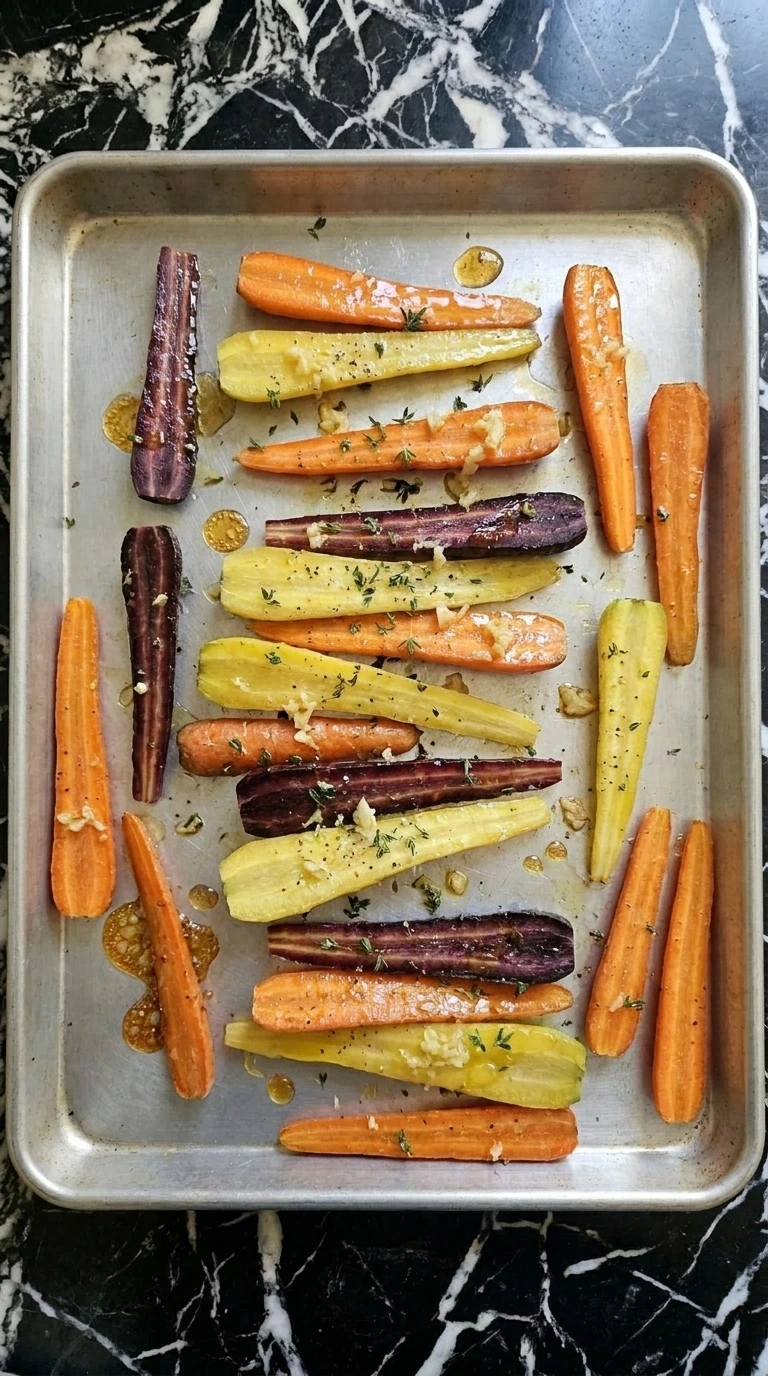
Transfer the coated rainbow carrots onto a large sheet pan at 425°F and spread them cut-side down with small gaps between pieces. Press the flat sides lightly against the pan using your fingertips so more surface touches the heat. After 15 minutes the undersides should turn deep golden with darker caramelized patches around the thinner ends. Rotate the pan at minute 8 and shift the thicker carrots toward the hotter back corner where the color develops slower. (I crowded the pan once because I was rushing dinner, the carrots steamed and turned soft before they browned.) You’ll hear a faint sizzling sound once the honey starts caramelizing around the edges. Crowding the pan traps steam and prevents the sugars from concentrating.
Tip: Use the largest sheet pan you have so the carrots roast instead of soften.
Step 3: Flip and finish roasting
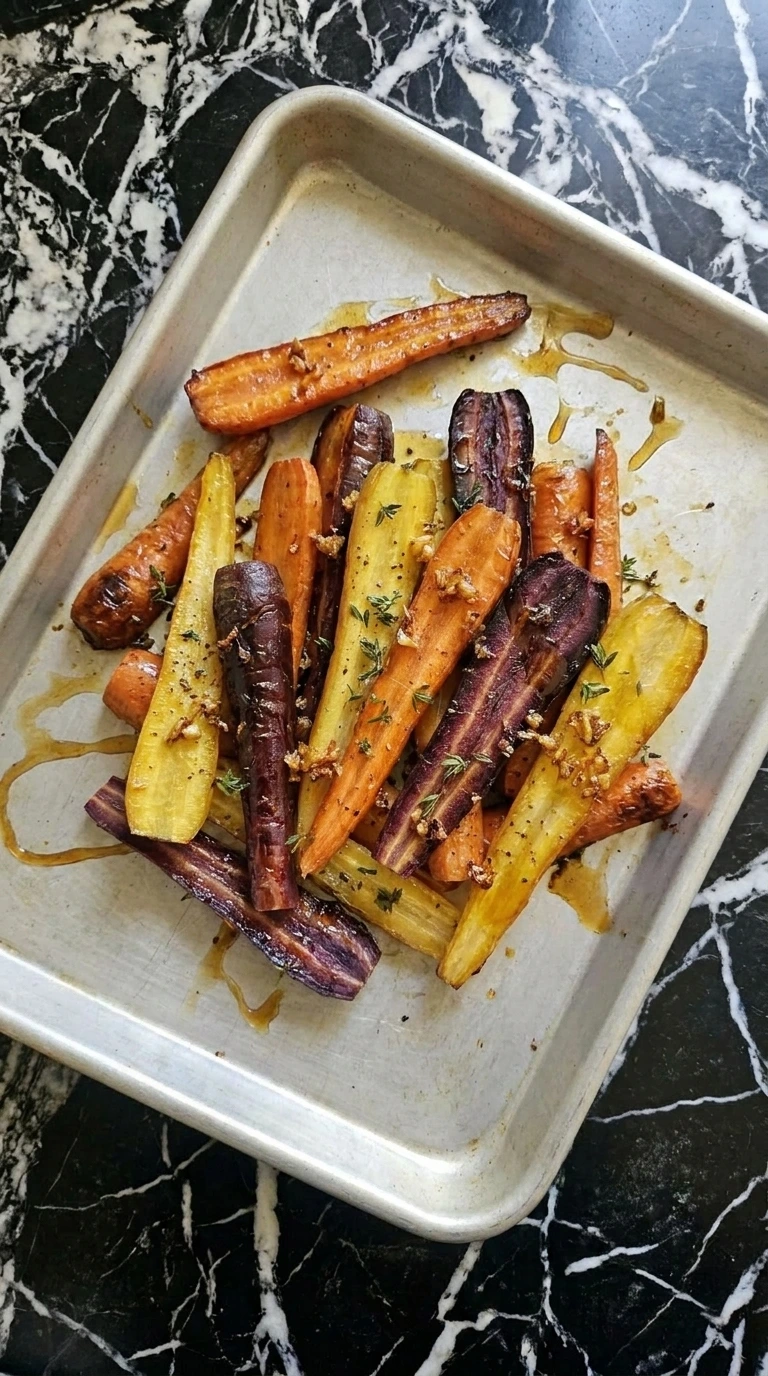
Flip each carrot after the first 15 minutes using quick turning motions so the darker underside faces up. Roast another 10 to 12 minutes at 425°F until the edges wrinkle slightly and the thickest centers slide easily when pressed. The honey should look glossy instead of watery and the garlic bits should deepen to dark golden brown without turning black. Shake the pan once at minute 6 so the carrots shift naturally and don’t stick where the glaze pools. If you go past 12 minutes the thinner purple carrots dry out before the larger orange pieces finish. Roast at high heat for the second half so the natural sugars concentrate before the centers collapse.
Tip: If the glaze darkens too quickly then move the pan one rack higher for the final minutes.
Step 4: Plate and finish with thyme

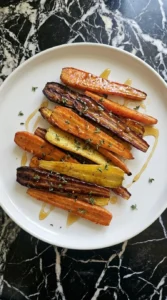
Transfer the roasted rainbow carrots onto a white serving plate while still hot and spoon any thickened glaze from the pan over the top. Scatter a final pinch of fresh thyme leaves unevenly across the carrots and let them cool for 3 minutes before serving. The edges stay slightly crisp while the centers soften into a buttery texture. Don’t stack the carrots tightly or the steam softens the caramelized sides within minutes. I usually serve these beside our Healthy Quinoa Salad because the fresh herbs and grains balance the sweet glaze really well. Resting the carrots briefly keeps the glaze from sliding off the hot surface.
Tip: A tiny squeeze of lemon right before serving brightens the sweetness without overpowering the thyme.
Pro Tips
- Dry the peeled carrots well before adding oil or the glaze slides off during roasting.
- Place the cut sides down first because flat surfaces brown faster than rounded edges.
- Rotate the pan halfway through roasting since most ovens heat unevenly near the back.
- Use fresh thyme at the end too because roasted herbs lose some brightness in the oven.
Make It Your Own
- wildflower honey: pure maple syrup — The glaze becomes slightly thinner and less floral but still caramelizes well at 425°F.
- fresh thyme leaves: fresh rosemary — Rosemary gives a stronger woodsy flavor and can overpower purple carrots if you use too much.
- California olive oil: avocado oil — Works well for higher heat roasting and gives a cleaner less peppery finish.
- fresh garlic cloves: garlic powder — The flavor stays milder and you lose the little crispy garlic bits on the pan.
- rainbow carrots: orange carrots — The flavor stays almost identical though the finished dish looks less colorful. These pair really well with our Creamy Cabbage Soup on colder nights.
How to Store & Reheat
Store leftover roasted carrots in a sealed container in the refrigerator for up to 4 days. Reheat them on a sheet pan at 400°F for 8 to 10 minutes instead of microwaving because the glaze softens quickly under steam. I also like chopping cold leftovers into grain bowls the next day with our High Protein Chicken Bowl or serving them beside Bbq Chicken Sliders when we have people over. The sweet roasted flavor actually deepens overnight.
Roasted Carrots
Ingredients
- 2 pounds rainbow carrots
- 2 tablespoons California olive oil
- 1 tablespoon wildflower honey
- 3 cloves fresh garlic cloves
- 1 tablespoon fresh thyme leaves
- 1 teaspoon kosher salt
- 1/2 teaspoon fresh cracked black pepper
Instructions
- Spread the 2 pounds of peeled rainbow carrots halved lengthwise across a large bowl and drizzle with 2 tablespoons California olive oil and 1 tablespoon wildflower honey. Add the grated fresh garlic cloves and fresh thyme leaves then toss with your hands for 2 minutes until every carrot looks glossy instead of dry. You’ll smell the garlic wake up right away and the honey will cling in thin streaks across the orange and purple surfaces. Let the coated carrots sit at room temperature for 10 minutes while the oven heats to 425°F. Turn the carrots over once halfway through resting so the honey doesn’t settle at the bottom. Miss this short rest and the seasoning slides off during roasting instead of sticking to the surface. Letting the carrots rest briefly helps the salt pull moisture outward for better browning.

- Transfer the coated rainbow carrots onto a large sheet pan at 425°F and spread them cut-side down with small gaps between pieces. Press the flat sides lightly against the pan using your fingertips so more surface touches the heat. After 15 minutes the undersides should turn deep golden with darker caramelized patches around the thinner ends. Rotate the pan at minute 8 and shift the thicker carrots toward the hotter back corner where the color develops slower. (I crowded the pan once because I was rushing dinner, the carrots steamed and turned soft before they browned.) You’ll hear a faint sizzling sound once the honey starts caramelizing around the edges. Crowding the pan traps steam and prevents the sugars from concentrating.
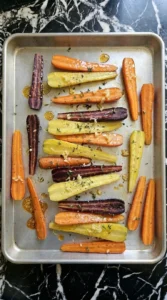
- Flip each carrot after the first 15 minutes using quick turning motions so the darker underside faces up. Roast another 10 to 12 minutes at 425°F until the edges wrinkle slightly and the thickest centers slide easily when pressed. The honey should look glossy instead of watery and the garlic bits should deepen to dark golden brown without turning black. Shake the pan once at minute 6 so the carrots shift naturally and don’t stick where the glaze pools. If you go past 12 minutes the thinner purple carrots dry out before the larger orange pieces finish. Roast at high heat for the second half so the natural sugars concentrate before the centers collapse.

- Transfer the roasted rainbow carrots onto a white serving plate while still hot and spoon any thickened glaze from the pan over the top. Scatter a final pinch of fresh thyme leaves unevenly across the carrots and let them cool for 3 minutes before serving. The edges stay slightly crisp while the centers soften into a buttery texture. Don’t stack the carrots tightly or the steam softens the caramelized sides within minutes. I usually serve these beside our Healthy Quinoa Salad because the fresh herbs and grains balance the sweet glaze really well. Resting the carrots briefly keeps the glaze from sliding off the hot surface.
Notes
Nutrition
Questions I Get Asked
Yes. Roast them fully then refrigerate for up to 4 days. Reheat at 400°F for 8 minutes so the edges crisp again.
The pan was probably overcrowded or the carrots were still wet after washing. Extra moisture creates steam instead of browning.
Not always. Thin young carrots can simply be scrubbed well but thicker mature carrots taste sweeter once peeled.
You can but they roast softer and less flavorful because their surfaces are smoother and hold less caramelization.
Final Thoughts
If you make this on a weekend afternoon with music playing, the way I do, you’ll understand why it’s been in our family rotation for years now. The little trick I mentioned about not crowding the pan is honestly the difference between okay and really good.
Tag me on Instagram if you make it, I love seeing what you cook. And Liam says hi (he ate almost half of these carrots when I tested them, which is the highest endorsement you’ll get from a 5-year-old).
Roasting carrots changes them more than people expect. The heat softens those tougher cell walls and pulls the natural sugars closer to the surface, so they end up tasting sweeter and a little richer too.