Thanksgiving Side Dishes Healthy Butternut Squash
Last fall, we were visiting my in-laws, and my mother-in-law ended up making this dish three times in one week because everyone kept coming back for more. I watched her roast the squash and noticed her little trick was simple: she cut the pieces evenly but left some natural edges to get extra caramelization. Now this Thanksgiving Side Dishes Healthy Butternut Squash recipe has become one I make every year too.
I tested it a few times before getting the balance just right. My first batch turned out too soft because I packed the pan too tightly, so the squash steamed instead of roasting. After that, I learned that giving the pieces enough space and using the right amount of heat is what creates those golden edges that make thanksgiving recipes side dishes healthy butternut squash so delicious.
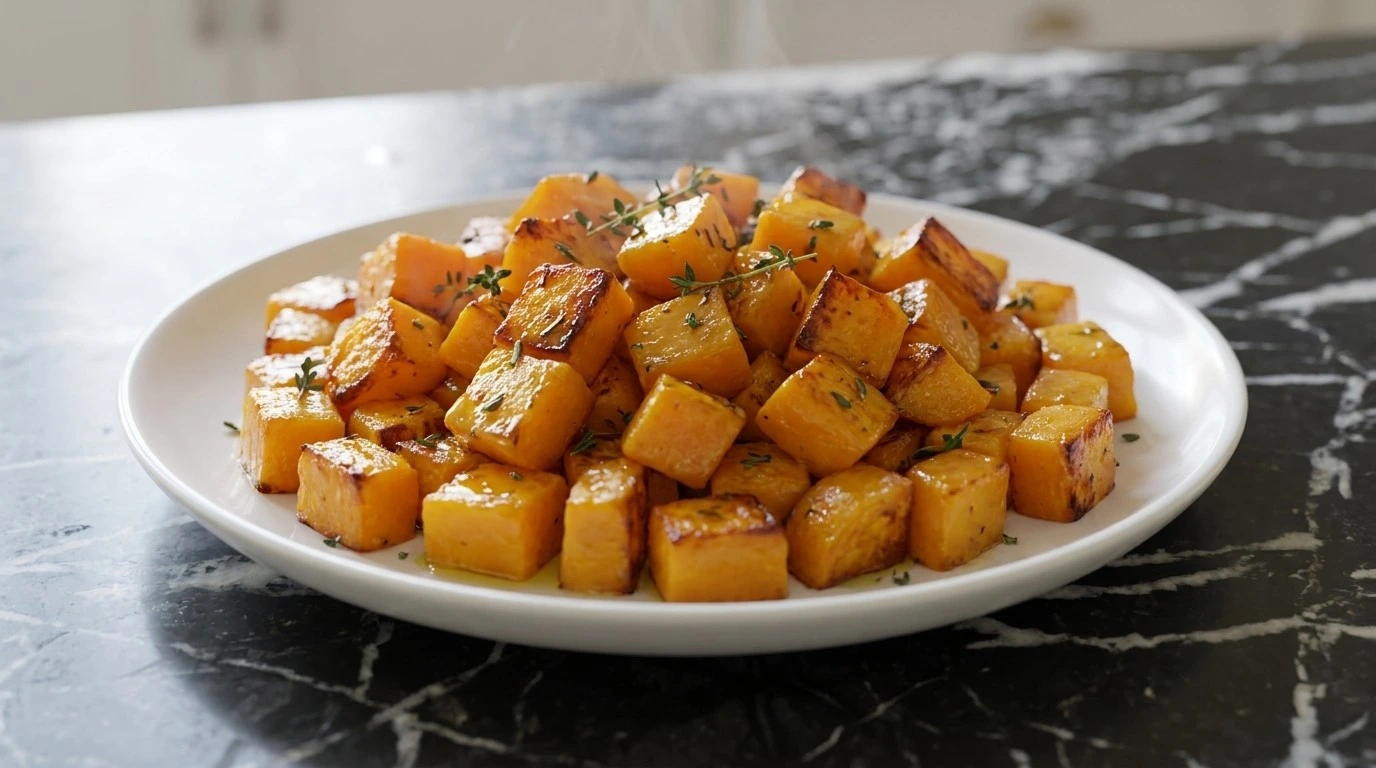
This roasted version fits perfectly alongside classic holiday meals and cozy fall dinners. If you love seasonal flavors, you might also enjoy our Crispy Air Fryer Pumpkin Seeds (ready in 15 Minutes) for another easy autumn snack idea.
What Makes This Thanksgiving Side Dishes Healthy Butternut Squash Work
The secret behind this Thanksgiving Side Dishes Healthy Butternut Squash is using 425°F heat with enough space between cubes. The dry heat creates caramelized edges while the center stays tender.
Cutting the squash into similar pieces helps each cube finish together. I also pair this technique with seasonal recipes like Easy Slow Cooker Tomato Soup for Cozy Fall Dinners because both rely on slow flavor development and careful timing.
Ingredient List

- butternut squash: Peeled and cut into uneven 1-inch cubes for tender centers and caramelized edges.
- olive oil: Used to coat the squash and help seasoning stick while improving browning.
- fresh thyme: Added for earthy flavor and scattered over the roasted squash before serving.
- kosher salt: Balances the natural sweetness of the roasted squash.
- black pepper: Adds mild spice and depth to the vegetable side.
What You’ll Use
- Large sheet pan: A heavy 13×18 inch sheet pan gives the squash space to roast evenly and prevents steaming, while a smaller crowded pan creates soft watery pieces.
- Large clear glass mixing bowl: A large bowl helps coat the squash evenly with oil and seasoning, and it should have enough room for tossing without spilling.
- Sharp chef knife: A sharp 8-inch knife makes clean squash cubes safer and faster, while a dull blade increases uneven cuts and crushing.
How to Make Thanksgiving Side Dishes Healthy Butternut Squash Step by Step
Step 1: Cut the butternut squash into cubes
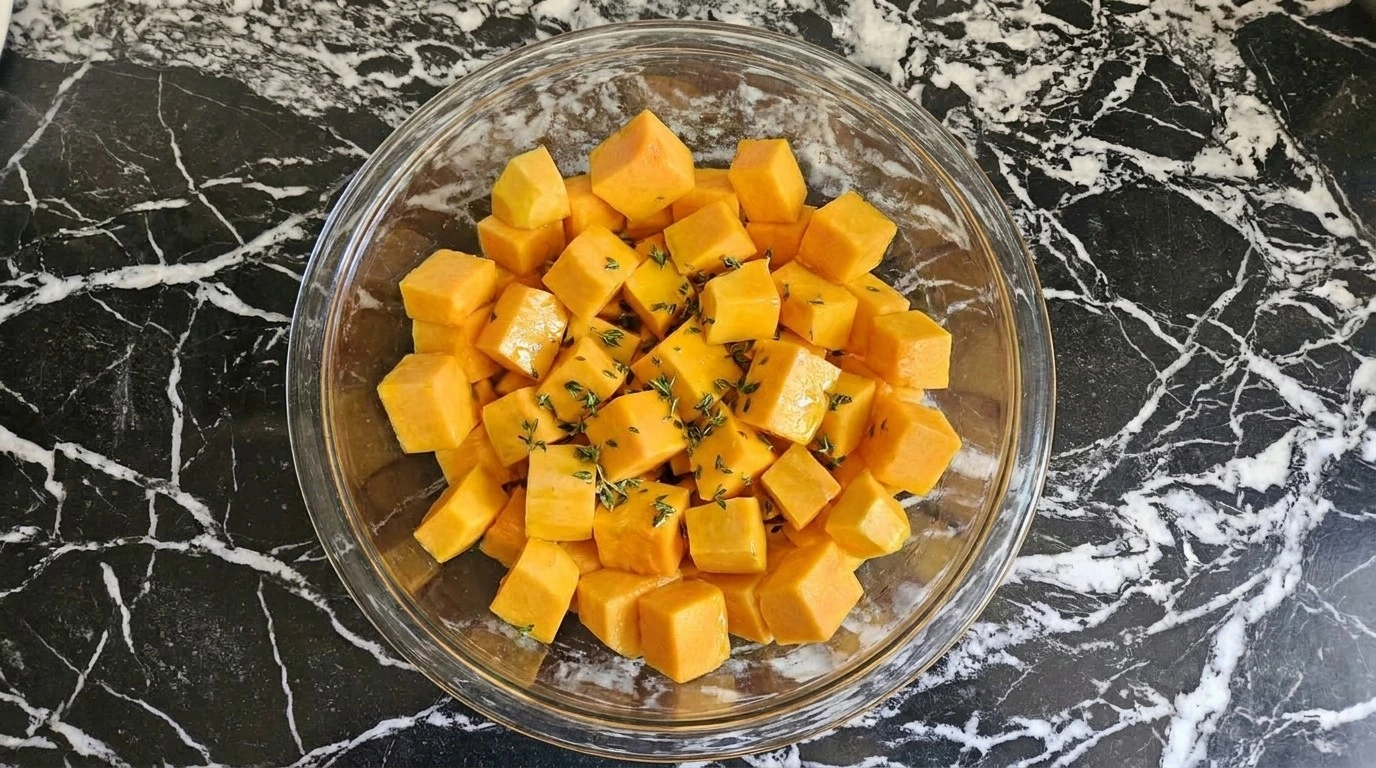
Preheat the oven to 425°F. Peel and cut 2 pounds butternut squash into uneven 1-inch cubes. Work at room temperature and finish within 10 minutes.
Toss the cubes with 2 tablespoons olive oil, salt, black pepper and thyme using your hands in a folding motion until coated. You’ll see a glossy orange surface with herbs clinging to the squash pieces. The smell becomes earthy and fresh from the thyme.
Skip this coating step and the seasoning won’t stick evenly across the cubes. Coat each cube evenly, the oil helps heat transfer and browning.
Tip: Choose a squash with a firm neck and cut pieces close to 1 inch so they roast at the same speed.
Step 2: Spread the squash for roasting
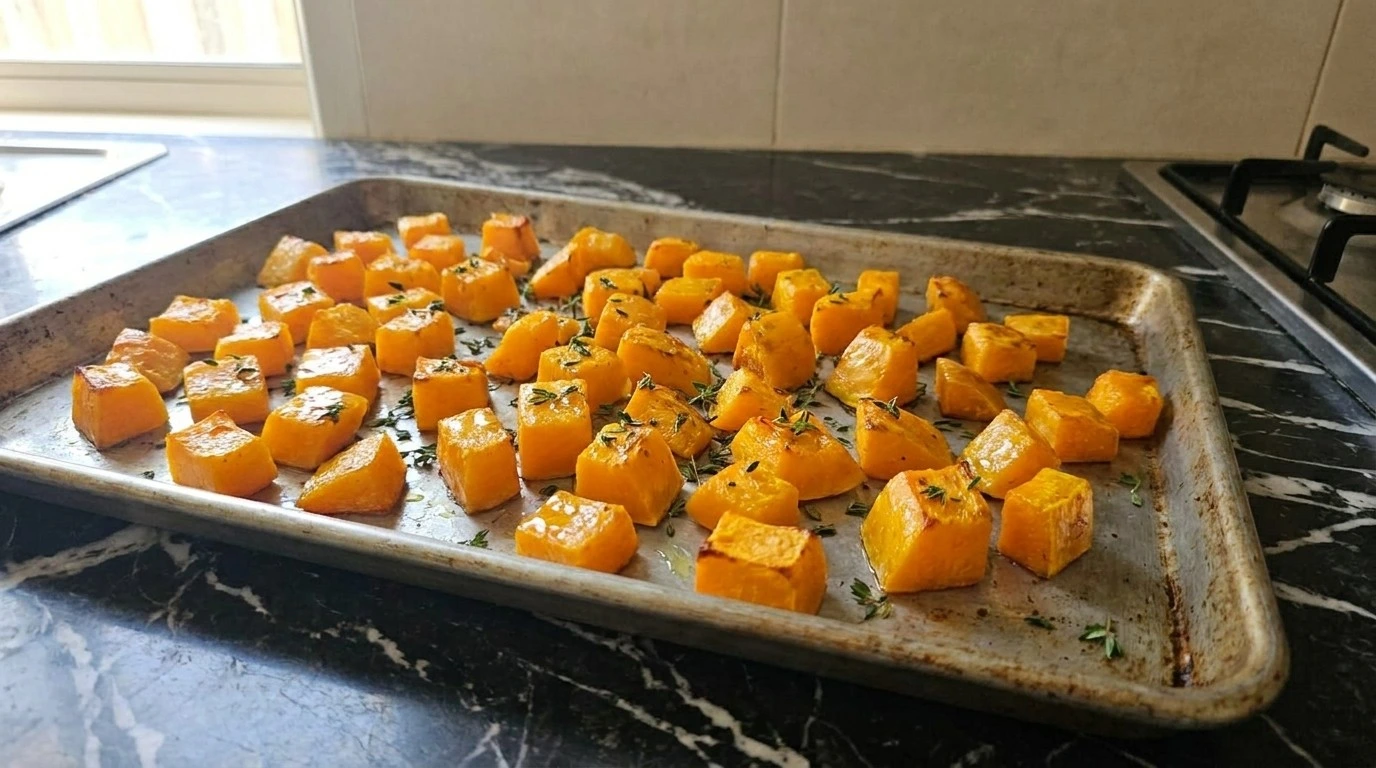
Spread the seasoned 2 pounds butternut squash cubes in a single layer and roast at 425°F for 20 to 25 minutes. Flip the cubes halfway through with a spatula using a gentle turning motion so each side touches the heat.
The edges become deep golden and you’ll notice a roasted aroma after about 15 minutes. The surfaces should look slightly crisp while the centers stay tender.
Crowd the pan and the squash steams instead of caramelizing. Roast at 425°F without crowding, dry heat creates better caramelization.
Tip: Leave small gaps between cubes because crowded squash releases moisture and loses crisp edges.
Step 3: Finish the roasted squash with herbs

Return the roasted 2 pounds butternut squash cubes to the pan and roast at 425°F for another 5 minutes after adding fresh thyme leaves. Gently toss the cubes with a turning motion so the herbs spread over the warm surfaces.
You’ll see darker caramelized corners and a glossy finish across the squash. The aroma becomes sweeter as the natural sugars deepen.
Remove them before 30 minutes total or the edges can turn bitter. Finish with a short final roast, concentrated sugars create the deeper flavor.
Tip: Add delicate herbs near the end because long heat exposure can dull their fresh flavor.
Step 4: Plate the roasted squash
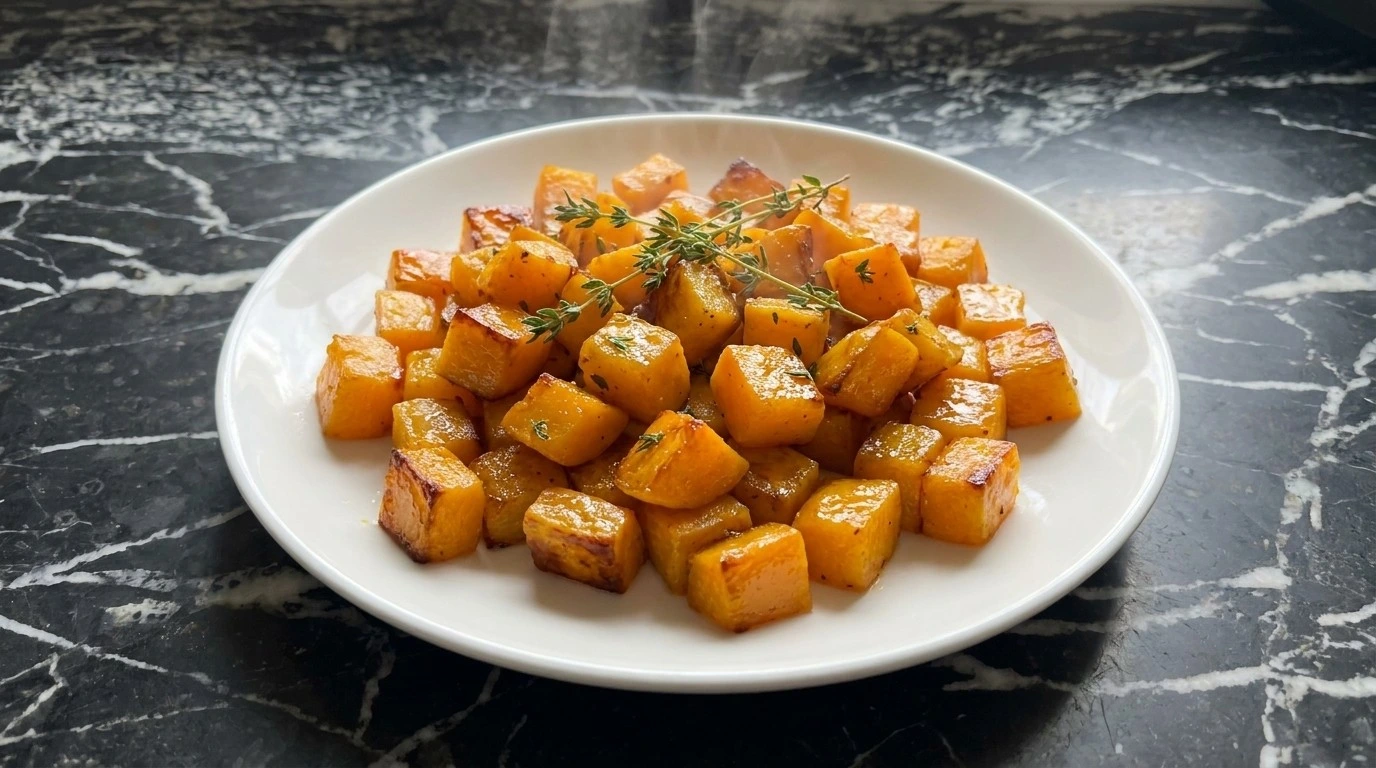
Transfer the roasted 2 pounds butternut squash cubes onto a white serving plate at room temperature after resting for 5 minutes. Arrange the pieces loosely by hand and keep some caramelized sides facing upward for texture.
(I tested serving it immediately once and the steam softened the edges. The short rest kept the roasted surface better.
) You’ll see uneven golden colors and small herb flecks across the plate. Rest 5 minutes before serving, the surface texture settles after roasting.
Tip: Serve on a warm plate during holidays so the squash keeps its soft center longer.
Tips and Tricks
- Cut the butternut squash cubes close to 1 inch because pieces under 1/2 inch can dry out during the 425°F roasting window.
- Choose a heavy sheet pan that measures about 13×18 inches because the squash needs space to roast instead of releasing steam.
- Season the squash immediately after cutting because the olive oil coating helps the salt cling before the pieces enter the oven.
- Flip the squash once around the 12-minute mark so more sides develop golden edges and the natural sugars caramelize evenly.
- Add fresh thyme after roasting for the brightest flavor because herbs exposed to 425°F heat for 30 minutes can lose their fresh aroma.
- Serve this side within 15 minutes after roasting because the caramelized surfaces are best while the edges still have texture.
- Add 1 tablespoon maple syrup and 1/2 teaspoon smoked paprika before roasting for a sweet and smoky Thanksgiving twist.
- Mix 1/3 cup toasted pecans with the finished squash for extra crunch and a nutty holiday flavor.
- Replace thyme with 1 teaspoon cinnamon and a pinch of nutmeg for a warmer fall-inspired version.
- Add 2 tablespoons dairy-free parmesan alternative after roasting for a savory plant-based variation.
Ingredient Swaps
- olive oil: avocado oil — Use the same 2 tablespoons because avocado oil handles high heat well. The flavor becomes slightly more neutral while the roasted edges stay crisp.
- fresh thyme: fresh rosemary — Replace with 1 tablespoon finely chopped rosemary because it has a stronger pine-like flavor. The squash becomes more savory and pairs well with turkey.
- kosher salt: sea salt — Use the same amount by volume if the crystals are similar. Larger sea salt flakes may need a small adjustment because they season less evenly.
- butternut squash: honeynut squash — Use 2 pounds of honeynut squash for a sweeter result with a smaller cube size. The texture becomes slightly creamier after roasting.
- olive oil: melted dairy-free butter — Use 3 tablespoons of melted dairy-free butter for a richer holiday flavor. It adds a buttery aroma but can brown faster, so watch the final minutes.
How to Store & Reheat
Store the roasted squash in an airtight glass container in the refrigerator for up to 4 days. You can freeze it for up to 3 months by spreading portions into freezer bags and removing excess air before sealing.
Thaw frozen squash overnight in the refrigerator before reheating. Reheat the squash at 400°F for 10 to 15 minutes until the edges warm and regain some roasted texture.
Add a teaspoon of olive oil and fresh thyme after reheating if the surface looks dry. Discard leftovers that develop a sour smell, slimy texture or unusual discoloration.
Thanksgiving Side Dishes Healthy Butternut Squash
Ingredients
- 2 pounds butternut squash Peeled and cut into uneven 1-inch cubes for tender centers and caramelized edges.
- 2 tablespoons olive oil Used to coat the squash and help seasoning stick while improving browning.
- 2 tablespoons fresh thyme Added for earthy flavor and scattered over the roasted squash before serving.
- 1 teaspoon kosher salt Balances the natural sweetness of the roasted squash.
- 1/2 teaspoon black pepper Adds mild spice and depth to the vegetable side.
Instructions
- Preheat the oven to 425°F. Peel and cut 2 pounds butternut squash into uneven 1-inch cubes. Work at room temperature and finish within 10 minutes. Toss the cubes with 2 tablespoons olive oil, salt, black pepper and thyme using your hands in a folding motion until coated. You’ll see a glossy orange surface with herbs clinging to the squash pieces. The smell becomes earthy and fresh from the thyme. Skip this coating step and the seasoning won’t stick evenly across the cubes. Coat each cube evenly, the oil helps heat transfer and browning.

- Spread the seasoned 2 pounds butternut squash cubes in a single layer and roast at 425°F for 20 to 25 minutes. Flip the cubes halfway through with a spatula using a gentle turning motion so each side touches the heat. The edges become deep golden and you’ll notice a roasted aroma after about 15 minutes. The surfaces should look slightly crisp while the centers stay tender. Crowd the pan and the squash steams instead of caramelizing. Roast at 425°F without crowding, dry heat creates better caramelization.

- Return the roasted 2 pounds butternut squash cubes to the pan and roast at 425°F for another 5 minutes after adding fresh thyme leaves. Gently toss the cubes with a turning motion so the herbs spread over the warm surfaces. You’ll see darker caramelized corners and a glossy finish across the squash. The aroma becomes sweeter as the natural sugars deepen. Remove them before 30 minutes total or the edges can turn bitter. Finish with a short final roast, concentrated sugars create the deeper flavor.
- Transfer the roasted 2 pounds butternut squash cubes onto a white serving plate at room temperature after resting for 5 minutes. Arrange the pieces loosely by hand and keep some caramelized sides facing upward for texture. (I tested serving it immediately once and the steam softened the edges. The short rest kept the roasted surface better.) You’ll see uneven golden colors and small herb flecks across the plate. Rest 5 minutes before serving, the surface texture settles after roasting.
Notes
Nutrition
Reader Questions
Yes, prepare the roasted squash up to 2 days ahead and store it covered in the refrigerator. Reheat it at 400°F for 10 to 15 minutes on a sheet pan so the edges regain some texture instead of becoming soft.
Store Thanksgiving Side Dishes Healthy Butternut Squash in an airtight container for up to 4 days. Keep the squash dry and avoid adding extra herbs until serving because moisture can soften the roasted surface.
The most common cause is overcrowding the pan or cutting pieces too small. Roast at 425°F with space between cubes and flip once after about 12 minutes so moisture can escape and the edges can brown.
Yes, freeze the roasted squash for up to 3 months in a freezer-safe container. Thaw overnight in the refrigerator and reheat at 400°F for about 15 minutes to improve the texture before serving.
You can double the recipe by using two sheet pans instead of stacking extra squash together. Keep the oven at 425°F and rotate the pans halfway through the 25-minute roasting time for even browning.
In Conclusion
Every time I make this, I think back to the first time I tried it. I was nervous about messing up the roasting and thought I needed a lot more experience. But this Thanksgiving Side Dishes Healthy Butternut Squash recipe is actually one of those easy sides that’s pretty forgiving.
Even if the timing isn’t perfect, those beautiful golden edges can still happen. I remember my first few tries when I packed the pan too full and missed that delicious caramelized texture. Now, I love this version because the simple roasting method brings out the squash’s natural sweetness without much effort.
If you try these thanksgiving recipes side dishes healthy butternut squash, I’d love to hear how it turns out in the comments below. And if you enjoyed this recipe, check out Sheet Pan Chicken Thighs and Potatoes for an Easy Dinner for another cozy meal idea.
Butternut squash gets even sweeter when it’s roasted because the heat slowly turns its natural starches into sugars. That’s what creates those rich caramelized flavors, and it’s why a few simple seasonings can make this holiday side taste so special.