Creamy Tomato Pasta
This is the pasta I fall back on when I want something cozy but not too heavy. It’s creamy, a little tangy, and the penne really holds onto that sauce. It’s the kind of dinner that doesn’t ask much from you, which is why it shows up a lot around here.
If you like this style of comfort food, you’ll probably enjoy Creamy Garlic Parmesan Pasta too What keeps me coming back is how the sauce turns silky without feeling over the top.
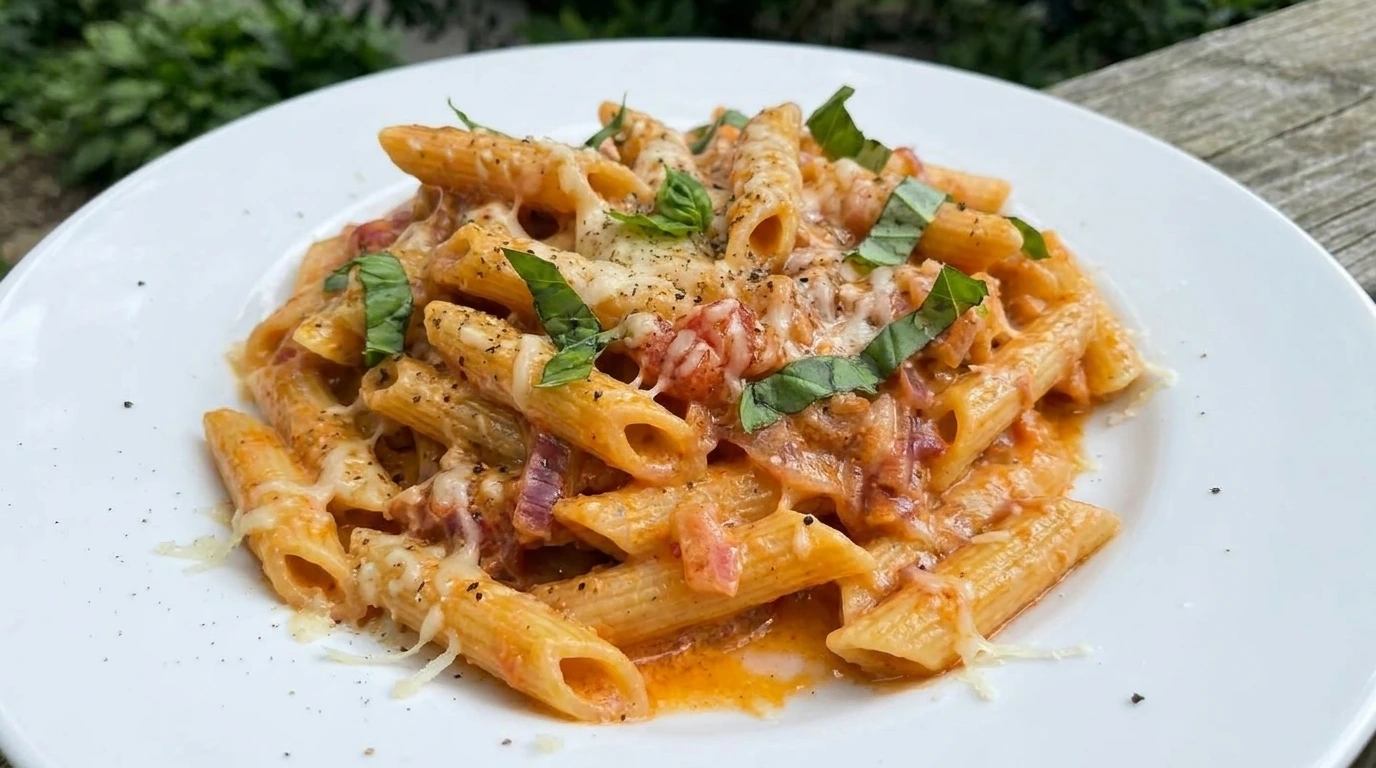
The color alone pulls people into the kitchen. And once it’s on the table, it doesn’t last long.
The Secret to This Recipe
Cooking the tomato paste until it darkens at medium heat builds a deeper base before any liquid goes in. Then keeping the sauce at a gentle 190°F simmer lets the tomatoes reduce without scorching. Adding cream at lower heat helps it emulsify smoothly, so the sauce stays silky instead of breaking.
Ingredients You Will Need
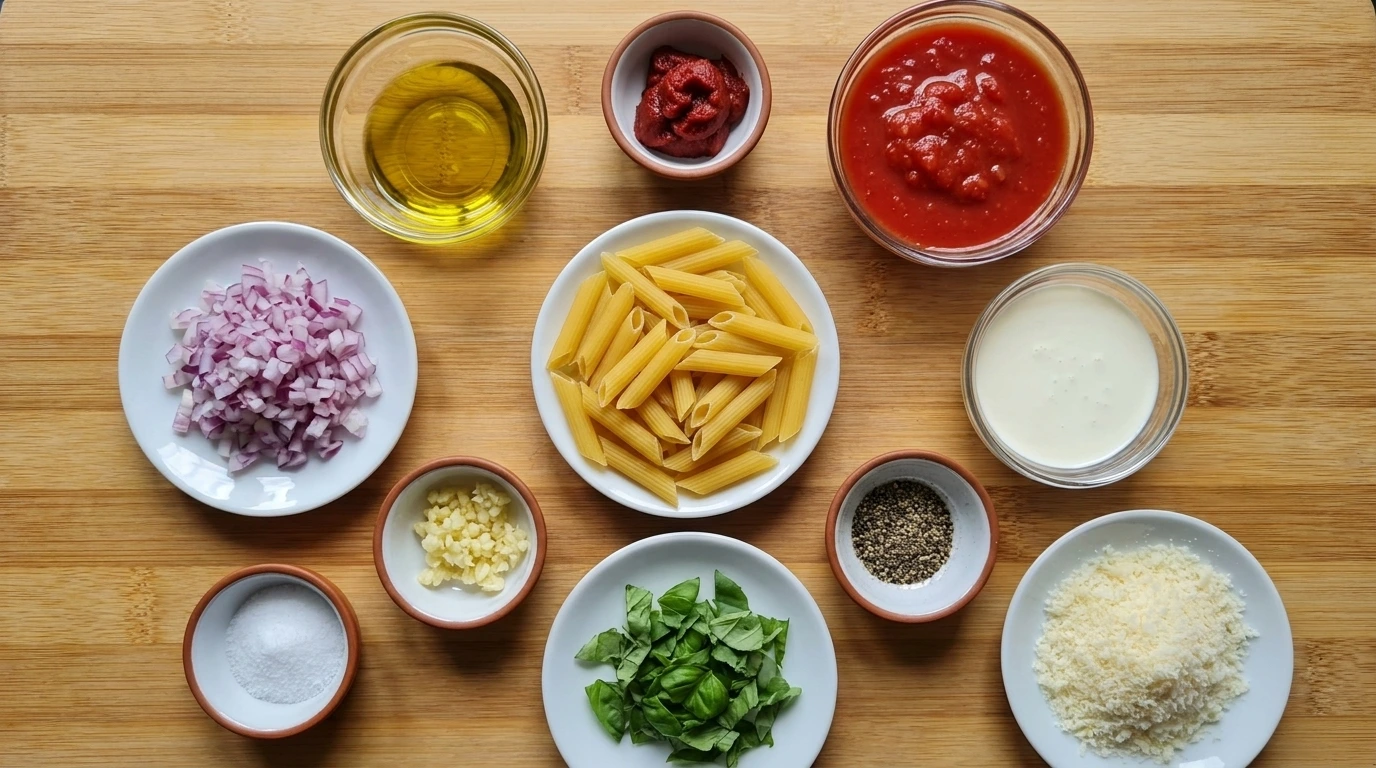
- penne: Short ridged pasta that traps the creamy sauce inside and along the grooves.
- olive oil: Used as the base fat to soften aromatics and carry flavor evenly.
- red onion: Finely chopped so it softens quickly and blends into the sauce.
- garlic cloves: Freshly minced for a stronger aroma and clean savory bite.
- double concentrated tomato paste: Adds a deep, rich tomato backbone when cooked until darkened.
- crushed San Marzano tomatoes: Smooth, slightly sweet tomatoes that form the body of the sauce.
- heavy cream: Gives the sauce its silky texture and soft orange color.
- freshly grated parmesan cheese: Finely grated so it melts smoothly into the sauce.
- fresh basil leaves: Torn by hand for a fresh, soft finish.
- kosher salt: Used to season both the pasta water and the sauce.
- freshly ground black pepper: Adds a gentle heat that balances the cream.
Kitchen Equipment
How to Make It
Step 1: Boil the penne until tender
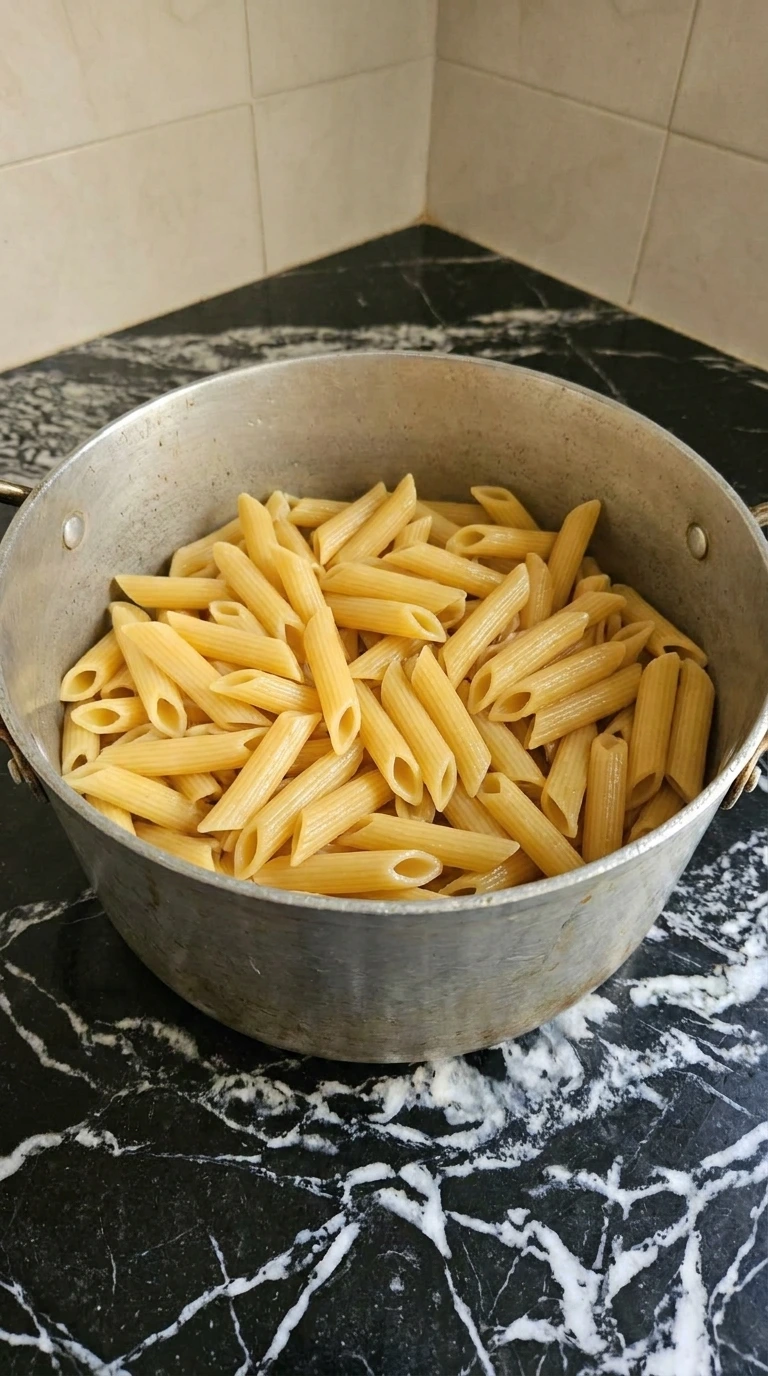
Bring a large pot of water to a full boil at 212°F. Salt it so it tastes like the sea, then add the penne and stir right away with a wooden spoon to keep it from sticking. Cook for 10 to 12 minutes, stirring every couple minutes with a slow sweep across the bottom. Around minute 10, bite one. It should be tender with a slight chew. You’ll see the pasta swell and turn a deeper yellow. Go past 12 minutes and it turns too soft, and the sauce won’t cling properly.
Tip: Don’t rinse the pasta after draining. The starch helps the sauce stick better.
Step 2: Soften the red onion and garlic with tomato paste
Heat olive oil over medium heat, about level 5 on a 10 dial. Add the onion and cook for 4 to 5 minutes, stirring slowly with a flat spatula until it softens and turns slightly translucent. Add the garlic and stir in small circles for 60 to 90 seconds. Then press in the tomato paste and spread it across the pan. Let it cook for 2 to 3 minutes until it darkens to a brick red and smells slightly sweet. If you skip this, the sauce stays sharp and flat.
Tip: Use a wide pan so the paste has space to caramelize instead of steaming.
Step 3: Stir in the tomatoes and cream until the sauce turns silky
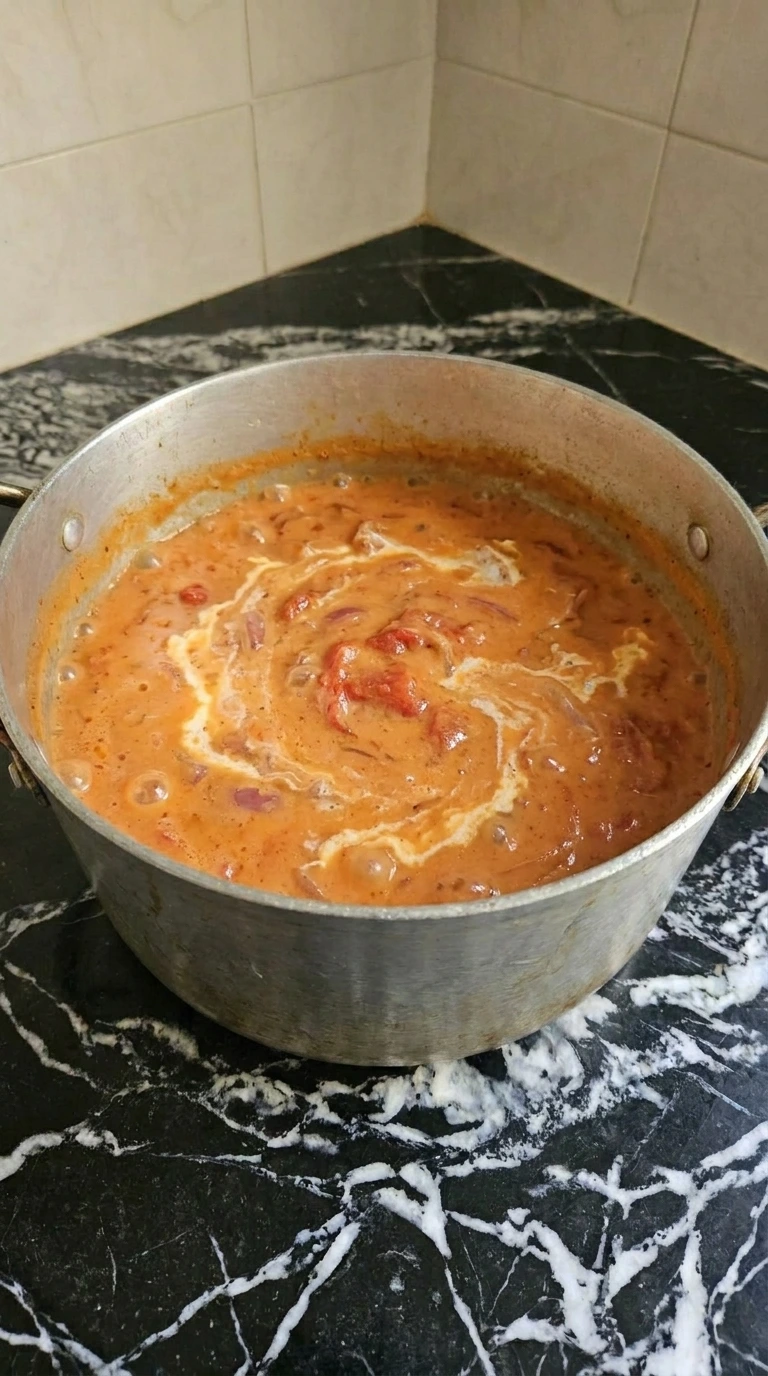
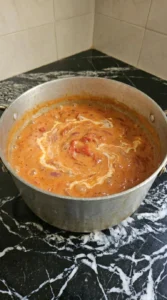
Pour in the crushed tomatoes and stir with a sweeping motion, scraping the bottom clean. Let it simmer at about 190°F for 8 to 10 minutes, stirring every few minutes as small bubbles rise slowly. Lower the heat slightly and fold in the cream with a gentle circular motion. The sauce should shift to a soft orange and coat the back of a spoon. (I used to rush this step, and the sauce always felt off.) Boil it too hard and it can turn grainy instead of smooth.
Tip: If the sauce gets too thick, add a splash of pasta water to loosen it.
Step 4: Fold the penne into the sauce with parmesan and basil
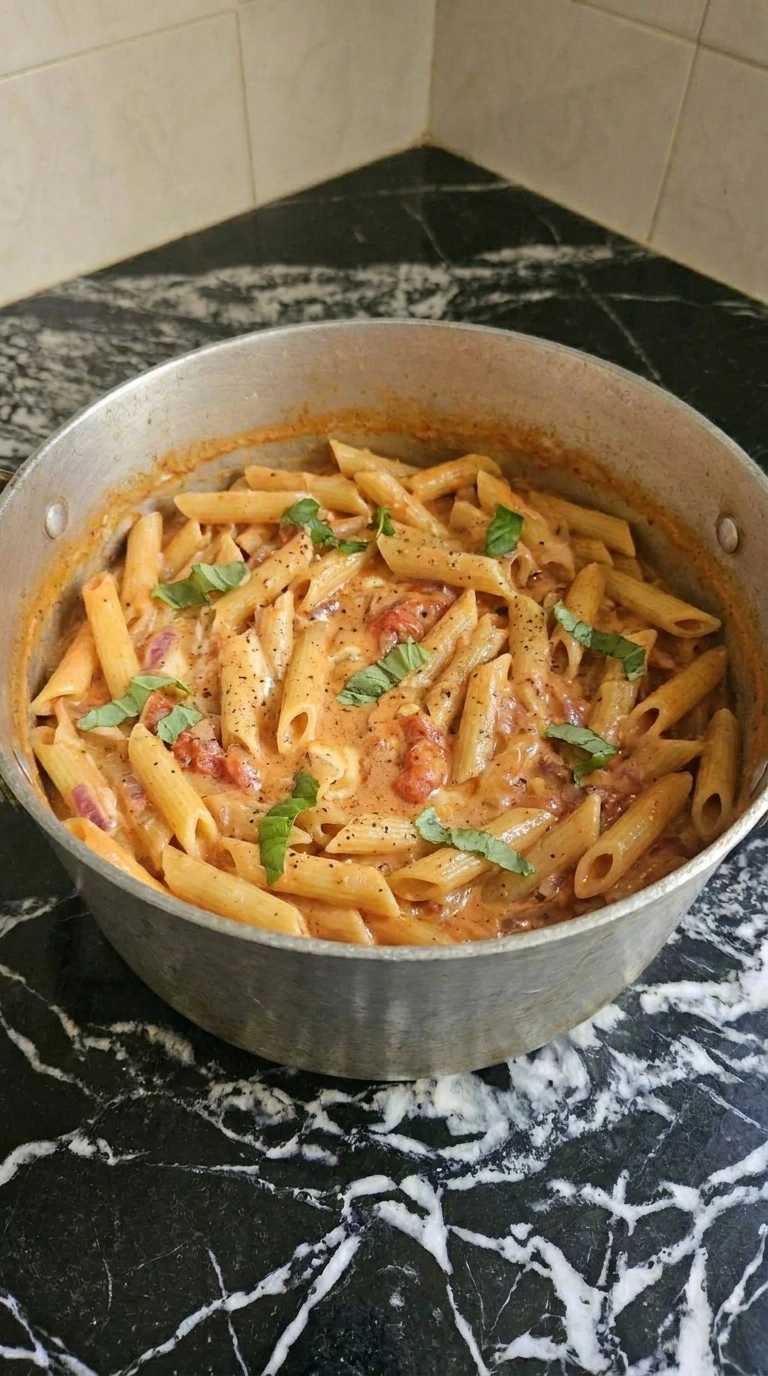
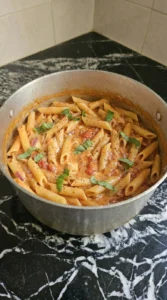
Add the drained penne straight into the sauce over low heat, about level 3. Use a slow scoop-and-turn motion to fold everything together for 2 to 3 minutes. Sprinkle in the parmesan a little at a time, folding gently so it melts evenly. Add torn basil at the end. You’ll see the sauce turn glossy and cling to every piece. Stir too aggressively and the pasta can break, and the sauce won’t coat right.
Tip: Turn the heat down before adding cheese so it melts instead of clumping.
Step 5: Plate the pasta and finish with extra parmesan and basil
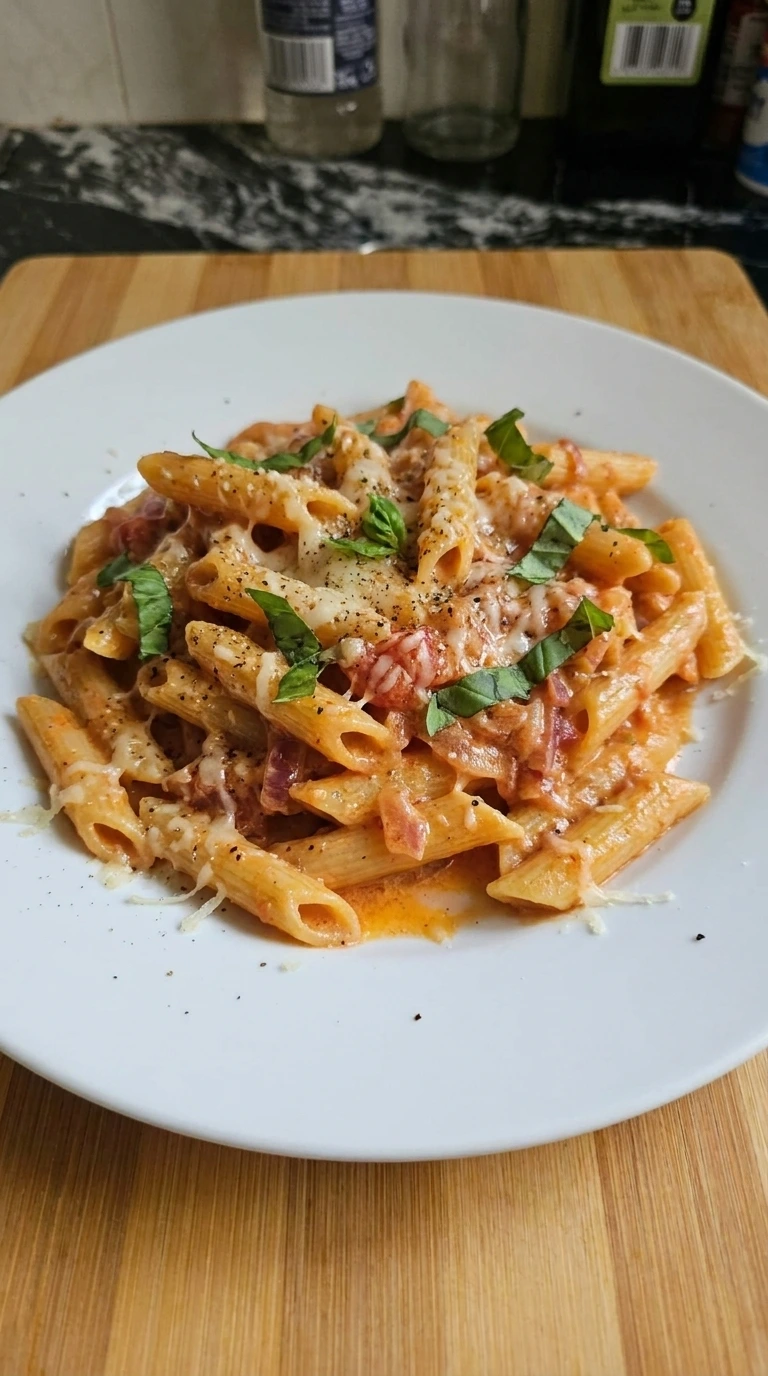
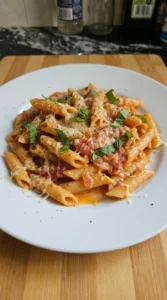
Turn off the heat and let the pasta sit for about 1 minute so the sauce settles around 150°F. Use a gentle lift and twist motion to plate it so it stacks naturally. Finish with extra parmesan and basil right away. The cheese should soften as it hits the hot pasta, and you’ll smell the basil instantly. Wait too long and the sauce thickens too much and loses that silky look.
Tip: Serve immediately for the best texture. This pasta doesn’t like to sit too long.
Pro Tips
- Grate your parmesan fresh. It melts smoother and won’t clump.
- Keep some pasta water nearby to loosen the sauce if needed.
- Cook the tomato paste until it darkens. That’s where the depth comes from.
- Tear basil by hand instead of cutting it. It keeps the texture softer.
Swaps and Variations
- heavy cream: half and half — It works, but the sauce will be thinner and less rich.
- parmesan cheese: pecorino romano — Saltier and sharper, so use a little less.
- penne: rigatoni or fusilli — Both hold sauce well, similar result overall.
- olive oil: butter — Adds richness but slightly changes the flavor balance.
- heavy cream: coconut cream — Dairy free option, but it adds a mild coconut flavor. Works better if you like that twist. Try pairing it with dishes like Grilled Chicken Salad: https://leagueofcooking.com/grilled-chicken-salad/
How to Store
Let the pasta cool completely before storing it in an airtight container. It keeps well in the fridge for up to 4 days. When reheating, use low heat and add a splash of water or cream. Stir slowly until the sauce loosens and turns smooth again.
Creamy Tomato Pasta
Ingredients
- penne
- olive oil
- red onion
- garlic cloves
- double concentrated tomato paste
- crushed San Marzano tomatoes
- heavy cream
- freshly grated parmesan cheese
- fresh basil leaves
- kosher salt
- freshly ground black pepper
Instructions
- Bring a large pot of water to a full boil at 212°F. Salt it so it tastes like the sea, then add the penne and stir right away with a wooden spoon to keep it from sticking. Cook for 10 to 12 minutes, stirring every couple minutes with a slow sweep across the bottom. Around minute 10, bite one. It should be tender with a slight chew. You’ll see the pasta swell and turn a deeper yellow. Go past 12 minutes and it turns too soft, and the sauce won’t cling properly.
- Heat olive oil over medium heat, about level 5 on a 10 dial. Add the onion and cook for 4 to 5 minutes, stirring slowly with a flat spatula until it softens and turns slightly translucent. Add the garlic and stir in small circles for 60 to 90 seconds. Then press in the tomato paste and spread it across the pan. Let it cook for 2 to 3 minutes until it darkens to a brick red and smells slightly sweet. If you skip this, the sauce stays sharp and flat.
- Pour in the crushed tomatoes and stir with a sweeping motion, scraping the bottom clean. Let it simmer at about 190°F for 8 to 10 minutes, stirring every few minutes as small bubbles rise slowly. Lower the heat slightly and fold in the cream with a gentle circular motion. The sauce should shift to a soft orange and coat the back of a spoon. (I used to rush this step, and the sauce always felt off.) Boil it too hard and it can turn grainy instead of smooth.
- Add the drained penne straight into the sauce over low heat, about level 3. Use a slow scoop-and-turn motion to fold everything together for 2 to 3 minutes. Sprinkle in the parmesan a little at a time, folding gently so it melts evenly. Add torn basil at the end. You’ll see the sauce turn glossy and cling to every piece. Stir too aggressively and the pasta can break, and the sauce won’t coat right.
- Turn off the heat and let the pasta sit for about 1 minute so the sauce settles around 150°F. Use a gentle lift and twist motion to plate it so it stacks naturally. Finish with extra parmesan and basil right away. The cheese should soften as it hits the hot pasta, and you’ll smell the basil instantly. Wait too long and the sauce thickens too much and loses that silky look.
Notes
Questions I Get Asked
Yes, and it works well. Shapes like rigatoni or fusilli catch the sauce nicely. Just cook them until tender the same way.
You can. The sauce thickens in the fridge, so add a splash of water or cream when reheating. Warm it slowly over low heat.
Yes, half and half works as a lighter option. The sauce will be thinner and not as rich, but still good.
Grilled chicken, sausage, or white beans all work well. Keep the seasoning simple so the sauce stays the focus.
The heat was likely too high after adding the cream. Keep it at a gentle simmer and stir slowly to keep it smooth.
It’s not ideal. Cream sauces can separate when thawed. It’s better fresh or from the fridge.
Final Thoughts
This creamy tomato pasta is one of those dinners that just works every time. It’s simple, cozy, and easy to come back to.
If you want another comfort dish, try One Pot Chicken Alfredo Pasta
The soft orange color happens when the tomato acids mix with dairy fat, which changes both the flavor and the hue.