Fig and Goat Cheese Stuffed Chicken
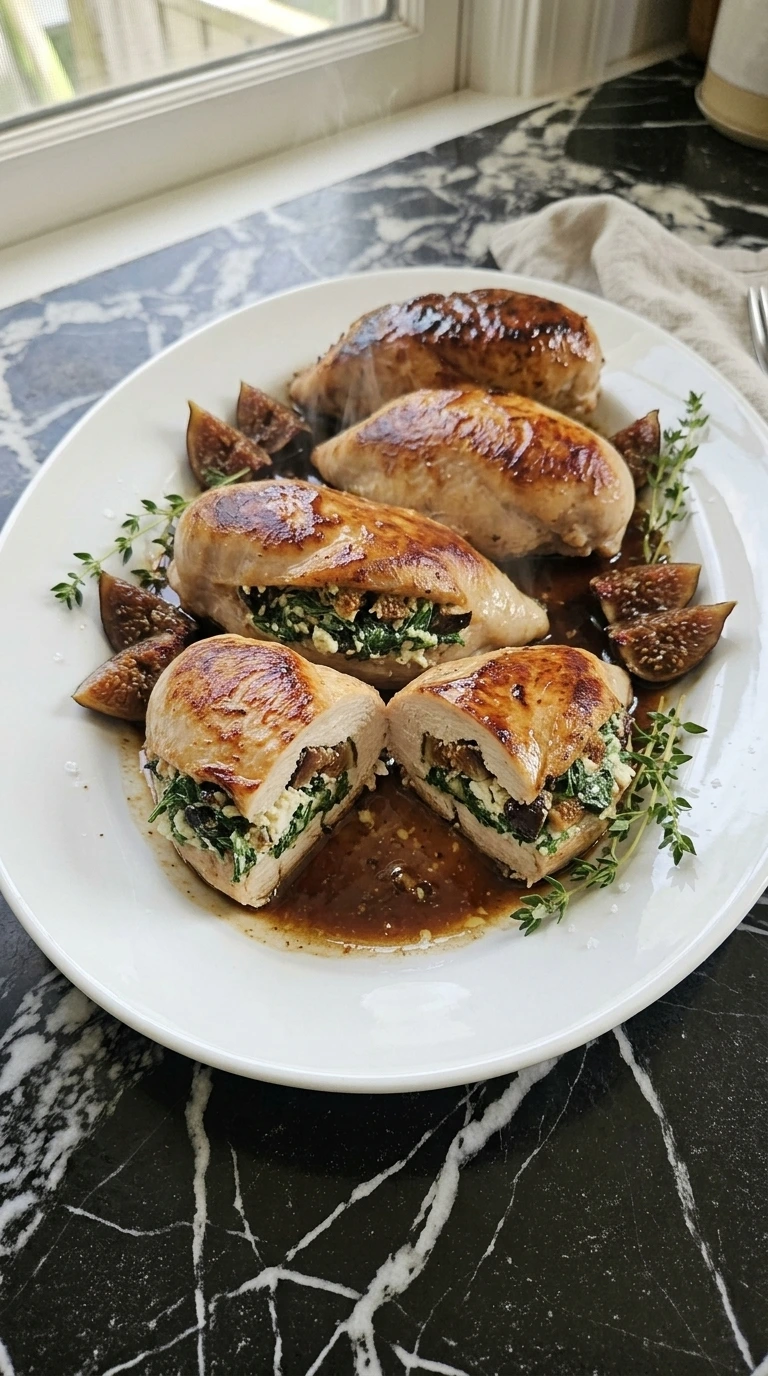
These Fig and Goat Cheese Stuffed Chicken breasts are packed with creamy goat cheese, spinach and ripe figs. The juicy chicken is brushed with a balsamic fig glaze, then roasted until glossy and golden. Dinner’s ready!
Hi, meet your new favorite stuffed chicken. It’s juicy, creamy, tangy-sweet and loaded with jammy figs. It’s filling, full of flavor and easy enough for a busy weeknight.
Love dinners like this? Try our Lemon Garlic Roast Chicken next. Those soft figs bring the perfect mix of sweet and savory, and they don’t disappoint.
Why You’ll Love It
Searing the stuffed breasts near 410°F creates a firm amber crust before the filling warms enough to loosen. Then a 375°F oven cooks the thick center steadily, which helps the goat cheese stay creamy while the chicken reaches the USDA minimum of 165°F without scorching the sweet glaze properly.
FSIS+1 Fig preserves bring concentrated fruit sugar, while balsamic vinegar adds enough acidity to keep the glaze from tasting flat or sticky-sweet. Adding cold butter after baking gives the sauce a glossy finish and helps it cling to the uneven chicken surface, while Garlic Bread catches every extra spoonful on the plate.
What You’ll Need

- Boneless skinless chicken breast: Trimmed of loose fat and kept chilled before cutting one deep side pocket in each breast.
- Fresh chèvre goat cheese: Softened for 10 minutes so it folds smoothly without turning runny.
- Baby spinach: Rinsed and dried thoroughly before wilting to prevent a watery filling.
- Black Mission figs: Dice two figs for the filling and quarter the remaining two for the glaze and plating.
- Fig preserves: Use a thick preserve with visible fruit pieces for concentrated sweetness and body.
- Balsamic vinegar: Choose a balanced vinegar with moderate acidity so the glaze stays bright rather than harsh.
- Low-sodium chicken broth: Thins the preserves and gives the glaze enough liquid to reduce around the chicken.
- Honey: Rounds the balsamic acidity and supports the glossy mahogany finish.
- Unsalted butter: Keep cold until the final swirl so the glaze turns shiny and clings well.
- Extra-virgin olive oil: Use 1 teaspoon for the spinach and the remainder for searing the stuffed chicken.
- Garlic clove: Finely minced so the filling gets even garlic flavor without harsh chunks.
- Fresh thyme: Strip 2 teaspoons of leaves for the filling and reserve 4 small sprigs for serving.
- Kosher salt: Divide between the filling and the outside of the chicken for even seasoning.
- Freshly ground black pepper: Divide between the filling and the chicken to add gentle warmth throughout.
What You’ll Use
- 12-inch cast-iron skillet: A heavy 12-inch cast-iron skillet builds an even sear and moves safely into the oven, while a smaller pan crowds the four breasts and steams their surfaces.
- Medium ceramic mixing bowl: A 2-quart ceramic bowl gives enough room to fold the filling without crushing it, while a shallow bowl lets soft goat cheese spill over the rim.
- Large maple cutting board: A board at least 18 inches long keeps four chicken breasts separated, while a small board increases cross-contamination and makes pocket cutting awkward.
- Sharp 8-inch chef’s knife: A sharp 8-inch blade cuts clean horizontal pockets without tearing the chicken, while a dull knife creates ragged openings that leak filling.
- Instant-read digital thermometer: A thin-tip thermometer checks the thickest meat beside the filling, while a slow dial thermometer can overcook the chicken before it settles.
- Long kitchen tongs: Tongs at least 12 inches long flip the stuffed breasts without piercing them, while a fork releases juices and can pull the seams open.
- Eight wooden toothpicks: Two plain wooden toothpicks close each pocket during searing, while colored picks may stain the chicken and short picks can disappear into the filling.
- Small balloon whisk: A 7-inch whisk smooths the preserves into the vinegar and broth, while an oversized whisk splashes the small glaze mixture out of the bowl.
Step-by-Step Instructions
Step 1: Wilt the spinach and fold the filling

Set a skillet over medium heat at about 325°F. Add 1 teaspoon olive oil and the baby spinach. Toss for 90 seconds until the leaves collapse.
Cool for 5 minutes. Then fold the spinach with goat cheese, diced black Mission figs, garlic, thyme, 1/4 teaspoon salt and 1/8 teaspoon pepper using a slow J-shaped motion. The filling should look marbled, thick and slightly crumbly with green ribbons and purple fig pieces.
You’ll smell the garlic just as the mixture comes together. Go past 2 minutes on the heat and the spinach releases water, which can make the filling leak. Brief heat removes moisture without melting the goat cheese.
Tip: Chill the mixed filling for 10 minutes if your kitchen is warmer than 75°F. It will stay easier to portion.
Step 2: Cut pockets and fill the chicken breasts

Keep the chicken at 40°F or colder until you start. Cut one deep horizontal pocket into each breast over 5 to 7 minutes. Leave a 1/2-inch border around every edge.
Divide the filling into four equal mounds. Press one mound into each pocket and close every seam with two toothpicks. The breasts should look plump but not stretched, and a little filling may peek through uneven seams.
Press lightly with your palm for 10 seconds so each portion sits flat. Overfill the pockets and the cheese pushes out during searing. A snug pocket holds the filling while heat firms the chicken.
Tip: Choose breasts between 7 and 9 ounces. Very large pieces cook unevenly and make each pocket harder to seal.
Step 3: Sear the stuffed chicken
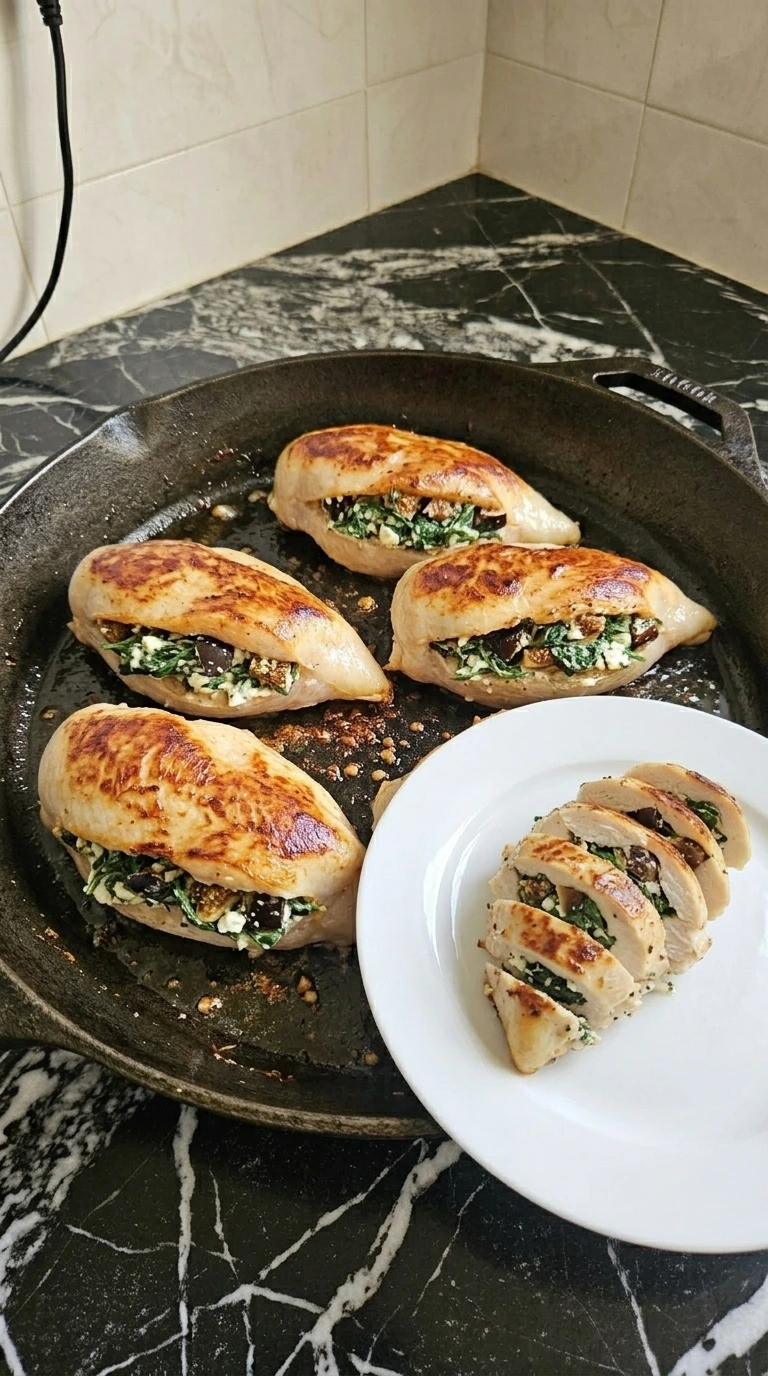
Heat the remaining olive oil over medium-high heat until the skillet surface reaches about 410°F. Season the four stuffed breasts with the remaining salt and pepper. Lay them in without crowding.
Sear for 2 1/2 minutes on the first side. Flip once and sear the second side for 2 minutes. You’ll hear a sharp steady sizzle and see a deep amber crust form around the uneven edges.
Shift the breasts toward the center after flipping so they brown evenly at once. Move them too soon and the crust tears away. High heat sets the exterior before the filling can escape.
Tip: Wipe exposed goat cheese from the outer surface before searing. Even a 1-teaspoon smear can scorch against the hot skillet.
Step 4: Bake the chicken in fig balsamic glaze
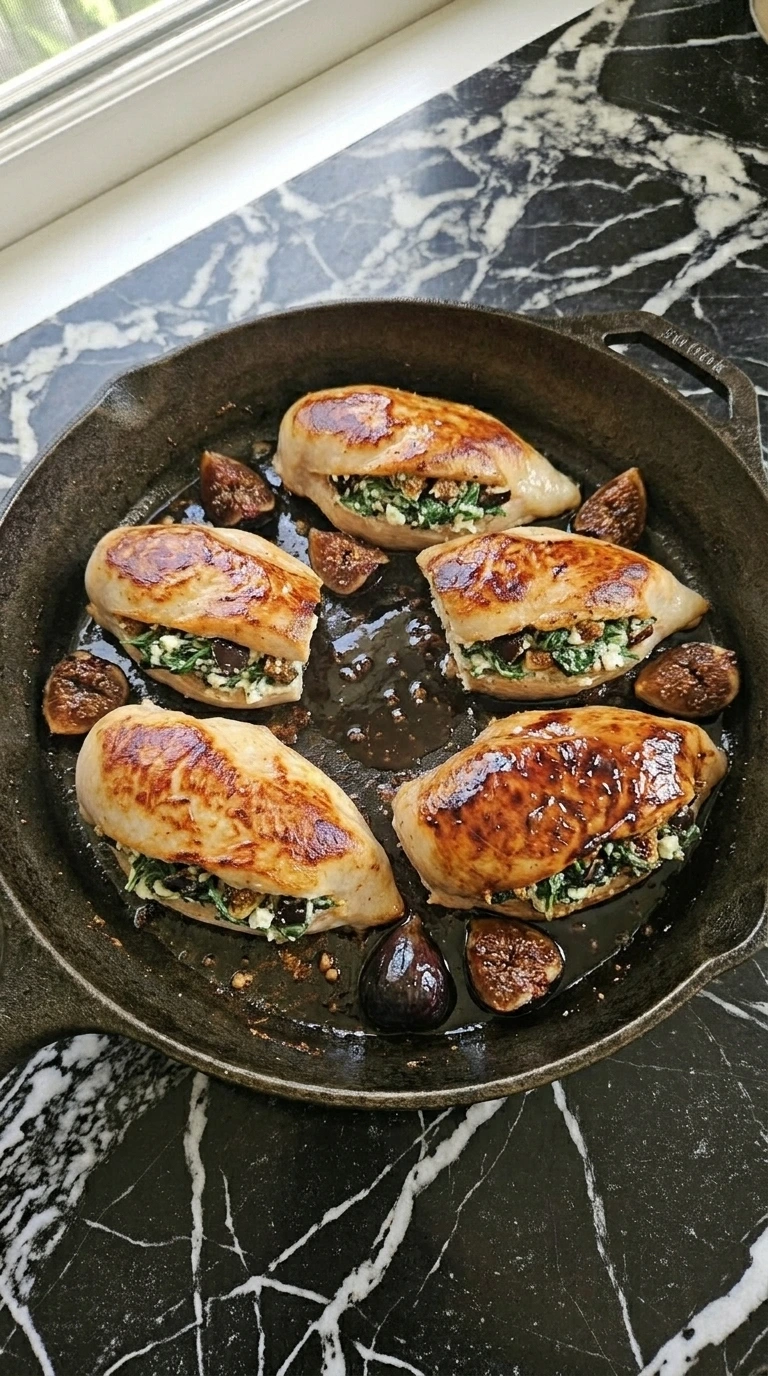
Whisk the fig preserves, balsamic vinegar, chicken broth and honey until completely smooth. Pour the mixture around the seared chicken and spoon a little over each breast. Add the quartered black Mission figs between the pieces.
Bake at 375°F for 16 to 20 minutes until the thickest center reaches 165°F. The glaze should bubble slowly, turn glossy mahogany and coat a spoon in a thin sticky layer. Swirl in the butter for 30 seconds after baking.
(I tried 400°F first, the glaze darkened before the centers reached temperature. ) The USDA lists 165°F as the safe minimum for poultry. Food Safety and Inspection Service+1 Moderate oven heat cooks the center before the glaze scorches.
Tip: Insert the thermometer from the side into the meat, not the filling. Hot cheese can give a falsely high reading.
Step 5: Rest slice and plate one portion

Rest the chicken off heat for exactly 8 minutes while it stays above 140°F. Remove the toothpicks. Transfer one breast to a white plate and slice it on a slight diagonal.
Spoon 2 tablespoons of fig glaze over the cut surface. Add two warm fig quarters and one small thyme sprig. The interior should look fully opaque and juicy, with creamy goat cheese and green spinach holding inside the seam.
The glaze should pool irregularly instead of flooding the plate. Cut before 8 minutes and the juices run into the sauce. Resting lets the proteins relax and keeps each slice moist.
Tip: Warm each serving plate for 5 minutes in a 170°F oven so the fig glaze doesn’t tighten as soon as it lands.
Tips and Tricks
- Use chicken breasts within a 2-ounce size range so all four reach 165°F within the same 16 to 20 minute baking window.
- Dry each breast for 20 seconds with paper towel before seasoning. A damp surface steams and won’t develop the deep amber crust.
- Keep the goat cheese filling below 70°F before stuffing. Warm cheese softens too quickly and pushes through the seams during searing.
- Leave at least 1 inch between the four breasts in the skillet. Crowding drops the surface temperature and turns the sear pale.
- Use thick fig preserves with at least 40% fruit. A thin jelly makes the glaze watery and needs 3 to 5 extra minutes.
- Let the cold butter sit in one solid tablespoon piece until the chicken leaves the oven. Slow swirling creates a glossy sauce within 30 seconds.
- Finish each plate with 2 tablespoons of glaze and one thyme sprig. More sauce can hide the browned crust and overwhelm the goat cheese.
- Add 1/3 cup chopped toasted walnuts to the filling for a firm crunch and a deeper nutty flavor.
- Replace the thyme with 2 teaspoons chopped fresh rosemary for a stronger piney note that matches the dark fig glaze.
- Mix 1 teaspoon crushed red pepper into the preserves for a sweet-hot version with gentle heat in every glazed bite.
- Use 1/2 cup arugula instead of spinach and add it without wilting for a sharper filling with a slightly looser texture.
Make It Your Own
- Fresh chèvre goat cheese: Almond-based dairy-free chèvre — Use it 1:1 for a dairy-free filling. It melts less and tastes milder, so add 1 extra teaspoon of balsamic vinegar to sharpen the glaze.
- Fresh chèvre goat cheese: Whole-milk ricotta — Drain 3/4 cup ricotta for 30 minutes and use it instead of 6 ounces goat cheese. The filling becomes softer and less tangy, so chill it for 15 minutes before stuffing.
- Black Mission figs: Dried black Mission figs — Use 2/3 cup chopped dried figs and soak them in hot water for 10 minutes. They’ll taste sweeter and feel chewier than fresh figs.
- Baby spinach: Lacinato kale — Use 1 packed cup of finely sliced kale and cook it for 4 minutes instead of 90 seconds. The filling will feel firmer and taste more earthy.
- Low-sodium chicken broth: Certified gluten-free chicken broth — Use the same 1/3 cup because the recipe contains no flour or breading. Check the label carefully since some broths use wheat-based flavoring.
- Egg-free preparation: No replacement needed — This recipe already uses no egg or breading. For another simple starter without an egg coating, serve Cheese Balls and check its ingredient list for your needs.
Storage Tips
Cool leftovers within 2 hours and store them in a shallow airtight container for up to 3 days at 40°F or colder. Keep the glaze with the chicken so the surface stays moist. For freezing, wrap each cooled breast tightly and place it in a freezer container for up to 2 months.
Freeze extra glaze separately in small portions so it doesn’t soak the crust during thawing. Thaw overnight in the refrigerator. Reheat covered at 325°F for 15 to 18 minutes with 1 tablespoon low-sodium chicken broth per breast.
Remove the cover for the final 3 minutes so the surface regains some texture. Discard portions with a sour smell, sticky film or gray-green filling. For another quick dinner after the leftovers are gone, make Garlic Butter Shrimp Pasta.
Mix the filling and cut the chicken pockets up to 1 day ahead. Store the filling and chicken in separate airtight containers at 40°F or colder. You can also stuff the breasts up to 24 hours early, but don’t add the glaze yet. Early glazing draws moisture toward the surface and weakens the sear. Whisk the fig preserves, balsamic vinegar, broth and honey up to 3 days ahead. Refrigerate the mixture in a sealed jar, then shake it for 10 seconds before using. Keep the butter separate and cold. Sear and bake the chicken just before serving so the crust stays amber and the goat cheese remains creamy.
Fig and Goat Cheese Stuffed Chicken
Ingredients
- 4 breasts, 7 to 9 ounces each Boneless skinless chicken breast Trimmed of loose fat and kept chilled before cutting one deep side pocket in each breast.
- 6 ounces Fresh chèvre goat cheese Softened for 10 minutes so it folds smoothly without turning runny.
- 2 packed cups Baby spinach Rinsed and dried thoroughly before wilting to prevent a watery filling.
- 4 medium Black Mission figs Dice two figs for the filling and quarter the remaining two for the glaze and plating.
- 1/3 cup Fig preserves Use a thick preserve with visible fruit pieces for concentrated sweetness and body.
- 1/4 cup Balsamic vinegar Choose a balanced vinegar with moderate acidity so the glaze stays bright rather than harsh.
- 1/3 cup Low-sodium chicken broth Thins the preserves and gives the glaze enough liquid to reduce around the chicken.
- 1 tablespoon Honey Rounds the balsamic acidity and supports the glossy mahogany finish.
- 1 tablespoon Unsalted butter Keep cold until the final swirl so the glaze turns shiny and clings well.
- 2 tablespoons Extra-virgin olive oil Use 1 teaspoon for the spinach and the remainder for searing the stuffed chicken.
- 2 large cloves Garlic clove Finely minced so the filling gets even garlic flavor without harsh chunks.
- 1/4 ounce Fresh thyme Strip 2 teaspoons of leaves for the filling and reserve 4 small sprigs for serving.
- 1 1/2 teaspoons Kosher salt Divide between the filling and the outside of the chicken for even seasoning.
- 3/4 teaspoon Freshly ground black pepper Divide between the filling and the chicken to add gentle warmth throughout.
Instructions
- Set a skillet over medium heat at about 325°F. Add 1 teaspoon olive oil and the baby spinach. Toss for 90 seconds until the leaves collapse. Cool for 5 minutes. Then fold the spinach with goat cheese, diced black Mission figs, garlic, thyme, 1/4 teaspoon salt and 1/8 teaspoon pepper using a slow J-shaped motion. The filling should look marbled, thick and slightly crumbly with green ribbons and purple fig pieces. You’ll smell the garlic just as the mixture comes together. Go past 2 minutes on the heat and the spinach releases water, which can make the filling leak. Brief heat removes moisture without melting the goat cheese.

- Keep the chicken at 40°F or colder until you start. Cut one deep horizontal pocket into each breast over 5 to 7 minutes. Leave a 1/2-inch border around every edge. Divide the filling into four equal mounds. Press one mound into each pocket and close every seam with two toothpicks. The breasts should look plump but not stretched, and a little filling may peek through uneven seams. Press lightly with your palm for 10 seconds so each portion sits flat. Overfill the pockets and the cheese pushes out during searing. A snug pocket holds the filling while heat firms the chicken.
- Heat the remaining olive oil over medium-high heat until the skillet surface reaches about 410°F. Season the four stuffed breasts with the remaining salt and pepper. Lay them in without crowding. Sear for 2 1/2 minutes on the first side. Flip once and sear the second side for 2 minutes. You’ll hear a sharp steady sizzle and see a deep amber crust form around the uneven edges. Shift the breasts toward the center after flipping so they brown evenly at once. Move them too soon and the crust tears away. High heat sets the exterior before the filling can escape.

- Whisk the fig preserves, balsamic vinegar, chicken broth and honey until completely smooth. Pour the mixture around the seared chicken and spoon a little over each breast. Add the quartered black Mission figs between the pieces. Bake at 375°F for 16 to 20 minutes until the thickest center reaches 165°F. The glaze should bubble slowly, turn glossy mahogany and coat a spoon in a thin sticky layer. Swirl in the butter for 30 seconds after baking. (I tried 400°F first, the glaze darkened before the centers reached temperature.) The USDA lists 165°F as the safe minimum for poultry. Food Safety and Inspection Service+1 Moderate oven heat cooks the center before the glaze scorches.

- Rest the chicken off heat for exactly 8 minutes while it stays above 140°F. Remove the toothpicks. Transfer one breast to a white plate and slice it on a slight diagonal. Spoon 2 tablespoons of fig glaze over the cut surface. Add two warm fig quarters and one small thyme sprig. The interior should look fully opaque and juicy, with creamy goat cheese and green spinach holding inside the seam. The glaze should pool irregularly instead of flooding the plate. Cut before 8 minutes and the juices run into the sauce. Resting lets the proteins relax and keeps each slice moist.

Notes
Nutrition
Common Questions
Yes. Fill and close the four breasts up to 24 hours ahead, then refrigerate them in one covered layer at 40°F or colder. Let them stand for only 10 minutes before searing so the outside loses its chill without warming the goat cheese too much.
Insert a thin thermometer from the side into the thickest meat beside the filling. The chicken should reach 165°F, which is the USDA safe minimum for poultry. Color alone can’t confirm safety because cooked chicken can still show pink areas. Food Safety and Inspection Service+1
The pocket was probably cut through the far edge or packed too tightly. Leave a 1/2-inch border and use about one-quarter of the filling per breast. Sear the seam side second for only 2 minutes because prolonged direct heat softens the cheese and widens small tears.
Double every ingredient but sear the chicken in two batches so the skillet stays near 410°F. Transfer all eight breasts to a 9×13-inch baking dish with the glaze, then bake at 375°F for about 20 to 25 minutes and verify every thick center reaches 165°F.
Serve one breast with roasted green beans, mashed Yukon Gold potatoes or a crisp arugula salad. Allow about 1 cup of vegetables and 3/4 cup potatoes per person. The tart greens and mild starch balance the rich goat cheese and sweet fig glaze.
Freeze cooled portions for up to 2 months in airtight containers with 1 tablespoon glaze over each breast. Thaw overnight, cover and reheat at 325°F for 18 to 22 minutes. Add 1 tablespoon broth before heating so the filling and meat don’t dry out.
In Conclusion
One of my signature chicken recipes! This is stuffed chicken made the weeknight way, with creamy goat cheese and sweet figs inside and a glossy balsamic fig glaze.
No heavy cream, that’s not needed here, and though filling each breast takes care, it’s worth every minute because the chicken stays juicy and the center turns rich and tangy. Makes 4 generous servings, and I still remember cutting the first test breast and seeing the filling hold instead of spilling.
Serve it with Garlic Bread or pair it with Garlic Butter Shrimp Pasta, then try it, share it and tag your plate.
The first test used 8 ounces of goat cheese, and nearly half escaped into the skillet. Six ounces gives every breast a creamy center without hiding the figs.