Hashbrown Breakfast Casserole
On mornings when I want crisp potato edges and soft cheesy eggs in the same forkful, Hashbrown Breakfast Casserole gets surprisingly tricky to get right at home. A hash brown breakfast casserole sounds simple. But frozen potatoes can leak water while the eggs set, so the middle turns soft just when the top starts looking right. I really thought it would be simple: spread the potatoes, add sausage and cheese, then pour eggs over everything.
But every shortcut had a catch. Wet hash browns made the base soggy and too much cheese formed a greasy lid before the custard set. If you like the potato and egg combination in a hand-held breakfast, try our Potato Egg and Cheese Breakfast Tacos too. So this breakfast casserole with hashbrowns takes one extra minute to squeeze the potatoes dry and layers the filling loosely instead of packing it down.
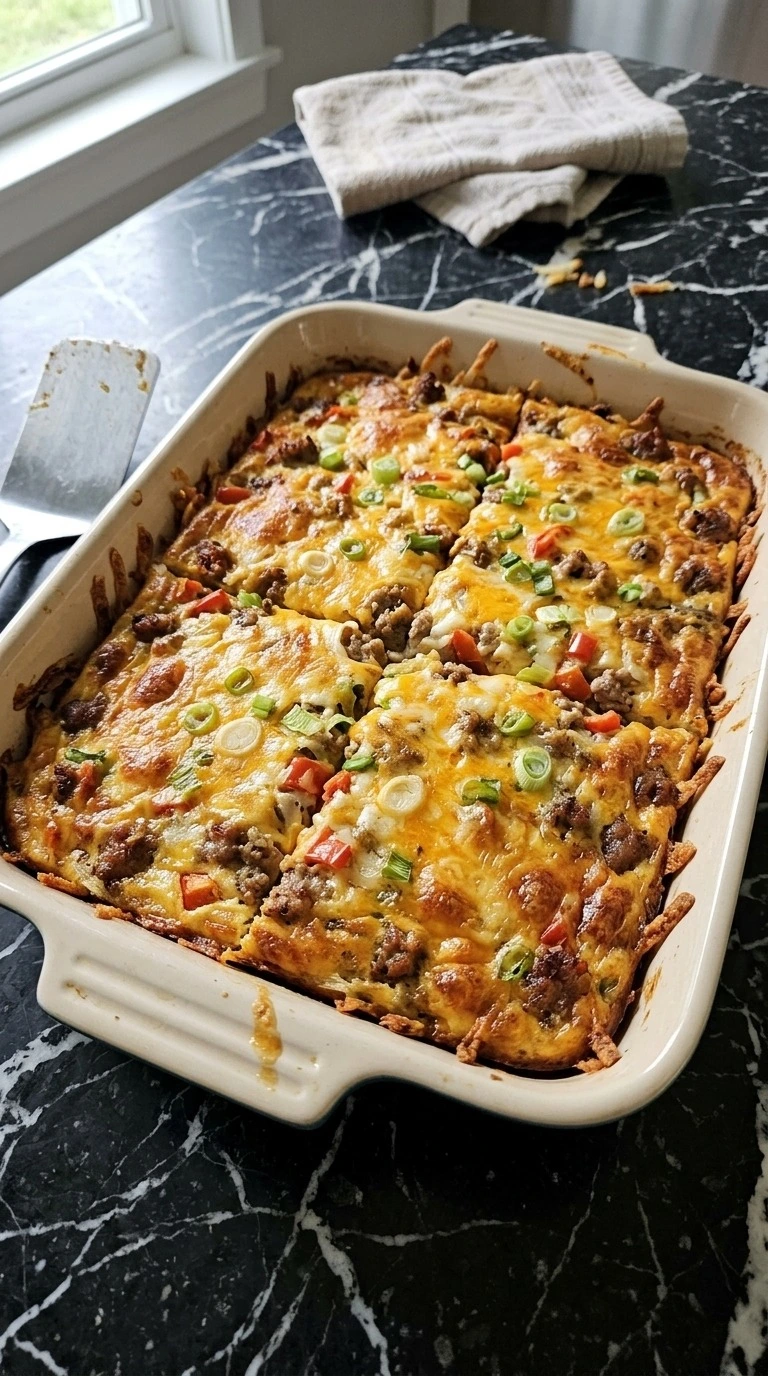
That small change matters. You get crisp bits around the edges and a tender center that still holds together when you lift a square.
Why This Recipe Works
Hashbrown Breakfast Casserole works best when the thawed russet hash browns are squeezed dry, because trapped water would steam the potato layer before the eggs can set. The 375°F bake matters too.
It lets the custard reach 160°F while the cheddar turns golden and the potato tips crisp instead of hardening early. Loose layering leaves small gaps for the custard to move through.
Our Patty Pan Squash Breakfast Hash uses a similar moisture-first approach when crisp texture matters.
Ingredients
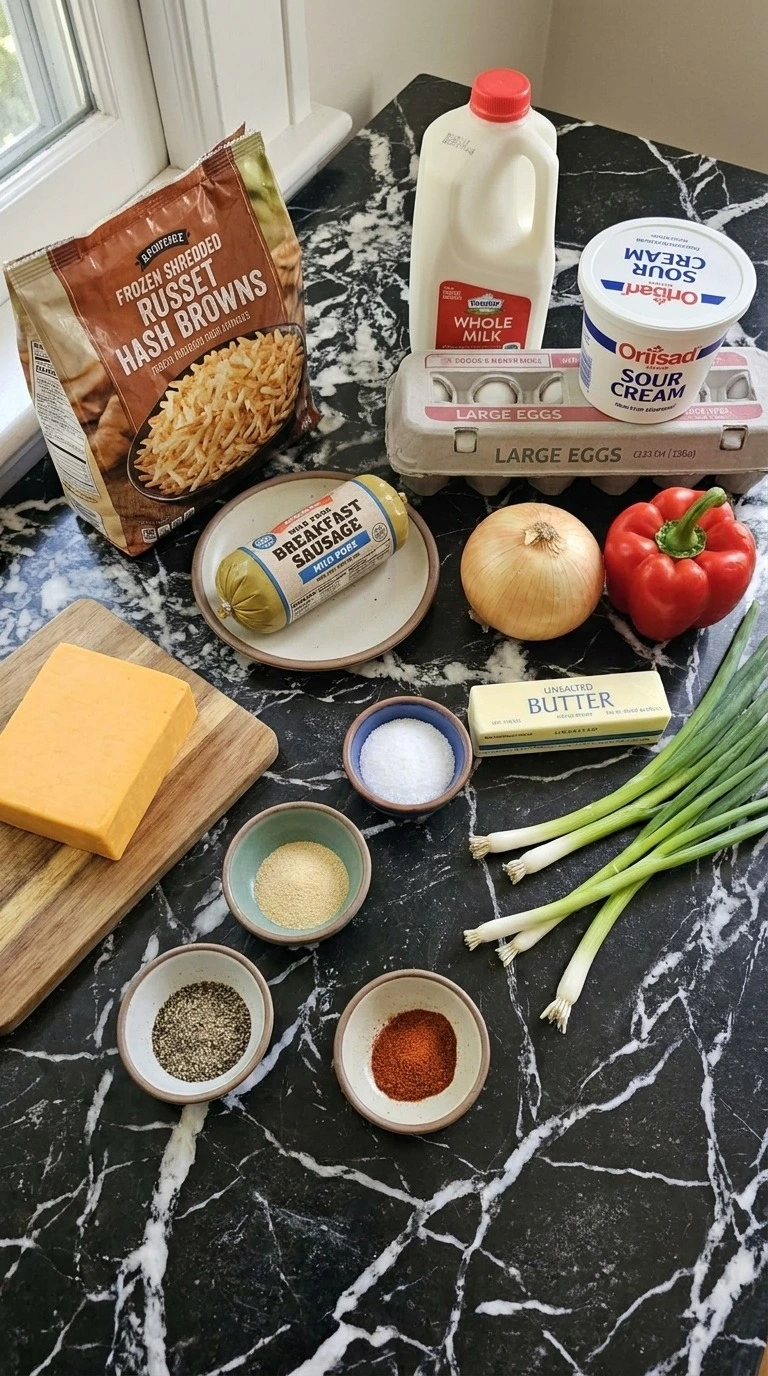
- Frozen shredded russet hash browns: Thaw fully and squeeze very dry so the potato layer can crisp instead of steaming.
- Mild pork breakfast sausage: Remove any casing and crumble into rough 1-inch pieces for browned savory pockets.
- Yellow onion: Dice finely so it softens in the same 8 to 10 minute window as the sausage.
- Red bell pepper: Dice into 1/4-inch pieces so it softens without disappearing into the filling.
- Large eggs: Keep chilled until mixing so the custard stays cool during assembly.
- Whole milk: Use cold whole milk for a tender custard with enough fat to stay soft after baking.
- Sour cream: Whisk into the eggs to add body and keep the center creamy rather than watery.
- Sharp cheddar cheese: Shred before using and divide 2 cups inside the casserole with 1/2 cup for the top.
- Unsalted butter: Soften slightly and rub over the baking dish to reduce sticking at the crisp potato edges.
- Kosher salt: Whisk into the custard so the eggs and potatoes are seasoned throughout.
- Ground black pepper: Add to the custard for a gentle pepper bite in every slice.
- Garlic powder: Whisk into the custard for even savory flavor without raw garlic pockets.
- Smoked paprika: Add to the custard for mild smoke and a warmer golden color.
- Scallions: Slice thinly and scatter over the rested casserole for a fresh onion finish.
Kitchen Equipment
- 9×13-inch baking dish: A 9×13-inch ceramic or glass baking dish gives the custard enough surface area to set evenly, while a smaller dish makes the center too deep and slows baking.
- 12-inch skillet: A heavy 12-inch skillet browns 1 pound of sausage without crowding, while a smaller pan traps steam and leaves the meat pale.
- Large mixing bowl: A 4-quart mixing bowl holds the egg custard with room to whisk, while a shallow bowl splashes milk over the rim.
- Balloon whisk: A medium balloon whisk smooths the eggs and sour cream quickly, while a tiny whisk takes longer and leaves thick streaks.
- Clean kitchen towel: A tightly woven towel squeezes water from 1.5 pounds of thawed hash browns, while a loose weave can shed lint into the potatoes.
- Instant-read thermometer: A fast thermometer confirms the egg center reaches 160°F, while judging by color alone can leave a pale middle undercooked.
How to Make It
Step 1: Brown the sausage with onion and pepper
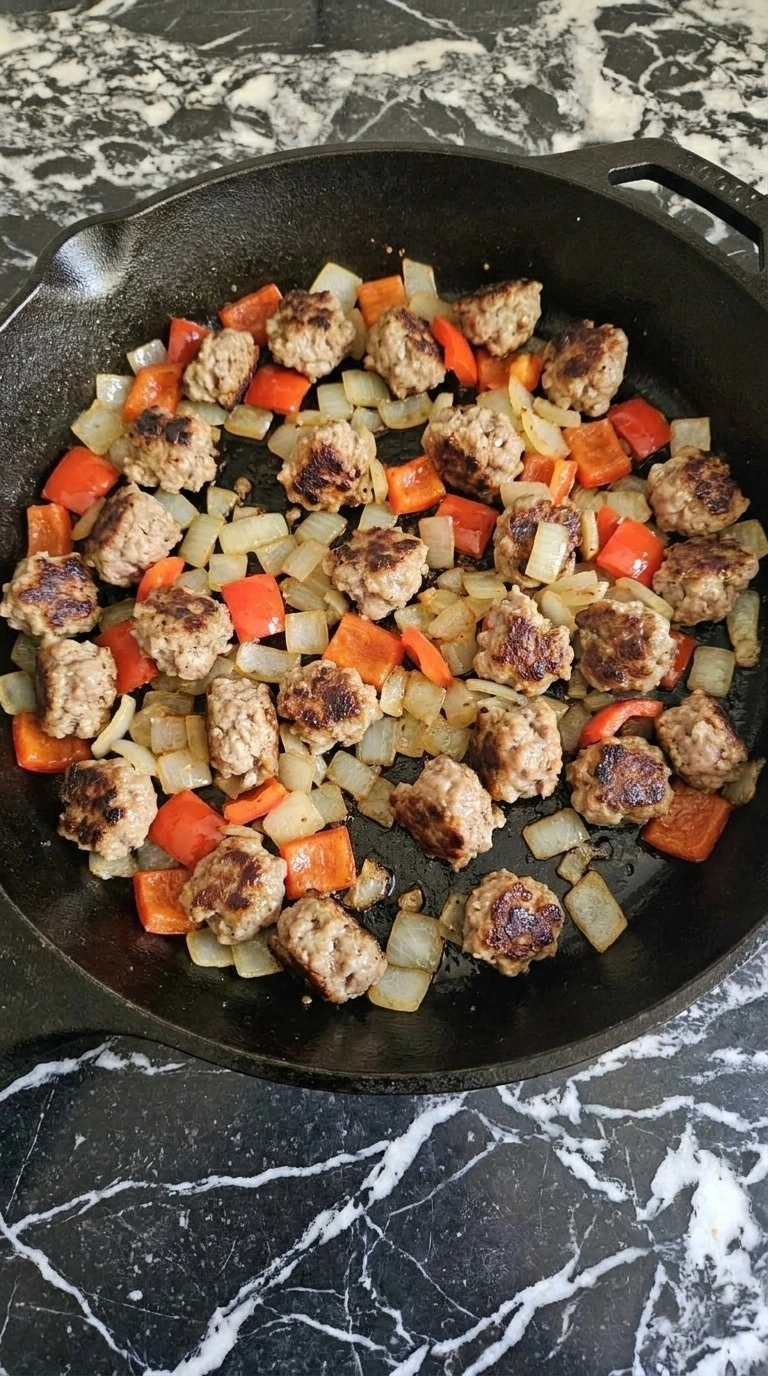
Set a 12-inch skillet over medium heat, about 5 on a 10-dial, then add the mild pork breakfast sausage with diced yellow onion and red bell pepper. Cook for 8 to 10 minutes while breaking the sausage into rough 1-inch crumbles with a firm scraping motion across the pan. Stir every 60 to 90 seconds so fresh surfaces touch the heat.
Spoon off excess fat near minute 8 if more than 2 tablespoons collect. The sausage should turn deep brown in spots and the onion should look soft and clear. You’ll smell the pepper sweeten.
Go past 10 minutes and the sausage dries at the edges. Keep medium heat because steady browning drives off water without scorching the vegetables.
Tip: Let the sausage sit untouched for the first 2 minutes so the first side browns instead of steaming.
Step 2: Whisk the egg custard until smooth
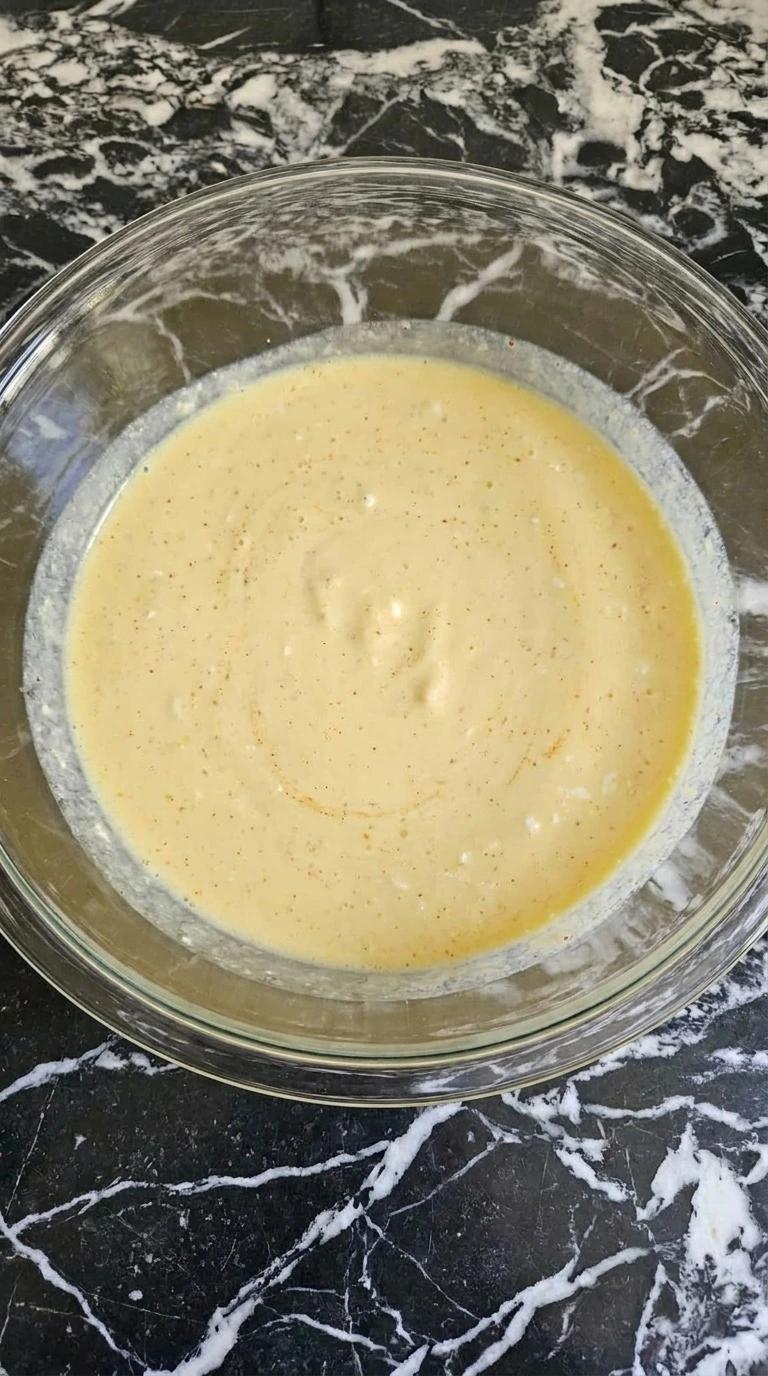
Keep the eggs, whole milk and sour cream cool, about 40 to 45°F, while you whisk them with kosher salt, black pepper, garlic powder and smoked paprika. Whisk for 60 to 75 seconds using tight circles, then sweep across the bottom five or six times to catch thicker sour cream. Stop once the mix turns pale yellow and mostly smooth.
Don’t beat it into a thick foam because trapped air can make the baked custard feel spongy. You should see only tiny sour cream flecks and no clear egg-white streaks. It should pour in a steady ribbon.
Keep it below 45°F because a cool custard waits safely while you assemble the casserole.
Tip: Crack the 10 eggs into a separate cup two at a time so one stray shell doesn’t end up in the whole custard.
Step 3: Layer the hash browns, filling and custard
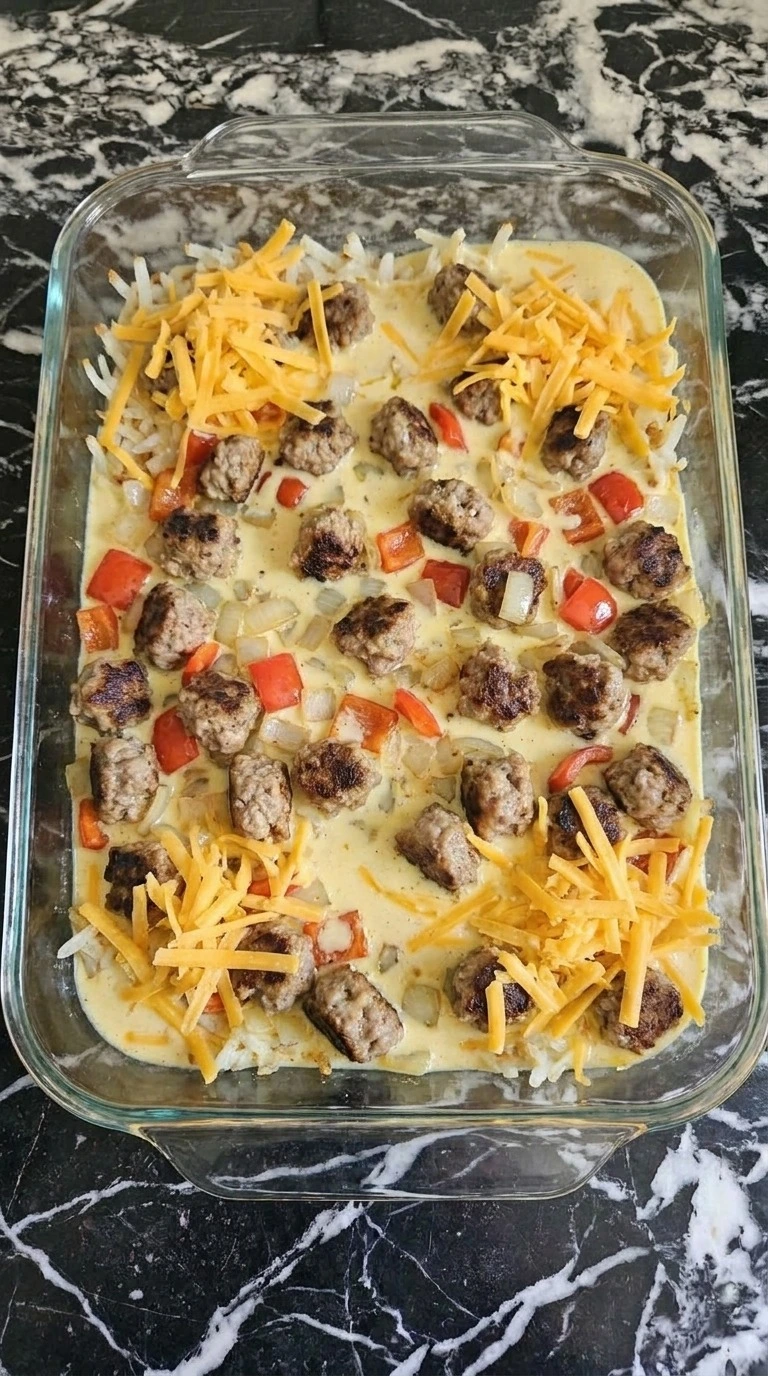
Heat the oven to 375°F. Rub a 9×13 baking dish with the unsalted butter, then spread the thawed shredded russet hash browns in a loose layer and press only the corners. Scatter the sausage mixture over the potatoes, add 2 cups of sharp cheddar and pour the egg custard slowly in three passes.
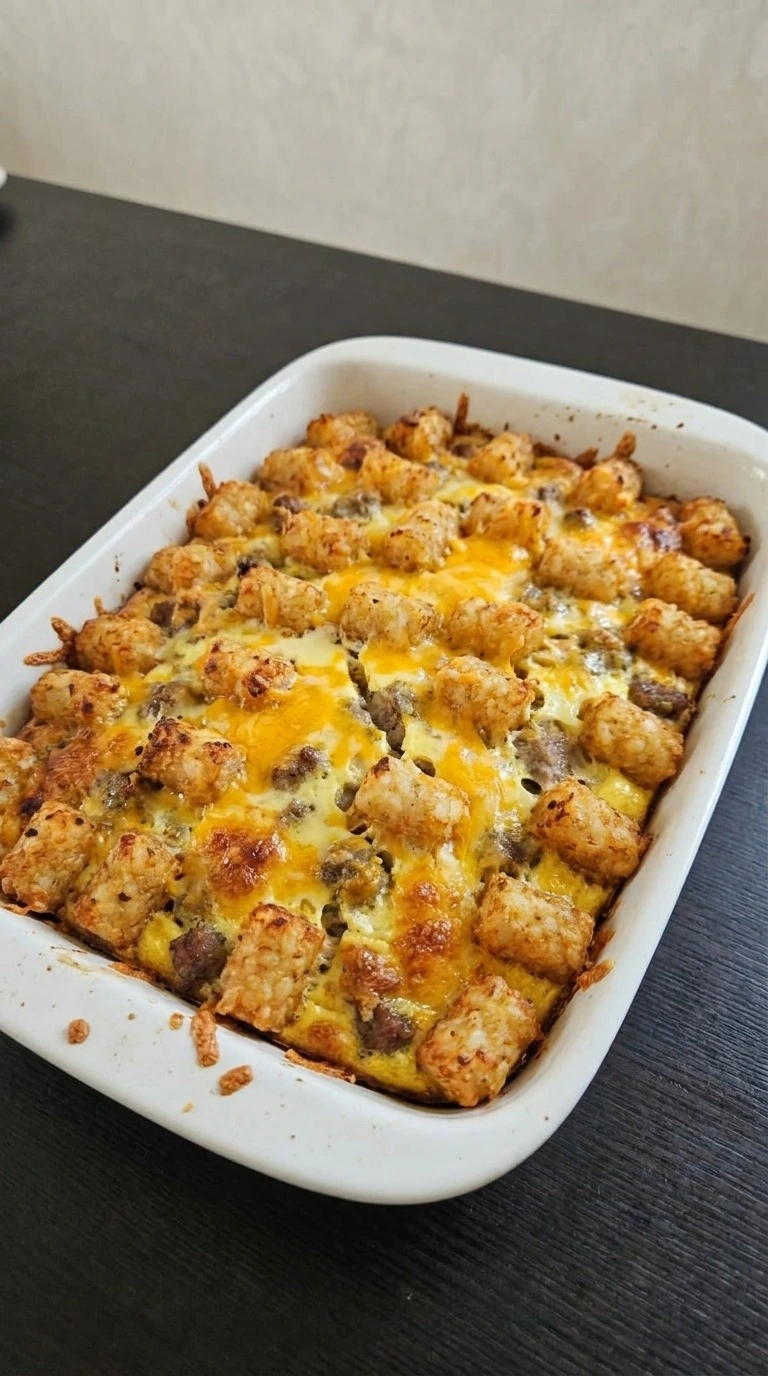
Finish with the remaining 1/2 cup cheddar. Assemble within 5 to 7 minutes so the potatoes don’t sit soaking in the liquid before the dish reaches the oven. The Hashbrown Breakfast Casserole should look uneven, with potato strands and sausage still visible through the cheese.
Pack the hash browns hard and the center turns dense. Pour in three passes because gradual wetting leaves air pockets that help the casserole set evenly.
Tip: Squeeze the thawed hash browns in a clean towel until they stop dripping, which usually removes about 1/3 cup of water.
Step 4: Bake until the center sets and the top browns

Bake at 375°F for 45 to 50 minutes on the center rack. At minute 30, rotate the dish 180 degrees so the back edge doesn’t brown much faster than the front. Check the middle at minute 45 with an instant-read thermometer and pull the casserole once the center reaches 160°F. If the top is pale at that point, give it 2 more minutes.
(I tried 400°F first. The top set too fast, while the center still wobbled. ) Deep golden cheese, crisp potato tips and tiny edge bubbles show it’s close. The center can jiggle but can’t look liquid.
Go beyond 55 minutes and eggs tighten. Bake at 375°F because steady heat sets the center before the top overbrowns.
Tip: If your oven runs hot, start checking at minute 42 and trust the 160°F center temperature more than the clock.
Step 5: Rest, slice and finish with scallions
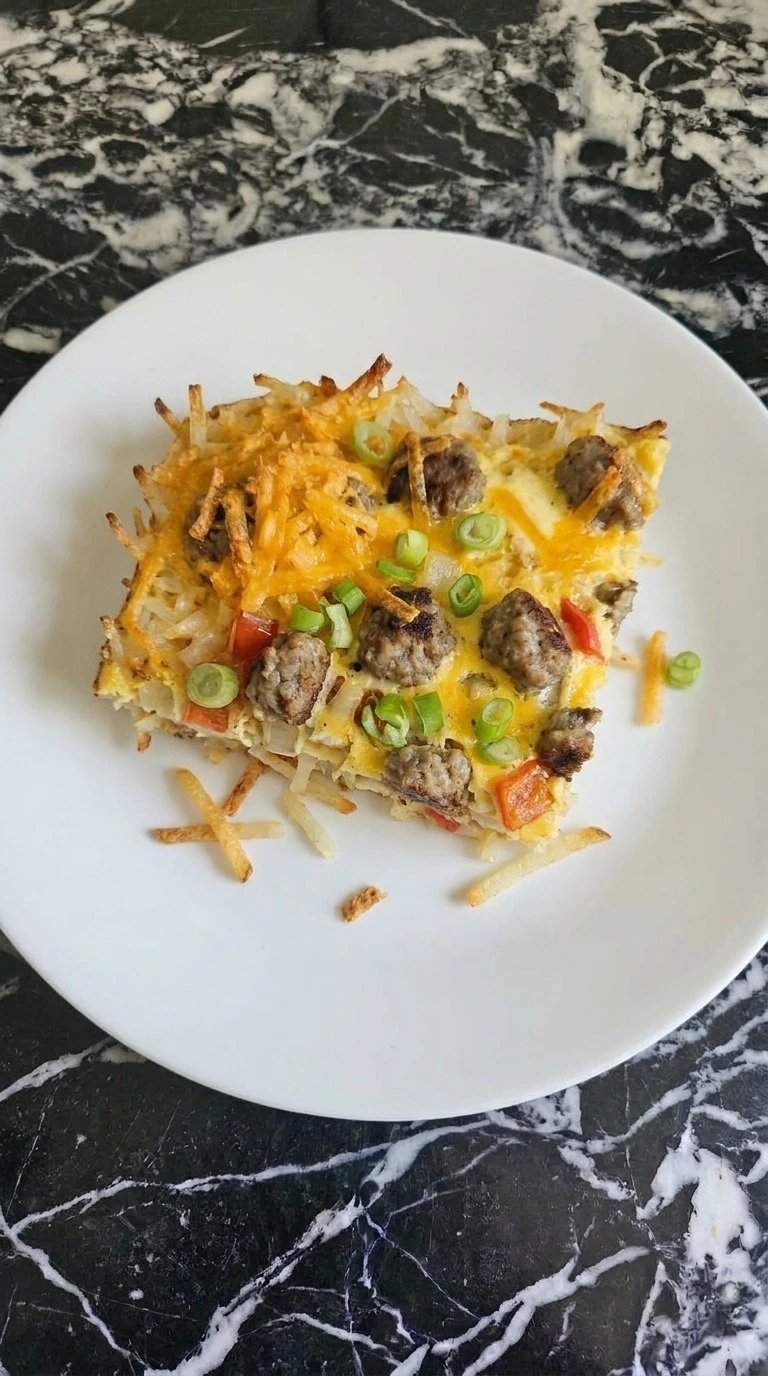
Rest the casserole at room temperature, about 68 to 72°F, for 10 to 15 minutes before cutting so the center can settle without cooling too much. Slice it into 8 rectangles with clean downward cuts, then lift each piece without dragging through the soft center. Scatter the sliced scallions over the top after slicing so they stay fresh and green.
Letting the dish sit longer than 20 minutes is fine, but the crisp edge softens as trapped steam settles back into the potatoes. The slice should stand. You should see distinct potato strands, sausage crumbles and a tender set egg layer under melted cheddar.
Cut before 10 minutes and the custard can leak. Resting lets the egg proteins firm enough to hold each slice.
Tip: Warm serving plates for 3 minutes in a 170°F oven so the first slices stay hot without more baking.
Pro Tips
- Thaw the hash browns fully, then squeeze until you remove about 1/3 cup liquid. Wet potatoes are the fastest route to a watery center.
- Use freshly shredded sharp cheddar and reserve 1/2 cup for the top. Pre-shredded cheese melts less smoothly because its coating limits contact between the shreds.
- Brown the sausage over medium heat for 8 to 10 minutes and leave it untouched for the first 2 minutes. That first sear adds deeper flavor.
- Keep the filling layer loose instead of pressing it flat. A 9×13-inch dish gives the egg custard enough room to flow between the potatoes and sausage.
- If you’re prepping ahead, refrigerate the browned sausage and egg mixture separately for up to 24 hours. Assemble just before baking so the potatoes don’t soak.
- Start checking the center at minute 45 and pull the casserole at 160°F. Waiting for a completely rigid center can leave the eggs dry after resting.
- Rest the baked casserole for 10 to 15 minutes before slicing. The center firms during that window and each piece lifts more cleanly.
- Scatter the 3 sliced scallions on after the rest, not before baking. Their fresh bite and bright color balance the rich sausage and cheddar.
- Add 1 cup sautéed baby spinach and reduce the whole milk by 1/4 cup so the extra vegetable moisture doesn’t loosen the custard.
- Swap the mild pork breakfast sausage for 1 pound hot breakfast sausage and add 1/4 teaspoon crushed red pepper for a warmer spicy version.
- Replace the red bell pepper with 1 cup sautéed cremini mushrooms and cook them until their pan looks nearly dry before adding them to the casserole.
- For a smoky brunch version, fold in 1/2 cup cooked chopped bacon and reduce the breakfast sausage to 12 ounces so the filling doesn’t become too salty or heavy.
Substitutions & Variations
- Mild pork breakfast sausage: Use 1 pound turkey breakfast sausage — Turkey sausage makes the casserole leaner and slightly less rich. Cook it for 7 to 9 minutes and add 1 teaspoon neutral oil if the pan looks dry.
- Sharp cheddar cheese: Use 2.5 cups dairy-free cheddar-style shreds — This makes the casserole dairy-free when paired with plant milk and dairy-free sour cream. The topping melts less evenly, so bake until the center reaches 160°F rather than waiting for deep browning.
- Whole milk and sour cream: Use 2 cups unsweetened oat milk plus 1/2 cup dairy-free sour cream — The custard will taste lighter and may set about 3 to 5 minutes later. Choose plain unsweetened products so the breakfast casserole doesn’t pick up extra sweetness.
- Frozen shredded russet hash browns: Use 1.5 pounds freshly shredded russet potatoes — Rinse the shreds once and squeeze them extremely dry before layering. Fresh potatoes work well but release more starch and moisture, so expect slightly softer edges than frozen hash browns.
- Large eggs: Use a commercial liquid egg substitute formulated for baking — Use the package amount equal to 10 large eggs and expect a softer set with less richness. Flax eggs don’t work well here because the casserole stays loose. For another potato breakfast without this custard structure, try Potato Egg and Cheese Breakfast Tacos.
Storage Instructions
Refrigerate leftover Hashbrown Breakfast Casserole within 2 hours of baking and keep it in a tightly covered container for up to 4 days. For freezing, cool the slices fully and wrap them individually before sealing in a freezer bag.
They keep their best texture for about 2 months. Reheat one chilled slice at 325°F for 12 to 15 minutes or until the center reaches 165°F.
For a frozen slice, thaw it overnight first and add 5 extra minutes if needed. Discard leftovers that smell sour, feel unusually slimy or show gray or green discoloration.
Hashbrown Breakfast Casserole
Ingredients
- 1.5 pounds Frozen shredded russet hash browns Thaw fully and squeeze very dry so the potato layer can crisp instead of steaming.
- 1 pound Mild pork breakfast sausage Remove any casing and crumble into rough 1-inch pieces for browned savory pockets.
- 1 small Yellow onion Dice finely so it softens in the same 8 to 10 minute window as the sausage.
- 1 medium Red bell pepper Dice into 1/4-inch pieces so it softens without disappearing into the filling.
- 10 large Large eggs Keep chilled until mixing so the custard stays cool during assembly.
- 2 cups Whole milk Use cold whole milk for a tender custard with enough fat to stay soft after baking.
- 1/2 cup Sour cream Whisk into the eggs to add body and keep the center creamy rather than watery.
- 2.5 cups Sharp cheddar cheese Shred before using and divide 2 cups inside the casserole with 1/2 cup for the top.
- 1 tablespoon Unsalted butter Soften slightly and rub over the baking dish to reduce sticking at the crisp potato edges.
- 1 teaspoon Kosher salt Whisk into the custard so the eggs and potatoes are seasoned throughout.
- 1/2 teaspoon Ground black pepper Add to the custard for a gentle pepper bite in every slice.
- 1/2 teaspoon Garlic powder Whisk into the custard for even savory flavor without raw garlic pockets.
- 1/2 teaspoon Smoked paprika Add to the custard for mild smoke and a warmer golden color.
- 3 medium Scallions Slice thinly and scatter over the rested casserole for a fresh onion finish.
Instructions
- Set a 12-inch skillet over medium heat, about 5 on a 10-dial, then add the mild pork breakfast sausage with diced yellow onion and red bell pepper. Cook for 8 to 10 minutes while breaking the sausage into rough 1-inch crumbles with a firm scraping motion across the pan. Stir every 60 to 90 seconds so fresh surfaces touch the heat. Spoon off excess fat near minute 8 if more than 2 tablespoons collect. The sausage should turn deep brown in spots and the onion should look soft and clear. You’ll smell the pepper sweeten. Go past 10 minutes and the sausage dries at the edges. Keep medium heat because steady browning drives off water without scorching the vegetables.
- Keep the eggs, whole milk and sour cream cool, about 40 to 45°F, while you whisk them with kosher salt, black pepper, garlic powder and smoked paprika. Whisk for 60 to 75 seconds using tight circles, then sweep across the bottom five or six times to catch thicker sour cream. Stop once the mix turns pale yellow and mostly smooth. Don’t beat it into a thick foam because trapped air can make the baked custard feel spongy. You should see only tiny sour cream flecks and no clear egg-white streaks. It should pour in a steady ribbon. Keep it below 45°F because a cool custard waits safely while you assemble the casserole.

- Heat the oven to 375°F. Rub a 9×13 baking dish with the unsalted butter, then spread the thawed shredded russet hash browns in a loose layer and press only the corners. Scatter the sausage mixture over the potatoes, add 2 cups of sharp cheddar and pour the egg custard slowly in three passes. Finish with the remaining 1/2 cup cheddar. Assemble within 5 to 7 minutes so the potatoes don’t sit soaking in the liquid before the dish reaches the oven. The Hashbrown Breakfast Casserole should look uneven, with potato strands and sausage still visible through the cheese. Pack the hash browns hard and the center turns dense. Pour in three passes because gradual wetting leaves air pockets that help the casserole set evenly.

- Bake at 375°F for 45 to 50 minutes on the center rack. At minute 30, rotate the dish 180 degrees so the back edge doesn’t brown much faster than the front. Check the middle at minute 45 with an instant-read thermometer and pull the casserole once the center reaches 160°F. If the top is pale at that point, give it 2 more minutes. (I tried 400°F first. The top set too fast, while the center still wobbled.) Deep golden cheese, crisp potato tips and tiny edge bubbles show it’s close. The center can jiggle but can’t look liquid. Go beyond 55 minutes and eggs tighten. Bake at 375°F because steady heat sets the center before the top overbrowns.

- Rest the casserole at room temperature, about 68 to 72°F, for 10 to 15 minutes before cutting so the center can settle without cooling too much. Slice it into 8 rectangles with clean downward cuts, then lift each piece without dragging through the soft center. Scatter the sliced scallions over the top after slicing so they stay fresh and green. Letting the dish sit longer than 20 minutes is fine, but the crisp edge softens as trapped steam settles back into the potatoes. The slice should stand. You should see distinct potato strands, sausage crumbles and a tender set egg layer under melted cheddar. Cut before 10 minutes and the custard can leak. Resting lets the egg proteins firm enough to hold each slice.

Notes
Frequently Asked Questions
You can prep most of it 1 day ahead, but keep the squeezed hash browns, cooked sausage and egg custard in separate covered containers. Assemble in the morning and bake at 375°F for 45 to 50 minutes. If you fully assemble overnight, the potatoes absorb liquid and the bottom turns softer.
The usual cause is moisture trapped in thawed potatoes or vegetables. Squeeze 1.5 pounds of hash browns until they stop dripping and cook the sausage mixture for 8 to 10 minutes so steam can escape. Also bake until the center reaches 160°F because an under-set custard can look watery when sliced.
Yes. Cool it completely and cut it into individual portions, then wrap each piece tightly and freeze for up to 2 months. Thaw overnight in the refrigerator and reheat covered at 325°F for 15 to 20 minutes. Uncover for the last 5 minutes to help the potato edges regain some texture.
Double every ingredient and divide the mixture between two separate 9×13-inch baking dishes rather than using one deeper pan. Bake both at 375°F and rotate their rack positions after 25 minutes. Start checking the centers at 50 minutes and remove each dish when it reaches 160°F.
Serve a 1/8-pan slice with fresh fruit or a tart breakfast side so the plate doesn’t feel too heavy. For a sweeter contrast, Raspberry Breakfast Bars work well at brunch. Keep the casserole warm at 200°F for no more than 30 minutes before serving.
For dairy-free, use 2 cups unsweetened oat milk, 1/2 cup dairy-free sour cream and 2.5 cups dairy-free cheddar-style shreds. The recipe is naturally gluten-free only if the sausage, hash browns and seasonings carry gluten-free labels. Bake to 160°F because dairy-free cheese color isn’t a reliable doneness cue.
Final Thoughts
This is one of those brunch dishes I keep coming back to because the crisp potato edges and soft cheesy center feel generous without making the recipe fussy. Hashbrown Breakfast Casserole gets its best texture from dry potatoes, loose layers and a steady 375°F bake.
It makes 8 hearty servings and works especially well when you need an easy breakfast casserole for family or guests. You can also prep the parts ahead for an overnight breakfast casserole without letting the hash browns sit in custard.
Try it, share your version and tag your brunch plate. Come back to it whenever you need tater tot breakfast casserole and hash brown breakfast casserole.
Shredded hash browns crisp better when their surface moisture is removed because dry potato strands brown instead of steaming. That’s why one hard squeeze can change the whole casserole.