Creamy Chicken Alfredo Pasta
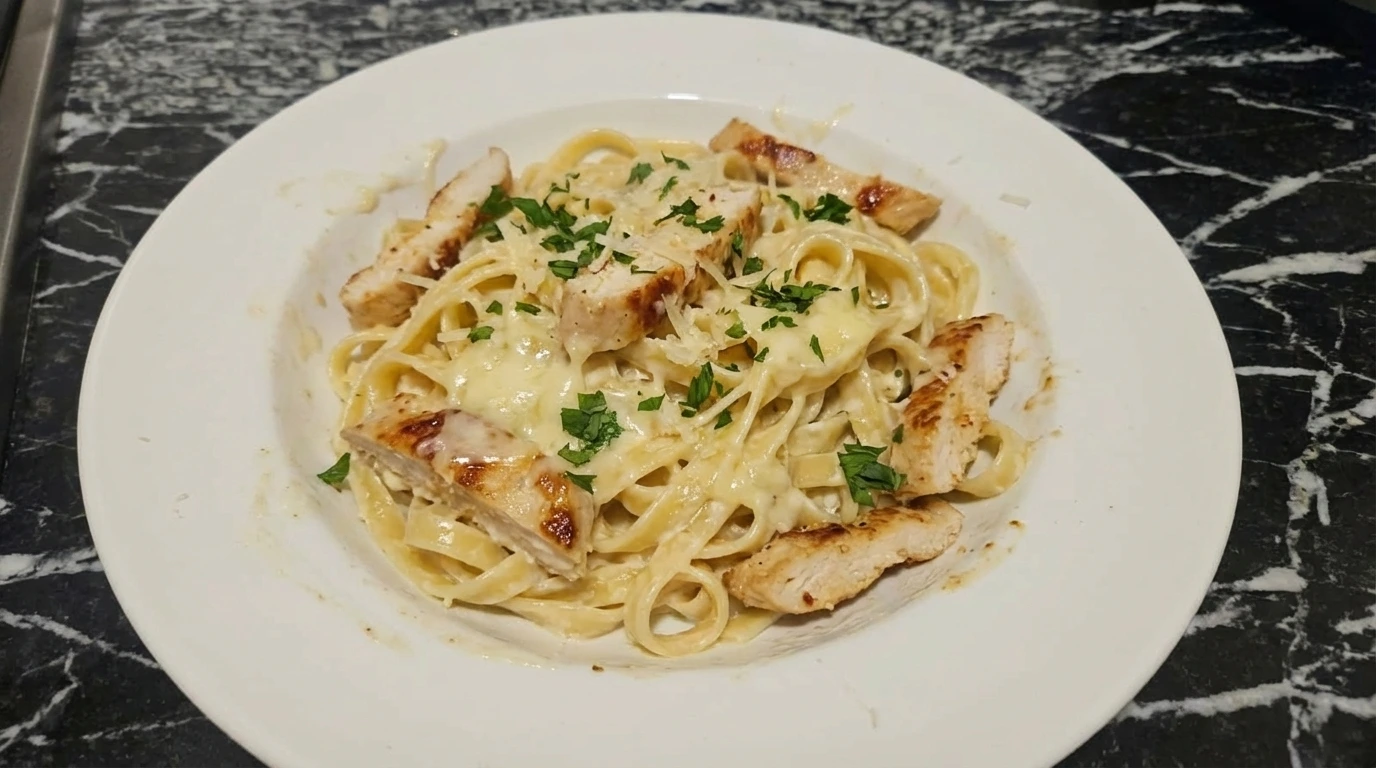
This is the kind of pasta you make when you want something warm and filling without overthinking it. Creamy sauce, tender chicken, and noodles that hold onto every bit of it. It’s a little messy when you serve it, in a good way.
The sauce clings, the chicken stays juicy, and you get that rich bite every time. If you like cozy dinners like this, you’ll probably enjoy this Creamy Tomato Pasta too: https://leagueofcooking. com/?
p=3145 It works for weeknights but still feels like you put in effort. And honestly, it’s one of those plates people go back for without saying much.
What Makes This Recipe Work
Cooking the chicken at medium-high heat around 400°F gives you a quick sear without drying it out. The mix of cream cheese and Parmesan stabilizes the sauce so it stays smooth instead of breaking. Adding milk at the right moment keeps the texture loose enough to coat the pasta without turning watery.
Ingredient List
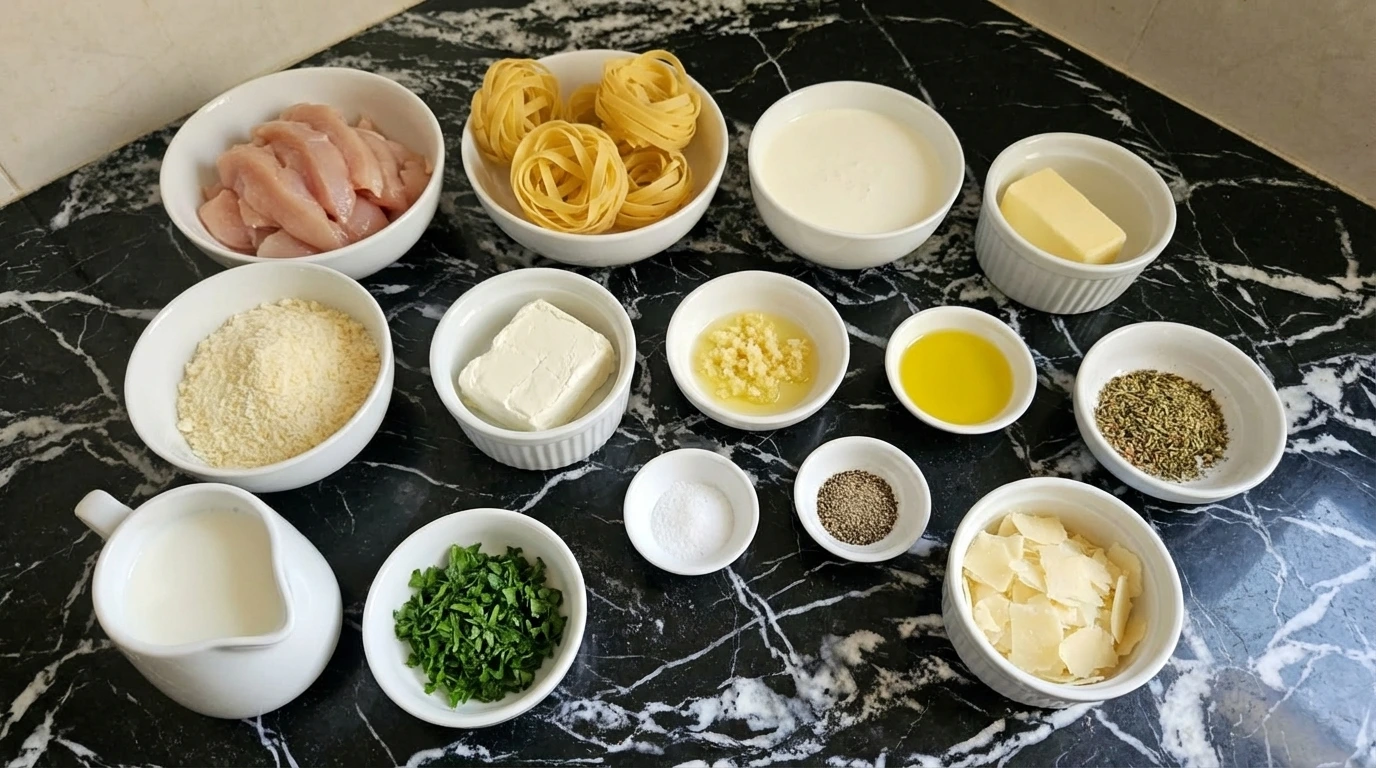
- boneless skinless chicken breasts: cut into even strips for quick, even cooking
- fettuccine pasta: wide noodles that hold onto creamy sauce well
- heavy cream: base for a rich and smooth Alfredo sauce
- unsalted butter: softened, adds depth and silkiness
- freshly grated Parmesan cheese: finely grated for better melting into sauce
- cream cheese: softened, helps thicken and stabilize sauce
- garlic: minced finely for even flavor throughout
- olive oil: coats the chicken for seasoning and searing
- Italian seasoning: dried herb blend for savory depth
- kosher salt: for seasoning at each stage
- black pepper: freshly cracked for balance
- milk: used to adjust sauce consistency
- fresh parsley: chopped for a fresh finish
- extra Parmesan cheese: for topping right before serving
Kitchen Equipment
How to Make It
Step 1: Slice and measure everything
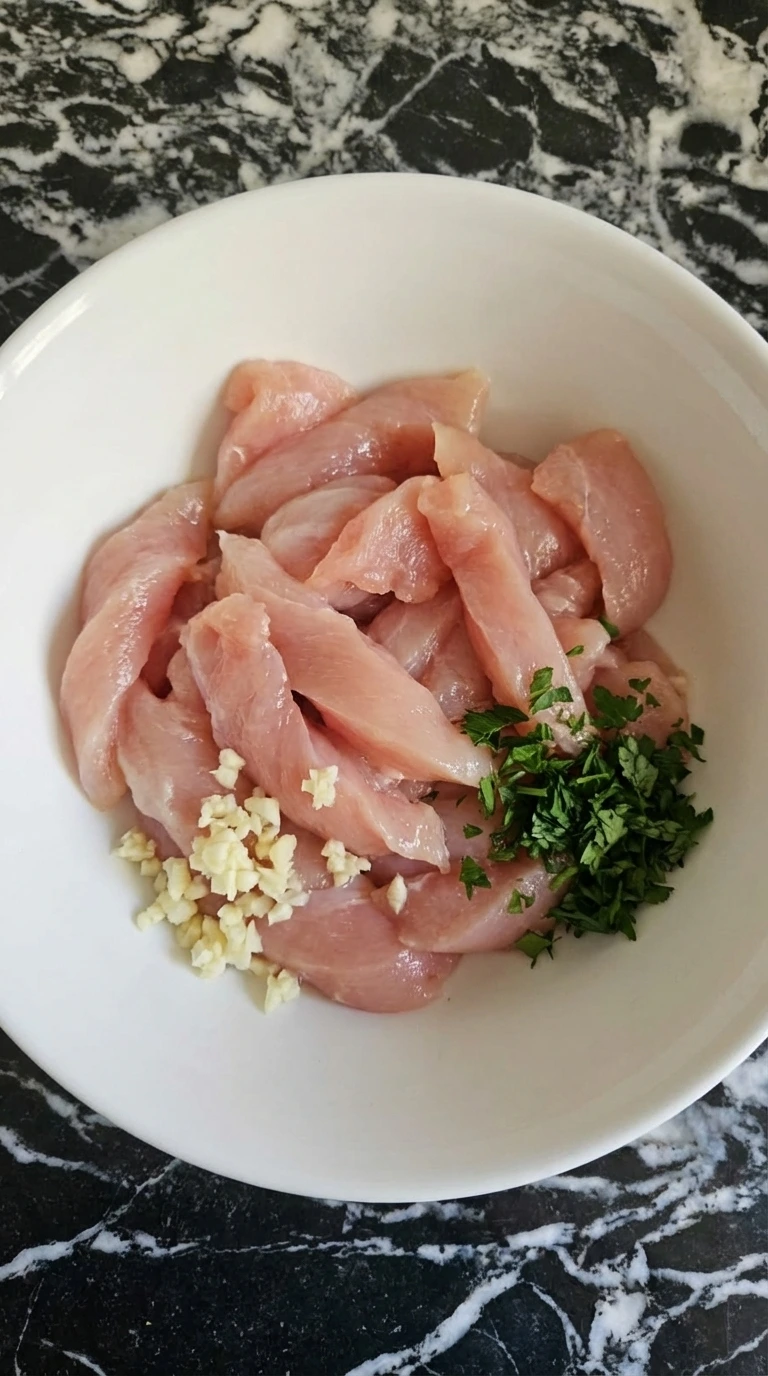
Start at room temperature, about 70°F, and slice the chicken into strips that are close in size. Take 5 to 7 minutes to trim and cut, using a steady forward-and-down motion so the edges stay clean. You’ll notice the chicken looks slightly glossy and soft when it’s freshly cut. Measure everything out right after. Keep butter and cream cheese sitting out for at least 10 minutes so they soften. If you skip that, they won’t mix smoothly later and you’ll fight lumps the whole time.
Tip: Set ingredients in the order you’ll use them so you don’t pause mid-cooking.
Step 2: Season the chicken
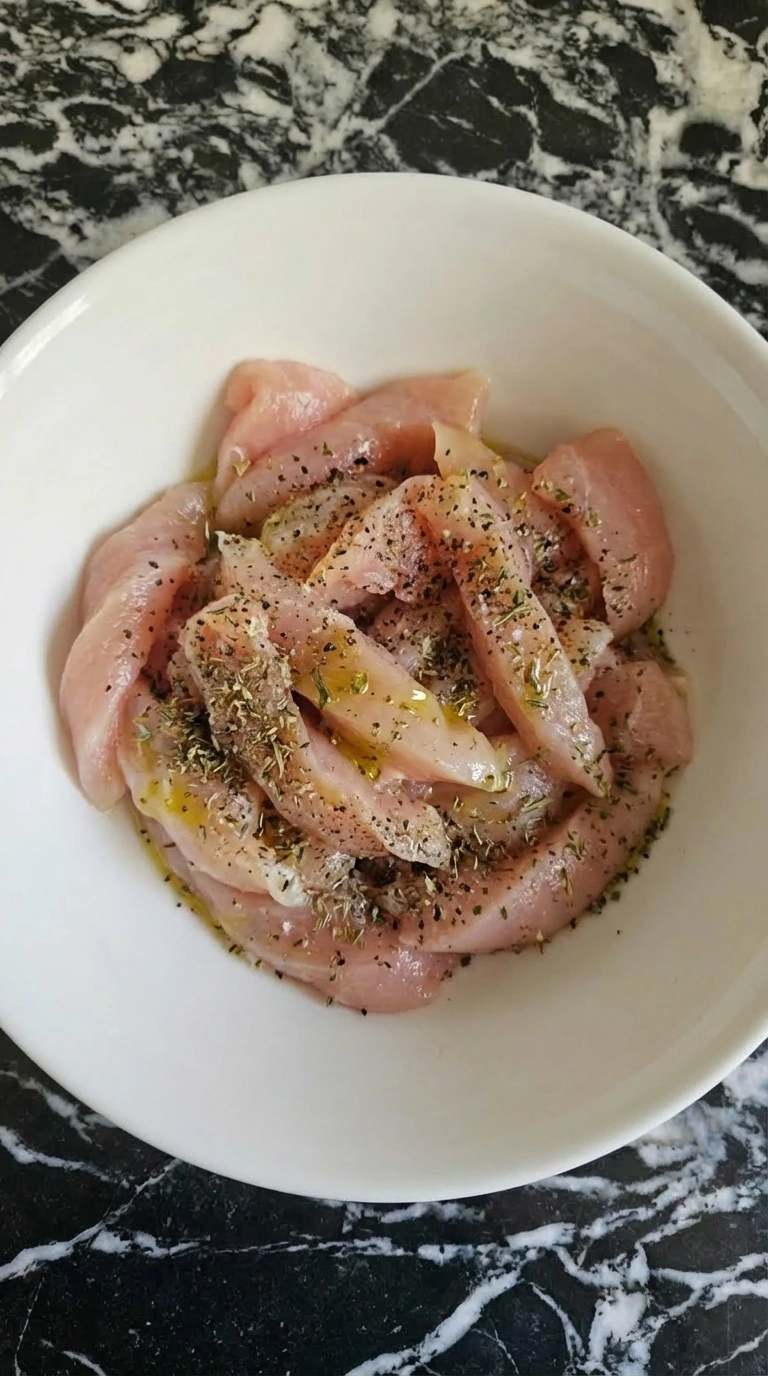
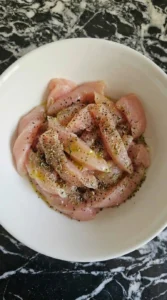
Drizzle olive oil over the chicken and sprinkle salt, pepper, and Italian seasoning evenly. Take about 1 minute to toss using your hands, lifting and folding the strips over each other so everything gets coated. The surface should look lightly glossy with herbs sticking. Keep the chicken at room temp while seasoning, around 70°F. If you rush and don’t coat evenly, some pieces will taste flat while others are too salty.
Tip: Use your hands instead of a spoon so the seasoning spreads more evenly.
Step 3: Let the chicken rest briefly
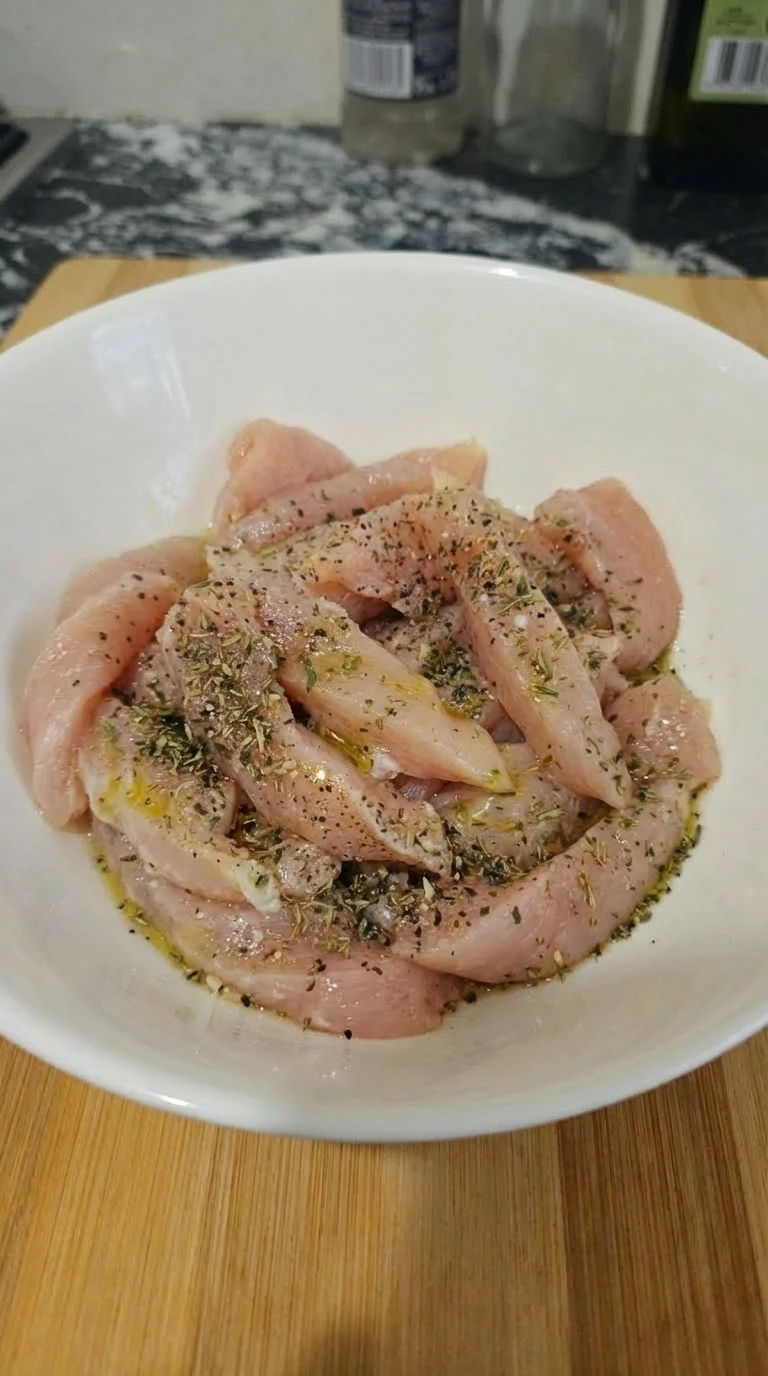
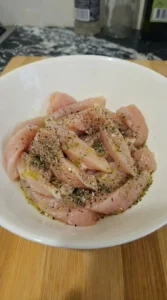
Let the chicken sit at room temperature for 10 minutes. No more than 15. This gives the salt time to pull in slightly, which helps with flavor and moisture. You’ll see the surface look less slick and more matte. Don’t skip this. If you cook it right away, the seasoning stays on the outside and the flavor doesn’t carry through.
Tip: Cover loosely so it doesn’t dry out while resting.
Step 4: Mix the Alfredo base
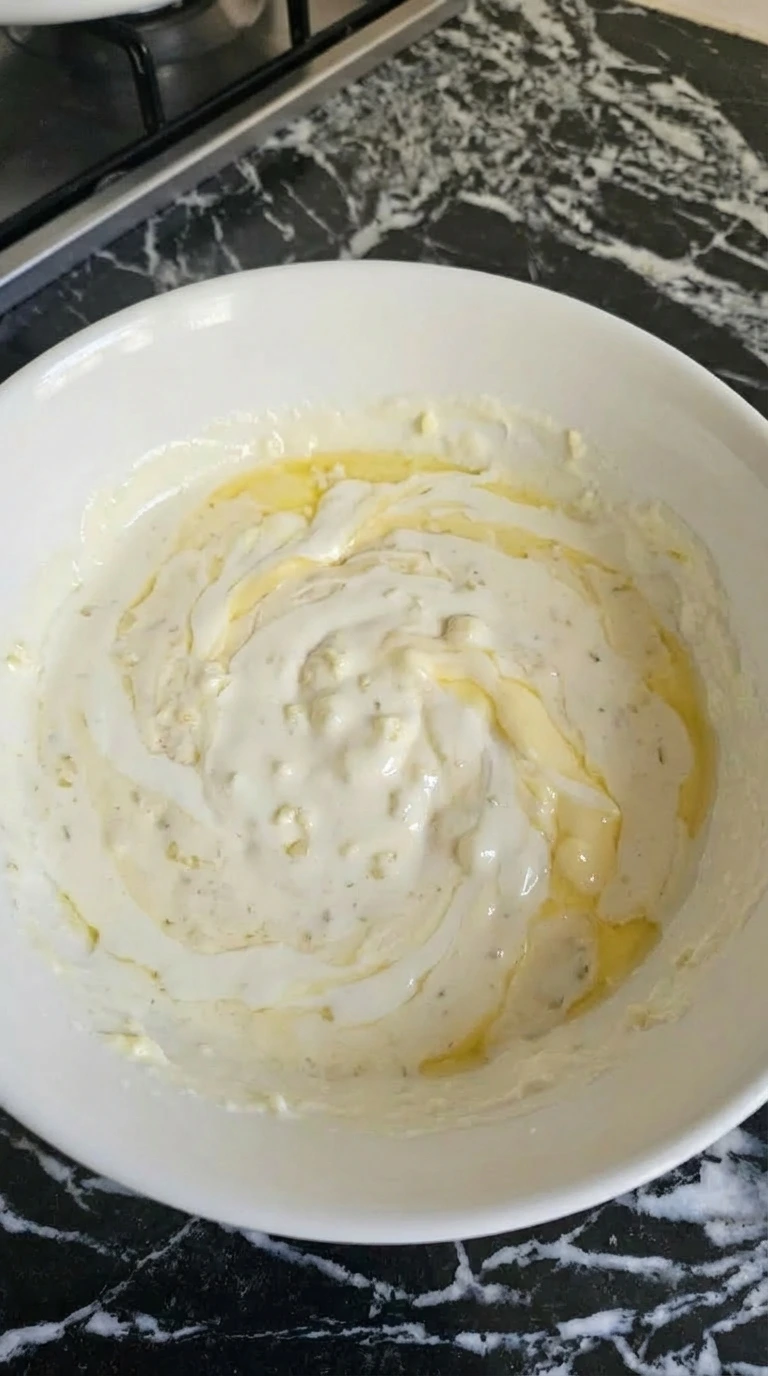
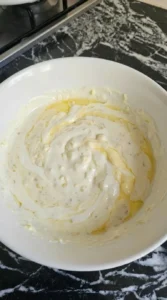
In a bowl, combine heavy cream, softened butter, cream cheese, and garlic. Stir for 2 to 3 minutes using a circular motion, pressing the cream cheese against the side to smooth it out. The mixture should start thick but loosen as it blends. Keep everything around room temp, about 70°F. You’ll see small streaks at first, then a more uniform cream with garlic specks. If it stays chunky, the butter or cream cheese was too cold. (I used to rush this and always ended up with uneven sauce.)
Tip: Mash the cream cheese against the bowl before mixing fully to speed things up.
Step 5: Fold in parmesan and loosen the sauce
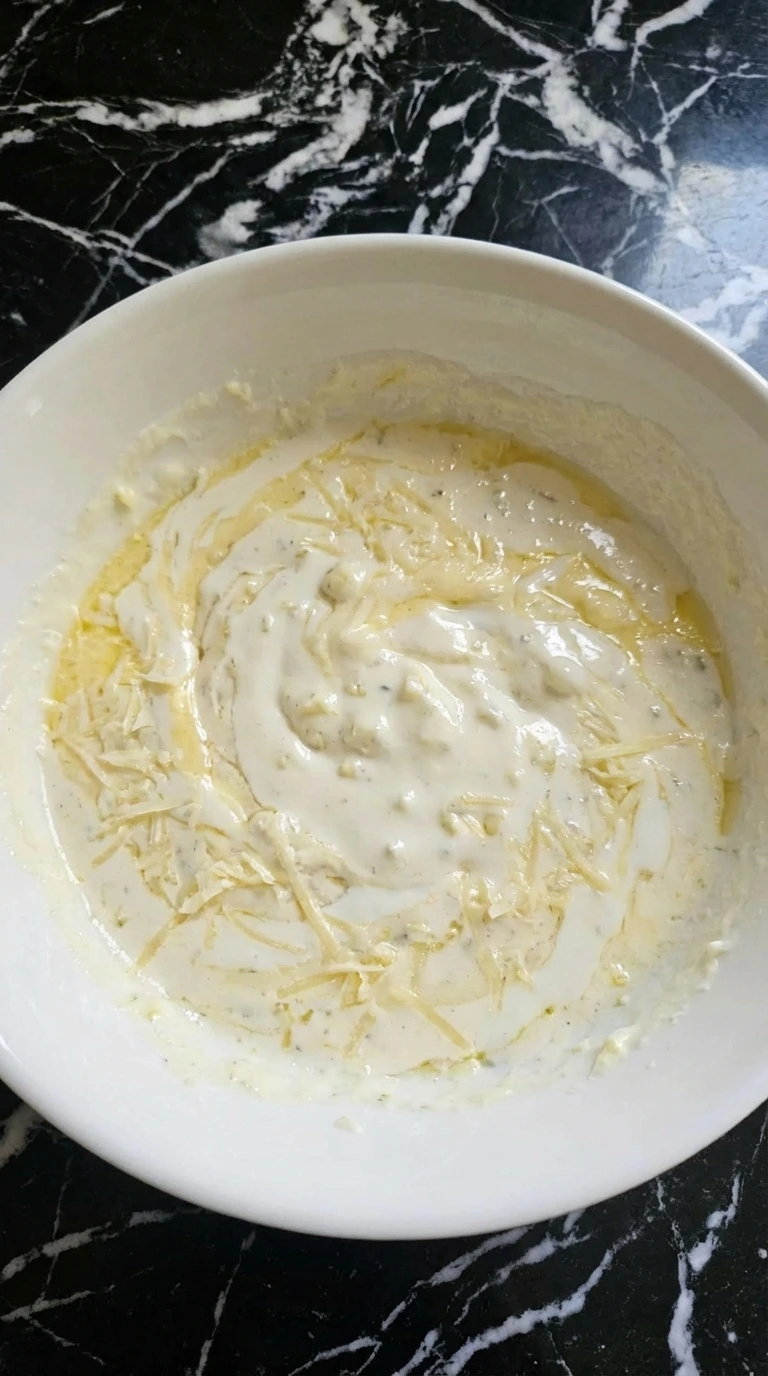
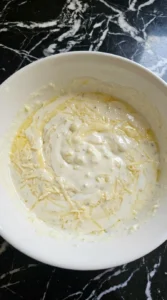
Add Parmesan gradually over 2 minutes, stirring constantly in a folding motion. Then pour in milk slowly while mixing. Keep the mixture warm if possible, around 90 to 100°F, so the cheese melts smoothly. Watch for the texture. It should coat a spoon lightly. You’ll smell a warm, nutty aroma when it’s right. If you dump the cheese in all at once, it clumps and won’t fully melt.
Tip: Warm the milk slightly before adding so it blends faster.
Step 6: Coat the pasta and chicken
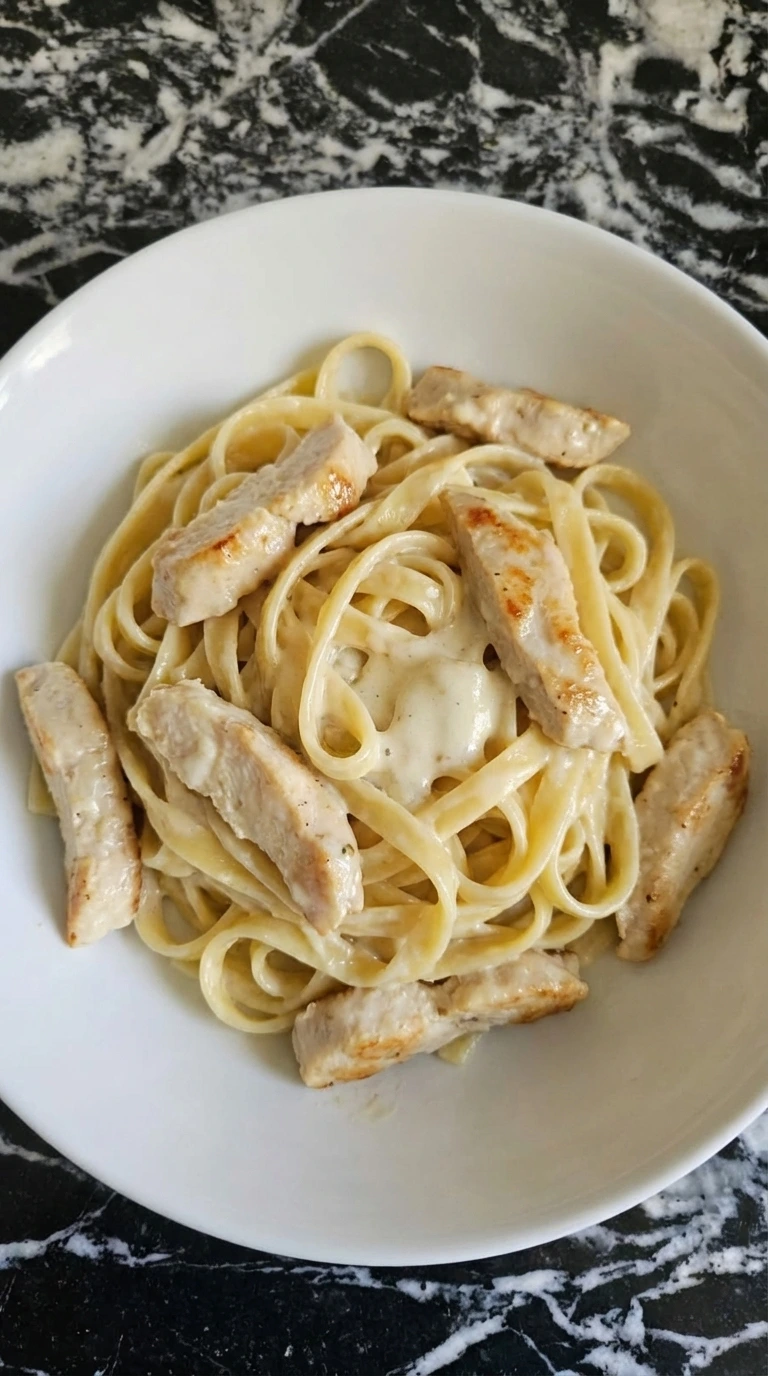
Combine cooked pasta and chicken with the sauce while everything is still hot, around 160 to 180°F. Fold gently for 2 to 3 minutes using a lift-and-turn motion so the noodles stay intact. The sauce should cling and look glossy. You’ll see the pasta loosen slightly as it absorbs the sauce. If you overmix, the noodles break and the sauce gets too thick in spots.
Tip: Add a splash of pasta water if the sauce feels too tight.
Step 7: Finish with more cheese and parsley
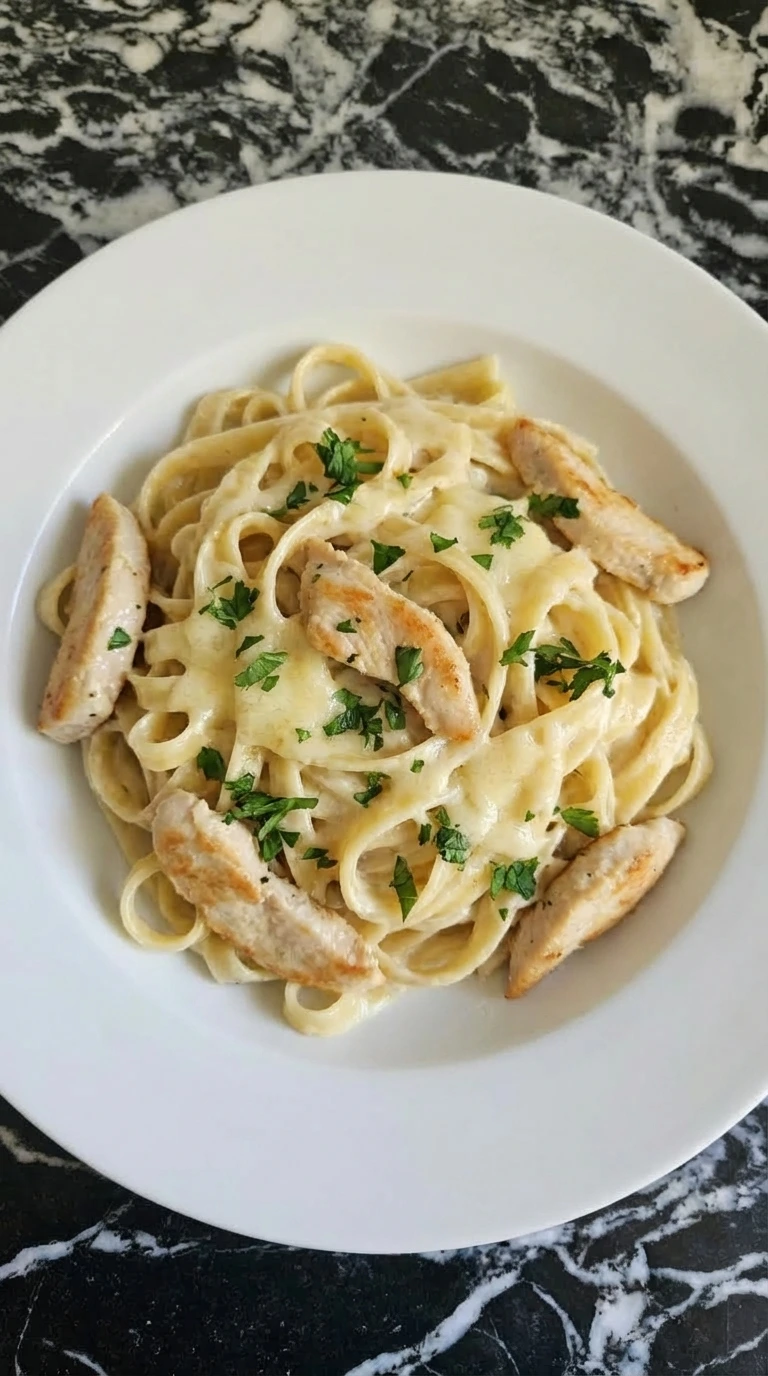
Sprinkle Parmesan and parsley over the hot pasta and let it sit for about 1 minute. The heat around 150°F helps the cheese soften without fully melting away. Scatter it with your fingers for an uneven finish. You’ll see the cheese soften into small creamy spots and smell the fresh herbs. If you mix it in right away, you lose that layered look and texture.
Tip: Add the parsley last so it stays bright and fresh.
Step 8: Plate and serve
Serve immediately while the pasta is still hot, around 140°F. Use tongs to lift and twist into a loose mound over 1 minute. Let some chicken sit on top for contrast. You’ll see the sauce settle and lightly pool. It should look glossy, not stiff. If you wait too long, the sauce thickens and loses that smooth coating.
Tip: Warm the plate slightly so the sauce stays creamy longer.
My Best Tips
- Grate your own Parmesan. It melts smoother and tastes better.
- Cut the chicken first so seasoning sticks to more surface.
- Save a bit of pasta water in case the sauce tightens up.
- Scatter toppings loosely for a more natural finish.
Make It Your Own
- heavy cream: half and half — lighter texture, sauce won’t be as rich
- cream cheese: mascarpone — smoother finish but slightly sweeter taste
- Parmesan cheese: Grana Padano — similar melt but slightly milder flavor
- fettuccine pasta: gluten-free pasta — works fine but texture is a bit softer
- chicken: shrimp — cooks faster, reduce cook time to avoid rubbery texture
- butter: olive oil — lighter flavor, but less creamy depth. Try it with this Grilled Chicken Salad: https://leagueofcooking.com/?p=3219
Storage Instructions
Store leftovers in an airtight container in the fridge for up to 3 days. Reheat gently over low heat with a splash of milk. The sauce thickens as it sits. Freezing works, but the sauce may separate slightly when reheated.
Creamy Chicken Alfredo Pasta
Ingredients
- 2 medium (about 1 pound) boneless skinless chicken breasts
- 12 ounces fettuccine pasta
- 2 cups heavy cream
- 4 tablespoons unsalted butter
- 1 1/2 cups freshly grated Parmesan cheese
- 2 ounces cream cheese
- 4 cloves, minced garlic
- 1 tablespoon olive oil
- 1 teaspoon Italian seasoning
- 1 1/4 teaspoons, divided kosher salt
- 3/4 teaspoon, divided black pepper
- 1/2 cup milk
- 2 tablespoons, chopped fresh parsley
- 1/4 cup extra Parmesan cheese
Instructions
-
The chicken breasts are cut into uneven bite-size strips and gathered in the white ceramic bowl, with a few thinner pieces and a few thicker ones so it feels like real home prep instead of perfect matching cuts. The garlic is minced, parsley is chopped, and all the dairy and seasonings are measured into separate additions ready to go. The visual change here is all about turning whole ingredients into recipe-ready pieces. The bowl now shows raw chicken with soft pink color and natural variation in size, while the surrounding measured ingredients look prepped for a smooth, steady assembly.
-
Olive oil is poured over the raw chicken in thin uneven streaks, then salt, pepper, and Italian seasoning are scattered across the top instead of landing in a perfectly even layer. Some pieces catch more seasoning than others at first, which makes the bowl look natural and lived-in. After a partial toss, the chicken shifts from plain and glossy to more visibly coated. Specks of herbs cling to the surface, the oil gives it a deeper sheen, and the strips start to look like they are on their way to becoming savory and well seasoned.
-
The seasoned chicken sits in the bowl for a short rest so the surface looks a little more absorbed and less slick. The herbs darken slightly as they hydrate, and the seasonings settle into the folds and edges of the strips. This is a subtle marinating stage, but it matters for the visual progression. The chicken still looks raw, yet it now appears more cohesive and ready, with the coating no longer sitting loosely on top but clinging in a more natural way.
-
Heavy cream, softened butter, cream cheese, and minced garlic are added into the bowl and stirred together with a few visible streaks still showing at first. The cream looks loose, the butter sits in pale soft pieces, and the cream cheese leaves thicker swirls through the mixture. As the mixture is worked more, it becomes smoother and slightly thicker, though not perfectly uniform. The sauce base now looks rich and creamy with tiny garlic flecks throughout, and the uneven texture gives it that realistic homemade start before cheese is fully blended in.
-
Freshly grated parmesan is scattered over the creamy base in a loose layer, then milk is added in a small pour around the edges. At first the cheese sits in soft mounds and shaggy pockets, with some strands melting into the mixture faster than others. After stirring, the sauce becomes silkier and more cohesive. It looks thicker than plain cream, with unevenly melted cheese creating a realistic texture and a few richer areas where the parmesan gathers more heavily.
-
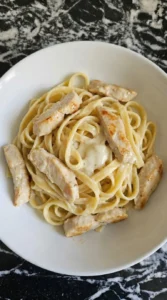
Tender cooked fettuccine and fully cooked sliced chicken are added into the bowl with the finished Alfredo sauce. The pasta lands in loose folds rather than neat coils, and the chicken is tucked through the noodles with casual overlap so some pieces peek out while others sink into the sauce. Once folded together, the visual change is dramatic. The noodles become glossy and coated, the chicken shifts from simply seasoned to fully integrated, and the whole bowl takes on a richer, softer appearance with sauce clinging more heavily in some spots than others.
-
Extra parmesan is scattered over the hot creamy pasta, not in a centered pile but in irregular patches that start to soften and melt where they land. Chopped parsley is sprinkled casually over the top, with some flakes catching on the chicken and some dropping into the sauce. The dish now looks finished but still naturally imperfect. The cheese melts unevenly into creamy spots, a few edges of chicken show slight browning, and the sauce settles into a rich, velvety coating that looks homemade instead of overly polished.
-
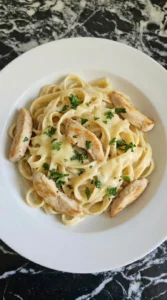
The creamy pasta is transferred onto the white ceramic dinner plate in a loose mound with visible folds, scattered chicken, and sauce pooling lightly in a few shallow areas. Nothing is perfectly centered, and the cheese remains melted in irregular patches with bits of parsley and parmesan landing wherever they fall. This final plated dish shows the full progression from raw ingredients to a fully cooked dinner. The chicken has light golden-brown color, the sauce looks rich and thick, the noodles are fully softened and glossy, and the whole plate feels warm, generous, and ready to serve.
Notes
Questions I Get Asked
You can prep parts ahead, but it’s best fresh. The sauce thickens as it sits and loses that silky texture.
Usually the cheese was added too fast or at too high heat. Add it gradually and keep the temperature moderate.
Yes, just warm it through before adding. It won’t have the same seared flavor but still works.
Final Thoughts
This creamy chicken Alfredo pasta is one of those meals that just works. It’s simple, filling, and always hits the spot.
If you’re in the mood for another cozy option, try this Spaghetti and Meatballs: https://leagueofcooking. com/?
Traditional Roman Alfredo didn’t include cream, it relied only on butter, cheese, and pasta water for its signature texture.